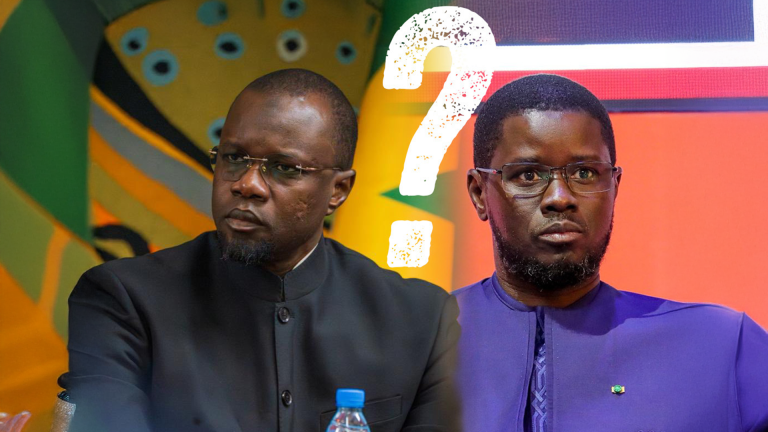
Bassirou Diomaye Faye has dismissed Prime Minister Ousmane Sonko and dissolved Senegal’s government following months of growing political tensions between the two leaders.
The dramatic announcement was made through a presidential decree read on national television, stating that President Faye had “ended the duties of Ousmane Sonko” along with those of ministers and state secretaries serving in the government.
The move marks a major political rupture within Senegal’s ruling leadership, less than two years after the pair secured a historic election victory that reshaped the country’s political landscape.
Sonko, one of Senegal’s most influential opposition figures and a popular voice among the youth, reacted shortly after the announcement, saying on social media that he would “sleep with a light heart.”
The dismissal followed a tense parliamentary session on Tuesday during which Sonko openly criticized President Faye, exposing divisions that had reportedly been building within the ruling Pastef movement for months.
Political tensions between the two leaders had increasingly become public in recent months, with reports suggesting that President Faye had grown uncomfortable with what he viewed as Sonko’s dominant political influence and “excessive personalisation” within the ruling party.
At the same time, Sonko had accused the president of showing weak leadership and failing to defend him against political attacks and criticism.
The fallout is particularly significant because Faye’s rise to the presidency was closely tied to Sonko’s popularity and political backing.
Sonko had originally been widely expected to contest and potentially win Senegal’s 2024 presidential election. However, a defamation conviction barred him from running, leading him to endorse Faye as the Pastef candidate.
The alliance proved successful, with Faye winning the presidency in what many observers described as an extraordinary political comeback. Both Faye and Sonko had been released from prison only days before the election after months of political unrest and legal battles that had drawn international attention.
Following news of Sonko’s dismissal, several hundred students reportedly gathered in the streets of Dakar overnight to demonstrate in support of the former prime minister, highlighting his continued influence among young Senegalese voters.
The political crisis comes at a difficult economic moment for Senegal. According to the International Monetary Fund (IMF), the country’s public debt has reached approximately 132 percent of gross domestic product (GDP), increasing pressure on the government to stabilize the economy and maintain investor confidence.
Analysts say the split between Faye and Sonko could significantly reshape Senegal’s political future, especially within the ruling coalition that had largely depended on their partnership and shared anti-establishment message.
The dissolution of government is expected to trigger a cabinet reshuffle and potentially deepen uncertainty within Senegal’s political environment as the country navigates mounting economic and governance challenges.
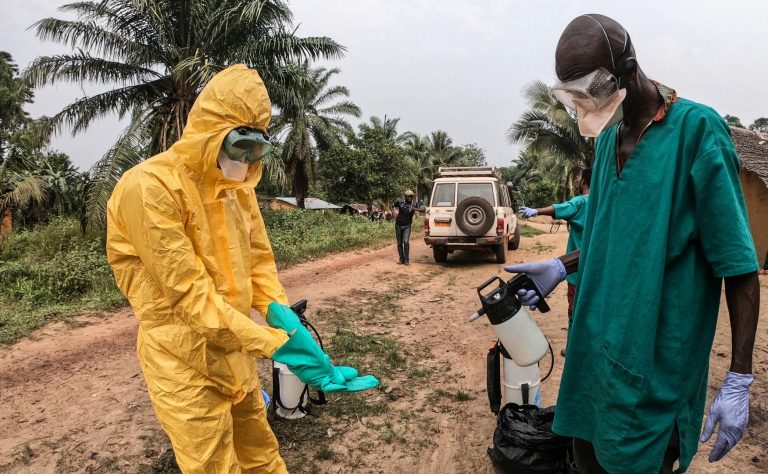
Uganda’s Ministry of Health has confirmed three new cases of Ebola Virus Disease (EVD), bringing the total number of confirmed infections in the country to five.
In a press release issued on May 23, 2026, the Ministry said the newly confirmed cases include a Ugandan driver, a Ugandan health worker, and a Congolese woman linked to earlier Ebola exposure and contact tracing investigations.
According to the Ministry, one of the new patients is a Ugandan driver who transported the country’s first confirmed Ebola case. Health officials said he is currently receiving treatment.
The second confirmed case involves a Ugandan health worker who was exposed to the virus while caring for the country’s first Ebola patient. Authorities confirmed that she is also undergoing treatment.
The Ministry noted that both individuals had already been identified among known contacts under follow-up by surveillance teams.
The third confirmed case is a Congolese woman residing in the Democratic Republic of Congo (DRC). According to health authorities, she entered Uganda from the DRC while experiencing mild abdominal symptoms.
The patient reportedly traveled from Arua to Entebbe using a chartered flight and later sought medical attention at a private hospital in Kampala on May 10, 2026.
The Ministry said the woman was initially treated and discharged in stable condition on May 14 before returning to the DRC. However, Ugandan health authorities later received information from the pilot who had airlifted her, prompting additional follow-up investigations by surveillance teams.
Subsequent laboratory testing later confirmed that she had tested positive for Ebola Virus Disease.
Health officials said all contacts linked to the confirmed cases have since been identified and are currently being closely monitored by response teams as part of ongoing containment measures.
The Ministry of Health urged the public to remain calm but vigilant and continue observing all recommended preventive measures.
Authorities also called on the public to immediately report any suspected Ebola symptoms to the nearest health facility, emphasizing that early treatment significantly improves survival chances.
The Ministry further stated that it continues to strengthen surveillance systems, case management, contact tracing, and public awareness campaigns in efforts to contain the outbreak and protect public health.
The latest development comes as Uganda intensifies nationwide Ebola response measures, including enhanced border screening, public sensitization campaigns, restrictions on mass gatherings in high-risk areas, and strengthened health surveillance along the Uganda-DRC border.
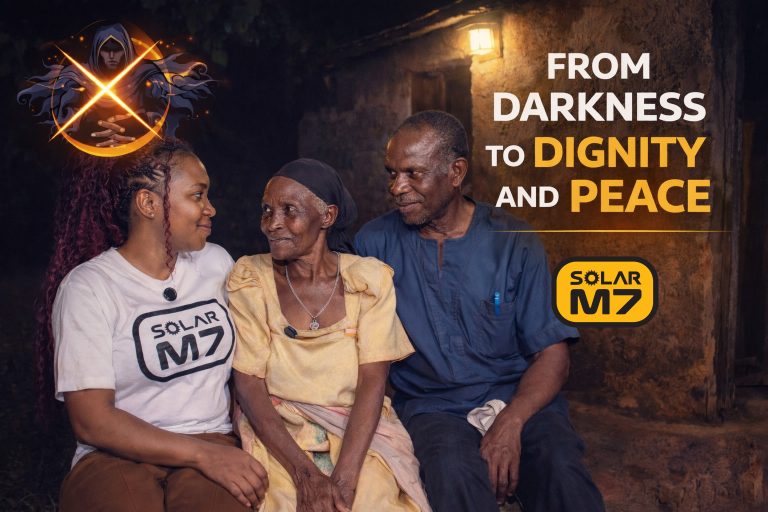
For most of her life, Nakabugo Maturona feared the night.
At 85 years old, the grandmother of Burundian origin has lived through decades of hardship, migration, uncertainty, and survival. But even after all those years, darkness still carried a fear she could never fully escape.
Inside her home in Kamengo, Mpigi District, the nights felt haunted.
When strong winds passed through the village, Maturona believed they carried voices of ghosts moving through the darkness. Every unfamiliar sound outside the house deepened her fear. She worried constantly about thieves hiding unseen nearby while her grandchildren sat helplessly begging for candles the family could rarely afford.
For Maturona, darkness became more than lack of light.
It became loneliness. Fear. And emotional suffering that followed her into old age.
Then Solar M7 arrived. And for the first time in her long life, the nights inside her home began to feel peaceful.
Today, reliable solar light fills the house after sunset. The frightening shadows have disappeared. Her grandchildren now sit comfortably beneath steady light instead of begging for candles. The home feels calm, secure, and emotionally lighter in ways she never imagined possible.
For Maturona, the transformation feels deeply spiritual and personal.
“Before Solar M7, nights brought fear into my heart,” she shared during her interview. “Now the home feels peaceful, the children are happy, and I no longer fear the darkness the way I once did.”
According to Doreen Nanfuka, many elderly people living in underserved communities experience emotional and psychological distress connected to darkness and insecurity.
“When older people spend decades living in fear after sunset, reliable light becomes emotionally transformative,” Doreen explained. “It restores comfort, dignity, confidence, and peace inside the home.”
Innocent Kawooya says stories like Maturona’s reveal how energy access restores humanity and emotional wellbeing alongside physical safety.
“Reliable light gives families more than visibility,” he noted. “It restores dignity, emotional peace, and the ability to live without fear inside one’s own home.”
Today, nights inside Maturona’s home no longer feel haunted by darkness.
The grandchildren laugh beneath safe light.
The shadows no longer control her peace.
And in a home where fear and superstition once ruled every evening, Solar M7 is now helping restore something profoundly human.
Comfort. Dignity. And peace in the final chapters of life.
Watch the full story of Nakabugo Maturona from Kamengo, Mpigi District, Uganda across our platforms:
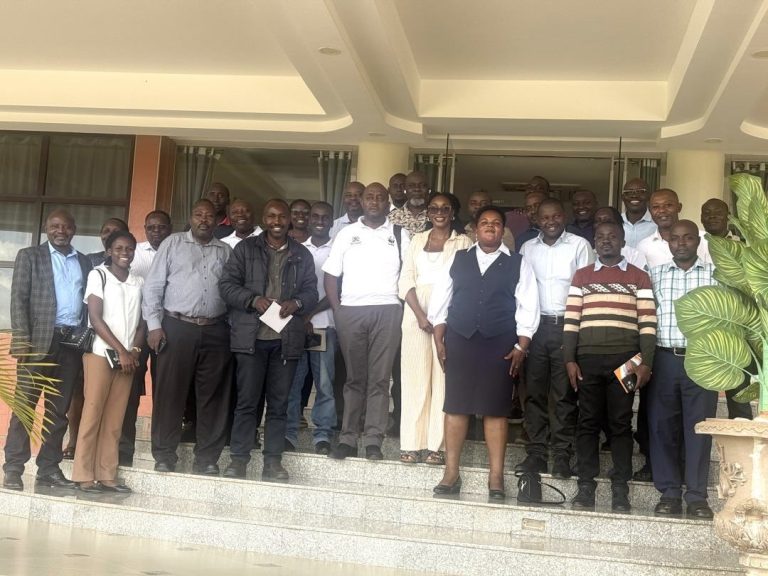
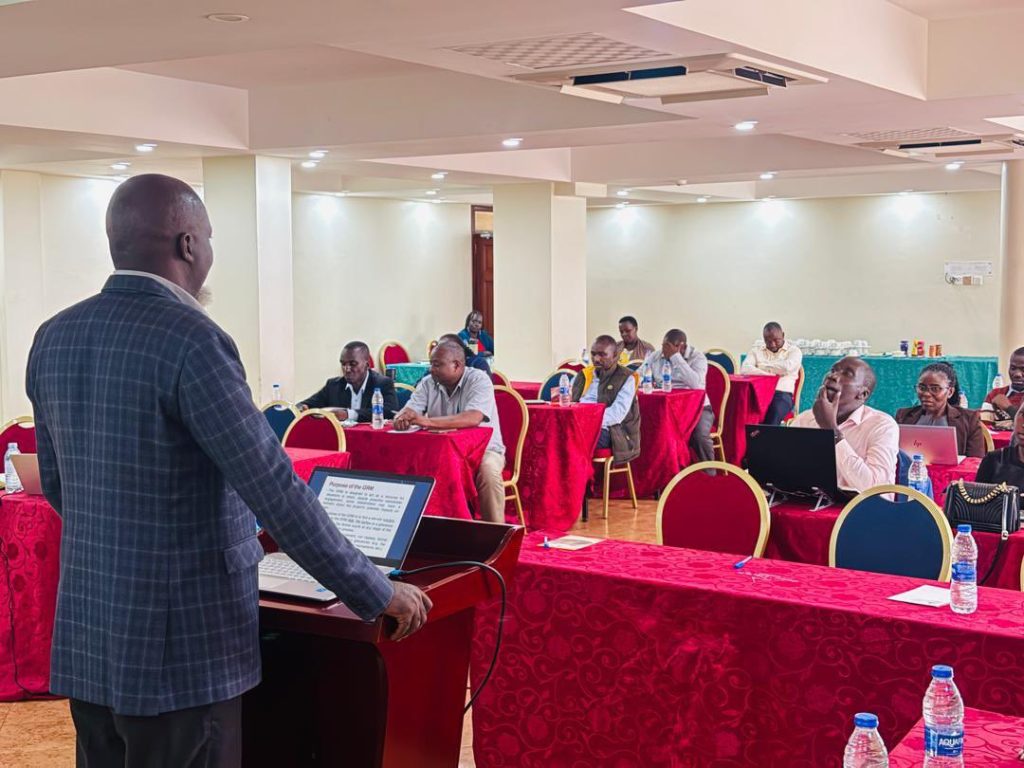
The Ministry of Water and Environment has conducted a three-day training aimed at strengthening the technical and institutional capacity of local and national government officials to improve ecosystem restoration efforts while promoting gender inclusion and minimizing community grievances during project implementation.
The training, organized under the Ecosystems-based Adaptation (EbA) Project, was held at Hotel Triangle in Mbarara City and brought together officials from the Ministry of Water and Environment, district local governments, and technical teams from Mbarara, Kamwenge, Ibanda, Kitagwenda, and Mbarara City.
According to the Ministry, the training focused on equipping officials with skills to mainstream gender and inclusive participation in environmental restoration projects, while also enhancing their ability to manage restoration and demarcation exercises involving wetlands, forests, rivers, and lakeshores.
Officials said the sessions were designed to strengthen coordination between national and local governments as Uganda continues implementing climate resilience and environmental protection interventions.
Among the key objectives of the training was building the capacity of government officials to integrate gender considerations into project implementation processes and ensure participation of all community groups during restoration activities.
Participants were also trained on planning and managing restoration interventions affecting wetlands, riverbanks, forest ecosystems, and lakeshores, as well as handling grievances that may arise from restoration and boundary demarcation exercises.
The Ministry noted that environmental restoration projects often involve sensitive community concerns related to land use, livelihoods, and access to natural resources, making grievance management an important part of project implementation.
Officials emphasized the need for local leaders and technical officers to appropriately identify, manage, and refer community complaints to ensure peaceful and effective implementation of conservation initiatives.
The expected outcomes of the training include improved institutional capacity to manage ecosystem restoration activities, strengthened grievance handling systems, and enhanced gender mainstreaming across environmental projects.
The Ecosystems-based Adaptation Project is being implemented by the Government of Uganda through the Ministry of Water and Environment under the Wetlands Management Department.
The initiative receives financial support from the Global Environment Facility (GEF) and technical support from the United Nations Environment Programme (UNEP).
Government says the project is part of broader national efforts to strengthen climate resilience, restore degraded ecosystems, and promote sustainable environmental management in vulnerable communities across Uganda.
Environmental experts have increasingly emphasized the importance of ecosystem restoration in addressing climate change impacts, protecting biodiversity, improving water resources, and supporting sustainable livelihoods.
The Ministry reaffirmed its commitment to working with local governments and communities to strengthen environmental conservation efforts while ensuring inclusive participation and reduced conflict during implementation of restoration activities.
#MWEworks: @min_waterUg through the Ecosystems based Adaptation (EbA) Project carried out a 3-day training on strengthening the technical and institutional capacity of local and national governments to mainstream and include: pic.twitter.com/oBRlp4kYRz
— MINISTRY OF WATER AND ENVIRONMENT 🇺🇬 (@min_waterUg) May 22, 2026
From the very first line of Matchless Love, there is an unmistakable sense that Voices Of Light – African Hymns Reimagined Vol. 1 is attempting something far bigger than conventional gospel music.
The song does not merely begin. It arrives. Softly. Warmly.
Almost like the opening moments of sunrise entering a cathedral.
“It’s sweet to sing of endless love…”
Within seconds, the listener is pulled into a deeply intimate spiritual atmosphere where worship is no longer confined to church walls, but transformed into a daily emotional experience designed for headphones, homes, cars, playlists, reflections, and repeat listening across the globe.
As the opening record on the album, Matchless Love performs an incredibly important role. It introduces the emotional architecture of the entire project while simultaneously establishing the sonic philosophy behind Voices Of Light – African Hymns Reimagined Vol. 1: short-form inspirational music with cinematic emotional depth and global replay value.
What makes the record particularly powerful is its restraint.
Rather than overwhelming the listener with excessive instrumentation or theatrical vocal runs, the song leans into emotional clarity. Every line feels intentional. Every progression feels designed to create spiritual warmth rather than performance spectacle.
The result is a record that feels timeless.
The songwriting itself is deceptively simple, but emotionally expansive. Themes of sacrifice, redemption, unity, and victory are communicated with remarkable accessibility:
“He gave His life, He set us free Now we rise in victory…”
That lyrical simplicity is precisely what gives the song its global strength. It allows listeners from vastly different cultures, generations, and spiritual backgrounds to emotionally enter the experience without barriers.
The chorus, particularly the repetitive:
“Oh oh oh — we lift Your name…” is engineered with extraordinary streaming intelligence. It is memorable.
Communal. Emotionally uplifting. And highly repeatable.
This is the kind of melodic structure that naturally transitions from personal devotion into collective worship environments, social sharing, choir reinterpretations, short-form video integrations, and global audience participation.
Vocally, Doreen Nanfuka and the Enlightened Academy deliver one of the defining performances of the project. Her voice moves with emotional precision, balancing tenderness and conviction without ever sounding performative. Rather than dominating the arrangement, she guides the listener through it, creating the feeling of spiritual companionship rather than artistic exhibition.
Her delivery gives the song humanity. Warmth. Nearness.
There is a remarkable emotional intelligence in the way her vocal phrasing interacts with the choir layers from Enlightened Academy Choir and HiPipo Voices. Together, they create a sense of intergenerational worship that feels deeply African in emotional spirit while remaining universally accessible in sonic presentation.
Behind the scenes, the production team demonstrates a sophisticated understanding of modern inspirational music consumption.
The sonic textures crafted by George Kasakya and Henry Kiwuuwa avoid the common trap of overproduction often found in contemporary gospel projects. Instead, the arrangement breathes. Space is treated as part of the composition itself.
The production feels cinematic without becoming heavy. Digital without becoming artificial.
Modern without abandoning spiritual authenticity. This balance is one of the album’s greatest achievements.
The song also reflects a growing shift happening inside global gospel music itself, where inspirational records are increasingly being designed not just for Sunday listening, but for daily emotional integration into people’s lives.
In many ways, Matchless Love feels less like a traditional album opener and more like a spiritual onboarding experience into the wider Voices Of Light universe.
Speaking about the vision behind the project, Innocent Kawooya explains:
“We wanted Matchless Love to feel like the beginning of light entering someone’s day. Not just a song people hear once, but something they can emotionally return to every morning, every evening, and every moment they need peace, strength, or spiritual grounding. This project was intentionally designed for daily human experience at global scale.”
Lead vocalist Doreen Nanfuka describes the recording process as deeply emotional:
“There was something very calming about this song from the moment we began working on it. Every lyric felt honest. Every harmony felt healing. We were not trying to impress listeners, we were trying to create something people could genuinely live with spiritually.”
The production team echoed similar sentiments, emphasising the intentional emotional architecture behind the record.
“The goal was to create warmth,” said the production crew led by George Kasakya and Henry Kiwuuwa. “Not noise. Not pressure. We wanted listeners to feel embraced by the music. Every layer was carefully shaped to make the experience feel human, uplifting, and timeless.”
At a time when much of the digital music landscape is dominated by disposable consumption and short attention cycles, Matchless Love achieves something increasingly rare:
It creates stillness.
And in doing so, it quietly positions itself as one of the most emotionally resonant opening records on a contemporary African inspirational project in recent memory.
More than a song, Matchless Love feels like the beginning of a global devotional movement, one designed not simply to be heard, but to be lived with.
As you experience the powerful journey of Voices Of Light – African Hymns Reimagined Vol. 1, from songs of hope, praise, healing, unity, victory, and light, this album stands as a remarkable celebration of faith, humanity, and emotional transformation through music. Led by Doreen Nanfuka, Enlightened Academy Choir, and HiPipo Voices, with exceptional production led by Innocent Kawooya, alongside George Kasakya and Henry Kiwuuwa, the project continues to position itself as one of the most emotionally immersive and globally resonant inspirational music releases from Africa in recent years.
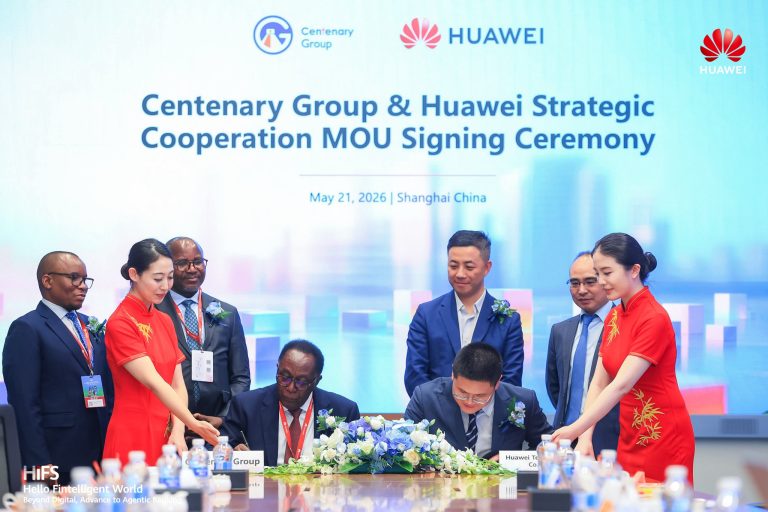
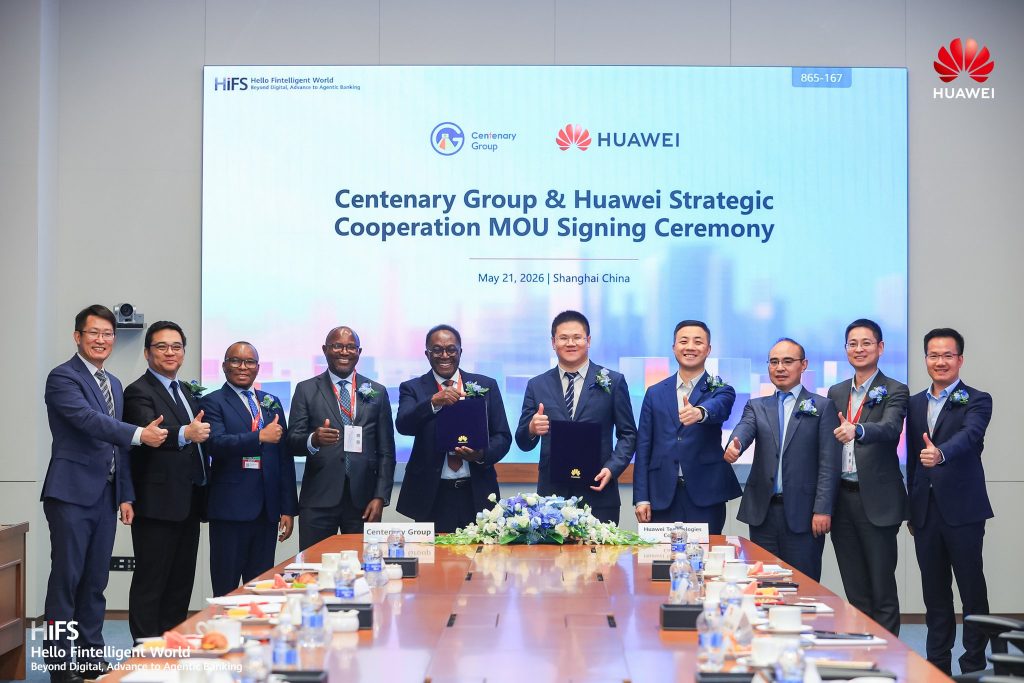
Centenary Group has partnered with Chinese technology giant Huawei in a move aimed at accelerating digital banking transformation and expanding financial inclusion across Africa.
The partnership brings together Centenary Group’s growing digital financial services ecosystem and Huawei’s global expertise in information and communications technology to strengthen digital infrastructure, modernize banking systems, and improve access to financial services, particularly in underserved communities.
Officials say the collaboration reflects the growing push among African financial institutions to embrace digital innovation as banking increasingly shifts toward mobile platforms, agency banking, artificial intelligence, cloud computing, and integrated digital ecosystems.
Centenary Group, whose flagship subsidiary is Centenary Bank, has in recent years intensified investments in technology-driven banking services as part of a broader modernization strategy.
The group’s technology arm, Centenary Technology Services, commonly known as Cente-Tech, is leading many of the institution’s digital transformation initiatives, including infrastructure development, financial technology integration, and digital service expansion across multiple sectors.
Industry observers say the partnership with Huawei is expected to strengthen Centenary Group’s ability to scale digital banking services, enhance cybersecurity systems, improve transaction efficiency, and support financial access for rural and previously underserved populations.
The collaboration comes at a time when Uganda’s banking sector is undergoing rapid digital evolution driven by increasing mobile phone penetration, fintech growth, agency banking expansion, and rising demand for digital financial services.
According to recent industry data, financial inclusion in Uganda has continued to improve over the years, supported by mobile money growth, digital banking platforms, and agency banking networks. Centenary Bank remains one of the country’s leading players in advancing financial access through its branch network, agent banking channels, and mobile banking services.
The partnership is also expected to support broader digital transformation efforts beyond banking, including education, healthcare, insurance, and enterprise technology solutions.
Technology experts note that collaborations between African financial institutions and global technology companies are becoming increasingly important as banks seek to modernize operations, reduce costs, improve customer experience, and compete with emerging fintech platforms.
Centenary Group has positioned digital innovation as a central pillar of its future growth strategy, with recent investments in digital infrastructure, mobile platforms, data systems, and technology partnerships aimed at strengthening its competitiveness within the evolving financial sector.
The group has also expanded partnerships focused on financial inclusion, including collaborations involving agency banking, digital payment systems, and technology-enabled service delivery across Uganda and the wider region.
Analysts say the Huawei partnership signals growing confidence in Africa’s digital banking potential as financial institutions increasingly prioritize technology-led solutions to reach unbanked populations and support economic growth.
Officials from both organizations say the partnership will focus on building scalable, secure, and innovative digital systems capable of supporting long-term financial sector transformation across the continent.
Centenary Group and Huawei Uganda have signed a strategic partnership to accelerate digital transformation and financial inclusion across Uganda and Africa. pic.twitter.com/0t8zV6WagB
— Centenary Bank Limited 🇲🇼 (@CenteBankLtd) May 22, 2026