Home Blog Page 20

Digital Leap: Ugandans save $7.28bn through Digital Tools

In 2015, the Digital Impact Awards Africa (DIAA) study under the HiPipo Include Everyone program revealed a lack of corporate websites among 59% of Uganda’s top 1,000 taxpayers. This absence resulted in higher operational costs and reduced profitability.

However, since then, digital transformation, mainly through corporate websites and online presence, has shown substantial benefits in reducing costs and enhancing customer service. It is important to note that HiPipo’s sustained advocacy, with the support and collaboration of partners and stakeholders, has played a crucial role in advocating for digital innovation, leading to this transformation and continuing to drive digital and financial inclusion across economies.

The financial impact on customers of Uganda’s top 1,000 taxpayers is staggering. They save approximately $1,995,000 daily through digital tools. Over ten years since 2014, this figure has scaled to a monumental $7.28 billion, accentuating the substantial financial benefits of digital adoption. This is a clear testament to the potential for further growth and success through digital transformation.

Digital adoption has led to tangible operational efficiency. Customers can find the information they need online and interact with service providers in real-time. Each online interaction saves customers an average of 30 minutes, and customers of these organisations save approximately 1.5 million hours daily. This boosts organisational efficiency and profitability, aligning with broader economic growth, and stresses the tangible benefits of digital innovation, instilling confidence in the future of digital transformation.

The 2015 HiPipo study highlighted the need for more corporate websites and online presence among Uganda’s top taxpayers. This absence hindered cost reduction, improved service delivery, and customer loyalty. The landscape has changed meaningfully since then, thanks to the ongoing HiPipo’s advocacy with partners.

Today, approximately three million online interactions occur every day among the 1,000 organisations, and each interaction saves an average of 30 minutes, leading to a daily time savings of around 1.5 million hours and a financial impact of approximately $1,995,000. The weekly online interaction count reaches at least twenty-one million, saving approximately 10.5 million hours and generating a financial impact of about $14M. The monthly online interaction count reaches approximately 90 million, saving around 45 million hours and leading to an economic impact of approximately $60M. These figures highlight the efficiency gains and financial benefits of digital transformation to Uganda’s business and financial sectors.

Over a year, these organisations facilitate at least 1 billion online interactions, saving approximately 547.5 million hours and resulting in an economic impact of around $728M. Over a decade, since 2014, these organisations have handled an estimated 11 billion online interactions, saving around 5.475 billion hours, with a financial impact of approximately $7.28 billion.

This usage has far-reaching impacts on enterprises and governments. For instance, digital adoption aligns with national economic growth goals by reducing business costs and increasing customer convenience and profitability. This trend benefits small, micro, nano, SMEs, and individuals running businesses. Effective, flexible policies become more urgent as governments should support digital innovation through favourable policies, recognising its impact on national competitiveness.

The findings of this paper suggest that even more attention should be paid to this effect. We plan to run subsequent surveys covering digital tools and financial services, exploring their combined time-saving and economic growth impact. HiPipo’s advocacy has driven digital innovation in East Africa and beyond for nearly two decades. Thanks to this advocacy, similar outcomes have occurred across different East African economies, just like the current Ugandan outcomes. Through initiatives like the Digital Impact Awards Africa (DIAA), HiPipo has highlighted the transformative potential of technology-based solutions, contributing to enhanced efficiency and economic growth among Uganda’s top taxpayers, SMEs, micro, nano, SHFs, and millions of merchants.

This paper further outlines the telecommunications landscape in Uganda as of March 2023. During this period, the average data consumption for Ugandan telecom subscribers was 1.7GB per month. Over the past two years, data expenditure has decreased by 6%. Internet subscriptions have grown by 1.2 million, reaching 27 million, due to the increasing access to the internet through mobile devices. These mobile devices comprise 39.1 million of the devices accessing Uganda’s telecom network, 21% of which are smart devices.

This paper notes that women, especially in urban areas, are leveraging digital tools to save time and money. However, using digital tools needs to extend to off-grid locations where access to power and energy remains challenging. Women are more likely to be employed in lower-paying jobs and sectors, particularly in developing economies like Uganda, where a weighty portion of the population earning less than 115 USD is female. Therefore, access to digital services should be equal for both genders to ensure inclusive economic development. Access should also be accelerated among youth, women and men to help them find more avenues to improve their income. Digital technologies can impact job opportunities for underrepresented women in the tech industry. Understanding customer demographics can help organisations tailor their services to meet gender needs better. Digital innovation can contribute to broader economic empowerment, which may benefit women in specific sectors or communities where they have been disadvantaged.

The report recommends that leaders prioritise digital presence and recognise its importance in enhancing efficiency, profitability, and economic growth. This includes investing in high-value corporate websites, content and digital channels to improve customer engagement and reduce operational costs. Leaders must focus on mobile platforms as mobile is increasingly the primary channel for digital access in Africa. Enterprises should prioritise responsive, mobile-friendly websites and apps to meet customer needs.

Mobile connectivity is vital in developing individuals and economies, accelerating financial inclusion and creating an inclusive economy that benefits all. This, in turn, leads to the advancement of nations, particularly in terms of economic growth, job creation, and poverty alleviation. The widespread availability of mobile connectivity has enabled individuals, even those in remote areas, to access financial services and participate in the global economy. Moreover, mobile technology has enabled individuals to engage in financial transactions without the need for traditional financial institutions, thereby promoting financial inclusion and reducing the cost of financial services. The result is a more equitable and inclusive economy that benefits everyone, regardless of socio-economic status.

The report highlights the need for enhanced cybersecurity to build customer confidence and trust and ensure safe digital interactions. Digital transformation comes with security challenges, and solutions must be secure, competitive, and universal, essential for sustainable and inclusive growth. Continuous improvement, such as updating the National Information Security Frameworks, is necessary. Partnering with experts like Cyberplc to support all security architecture and technical security assurance domains, such as risk identification, network security, data protection, identity management, posture and vulnerability management, logging, and threat detection, is vital. Regularly evaluating and improving digital strategies is necessary to stay aligned with evolving technological trends and consumer expectations.
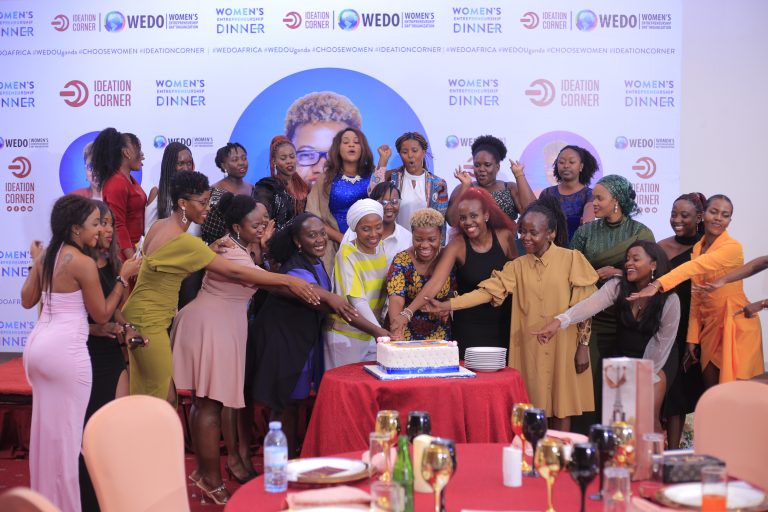

2024 Women Entrepreneurship Celebrations set for July 5th

The Ideation Corner Foundation has officially kicked off the annual Women Entrepreneurship Celebrations that will climax in a major activity in Kampala on July 5th, 2024.

Organized by the Ideation Corner Foundation in partnership with HiPipo and Women’s Entrepreneurship Day Organisation (WEDO), the annual Women Entrepreneurship Celebrations recognize exceptional women entrepreneurs leading Uganda’s transformation. It gives young and upcoming women innovators an unparalleled chance to network with already established entrepreneurs, and also celebrate milestones that women founders and business leaders have accomplished over the years.

The inaugural Women Entrepreneurship Celebration was held in 2021 at the Stanbic Business Incubator, Kololo where up to 25 Women Entrepreneurs attended. 

The second edition took a dinner theme held on December 17th, 2022 at Kampala Serena Hotel, attracting up to 50 Women Entrepreneurs who each had a chance to pitch their businesses, share experiences and mutually celebrate each other’s accomplishments.

“Over the past five years, the Ideation Corner has contributed to Uganda and Africa’s entrepreneurship success by offering young entrepreneurs free space to ideate, conceptualize, develop, fine-tune and turn their ideas into reality. We also support those already on the market with the much-required business development and management skills. During this period, we have interacted with over 1000 innovators, hosted more than 80 entrepreneurs on our podcasts, and featured up to 22 visionaries in our inaugural Ideation Corner book that was published in 2021,” Ambassador Damali Ssali, Founder Ideation Corner explained.

She added: “From our interaction with women entrepreneurs, we discovered that while a lot of effort continues to be channelled towards encouraging them to put their best foot forward, little or no effort is being channelled towards ‘looking back to appreciate the ride so far, celebrate the small milestones accomplished, network, re-energize and continue with the journey of transformation’. Many entrepreneurs invest a lot of resources, most of which are never recouped yet a token of appreciation, however small, would go a long way in reminding them that they are valued, and their contribution cherished.”

Building on the remarkable success of the first and second editions, the third Women Entrepreneurship Celebrations are set to be held on Friday 5th July 2024 in Kampala. The third edition is bigger and better as it will also cover 2023 which was missed.

Minus the main activity scheduled for July 5th, the 2024 celebrations will have other virtual and physical activities involving Women Entrepreneurs, project partners and supporters.  A timeline of activities will be communicated in due course.

Visit www.ideationcorner.com to learn more about Ideation Corner.

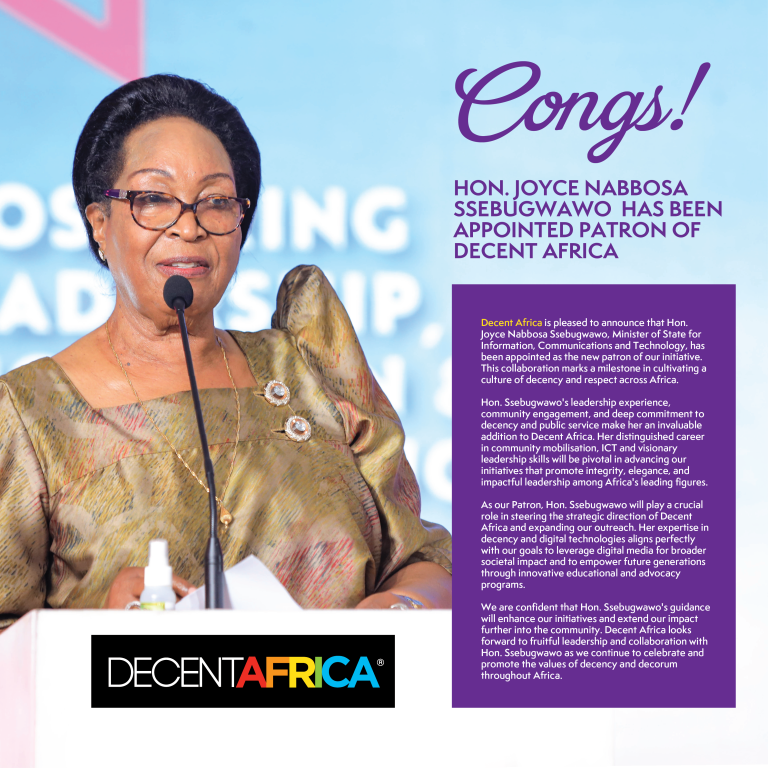
Hon. Joyce Nabbosa Ssebugwawo Named as Patron of Decent Africa

Decent Africa announces the appointment of Hon. Joyce Nabbosa Ssebugwawo, Minister of State for Information Communication Technology, as the new patron of the organization. This partnership signifies a significant step towards fostering a culture of decency and respect across the African continent.

Hon. Ssebugwawo brings a wealth of leadership experience, community engagement, and a steadfast commitment to decency and public service, making her an invaluable addition to Decent Africa. Her illustrious career in community mobilization, ICT, and visionary leadership will play a pivotal role in advancing initiatives that promote integrity, elegance, and impactful leadership among Africa’s prominent figures.

In her capacity as Patron, Hon. Ssebugwawo will play a crucial role in shaping the strategic direction of Decent Africa and expanding its outreach. Her expertise in decency and digital technologies perfectly aligns with the organization’s objectives to utilize digital media for broader societal impact and empower future generations through innovative educational and advocacy programs.

Decent Africa is confident that Hon. Ssebugwawo’s guidance will enhance its initiatives and extend its impact deeper into the community. The organization eagerly anticipates productive leadership and collaboration with Hon. Ssebugwawo as they continue to champion and uphold the values of decency and decorum across Africa.

Busoga Kingdom and PSFU agree on Business Development partnership following successful Women’s Day Katale in Jinja. 

0

Busoga Kingdom will work closely with the Private Sector Foundation Uganda (PSFU) and other like-minded stakeholders to deliver transformation and prosperity for its people and the country at large.

This follows the public endorsement of PSFU works in Busoga region by both the Kyabazinga and the Inhebantu.

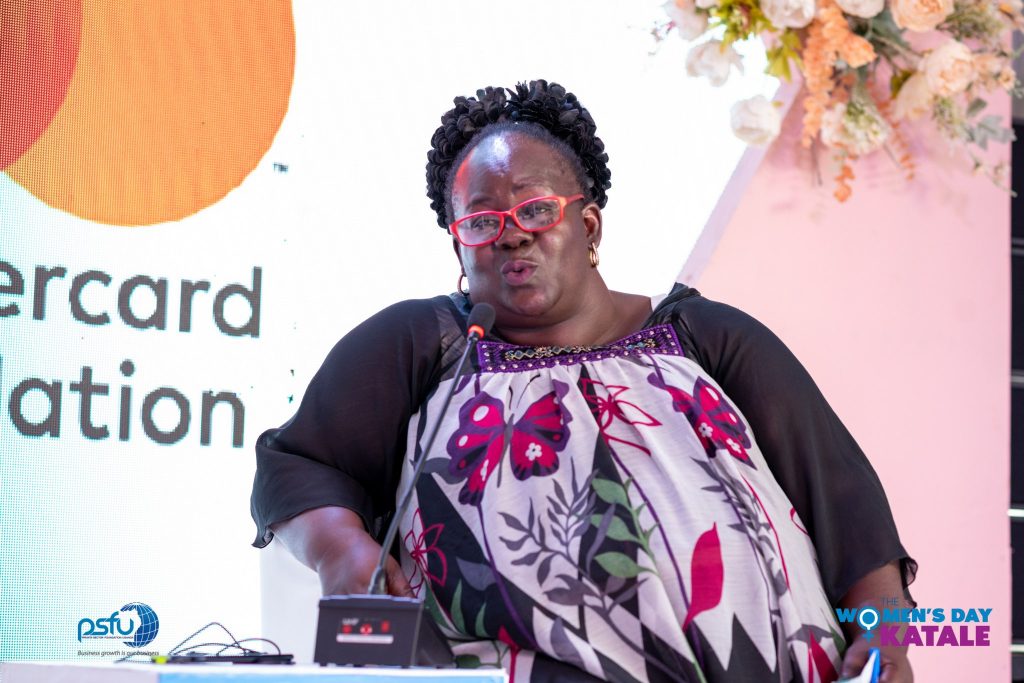
While delivering messages from both the King and the Queen at the 2024 PSFU Women’s Day Katale held at the Dam Waters Rugby Ground in Jinja City from 15th to 17th March, Owek Osman Ahmed Noor, the Busoga Kingdom Second Deputy Prime Minister (Katukiiro), expressed the kingdom’s commitment to fostering partnerships with PSFU for the betterment of its people.

In his remarks, Owek Osman Ahmed Noor said: “I am pleased to announce that His Majesty has endorsed the partnership between Busoga Kingdom and the Private Sector Foundation Uganda. He has encouraged us to proceed with engaging you to explore how we can advance discussions to benefit our people through the Inhebantu.”

He added: “To further these engagements, we are going to sign an MOU with PSFU so that we can directly mobilize our people and enlighten them on what is required to benefit from the available opportunities. We are trying to transform the Kingdom to be both cultural and private sector driven. I am here to pledge our support as an institution that we are going to work with PSFU. I now call upon the people of Busoga to be ready and well prepared to benefit from this partnership,” he said.

The three-days PSFU Women’s Day Katale brought together more than 200 Exhibitors; majority being women-founded and women-led businesses. Held under the theme “Bridging Economic Divides for Women’s Prosperity,” the Katale was supported by Young Africa Works (YAW) Lead Firm Structure program that is implemented in partnership with the Mastercard Foundation.

Ms Sarah Kagingo, the PSFU Vice Chairperson noted that minus the Women’s Day Katale, Busoga based businesses are set to benefit from other programs that the organization and partners are implementing such as Lead Firm Structure (LFS), Generating Growth Opportunities and Productivity for Women Enterprises (GROW), Investment for Industrial Transformation and Employment (INVITE) and Catalytic Fund.

She noted that the key highlights from the Jinja edition included the Business Clinics conducted by Trade Facilitation Agencies, Panel Sessions that sought to address challenges affecting Women and the Kreative Village; where leaders in the art, culture, music and fashion sector met and freely interacted with industry stakeholders drawn from all over Busoga region.

While closing the 2024 Katale, Hon Rebecca Kadaga, the First Deputy Prime Minister commended PSFU for the initiative.

“I want to thank Mastercard Foundation for the support they have given to the young people to develop their capacity. I am also really happy that the PSFU has decided to leave their comfort zone in Kampala and come to support entrepreneurs in Busoga region,” Kadaga said.

On her part, Nwanne Vwede-Obahor, the United Nations Development Programme’s (UNDP) Resident Representative for Uganda said that women entrepreneurs play a pivotal role in national development and thus must be prioritized.

“I extend my heartfelt gratitude to the PSFU for inviting me to witness firsthand, your dedication, energy, and commitment to the fight for equality and women’s economic advancement. Women world over, have increasingly made significant contributions to economic, political, and social transformation. Despite strides made in narrowing gender disparities, particularly in leadership and political engagement, substantial gaps persist in areas such as education, employment and economic participation.”

Permanent PSFU Office in Jinja.

Meanwhile, PSFU CEO, Mr Stephen Asiimwe noted that the Busoga region boasts some of the world’s finest tourist attractions which if well marketed can catalyze the region’s development. He announced that ‘to explore these and more opportunities, Jinja will soon host a permanent PSFU office’ to foster partnerships and mutual prosperity for the region.

“For anyone considering investment opportunities, Busoga stands out as the prime destination. PSFU eagerly extends its hand to collaborate with you, offering support for your growth endeavors. Our intention is to establish a liaison office managed in conjunction with our partner, the Uganda Manufacturers Association (UMA). This office will serve as a platform for representation across various sectors, including trade, manufacturing, ICT, financial services, professional services, tourism, and hospitality, as well as creative spaces,” he said.

Aligned with International Women’s Day celebrations, the Katale is an annual event that acknowledges the significant contributions and potential of women and girls as entrepreneurs. The third ‘Katale’ built on the success of the previous editions held in Luweero and Kampala in 2022 and 2023 respectively.

Art and Creatives take centre stage at the 2024 PSFU Women’s Day Katale

The Private Sector Foundation Uganda (PSFU) is currently hosting the third edition of the Women’s Day Katale, showcasing more than 200 exhibitors and their products.

Held at the Dam Waters Rugby Ground in Jinja City, the event commenced yesterday, Friday 15th and will conclude tomorrow, Sunday 17th of March.

During the Creatives business clinic, Daniel Kazibwe (popularly known as Raga Dee), a board member representing arts and creatives at PSFU, advised young artists to maintain professional boundaries with their managers to avoid conflicts.

“If you are going to support this girl, she should not be your girlfriend. Do not mix business with pleasure. As a girl who wants to make it in the sector, create a line between your business and your pleasure because, at the end of the day, the small mistake you make will cost your career,” he said.

Ahuurra Andrew, an audio engineer and Managing Director of Quad-A, noted the necessity for more training and awareness initiatives within the creative industry to protect girls and women.

“Our people need training and sensitization. We also need a code of conduct with music promoters and producers. The girls are being used and people are not accountable to anyone,” he said.

Other panelists included Sylvia Kyansuti – Musician, Jovia Lanisha – musician and Rachel Monique – Musician and Teacher.

Minus the Creatives Panel Discussion, Day two featured interactive business clinics and networking opportunities. Exhibited products include agricultural products, arts and crafts, clothing, hair and body care items, ICT banking products as well as lessons on hairdressing, shoe making, and marketing lessons.

Ucha David Karmu, managing director of Detra, specializing in energy solutions, noted the significance of such exhibitions in attracting new clientele.

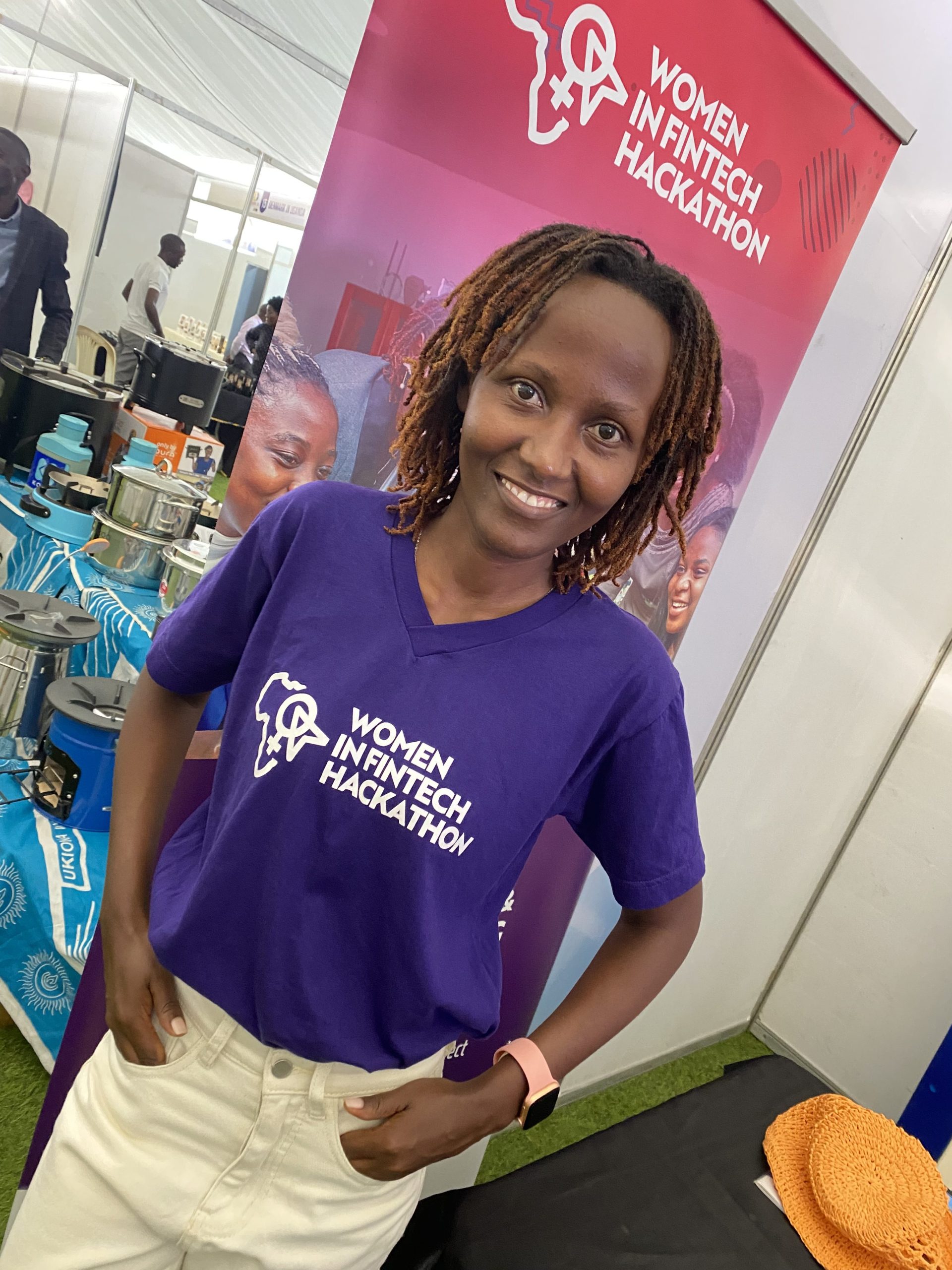
Furthermore, Charlotte Neeza, the HiPipo FinTech Events Manager observed that while Women and Young girls continue to get interested in Science, Technology, Economics and Mathematics, they are being impeded by the absence of essentials such as smartphones, laptops and data.

“It is visible that most women have feature phones. Many have come on the stall to find out what Women in FinTech is all about but minus finding out, they cannot do much as they lack things like devices and data. This is an area that we must pay more attention to as we push for inclusive financial solutions.”

Under the theme “Bridging Economic Divides for Women’s Prosperity,” this season of the Katale receives support from the Young Africa Works Lead Firm Structure program, funded by the Mastercard Foundation.

The Women’s Day Katale serves as a vital platform for women entrepreneurs, enabling them to showcase their offerings to a diverse audience, thereby expanding their market presence and visibility.