Home Blog Page 8

BroadPay is easing Collections, Payments and Payouts. #40Days40FinTechs Zambia and Malawi edition, Day 32

BroadPay; a Zambian FinTech is supporting last mile financial inclusion through digital financial services accessible anywhere, anytime. The company processes electronic payments for different service providers ranging from mobile network operators, utilities like electricity & water companies and Internet merchants through self-service kiosks.

BroadPay’s flagship product is Lenco; a payments gateway that accept and make payments in Zambia with mobile money, bank transfers and cards.

“We are a payment company that helps businesses accept payments from their customers through cards and mobile money payments. We incorporated in 2012 and started looking for investors. Our operations started in 2013 after we got our first seed investment. We onboard our clients through our APIs available on our web page. Clients fill in the onboarding forms available on our website and get started,” Bright Chinyundu, the Founder and CEO of BroadPay said.

He added: “We started with bill payments so we deployed self service kiosks in shopping malls where people could deposit cash and pay for bills like airtime, electricity and pay TV. In 2018, we started to scale and developed an APP so that people from anywhere across the country could access our services. But this meant that we needed a payment solution. At that time, there was only one payment gateway which was a card payment gateway owned by a bank. This inspired us to build our own APIs and payment platform.”

Chinyundu stressed that interoperability and collaboration is key to the success of FinTech in Zambia and across Africa.

“Unlike other markets, in Africa, we have to build the foundation ourselves. For example, when we started, we had to build a payment gateway. That is the foundation. So, someone else who comes and says they want to build a digital wallet, they will have to collaborate with us because we already got a payment gateway. They now don’t need to go and start building from scratch. That is how important collaboration is,” Chinyundu said.  

He noted that the other issues affecting the FinTech industry are low trust in digital innovations, preference for cash over digital money and limited funding for FinTech innovations.

“We keep going out to look for money. In an ecosystem like this, we don’t only need the founders and companies building the products. We also need HiPipo, COMESA Business Council and other partners because without you, we will not get the additional support. Thank you for the 40 Days 40 FinTechs initiative as it is really supporting the ecosystem. We need enablers like you,” he concluded.

BroadPay featured on Day 32 of the 40 Days 40 FinTechs initiative; Zambia and Malawi edition. The roll-out of the 40 Days 40 FinTechs initiative in Zambia and Malawi followed its success in East Africa. Over the past 5 years, the 40 Days 40 FinTechs initiative has featured over 200 FinTech stories from Uganda, Tanzania, Kenya, and Rwanda. This initiative has also engaged hundreds of end-users and shared their stories with millions worldwide.

The primary objective of this initiative is to support and showcase innovative FinTech giants and start-ups from across Africa, with a focus on promoting financial inclusion and economic growth, in addition to giving start-ups access to the resources they need to develop new and innovative financial solutions that can benefit underserved populations. Such resources include but are not limited to Level One Project guidelines, Mojaloop Open Source Software and Inclusive Finance systems, etc. 

Save and Remit is helping Saving Groups and Cooperatives digitize. #40Days40FinTechs Zambia and Malawi edition, Day 31

Africa has thousands of women savings and lending groups. Many of these are still informal, cash and paper based thus making them prone to administration mismanagement and funds misuse. It is such ills that Save and Remit services was founded to solve in Zambia.

According to Putty Kabango Muuka, the Founder and CEO of Save and Remit Services, this platform was born from the development of a digital application which caters for saving groups, village banking groups and cooperatives.

“The main focus of this application is to create a digital identity for these informal sector savings and lending groups and make them viable to microfinance institutions (MFIs) as well as give them a digital structure which also intensifies security in terms of payments because the application is linked to digital payments like mobile money and bank cards,” Putty Kabango Muuka said.

She added: “The Save and Remit application is currently present on the Google Play store. Our users are able to download it on the Google Play store. Once they download, they register their group and its details such as number of members, circle period and whether they would want to use the application for payments, savings plus administration which is all digitized. When they contact us, the registration is completed in less than 5 minutes. We then produce for them an 11 digits code to which the administrators of the group use to invite all their members. Once the members log on, they link themselves to the group using the 11 digits code and their administrators can confirm them on to the group.”

She noted that once onboarding is done, then the group and its members are able to transact digitally as per the services they signed up for.

“All transactions like savings are updated in real time. Every member can access their details and information from anywhere across the world. They are also able to download their statements which are generated in real time as members are transacting.

Kabango noted that while this platform was launched at the start of the COVID-19 pandemic, it picked up in 2022 when they were able to carry out pilot projects with organizations such as FSD Zambia.

“We currently have 50 saving groups that sit on our application with each group having a minimum of 20 members. We have at least 1000 members utilizing the APP.”

Kabango revealed that it is very difficult for FinTech start-ups to acquire certification and regulatory qualifications.

“For one to get a payment license, there a number of requirements needed. Also, the amount of money needed to acquire such a license is quite high for start-ups like ours. Also getting aggregation agreements with telecoms is hard as they also look at the volumes you have thus favoring already established FinTechs. Other challenges we are facing are high costs of new APP’ features development, and high cost for development of a USSD version to include those that don’t use smart phones.”

She applauded the 40 Days 40 FinTechs initiative for its gender intentional approach that supports women innovators and urged the initiative to further empower women through helping them address some of the challenges they face, working with regulators to improve certain regulations to enable more women to roll-out their ideas plus extending technical and financial aid if possible.

Save and Remit featured on Day 31 of the 40 Days 40 FinTechs initiative; Zambia and Malawi edition. The roll-out of the 40 Days 40 FinTechs initiative in Zambia and Malawi followed its success in East Africa. Over the past 5 years, the 40 Days 40 FinTechs initiative has featured over 200 FinTech stories from Uganda, Tanzania, Kenya, and Rwanda. This initiative has also engaged hundreds of end-users and shared their stories with millions worldwide.

The primary objective of this initiative is to support and showcase innovative FinTech giants and start-ups from across Africa, with a focus on promoting financial inclusion and economic growth, in addition to giving start-ups access to the resources they need to develop new and innovative financial solutions that can benefit underserved populations. Such resources include but are not limited to Level One Project guidelines, Mojaloop Open Source Software and Inclusive Finance systems, etc.  

Trade Flow Analytics is providing reliable Data to Informal Cross Border Traders. #40Days40FinTechs Zambia and Malawi edition, Day 30

Across Africa, informal cross border traders are irked by different bottlenecks. Among such challenges is lack of access to reliable, real-time trade and market information to support decision making.

It is this specific challenge that Trade Flow Analytics is addressing in Malawi. Trade Flow Analytics is a web solution that relies on data analysis to provide trade information including available markets and foreign exchange rates to cross-border traders.  

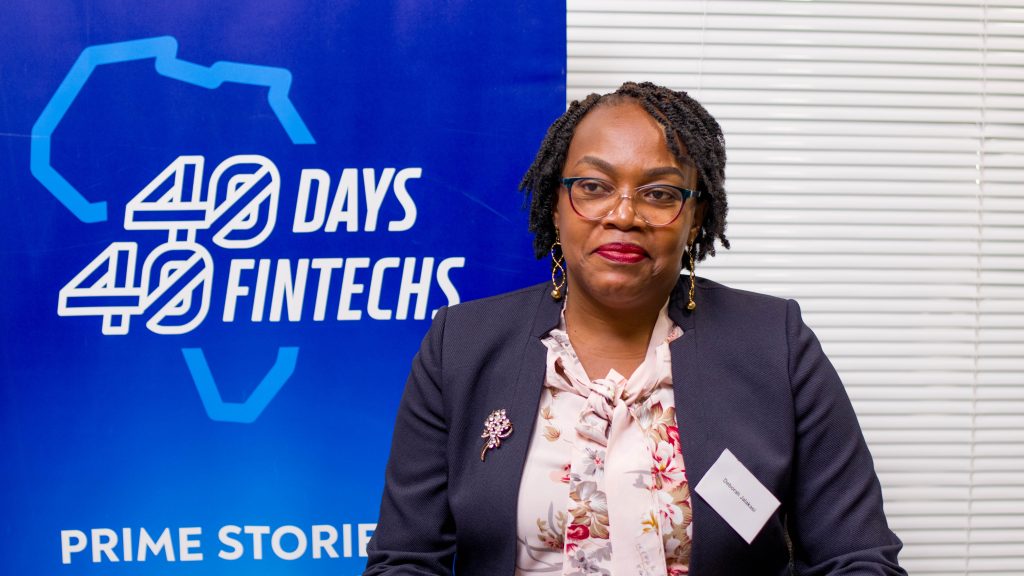
“We are a start-up Fintech that has been in the industry for less than a year. Basically, what we do is analyzing trade data to help cross border women. We make sure that these women have access to real-time data and able to have insights which are coming from a platform accessible any time so long as they have internet and a smart phone,” noted Deborah Jalakasi, the managing director of Trade Flow Analytics said.

She added: “Our platform is accessible on the Play Store with one having to download, install, subscribe at a small fee and then register. After registration, you can then login and access the dashboard. The dashboard has different modules such as market insights, forex, and trade regulations among others. We are delivering a data driven solution because when data is available, people are able to make good decisions.”

Jalakasi noted that this platform was inspired by her bad experience as an informal cross border trader operating between South Africa and Malawi.

“That time, I had no platform to refer to so when I got stock from South Africa, I came back to Malawi and tried to supply only to find that the prices had changed and I was at a loss. So, this idea came up for us to have an APP from which women can find the latest market information and avoid making loses.”

She noted that they first introduced the Trade Flow Analytics platform to women cross border traders at the Mchinji/Mwami border between Malawi and Zambia, with plans of rolling it out to other borders underway.

Jalakasi explained that as a start-up, their main challenges are getting updated trade data, digital & financial illiteracy, internet challenges, failure of many women traders to use smart phones and low user acceptance.

She urged the 40 Days 40 FinTechs initiative to support this platform through initiating collaborations with likeminded partners, capacity building and financial assistance.

“If the 40 Days 40 FinTechs initiative can come in with financial help, it will move us from one level to another. We shall produce posters and fliers that we shall use to sensitize and onboard more cross-border traders.”

Women in Fintech Hackathon winners.

Although developed in 2024, Trade Flow Analytics was upgraded in the inaugural COMESA Women in FinTech Hackathon for Zambia and Malawi, held in Lusaka in March, 2025. Thanks to the platform’s gender intentional approach and scalability potential, Trade Flow Analytics won this Hackathon with its winners flying home with USD 2,000 in prize money.

Trade Flow Analytics featured on Day 30 of the 40 Days 40 FinTechs initiative; Zambia and Malawi edition. The roll-out of the 40 Days 40 FinTechs initiative in Zambia and Malawi followed its success in East Africa. Over the past 5 years, the 40 Days 40 FinTechs initiative has featured over 200 FinTech stories from Uganda, Tanzania, Kenya, and Rwanda. This initiative has also engaged hundreds of end-users and shared their stories with millions worldwide.

The primary objective of this initiative is to support and showcase innovative FinTech giants and start-ups from across Africa, with a focus on promoting financial inclusion and economic growth, in addition to giving start-ups access to the resources they need to develop new and innovative financial solutions that can benefit underserved populations. Such resources include but are not limited to Level One Project guidelines, Mojaloop Open Source Software and Inclusive Finance systems, etc. 

PayChangu is enabling seamless Payments and Collections. #40Days40FinTechs Zambia and Malawi edition, Day 29

Malawi based FinTech, PayChangu is supporting financial inclusion through a digital payment platform that simplifies transactions for businesses and individuals.

The PayChangu platform enables merchants to accept payments through mobile money and card payments thus providing customers with flexible payment options.

“At PayChangu, we help businesses; small or big to collect payments locally and globally. We have got APIs which developers use to integrate. We also have the payment gateway which is our biggest product. While we started the development of PayChangu in 2021, we got our license from the Reserve Bank of Malawi in July, 2024. Since then to date, our platform has transacted over 7 billion Malawian Kwacha. We have got over 4000 active merchants on our platform. We are doing well in Malawi and looking forward to being allover Africa,” Joshua Mwendo, the Chief Operations Officer at PayChangu said.

He added: “Our newest innovation is the instant direct bank transfer. This one allows our customers to do big transactions instantly via PayChangu. This allows for industries like real estate, car dealerships, hardwares and other big industries to integrate PayChangu and transact. This service is picking big interest from the Betting Industry as gamers are able to deposit 10, 15 million at once. Similarly, the Betting company is able to disburse wins of up to 500 million Kwacha in one transaction instead of writing multiple cheques.”

He noted that Malawi is still ‘a fresh market and virgin land when it comes to Technology, especially FinTech’, thus urging the organizers of the 40 Days 40 FinTechs initiative to further support this ‘young yet nascent’ industry through capacity building, knowledge sharing and collaborations.

PayChangu featured on Day 29 of the 40 Days 40 FinTechs initiative; Zambia and Malawi edition. The roll-out of the 40 Days 40 FinTechs initiative in Zambia and Malawi followed its success in East Africa. Over the past 5 years, the 40 Days 40 FinTechs initiative has featured over 200 FinTech stories from Uganda, Tanzania, Kenya, and Rwanda. This initiative has also engaged hundreds of end-users and shared their stories with millions worldwide.

The primary objective of this initiative is to support and showcase innovative FinTech giants and start-ups from across Africa, with a focus on promoting financial inclusion and economic growth, in addition to giving start-ups access to the resources they need to develop new and innovative financial solutions that can benefit underserved populations. Such resources include but are not limited to Level One Project guidelines, Mojaloop Open Source Software and Inclusive Finance systems, etc.


Pay per Coin seeks to give Farmers value for money. #40Days40FinTechs Zambia and Malawi edition, Day 28

Ashers Foods, an Agriculture value addition start-up found some 200 kilometers outside Lilongwe, Malawi has a developed a digital payment platform that ensures that farmers get full value for their money.

Though in its infant stages, Pay per Coin seeks to ensure that farmers, offtakers and suppliers transact digitally; pay and receive the exact amounts without losing any coin.

“As part of our Agriculture value addition work, we found out that most offtakers and suppliers have challenges with handling payments and financial management. Many were complaining that whenever they are making payments, they lose money. For example, if one was paying 49 dollars and 20 cents, they would pay 50 dollars and won’t get the change/balance back. They end up losing money in these small figures, which becomes a lot at the end of the whole transaction. It is from this experience that we came up with Pay per Coin to encourage our suppliers and offtakers to use electronic payments which ensure that they pay the exact amount and don’t lose any coin,” Watupa Wyson Mtambo, the Founder and Operations Manager of Ashers Foods, the organization behind the Pay per Coin innovation said. 

Watupa noted that Pay per Coin allows its users to pay for their goods or services and also receive payment for the goods or services they supplied in local currency.

“Pay per Coin also allows other services such as purchase of talk time, payment of utilities bills, sending and receiving money. In a transaction, the platform allows you to pay the exact amount without losing any cents,” she said.

She noted that as a new platform, they are facing several challenges including poor connectivity, digital and financial illiteracy, limited funding and low public acceptability and trust of digital innovations.

She urged the organizers of the 40 Days 40 FinTechs initiative to roll-out more digital and financial literacy trainings focusing on farmers and cross border traders as knowledge acquired from these workshops will propel their businesses to greater heights in addition to building more trust for digital innovations.

“CBC and HiPipo should give us more trainings that are in line with digital payment platforms and how such platforms can operate not only in one country but several countries. For example, I am also a cross border trader operating in Malawi, Zambia, Tanzania and some times Mozambique. Such trainings on cross border digital payments platforms would help me and other cross border traders address issues such as forex exchange.” 

Pay per Coin featured on Day 28 of the 40 Days 40 FinTechs initiative; Zambia and Malawi edition. The roll-out of the 40 Days 40 FinTechs initiative in Zambia and Malawi followed its success in East Africa. Over the past 5 years, the 40 Days 40 FinTechs initiative has featured over 200 FinTech stories from Uganda, Tanzania, Kenya, and Rwanda. This initiative has also engaged hundreds of end-users and shared their stories with millions worldwide.

The primary objective of this initiative is to support and showcase innovative FinTech giants and start-ups from across Africa, with a focus on promoting financial inclusion and economic growth, in addition to giving start-ups access to the resources they need to develop new and innovative financial solutions that can benefit underserved populations. Such resources include but are not limited to Level One Project guidelines, Mojaloop Open Source Software and Inclusive Finance systems, etc.