
Home Blog Page 9

YendaRide seeks to digitize Bus Ticketing and Fare Payments. #40Days40FinTechs Zambia and Malawi edition, Day 27

Those that have used local buses, and taxis will tell you that most payments are done in cash; with passengers usually paying for a full trip fare regardless of your drop off point.

It is such rigidities that YendaRide seeks to address in Zambia, through a digital platform that allows passengers to pay fares that are in sync with distance travelled.

“Our platform is a post-paid e-ticketing payment system that makes it easy for passengers to pay bus fares seamless. The genesis of this platform is that I identified a problem in the way passengers traditionally pay for bus fares on local routes. In a typical bus situation, a passenger pays with cash, expects change and even when the authorities come up with a standard bus fare, the operators don’t follow it. At the end, passengers are overcharged, and some time lose their balance. This affects bus owners too,” Colins Mulenga Nonde, Founder and CEO YendaRide said, adding:

“It is this mess that we seek to address. This is an electronic platform that calculates and allows you to pay the exact fare for your trip. The idea is that you should pay for the distance covered, not round payment or full fare even when you dropping off half way the trip. Our platform has come to ensure that customers don’t make such losses.”

Mulenga noted that YendaRide is an APP based platform, currently downloadable on the Google Play store.
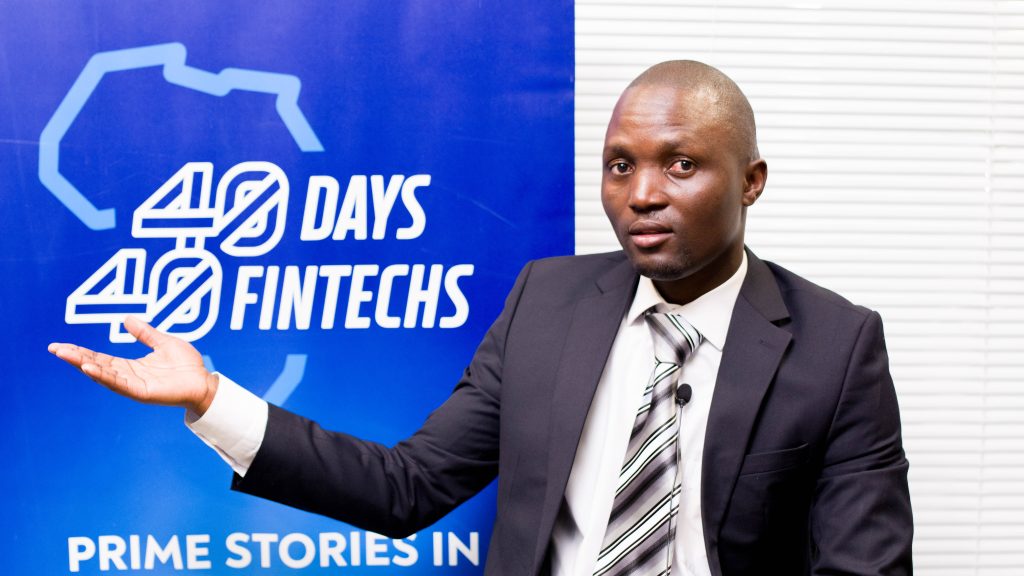
“Once you download it on Google Play, you register and link the platform to your mobile money or bank account to enable you deposit and recharge the account. After this set up, you are able to start initiating trips and the platform will give you a QR code which is scanned by a conductor using a point of sale machine after which you are allowed to board. Bus owners are registered with us and issued with point of sale machines that they use to scan the tickets. Through the point of sale machines, the bus operators are able to see and monitor all transactions.”

He nonetheless noted that while this platform is exciting, the town council authorities are skeptical and less knowledgeable about such innovations thus ‘resistance to adopt’.

Mulenga applauded the 40 Days 40 FinTechs initiative for ‘encouraging Zambian FinTechs to take a lead in ensuring that more people are included in the digital payments ecosystem plus ensuring that payment systems are at the center stage of driving innovations.’

YendaRide featured on Day 27 of the 40 Days 40 FinTechs initiative; Zambia and Malawi edition. The roll-out of the 40 Days 40 FinTechs initiative in Zambia and Malawi followed its success in East Africa. Over the past 5 years, the 40 Days 40 FinTechs initiative has featured over 200 FinTech stories from Uganda, Tanzania, Kenya, and Rwanda. This initiative has also engaged hundreds of end-users and shared their stories with millions worldwide. The primary objective of this initiative is to support and showcase innovative FinTech giants and start-ups from across Africa, with a focus on promoting financial inclusion and economic growth, in addition to giving start-ups access to the resources they need to develop new and innovative financial solutions that can benefit underserved populations. Such resources include but are not limited to Level One Project guidelines, Mojaloop Open Source Software and Inclusive Finance systems, etc.
Robust365 is helping MSMEs manage finances and payments. #40Days40FinTechs Zambia and Malawi edition, Day 26

Robust365 is contributing to Zambia’s Digital and Financial Inclusion through empowering micro, small and medium sized enterprises (MSMEs) to take control of their finances, make data driven decisions and achieve their business growth.

The tool allows small businesses to manage their finances, track quotations, invoices, income and expenses among other things. Its latest addition is a payment functionality.

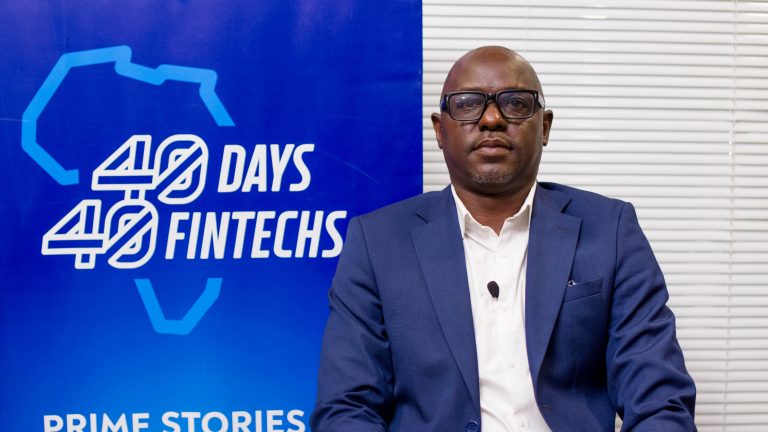
“The financial technology solution we have created helps small businesses to manage their finances. Our system not only helps businesses manage finances but also allows payments. When our users send invoices, they directly receive payments on to their wallets,” Fredrick Alban, co-founder and CTO of Robust365.

Alban noted that while they started the development of their software in 2019, it at some point crushed and had to be redeveloped to meet the needs of the market.

“There are over 500 businesses using our platform. The main challenge we are facing is the fact that most small businesses have no records of their finances and are hesitant to migrate to digital. These, we are reaching out to and educating them to understand why they should digitize their business.”

He further revealed that low funding, limited technical skills and expertise are key barriers to Zambia and broadly Africa’s digitization and financial inclusion.

“Our market lacks technical knowledge. You find for example, we are failing to integrate the Mojaloop API on to our systems. It is not just about finances but more about the technical competence. We need to have the right technology and developers to build our FinTechs and boost our systems.”

Alban applauded the 40 Days 40 FinTechs initiative noting that “if it continues to operate over years, many start-ups which are still lagging behind will get a lot of achievements.”

Robust365 was featured on Day 26 of the 40 Days 40 FinTechs initiative; Zambia and Malawi edition. The roll-out of the 40 Days 40 FinTechs initiative in Zambia and Malawi followed its success in East Africa. Over the past 5 years, the 40 Days 40 FinTechs initiative has featured over 200 FinTech stories from Uganda, Tanzania, Kenya, and Rwanda. This initiative has also engaged hundreds of end-users and shared their stories with millions worldwide.

The primary objective of this initiative is to support and showcase innovative FinTech giants and start-ups from across Africa, with a focus on promoting financial inclusion and economic growth, in addition to giving start-ups access to the resources they need to develop new and innovative financial solutions that can benefit underserved populations. Such resources include but are not limited to Level One Project guidelines, Mojaloop Open Source Software and Inclusive Finance systems, etc.
ValueFin is easing access to Finance and Markets. #40Days40FinTechs Zambia and Malawi edition, Day 25

ValueFin is supporting micro, small and medium sized businesses in Zambia to scale and reach higher heights through connecting them to ready markets, and providing patient credit.

This according to Mukuka Bwalya, a Co-Founder and Managing Partner of ValueFin Limited is part of their commitment to promote entrepreneurship and provide solutions to the social and economic challenges faced by communities at the bottom of the pyramid.

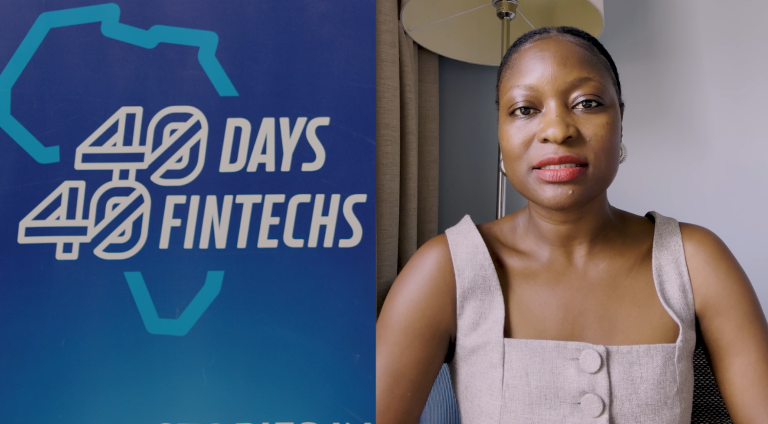
“At ValueFin, we work with low income entrepreneurs and provide three specific services. These are access to finance, market linkages and business formalization services,” Mukuka Bwalya, a Co-Founder and Managing Partner of ValueFin Limited said.

She added: “From a financial inclusion perspective, we use a web-based loan management system that allows us to gather specific customer data points especially in the informal sector where there is no real record system. The system we have in place allows to leverage AI analytics to make credit decisions about what our customers need but also mitigate risk by following the patterns and behaviors of our customers.”

Mukuka noted that the ValueFin loan management system in flexible and accessible on an entry level smart phone thus making it easy for field agents to capture data required in ‘our day to day credit decision making’.

“We strongly believe that there should be a balance between touch and tech and thus ensure that in every market we work in, we have a physical presence so that from a trust perspective our customers can reach us to assist them whenever there is any challenge.”

She noted that ValueFin onboards 80 per cent women, serves about 500 women every month in 13 market locations and disburses average loans sizes of about 1500 Kwacha per person.

Even with this encouraging growth, Mukuka noted that low digital literacy, and low smart devices penetration are delaying last mile financial inclusion.

“We are looking for opportunities for collaboration because we believe that with collaboration, you can achieve anything. We are also improving our system to create more impact. Beyond that, we have also noticed that our customers have a lot challenges around micro insurance when tragedy befalls them. We are looking for ways of partnering with strategic partners and providing a holistic service that captures services like micro insurance to our customers.”

ValueFin was featured on Day 25 of the 40 Days 40 FinTechs initiative; Zambia and Malawi edition. The roll-out of the 40 Days 40 FinTechs initiative in Zambia and Malawi followed its success in East Africa. Over the past 5 years, the 40 Days 40 FinTechs initiative has featured over 200 FinTech stories from Uganda, Tanzania, Kenya, and Rwanda. This initiative has also engaged hundreds of end-users and shared their stories with millions worldwide.

The primary objective of this initiative is to support and showcase innovative FinTech giants and start-ups from across Africa, with a focus on promoting financial inclusion and economic growth, in addition to giving start-ups access to the resources they need to develop new and innovative financial solutions that can benefit underserved populations. Such resources include but are not limited to Level One Project guidelines, Mojaloop Open Source Software and Inclusive Finance systems, etc. 

Owek Hon. Sebugwawo launches Solar M7, promises to donate 1,000 for free

The State Minister for ICT, Owek. Hon. Joyce Nabosa Sebugwawo, has today launched a Ugandan Home Solar Kit dubbed Solar M7 with a promise to light up Uganda and Africa in the next five years.

Speaking to journalists in Kampala, Owek. Sebugwawo noted that for too long, many people in remote areas have lived in darkness because they cannot afford grid electricity.

Hon. Sebugwawo says that during her efforts to provide computers to rural schools, she discovered that many of the communities these school-going children came from lacked even basic access to electricity.

“Even in places where power lines pass overhead, many homes remain dark every night. This is not just a power problem, it is a poverty problem, a development problem, and a barrier to participating in the digital economy of our time,” she noted.

It was for this reason that she joined hands with Mr Innocent Kawooya and Henry Lutwama, to develop a cheap solar product that can serve these last-mile households.

“This is not just a gadget. It is the start of a movement. A movement that will light homes, charge phones, enable schoolwork, and empower businesses even in the most remote locations,” she said.

According to Mr Lutwama, a co-founder, Solar M7 comes with Seven Powerful Characteristics including mobility, affordability, plug-and-play convenience, 24/7 Availability, portability, Ease of Use and Reliability.

“It is designed for even the lowest-income households. You don’t need a technician to use it and is built to last with dependable, high-quality components,” he said.

He noted that the Solar M7 kit comes with a battery, 5 bulbs, a solar panel, a phone charger and a radio.

Hon Sebugwawo promised that over the next five years, Solar M7 will roll out and give away up to five million (5,000,000) solar kits at the lowest prices ever, changing lives across Uganda and the entire COMESA region, which is home to over 640 million people.

“But today, as we launch this campaign, I am pleased to share that we are starting with 1,000 solar kits, which I will personally hand over to women leaders in remote villages for free. These women leaders, teachers, midwives, elders, and birth attendants are the light of their communities, and they deserve to live and serve with light in their homes.”

Meanwhile, Mr Innocent Kawooya, the CEO of HiPipo and a National Independence Medallist, said that this campaign is a contribution to the Uganda National Electrification Plan, and a direct response to His Excellency the President’s Agenda of ensuring every Ugandan has access to power and can fully participate in the digital economy.

“Many families in rural areas can’t afford paraffin of Shs 1,000 a day, or Shs 360,000 a year, to light their homes. Solar M7 is the solution. At less than 50 dollars, families should be able to get a permanent solution to domestic electricity.”

He further noted that they are working with partners such as the COMESA Business Council, with a plan to scale this effort across borders.

The minister urged development partners, donors, and governments to join the cause and ensure that ‘no home is left in the dark, no child fails to study because of lack of light, and no woman gives birth in total darkness’.

About Solar M7

Solar M7 is a product that delivers Africa’s most accessible and transformative solar home kit for last-mile communities. Solar M7 is the latest innovation in Africa’s journey toward inclusive energy and financial empowerment, designed to provide clean, reliable, and affordable energy to off-grid households.

Third Floor Pigu, Selected for 8 Prestigious International Film Festivals in a Single Day

We are excited to announce that our upcoming 2025 film, Third Floor Pigu, has been selected for eight prestigious international film festivals and awards in just one day. These include the Fortean Film Festival, MegaFlix Movie Awards, Global INDIE Filmmaker Awards, and the International Celebration of Cinema.

This electrifying recognition comes shortly after a closed-door premiere with industry leaders. The film stars and is produced by one of Africa’s most transformative figures, National Independence Medallist Innocent Kawooya, NIM.

In the past two decades, Innocent has been at the forefront of advancing digital and financial inclusion tools to empower millions of youths worldwide. Through his leadership, he has driven initiatives providing young people access to digital financial services, fostering financial literacy, and bridging the gap between underserved communities and essential digital tools. His work has created new pathways for financial independence, allowing individuals to navigate and thrive in an increasingly digital world.

Innocent’s groundbreaking work is changing how millions of young people engage with technology and finance, providing them with the tools they need to transform their lives. Public premieres for Third Floor Pigu are set to take place in the coming months, marking another milestone in Innocent’s mission to create a lasting impact through digital empowerment.