Countries along the Northern Corridor are intensifying efforts to modernize customs systems and strengthen digital trade infrastructure in a bid to eliminate persistent non-tariff barriers slowing regional trade and cargo movement across East Africa.
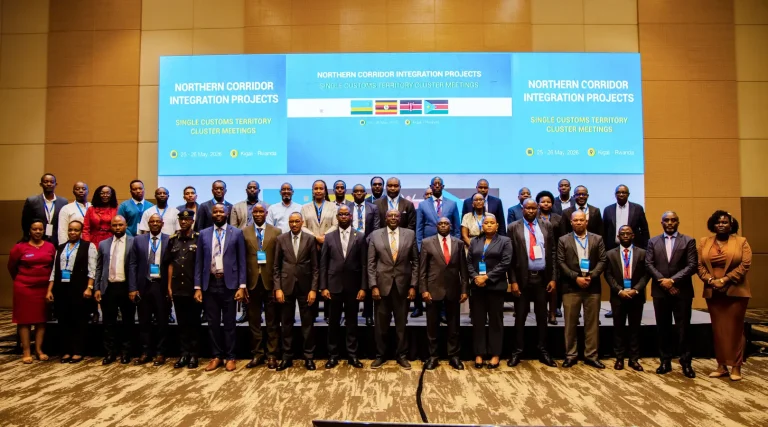
The discussions are taking place during the Northern Corridor Integration Projects (NCIP) Single Customs Territory (SCT) Cluster meetings currently being held in Kigali, Rwanda, bringing together officials from Rwanda, Uganda, Kenya, and South Sudan.
The two-day meeting, hosted by the Rwanda Revenue Authority (RRA), is focused on improving cross-border trade efficiency through greater digitization, enhanced customs coordination, and stronger information sharing among partner states.
Officials say despite progress made under the Single Customs Territory framework, businesses and transporters along the Northern Corridor continue to face delays caused by repeated cargo inspections, customs inefficiencies, infrastructure bottlenecks, and non-tariff barriers.
Speaking during the meeting, Rwanda’s Commissioner for Customs Services and SCT National Coordinator, Sam Kabera, acknowledged that while partner states have improved cargo clearance and coordinated border management, several operational challenges continue to affect seamless trade movement across the region.
Among the key reforms under discussion are expanded scanner image sharing between countries, customs data exchange systems, automation of customs procedures, improved cargo monitoring technologies, and stronger regional risk management systems.
Kenya’s SCT National Coordinator Jeremiah Kosgei said multiple cargo inspections along the trade corridor remain one of the leading causes of delays and increased transport costs.

According to Kosgei, sharing scanner images captured at the Port of Mombasa with other partner states would significantly reduce unnecessary re-scanning of goods and speed up cargo clearance processes across borders.
Regional officials also emphasized that improved integration of customs systems and digital cargo tracking technologies has already helped reduce cargo transit times between the Kenyan coast and inland destinations within the region.
Uganda’s Head of Regional Economic Cooperation at the Ministry of Foreign Affairs, Richard Kabonero, noted that delayed harmonization of customs systems and procedures remains one of the major obstacles affecting full implementation of the Single Customs Territory agenda.
Kabonero called for increased digitization and integrated regional systems capable of improving customs administration, cargo tracking, and information exchange between member states.
Rwanda Revenue Authority Commissioner General Ronald Niwenshuti described digital systems as central to improving trade efficiency and strengthening trust among regional trading partners.
According to Niwenshuti, digital innovations are expected to improve service delivery, simplify customs administration, and support sustainable revenue mobilization across the region.
The Northern Corridor remains one of East Africa’s most important trade routes, connecting the Port of Mombasa in Kenya to landlocked countries including Uganda, Rwanda, Burundi, South Sudan, and parts of the Democratic Republic of Congo.
The corridor plays a critical role in facilitating regional trade, transport, and economic integration through harmonized transit systems, customs cooperation, and infrastructure development.
Regional leaders and trade experts have increasingly identified non-tariff barriers as one of the biggest obstacles limiting intra-African trade despite broader continental integration efforts under the African Continental Free Trade Area (AfCFTA).
Analysts say successful implementation of digital customs reforms could significantly lower transport costs, reduce border delays, improve trade competitiveness, and strengthen economic integration within East Africa.