Home Blog

Elon Musk, HiPipo CEO, and the Trillion-Dollar Advice: Build the Future to Include Everyone

Elon Musk has entered a place no human being had officially entered before: the trillion-dollar frontier.

From a reported net worth of about USD 2 billion in 2012 to becoming the world’s first trillionaire in 2026, Musk’s journey is more than a wealth story. It is a story of vision, risk, technology, timing, obsession, and a refusal to accept that the future must arrive slowly.

For HiPipo Money, this moment matters deeply. Not because one man has become richer than nations, but because one man has shown that an idea can grow from impossible to inevitable within a single generation.

Tesla challenged how the world moves. SpaceX challenged how humanity reaches space. Starlink challenged how remote communities connect. Neuralink challenged the limits of human-machine possibility. xAI challenged how intelligence itself may be built, distributed, and governed.

But now that Elon Musk has reached the trillion-dollar mountain, the next question is bigger than money.

What should a trillionaire do next?

For Innocent Kawooya, NIM, CEO of HiPipo, the answer is clear: the next frontier is not only Mars. It is the mother in a border market who still cannot receive safe digital payments. It is the young woman innovator who has the talent but not the capital. It is the rural trader who has a phone but no meaningful access. It is the family that cannot study, work, or trade after sunset because energy poverty still rules their night.

Musk has built machines that reach the stars. HiPipo has spent more than two decades building systems that reach the last mile.

That is where the advice begins.

Dear Elon Musk, the world no longer doubts your ability to build the future. But the future will not be complete until it includes everyone.

HiPipo’s Include Everyone program has worked across Africa to bring women, youth, small businesses, border traders, FinTechs, policymakers, and financial institutions into the same conversation: how do we make digital transformation useful for the people most often left behind?

Through financial inclusion advocacy, women-in-FinTech programs, digital and financial literacy, interoperability advocacy, regional partnerships, and last-mile innovation, HiPipo has learned one powerful truth: technology alone does not change lives. Technology changes lives when trust, affordability, literacy, access, and dignity move with it.

That is the lesson Africa can offer Musk.

The world celebrates rockets, electric cars, artificial intelligence, and satellites. But the greatest technology revolution of this century may be the one that allows a woman selling tomatoes at a border post to receive money safely, save consistently, access credit, pay school fees, insure her family, and grow from survival into prosperity.

That is not small innovation. That is civilization-building.

Musk has advised presidents, governments, investors, engineers, and dreamers. But now, from Africa, HiPipo offers him advice in return: build the next chapter of your legacy around inclusive infrastructure.

Let Starlink not only connect the world, but deliberately connect the excluded. Let Tesla Energy and solar innovation not only serve premium markets, but power last-mile households, clinics, schools, and micro-enterprises. Let xAI not only compete in intelligence, but help translate knowledge into local languages for farmers, traders, patients, students, and entrepreneurs. Let SpaceX not only take humanity to Mars, but help humanity on Earth reach fairness faster.

Africa does not need pity. Africa needs partnership.

And HiPipo is one of the institutions ready for that partnership.

For years, HiPipo has carried a message that now feels even more urgent: the future must not be designed only by those already inside the system. It must be co-created with those historically locked outside it.

That is why Include Everyone matters. That is why women in FinTech matter. That is why interoperability matters. That is why digital literacy matters. That is why financial inclusion is not charity; it is economic infrastructure.

Elon Musk’s rise from USD 2 billion to over USD 1 trillion proves that exponential growth is real. For African innovators, this is deeply inspiring. It tells us that what looks impossible today can become history tomorrow.

But Africa’s dream is not simply to create one trillionaire. Africa’s dream is to create millions of dignified livelihoods, thousands of scalable enterprises, hundreds of investable platforms, and a generation that no longer sees poverty as destiny.

That is why this moment belongs to Musk, but its meaning belongs to the world.

The trillion-dollar question is no longer: how rich can one man become?

The trillion-dollar question is: how many people can one man help include?

HiPipo’s advice to Elon Musk is therefore simple, emotional, and urgent:

Do not only build the future upward. Build it outward.

Build it to the villages. Build it to the women. Build it to the informal traders. Build it to the schools. Build it to the health centers. Build it to the unbanked. Build it to the young African founder with a world-changing idea but no investor in the room.

Because the next great technology revolution will not be judged only by valuation. It will be judged by inclusion.

And if Musk wants his trillion-dollar legacy to become a humanitarian legacy, Africa is the place to prove it.

HiPipo stands ready.
Japan’s Down Syndrome Breakthrough: Why This Matters For The Future Of Healthcare, Genetics, And Human Potential

For generations, Down syndrome has been one of the most widely recognised genetic conditions in the world. Caused by an extra copy of chromosome 21, the condition affects millions of individuals and families worldwide. While advances in healthcare, education, and social support have dramatically improved the quality of life for people living with Down syndrome, the underlying genetic cause has remained beyond the reach of modern medicine.

That reality may now be beginning to change.

Japanese researchers have achieved a remarkable scientific milestone by successfully removing the extra chromosome associated with Down syndrome from human cells in a laboratory setting. Using advanced CRISPR-Cas9 gene-editing technology, scientists were able to selectively target and eliminate the additional copy of chromosome 21, restoring many cellular functions to normal levels. While the research remains at an early experimental stage and is far from becoming a clinical treatment, it represents one of the most significant advances ever made in the field of chromosomal genetics.

The announcement quickly attracted global attention because it challenges a long-held assumption in medicine: that chromosomal conditions could only be managed rather than corrected. For decades, healthcare professionals have focused on helping individuals with Down syndrome live healthy, productive, and fulfilling lives through therapy, education, family support, and medical interventions. The Japanese breakthrough suggests that future generations of medicine may one day address certain chromosomal conditions at their biological source.

The significance of this research extends far beyond Down syndrome itself. It signals the arrival of a new era in which medicine may increasingly focus on correcting genetic causes rather than simply treating symptoms. For centuries, healthcare has largely revolved around responding to disease after it appears. The future envisioned by researchers is one in which conditions can be identified earlier, understood more deeply, and potentially addressed at the molecular level before they become lifelong challenges.

This transformation is particularly important because it demonstrates how rapidly science is advancing. Technologies such as gene editing, artificial intelligence, genomic sequencing, and precision medicine are converging to create possibilities that would have sounded like science fiction only a decade ago. The ability to target an entire extra chromosome was once considered impossible. Today, it has become a reality inside a research laboratory.

For Africa, the implications are especially profound. While many of the world’s most advanced genetic discoveries emerge from research institutions in countries such as Japan, the United States, Germany, and the United Kingdom, the benefits of those discoveries must eventually reach families everywhere. Across Africa, millions of people live with genetic conditions, developmental disorders, and chronic illnesses that are often diagnosed late or not diagnosed at all. Limited access to specialists, long travel distances, healthcare workforce shortages, and gaps in awareness continue to create barriers for patients and families seeking care.

This is where the conversation moves beyond scientific discovery and toward health inclusion. A breakthrough in a laboratory does not automatically improve lives. A discovery only becomes meaningful when it reaches the people who need it. The greatest challenge of the next generation of healthcare may not be inventing new treatments; it may be ensuring equitable access to them.

Digital health solutions are becoming increasingly important in addressing this challenge. As healthcare systems around the world embrace telemedicine, digital records, artificial intelligence, and remote consultations, access barriers that once seemed insurmountable are beginning to disappear. A parent living hundreds of kilometres away from a specialist can increasingly receive guidance, consultations, referrals, and support through digital channels. The smartphone is rapidly becoming one of the most important healthcare tools in human history.

This is why platforms such as My Doctor are strategically important for Africa’s future. As scientific advances accelerate, digital health ecosystems will play a critical role in ensuring that innovation reaches ordinary people rather than remaining confined to hospitals, universities, and research laboratories. Through telemedicine, remote healthcare access, digital consultations, and AI-enabled healthcare support, platforms like My Doctor are helping build the infrastructure necessary to connect patients with healthcare professionals regardless of geography.

The parallel with Africa’s financial inclusion journey is impossible to ignore. Twenty years ago, millions of Africans were excluded from formal financial systems. Today, digital payments, mobile money, interoperability, and financial technology have connected hundreds of millions of people to once inaccessible services. The same transformation is beginning to unfold in healthcare. Just as digital finance democratized access to money, digital health has the potential to democratize access to quality healthcare.

However, the future also raises important ethical questions. If gene-editing technologies eventually become safe, effective, and widely available, who will have access to them? How will governments regulate their use? Will they be affordable for ordinary families? How do societies balance innovation with human dignity, inclusion, and ethical responsibility? These questions are likely to shape healthcare policy discussions for decades to come.

Researchers themselves caution that the Japanese breakthrough should not be misunderstood. Down syndrome has not been cured. No approved treatment currently exists based on this research. Significant scientific, clinical, regulatory, and ethical hurdles remain before such technology could ever be used in humans. Nevertheless, the achievement represents an extraordinary proof of concept and a glimpse into what future medicine may look like.

Ultimately, the biggest story is not simply about Down syndrome. It is about humanity’s growing ability to understand and influence the biological foundations of health and disease. It is about the convergence of genetics, artificial intelligence, digital health, and precision medicine. Most importantly, it is about ensuring that the benefits of these advances reach every community, every family, and every individual, regardless of where they live.

The future of healthcare will belong not only to those who make scientific discoveries, but also to those who build the systems that deliver those discoveries to the last mile. In Africa, digital health platforms such as My Doctor represent an important part of that future, helping bridge the gap between innovation and impact, between breakthrough and access, and ultimately between possibility and reality.

Bebe Cool Returns with ‘No Risk EP’ One Year After Break The Chains Triumph

Just when many thought he had said everything he needed to say with the critically acclaimed Break The Chains album, Bebe Cool is back.

The Gagamel Entertainment boss officially released No Risk EP on Friday, a seven-track collection arriving exactly one year and two weeks after Break The Chains reintroduced him to a new generation of listeners and reaffirmed his place among Africa’s most adaptable music stars.

Available on all major streaming platforms, the EP sees the veteran singer continue the sonic evolution that has defined the latter stage of his career, fusing Afrobeat, Dancehall, Reggaeton, and R&B with unmistakable Ugandan influences.

For an artist who has spent more than two decades at the summit of Uganda’s music industry, No Risk is less about proving a point and more about demonstrating why he has remained relevant while many of his contemporaries have struggled to keep pace with changing musical trends.

“No Risk EP is a journey through life, love, and focus with zero regrets,” Bebe Cool said in a statement accompanying the release.

The project opens with Kakebere, a hard-hitting Dancehall anthem built around the message of verification and caution in an era where misinformation, scams, and misplaced trust have become common realities.

From there, Bebe Cool shifts gears with Bundle, a celebration of financial independence and personal freedom that encourages listeners to chase success on their own terms while ignoring unsolicited advice from critics.

The energy intensifies on Shekete, a Reggaeton-infused dancefloor anthem that embraces confidence, movement, and self-expression, before transitioning into Kiss and Make Up, a song that explores the realities of modern relationships and the importance of forgiveness.

On Melodies, the singer leans into nostalgia, connecting childhood memories with mature romance over a groove-rich Ugandan soundscape.

The sixth track, Target, reflects a more focused and determined Bebe Cool, delivering a message about discipline, ambition, and staying locked in on personal goals despite distractions.

The EP concludes with Joromai, an Afrobeat-inspired love song that celebrates admiration and affection, offering a softer ending to an otherwise energetic project.

The release comes at a time when Break The Chains is still widely regarded as one of the most ambitious projects ever produced by a Ugandan artist.

Launched in May 2025 at Kampala’s Noni Vie Lounge before a star-studded audience of musicians, media personalities, and entertainment stakeholders, the 16-track album was praised for embracing Afrotech, African House, and Afrobeats while maintaining Bebe Cool’s signature vocal identity.

The album featured collaborations with rising Ugandan sensation Joshua Baraka and Nigerian superstar Yemi Alade, symbolising Bebe Cool’s desire to bridge generations and expand Uganda’s musical footprint beyond its borders.

At the time, he described the album as the beginning of a new chapter for both Ugandan and African music.

“This is the beginning of a new journey for both African music and Ugandan music at large,” he said during the launch.

The project also highlighted his growing focus on digital consumption and streaming platforms, an area where many veteran African artists have struggled to adapt.

While fellow members of Uganda’s celebrated “Big Three” have largely shifted focus in recent years with Jose Chameleone releasing music less frequently and Bobi Wine concentrating on politics Bebe Cool has remained firmly committed to recording, experimenting, and competing in the modern music economy.

That consistency has increasingly become part of his legacy.

From Ragga and Dancehall to Afro-pop, Afrotech, and now genre-fusing contemporary Afrobeat sounds, Bebe Cool has repeatedly reinvented himself without losing the core identity that first made him a household name.

The arrival of No Risk EP suggests that the reinvention is far from over. Rather than slowing down after the success of Break The Chains, the self-styled “King of the Uganda Music Industry” appears determined to keep building momentum, offering fans new music while positioning himself at the centre of conversations about the future of Ugandan sound.

For an artist whose career spans more than twenty years, No Risk feels less like a side project and more like another chapter in a story that continues to evolve.

Whether the EP will achieve the same critical and commercial success as its predecessor remains to be seen. But one thing is clear: Bebe Cool is not stepping aside for the next generation just yet. He is making them share the stage.

Four Charged with Murder of Sydney Gongodyo as Police Hunt for More Suspects

0

Four men have been charged with murder in connection with the killing of Sydney Gyabi Gongodyo, as police intensify efforts to track down additional suspects believed to have participated in the fatal attack.

The accused are Obed Mugwisa, 39, a boda boda rider from Nsimbiziwome Zone in Nakawa Division; Elly Mundoni, 33, a delivery agent attached to Medicinal Pharmacy and resident of Luzira Port Bell Road; Joseph Owino, 30, a private security guard from Bukoto; and Henry Kabugo, 21, a boda boda rider from Bukoto Old Kira Zone.

According to a charge sheet sanctioned at Kira Road Police Station under CRB 619/2026, the quartet has been charged with murder contrary to Sections 171 and 172 of the Penal Code Act, Cap 128.

Prosecution alleges that on 5th June 2026, at Upper Naguru East Road in Kampala District, the accused, acting together with others still at large and with malice aforethought, unlawfully caused the death of Gongodyo.

“The accused persons, together with others still at large, are alleged to have unlawfully caused the death of Sydney Gyabi Gongodyo on June 5, 2026, at Upper Naguru East Road,” a source familiar with the investigations said.

The charges mark a significant development in a case that has attracted widespread public attention and renewed concerns over mob violence and vigilante justice.

Police said inquiries into the circumstances surrounding the killing are ongoing and that investigators are pursuing other individuals suspected to have played a role in the incident.

“We remain committed to ensuring that all individuals connected to this crime are identified, arrested, and brought before the courts of law,” the source added.

Under Ugandan law, murder is a capital offence and carries severe penalties upon conviction. The accused are expected to appear before court as prosecutors prepare to present evidence supporting the murder charges.

The killing has triggered public debate about the growing incidence of mob violence and the dangers of citizens taking the law into their own hands.

Security agencies have repeatedly cautioned the public against assaulting suspected offenders, stressing that suspects should be handed over to law enforcement authorities for investigation and prosecution through the courts.

The circumstances surrounding Gongodyo’s death have not been fully detailed in public, but the case has become a flashpoint for discussions about vigilantism in Kampala and other urban centres.

Police say investigations remain active and further arrests are likely as detectives continue to piece together the events leading to Gongodyo’s death.

The four accused remain in custody, pending their next court appearance. Prosecutors are expected to present evidence linking them to the attack, including witness testimony and forensic findings.

For now, the case serves as a test of the justice system’s ability to handle high-profile violent crimes and send a clear message about the consequences of mob action.

“Rise in Praise” Feels Like The Soundtrack of a Global Spiritual Celebration in Motion

By the time Rise in Praise arrives on Voices Of Light – African Hymns Reimagined Vol. 1, one thing becomes unmistakably clear:

This album understands emotional sequencing at an elite level.

After the reflective stillness of Evening Hymn, Rise in Praise reintroduces momentum, movement, and collective joy with explosive spiritual energy. The transition feels intentional, almost cinematic, like the moment dawn breaks after a quiet night of reflection.

And from its opening invitation:

“Come and sing, lift your voice on high…”

the record immediately expands outward into celebration.

This is not passive worship music.

It is participatory praise engineered for motion, rhythm, unity, and emotional elevation.

What makes Rise in Praise especially compelling is the way it merges African rhythmic instinct with globally accessible inspirational songwriting. The song carries the heartbeat of communal African celebration while simultaneously embracing the concise melodic structure of modern streaming culture.

The result is a record that feels incredibly alive.

Every section pulses with upward momentum.

Every lyric feels designed to activate rather than merely inspire.

The repeated:

“Hey hey hey — we sing Your praise…”

is one of the album’s most commercially intelligent and emotionally contagious melodic constructions. It is simple enough for instant participation, yet emotionally expansive enough to feel enormous when layered through choir harmonies and collective vocal textures.

This is the kind of chorus that naturally transcends listening environments.

It belongs equally in:
global worship gatherings,
stadium-style live performances,
youth choirs,
festival stages,
short-form social content,
morning motivation playlists,
and spontaneous communal singing moments.

Very few modern gospel records achieve that level of emotional portability.

Rise in Praise does it effortlessly.

At the center of the song is another commanding performance from Doreen Nanfuka, whose vocal energy here contrasts beautifully with the softer emotional restraint heard on Evening Hymn. On this record, her delivery becomes brighter, more rhythmic, and more celebratory, while still maintaining the emotional sincerity that defines the entire album.

She sounds liberated inside the music.

There is joy in the phrasing.

Movement in the tone.

Lightness in the delivery.

And that emotional freedom becomes infectious for the listener.

Meanwhile, Enlightened Academy Choir provides some of the most uplifting choral layering on the project so far. Their harmonies transform the song into a genuinely communal experience, reinforcing the feeling that Rise in Praise was designed not simply for audiences, but for participation.

Together with HiPipo Voices, the track creates a powerful emotional illusion:
that the entire world is slowly joining the song itself.

That illusion becomes one of the song’s greatest strengths.

Production-wise, George Kasakya and Henry Kiwuuwa demonstrate remarkable rhythmic discipline throughout the arrangement.

The song never collapses into chaos despite its energetic spirit.

Every drum pattern feels purposeful.

Every vocal layer is strategically positioned.

Every transition is designed to sustain emotional lift without overwhelming the listener.

The production understands an important truth often overlooked in modern inspirational music:
energy and clarity must coexist.

That balance allows the song to remain emotionally uplifting while still feeling premium, cinematic, and globally polished.

Thematically, Rise in Praise also expands the album’s broader vision beyond personal devotion into collective human unity.

Lines like:

“From the mountains to the sea
All creation sings in harmony…”

introduce a larger spiritual imagination where worship becomes universal rather than isolated. The song subtly positions praise as something woven into creation itself, an emotional force connecting people across geography, language, and culture.

That global inclusiveness is one of the defining artistic identities of Voices Of Light – African Hymns Reimagined Vol. 1.

Speaking about the creative direction behind the song, Innocent Kawooya explains:

“Rise in Praise was intentionally created to feel alive. We wanted listeners to feel movement emotionally, spiritually, even physically. The song represents joy without borders, praise that feels global, youthful, energetic, and deeply human at the same time.”

Lead vocalist Doreen Nanfuka describes the song as one of the album’s most uplifting recording experiences:

“This record naturally brought energy into the room. The moment the choir layers came together, everyone started smiling, moving, singing louder. It felt less like recording music and more like entering celebration together.”

The production crew, including George Kasakya and Henry Kiwuuwa, emphasized the importance of emotional momentum in shaping the final arrangement:

“We wanted the song to continuously rise emotionally from beginning to end. Every layer was built to create lift, rhythmically, vocally, spiritually. The goal was to make listeners feel carried by the music.”

What ultimately makes Rise in Praise exceptional is not simply its celebratory tone, but its emotional scalability.

The song feels designed for millions.

Not in a commercial sense alone, but in emotional reach.

It understands modern listening behaviour while preserving the emotional soul of communal African worship traditions.

And in doing so, it accomplishes something incredibly difficult:
it makes praise feel both deeply personal and globally collective at the exact same time.

Rise in Praise is not merely a song on an album.

It feels like the beginning of a worldwide chorus still growing louder.

As you experience the powerful journey of Voices Of Light – African Hymns Reimagined Vol. 1, from songs of hope, praise, healing, unity, victory, and light, this album stands as a remarkable celebration of faith, humanity, and emotional transformation through music. Led by Doreen Nanfuka, Enlightened Academy Choir, and HiPipo Voices, with exceptional production led by Innocent Kawooya, alongside George Kasakya and Henry Kiwuuwa, the project continues to position itself as one of the most emotionally immersive and globally resonant inspirational music releases from Africa in recent years.

Experience the full album globally here: Voices Of Light – African Hymns Reimagined Vol. 1: https://ditto.fm/voices-of-light-voices-of-light

And as the movement continues, secure your place at the prestigious HiPipo Music Awards 2026 and celebrate the future of African music, creativity, and cultural excellence: Buy HiPipo Music Awards Tickets: https://momoticketing.com/event/hipipo-music-awards-2

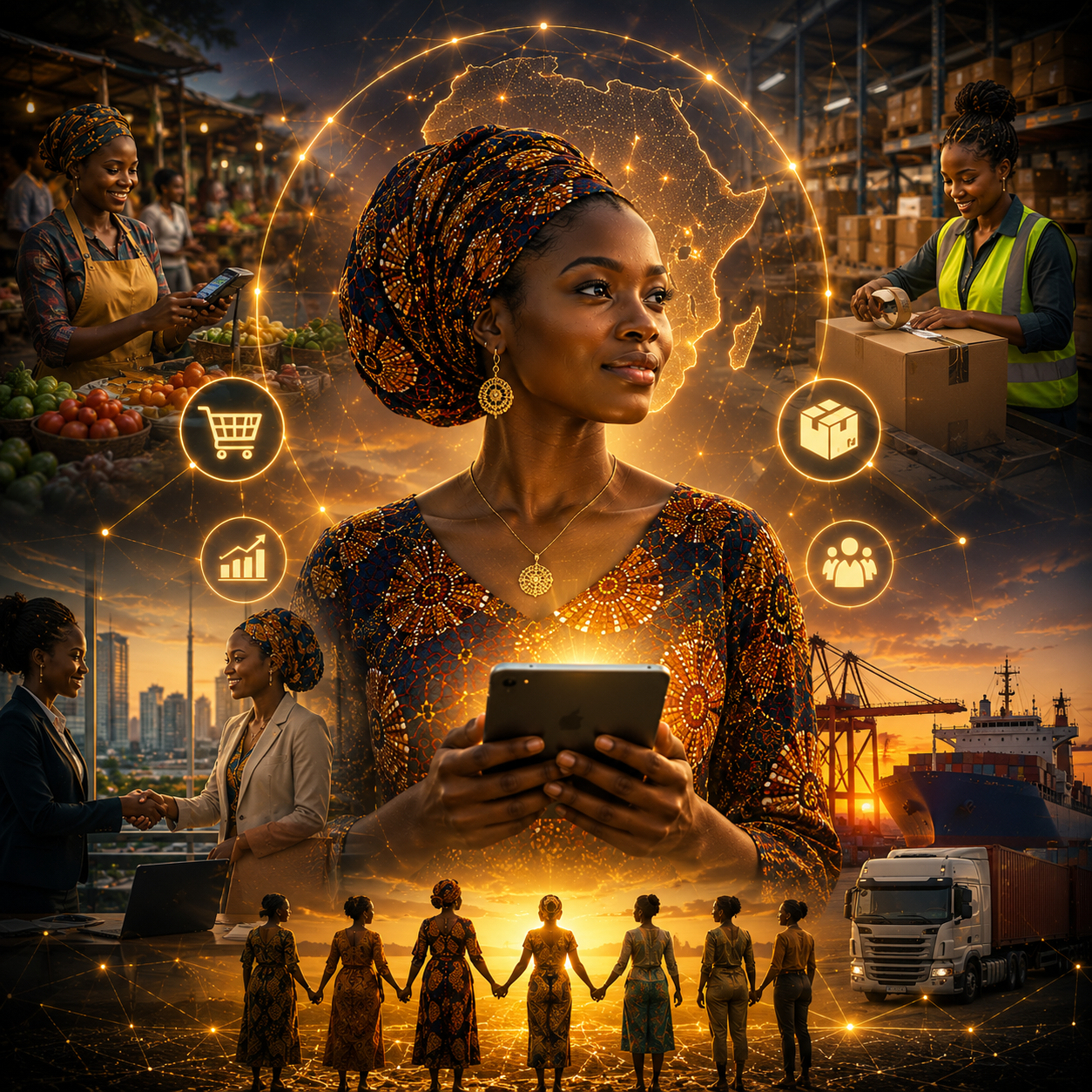
BUYING POWER – Why Gender-Responsive Digital Procurement Could Become One of Africa’s Most Powerful Inclusion Tools

0

By HiPipo Money

Africa’s digital economy is growing rapidly.

Governments are digitising services. Banks are modernising payment systems. Telecom operators are expanding connectivity. FinTech ecosystems are scaling across the continent. Public institutions are investing billions into digital transformation infrastructure.

But beneath all the momentum sits a question that is becoming increasingly important:

Who benefits from the money flowing into the digital economy?

Because digital transformation is not only about technology deployment.

It is also about economic participation.

Who gets funded?
Who gets contracted?
Who gets visibility?
Who gets procurement opportunities?
Who gets included in the growth ecosystem?

These questions matter deeply for women entrepreneurs, women-led startups, and women innovators across Africa.

Historically, procurement systems, both public and private, have often favoured:

  • larger companies,
  • established networks,
  • legacy suppliers,
  • and male-dominated business ecosystems.

Women-led businesses frequently struggled accessing major contracts despite operating innovative and impactful enterprises. In many cases, the challenge was not capability.

It was visibility and access.

This is why gender-responsive digital procurement is becoming increasingly important across Africa’s digital transformation conversation.

The idea is simple but powerful:

As governments, institutions, FinTechs, and corporations digitize economies, procurement systems should intentionally create space for women-led businesses and gender-inclusive innovation ecosystems to participate meaningfully.

Because inclusion cannot only happen at the consumer level.

It must also happen at the economic opportunity level.

Digital procurement systems are especially important because procurement shapes markets.

A government contract can help a startup scale.
A telecom partnership can create credibility.
A FinTech integration can unlock distribution.
A visibility platform can attract investors.
An innovation award can open regional opportunities.

Procurement decisions influence who grows inside the digital economy.

This is why many global development conversations increasingly push for procurement frameworks that:

  • encourage women-led suppliers,
  • prioritize inclusive innovation,
  • strengthen SME participation,
  • and improve visibility for underrepresented entrepreneurs.

The impact can be significant.

A woman-led FinTech gaining access to institutional procurement may:

  • expand hiring,
  • improve products,
  • attract funding,
  • and scale services into underserved communities.

The ripple effects extend far beyond one contract.

Africa’s digital economy presents a particularly important opportunity because much of the ecosystem is still being built.

The rules, partnerships, infrastructure, and visibility systems shaping tomorrow’s markets are being formed now.

That means inclusion can still be intentionally designed into growth systems before exclusion becomes structurally embedded.

This is where recognition platforms become important.

Awards ecosystems, innovation showcases, digital inclusion programs, and visibility platforms increasingly influence which companies gain credibility within emerging markets. Recognition often becomes a gateway into:

  • partnerships,
  • procurement pipelines,
  • investment conversations,
  • and regional expansion opportunities.

This is one reason initiatives such as the Digital Impact Awards Africa (DIAA) have become increasingly relevant within broader conversations around digital inclusion and gender-responsive innovation ecosystems.

DIAA’s long-standing focus on recognizing digital excellence across Africa increasingly reflects a larger shift happening across the continent: digital transformation is no longer being evaluated only through scale or profitability.

It is also increasingly evaluated through impact, inclusion, accessibility, and empowerment.

The recognition of women-led innovation and gender-responsive digital initiatives helps reshape visibility itself. And visibility matters in digital economies.

For years, many women-led businesses operated with limited institutional exposure despite solving real problems in:

  • financial inclusion,
  • healthcare,
  • education,
  • agriculture,
  • digital commerce,
  • and community finance.

Recognition platforms help surface these innovators into broader economic conversations.

A startup once operating quietly in a local ecosystem may suddenly gain:

  • investor attention,
  • procurement visibility,
  • partnership opportunities,
  • and regional credibility.

Awards and recognition therefore become more than branding exercises. They become market-access infrastructure.

The rise of gender-responsive procurement conversations also reflects a broader realisation:

Digital economies do not become inclusive automatically.

Without intentional frameworks, inequalities often replicate themselves digitally.

If funding flows primarily toward already-visible networks, women-led innovation ecosystems risk remaining undercapitalised despite enormous potential.

This is why governments, development institutions, telecom operators, FinTech ecosystems, and private-sector players increasingly discuss:

  • supplier diversity,
  • women-focused innovation support,
  • SME inclusion,
  • and gender-responsive procurement standards.

The objective is not symbolic inclusion. It is broader economic participation.

Technology itself is also changing procurement systems.

Digital procurement platforms can reduce some traditional barriers linked to:

  • geography,
  • informal networks,
  • paperwork,
  • and limited institutional access.

Online procurement systems, digital verification, interoperable identity frameworks, and FinTech-enabled payments can make procurement more transparent and accessible for SMEs and women-led businesses. But digital systems alone are not enough.

If procurement criteria remain structurally biased toward:

  • large balance sheets,
  • existing institutional relationships,
  • or highly formalised ecosystems,
    many women entrepreneurs may still struggle to compete effectively.

True inclusion therefore requires both:

  • digital modernisation,
  • and intentional policy design.

Access to finance remains one of the biggest barriers.

Many women-led businesses still struggle securing:

  • working capital,
  • bid financing,
  • guarantees,
  • and growth funding required to participate in larger procurement ecosystems.

This creates a difficult cycle.

Without contracts, scaling becomes difficult. Without scale, accessing larger contracts becomes difficult.

Gender-responsive procurement discussions increasingly recognize that procurement inclusion must connect with:

  • digital finance,
  • SME financing,
  • FinTech innovation,
  • and women-focused growth infrastructure.

The ecosystem must work together.

There is also a broader economic implication beneath the surface.

Women already contribute enormously to:

  • informal trade,
  • SME activity,
  • agriculture,
  • household economies,
  • and service industries across Africa.

When women-led businesses gain stronger participation in digital procurement ecosystems, the benefits ripple across:

  • employment,
  • local commerce,
  • financial inclusion,
  • innovation ecosystems,
  • and community resilience.

This is why gender-responsive procurement is increasingly viewed not only as a diversity issue, but as an economic growth strategy. Inclusive ecosystems tend to create broader participation and deeper market expansion.

For HiPipo Money, gender-responsive digital procurement represents one of the most important conversations shaping Africa’s next digital economy.

The continent’s digital transformation cannot reach full potential if women remain underrepresented in the systems allocating visibility, contracts, funding, and opportunity.

This aligns strongly with broader conversations around:

  • women’s empowerment,
  • financial inclusion,
  • digital innovation,
  • SME growth,
  • inclusive procurement,
  • FinTech ecosystems,
  • and impact-driven transformation championed through initiatives such as Women in FinTech, Include Everyone, and the Digital Impact Awards Africa (DIAA).

Because ultimately, inclusion is not only about who uses digital systems. It is also about who gets to build, supply, lead, and grow within them.

A woman-led FinTech gaining procurement access. A startup receiving continental visibility. A digital innovator entering regional markets. An entrepreneur scaling through recognition and trust. A continent building digital economies where opportunity flows more broadly. Most people think procurement is an administrative process. But in emerging digital economies, procurement quietly shapes who participates in the future itself.