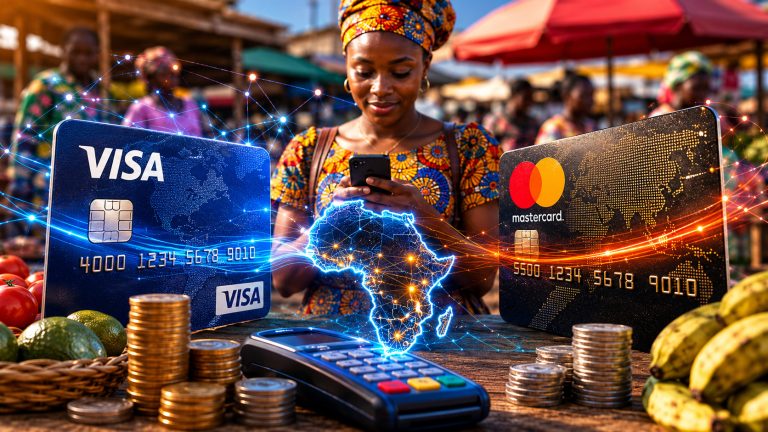
An in‑depth analysis of how global networks and local fintechs compete and collaborate to serve the unbanked.
Africa’s digital payments sector is booming. In early 2024, the number of FinTech companies on the continent had risen to about 1,263, nearly triple the 450 recorded in 2020. These firms captured roughly 60 percent of all African equity funding, underscoring investor confidence. Yet the market remains largely untapped: hundreds of millions of Africans still pay with cash, and more than 400 million remain unbanked. Into this opportunity have stepped global card networks Visa and Mastercard.
Visa’s strategy centres on partnerships with banks and mobile network operators. By embedding its payment rails into mobile money wallets and bank apps, it aims to connect the continent’s fragmented payment landscape. The company has piloted interoperable QR codes and contactless cards in East and West Africa and backed infrastructure projects like Ghana’s real‑time interoperable payments system. Mastercard, by contrast, emphasises grassroots initiatives. It invests in digital tools for small merchants and rural cooperatives, helping them to accept electronic payments and manage inventory. It has launched community‑level programmes in Kenya, Rwanda and Nigeria that bundle payment services with credit and savings.
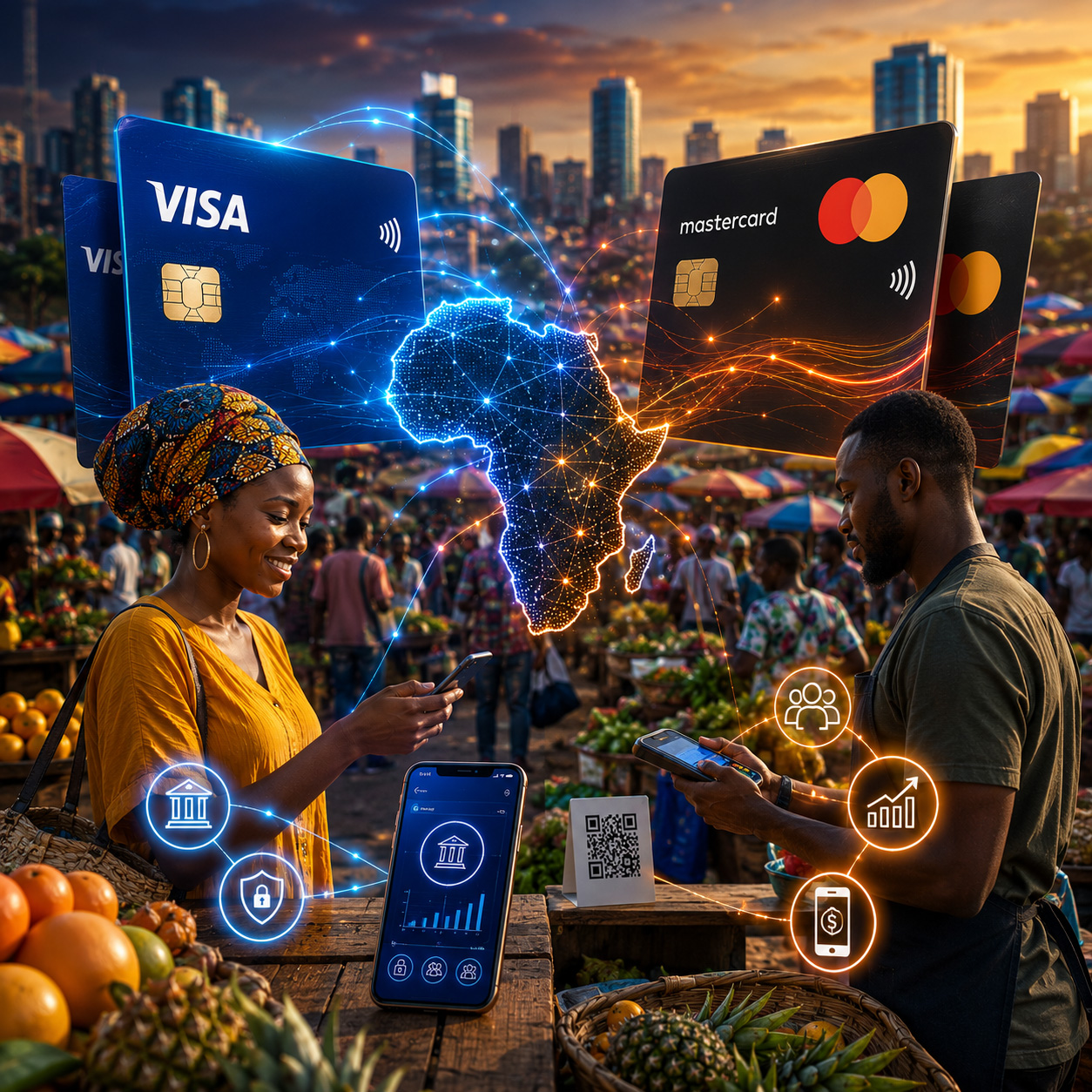
Both firms face challenges. High mobile data costs, patchy internet coverage and complex regulatory environments make it hard to scale. Indigenous payment providers, many supported by government and regional bodies, are competing fiercely with global brands. Fintech platforms like Flutterwave, Paystack and M‑Pesa already handle most peer‑to‑peer transfers, while regional projects such as the Pan‑African Payment and Settlement System (PAPSS) promise to simplify cross‑border payments. To remain relevant, Visa and Mastercard must offer services that go beyond plastic cards and partner authentically with local innovators.
The outcome of this contest will shape Africa’s digital economy. If Visa, Mastercard and African fintechs cooperate on open, low‑cost and interoperable systems, consumers will enjoy easier remittances, safer online shopping and a wider array of financial products. If competition stifles interoperability or entrenches monopolies, the continent risks replicating old inequalities in a new digital guise.
Digital payment rails underpin trade, investment and everyday commerce. Understanding the competitive dynamics between Visa, Mastercard, and local FinTechs helps policymakers craft rules that foster innovation while protecting consumers. It also highlights the need for open platforms and regional payment infrastructures that lower costs and accelerate financial inclusion. A collaborative approach will ensure Africa’s digital payment revolution benefits everyone, not just corporate giants.