By HiPipo Money
Africa’s digital finance revolution is often told through the language of growth.
Millions of wallets opened.
Billions of transactions processed.
FinTech valuations rising.
Urban merchants digitising rapidly.
Smartphone adoption expanding.
But beyond the statistics lies a more difficult reality:
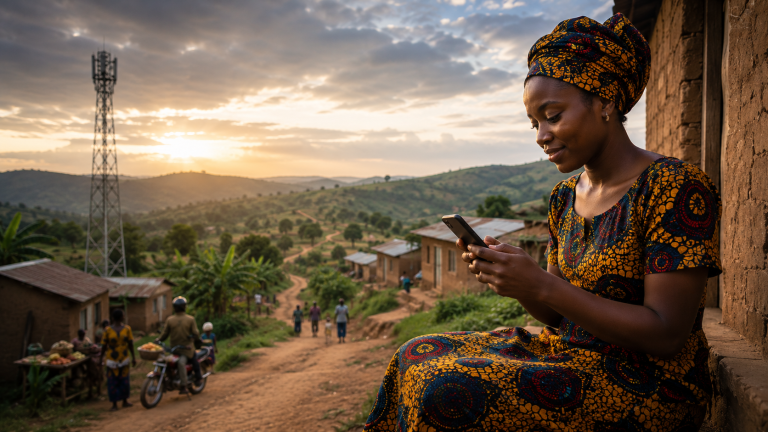
Large parts of rural Africa still operate at the edge of the digital economy.
In many remote communities, cash remains dominant not because people reject digital finance, but because infrastructure gaps continue limiting meaningful participation. Network instability, long distances to agents, weak liquidity, unreliable electricity, low smartphone penetration, limited merchant acceptance, affordability barriers, and low digital literacy still shape daily financial life for millions.
This is Africa’s last-mile money problem.
And solving it may determine whether the continent’s digital transformation becomes truly inclusive, or simply urban.
Because while cities often dominate FinTech headlines, Africa’s economic future will also depend heavily on whether rural populations can participate meaningfully in digital commerce, payments, savings, insurance, healthcare, and broader financial ecosystems.
The challenge is enormous.
But so is the opportunity.
Historically, rural communities were among the most financially excluded populations across the continent. Traditional banking infrastructure concentrated heavily around urban centres where transaction volumes and customer density made branch operations commercially viable.
For millions living in remote areas, formal banking often meant:
- long travel distances,
- high transportation costs,
- documentation barriers,
- unreliable service access,
- and systems poorly designed for low-income or informal economic realities.
Mobile money dramatically changed that equation.
By leveraging telecom infrastructure and agent networks, digital finance providers brought financial access closer to communities previously ignored by formal financial systems. Small shops, kiosks, pharmacies, fuel stations, and trading centers evolved into cash-in and cash-out points, allowing people to transact without travelling long distances to banks.
This agent-network model became one of Africa’s greatest financial infrastructure innovations.
It solved a fundamental economic challenge:
How do you distribute financial services affordably across vast geographies with limited formal infrastructure?
The answer was decentralization.
Instead of relying entirely on expensive bank branches, digital finance ecosystems distributed financial access through local agents embedded directly inside communities.
The results were transformative.
People could:
- receive remittances locally,
- pay school fees digitally,
- save small amounts,
- transact more safely,
- and participate in growing digital economies.
Yet despite this progress, major gaps remain between urban and rural financial participation.
The divide is not only about access.
It is about quality of access.
A rural customer may technically own a mobile wallet while still facing:
- poor connectivity,
- frequent network downtime,
- low agent liquidity,
- high cash-out dependency,
- limited merchant ecosystems,
- and weak interoperability between providers.
This creates a fragile digital finance experience. When systems fail repeatedly, trust weakens. And in financial systems, trust is everything.
One of the biggest challenges rural communities continue facing is liquidity.
An agent may technically exist in a village, but without sufficient float or cash liquidity, transactions fail. Customers may walk long distances only to discover an agent cannot process withdrawals or transfers.
This is one of the invisible operational realities often overlooked in urban FinTech discussions.
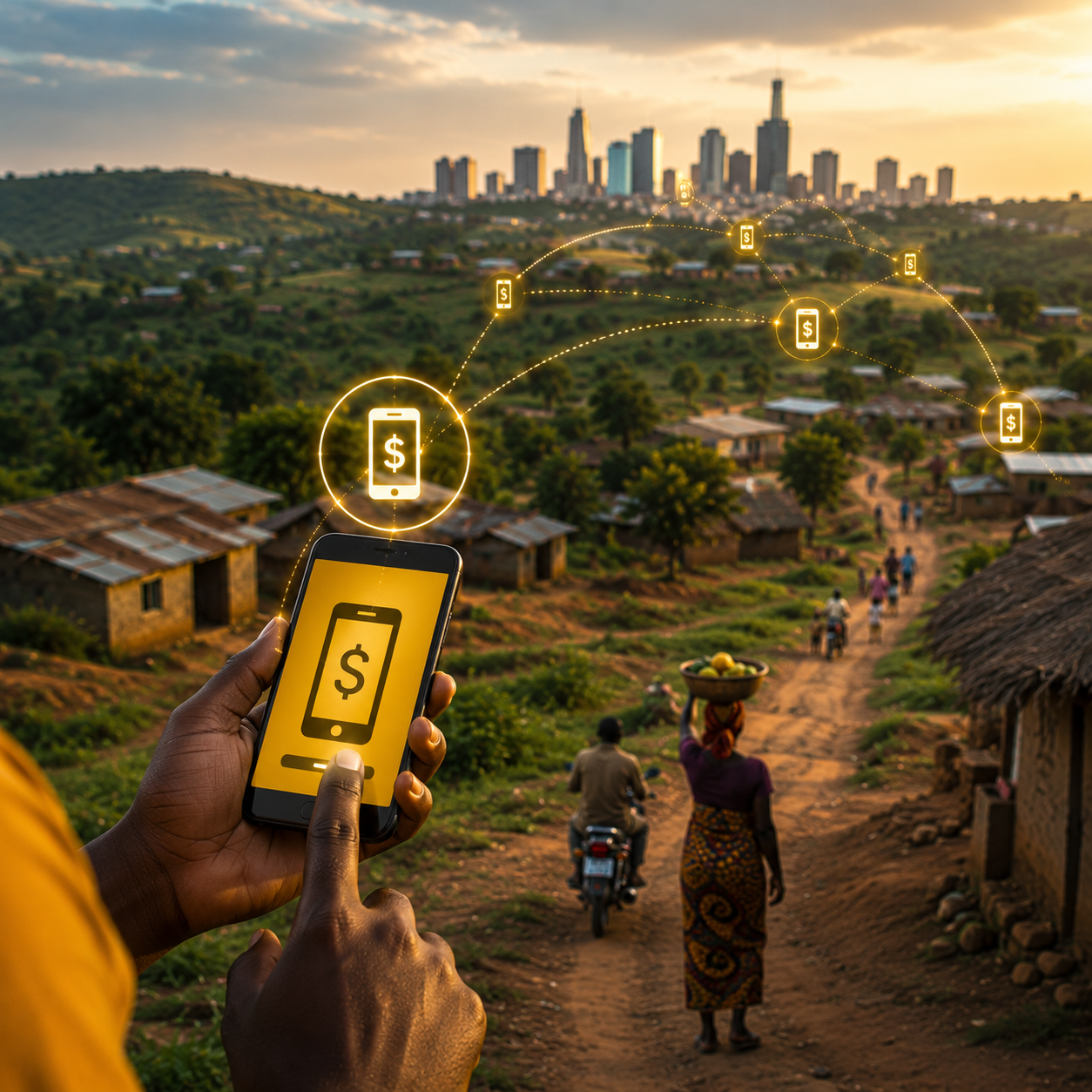
Digital finance depends heavily on physical infrastructure too.
Behind every successful mobile transaction sits an entire ecosystem:
- telecommunications,
- electricity,
- liquidity management,
- transportation,
- cash distribution,
- compliance systems,
- and agent support structures.
If one layer breaks down, user confidence suffers.
This is why agent network expansion remains central to rural financial inclusion strategies across Africa.
Providers increasingly compete not only through apps and technology — but through physical reach.
Who can serve the hardest-to-reach communities?
Who can maintain liquidity most effectively?
Who can reduce transaction friction for low-income populations?
Who can make digital finance feel reliable enough to replace cash?
These questions increasingly define the next stage of inclusion.
At the same time, another important innovation is emerging:
Offline digital payment solutions.
In many rural areas, internet connectivity remains inconsistent or entirely unavailable. Smartphone penetration also remains uneven, particularly among low-income households and older populations. Financial systems designed exclusively around always-online smartphone experiences risk excluding millions.
This reality is driving renewed interest in:
- USSD-based services,
- offline wallets,
- QR-based offline payments,
- NFC technologies,
- feature-phone-compatible systems,
- and delayed synchronisation payment models.
Offline-capable systems may become especially important for rural Africa because they reduce dependence on constant internet access while still enabling digital transactions.
This is a critical strategic insight often overlooked by global FinTech narratives.
Africa’s digital finance future will not be built only through high-end smartphone ecosystems.
It will also be built through resilient low-bandwidth systems capable of functioning under real-world infrastructure constraints.
The economics of inclusion demand it.
Energy access also plays a surprisingly important role in rural digital payments.
A digital wallet is only useful if a phone can remain charged.
Across multiple African markets, unreliable electricity continues limiting digital participation. This creates a powerful connection between financial inclusion and broader infrastructure agendas such as decentralized solar energy.
Projects providing affordable clean energy solutions can indirectly strengthen digital payment adoption by ensuring users maintain reliable device access. In many rural households, the ability to keep phones charged consistently directly affects participation in mobile money ecosystems, digital commerce, and financial services.
This is where infrastructure ecosystems increasingly overlap:
- energy,
- connectivity,
- finance,
- identity,
- and digital literacy.
The future of inclusion depends on all of them working together.
Another major challenge remains digital literacy.
Many rural users may have access to mobile money services but still lack confidence navigating:
- PIN security,
- fraud prevention,
- merchant payments,
- digital savings,
- or advanced financial services beyond simple transfers.
Fraud and social engineering attacks disproportionately affect populations with lower digital literacy. A single negative experience can discourage adoption across entire communities.
This is why education matters as much as technology.
Financial inclusion is not only about deploying infrastructure.
It is about building confidence.
Communities must understand:
- how systems work,
- how to protect themselves,
- why digital records matter,
- and how digital payments can improve economic opportunities.
This is where localised financial literacy initiatives become strategically important.
Governments are also increasingly recognising the importance of rural digital payment infrastructure.
Digitising social transfers, agricultural subsidies, healthcare support, and public services can help accelerate adoption while reducing leakage and improving transparency. Rural merchants accepting digital payments can generate transaction histories that support access to credit. Farmers receiving digital payments can participate more effectively in formal supply chains.
In this sense, rural digital payment infrastructure becomes more than financial infrastructure.
It becomes development infrastructure.
Yet there is another important truth:
Rural Africa is not merely a “catch-up” market.
It is an innovation frontier.
Many of Africa’s most successful digital finance innovations emerged precisely because traditional infrastructure gaps forced entirely new approaches. Agent banking, mobile wallets, USSD systems, low-cost interoperability frameworks, and mobile-based microfinance models evolved largely because existing financial systems failed to serve vast populations effectively.
The next generation of inclusion innovation may emerge the same way.
Solutions designed for:
- low bandwidth,
- low literacy,
- remote communities,
- intermittent electricity,
- and small-value transactions
may ultimately shape the future of digital finance globally.
This is where ecosystem builders such as HiPipo and initiatives including the Digital Impact Awards Africa (DIAA), Include Everyone, Women in FinTech, and broader grassroots financial literacy programs become increasingly important. Africa’s digital transformation cannot only celebrate urban FinTech growth while overlooking the infrastructure realities of remote communities.
True inclusion must reach the last mile.
Because ultimately, the rural digital payments divide is not just about technology gaps.
It is about economic participation.
A farmer accessing markets more efficiently.
A mother receiving healthcare support digitally.
A village merchant building transaction history.
A rural youth entrepreneur participating in e-commerce.
A community entering the formal economy without leaving home.
Most discussions about financial innovation focus on apps, startups, or billion-dollar valuations.
But Africa’s real digital finance story may ultimately be decided somewhere much quieter:
In villages where the signal is weak. Where electricity is unreliable. Where roads are difficult. Where cash still dominates. And where millions are waiting not simply for technology, but for systems designed to include them fully in the future economy.
Because if Africa succeeds in closing the urban-rural payments divide, the continent will not only expand digital finance.
It will expand economic possibility itself.