By HiPipo Money
For generations, millions of African women managed household economies without fully controlling financial systems around them.
They sold produce in markets. Ran small businesses. Managed food budgets. Paid school fees. Supported families. Built informal savings groups. Yet despite carrying enormous economic responsibility, many remained excluded from formal financial infrastructure.
Banks were often too far away. Account requirements were too rigid. Minimum balances felt unrealistic. Documentation was difficult. Travel costs were high.
For many women, finance remained physical, not digital.
Then mobile money arrived. And quietly, one of the most important shifts in women’s economic empowerment began unfolding across Africa.
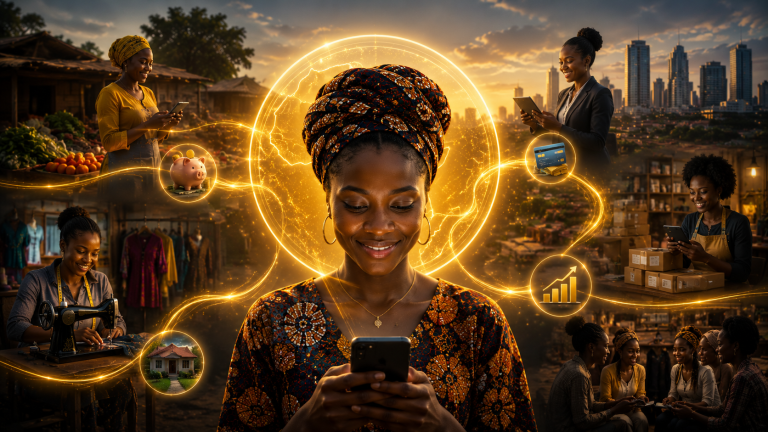
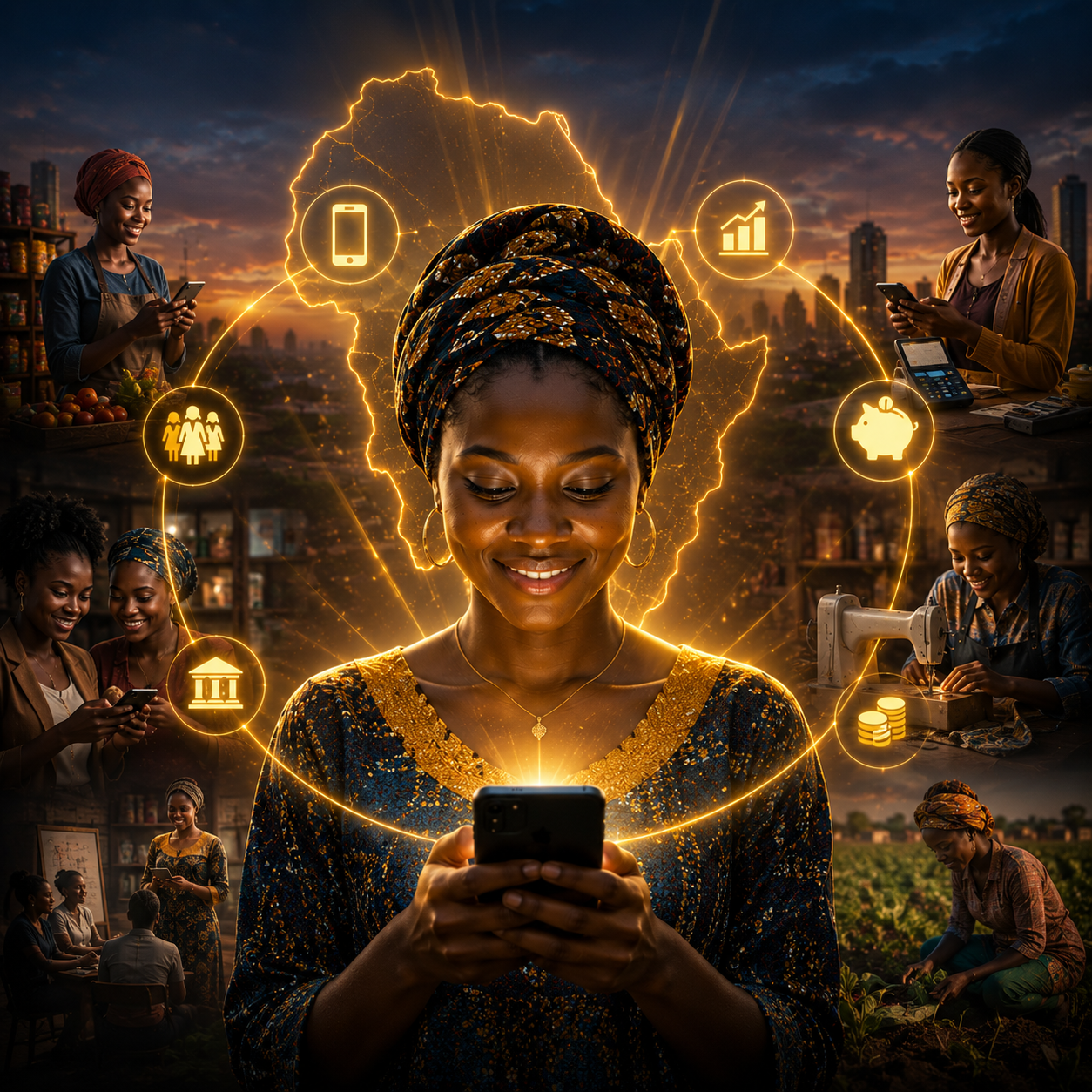
Today, millions of women use digital financial services to save small amounts, receive remittances, run microbusinesses, and manage household resources directly through mobile phones. The transformation may appear simple on the surface, but its implications are profound.
Because financial control changes power.
Historically, traditional banking systems struggled to serve low-income women effectively. Many women operated in informal economies where income arrived in small and irregular amounts. Conventional banking models built around salaries, formal employment, and larger transactions often failed to match those realities.
Mobile money adapted differently.
It allowed women to deposit daily earnings, market proceeds, transport income, and micro-savings directly into digital wallets. For many, this became the first practical savings infrastructure they could consistently access.
The ability to store even small amounts securely matters enormously in low-income environments. A woman no longer needed to keep all cash physically at home, where it could easily be spent, requested by others, misplaced, or stolen.
A mobile wallet created something many women had never fully possessed before:
Private financial space. That privacy became quietly transformative.
In many households, women historically managed money collectively while still lacking independent control over major financial decisions. Digital accounts allowed some women to separate business money from household expenses, savings, and emergency reserves more effectively.
That separation increased resilience.
A market vendor could preserve inventory capital digitally. A mother could gradually save for school fees. A trader could build emergency reserves without needing large lump sums.
The phone became more than a payment tool. It became a personal financial management system. Remittances amplified this transformation even further.
Across Africa, millions of women receive support from relatives abroad, urban family members, spouses working remotely, or diaspora communities. Historically, receiving money could involve long travel distances, insecure cash pickups, or dependence on intermediaries.
Mobile money changed the experience dramatically. Funds could arrive directly into a woman’s phone within minutes.
This mattered deeply because direct access improves financial control. A woman receiving money digitally often gains greater ability to decide how resources are used, when emergencies are handled, and how household priorities are managed.
The impact reaches far beyond convenience.
Food security improves. Healthcare access stabilises. Children remain in school more consistently. Small businesses recover faster after shocks.
Remittances become more effective when women can receive and manage them directly.
The timing of this digital shift was also important. As inflation, drought, food insecurity, and economic instability affected parts of Africa over recent years, digital financial services increasingly became household resilience infrastructure.
Women managing families under pressure often relied heavily on mobile money to:
- receive emergency support,
- purchase food,
- coordinate healthcare spending,
- and sustain small businesses during difficult periods.
In many communities, mobile money quietly became part of the financial operating system of survival itself.
There is also another important shift happening beneath the surface.
Digital transactions create visibility.
Historically, many women participated actively in commerce while remaining financially invisible to lenders, insurers, marketplaces, and formal institutions. They traded daily yet lacked formal financial records capable of proving economic activity.
Digital payments begin changing that reality. Every transaction creates data. Every payment builds financial history. Every digital interaction gradually strengthens economic visibility. This matters because visibility affects opportunity.
A woman with transaction history may eventually gain access to:
- credit,
- insurance,
- merchant platforms,
- digital commerce ecosystems,
- and broader formal financial services.
Financial inclusion therefore becomes more than access to payments. It becomes access to recognition. Women entrepreneurs are among the biggest beneficiaries of this shift.
Across Africa, millions of women operate small retail businesses, tailoring shops, food enterprises, farming activities, transport services, and informal trade networks. Digital financial services help these businesses receive payments faster, reduce cash risk, separate finances, and transact remotely.
Even simple mobile payments can improve operational stability significantly for businesses operating on very small margins.
The changes may appear incremental individually. But at continental scale, they become transformational. Yet despite the progress, important barriers remain.
Millions of women still face challenges linked to:
- smartphone affordability,
- digital literacy,
- fraud risks,
- weak connectivity,
- and identity-documentation requirements.
Some women still rely on assistance to use digital accounts confidently. Others remain vulnerable to scams or limited control over phone access itself.
This means inclusion remains uneven.
The next phase of progress depends not only on expanding access, but deepening confident usage.
Women must be able to:
- transact independently,
- protect accounts securely,
- understand digital systems,
- and use financial tools confidently.
Without confidence, participation remains fragile.
This is why women-focused FinTech ecosystems are becoming increasingly important. Across Africa, more platforms now target women entrepreneurs, savings groups, micro-merchants, and low-income users through simplified onboarding, mobile-first design, interoperable payments, and financial literacy support.
The shift reflects growing recognition that women are not a “secondary market” within Africa’s digital economy. They are central economic actors. There is also a larger macroeconomic story emerging quietly beneath the surface.
Africa’s future growth depends heavily on increasing participation in formal economic systems. Women already drive enormous portions of:
- household spending,
- informal trade,
- agriculture,
- caregiving economies,
- and microenterprise activity.
When digital financial services empower women more effectively, productivity gains ripple across entire economies.
This is why women’s financial inclusion is increasingly viewed not only as social policy, but economic strategy.
For HiPipo Money, the rise of digital financial services for women represents one of the most important transformations shaping Africa’s future.
The continent’s mobile money revolution did more than digitise transactions.
It redistributed access.
This aligns strongly with broader conversations around women’s empowerment, financial inclusion, digital literacy, interoperable payments, FinTech innovation, and inclusive growth championed through ecosystems such as Women in FinTech, Include Everyone, the Digital Impact Awards Africa (DIAA), and wider digital transformation movements across Africa.
Because ultimately, digital finance is not only about technology.
It is about control.
A woman saving privately for the first time.
A mother receiving support directly into her phone.
A trader managing inventory digitally.
A rural entrepreneur building financial history.
A household becoming more resilient through a simple device in someone’s hand.
Most people see mobile money as a payments story.
But for millions of African women, it became something much larger.
A quiet redistribution of economic power itself.