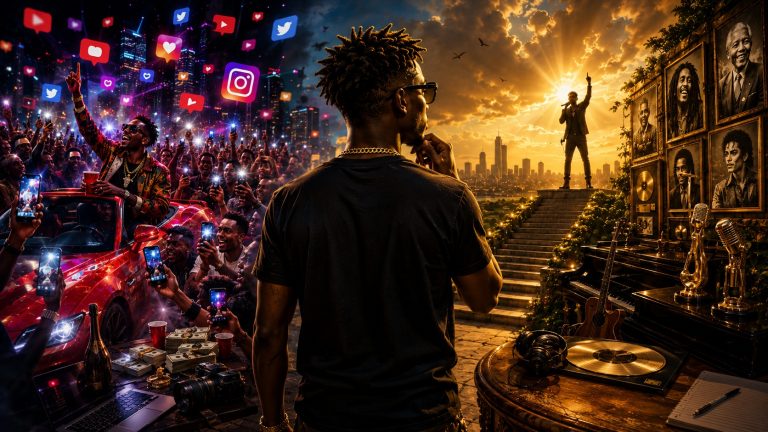
In today’s entertainment economy, attention is everywhere.
A single scandal can dominate timelines within minutes. A viral interview can turn an unknown artist into a national talking point overnight. A controversial video, a leaked private moment, a public feud, or an outrageous statement can suddenly push a musician into the centre of conversation across radio, television, TikTok, X, Instagram, YouTube, blogs, and gossip platforms.
But attention alone has never guaranteed longevity.
And that is where many artists misunderstand the difference between popularity and fame.
Popularity simply means being widely known.
Fame, however, is something far deeper. Fame is emotional connection. It is admiration. It is loyalty. It is public affection strong enough to survive silence, controversy, failure, aging, industry changes, and even long absences from the spotlight.
Popularity creates noise.
Fame creates legacy.
And in the long run, legacy is far more valuable than noise.
Across the global entertainment industry, countless artists have experienced moments of explosive popularity. Their names trend everywhere. Their faces dominate conversations. Their songs become unavoidable. Their scandals attract endless media attention.
Yet only a small percentage transform that visibility into lasting fame.
That distinction matters because the economics of entertainment are heavily tied to emotional connection. The artists who earn the most sustainable careers are usually not just the most visible, but the most loved, respected, admired, or emotionally trusted by audiences.
Audiences spend differently on artists they adore.
People may stream a popular song temporarily, but they buy concert tickets, defend reputations, support brands, wear merchandise, forgive mistakes, and remain loyal for years to artists they genuinely love. That emotional investment is what turns entertainers into institutions.
This is why popularity alone is often unstable.
Attention moves quickly. Public conversation changes rapidly. Viral moments fade. Social media algorithms shift. Trends disappear. New artists emerge daily. Controversy loses value with time. What shocks audiences today may become irrelevant tomorrow.
Fame, however, operates differently.
Fame is built slowly through consistency, authenticity, emotional trust, cultural relevance, professionalism, identity, values, storytelling, and public perception accumulated over years. Fame survives beyond trends because it becomes attached to meaning rather than mere visibility.
And this difference can completely shape an artist’s career trajectory.
Uganda’s entertainment industry itself offers numerous examples of this distinction between temporary popularity and enduring fame.
Take Moses Golola for instance. Long before many musicians mastered the art of commanding public attention, Golola understood something crucial: personality itself could become entertainment.
His humor, outrageous confidence, dramatic interviews, unforgettable quotes, and theatrical public appearances made him one of the country’s most recognizable public figures. Interestingly, his fame often extended beyond his athletic performances. Many people could easily recall his catchphrases even more than specific fights he participated in.
Golola transformed visibility into cultural identity.
That is an important difference.
He was not merely known.
He became memorable.
And memorability is one of the foundations of fame.
The same contrast can be observed within music itself.
Grace Nakimera once built extraordinary admiration around her live performances. Beyond simply releasing songs, she cultivated a recognizable performance identity. Her stage presence, energy, choreography, and incorporation of traditional dance elements created an experience audiences emotionally attached themselves to.
People did not simply know Grace Nakimera.
They anticipated her.
That anticipation created commercial value.
At a certain point, her performances became a premium product because audiences associated her brand with excellence and emotional excitement. That is what happens when popularity evolves into admiration.
However, fame also requires consistency and sustainability. Entertainment audiences evolve constantly, and maintaining emotional relevance over long periods requires reinvention, discipline, and strategic brand management.
Then there are artists whose popularity emerged primarily through controversy.
Desire Luzinda experienced an enormous spike in visibility during one of the most controversial moments of her career. Public attention exploded. Conversations intensified. Media coverage multiplied. Interest in her music temporarily surged alongside her increased visibility.
For a moment, the commercial benefits of that popularity became very real — performances increased, fees improved, and public curiosity expanded.
But controversy-driven popularity often faces one major challenge: it is difficult to sustain emotionally.
Audiences may become curious quickly, but curiosity alone rarely builds long-term loyalty. Once the shock fades, artists are often left with the difficult task of rebuilding identity beyond the controversy that initially drove visibility.
That is why scandals alone rarely create enduring fame.
Fame requires emotional substance beyond headlines.
A similar lesson can be drawn from the career trajectory of Iryn Namubiru. At one stage, her artistry, vocals, and public image positioned her toward deep audience admiration. However, repeated controversies and public conflicts complicated that emotional relationship with audiences over time.
Public trust matters enormously in fame economics.
An artist’s reputation becomes part of their commercial value. The more audiences emotionally trust or respect a public figure, the easier it becomes to sustain long-term relevance, partnerships, performances, endorsements, and audience loyalty.
On the other hand, Juliana Kanyomozi represents a powerful example of sustained fame. She can remain relatively quiet musically for extended periods and still command admiration, audience affection, media respect, and strong concert attendance.
Why?
Because fame is not built solely on frequency.
It is built on emotional equity.
Over the years, Juliana cultivated elegance, professionalism, restraint, consistency, emotional connection, and public dignity. Even when faced with personal challenges or public scrutiny, she managed her image carefully enough to preserve audience respect.
That respect became long-term brand capital.
And in entertainment, brand capital is often more valuable than temporary hype.
Artists like Bebe Cool and Bobi Wine demonstrate yet another dimension — the ability to balance both popularity and fame simultaneously.
They remain constantly visible while also maintaining emotional attachment with specific audiences. Beyond music itself, both artists strategically connect themselves to broader identities, causes, communities, and narratives larger than entertainment alone.
One builds influence through philanthropy, industry presence, and visibility.
The other strengthens emotional loyalty through activism, social representation, and grassroots identity.
In both cases, audiences feel emotionally connected to something beyond songs.
That emotional attachment is what transforms entertainers into movements.
And perhaps that is the ultimate lesson for modern artists navigating the digital era.
Today’s music industry rewards visibility aggressively. Social media algorithms encourage constant exposure. Virality is monetized. Shock value spreads rapidly. Trends move at incredible speed.
As a result, many artists obsess over becoming known.
But the deeper question is:
Known for what?
What do audiences genuinely admire about you?
What emotional value do you represent?
What identity have you built?
What trust have you earned?
What feeling do people associate with your name?
Because eventually, every artist discovers that visibility alone is not enough.
At some point, public attention demands emotional meaning.
The future belongs not merely to artists who can dominate conversations temporarily, but to those capable of building emotional permanence in the hearts of audiences.
Popularity may fill headlines.
But fame fills history.