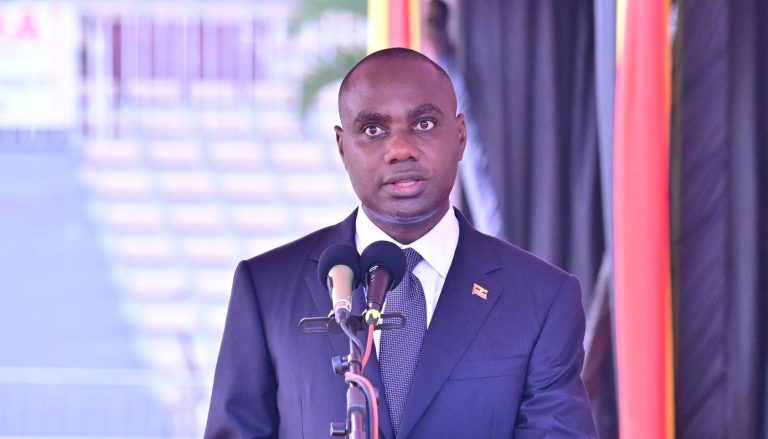
The Government of Uganda has invested close to Sh11 trillion in wealth creation programmes over the past five years, Finance Minister Henry Musasizi revealed on Thursday as he presented the 2026/27 national budget at Kololo Ceremonial Grounds.
The interventions, Musasizi said, target households, farmers, women, youth, and businesses by expanding access to affordable capital, strengthening enterprise development, and increasing household incomes. He described wealth creation as the foundation of economic transformation and praised President Yoweri Museveni’s leadership in empowering Ugandans.
Musasizi described the Parish Development Model (PDM) as the most important intervention for poverty eradication. Over the last five years, the government has transferred Sh4.4 trillion as revolving capital to 10,589 parishes across the country.
“By the end of June, the programme is expected to have reached more than four million beneficiaries,” Musasizi said. He added that the next phase of PDM will focus on improving productivity, value addition, and market access while ensuring underserved and densely populated urban parishes receive adequate funding.
The government also plans to gradually transform the programme into a self-sustaining financial ecosystem, ultimately evolving into a PDM Bank.
On Emyooga, the specialised enterprise development programme, Musasizi said the government has so far capitalised it with Sh760 billion in revolving funds.
The programme has established 7,148 Savings and Credit Cooperative Organisations (SACCOs) with more than 2.48 million members and cumulative savings of Sh95.3 billion. An additional Sh100 billion has been allocated for Emyooga in the 2026/27 financial year.
The government is currently piloting the Katale Loan Facility, administered through the Microfinance Support Centre in six major markets within the Kampala Metropolitan Area. The facility offers working capital loans at an annual interest rate of 8 percent and currently serves traders in St Balikuddembe (Owino), Nakawa, Kalerwe, Busega, Nakasero, and Ggaba markets.
Musasizi said the government plans to roll it out nationwide during the 2026/27 financial year.
The Small Business Fund, established in 2021 following the Covid-19 pandemic, has so far disbursed more than Sh82.1 billion to 4,031 small and medium enterprises. The facility offers loans of up to Sh500 million at a 10 percent interest rate.
The government has also invested Sh371.7 billion in the Agricultural Credit Facility, which has leveraged cumulative lending of Sh1.35 trillion to more than 14,000 beneficiaries. A further Sh47.68 billion has been allocated to the facility for the coming financial year.
For large-scale commercial farmers cultivating at least 50 acres of grains and animal feeds, Musasizi said the government paid Sh41 billion in interest subsidies during the current financial year, enabling 186 farmers to access Sh169.1 billion in credit. Another Sh41 billion has been set aside for the programme in 2026/27.
Through the Uganda Development Bank (UDB), one of the largest recipients of government capitalisation, Musasizi said the government has injected Sh1.6 trillion into the bank, bringing more than Sh2.45 trillion in financing to over 600 businesses operating in agriculture, manufacturing, tourism, construction, and services. In the 2026/27 financial year, the bank will receive an additional Sh442.2 billion.
Under the World Bank-financed GROW (Generating Opportunities for Women) project, Musasizi said Sh133.14 billion in soft loans has been extended to 6,584 women-owned businesses. This complements Sh153.5 billion previously disbursed under the Uganda Women Entrepreneurship Programme, which has benefited nearly 245,000 women.
For youth empowerment, the minister said the government has financed 24,859 projects benefiting 275,034 young people at a cost of Sh195.4 billion, while another 57,849 youths have benefited through the Youth Venture Capital Fund.
Another beneficiary group, according to Musasizi, is the creative sector. The government has established a Sh33 billion revolving fund for musicians and other creatives to support enterprise growth and job creation.
Private teachers’ unions received Sh20 billion to strengthen their SACCOs and improve access to affordable credit, on top of an earlier Sh25 billion extended to Walimu SACCO umbrella structures. A total of Sh2.49 trillion has been earmarked for teachers’ SACCOs in the next financial year.
The Sh11 trillion figure represents a significant portion of Uganda’s budget over five years, reflecting the government’s stated commitment to moving households from subsistence to the money economy. However, questions remain about the effectiveness of these programmes. While the minister presented impressive numbers on beneficiaries and disbursements, the budget speech did not include independent data on poverty reduction, household income growth, or loan repayment rates.
The government’s plan to eventually transform PDM into a self-sustaining bank suggests an awareness that long-term success depends on financial viability, not just capital injection. For now, the minister’s message was clear: the money has been spent, and millions of Ugandans have been reached. Whether that translates into lasting wealth creation will be the measure of the programmes’ true success.