Home Blog Page 49

UNBS Opens The 2nd Regional Food Safety Laboratory In Mbale City

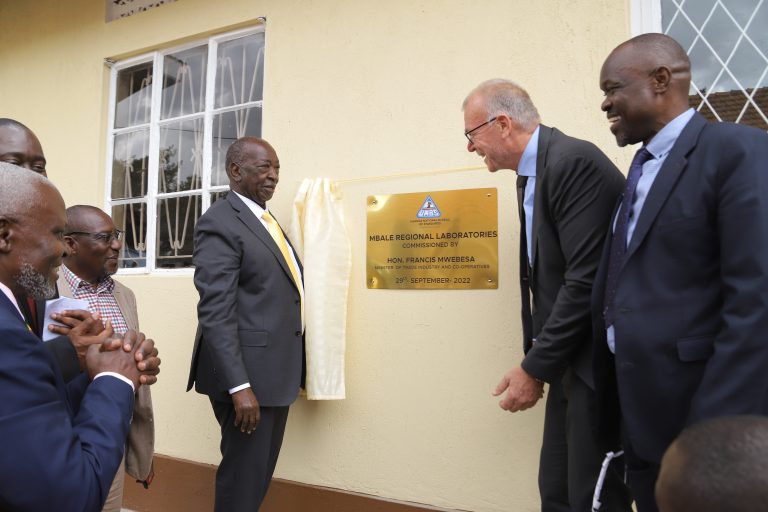
Uganda National Bureau of Standards (UNBS) has opened its 2nd Food Safety Laboratory in Mbale City to provide Conformity Assessment and Quality Assurance of products manufactured in Eastern Uganda.

According to Mr. David Livingstone Ebiru, the Executive Director of the Uganda National Bureau of Standards (UNBS), this is part of the Bureau’s Strategic Plan to decentralize Quality Infrastructure and other Standardization Services to other parts of the Country. Similar Testing Laboratories were commissioned in Gulu City in July 2022, to serve Northern Uganda, with the next one planned for Western Region in the near future. He thanked Trade Mark East Africa (TMEA) and the Danish Government for providing the critical equipment worth USD 4,455,283 for UNBS Regional Testing Laboratories and promised to put them to optimum use.

Mr. Ebiru urged all Enterprises involved in any form of Production, Processing, and Value Addition to take advantage of the decentralized Quality Infrastructure to enhance the quality and safety of their products by seeking certification services (Q-Mark) from UNBS before putting them on the market. He informed those involved in Export Trade that the Bureau is currently spearheading harmonization of common Standards within the East African Community (EAC) and the African Continent in order to facilitate market access of Ugandan-made products to the East African Community (EAC) and the African Continental Free Trade Area (AfCFTA). He also urged the Micro, Small, and Medium Enterprises (MSMEs) to seek certification services from the Bureau if their businesses are to remain competitive and sustainable.

Mr. Charles Musekuura, the Chairperson of the National Standards Council pledged to continue with the Bureau’s Agenda of taking Standardization services to every Region in order to reduce the cost of doing business and support the production, trade, and consumption of quality products across the country.

The Minister of Trade, Industry and Cooperatives, Hon. Francis Mwebesa welcomed the Bureau’s initiative of taking its services nearer to the people despite the constraints in resources and pledged his support to complement the effort. He noted that Quality Standards are critical in supporting the Government’s Industrialization Agenda, the Buy Uganda Build Uganda (BUBU) Policy, Imports Substitution, and Export Promotion Strategies and urged all Enterprises engaged in any form of production, value addition, and trade to embrace quality standards by dealing in quality and safe products in order to protect public health and safety.

Hon. Mwebesa observed that, with the decentralization of Testing Laboratories to the Regional Offices, accessibility to UNBS services will be enhanced, the cost of doing business reduced, and the overall level of compliance to quality standards should improve.

The Deputy Danish Ambassador to Uganda, H.E Henrik Jespersen, thanked the Bureau for putting the support extended to the best use and hoped that this will significantly contribute to the safety and quality of Ugandan-made products on the market, as well as support other Government Programs such as Agro- Industrialization, Manufacturing, and Private Sector Development which are critical for the country’s Economic Transformation. She urged UNBS to prioritize vulnerable Enterprises, especially MSMEs which are owned by Women and Youth in order to empower them to produce safe and quality products which are competitive on the market for their livelihoods. She tasked the Enterprises to take advantage of the decentralized Testing Facility to improve the quality of their products in order to benefit from the Regional and Continental Markets such as EAC and AfCFTA, including exports to other International Markets like the European Union (EU).
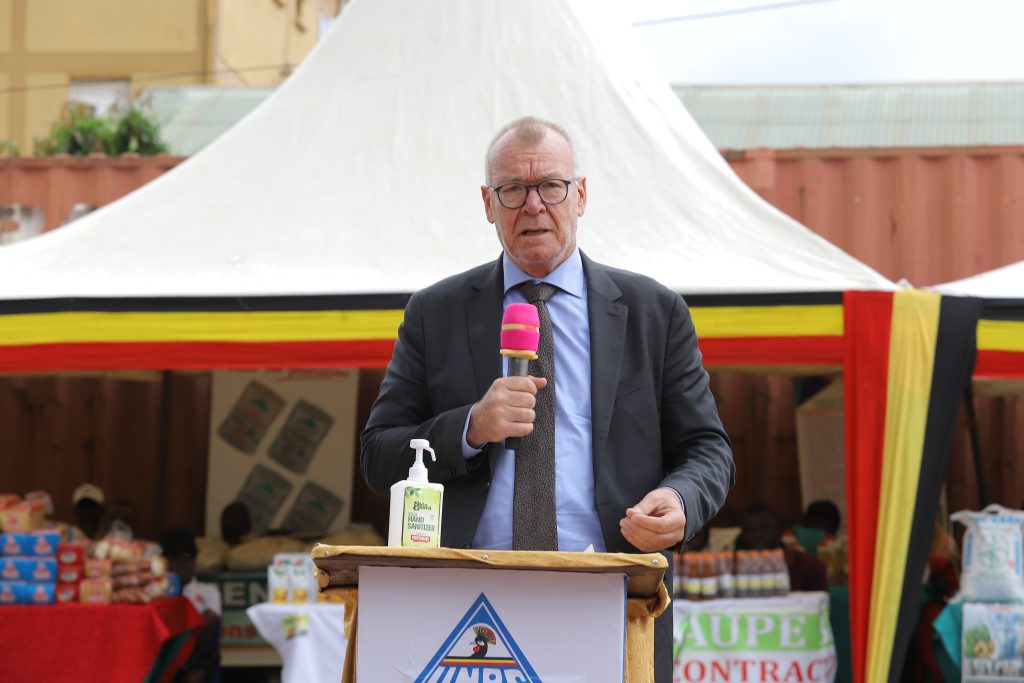
The Trademark East Africa (TMEA) Senior Director for the East and Central Region, Mr. John Ulanga thanked UNBS for being a dependable and trusted partner in facilitating trade and investments by putting the support so far given to the best use and for the intended purpose. He pledged to continue supporting UNBS in its effort towards making standardization services cheaper and easily accessible to the public through decentralization.

The Regional Laboratories will be testing a wide range of products, both food and non-food items such as edible fats and oils, milk and milk products, water, fruits and vegetables, cereals and cereal products, grains, and animal products, among others.

About UNBS

Uganda National Bureau of Standards (UNBS) is a Government Agency responsible for the Developing, Promotion, and Enforcement of National Standards in order to Protect the Health and Safety of the Public and the Environment against Harmful and Sub-Standard Products; as well as Promoting Fair Trade Practices and Competition.

Women in FinTech Hackathon Winners and Participants celebrated

Our Reporter.

After an intense and knowledge-packed week, the 2022 Women in FinTech Hackathon, culminated in to the Women in FinTech Summit on the 16th of September.

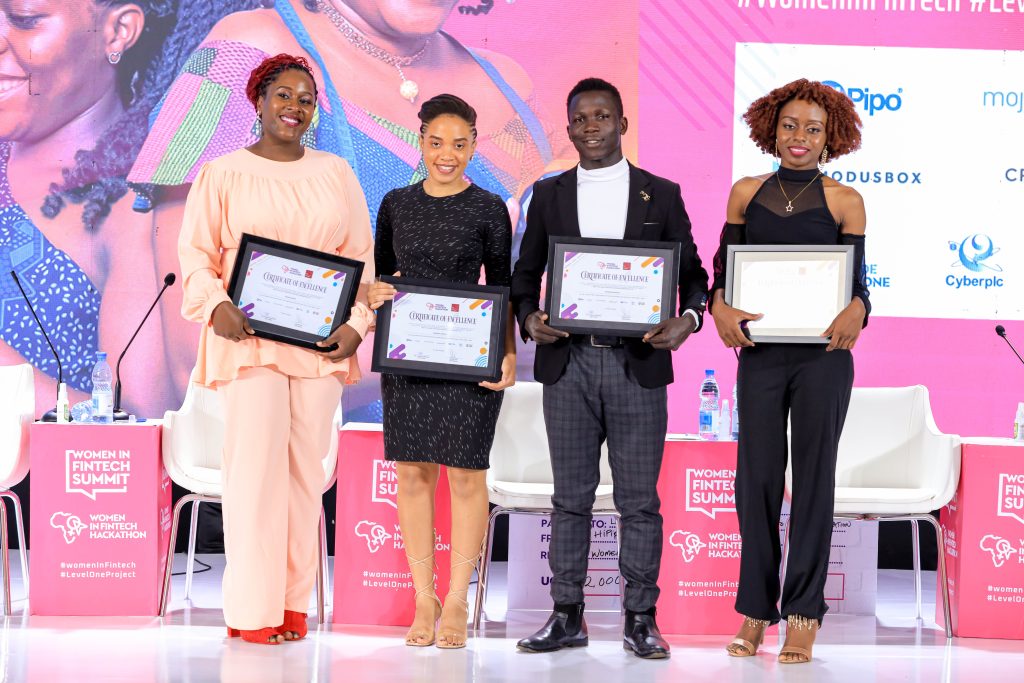
The Women in FinTech Summit was characterized by colour and pomp as the top six teams were announced and rewarded. Even so, all the 20 Teams got their fair share of the collective USD 10,000 reward prizes.   

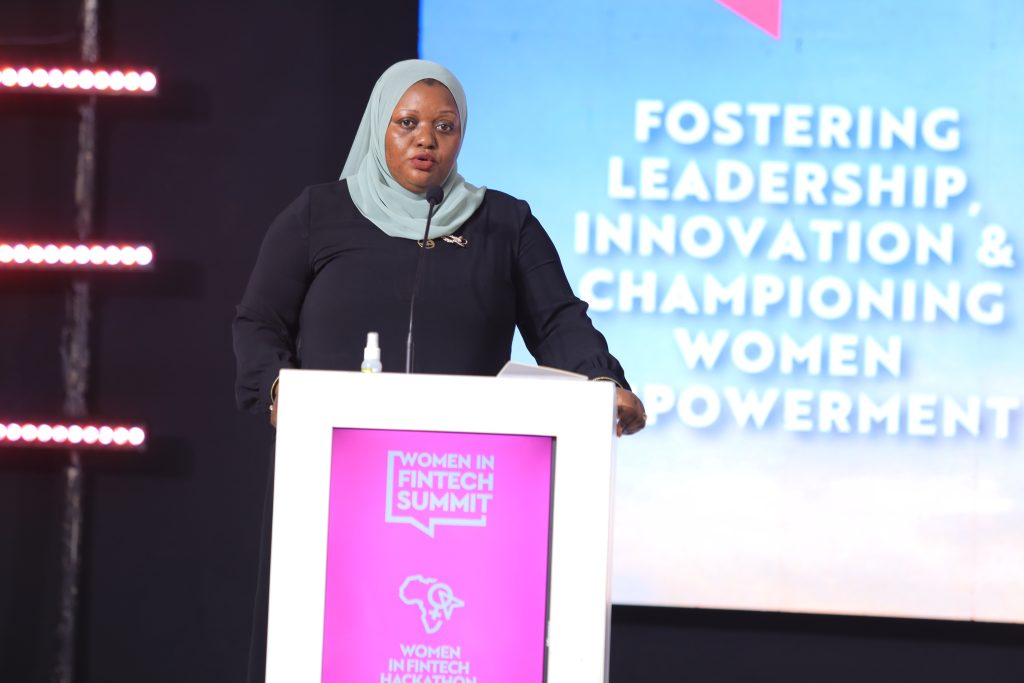
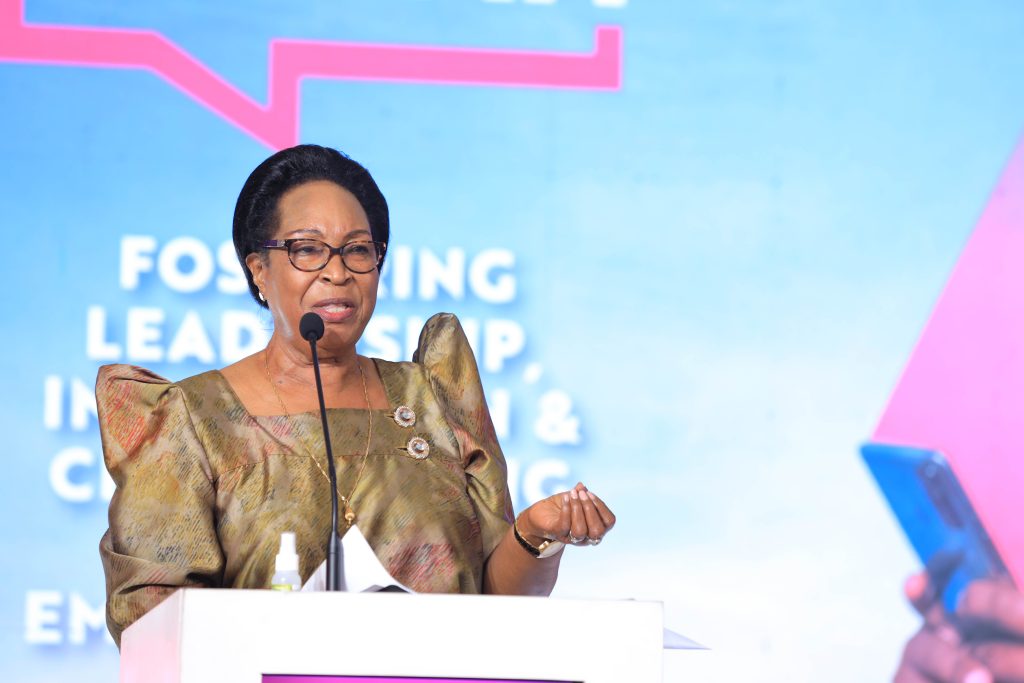
While presiding over the Summit, Owek. Hon. Joyce Nabbosa Ssebugwawo, the Minister of State for ICT noted that the Women in FinTech Hackathon is a noble idea that uplifts women and also fosters overall country development.

“We are happy that HiPipo and partners are exploring women’s formal and informal income-generating opportunities that add value to women’s lives and livelihoods using digital solutions. I thank HiPipo for applying a gender lens across all its projects and driving stakeholder influence to advance women’s financial inclusion and economic empowerment. To my daughters that have completed this program, I applaud you and thank you for your commitment. Please use this knowledge to uplift even more women,” Nabbosa said.

The Hackathon had a total of 20 women-led and women-dominated teams. Team Elevation was declared the overall winner and took home a cash prize of UGX 4,000,000 thanks to its product named Kutayarisha; which is a web-based platform that provides maternity services and products to pregnant women in Urban-rural communities with need to have timely and reliable access to maternity care.

 Academic Personal Assistant (APA), Oliwa Events, and Go Green came second, third, and four respectively while both Lands Resource and Insure Wallet tied at the fifth spot.

Prof. Maggie Kigozi, who was the Hackathon Chief Mentor advised the young developers to use the opportunity presented to them to transform and improve lives of their communities.

“At an individual level, I am always ready and willing to help people attain success. If there is one piece of advice I would give all of you today, it is to pull up your sister. Please pull up your sister. Do not go alone because there is no much point. You will not go very far if you go alone,” Kigozi said. 

The Women in FinTech Hackathon and Summit were organized by HiPipo in partnership with Level One Project, Mojaloop Foundation, ModusBox, CyberPLC Academy, and Crosslake Technologies and generously supported by Gates Foundation. The Summit had several thematic panel discussions and speeches.

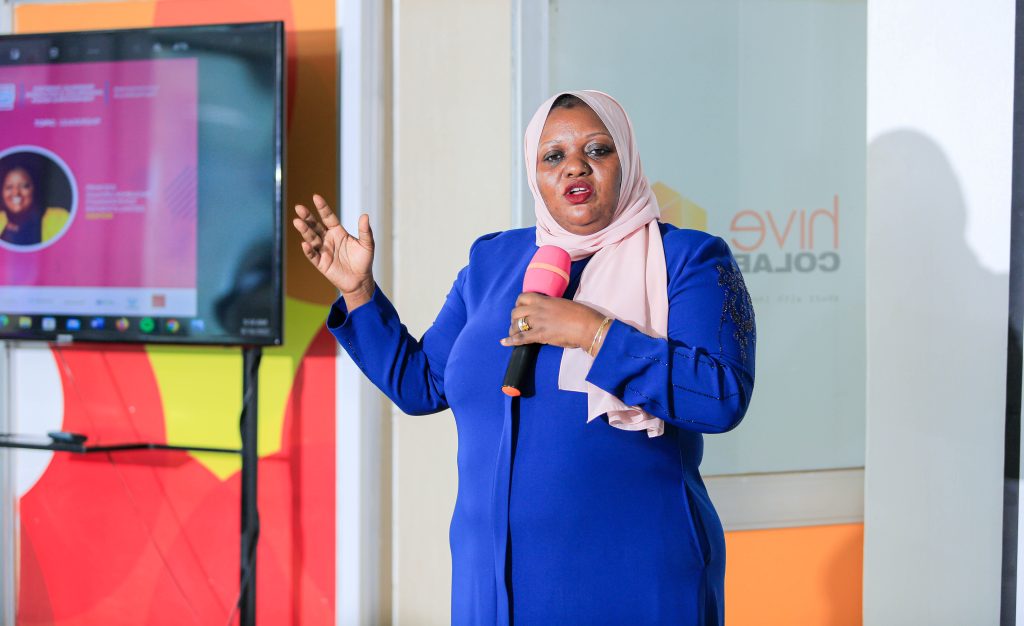
“Leadership is the ability to see the grey areas and hear the unspoken words. When I talk about this I am asking you to check yourself and ask yourself that as a woman who wants to serve my nation, where do I want to play? Do I want a leadership role, a regulators’ role, innovator’s role, an investor’s role or a consumer’s role?”, Princess Shamirah Kimbugwe, the Pivot Payments Limited founder and managing director said in her keynote address, adding;

“There is no question as to if a woman is a worthy player in the FinTech industry. There is just a question of where the woman should play in the value chain. There are a lot of opportunities for Women in FinTech. As a woman player, you have a whole list of opportunities that you can tap in to.”

On her part, Damali Ssali, the Private Sector Foundation Uganda (PSFU) chief of programmes and project officer noted that as a way of curbing high transactional costs in the financial technology industry, PSFU is working with partners, particularly HiPipo and Gates Foundation to implement the Pearl of Africa Instant and Inclusive Payment Switch.

2022 Women in FinTech Hackathon participants make final presentations

Our Reporter.

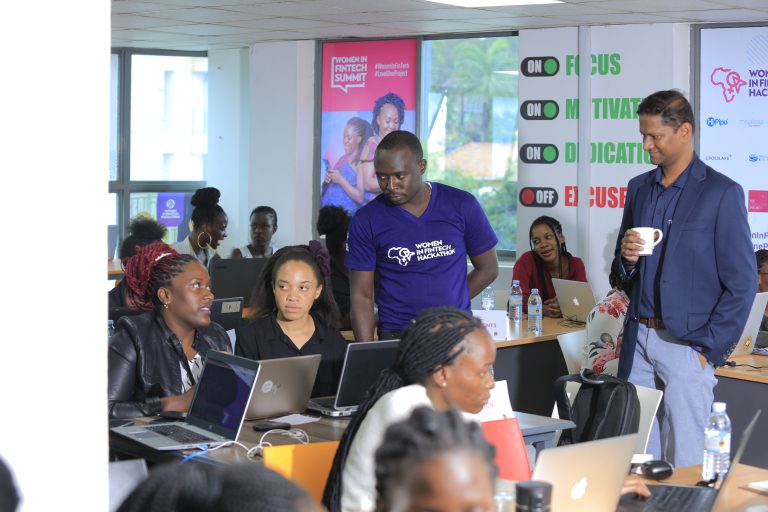
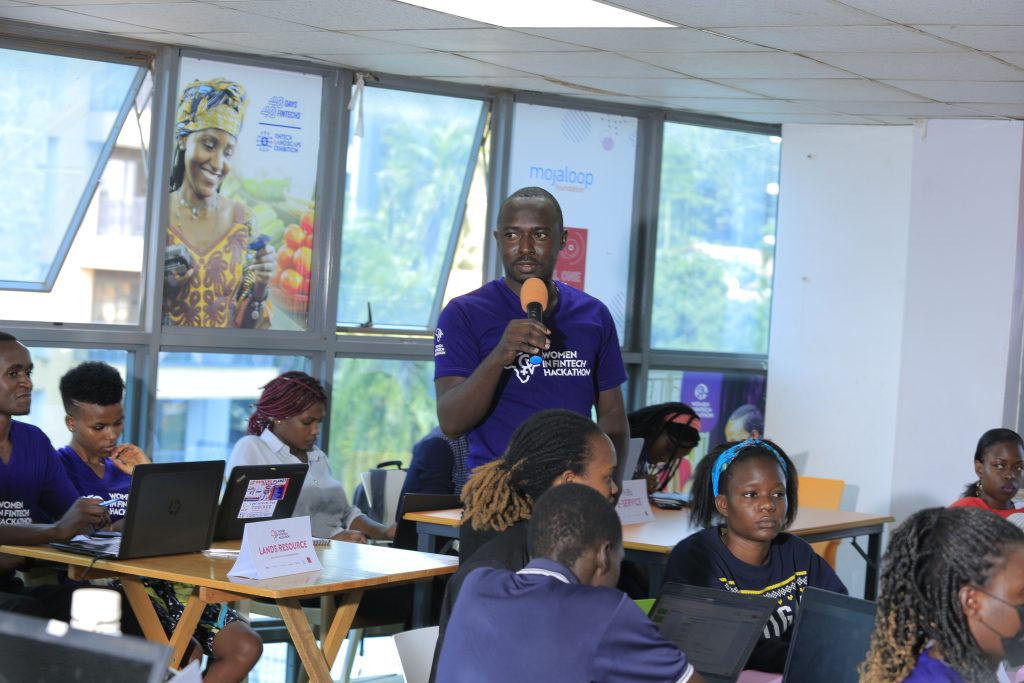
After over a week of ideation, designing, developing, and coding, the 2022 Women in FinTech Hackathon reached its climax on Thursday 15th September with the 20 teams presenting their final minimum viable products (MVPs) to the judges.

Day five was very tense and action-packed as participants prepared for the final pitches. The 20 teams that made the final submissions were Her Duuka, Funa House Property, Tawaza Digital Varieties, Lands Resource, Oliwaa Events, Lima Pesa, Jibu, Academic Personal Assistant (APA), The Platter, Rental Pro, Sayl Kare, E-Truck Service, Insure Wallet, The Fintech Devotee, Tegeka Investment Club, Go Green, Autopay, Elevation, Sueno and Izere Education.

According to Innocent Kawooya, the HiPipo CEO, all teams met the minimum expectations of the Hackathon as they were able to have working MVPs and also integrated payment solutions from third parties.

“We have been amazed by what we have seen today. The twenty teams have really put in a lot of effort and extra hours to reach this far. From their presentations and product tests, you can clearly see great solutions,” Kawooya said, adding:

“It will be interesting to see how they move to the next steps in their products’ development. As prototypes, they are good, but then they have and in fact, must put in extra effort to complete the job at hand. We promise to continue supporting them in every way possible.”

On her part, Cleopatra Kanyunyuzi, the Hackathon Lead Facilitator and CEO of Club Tangaza noted that as a trainer, she was excited to see how the teams improved each passing day. She thanked the participants for their commitment to the hackathon and the broader women inclusion drive.

“It has been a busy week but yes, the teams have been very committed. You can see that each team has had tremendous growth compared to when they came here. On behalf of the facilitators, we wish all the teams the best for the future. Let them continue with their products even after the Hackathon,” Kanyunyuzi noted.

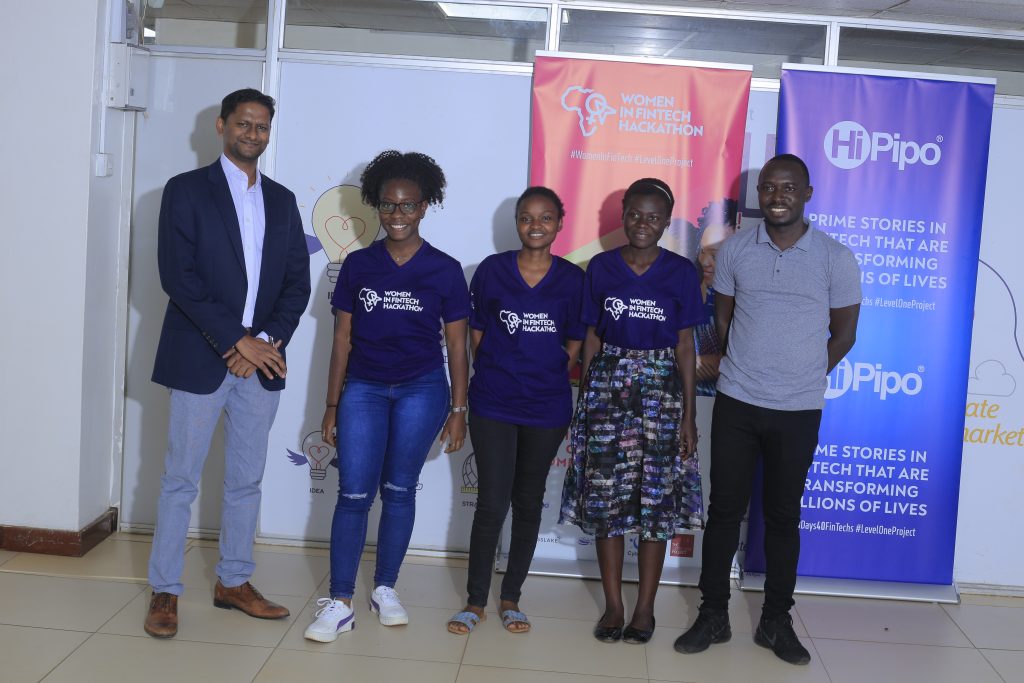
Now in its third edition, the Women in FinTech Hackathon is part of HiPipo’s commitment towards empowering women with the required digital and financial inclusion skills so that they can go out there; innovate, prosper, earn and develop their families and communities. 

The winners of the 2022 Women in FinTech Hackathon will be unveiled on Friday 16th September at Mestil Hotel and rewarded.

“We are all set for the Women in FinTech summit, which is a culmination of the Women in FinTech Hackathon. All participants are looking forward and optimistic about winning. The top 5 teams will be announced and rewarded at the summit. Even so, all participants will take home something because they are all winners. I take this early opportunity to congratulate all of them,” Charlotte Neeza, the HiPipo FinTechs Events Manager noted.  

The Women in FinTech Hackathon, Summit, and Incubator project is presented by HiPipo in partnership with Level One Project, Mojaloop, ModusBox, CyberPLC Academy, and Crosslake Technologies and generously supported by Gates Foundation.

Women Innovators tipped on how to succeed in a male dominated FinTech Industry

0

Our Reporter.

Over the years, the financial technology industry has been male-dominated. However, a lot of effort has in the recent years been geared towards changing this, some of which is already bearing fruits.

According to Princess Shamirah Kimbugwe, the Pivot Payments founder and managing director, while gender imbalance is still a challenge, the industry has over the years matured and now prioritizes knowledge and skills.

“In comparison to other industries like banking, legal, and medicine; technology is more open, inclusive, and more welcoming. Half the time, people in technology don’t want to front their religion, tribe, race or gender,” Kimbugwe said.

She added: “Technology is about the leadership, the knowledge and skills you bring on to the table. The technology industry is about performance regardless of your gender. I have personally witnessed this transformation over the more than 14 years I have been in this industry.”

Kimbugwe revealed this while mentoring the 2022 Women in FinTech Hackathon participants. She further urged them to continue with the journeys ‘they have started because the FinTech industry is fast growing with a lot of opportunities.’

“The future of the FinTech industry is very bright. We are seeing more investment, interest from abroad, product diversity, and more homegrown products. That said, we must all agree that innovation has to work very closely with regulation,” she said.

Pivot Payments is a Bank of Uganda licensed financial technology company that is building a Pan African Neo Bank and serving export labourforce users who have typically been financially exploited or excluded. The company currently serves more than 250,000 customers and has processed more than two million transactions in less than five years.

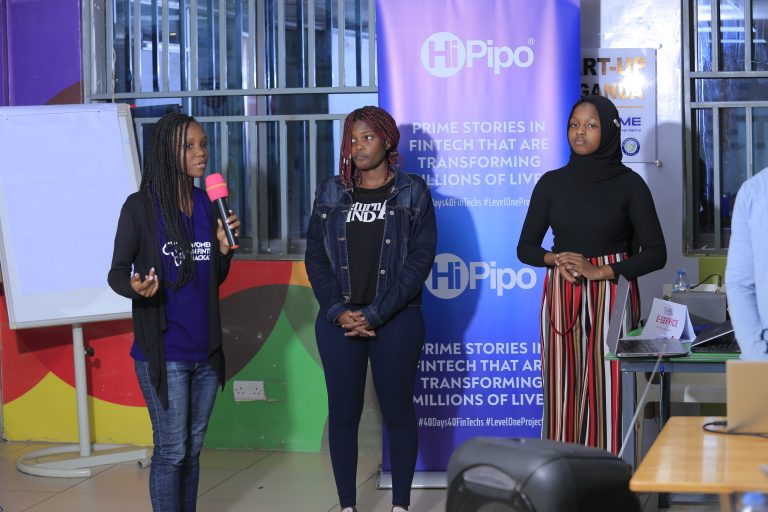
Meanwhile, Day four of the 2022 Women in FinTech Hackathon activities included the 20 participating teams pitching their products, testing Mojaloop open source software, and presenting their minimum viable product (MVP) phase two. A product pitch is the process of presenting to and persuading potential investors to buy into the idea of investing in your product. 

According to Mastulah Sarah Nakisozi, the Jibu Team Leader, the Hackathon has so far been a great learning experience for her and all participants.

“As a student of computer science, my skills have improved through software development, and prototype creation using different platforms. I have also improved my communication and pitching skills,” she said.

The #WomeninFinTech Hackathon will culminate into the Women in FinTech summit on Friday 16th September, where the best performing teams and individuals from across East Africa will be announced and receive their share of the USD 10,000 collective prize money. The best teams will also automatically qualify for the Women in FinTech Incubator program that will run until January 2023.

The Women in FinTech Hackathon, Summit, and Incubator project is presented by HiPipo in partnership with Level One Project, Mojaloop, ModusBox, CyberPLC Academy, and Crosslake Technologies and generously supported by Gates Foundation.

Women in FinTech Hackathon participants introduced to Mojaloop Open Source Software

Our Reporter.

Day three of the ongoing Women in FinTech Hackathon was action-packed, with participants working on their products’ MVP phase one.

In products’ development, MVP stands for a minimum viable product. According to ProductPlan, a minimum viable product (MVP) is a product with enough features to attract early-adopter customers and validate a product idea early in the product development cycle. The MVP is a critical milestone in the product development ecosystem.

Minus the MVP, the participants were also introduced to Mojaloop Open Source Software.

According to Sam Kummary, one of the developers of Mojaloop, this software was designed to provide a reference model for payment interoperability. It can be used to overcome barriers that have slowed the spread of digital financial services.

In his presentation, Kummary took the teams through how developers and innovators can freely use the Mojaloop core code, join the community, and build inclusive, real-time payment systems to help support economies. He shared in-depth insights on the Mojaloop scheme, hub and platform and the roles that each play.

“Mojaloop can be used to create interoperable payment solutions in areas such as person to person transfers, payroll and other bulk payments, account management and fraud monitoring,” Kummary said.

On his part, Innocent Kawooya, the HiPipo CEO noted that innovators can use Mojaloop to develop secure and interoperable payment systems that are acceptable globally.

“Payments Schemes around the world are in the process of implementing, or considering implementation, of Mojaloop-based interoperable payments systems. Women in FinTech Innovators can use Mojaloop open-source software to support financial services companies, government regulators, and others taking on the challenges of interoperability and financial inclusion,” Kawooya said.

Still on Day 3, the teams were mentored on Product Management. This session was delivered by Mercy Angela Nantongo, the EzyAgric Product Manager.

Nantongo noted that Product Management is a continuous process that ensures that both the product owners and customers get the best results possible.

“Product Management is important as it is the first interaction with customers before any issues arise. It plays a key role in product marketing at initiation, before you build, while building the product, and after you complete the product. Product Management ensures that you are on top of the market trends. It ensures that your customers get the best quality of your product,” Nantongo said.

Organized by HiPipo in partnership with Level One Project, Mojaloop Foundation, ModusBox, CyberPLC Academy, and Crosslake Technologies and generously supported by Gates Foundation, the 2022 Women in FinTech Hackathon has brought together 20 women-led teams this year. The week-long Women in FinTech Hackathon will culminate into the Women in FinTech summit on Friday 16th September at Mestil Hotel, Kampala; where the best performing teams and individuals from across East Africa will be announced and receive their share of the USD 10,000 collective prize money. The best teams will also automatically qualify for the Women in FinTech Incubator program that will run until January 2023.

SafeBoda launches SafeCar, cashless convenience to car transportation

0

SafeBoda announced the immediate launch of its car-hailing service — SafeCar. The company is bringing its expertise in the boda industry to revolutionize the car and taxi industry in Uganda and Nigeria.

SafeBoda believes that the future of urban transportation is about community, supporting drivers to make more money, enhancing their welfare, and giving customers a convenient world-class cashless experience. SafeBoda does things differently — no hassle, no negotiation with a friendly, happy driver.

Commenting about the launch, Rapa Ricky Thomson, the SafeBoda co-founder, and director says: “We’re very excited to launch SafeCar in our Super App with a safer, more convenient solution than what is offered in the market. We’ve talked to drivers and passengers, tested our product, and we are going to change transportation in Uganda forever, we are going completely cashless.

Cashless, hassle-free and no negotiation

All SafeCar trips are cashless. No change is needed. Customers use the SafeBoda Wallet to conveniently pay for a trip and don’t have to negotiate with drivers as they are paid via their SafeBoda Wallet.

Users can deposit in their wallet via Mobile Money, Agents or giving cash to the driver! Customers also earn interest on any balance they have on their SafeBoda wallet via the Savings product.

Happy community for boda and car drivers

To date, SafeBoda hosts a community of over 27,000 motorbike drivers that transport customers within the Kampala Metropolitan region. Adding the car and taxi driver community will see the overall community grow as many join the company’s mission.

As Ricky Rapa Thomson adds, “Car drivers have the same needs as boda boda drivers and SafeBoda can provide a great livelihood for all. Our drivers will be happy and make more money with SafeBoda. We are in the business of making communities thrive and our car drivers will now join us!”.

Moses Musinguzi, SafeBoda’s very first driver and currently a Senior Operations Manager, says, “SafeBoda has always cared for its driver community, and I am a testimony of this, having been part of the journey from the start. The launch of cars is another opportunity for the community to grow and thrive. The onboarding process is smooth and friendly, in addition to the numerous benefits of being a SafeCar driver. We offer in-person support instead of online because we understand that human interaction is better, and we are offering balanced prices while leveraging our 1 million customers.