Home Blog Page 65

MoKash’s 9.7 million subscribers make NCBA the biggest Bank in terms of Account Holders

Our Reporter.

The second wave of the Covid-19 pandemic has left majority Ugandan businesses and even individuals in desperate need of a financial bailout. Sadly, many of them could hardly access credit due to lack of security and other necessary requirements.

However, there has been a reprieve for more than nine million Ugandans who have used their mobile banking accounts to acquire quick loans.

Through MoKash, a money lending and savings platform hosted by MTN Uganda, NCBA Bank Uganda Limited is helping over 9.7 million customers to get low-cost unsecured credit in the shortest time possible.

With the 9.7 million MoKash accounts, NCBA automatically becomes the biggest bank in Uganda in terms of Account Holders.

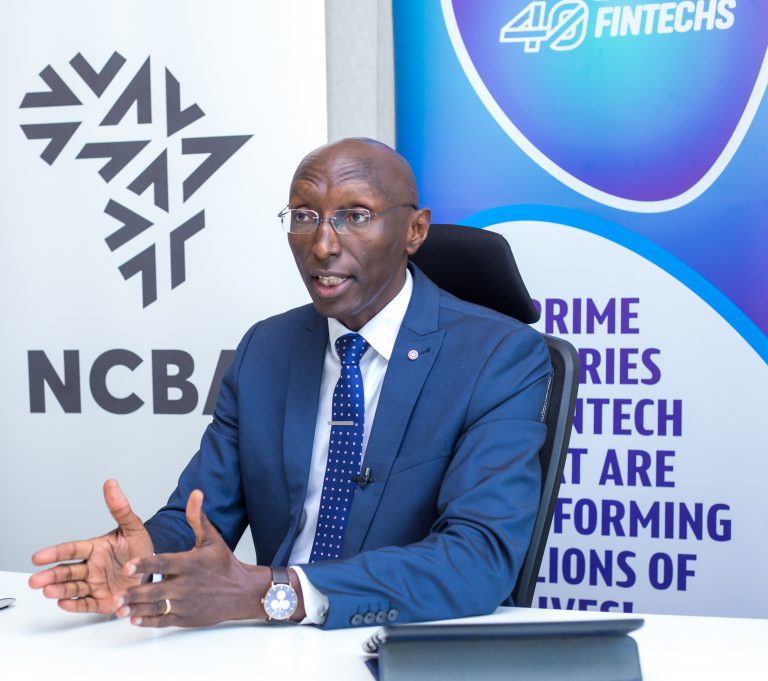
“The partnership with MTN Mobile Money Uganda Limited allows us to continuously extend financial services to millions of Ugandans through the mobile channel. It is a great partnership that is positively contributing to the deepening of the financial inclusion agenda in Uganda,” says Anthony Ndegwa, the NCBA CEO

Anthony Ndegwa however adds that the advent of the Covid-19 pandemic has presented both challenges and opportunities for economies and businesses world over, one of them being failure to repay loans. 

“Our MoKash service has experienced similar trends,” he says.

As part of their financial management process during the pandemic, they have worked with MTN to increase customer engagement with a view of improving their appreciation of the changes happening within the environment, and how to adapt to these changes.

“The increased focus on customer engagement has helped to maintain the momentum on customer repayments. Additionally, we provided some relief to customers during this period, as supported by the Bank of Uganda to allow our customers deal with the new realities that came with the pandemic,” he adds.

In addition to the MoKash service, Ndegwa says NCBA bank recently opened an MTN Escrow Account that allows them to provide Float Management Services to MTN Agents and Customers. 

“We will continue to innovate in this space to ensure that we are positively impacting the lives of Ugandans,” he says.

Future bright

Meanwhile, Ndegwa notes that there have been great strides in Uganda’s Fintech industry over the past few years.

He explains that just like the rest of the world, the disruption brought by digital technologies has ushered in new opportunities that innovators are quickly taking advantage of. 
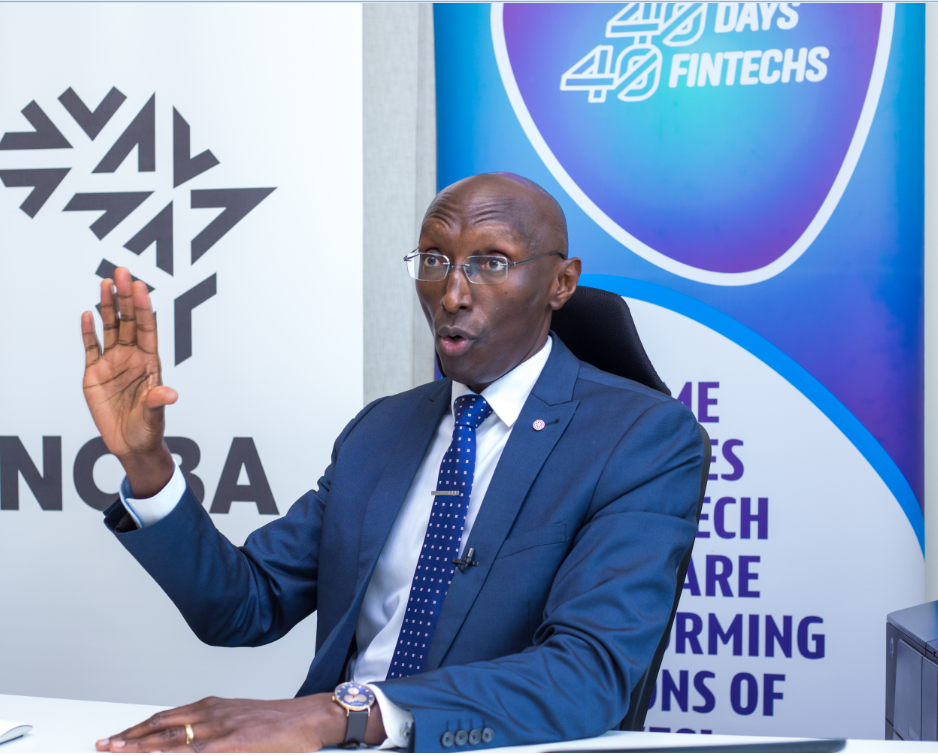
“With the introduction of the new regulation (National Payment Systems Act 2019) to support innovation in the Fintech space, Uganda will soon be a hub for financial services innovation,” he says. 

40-Days-40-FinTechs

Ndegwa appreciated the organizers of the second edition of 40-Days-40-FinTechs initiative, noting that while there has been a lot of positive change in the FinTech landscape, locally and globally, there have not been many platforms to showcase these initiatives here in Uganda and across Africa. 

The 40-Days 40-FinTechs initiative is organised by HiPipo in partnership with Crosslake Technologies, ModusBox and Mojaloop Foundation, and sponsored by the Gates Foundation.

“With the 40-Days-40-FinTech’s initiative, Innovators now have a platform that sheds light on the big transformations happening within the Digital Financial Services space,” he says. 

The resultant effect is an overall improvement in the quality and quantity of innovations coming into the Fintech space.

The HiPipo Chief Executive Officer Innocent Kawooya says the 40-Days 40-FinTechs initiative seeks to boost the African FinTech ecosystem to enable innovators enjoy sustainable profitability to help them design and deploy affordable and inclusive financial services especially for the poor.

40 Days 40 FinTechs season two started on 12th July, 2021 and has since featured 42 players in the FinTech ecosystem. It will culminate in the scientific FinTech Landscape Exhibition to be held on 2nd September, 2021.
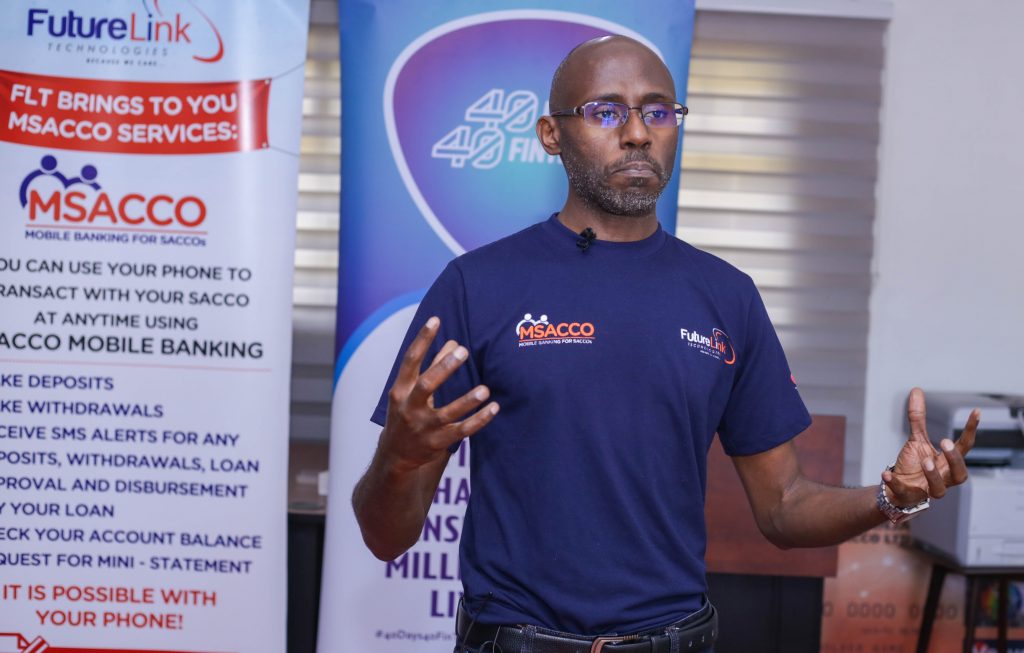
FutureLink Technologies is enhancing low income earners’ financial resilience

By Our Writer.

While the Uganda Bureau of Statistics indicates that there has been a reduction in national poverty levels over the years, majority Ugandans still live in poverty.

Even those who manoeuvre their way out remain just a shock away from falling back into poverty, mainly because they lack resilience mechanisms.

Seeking to close this gap, FutureLink Technologies set out to build the financial resilience of low and medium income earners in Eastern Africa, through financial inclusion so as to create opportunities for all.

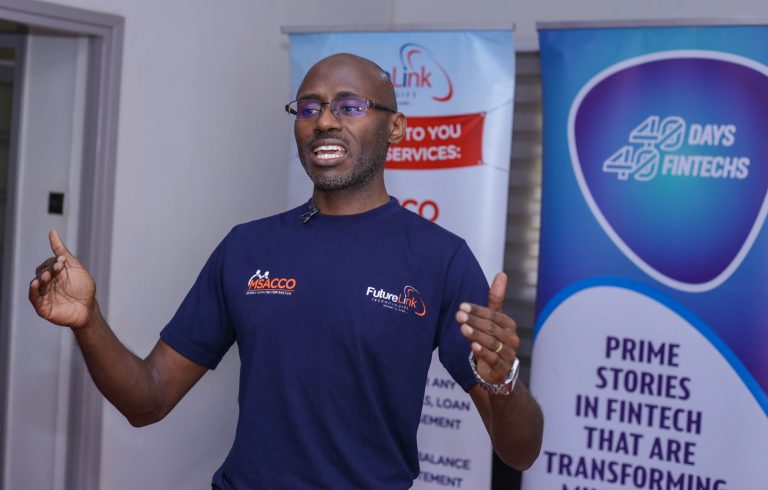
According to the FutureLink Technologies Chief Executive Officer Vincent Tumwijukye, the firm leverages the relevance and outreach of Saccos and Micro-Finance Institutions (MFIs) to enable the low-income earners grow personal savings, access affordable credit and make payments using digital channels.

Through its Ecosystem core banking product, the company de-risks the Saccos and MFIs it works with. It also manages their network and Server infrastructure, which has helped lower their monthly infrastructural expenses to $18 from $200.

The company also offers a mobile banking switch, which enables end consumers to access a variety of services provided by its partner Saccos.

This, Tumwijukye says, has empowered the end consumer and enabled them choose products that best serves them. He says that at one of the Saccos, members access credit at 9.75% per annum.  

“It is the first time that we have a financial service provider offering credit for as low as 9.75% interest. Money lenders are lending at 240% per annum. This is a phenomenon because not even a commercial bank is doing that! This explains the power of leveraging technology,” Tumwijukye says.

He says the company serves 300 Saccos and MFIs across the country, with a customer base of about 1.2 million, of which 390,000 are women.

The services can be accessed on a feature phone through the USSD, an App on smartphones and via the web.

Tumwijukye, however, notes that lack of phone ownership by women has contributed to their lower uptake of digital financial services.

FutureLink Technologies integrated with leading mobile money providers and Interswitch to ensure real-time transactions so as to build trust among users.

“We know that for the end-consumer in the village, the moment there is a slight challenge in verification or reconciliation, it will affect their confidence in the product. This was the first thing we resolved,” he says.

Bright future

Tumwijukye says that Uganda’s FinTech industry’s future is bright, owing to, among others, the enactment of the National Payments Systems Act.

“We are beginning to see more trust coming in from the different stakeholders as a way to advance the financial inclusion agenda,” he notes.

To further support the industry, Tumwijukye says there is need for the government to fight corruption and offer space for value creation.

Additionally, he says government needs to continue to understand that FinTech is a platform upon which the economy ought to stand and thus rather than taxing it, support it to grow and then tax the services built on the platform.

“Taxation needs to recognize the role of FinTech as a way to enhance accountability, to bring to the limelight the value creation and as a way to get reasonable data upon which policy could be made,” he notes.

FutureLink Technologies is among the firms participating in the second edition of the 40-Days 40-FinTechs initiative organized by HiPipo in partnership with Crosslake Technologies, ModusBox and Mojaloop Foundation, and sponsored by the Gates Foundation.

Tumwijukye applauds HiPipo for the initiative, saying that it offers the industry a possibility of convergence of purpose.

He, however, advises that FinTech players need to move from just technology and being excited about having real-time settlement, to a greater purpose of enhancing the financial resilience of the people.

The HiPipo Chief Executive Officer Innocent Kawooya says FinTech is the launch-pad on which the promise of full global financial inclusion will be fulfilled.

He, however, notes that FinTechs need to be prepared with appropriate products and have appropriate real time payment systems in place to support an inclusive, interoperable digital marketplace that is both thriving and safe.

FutureLink Technologies can be accessed at www.fltug.com

Airtel Money is delivering banking services to the unbanked

By Our writer.

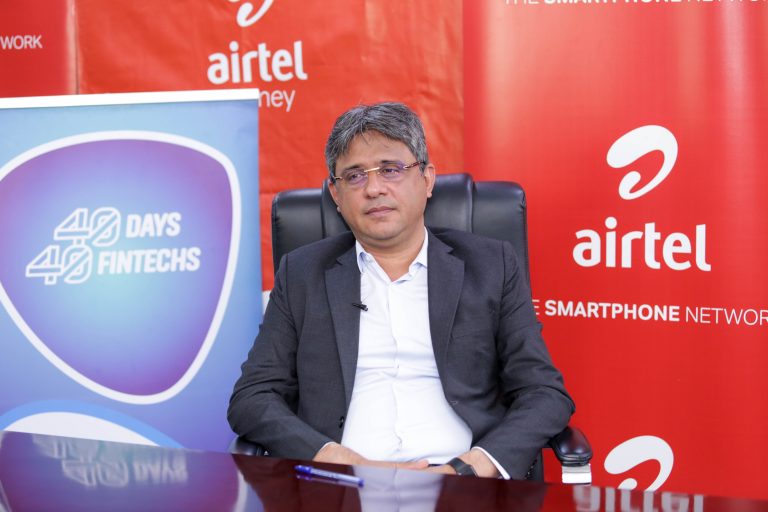
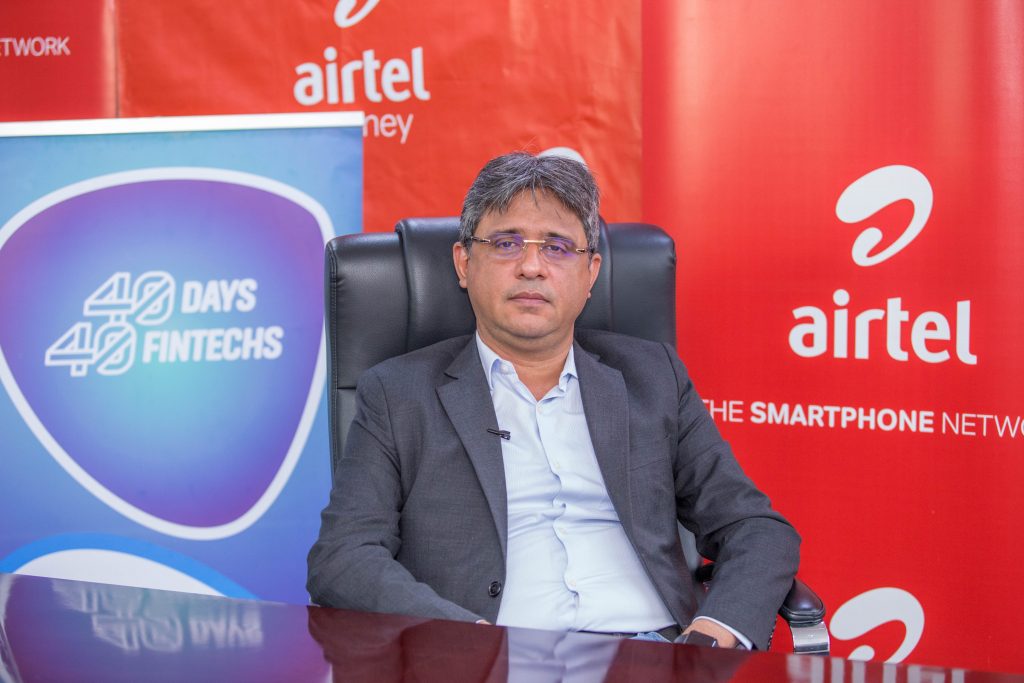
The low transaction costs, innovative products and a wide network coverage that makes its products and services easily accessible to everyone, irrespective of location, has made Airtel Mobile Commerce Uganda Limited “a bank” for people who were previously unbanked. This is according to the Airtel Uganda Chief Commercial Officer, Amit Kapur.

Amit Kapur says that while majority of Ugandans had been excluded from the financial system partly because services were out of reach for people especially those in rural areas, Airtel Mobile Commerce has over the years invested to ensure that such access financial services.

Apart from offering mobile money services, Airtel Mobile Commerce, which was recently given a payment services license by Bank of Uganda following the enactment of the National Payments Systems (NPS) Act, also offers savings and loan products.

“People at the bottom of the pyramid need savings and loan products like anyone else but their requirements are simpler; they want products which are convenient, safe and affordable and our products are designed keeping those requirements right at the heart of it,” he says.

He adds that it is the designing of customer-centric products that will help the country achieve the financial inclusion agenda.

On its savings product, Kapur says that the institution offers a 5% interest rate on daily average finances as it seeks to maximize the benefits to customers while ensuring convenience and safety of their money.

In addition to the current loan and savings products which it offers in partnership with partners like JUMO and KCB, Kapur says that the organization is in the process of launching Quick Loans – a check-out loan product that will be accessed across the country.

 “We have worked all this past period to expand the role of Airtel services to drive financial inclusion right down the person at the bottom of the pyramid. We know that driving financial inclusion to the bottom of the pyramid is a huge task but that is the reason we exist,” Kapur notes.

He adds: “Our services can be accessed at any location through our vast network of 110,000 agents and the 1,400 Airtel Money branches across the country.”

Additionally, Kapur notes that while the COVID-19 pandemic has disrupted businesses across the entire African continent, it has also brought forward the entire digital financial services industry forward by a couple of years.

“The pandemic has put this industry right at the centre of ensuring financial inclusion to the bottom of the pyramid. Using cashless financial services like mobile money is one important way in which you can reduce contact and the risk of COVID-19 transmission,” he explains.

To achieve full financial inclusion, however, Kapur says there is need to build an entire eco-system so that one does not have to withdraw the money from their mobile money account to complete a transaction but simply pay digitally. He says there is also need for more digital savings and credit products.

 “It is important to build the ecosystem; and that is where partnerships with the various merchants, banks, partnerships to build savings products, partnerships to build loan products, which become extremely critical for the development of this entire ecosystem, are important,” he notes.

Airtel Mobile Commerce Uganda Limited is among the firms participating in the second edition of the 40-Days 40-FinTech initiative that is organized by HiPipo in partnership with Crosslake Technologies, ModusBox and Mojaloop Foundation, and sponsored by the Gates Foundation.

Kapur says that the initiative has created visibility that will accelerate uptake of the various innovative solutions on the market to further boost financial inclusion.

He adds that with NPS Act, BOU guidelines and the excitement from players, Uganda is in the process of building a vibrant FinTech industry that will be among the most vibrant ones across the continent.

The HiPipo Chief Executive Officer, Innocent Kawooya says that the second edition of the 40 Days 40 FinTechs has showcased several innovations around distributed ledger technologies, Artificial Intelligence, Big Data, Automated Customer Relationship Management, cash management and lending platforms, among others. He adds that this is an indication that with the right support, FinTechs will help Uganda and Africa achieve full financial inclusion.

KaCyber In Partnership With Private Sector Foundation Uganda To Onboard Bus Operators On A New Ticketing App

Private Sector Foundation Uganda (PSFU) in partnership with MasterCard Foundation through the COVID-19 Economic Recovery and Resilience Response Program (CERRRP) have supported KaCyber Security Technologies Limited, a transportation and logistics technology company whose mission is “to make seamless mobility a reality in Africa” to pilot an electronic ticketing system together with bus operators that will close income leakages and enable passengers to pay for bus tickets online, in a safer and more convenient way.

The Covid-19 pandemic has changed the way many businesses operate and KaCyber’s Electronic Ticketing solution brings unprecedented efficiency in Uganda’s transport sector.

While signing the agreement the Chief Executive Officer and Founder of KaCyber, Mr. Innocent Orikiiriza together with his team, emphasized that their digital solution will minimize income leakages, reduce operational costs while providing a safer and convenient ticket booking experience to their public transport users. He said the current data reveals that transport operators lose 30 to 40 per cent of their revenue when using manual booking systems.

Because of what the sector is going through, Private Sector Foundation Uganda and KaCyber are optimistic that this digital solution will add value to the transport sector by contributing towards national efforts on safety and business recovery and resilience in the face of the COVID-19 Pandemic.

He reiterated that the new Electronic Ticketing App would create convenience for passengers, who have had to endure the chaos to physically visit bus parks just to book a ticket for their trips.

The Private Sector Foundation Uganda is confident that this new technology is an opportunity for Uganda’s transport industry to transform and benefit both passengers and the business owners in the sector. Private Sector Foundation Uganda has offered UGX 35,134,500 (Thirty Five Millions One Hundred Thirty-Four Thousand Five Hundred Shillings Only) to this programme that will see KaCyber onboard new users on its Online ticketing App and also enable bus operators to pilot the new system and reap the benefits and efficiency provided by the system.

EzyAgric is providing ready market, digital loans and agro-inputs to farmers

By Our writer.

Smallholder farmers have for long been exploited and cheated at various stages of the agricultural production; be it buying inputs, where they have been sold counterfeits, or selling their produce, where they have been exploited by middlemen who offer them very low prices.

This has played a great deal in keeping them in abject poverty.

Observing this with great pain, a group of four passionate software and computer engineers, set out to salvage the farmer.

Leveraging technology, the group developed the EzyAgric mobile and web Application, to provide a platform for farmers across the country to access genuine agricultural inputs, markets, and information so as to improve their harvest and raise their living standards.

Through the App, the platform provides a one stop centre for everything a farmer needs, right from garden mapping and planning, buying inputs to market access.

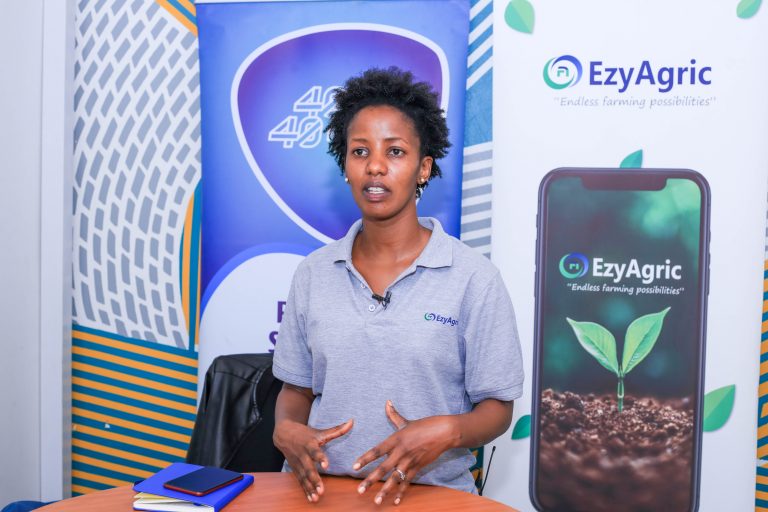
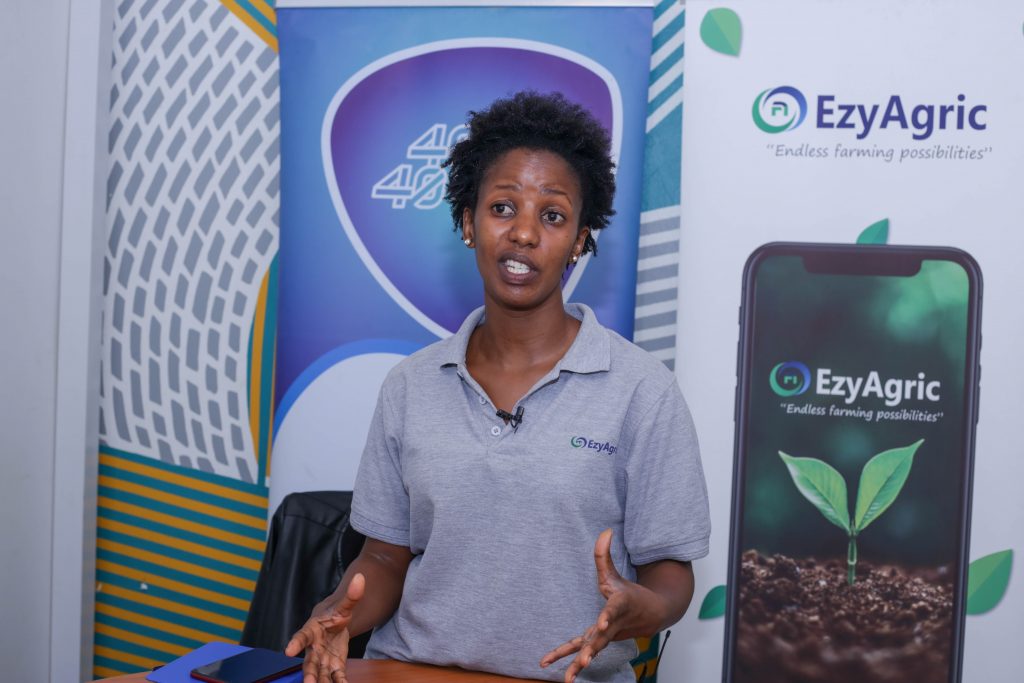
According to Esther Karwera, the EzyAgric co-founder and Head of Business Development and Marketing, the platform is built to address gaps around soil quality/testing, quality seeds availability, right fertilizer availability, farming tools, weeding methodologies, harvesting, post harvesting handling and linkage to profitable markets.

The platform, according to Karwera, helps farmers connect to suppliers, produce market, buyers and financial institutions, among others.

Farmers also access extension and advisory services through the platform. These may include advise on soil testing to enable a farmer apply the right type of fertilizers, do garden mapping for estimation of input quantities and expected yields among others.

EzyAgric also links farmers with buyers at the most competitive price on the market.

Once one sells their produce through EzyAgric, they can also receive their payment through mobile money. Karwera says they are in the process of integrating with banks so that those who prefer receiving their money on their bank accounts do so.

 “The App presents a less- laborious approach to agriculture. Previously we thought that for one to do agriculture, they should have a hoe, have a garden and move to access genuine inputs or wait for the market. EzyAgric is re-writing the story of how agriculture is done in Uganda and beyond,” Karwera says.

She adds: “With this App, once a farmer’s crops are infested by a certain pest, all the farmer needs to do is to take a picture of the pests in their gardens and sending it to the App and they will be given feedback on the possible pesticides to apply and genuine suppliers.”

Usage

She says that 250,000 farmers have accessed services through the EzyAgric platform, with over 30,000 of them being financially active – they are buying agricultural inputs and selling their produce on the App. Additionally, 40% of the 250,000 farmers are women.

Karwera also notes that the AgriTech is developing EzyCredit; which using the farmer’s data, will enable them get affordable credit from EzyAgric or a partner financial institution.

To use the platform, one needs to download and install the EzyAgric Farmer App from Play Store on their smartphone and then register for an account using their mobile phone number.

Karwera, however, says that even farmers without smartphones can access the EzyAgric App through a network of village agents, who visit them regularly.

She, however, says that it would have been better and seamless if every farmer could own their own smartphone and interacts on the platform on their own.

She also alludes to the connectivity challenge, saying that there is need for infrastructure improvement to ensure the right digitization of the value chain to improve and lower production costs.

EzyAgric is among the firms participating in the ongoing 40-Days 40-FinTech initiative, organized by HiPipo in partnership with Crosslake Technologies, ModusBox and Mojaloop Foundation, and sponsored by the Gates Foundation.

The HiPipo Chief Executive Officer Innocent Kawooya says the initiative is boosting the African FinTech ecosystem by enabling innovators enjoy sustainable visibility, and profitability which in turn helps them design and deploy affordable and inclusive financial services for the poor.

He explains that FinTechs have played a great role in financial inclusion across Africa, as the various products and services innovated by players are impacting millions of people at the last mile.

CardPesa is enabling small businesses access instant working capital

By Our writer

While majority of Uganda’s youth have resorted to running small businesses due to the high unemployment rate, their businesses suffer high failure rates due to, among others, inability to access credit.

This is mainly because most lenders ask for collateral, which most of them do not have.

However, Discount Cards Limited’s CardPesa solution, an online platform that enables ordinary people to access revolving credit on their mobile devices or digital wallets, could salvage them.

According to the Discount Cards Limited Managing Director, Nelson Kituuka, the solution enables people access collateral-free working capital loans instantaneously to invest in their businesses so as to maintain or increase their earnings.

 “We will not provide you money to buy a house, land or Boda Boda, but we shall give you money to fuel your Boda Boda so that you can work. We will give you money to buy ingredients to bake cakes or provide you money to ensure that your daily activities are not hindered by lack of that small ingredient you need to carry out your business,” Kituuka explains.

5Cs.

Instead of asking for physical collateral, CardPesa assesses the borrower’s credit worthiness and loan limits using five Cs – the borrower’s character, capacity, capital, available conditions in the environment and collateral – which in this case is in form of one’s bio data, references and one’s business or work place.

The borrower is, however, required to subscribe to the platform and access funds for a period of the year they have subscribed via www.cardpesa.com/signup.

Kituuka says that if one is subscribed for a year and their monthly limit is UShs500,000, they can access up to UShs6 million by the end of the year, as long as they pay back the borrowed money for that particular month within 30 days.

Basing on one’s credit history on the platform; their limits can be increased and even given better service, according to Kituuka.

To provide the loan service, CardPesa integrated into Airtel Money, MoMo Pay and banks to easily provide instant credit to its clients.

For safety, the CardPesa platform uses a two factor-authentication. A user is thus required to have a secret PIN and to remove the money off the platform; they also need an operator PIN. For instance, if one uses Airtel or MTN mobile money, they will need that secret code or that to their bank account before the money can be released.

While a third of CardPesa’s clients are women, Kituuka says that women are less likely to take loans mainly because they are more risk averse.

To raise their appetite for loans, Kituuka notes that they are looking to partner with organizations that want to empower women and show them that they can borrow and use the credit to increase their revenues.

40-Days 40-FinTechs

Discount Cards is among the firms participating in the ongoing second edition of the 40-Days 40-FinTechs initiative, organized by HiPipo in partnership with Crosslake Technologies, ModusBox and Mojaloop Foundation, and sponsored by the Gates Foundation.

Kituuka applauded HiPipo, saying that 40 Days 40 FinTechs is a move in the right direction as it highlights the different FinTechs and their solutions so that the different sector players see what others are doing and seek to form synergies.

“I thank HiPipo for initiatives like 40 Days 40 FinTechs. To win as FinTechs, the public needs to know what is out there. I was one of the biggest skeptics of what HiPipo was doing but I have watched videos of the players featured and it’s incredible. As a lender, it is important for me to know that there are farmers in this place, with this amount of produce and need this amount of money,” he says, adding that the biggest problem for doing business in third-world countries is the inability to access information on which to base decision making.

The HiPipo Chief Executive Officer Innocent Kawooya says that this year’s edition of the 40-Days 40-FinTechs initiative has showed that there are several FinTech solutions on the Ugandan market, with things like distributed ledger technologies, Artificial Intelligence, Big Data, Automated Customer Relationship Management, cash management and lending platforms, among others being showcased.

He notes that equity of access to credit is key to achieving business success and financial inclusion.