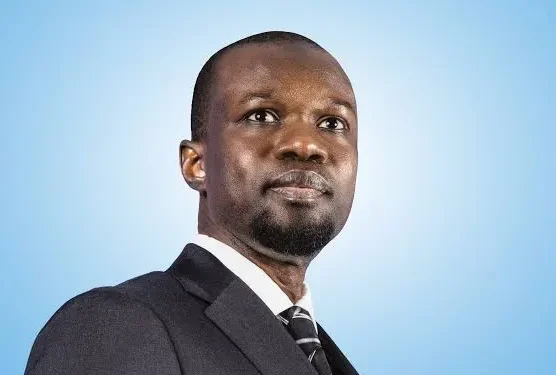
Just days after being dramatically sacked as Prime Minister, Ousmane Sonko has been elected Speaker of Senegal’s National Parliament, a stunning countermove that sets up a direct institutional challenge to President Bassirou Diomaye Faye.
The election, which took place on Tuesday, transforms Sonko from a dismissed subordinate into the second-highest political figure in the country. His Pastef party holds a majority in the National Assembly, giving him significant leverage over the president’s agenda.
The development follows months of simmering tension between the two former allies, whose once-unified front had powered Pastef to electoral victory. Now, their rupture threatens to paralyze Senegal’s government at a time of mounting economic pressure.
Sonko and Faye rose together as political insurgents, challenging the old guard of former President Macky Sall. Sonko, 51, was the movement’s fiery heart barred from running in the 2024 presidential election due to a defamation conviction, but still commanding massive support, especially among Senegal’s youth.
Faye became president with Sonko’s backing. In return, Sonko was named Prime Minister. But the alliance was never comfortable.
For months, relations deteriorated. Sonko openly criticized Faye’s handling of Senegal’s debt problems a sensitive issue for a country already under financial strain. The president, analysts say, grew weary of sharing power with a figure whose popularity rivaled his own.
On Friday, Faye made his move: he sacked Sonko and appointed economist Ahmadou Al Aminou Lo as the new Prime Minister.
But Faye underestimated Sonko’s next move.
By securing the Speaker position, Sonko has placed himself directly in the president’s path. As head of parliament, he controls the legislative agenda, committee assignments, and crucially the approval of key government policies.
President Faye cannot dissolve parliament until at least two years after the last election. Any attempt to prematurely end lawmakers’ mandates before November 2026 would be considered invalid. That means Sonko’s parliamentary stronghold is secure for the foreseeable future.
Analysts say Sonko’s elevation as Speaker could severely limit Faye’s ability to maneuver on debt restructuring, budget approvals, and major reforms.
“Sonko’s position as Speaker gives him veto power over the president’s legislative priorities,” said one Dakar-based political analyst. “Faye may be the head of state, but Sonko now controls the chamber that must approve his agenda.”
Senegal has long been considered one of West Africa’s most stable democracies. But the country has a history of high-stakes political confrontations and this latest crisis raises fresh uncertainty.
The debt-challenged nation needs coherent leadership to navigate economic headwinds. Instead, it now faces the prospect of a divided executive and a hostile parliament.
Sonko, as an opposition MP, was renowned for fiercely challenging former President Macky Sall’s policies often using parliamentary tactics to disrupt government business. He has already shown signs of adopting the same approach against his former boss Faye.
“It’s the same Sonko, just a different target,” one observer noted.
The immediate future depends on whether Faye and Sonko can find a working modus vivendi or whether their rivalry escalates into full institutional gridlock.
Sonko would almost certainly have taken the presidency himself had he not been barred from the 2024 race. Now, from the Speaker’s chair, he remains a heartbeat away from power and a constant thorn in the president’s side.
For Senegal’s citizens, many of whom admire Sonko’s combative style, the crisis is both captivating and concerning. The young people who once marched for Pastef now watch as their heroes become rivals.
The coming weeks will reveal whether Senegal’s democracy can absorb this shock or whether the Sonko-Faye rupture marks the beginning of a prolonged political paralysis.