By HiPipo Money
From dairy farmers in Rwanda to market women in Lagos, consumer‑permissioned data sharing is opening new vistas of opportunity. Yet the shift towards open finance also surfaces profound questions about privacy, power and who benefits from Africa’s digital future.
The soft whir of a smartphone motorbike app and the high‑pitched chatter of market stalls mingle in a dusty courtyard in Kigali. Inside a small house, 28‑year‑old Chantal, a dairy farmer and mother of three, swipes through an unfamiliar interface. She’s using an experimental application built by a Rwandan fintech in partnership with local cooperatives. The app links her savings group account, mobile‑money wallet and crop insurance plan. With a few taps, she can see her milk sales, contributions to the savings group and the status of a microinsurance claim filed after recent floods. What she doesn’t see are the streams of data coursing between providers: her transaction history is being pulled from her mobile‑money operator and shared with a credit bureau; her insurance premiums are calculated using rainfall data and her cooperatives’ ledger. For Chantal, the experience feels magical, an integrated financial life she never imagined. But behind the magic lies a radical change in how financial data is owned and exchanged, the essence of open finance.
To appreciate why open finance matters, one must recall Africa’s digital transformation journey. Two decades ago, an unbanked trader in Kampala or Kisumu faced enormous friction simply to send or receive money. Today, mobile‑money agents populate nearly every village, and Sub‑Saharan Africa accounts for about 65 per cent of global mobile‑money transactions. This explosion in digital payments created repositories of transaction data that, until recently, remained locked within each provider. Open finance shifts the paradigm by letting consumers “take control of their data in the financial system and gain the ability to share it with other providers”. The World Bank notes that such data sharing reduces switching costs, diminishes information asymmetry and empowers consumers by creating a level playing field between incumbents and new entrants. In simple terms, it means Doreen Nanfy, or a shopkeeper in Lagos, can authorise her bank or mobile‑money operator to share her financial history with a fintech that might offer her a better loan or savings product.
The human implications are profound. In Nigeria, open finance is no longer theory. After years of groundwork, the CBN announced that it would launch the open‑banking regime in August 2025, positioning Nigeria as the first African country to adopt this transformative framework. Operational guidelines published in 2023 lay out detailed consent management processes, requiring that customers’ consent be explicit, time‑bound and easily revoked. Banks must expose data via secure APIs, and third‑party FinTechs – once considered outsiders, can apply to become accredited API consumers or providers. For everyday Nigerians this could mean comparing credit offers, automating savings plans or aggregating multiple accounts on a single dashboard, all with peace of mind that their data will not be shared without permission. Crucially, the guidelines emphasise accessibility and user experience, aiming to make consent flows simple for people who may be using USSD on a feature phone, not just smartphones.
The excitement is palpable among innovators. “Finally, we can build the tools we’ve been dreaming of,” says Sola, the Lagos fintech founder whose startup creates budgeting and lending products for market traders. “Our customers will own their data; we won’t have to beg banks for it.” Nigeria’s open‑banking experiment is part of a broader global movement. In late 2024, a coalition including the IMF, World Bank and Bank for International Settlements issued high‑level guidelines urging public authorities to harness open finance to accelerate digital financial services and innovation. Queen Máxima of the Netherlands, the UN Special Advocate for Financial Health, reminded policymakers that open finance presents a chance to design systems that benefit those historically excluded. World Bank President Ajay Banga argued that open finance could be a game changer, helping bring services to people who had none and providing capital to millions of women entrepreneurs. Their optimism reflects a belief that data portability can unlock new credit models, micro‑insurance products, investment apps and cross‑border remittance services.
Optimism, however, does not negate risk. As more data is exchanged, new vulnerabilities emerge. The IMF guidelines caution that open finance can heighten data security and privacy risks. If big technology companies gain access to financial data without sharing their own, competition could be distorted, and consumer protection weakened. The World Bank’s digital‑finance knowledge base warns that authorities must consider how small players can meet technical standards and that volume‑based data access fees may disadvantage them. In Chantal’s village, smartphone ownership is far from universal; a recent Cenfri report notes that smartphone‑based consent models popular in Europe may not work in African settings and that alternative methods, like USSD or agent‑assisted consent, will be necessary. Cenfri also stresses that open finance carries the risk of exacerbating existing inequalities if data are misused or if the benefits accrue mainly to urban elites.
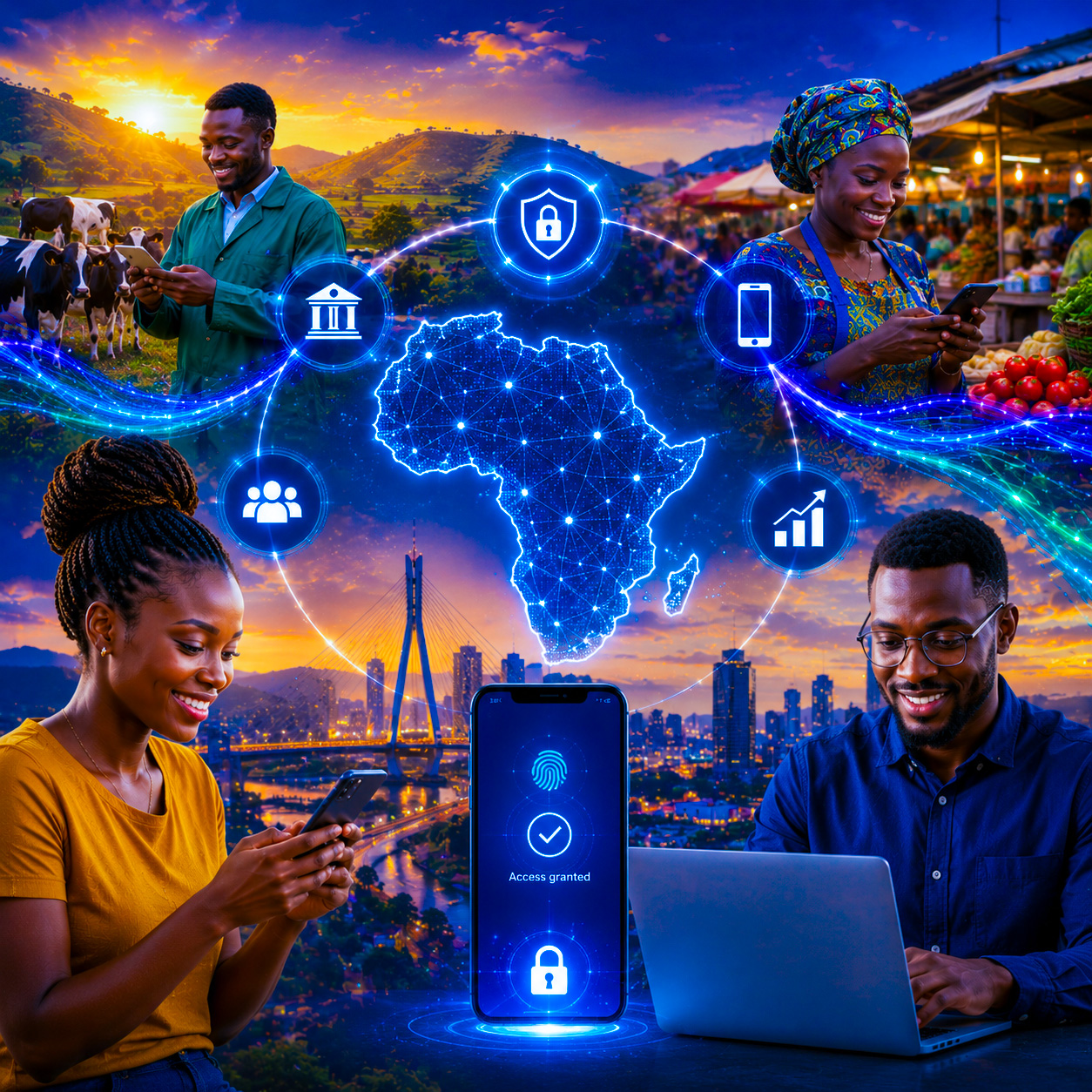
These warnings echo through community meetings in Nairobi’s Kibera settlement, where women entrepreneurs gather to discuss digital tools. “We’ve heard that new apps want to collect our data, but will they protect us?” asks Mary, who runs a hair salon and belongs to a savings group. She is right to be cautious. Without strong data protection laws and enforcement, unscrupulous actors could harvest customer data for predatory lending or targeted scams. Nigeria’s guidelines attempt to mitigate this by mandating encrypted tokens and requiring an open‑banking registry for oversight. But across much of Africa, regulatory capacity remains thin. A patchwork of data‑protection laws exists, some robust, others vague or unenforced. Civil society must therefore play an active role in holding institutions accountable and educating consumers about their rights.
Progress in other African countries illustrates the diversity of approaches. Ghana’s central bank published a draft open‑banking directive in 2024 as part of its ongoing Payment Systems Strategy. South Africa’s Financial Sector Conduct Authority has issued policy recommendations on open finance, emphasising that it extends beyond payment initiation to include a broad array of financial products. In Kenya, home to Africa’s most famous mobile‑money ecosystem, regulators are treading carefully, encouraging API standardisation while reinforcing data‑protection rules. In smaller markets such as Namibia and Zambia, feasibility studies conducted with Cenfri and Smart Africa are helping tailor roadmaps to local conditions. These roadmaps recognise that implementation will take years and must begin with foundational infrastructure, followed by pilots and gradual scaling.
Rwanda offers a glimpse into the human stories that such roadmaps must respect. The country’s early digital identity system, known as Irembo, has allowed citizens to access government services online. When Cenfri partnered with the National Bank of Rwanda to explore open finance, they discovered that many consumers still rely on feature phones. So they designed consent prototypes using both USSD codes and agent support. Farmers like Chantal were consulted on what information they would need to feel comfortable sharing data. The resulting approach emphasises clear explanations of what data will be shared, why it matters and how long the permission lasts. It also highlights the importance of intermediaries, cooperatives, savings groups, agents, in building trust. Similarly, in Zambia, open‑finance pilots are being linked to agricultural value chains, allowing cotton farmers to receive input financing based on transaction histories while ensuring data is only shared with their explicit consent.
Open finance also has a cross‑border dimension. The African Continental Free Trade Area seeks to facilitate trade across 54 countries. Initiatives like the Pan‑African Payment and Settlement System allow for near‑real‑time settlement in local currencies. With harmonised open‑finance standards, a Ugandan exporter could share her transaction history with a bank in Côte d’Ivoire to secure a working‑capital loan. Remittance corridors could be streamlined, with senders authorising service providers to aggregate data and shop for the cheapest rates. Digital insurers could offer products that follow migrant workers across borders. Such visions depend on robust digital public infrastructure, including digital identity systems, cybersecurity frameworks and interoperability, and on political coordination that remains nascent.
Women’s inclusion sits at the heart of this story. In many African countries, women are disproportionately unbanked and have less access to digital devices; studies show that women in low‑ and middle‑income countries are nine percentage points less likely than men to own a phone. Without targeted policies, open finance could worsen this divide by rewarding data‑rich customers (often male, urban and formal) while neglecting data‑poor women, farmers and informal workers. Yet open finance could also be a lifeline for women entrepreneurs, as Ajay Banga noted, if frameworks ensure that non‑traditional data, such as mobile‑money flows, communal savings records or retail purchase histories, can be used to underwrite loans. Programmes like HiPipo’s Women in FinTech Hackathon and Include Everyone initiative already support female innovators and digital‑literacy campaigns. Integrating these efforts into open‑finance roadmaps could amplify impact.
As open finance gains momentum, the role of intermediaries such as HiPipo and Digital Impact Awards Africa becomes even more vital. These organisations bridge the worlds of innovation, policy and community. They can convene regulators, banks and FinTechs to co‑design standards, highlight best practices from Nigeria or Rwanda and ensure that consumer voices inform policy. They can support small‑scale innovators who might otherwise struggle with compliance costs, and they can champion the inclusion of women and rural communities. They can also celebrate successes through awards and storytelling, embedding open finance within Africa’s broader narrative of digital transformation.
For Chantal, the dairy farmer, the concept of open finance is abstract. What matters is whether she can continue to access fair credit, save securely and protect her family against drought. For Sola, the fintech founder, open finance is a new canvas for creativity, but also a maze of regulatory and technical hurdles. For regulators, it is a balancing act between fostering innovation and preventing harm. For civil society, it is an opportunity to demand accountability. For Africa as a whole, it is part of an unfolding journey from the early days of mobile money to a future in which data itself is the currency of empowerment.
Open finance is not a niche fintech trend; it is a structural shift that could determine who thrives in Africa’s digital economy. By bringing to life the stories of farmers, traders and innovators, this feature shows how data portability may transform daily life while surfacing the dilemmas of privacy, power and inclusion. Whether Africa’s open‑finance revolution elevates millions or leaves them behind depends on choices being made today about consent models, infrastructure investments, gender equity and regulatory oversight.