Uganda Airlines has signed a landmark commitment with American aircraft manufacturer Boeing to acquire 10 new aircraft, a deal valued at approximately Sh3.7 trillion, funded through domestic revenue collections.
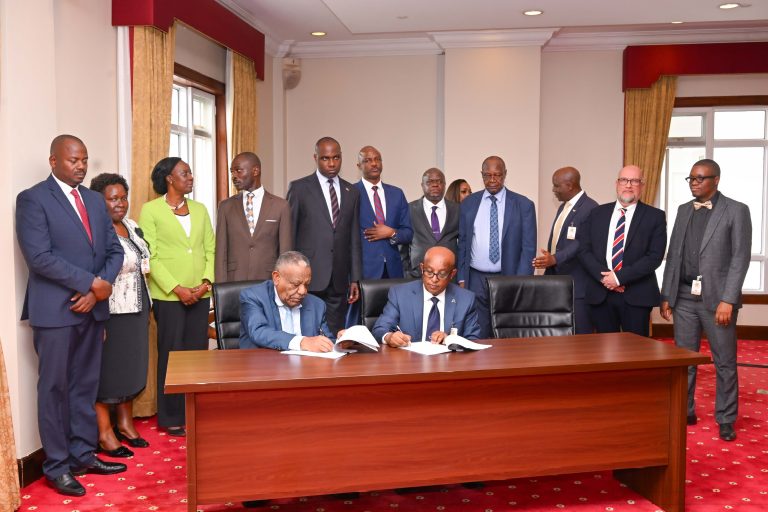
The agreement was signed on Wednesday, 10th June 2026, at State House Entebbe in the presence of President Yoweri Museveni. Uganda Airlines Acting Chief Executive Officer Girma Wake and Boeing Executive Vice President and Head of Sales for Africa, Anbessie Yitbarek, put pen to paper on what both parties described as the beginning of a long-term partnership.
Under the agreement, Uganda Airlines will acquire eight Boeing passenger aircraft, each with a seating capacity of 294 passengers, alongside two cargo freighters: a Boeing 767 wide-body converted freighter and a Boeing 737 Boeing Converted Freighter (BCF).
The first phase of the agreement will involve the delivery of four large passenger aircraft before the remaining aircraft are delivered.
Minister of Works and Transport Fred Byamukama described the project as a strategic investment that will enhance Uganda’s connectivity with the rest of the world.
“It is a very expensive project, but the President guided that we have no other option,” Byamukama said. “We need to build our own airline. That is how Uganda can be connected to the rest of the world.”
The minister disclosed that the government is expected to make an initial payment of Shs460 billion as part of the implementation process, with the entire project costing about Shs3.7 trillion.
“This money comes from taxpayers’ contributions through government revenue collections, which the President directed should be invested in expanding Uganda Airlines,” he explained.
Byamukama observed that the expansion will significantly reduce Uganda’s dependence on transit hubs in other countries and increase direct flights into the country.
“Uganda will be connected directly to the rest of the world,” he said. “We shall bring many investors directly to Uganda. Previously, investors had to transit through other countries and make several stopovers. With the addition of these aircraft, we shall have more direct routes and connections.”
The acquisition forms part of a broader government strategy to expand the national carrier’s fleet, increase direct international connections, boost tourism and trade, and position Uganda as a key aviation hub in the region, according to a release from the Presidential Press Unit.
The inclusion of two cargo freighters signals Uganda’s ambition to capture a share of the air freight market, which has grown significantly across Africa in recent years. The Boeing 767 wide-body converted freighter and Boeing 737 Boeing Converted Freighter will allow the airline to transport goods more efficiently, supporting export-oriented sectors such as agriculture, horticulture, and manufacturing.
The minister emphasised that the aircraft acquisition aligns with the government’s broader infrastructure development agenda, which includes the expansion of Entebbe International Airport and the completion of Kabalega International Airport in Hoima.
He expressed optimism that the investments would significantly increase tourist arrivals and enhance Uganda’s competitiveness in international aviation over the next decade.
“We are finalising Kabalega Airport and expanding Entebbe Airport,” Byamukama said. “We know that within the next ten years, Uganda will be where it should be in terms of aviation development.”
Byamukama also revealed the government’s plans to eventually introduce domestic air services to improve connectivity within Uganda.
“Once we stabilise the expanded international operations, we shall embark on domestic flights so that Ugandans can easily fly to destinations such as Gulu, Kotido, Kidepo, and Mbarara,” he added.
If implemented, domestic services would open up tourism and business travel to regions currently accessible only by long road journeys.
Boeing Vice President of Sales for Africa, Anbessie Yitbarek, pledged the company’s commitment to supporting Uganda Airlines beyond aircraft supply through technical expertise, training, and capacity-building programmes.
He said Boeing would work closely with Uganda Airlines to ensure sustainable growth and operational excellence as the airline expands its fleet and route network.
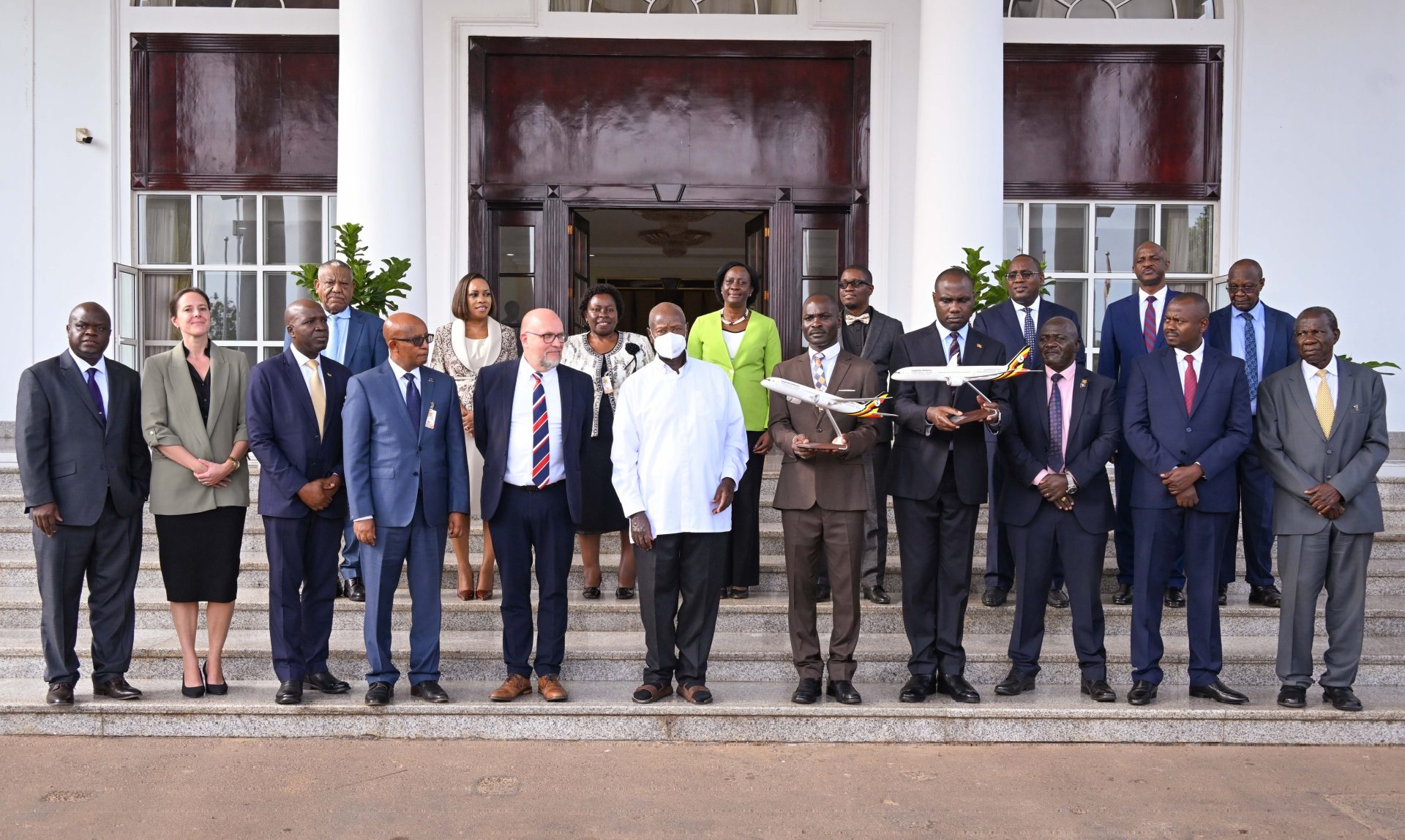
Also present at the signing were Minister of Finance Henry Musasizi, former Works Minister General Katumba Wamala, former Finance Minister Matia Kasaija, Permanent Secretary Ramathan Ggoobi, Uganda Airlines Board Chairperson Priscilla Mirembe Sseruka, and Chargé d’Affaires of the United States Embassy in Uganda, Mikael Cleverley.
Uganda Airlines was relaunched in 2019 after the collapse of the original carrier decades earlier. The airline currently operates a modest fleet serving regional and a few international destinations. This deal represents a dramatic scaling up of its ambitions.
According to the airline, the planned acquisition will substantially increase its capacity to serve regional, continental, and intercontinental markets while supporting Uganda’s economic transformation agenda. The airline noted that the additional aircraft will facilitate trade, tourism, investment promotion, and cargo transportation, directly contributing to the implementation of Uganda Vision 2040.
While the government has framed the deal as a strategic necessity, the Sh3.7 trillion price tag raises questions about affordability and sustainability. The funding will come entirely from domestic revenue collections, meaning taxpayers are bearing the full cost. There has been no public disclosure of the repayment terms, interest rates, or total cost over the life of the agreement.
Additionally, Uganda Airlines will need to recruit and train additional pilots, cabin crew, engineers, and ground staff to operate the expanded fleet. The airline will also need to secure landing slots and regulatory approvals in new markets. These operational challenges are significant and will require careful execution.
For now, the government is celebrating the deal as a milestone. The first four passenger aircraft are expected to be delivered under the initial phase, though specific delivery dates have not been announced.