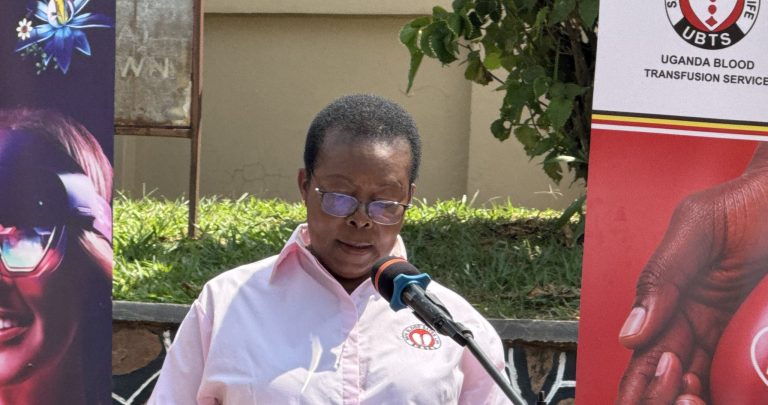
Ten percent of Ugandans who urgently need blood do not receive it due to persistent shortages in supplies, officials from the Uganda Blood Transfusion Services (UBTS) have revealed.
UBTS Executive Director Dr. Dorothy Kyeyune Byabazaire told reporters on 12th June that the agency cannot meet the country’s blood needs due to a lack of adequate donors and limited financing.
“According to the World Health Organisation standards, a country is supposed to collect units of blood equivalent to one percent of its population,” she said. “Since we are around 50 million Ugandans, we must collect 500,000 units of blood. Last year, we collected 439,000 units, which is below the standard. We also managed to meet 90 percent of the blood demand.”
Uganda’s national blood requirement is estimated at between 400,000 and 460,000 units annually, with hospitals needing approximately 1,000 to 1,200 units per day.
Statistics from UBTS indicate that blood collection has risen in the last three years, from 313,659 units in 2023 to 350,000 units in 2024, and to 439,000 units last year. Despite the increase, the gap between supply and demand remains significant.
Dr. Byabazaire noted that the current blood collection would be sufficient if the country were implementing effective primary healthcare and preventing the key conditions that drive blood demand many of which are avoidable.
According to the UBTS executive director, children suffering from severe anemia consume 60 percent of the blood collected, followed by postnatal complications, accident victims, and then other terminal illnesses such as cancer.
“Diseases like malaria, which result in severe anemia among children, can be prevented,” she said. “Good antenatal care can prevent postnatal complications. If we have proper road safety mechanisms, road crashes will also reduce, and the blood will only be needed by a few people like cancer patients.”
Severe anemia is often caused by malaria, sickle cell disease, or malnutrition all of which, health experts say, can be prevented.
The 2024 World Health Organisation Malaria Report indicated that Uganda remains a high-burden malaria country, with its entire population at risk of infection. The report revealed that 12.6 million Ugandans were diagnosed with malaria, with at least 16,000 deaths reported, 75 percent of them children.
Malaria accounts for about 25 percent of deaths among children with sickle cell disease. The Ministry of Health estimates that Uganda registers 20,000 new sickle cell cases annually, with 70 to 80 percent of affected children dying early, especially before the age of five.
A 2025 report by UNICEF revealed that an estimated 268,000 children across Uganda suffered from severe malnutrition, also known as wasting, in 2024.
Meanwhile, Uganda recorded 26,044 road crashes in 2025, up from 25,107 in 2024, according to the Annual Crime Report launched in March. Fatalities stood at 5,144, and the majority of road crash victims rushed to hospitals required blood, according to officials.
Another key driver of blood demand is the risks faced by postnatal mothers, including hemorrhage, infection (sepsis), and major depression. Uganda’s maternal mortality ratio is roughly 189 deaths per 100,000 live births, with approximately 60 to 70 percent of maternal fatalities occurring in the postpartum period.
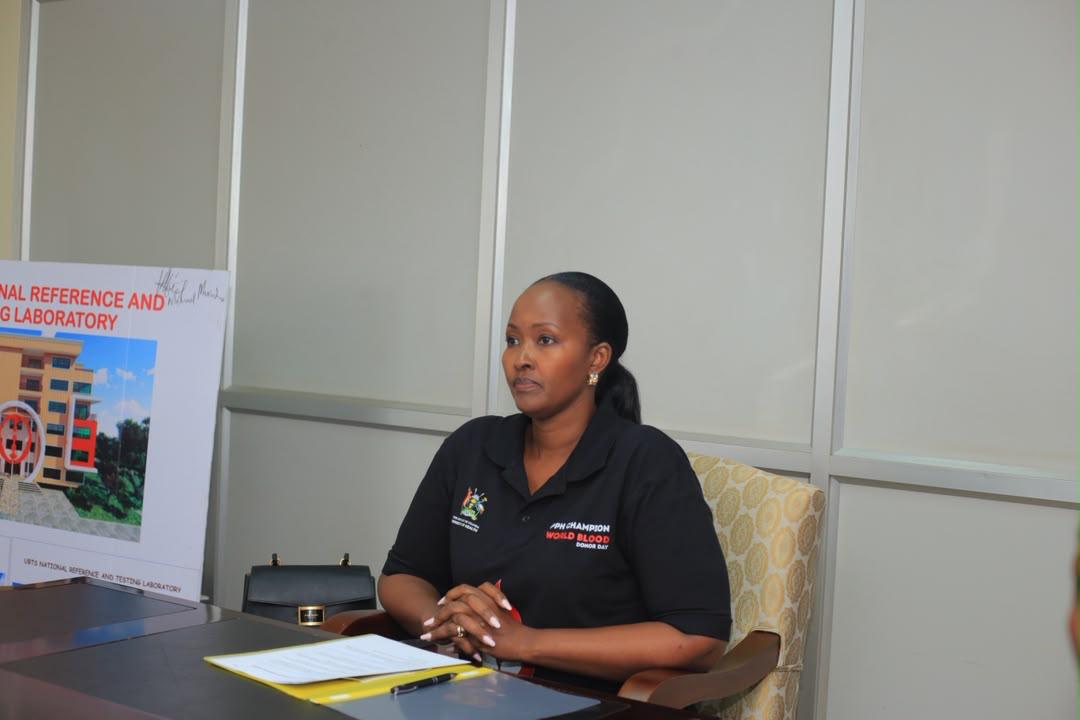
Charlotte Kainerugaba, Uganda’s Postpartum Hemorrhage (PPH) Champion, emphasised the need for timely access to safe blood for mothers suffering from postpartum hemorrhage.
“Timely access to safe blood can mean the difference between life and death during childbirth,” she said.
Dr. Byabazaire noted that UBTS needs a minimum of $100 (approximately Shs380,000) to handle a single unit of blood from one vein to another.
“Collecting blood requires items such as vacuum tubes, soda to give donors, employees, vehicles, among others,” she explained. “After that, blood needs to undergo testing where we need reagents, then it comes to storage and distribution. So when we sum it up, we need at least $100 to do all of it.”
The government has continued to partner with private firms to strengthen blood collection, testing, and storage. Under a Public-Private Partnership arrangement, Star Pharmaceuticals Ltd, in partnership with Abbott Diagnostics, supplied UBTS with the latest Alinity high-tech machine.
Ani Prajith, Chief Executive Officer of Star Pharmaceuticals Ltd, said the machine automatically screens large volumes of blood for infectious diseases such as HIV, Hepatitis B, and syphilis to improve blood safety.
“Alinity machines have full automation, which means that you can load the samples and get more output with minimal human intervention,” Prajith said. “With the new machine, we can process more samples in a limited time, which means that whenever there is a high load, the output can be faster.”
Dr. Steven Ssenyonga, a medical officer and research officer at UBTS, said that with the new machine, they are able to test between 800 and 1,000 samples in a single day.
“We have realised that blood from educational institutions is safer, with limited cases of diseases compared to communities,” he said. “Between 8am and 5pm, we can test between 800 and 1,000 samples because this machine can load reagents automatically. The sensitivity is much higher, so there is a real-time turnaround solution.”
While new technology improves testing efficiency, the fundamental challenge remains one of supply. UBTS needs more donors and more financing to close the 10 percent gap that leaves one in ten Ugandans without the blood they urgently need.
The agency has called on eligible Ugandans to donate blood regularly, noting that every unit collected can save multiple lives. For now, the gap persists and with it, the quiet tragedy of patients who arrive at hospitals only to be told the blood they need is not available.