Home Blog Page 14

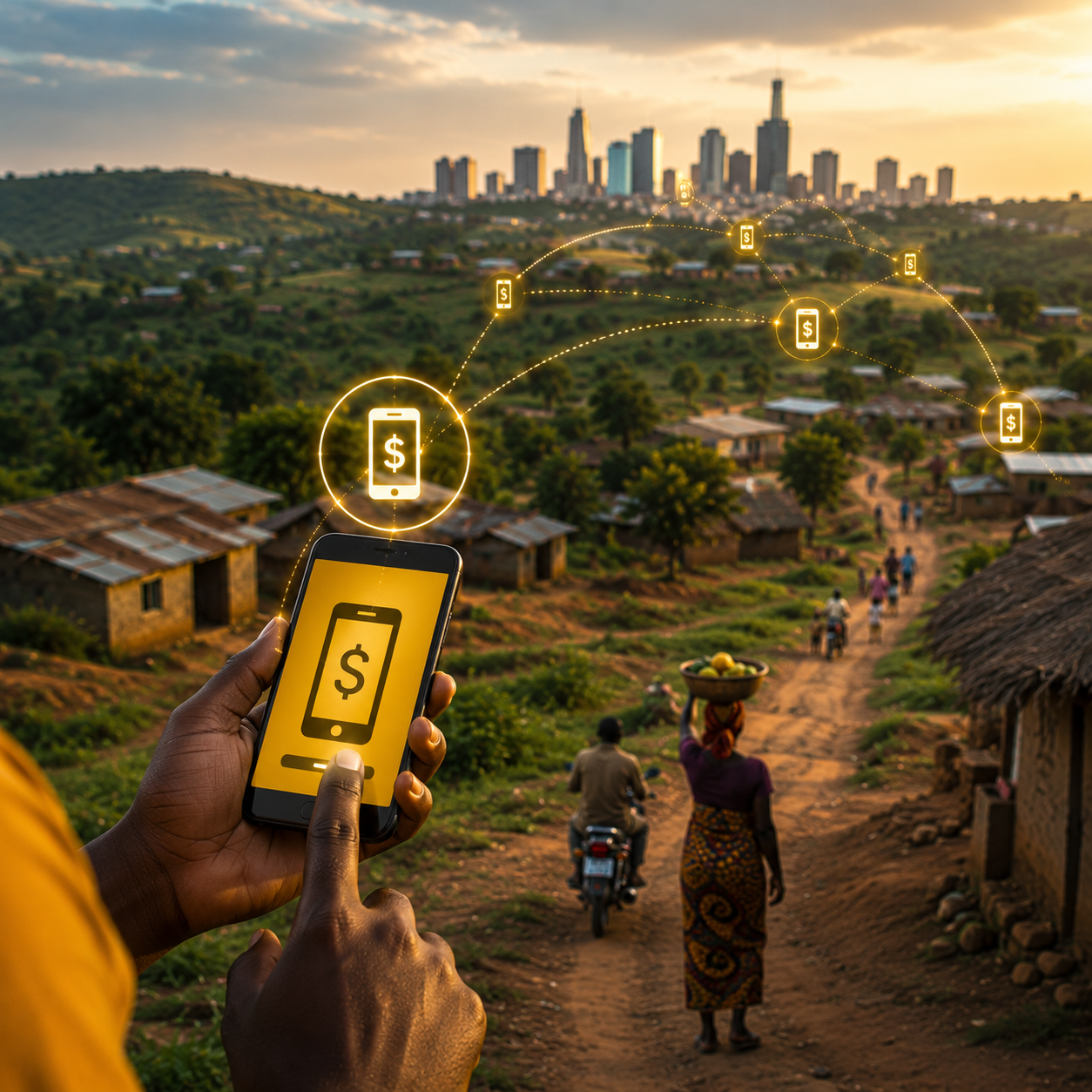
BREAKING THE WALLET WALLS – How Interoperability Is Transforming Mobile Money from Isolated Systems into Africa’s Connected Financial Future

By HiPipo Money

For years, Africa’s mobile money revolution grew through powerful but largely separate ecosystems.

One network spoke its own language. Another built its own rails.

One telecom operator connected millions of users internally, while another created parallel infrastructure beside it. In many countries, sending money within the same network became simple and affordable, but transferring across networks often remained slower, more expensive, or technically restricted.

The result was a fragmented digital economy.

Millions of Africans gained access to digital finance, yet the systems themselves often remained disconnected from one another.

That fragmentation created invisible barriers across commerce.

A customer on one mobile money network could struggle to transact smoothly with a merchant using another provider. Businesses operating across multiple networks faced reconciliation challenges. Users maintained multiple SIM cards to navigate ecosystem limitations. Merchants lost sales opportunities. SMEs faced liquidity inefficiencies. And the broader digital economy developed in silos rather than as one connected financial ecosystem.

Today, however, a major shift is underway.

Across Africa, regulators, FinTechs, telecom operators, development institutions, and payment innovators are increasingly pushing toward interoperability — the ability for different financial systems, wallets, providers, banks, and payment networks to transact seamlessly with one another.

The implications are enormous.

Because interoperability is not merely a technical upgrade.

It is economic integration infrastructure.

And for Africa’s digital future, it may become just as important as mobile money itself.

The first phase of Africa’s digital finance revolution focused on access.

The second phase focused on adoption.

The third phase is increasingly becoming about connectivity.

How do systems connect?

How does money move between ecosystems?

How do banks, FinTechs, wallets, merchants, and governments operate inside one integrated financial environment rather than fragmented islands?

This is where interoperability changes everything.

When systems interconnect effectively:

  • consumers transact more freely,
  • merchants reach more customers,
  • SMEs improve efficiency,
  • governments digitize services more effectively,
  • and digital economies scale faster.

Without interoperability, digital finance remains partially trapped inside platform boundaries.

With interoperability, entire economies become more fluid.

Historically, telecom-led mobile money systems expanded rapidly because they solved a fundamental infrastructure problem ignored by traditional banks: last-mile financial access. Agent networks extended financial services into rural and underserved communities where banking infrastructure barely existed.

But the rapid growth of separate ecosystems also produced competitive fragmentation.

Different providers often prioritized customer retention inside their own ecosystems rather than cross-network openness. From a business perspective, this strategy made sense. Closed ecosystems helped protect market share and transaction revenues.

From a broader economic perspective, however, fragmentation created inefficiencies.

Consumers adapted creatively.

Many users carried multiple SIM cards.

Businesses opened accounts across different networks.

Agents managed complex liquidity balancing across providers.

Yet beneath this adaptation remained a structural reality:

Disconnected financial systems increase friction.

And friction slows economies.

This is why interoperability has become a central policy and infrastructure priority across multiple African markets.

Governments and regulators increasingly recognise that digital financial inclusion cannot fully scale if payment systems remain isolated from one another.

The shift toward interoperability is now happening through:

  • national payment switches,
  • real-time payment systems,
  • interoperable QR standards,
  • open APIs,
  • instant settlement infrastructure,
  • and shared digital financial rails.

The vision is straightforward:

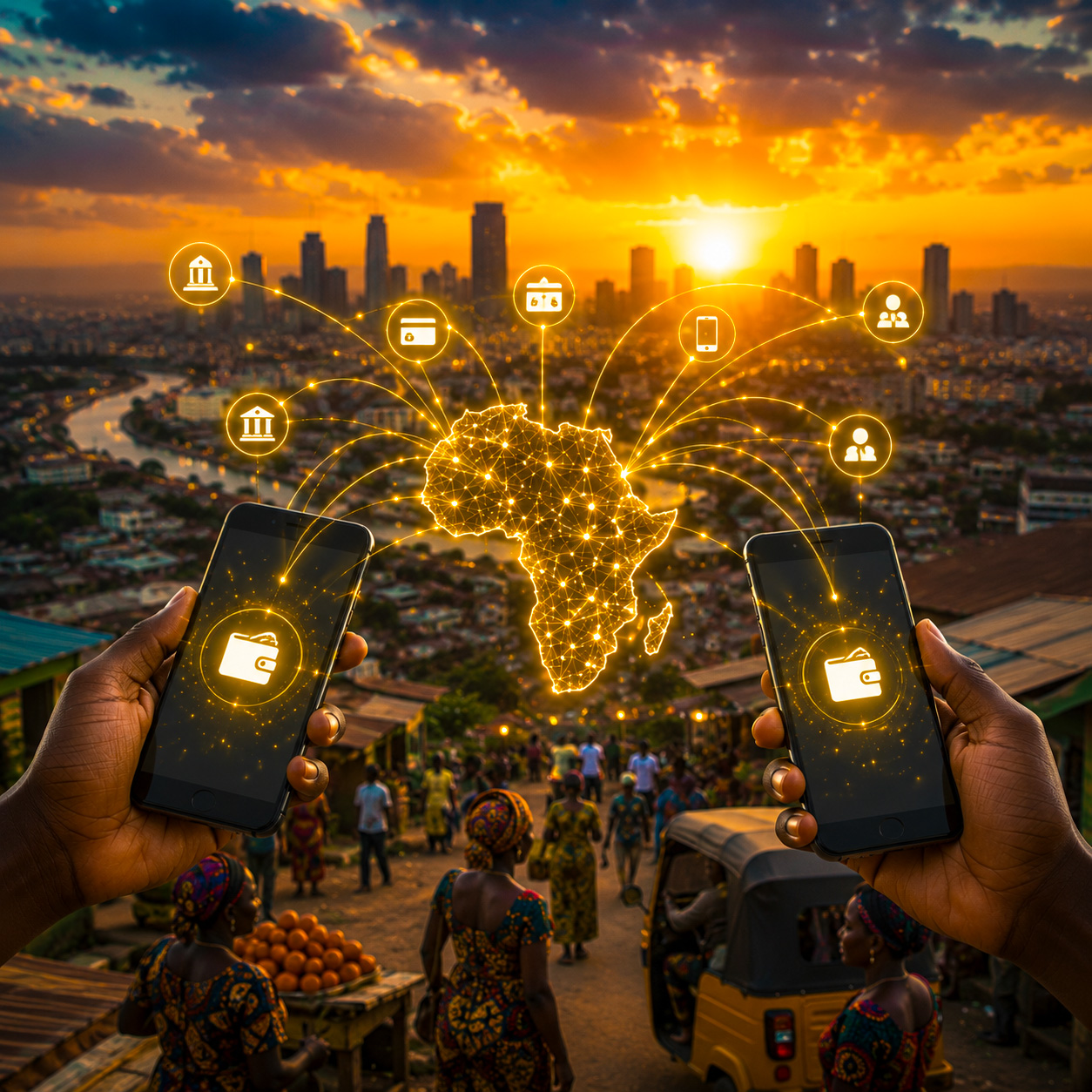
A user on one network should be able to transact seamlessly with another user, merchant, bank, or service provider regardless of platform.

In many ways, interoperability aims to make digital money behave more like communication itself.

A customer using one telecom network can call another network without thinking about technical compatibility. Financial systems increasingly need similar seamlessness.
One of the most influential global frameworks shaping this thinking is Mojaloop.

Originally developed with support from the Bill & Melinda Gates Foundation and other partners, Mojaloop was designed as open-source software infrastructure capable of enabling interoperable instant payment systems, especially in emerging markets.

The significance of Mojaloop extends beyond software.

It introduced a new philosophy for financial inclusion infrastructure:

  • open standards,
  • interoperability by design,
  • low-cost digital payments,
  • and scalable financial connectivity for underserved populations.

Instead of forcing countries to build entirely proprietary systems from scratch, Mojaloop demonstrated how shared payment infrastructure could support interoperability between banks, telecom operators, FinTechs, governments, merchants, and digital wallets.

This model became especially important for countries seeking to build inclusive digital payment ecosystems without replicating fragmented architectures.

And increasingly, similar philosophies are influencing major interoperability initiatives globally and across Africa.

One of the most important examples connected to this broader movement is the Level One Project.

The Level One Project focused on designing inclusive, low-cost digital payment systems capable of supporting broad financial participation at scale, particularly for underserved populations. The initiative emphasized interoperability, affordability, open-loop infrastructure, and reducing barriers that prevent low-income users from participating meaningfully in digital finance ecosystems.

Its principles became highly influential in discussions around inclusive instant payment systems and interoperable financial infrastructure globally.

The importance of this approach is difficult to overstate.

Because for low-income economies, transaction costs matter enormously.

A payment system designed primarily for high-value transactions may exclude the very populations most in need of financial inclusion. Interoperable low-cost systems help make small-value transactions economically viable — a critical factor in African markets where informal commerce dominates daily economic activity.

This is one of the deepest economic strengths of interoperable infrastructure:

It improves efficiency not only for large institutions, but also for ordinary citizens and small businesses.

A market vendor can receive payments from any customer.
A merchant can avoid maintaining multiple wallets.
An SME can simplify reconciliation.
A customer can transact more confidently.
Governments can distribute funds more efficiently.
FinTechs can innovate on top of shared infrastructure rather than rebuilding isolated systems repeatedly.

Interoperability therefore creates network effects.

The more connected systems become, the more valuable the ecosystem becomes for everyone participating inside it.

The rise of interoperability also has major implications for cross-border trade.

Africa’s digital economy is becoming increasingly regional. The African Continental Free Trade Area (AfCFTA) aims to deepen economic integration across the continent, yet fragmented payment systems remain one of the largest barriers to seamless trade.

Interoperable payment rails can help reduce:

  • settlement delays,
  • transaction costs,
  • liquidity constraints,
  • and operational inefficiencies for businesses operating regionally.

For SMEs especially, this matters profoundly.

Large corporations may absorb payment friction.

Small businesses often cannot.

A delayed settlement can affect inventory.
A failed transfer can disrupt operations.
Multiple wallet systems can create accounting complexity.
Cross-network fees can reduce already thin margins.

Interoperability therefore directly affects business survival and scalability.

Yet despite its benefits, interoperability also creates new tensions.

Competition dynamics change.

Dominant providers may fear losing ecosystem lock-in advantages. Transaction revenues may shift. Market power becomes redistributed. Regulators must balance openness with incentives for innovation and infrastructure investment.

Cybersecurity also becomes more important.

As systems interconnect more deeply, vulnerabilities can spread faster across ecosystems. Fraud prevention, identity verification, compliance systems, and consumer protection frameworks must evolve alongside interoperability expansion.

Trust therefore remains foundational.

Users must believe interoperable systems are:

  • reliable,
  • secure,
  • affordable,
  • and fair.

Without trust, adoption slows regardless of technological capability.

Africa’s interoperability journey is still unfolding.

Some countries have advanced rapidly in building national switches and interoperable payment frameworks. Others continue facing infrastructure gaps, regulatory fragmentation, or uneven ecosystem participation.

But the broader direction is becoming increasingly clear:

The future digital economy cannot thrive efficiently on isolated financial islands.

Connected economies require connected payment systems.

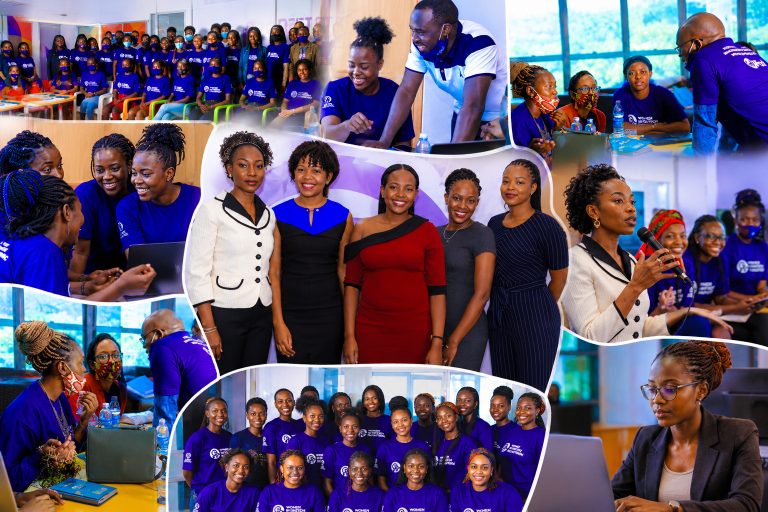
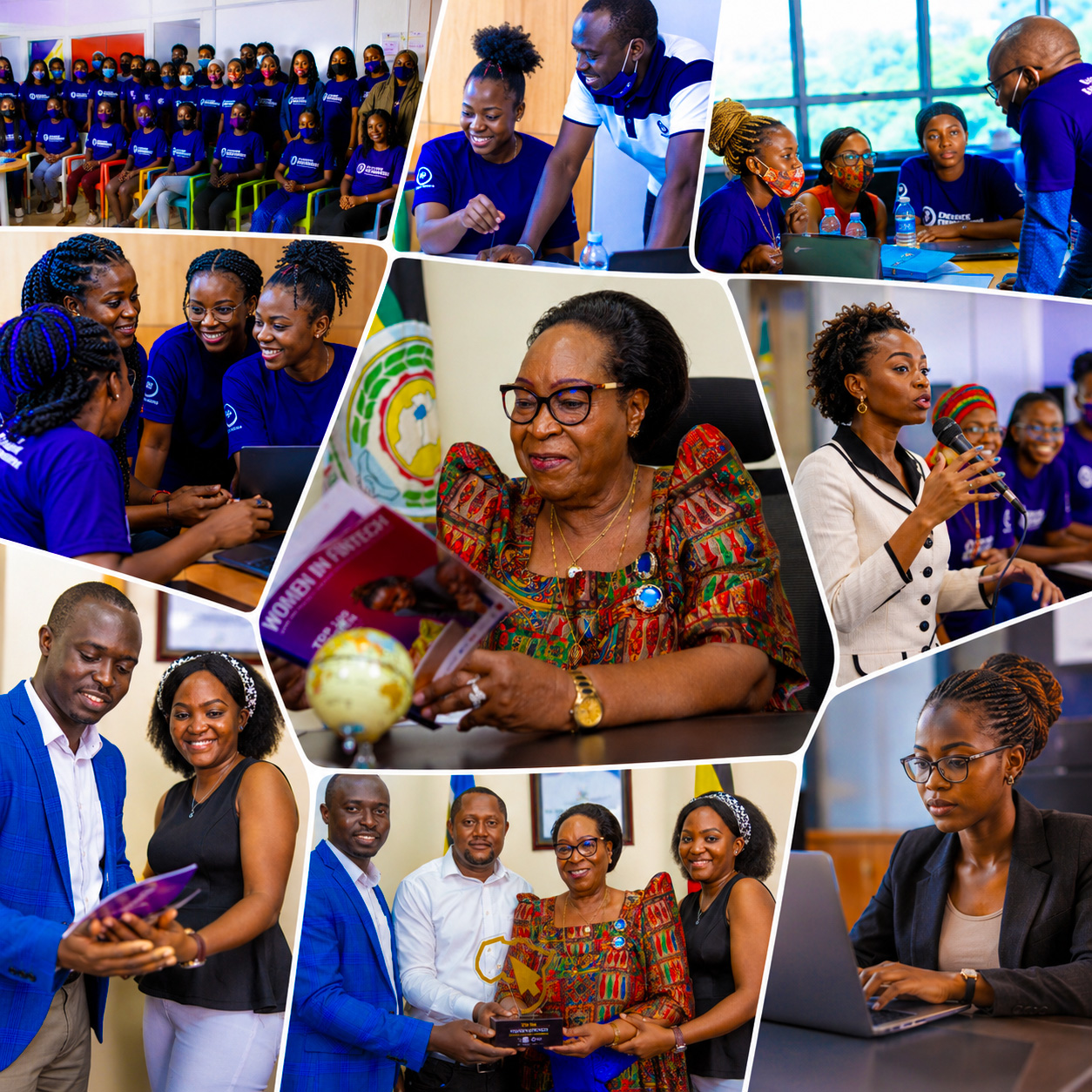
This is where ecosystem builders such as HiPipo and initiatives including the Digital Impact Awards Africa (DIAA), Include Everyone, Women in FinTech, and broader financial inclusion programs become strategically important. As Africa modernises its financial infrastructure, the continent needs platforms capable of amplifying innovation, encouraging collaboration, documenting progress, and ensuring interoperability remains connected to inclusion rather than only institutional efficiency.

Because ultimately, interoperability is not only about systems talking to one another.

It is about people participating more freely in economic life.

A trader accepting payments from any customer.
A woman entrepreneur operating across multiple networks seamlessly.
A rural merchant accessing broader digital commerce.
An SME scaling regionally.
A freelancer receiving payments more efficiently.
A continent transacting with fewer invisible barriers.

Most citizens may never hear the terms Mojaloop, open-loop architecture, or interoperability frameworks.

But they will experience what those systems make possible.

Less friction. More freedom. Lower costs. Broader opportunity.

And perhaps for the first time, a truly connected African digital financial ecosystem where the movement of money becomes as seamless as the movement of ideas.


Trailblazers of the Digital Economy: Stories of Women Shaping Tech and Finance

A narrative celebration of African women whose personal journeys redefine what’s possible.

Take the story of Fatima, an engineer from Kano who grew up fixing radios in her family’s shop. Today she leads a fintech start‑up that uses blockchain to provide transparent micro-loans to market women. Or consider Amahle in Cape Town, whose start‑up trains township youth in AI and matches them with apprenticeships at local banks. These stories are not isolated; they are part of a wave of African women who are reshaping technology and finance.

Their journeys reveal common threads. Many overcame scepticism and limited access to capital. They leveraged mobile phones and social networks to build customer bases. They used programs like HiPipo’s Women in FinTech initiative to gain mentorship and market exposure. In doing so they helped other women participate in the digital economy.

Women’s leadership has a cascading impact. When Fatima’s clients repay loans via mobile wallets, they build transaction histories that qualify them for larger credit lines. When Amahle’s trainees enter banks, they advocate for products that serve township communities. Meanwhile, researchers across Africa are developing AI models that account for local languages and dialects, ensuring that voice assistants work for everyone.

By shining a light on these personal journeys, we see how inclusion happens one entrepreneur, engineer or regulator at a time. Their combined influence is transforming markets and mindsets, proving that Africa’s digital future will be shaped not only by technology but by the women who lead it.

Personal stories illustrate the power of representation. When girls and young women see someone like them coding, building businesses and leading banks, they are more likely to believe they can do the same. Emphasising the human side of leadership also underscores the importance of mentorship, networks and supportive policies. Celebrating these stories helps normalise women’s authority in tech and finance, accelerating the broader movement toward gender equality and inclusive innovation.

The 93-Year-Old Grandmother Who Finally Got Her Evenings Back

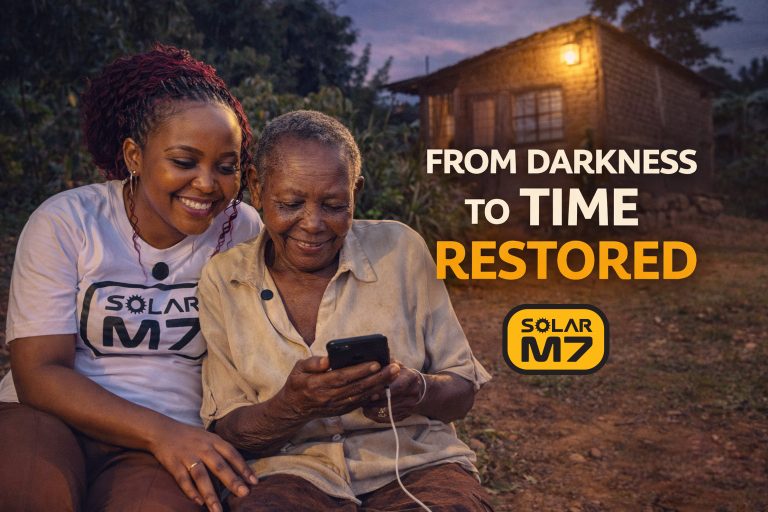
A #100DaysofSolar Human Impact Story from Kamengo, Mpigi District, Uganda

At 93 years old, Nakate Agnes had quietly accepted a painful reality.

In her home in Kamengo, Mpigi District, life seemed to end when the sun disappeared.

Together with her two grandchildren, Agnes would retreat into darkness every evening, sleeping early not because they were tired, but because there was simply nothing else they could do once night arrived.

The house became silent. The evenings became empty. And for an elderly grandmother already weakened by age, darkness slowly stole the small joys and freedoms that make life feel human.

Even something as basic as charging a phone became exhausting. Agnes often had to endure long walks to nearby trading centers just to keep communication alive, journeys that drained her physically and emotionally.

For her, darkness was not only inconvenient. It stole time from her life. Then Solar M7 arrived. And suddenly, the nights inside her home changed completely.

Today, reliable solar light fills the house after sunset. Her phone now charges safely from home, removing the painful burden of long walks. The evenings no longer disappear into silence and helplessness. Agnes and her grandchildren now remain awake longer, sharing conversations, comfort, and peaceful moments together beneath steady light.

For Agnes, the transformation feels like life returning.

“Before Solar M7, nights felt empty because darkness ended everything early,” Agnes shared during her interview. “Now the home feels alive again, and I no longer struggle walking long distances to charge my phone.”

According to Doreen Nanfuka, elderly people in underserved communities often lose independence and valuable time because of lack of reliable energy access.

“When older people regain light and phone charging at home, their daily lives become much easier and more dignified,” Doreen explained. “Reliable light gives them comfort, connection, and freedom.”

Innocent Kawooya says stories like Agnes’ reveal how energy access restores quality of life for elderly people who have spent decades living without reliable power.

“Reliable light helps people reclaim time, comfort, and independence,” he noted. “No one should spend old age trapped by darkness and isolation.”

Today, evenings inside Agnes’ home no longer feel lost to darkness.

The phone remains connected. The house glows warmly. And in a home where night once felt like the end of life itself, Solar M7 is now helping restore something deeply precious.

Time. Connection. And the dignity of living fully after sunset again.

Watch the full story of Nakate Agnes from Kamengo, Mpigi District, Uganda across our platforms:

YouTube
TikTok
Facebook
Instagram
LinkedIn
X/Twitter

#100DaysofSolar #SolarM7 #IncludeEveryone #EnergyAccess #HumanImpact #Mpigi #Uganda #CleanEnergy #HiPipo

THE LAST-MILE MONEY PROBLEM – Why Africa’s Digital Payment Revolution Will Be Won or Lost in Rural Communities

By HiPipo Money

Africa’s digital finance revolution is often told through the language of growth.

Millions of wallets opened.

Billions of transactions processed.

FinTech valuations rising.

Urban merchants digitising rapidly.

Smartphone adoption expanding.

But beyond the statistics lies a more difficult reality:

Large parts of rural Africa still operate at the edge of the digital economy.

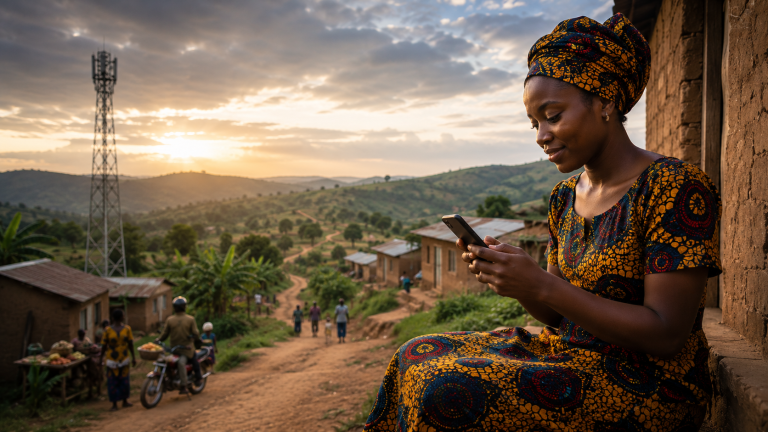
In many remote communities, cash remains dominant not because people reject digital finance, but because infrastructure gaps continue limiting meaningful participation. Network instability, long distances to agents, weak liquidity, unreliable electricity, low smartphone penetration, limited merchant acceptance, affordability barriers, and low digital literacy still shape daily financial life for millions.

This is Africa’s last-mile money problem.

And solving it may determine whether the continent’s digital transformation becomes truly inclusive, or simply urban.

Because while cities often dominate FinTech headlines, Africa’s economic future will also depend heavily on whether rural populations can participate meaningfully in digital commerce, payments, savings, insurance, healthcare, and broader financial ecosystems.

The challenge is enormous.

But so is the opportunity.

Historically, rural communities were among the most financially excluded populations across the continent. Traditional banking infrastructure concentrated heavily around urban centres where transaction volumes and customer density made branch operations commercially viable.

For millions living in remote areas, formal banking often meant:

  • long travel distances,
  • high transportation costs,
  • documentation barriers,
  • unreliable service access,
  • and systems poorly designed for low-income or informal economic realities.

Mobile money dramatically changed that equation.

By leveraging telecom infrastructure and agent networks, digital finance providers brought financial access closer to communities previously ignored by formal financial systems. Small shops, kiosks, pharmacies, fuel stations, and trading centers evolved into cash-in and cash-out points, allowing people to transact without travelling long distances to banks.

This agent-network model became one of Africa’s greatest financial infrastructure innovations.

It solved a fundamental economic challenge:

How do you distribute financial services affordably across vast geographies with limited formal infrastructure?

The answer was decentralization.

Instead of relying entirely on expensive bank branches, digital finance ecosystems distributed financial access through local agents embedded directly inside communities.

The results were transformative.

People could:

  • receive remittances locally,
  • pay school fees digitally,
  • save small amounts,
  • transact more safely,
  • and participate in growing digital economies.

Yet despite this progress, major gaps remain between urban and rural financial participation.

The divide is not only about access.

It is about quality of access.

A rural customer may technically own a mobile wallet while still facing:

  • poor connectivity,
  • frequent network downtime,
  • low agent liquidity,
  • high cash-out dependency,
  • limited merchant ecosystems,
  • and weak interoperability between providers.

This creates a fragile digital finance experience. When systems fail repeatedly, trust weakens. And in financial systems, trust is everything.

One of the biggest challenges rural communities continue facing is liquidity.

An agent may technically exist in a village, but without sufficient float or cash liquidity, transactions fail. Customers may walk long distances only to discover an agent cannot process withdrawals or transfers.

This is one of the invisible operational realities often overlooked in urban FinTech discussions.

Digital finance depends heavily on physical infrastructure too.

Behind every successful mobile transaction sits an entire ecosystem:

  • telecommunications,
  • electricity,
  • liquidity management,
  • transportation,
  • cash distribution,
  • compliance systems,
  • and agent support structures.

If one layer breaks down, user confidence suffers.

This is why agent network expansion remains central to rural financial inclusion strategies across Africa.

Providers increasingly compete not only through apps and technology — but through physical reach.

Who can serve the hardest-to-reach communities?
Who can maintain liquidity most effectively?
Who can reduce transaction friction for low-income populations?
Who can make digital finance feel reliable enough to replace cash?

These questions increasingly define the next stage of inclusion.

At the same time, another important innovation is emerging:

Offline digital payment solutions.

In many rural areas, internet connectivity remains inconsistent or entirely unavailable. Smartphone penetration also remains uneven, particularly among low-income households and older populations. Financial systems designed exclusively around always-online smartphone experiences risk excluding millions.

This reality is driving renewed interest in:

  • USSD-based services,
  • offline wallets,
  • QR-based offline payments,
  • NFC technologies,
  • feature-phone-compatible systems,
  • and delayed synchronisation payment models.

Offline-capable systems may become especially important for rural Africa because they reduce dependence on constant internet access while still enabling digital transactions.

This is a critical strategic insight often overlooked by global FinTech narratives.

Africa’s digital finance future will not be built only through high-end smartphone ecosystems.

It will also be built through resilient low-bandwidth systems capable of functioning under real-world infrastructure constraints.

The economics of inclusion demand it.

Energy access also plays a surprisingly important role in rural digital payments.

A digital wallet is only useful if a phone can remain charged.

Across multiple African markets, unreliable electricity continues limiting digital participation. This creates a powerful connection between financial inclusion and broader infrastructure agendas such as decentralized solar energy.

Projects providing affordable clean energy solutions can indirectly strengthen digital payment adoption by ensuring users maintain reliable device access. In many rural households, the ability to keep phones charged consistently directly affects participation in mobile money ecosystems, digital commerce, and financial services.

This is where infrastructure ecosystems increasingly overlap:

  • energy,
  • connectivity,
  • finance,
  • identity,
  • and digital literacy.

The future of inclusion depends on all of them working together.

Another major challenge remains digital literacy.

Many rural users may have access to mobile money services but still lack confidence navigating:

  • PIN security,
  • fraud prevention,
  • merchant payments,
  • digital savings,
  • or advanced financial services beyond simple transfers.

Fraud and social engineering attacks disproportionately affect populations with lower digital literacy. A single negative experience can discourage adoption across entire communities.

This is why education matters as much as technology.

Financial inclusion is not only about deploying infrastructure.

It is about building confidence.

Communities must understand:

  • how systems work,
  • how to protect themselves,
  • why digital records matter,
  • and how digital payments can improve economic opportunities.

This is where localised financial literacy initiatives become strategically important.

Governments are also increasingly recognising the importance of rural digital payment infrastructure.

Digitising social transfers, agricultural subsidies, healthcare support, and public services can help accelerate adoption while reducing leakage and improving transparency. Rural merchants accepting digital payments can generate transaction histories that support access to credit. Farmers receiving digital payments can participate more effectively in formal supply chains.

In this sense, rural digital payment infrastructure becomes more than financial infrastructure.

It becomes development infrastructure.

Yet there is another important truth:

Rural Africa is not merely a “catch-up” market.

It is an innovation frontier.

Many of Africa’s most successful digital finance innovations emerged precisely because traditional infrastructure gaps forced entirely new approaches. Agent banking, mobile wallets, USSD systems, low-cost interoperability frameworks, and mobile-based microfinance models evolved largely because existing financial systems failed to serve vast populations effectively.

The next generation of inclusion innovation may emerge the same way.

Solutions designed for:

  • low bandwidth,
  • low literacy,
  • remote communities,
  • intermittent electricity,
  • and small-value transactions

may ultimately shape the future of digital finance globally.

This is where ecosystem builders such as HiPipo and initiatives including the Digital Impact Awards Africa (DIAA), Include Everyone, Women in FinTech, and broader grassroots financial literacy programs become increasingly important. Africa’s digital transformation cannot only celebrate urban FinTech growth while overlooking the infrastructure realities of remote communities.

True inclusion must reach the last mile.

Because ultimately, the rural digital payments divide is not just about technology gaps.

It is about economic participation.

A farmer accessing markets more efficiently.
A mother receiving healthcare support digitally.
A village merchant building transaction history.
A rural youth entrepreneur participating in e-commerce.
A community entering the formal economy without leaving home.

Most discussions about financial innovation focus on apps, startups, or billion-dollar valuations.

But Africa’s real digital finance story may ultimately be decided somewhere much quieter:

In villages where the signal is weak. Where electricity is unreliable. Where roads are difficult. Where cash still dominates. And where millions are waiting not simply for technology, but for systems designed to include them fully in the future economy.

Because if Africa succeeds in closing the urban-rural payments divide, the continent will not only expand digital finance.

It will expand economic possibility itself.

40 African Women Leading the Future of Tech and Finance: An analytical overview of the pioneers and policymakers driving gender‑inclusive innovation across the continent

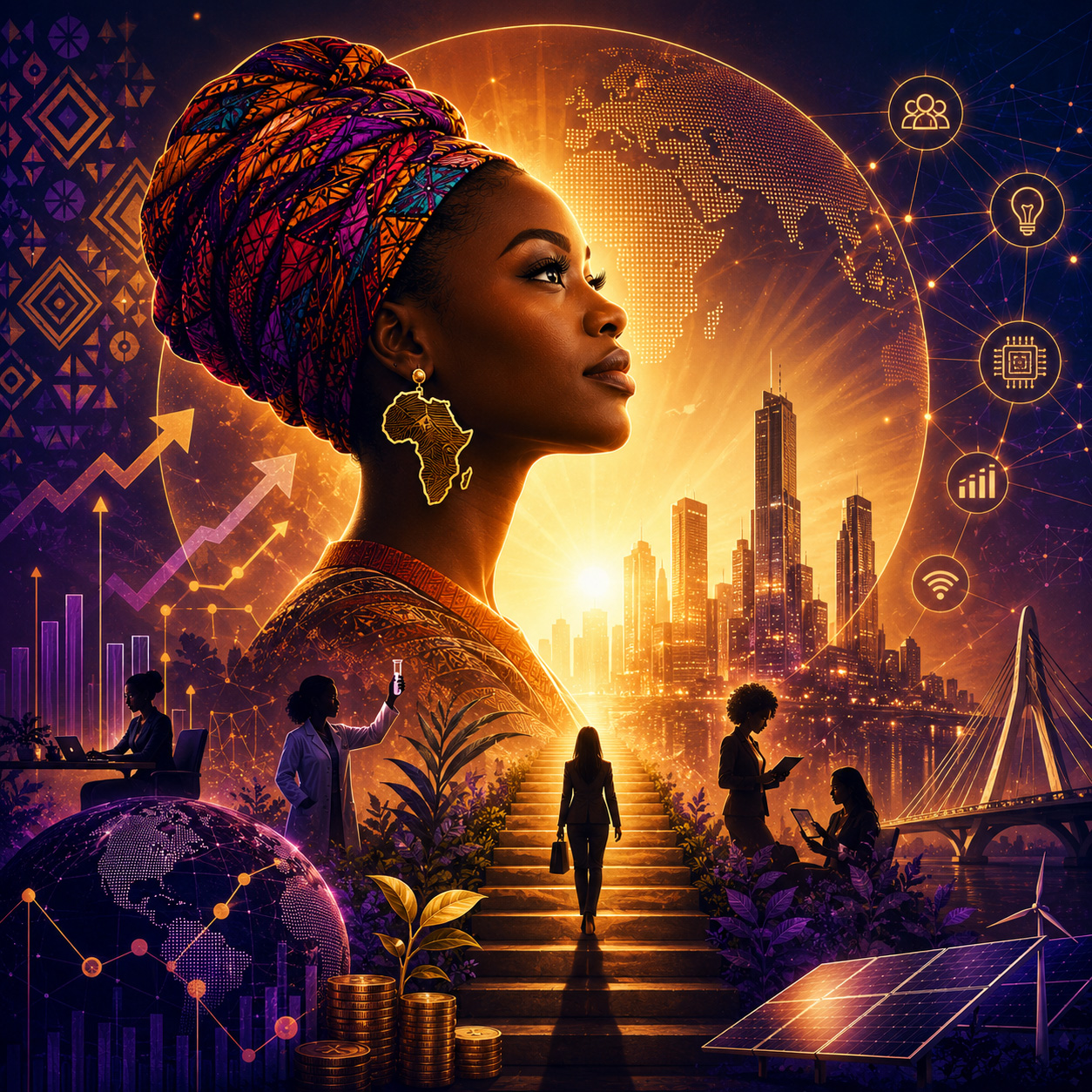
Across Africa a new generation of women leaders is reshaping the technology and finance sectors. From FinTech founders and central bankers to AI researchers and venture capitalists, these trailblazers are driving innovation and inclusion. They spearhead start‑ups that build credit scoring models for informal traders, lead banks that adopt open APIs and oversee regulatory frameworks that encourage responsible innovation. Together they form a constellation of 40 inspiring figures whose collective impact can redefine the continent’s digital economy.

Women’s leadership matters because gender gaps persist at every level of finance. Globally women are four percentage points less likely than men to have an account, and in Sub‑Saharan Africa the gap is around 12 percentage points. Women are also nine percentage points less likely to own a mobile phone, limiting their access to digital services. Yet when women gain access to finance and technology they tend to invest a higher share of their income in families and communities. By leading fintechs, banks and regulators, African women are closing these gaps from the top down and the bottom up.

The list of 40 leaders includes pioneers like a Ugandan banker who championed mobile money interoperability, a Kenyan technologist developing AI-driven agri‑tech solutions for smallholder farmers, a Nigerian venture capitalist funding women‑led start-ups and a South African regulator who helped draft open-banking guidelines. Their diverse backgrounds underscore that leadership in tech and finance is not one-size-fits-all. What unites them is a commitment to inclusion, integrity and innovation.

As women rise to leadership positions, they become role models for younger generations. Programmes like HiPipo’s Women in FinTech initiative provide training, mentorship and awards that spotlight female innovators, while advocacy efforts push for gender-responsive policies. By celebrating these 40 leaders and the ecosystems that support them, we acknowledge the multiplier effect of women’s leadership on digital transformation and economic growth.

Highlighting women leaders is more than a recognition exercise; it is a strategic investment in Africa’s future. When women lead tech and finance companies, they design products that serve women’s needs, challenge cultural barriers and champion inclusive policies. Their visibility inspires girls to pursue STEM careers and entrepreneurs to seek funding. By spotlighting 40 women shaping Africa’s digital economy, we send a clear signal that gender diversity is not optional but essential for inclusive growth.

The Elderly Woman Who Finally Sleeps Without Fear

A #100DaysofSolar Human Impact Story from Kasenge Nakawuka, Uganda

At 82 years old, Nyinamaronko Christine spent too many nights feeling alone inside the darkness.

A migrant from Burundi living in Kasenge Nakawuka, Christine survived quietly inside a fragile iron-sheet house where every evening brought fear instead of rest. The home was small and broken, vulnerable to the sounds and dangers that crept through the night.

Frogs crawled across the floor.

Rats invaded her space, eating the little food she had.

And worst of all, she feared snakes moving near her bed in the darkness.

For an elderly woman living alone, every sound became frightening. Every shadow felt dangerous. The nights stretched endlessly as fear kept her awake, trembling and anxious inside a home that no longer felt safe.

Over time, the darkness did more than disturb her sleep.

It slowly stole her dignity.

Then Solar M7 arrived.

And for the first time in many years, the nights began to change.

Today, bright, reliable light fills Christine’s home after sunset. The darkness that once magnified fear has disappeared. She now sees clearly around her room. The pests no longer feel hidden inside dangerous shadows. And for the first time in a long while, she rests peacefully through the night.

For Christine, the transformation feels deeply emotional.

“Before Solar M7, nights were terrifying for me,” she shared during her interview. “I feared sleeping alone in darkness. But now I feel safe, calm, and able to rest peacefully again.”

According to Doreen Nanfuka, elderly people living alone often experience the emotional burden of darkness more intensely than many realize.

“When you visit elderly people like Christine, you understand how much fear darkness can create,” Doreen explained. “Reliable light restores not only safety, but emotional comfort and dignity.”

Innocent Kawooya says stories like Christine’s reveal why energy access must also be understood as a human dignity issue.

“No elderly person should spend their nights living in fear because of darkness,” he noted. “Reliable light restores confidence, safety, peace of mind, and the dignity every human being deserves.”

Today, nights inside Christine’s home no longer feel haunted by fear.

The shadows no longer control her peace.

The darkness no longer steals her courage.

And in a small iron-sheet house where fear once filled every corner, Solar M7 is now shining as something far greater than electricity.

Safety. Peace. And dignity restored.

Watch the full story of Nyinamaronko Christine from Kasenge Nakawuka, Uganda across our platforms:

YouTube
TikTok
Facebook
Instagram
LinkedIn
X/Twitter

#100DaysofSolar #SolarM7 #IncludeEveryone #EnergyAccess #HumanImpact #Nakawuka #Uganda #CleanEnergy #HiPipo