Home Blog Page 15

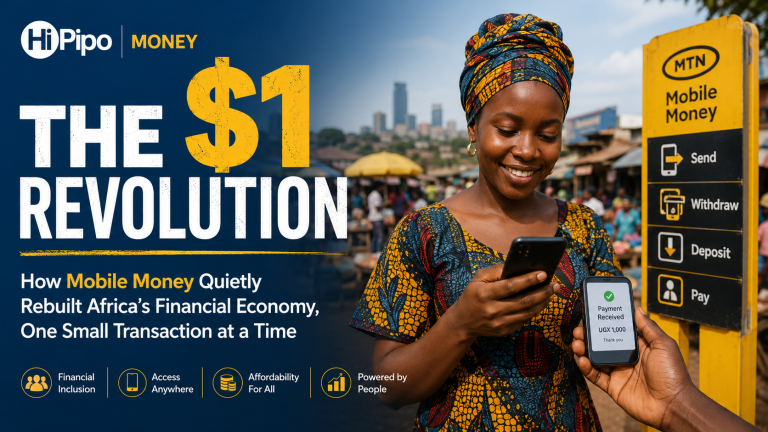
THE $1 REVOLUTION — How Mobile Money Quietly Rebuilt Africa’s Financial Economy, One Small Transaction at a Time

By HiPipo Money

The African digital finance revolution did not begin in skyscrapers.

It began in markets. In villages. In roadside kiosks. In taxi parks.

In small shops where people needed to send the equivalent of one dollar quickly, safely, and affordably.

For decades, millions of Africans operated almost entirely outside formal financial systems. Traditional banks often remained physically distant, expensive, documentation-heavy, and poorly designed for low-income populations and informal economies. Opening an account could require paperwork many citizens did not possess. Maintaining balances carried costs many households could not sustain. And for rural communities, simply reaching a bank branch could consume an entire day.

Yet even outside formal banking systems, economic activity never stopped.

People still traded.
Still saved.
Still borrowed.
Still sent money home.
Still paid school fees.
Still supported relatives.
Still built informal businesses.

The problem was never a lack of economic participation.

The problem was infrastructure. Mobile money changed that. And in doing so, it may have become one of the most important financial innovations of the modern African economy.

Across the continent, mobile money transformed ordinary phones into financial access points. Suddenly, people no longer needed a nearby bank branch to send or receive money. Transactions that once required travel, paperwork, intermediaries, or risky cash movement could now happen digitally within seconds.

The impact was revolutionary not because the transactions were large.

But because they were small. Very small.

Historically, traditional financial systems struggled to serve low-value transactions profitably. Banks were designed around larger balances, formal employment structures, and urban customers. Processing tiny transactions often cost more than the revenue generated from them.

Mobile money changed the economics completely.

By leveraging telecom infrastructure, agent networks, and simple mobile interfaces, providers dramatically reduced the cost of moving money. This allowed millions of low-income users to participate in digital finance for the first time.

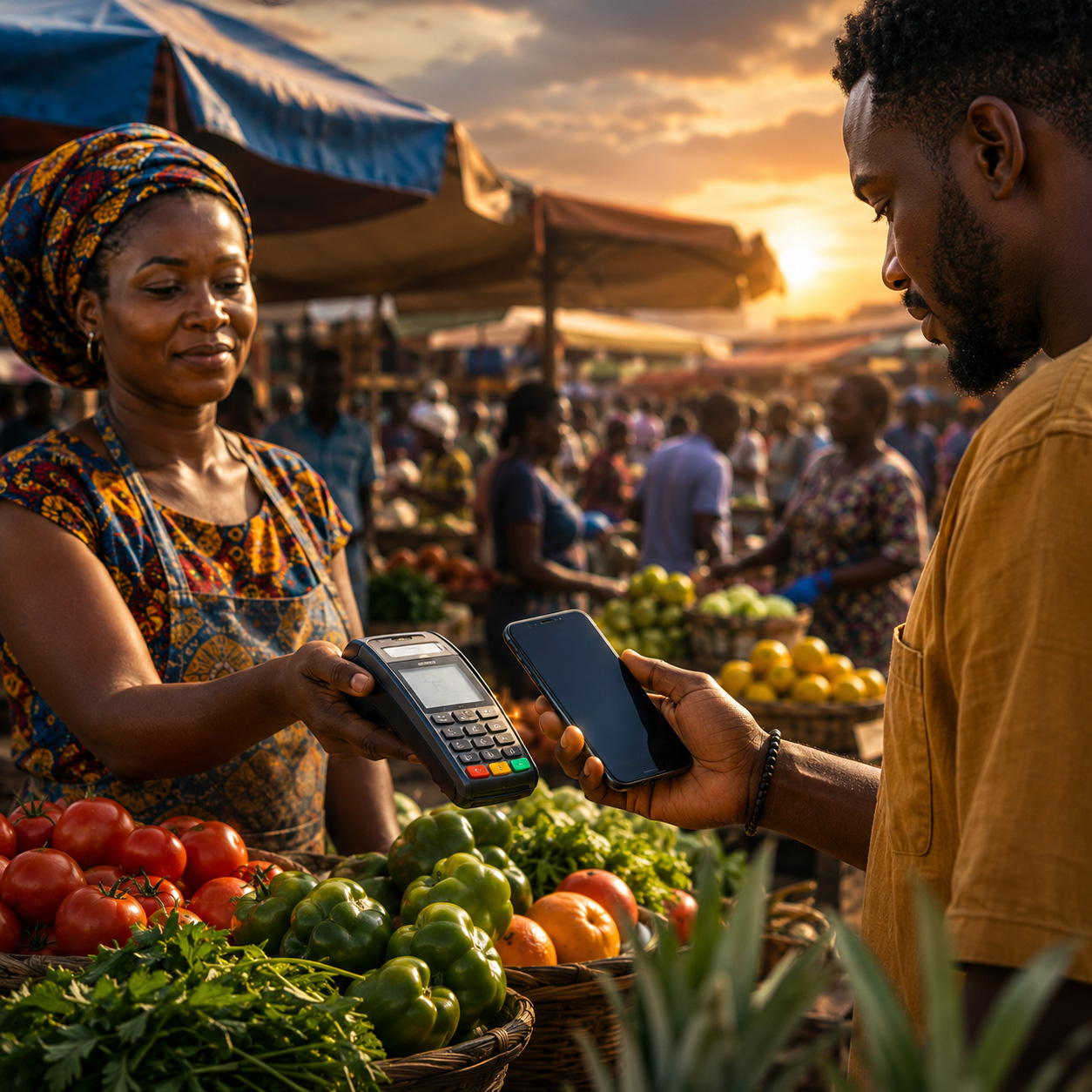
A vegetable vendor could receive payment instantly.
A boda boda rider could save small daily earnings digitally.
A parent could send school fees remotely.
A rural family could receive emergency support immediately.
A trader could transact without carrying large amounts of cash.

This is one of mobile money’s greatest achievements:

It made tiny transactions economically viable.

And in Africa’s largely informal economies, tiny transactions collectively power entire communities.

The scale of the transformation became extraordinary.

Sub-Saharan Africa emerged as the global centre of mobile money adoption. According to World Bank-related reporting, approximately 28% of adults in the region had a mobile money account by 2022. In several countries, mobile money penetration surpassed traditional banking penetration entirely.

This fundamentally altered Africa’s financial landscape.

For many citizens, their first meaningful financial account was not a bank account.

It was a mobile wallet.

That shift carried enormous economic implications.

Mobile money reduced transaction costs, increased transaction speed, expanded financial access, improved household resilience, enabled digital commerce, and strengthened informal business activity. It also accelerated broader digital transformation by introducing millions of people to digital financial behaviour for the first time.

The importance of cost reduction cannot be overstated.

Low-income populations are disproportionately affected by transaction friction. A small transfer fee may appear insignificant to upper-income users, but for households surviving on thin margins, transaction costs directly affect survival decisions. Mobile money’s ability to reduce transfer costs and eliminate unnecessary travel created real economic efficiency for millions.

In many rural communities, mobile money became more than a payment tool.

It became financial infrastructure.

Agent networks extended financial access into areas where banks had never meaningfully operated. Informal merchants evolved into cash-in and cash-out points. Small businesses integrated mobile transactions into daily commerce. Governments increasingly distributed social support digitally. Employers digitized wage payments. Families developed new patterns of saving and emergency support.

The technology quietly reshaped economic behaviour itself.

Yet despite its remarkable success, mobile money’s evolution also exposed deeper structural inequalities that remain unresolved.

The first is geography.

Urban users often benefited earlier and more fully from digital finance expansion. Cities generally offered stronger network coverage, denser agent ecosystems, more merchants accepting digital payments, greater smartphone adoption, and higher digital literacy levels.

Rural communities frequently experienced a different reality.

Network instability, lower agent liquidity, long distances between agents, limited merchant ecosystems, and poor digital literacy continued limiting active usage in many regions. In some rural economies, users still rely heavily on cash-out behaviour rather than broader digital ecosystem participation.

This matters because access alone does not equal inclusion.

A rural user may technically own a mobile wallet while still facing significant barriers to meaningful participation in digital commerce.

The second major gap is gender.

Mobile money significantly improved women’s financial inclusion across Africa. According to World Bank-related reporting, women’s account ownership in sub-Saharan Africa nearly doubled between 2011 and 2021, driven substantially by mobile money expansion.

But major disparities remain.

Women are still more likely to face:

  • lower phone ownership,
  • lower digital literacy,
  • identification barriers,
  • affordability challenges,
  • social restrictions,
  • and reduced confidence using digital financial systems independently.

In several communities, women may have nominal access to accounts but remain dependent on agents, spouses, relatives, or intermediaries to transact. This weakens the empowerment potential of digital finance.

The distinction is critical.

True financial inclusion is not only about account ownership.

It is about control.

Can women transact independently?
Can they save privately?
Can they build transaction histories?
Can they access credit?
Can they participate confidently in digital commerce?

These questions increasingly define the next stage of Africa’s mobile money evolution.

There are also emerging competitive pressures shaping the sector.

Mobile money initially succeeded because it solved a foundational infrastructure problem ignored by traditional banking systems. But the ecosystem is now evolving rapidly. FinTechs, banks, payment gateways, merchant platforms, digital lenders, and cross-border payment providers are increasingly competing within the same financial space.

Mobile money operators are no longer simply telecom services.

They are becoming broader financial ecosystems.

Many now integrate:

  • merchant payments,
  • lending,
  • savings,
  • insurance,
  • remittances,
  • APIs,
  • and e-commerce functionality.

This convergence is transforming mobile money from a transfer service into a digital economic platform.

At the same time, regulators face increasingly complex responsibilities. As mobile money ecosystems grow larger and more interconnected, issues around interoperability, taxation, consumer protection, cybersecurity, fraud prevention, data governance, and competition policy become more important.

Trust remains central to the sector’s future.

Financial fraud, scams, SIM swap attacks, social engineering, and digital theft continue threatening confidence in digital finance systems. For low-income users, losing even small amounts of money can create devastating consequences. Strengthening consumer protection and cybersecurity therefore becomes essential for sustaining adoption.

The next phase of mobile money’s growth may ultimately depend on moving users beyond basic transfers into broader economic participation.

Can mobile money help SMEs formalize?
Can transaction histories support lending?
Can cross-border interoperability support regional trade?
Can mobile wallets connect to digital identities?
Can platforms support women entrepreneurs more effectively?
Can rural users participate in digital marketplaces?
Can small-value transactions become gateways into broader financial health?

These questions increasingly shape the future of digital finance policy across Africa.

This is where institutions such as HiPipo and initiatives including the Digital Impact Awards Africa (DIAA), Include Everyone, Women in FinTech, and broader financial literacy programs become strategically important. As digital finance ecosystems evolve, Africa needs platforms capable of not only celebrating innovation, but also examining inclusion gaps, promoting responsible growth, and ensuring digital transformation remains connected to ordinary people.

Because the real story of mobile money is not only technological.

It is deeply human.

It is the story of how millions of small transactions quietly reshaped a continent.

A grandmother receiving support instantly.
A trader avoiding dangerous cash travel.
A student paying school fees digitally.
A woman controlling her own income for the first time.
A small merchant surviving through faster payments.
A rural household entering the formal economy.

Most revolutions are remembered through dramatic moments.

Africa’s mobile money revolution may ultimately be remembered differently.

As millions of tiny moments. Tiny transfers. Tiny payments. Tiny savings. Tiny transactions.

That collectively became one of the largest financial transformations the continent has ever seen.

And in many ways, the future of Africa’s digital economy is still being built one small transaction at a time.

Payments on the Ground: How Africa’s Small Businesses Navigate the Visa–Mastercard Tug of War

A narrative journey through markets and villages where digital payments are redefining commerce.

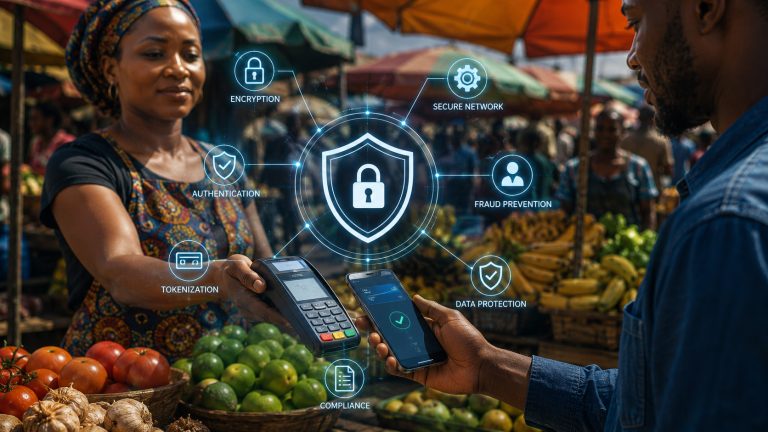
In a bustling market in Lagos, a street vendor scans a QR code on a customer’s phone and receives instant payment. The transaction happens over a mobile wallet built on Mastercard’s rails, yet tomorrow the same vendor might accept a Visa-enabled QR code or a local fintech app. This fluidity reflects the ground reality of Africa’s digital payments boom. Sub‑Saharan Africa accounts for 65 percent of global mobile money transactions, with $910 billion in value processed in 2023. Behind every tap, scan and transfer lies a struggle for supremacy among global giants and local challengers.

Mastercard’s community‑first approach is evident in the way it equips small merchants with low-cost terminals and provides training and microloans. In rural Rwanda, women’s cooperatives use Mastercard’s tools to sell crafts online and receive cross‑border payments. Visa, meanwhile, focuses on scale. It signs deals with large banks, mobile operators and governments to integrate Visa Direct and virtual card services into mobile wallets. In Tanzania, Visa has partnered with a mobile network operator to offer a unified QR code that works across multiple banks and telecoms.

For merchants and consumers, the benefits are tangible. Electronic payments eliminate the need to carry cash, reduce theft and open access to formal credit. Entrepreneurs can accept international payments through e-commerce platforms, while farmers can get paid promptly for produce. Yet these gains depend on inclusive infrastructure. Many rural areas still lack reliable internet or agent networks; regulatory fragmentation increases costs; and some global players prioritise proprietary systems over interoperability. To ensure that competition drives innovation rather than fragmentation, regulators and industry groups must enforce standards and incentivise open APIs.

The contest between Visa and Mastercard matters most to the people on the ground. Their choices determine whether digital payments empower a boda boda rider, a market trader or a tech start‑up. A balanced playing field where local providers and global giants collaborate will enable Africa’s payment revolution to reach every corner of the continent.

For Africa’s shopkeepers, farmers and young entrepreneurs, digital payments are more than convenience; they are a lifeline to formal finance and a gateway to e‑commerce. Highlighting the lived experiences of vendors and cooperative members underscores why payment innovation must be inclusive. By ensuring interoperability and fair competition, regulators can help global players and local fintechs build a digital economy that leaves no one behind.

“All Glory” Transforms Ancient Worship Into A Cinematic Global Anthem of Praise

0

If Matchless Love introduced listeners to the emotional heart of Voices Of Light – African Hymns Reimagined Vol. 1, then All Glory expands that atmosphere into something far larger:

A continental sound of celebration.

A global chorus of reverence.

A cinematic proclamation of worship designed for the modern streaming era.

From its opening declaration:

“All glory, honor we bring…”

the record immediately establishes itself with striking confidence and spiritual grandeur. There is no hesitation in the songwriting. No uncertainty in the emotional direction. The song knows exactly what it wants to communicate: total surrender, collective praise, and the exaltation of divine kingship through music that feels simultaneously ancient and futuristic.

What makes All Glory particularly remarkable is the way it translates traditional worship language into a highly immersive digital-age listening experience.

This is not worship music trapped in convention.

It is worship reimagined for a globally connected generation.

The repeated:

“Ho sa na — we call Your name…”

functions almost like a spiritual rallying cry, engineered with extraordinary emotional intelligence. The phrase carries the communal intensity of historic African praise gatherings while maintaining the melodic accessibility required for international playlist culture, streaming repetition, and large-scale audience resonance.

The genius of the record lies in its ability to feel massive without losing intimacy.

Sonically, the arrangement unfolds like a rising cathedral of sound. Layer by layer, the song builds emotional elevation through carefully controlled vocal progression, atmospheric harmonies, and cinematic rhythmic pacing. Rather than overwhelming the listener with excessive instrumentation, the production allows space for spiritual immersion.

That restraint gives the song power.

At the center of the experience is Doreen Nanfuka, whose performance on All Glory demonstrates remarkable command of emotional dynamics. Her delivery does not simply lead the song, it anchors it. There is authority in her tone, but also grace. Strength, yet deep tenderness.

Her voice moves through the arrangement with the confidence of someone fully aware that worship is not performance, but emotional transmission.

Supporting her is the magnificent presence of Enlightened Academy Choir, whose layered harmonies transform the song from an individual expression into a collective spiritual movement. Their contribution gives All Glory its intergenerational emotional texture, reinforcing one of the defining characteristics of the entire album: the fusion of personal devotion with communal celebration.

Together with HiPipo Voices, the record achieves a rare sonic balance:
African choral richness,
cinematic scale,
and global accessibility.

The production architecture crafted by George Kasakya and Henry Kiwuuwa deserves particular recognition for its sophistication.

Every vocal layer feels intentionally positioned.

Every atmospheric transition feels emotionally calculated.

Every progression feels designed to elevate listener engagement without sacrificing spiritual authenticity.

There is an unmistakable understanding here of how modern audiences emotionally consume inspirational music. The song’s concise structure aligns perfectly with contemporary streaming behavior while still delivering a complete emotional journey.

In many ways, All Glory represents one of the clearest examples of the album’s broader production philosophy:
short-form worship music engineered for deep emotional replay value.

Speaking about the vision behind the record, Innocent Kawooya describes All Glory as a global spiritual unifier:

“We wanted this song to feel bigger than geography. Bigger than denomination. Bigger than language barriers. All Glory was designed as a universal sound of praise that anyone, anywhere in the world, could emotionally connect with instantly. The goal was to create worship that feels both deeply personal and globally collective at the same time.”

Lead vocalist Doreen Nanfuka says the emotional energy inside the recording sessions was immediate:

“The moment we began singing Ho sa na together, the atmosphere completely changed. It stopped feeling like a recording session and started feeling like a real worship experience. You could feel unity inside the music itself.”

Members of the production crew, including George Kasakya and Henry Kiwuuwa, emphasized the intentional cinematic pacing behind the song:

“We approached All Glory almost like scoring an inspirational film sequence. The music needed to rise gradually, emotionally, spiritually, and sonically. Every harmony, every pause, every vocal layer was designed to create elevation.”

What ultimately makes All Glory exceptional is not merely its message, but its scalability.

The song feels built for:
morning devotion playlists,
international choir performances,
live worship gatherings,
cinematic visual adaptations,
social media spiritual moments,
and deeply personal private listening alike.

Very few contemporary inspirational records manage to operate effectively across all those emotional environments simultaneously.

All Glory does.

And it does so with elegance.

At a time when much of global music culture is increasingly fragmented and disposable, All Glory offers something enduring:
a unified sound of praise designed to transcend borders, platforms, and generations.

It is not simply a worship song.

It is a modern global hymn engineered for repeat spiritual experience.

As you experience the powerful journey of Voices Of Light – African Hymns Reimagined Vol. 1, from songs of hope, praise, healing, unity, victory, and light, this album stands as a remarkable celebration of faith, humanity, and emotional transformation through music. Led by Doreen Nanfuka, Enlightened Academy Choir, and HiPipo Voices, with exceptional production led by Innocent Kawooya, alongside George Kasakya and Henry Kiwuuwa, the project continues to position itself as one of the most emotionally immersive and globally resonant inspirational music releases from Africa in recent years.

Experience the full album globally here: Voices Of Light – African Hymns Reimagined Vol. 1: https://ditto.fm/voices-of-light-voices-of-light

And as the movement continues, secure your place at the prestigious HiPipo Music Awards 2026 and celebrate the future of African music, creativity, and cultural excellence: Buy HiPipo Music Awards Tickets: https://momoticketing.com/event/hipipo-music-awards-2

The Teacher Who Refused to Let Darkness Delay the Future

A #100DaysofSolar Human Impact Story from Buteyongera, Mukono District, Uganda

At just 25 years old, Farouk Ndase already carries enormous responsibility on his shoulders.

Inside his classroom in Buteyongera, Mukono District, 46 eager pupils look to him every single day for guidance, knowledge, and hope. For many of them, education is their clearest path toward a better future.

And Farouk understands that deeply.

But before Solar M7 arrived, darkness constantly interrupted the work he loved most.

When night fell, lesson preparation became difficult. Assignments remained unmarked. Important reading had to wait. Sometimes exhaustion and poor lighting forced him to postpone work entirely, even when he desperately wanted to do more for his students.

Yet Farouk was not only teaching others. He was also fighting for his own future.

Like many educators across Uganda, he is pursuing a degree to meet government requirements for teachers and strengthen his professional journey. But studying at night without reliable light often felt frustrating and limiting.

Then Solar M7 changed everything. Now, when evening comes, Farouk’s work does not stop.

Under the glow of solar light, he prepares lessons with confidence. He marks assignments late into the night. He studies for his degree with renewed focus and determination.

The light has not only transformed his evenings. It has expanded his possibilities.

“Before Solar M7, there were many things I wanted to accomplish at night but couldn’t,” Farouk shared during his interview. “Now I can prepare better for my students and also continue building my own future through education.”

According to Doreen Nanfuka, teachers like Farouk demonstrate how energy access directly affects the quality of education in underserved communities.

“When teachers have reliable light, entire classrooms benefit,” Doreen explained. “Better preparation means better learning. And when educators continue advancing their own studies, communities gain stronger leaders for the next generation.”

Innocent Kawooya says empowering teachers is one of the most powerful ways to transform communities sustainably.

“Every teacher supported through energy access has the potential to influence hundreds or even thousands of lives over time,” he noted. “Solar M7 is helping unlock educational opportunity not only for students, but also for the educators shaping Africa’s future.”

Today, the nights in Farouk’s home no longer bring limitation.

Lessons are prepared. Assignments are completed. Dreams move forward instead of waiting for daylight. And in Buteyongera, one young teacher is proving that when light reaches an educator, an entire community’s tomorrow shines brighter too.

Watch the full story of Farouk Ndase from Buteyongera, Mukono District, Uganda across our platforms:

YouTube
TikTok
Facebook
Instagram
LinkedIn
X/Twitter

#100DaysofSolar #SolarM7 #IncludeEveryone #Education #EnergyAccess #HumanImpact #Mukono #Uganda #CleanEnergy #HiPipo

Noela Continues to Shine with Her New Song “OLUDE LUDAWA”

0

Uganda’s music industry is blessed with talented female artists who continue to inspire audiences through creativity, passion, and powerful storytelling. Among the rising stars making a strong impact is Noela, a prominent artist signed under Code Bass Entertainment. Known for her soulful voice, emotional lyrics, and unique Afro-inspired sound, Noela has steadily established herself as one of the most promising female musicians in Uganda.

Her latest release, “OLUDE LUDAWA,” is already attracting attention from music lovers and industry followers, further proving her growth and consistency in the entertainment scene.

A Journey of Talent and Determination

Noela’s journey in music has been marked by hard work, resilience, and artistic excellence. Through her dedication, she has built a loyal fan base and gained recognition for producing quality music that connects deeply with listeners.

One of the biggest milestones in her career came in 2024, when she won the HiPiPo Music Awards as the Best Regional Artist during the prestigious award ceremony held at Serena Hotel Kampala. This achievement highlighted her growing influence in the Ugandan music industry and confirmed her position as one of the country’s standout female talents.

Winning such a respected award not only celebrated her musical achievements but also inspired many upcoming female artists striving to make their mark in the industry.

About “OLUDE LUDAWA”

Noela’s new song “OLUDE LUDAWA” showcases her artistic maturity and emotional depth. The song blends beautiful Afrobeat melodies with heartfelt lyrics, creating a sound that is both modern and deeply relatable.

Through her smooth vocals and expressive delivery, Noela brings emotion and authenticity into the song, making it resonate strongly with fans. The production quality and lyrical creativity demonstrate the professionalism that has become part of her musical identity.

“OLUDE LUDAWA” is not just another release — it is a reflection of Noela’s continuous evolution as an artist determined to push her music to greater heights.

Previous Successful Projects

Over the years, Noela has built an impressive music catalog filled with memorable songs that have contributed to her growing popularity. Her previous projects include:

  • Feeling Loved” from the Feeling Loved EP
  • Sankara”
  • Lwaki” featuring Young D Gwebagema
  • Omukago
  • Ngelela
  • Muntu Wange
  • Komando
  • Kugwe Weka
  • Nze Gwe

Each of these songs showcased different dimensions of her artistry, ranging from love and relationships to empowerment and real-life emotions. Her versatility and consistency have made her one of the most respected female artists emerging from Uganda’s music scene.

Representing Female Excellence in Ugandan Music

As a female artist under Code Bass Entertainment, Noela continues to break barriers and represent women positively in the entertainment industry. Her ability to combine talent, discipline, and originality has helped her stand out in a highly competitive space.

Fans admire her not only for her music but also for her confidence, stage presence, and commitment to delivering quality content. With every release, she continues to strengthen her brand and expand her influence across East Africa.

The Future Looks Bright

With the success of her previous songs and the growing popularity of “OLUDE LUDAWA,” Noela’s future in music looks extremely promising. Many industry observers believe she is destined for even greater achievements both locally and internationally.

Her determination, award-winning talent, and strong connection with audiences position her as one of Uganda’s future music icons.

Conclusion

Noela’s new release “OLUDE LUDAWA” is another powerful chapter in her musical journey. From winning the HiPiPo Music Award for Best Regional Artist in 2024 at Serena Hotel Kampala to consistently releasing impactful music, she continues to prove that she is a force to be reckoned with in Ugandan entertainment.

As she continues to grow artistically and inspire fans through her music, Noela remains a shining example of talent, passion, and perseverance in Africa’s music industry.

Church of Uganda Announces Scientific Martyrs’ Day Celebrations at Namugongo Amid Health Concerns

0

The Church of Uganda has confirmed that this year’s national Uganda Martyrs’ Day celebrations will be held scientifically, with strict adherence to Ministry of Health Standard Operating Procedures (SOPs), according to a press release issued on 28th May 2026.

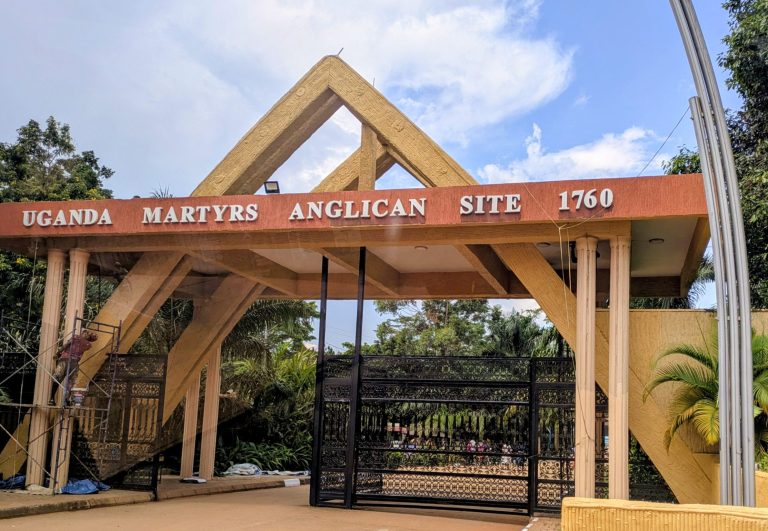
The Most Rev. Dr. Stephen Samuel Kaziimba Mugalu, Archbishop of the Church of Uganda, recently visited the Uganda Martyrs’ Anglican Site at Namugongo to assess readiness. Uganda Christian University (UCU) has been mandated by the House of Bishops to organize this year’s celebrations on behalf of the Church.

In light of current public health circumstances, the Church has outlined the following arrangements:

  • National celebrations at Namugongo Anglican Site will be held strictly by invitation, with attendance limited in line with Ministry of Health guidelines.
  • Dioceses are encouraged to commemorate Martyrs’ Day in their respective parishes across the province.
  • The official Martyrs’ Day liturgy will be shared through Diocesan Secretaries in due course.

The phrase “scientific celebrations” has become standard terminology in Uganda for events conducted under strict health protocols typically including social distancing, limited crowd sizes, mandatory handwashing or sanitizing, and mask-wearing where required.

The Archbishop has further assigned Uganda Christian University to continue organizing this year’s scientific celebrations and also prepare to coordinate next year’s Uganda Martyrs’ Day celebrations.

The Church of Uganda encouraged all Christians and members of the public to continue observing the Ministry of Health SOPs for the safety and well-being of all.

Uganda Martyrs’ Day, observed annually on 3rd June, commemorates the execution of Christian converts both Anglican and Catholic who were killed on the orders of Kabaka Mwanga II between 1885 and 1887. The Anglican martyrs are remembered at Namugongo, where many lost their lives.