Home Blog Page 3

Uganda Suspends DRC Flights, Border Transport Over Ebola Fears

0

The Government of Uganda has announced sweeping new measures aimed at containing the spread of Ebola Virus Disease (EVD), including the temporary suspension of flights between Uganda and the Democratic Republic of Congo (DRC), cross-border public transport, cultural gatherings, and weekly markets in high-risk border districts.

The resolutions were announced by the Permanent Secretary at the Ministry of Health, Dr. Diana Atwine, following a National Task Force on Ebola Virus Disease meeting convened by Vice President Jessica Alupo earlier today.

According to the Ministry of Health, the measures form part of intensified national efforts to prevent cross-border transmission as Ebola concerns continue to rise in the region.

Among the most significant directives is the temporary suspension of all flights between Uganda and the DRC, which government says will take effect within 48 hours. Authorities also suspended cross-border public passenger transport services for four weeks, including ferries operating on River Semliki, public buses, and other passenger transport linking the two countries.

However, government clarified that the restrictions will not affect transportation of food supplies and goods.

Officials also announced the temporary suspension of all cultural celebrations and commemorative events that attract large crowds within districts bordering the DRC. Weekly markets operating in border sub-counties within high-risk districts have equally been suspended for the next four weeks.

Government says the restrictions are intended to reduce mass gatherings and minimize opportunities for possible transmission.

At the same time, authorities directed schools, prisons, hotels, places of worship, and non-weekly markets in border districts to strictly enforce Standard Operating Procedures (SOPs) issued by the Ministry of Health.

Despite heightened Ebola concerns, government confirmed that schools will reopen on schedule, with strict adherence to health guidelines expected from school administrators. The Ministry of Health added that nearby health facilities will support schools, while additional guidance will be communicated in the coming days.

The National Task Force also resolved to intensify nationwide public sensitization campaigns on Ebola prevention and infection control through radio, television, social media, religious institutions, cultural institutions, and local government structures.

Health authorities further announced plans to strengthen screening, testing, and treatment capacity along the Uganda-DRC border based on ongoing risk assessments.

Government additionally ordered enhanced death reporting across the country, with particular emphasis on high-risk districts along the Uganda-DRC border and the Kampala Metropolitan Area.

Security agencies have also been directed to strengthen patrols along porous border points to minimize illegal cross-border movement. Officials emphasized that only essential movement for people originating from the DRC will be permitted, and only through gazetted and designated entry points.

The Ministry of Health urged the public to remain calm but vigilant, strictly follow all health guidelines, and immediately report suspected Ebola symptoms to the nearest health facility.

The latest measures come as Uganda intensifies surveillance and containment efforts amid growing regional concern over Ebola transmission linked to outbreaks in eastern DRC.

Uganda Issues Strict Ebola SOPs for Schools Ahead of New Term

0

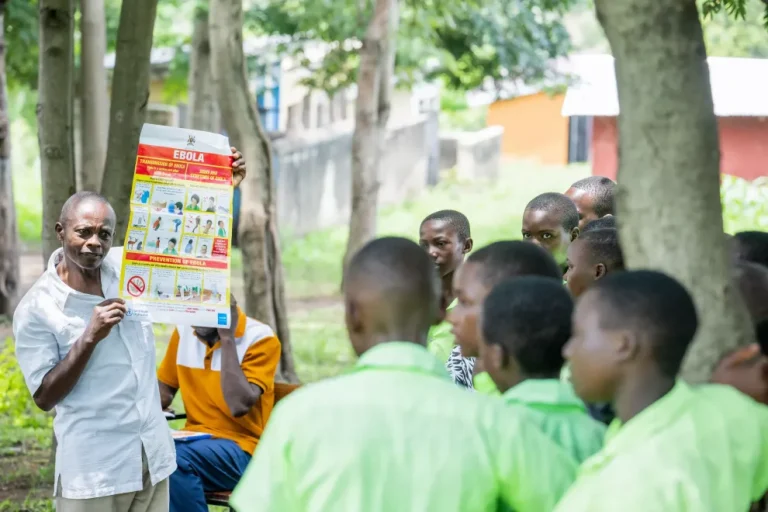
As schools prepare to reopen for the new academic term, Uganda’s Ministry of Health has released strict Standard Operating Procedures (SOPs) aimed at protecting learners, teachers, and school communities from the ongoing Ebola threat.

The new guidelines come amid heightened national and regional concern following confirmed Ebola cases linked to the Bundibugyo strain in Uganda and the Democratic Republic of Congo (DRC). Health authorities say schools remain high-risk environments because of close interaction among learners, staff, parents, and visitors.

Under the new SOPs, schools across the country will be required to strengthen hygiene measures, screening systems, surveillance, and emergency response protocols to minimize the risk of transmission.

The Ministry of Health directed all schools to establish handwashing facilities with running water and soap at strategic points including school entrances, classrooms, dormitories, dining halls, staff rooms, and toilets. Mandatory handwashing for learners, staff, and visitors will also be enforced throughout the school day.

Schools have additionally been instructed to set up temperature screening points at entrances and deny access to anyone showing Ebola-related symptoms such as fever, vomiting, unexplained bleeding, weakness, or severe headache.

Authorities are also discouraging physical contact within school environments, including handshakes, hugging, and sharing personal items. Classrooms and dormitories are expected to remain well ventilated, while schools have been asked to regularly disinfect surfaces, toilets, bathrooms, vehicles, and other frequently touched areas.

One of the major directives involves preparedness for suspected cases. Schools are now required to designate temporary isolation areas where learners or staff showing Ebola-like symptoms can be separated from others before health authorities intervene.

The Ministry further instructed schools to maintain updated emergency contact information for nearby health facilities and district surveillance teams to ensure rapid reporting and response.

According to health officials, the SOPs are intended not only to protect learners but also to avoid widespread disruptions to the education system should the outbreak escalate.

“Schools are environments where learners, teachers, support staff, parents and visitors interact closely, making them vulnerable to the spread of infectious diseases if preventive measures are not observed,” part of the Ministry guidance states.

The measures come as Uganda intensifies national Ebola containment efforts following the confirmation of imported cases connected to the outbreak in eastern DRC. The World Health Organization recently classified the outbreak as a Public Health Emergency of International Concern, warning of the risk of cross-border transmission due to high population movement in the region.

Health authorities say the Bundibugyo strain currently circulating poses additional concern because there are no fully approved vaccines specifically designed for it.

The latest school guidelines are part of broader national preventive measures that also target public gatherings, places of worship, transportation hubs, and social events. Government recently directed organizers of mass gatherings to seek prior health clearance and implement strict preventive protocols during events.

Officials say public cooperation will remain critical in controlling the outbreak.

Parents, teachers, and school administrators have been urged to remain vigilant, report suspected symptoms immediately, and reinforce public health awareness among learners as Uganda works to prevent further spread of the disease.

Shakira personally invites Ghetto Kids to perform at the FIFA World Cup finals halftime show

It started on the dusty streets of Kampala. Later this year, it will explode on the biggest sporting stage on earth.

Uganda’s own Ghetto Kids the dance troupe that turned raw talent and viral energy into an international brand have just received an invitation that transcends entertainment. Music superstar Shakira has personally confirmed that the group will join her for the FIFA World Cup finals halftime show.

In a video message addressing fans participating in the viral “Dai Dai” dance challenge, Shakira made it official.

“I’ve been seeing amazing creations to ‘Dai Dai,’ the official World Cup song, and I’m gonna need dancers for the halftime show at the finals,” she said.

“That’s why I’ve decided to invite as many of you as I can to dance with me at the finals. So I’ve already invited the Ghetto Kids from Uganda but I really, really would like to see all of your creations and your videos.”

For years, Uganda has fought to be seen not as a destination of hardship, but as a wellspring of creativity, resilience, and joy. The Ghetto Kids have become the living embodiment of that fight.

Known for turning choreography into global conversation, the group has previously performed alongside international stars and graced major global stages. But the World Cup finals halftime show is a different stratosphere altogether. It is a stage watched by hundreds of millions of people across nearly every country on earth.

Shakira’s invitation also signals something larger: the democratization of global entertainment. Social media dance culture raw, unfiltered, and borderless is now shaping major live productions. Fan-created choreography is influencing shows that were once the exclusive domain of polished, corporate-selected acts.

The Ghetto Kids earned this moment not through agents or lobbying, but through years of authentic, electrifying work that could not be ignored. They represent a new kind of global star: one built on talent, hustle, and the kind of joy that needs no translation.

Shakira’s call is also an open invitation to fans worldwide to join the dance challenge. She wants to fill that halftime stage with authentic, diverse creators not just polished professionals. That spirit of inclusion is exactly what the Ghetto Kids have always represented.

As they prepare to represent Uganda before the world’s largest television audience, one thing is clear: The kids from Kampala’s ghettos are no longer just a story of survival. They are a story of triumph. And soon, the whole world will be watching them dance.

ARSENAL AFTER THE WAIT: THE CLUB THAT REFUSED TO DIE, THE FANS THAT REFUSED TO STOP BELIEVING

0

By Innocent Kawooya, NIM | HiPipo Money

Arsenal really did win the Premier League on Tuesday, 19 May 2026. After 22 years of waiting, rebuilding, heartbreak and near misses, Arsenal F.C. finally returned to the summit of English football. The title was confirmed when Manchester City F.C. drew 1-1 away to Bournemouth, leaving Arsenal four points clear with one match remaining. It was Arsenal’s first league title since the legendary Invincible season of 2003/04, their 14th top-flight crown overall, and the completion of one of the most emotional football journeys modern fans have witnessed.

For many supporters across the world, this was never just another football trophy. This was emotional resurrection. This was the reward for years of loyalty through difficult seasons, painful banter, online ridicule, and repeated moments where Arsenal came painfully close but could not finish the race. Entire generations of supporters had grown up hearing stories about greatness without experiencing a league title themselves. Then suddenly, on one unforgettable night in May 2026, everything changed.

North London exploded into celebration. Phones rang endlessly. Families screamed into the night. WhatsApp groups became battlefields of emotion. Rivals suddenly fell silent. Others showed reluctant respect. Some supporters cried openly because they understood exactly how long this wait had been. This title was not built in one season. It was built over decades of belief.

What makes this championship even more powerful is that Arsenal did not stumble into it accidentally. This was not luck. This was a long-awaited miracle. Arsenal won the league because they became the most balanced and disciplined side in England. They conceded only 26 league goals all season, the best defensive record in the division, while combining structure, intensity and intelligence to control matches under enormous pressure.

This Arsenal side won differently from the beautiful chaos of the Invincibles. The modern team was harder, calmer and more tactical. They were not obsessed with entertaining the world every minute. They were obsessed with surviving pressure, controlling games and collecting points. That mentality shift transformed Arsenal from “almost champions” into actual champions.

Much of that transformation came through Mikel Arteta. For years, Arteta lived under enormous scrutiny. Every tactical decision became debate material. Every setback was treated as evidence that he would never truly succeed. Many questioned whether he could ever take Arsenal beyond rebuilding and into actual dominance. Yet through patience, courage and relentless belief, Arteta rebuilt one of the biggest clubs in world football and restored Arsenal to the top of England once again.

One of the defining faces of this title-winning season was David Raya. Statistics will remember his saves, but Arsenal supporters will remember the emotional moments he protected. Raya delivered critical interventions throughout the campaign, making huge late-game saves that repeatedly preserved Arsenal’s momentum. His performances earned him a third consecutive Golden Glove while maintaining nearly a 70% save success rate. But beyond the numbers, Raya became the goalkeeper who repeatedly stopped fear from entering Arsenal hearts again.

Then there was Declan Rice, who transformed Arsenal psychologically as much as tactically. Rice brought leadership, aggression, composure and authority into the midfield. His interceptions, tackles, passing range and consistency became central to Arsenal’s title push. More importantly, he gave Arsenal a new mentality. This team no longer looked fragile under pressure. They looked prepared for war.

The attacking responsibility was also shared across the squad rather than relying on a single superstar. Viktor Gyökeres finished as Arsenal’s leading league scorer with 14 goals, while Bukayo Saka and Eberechi Eze each added seven. Leandro Trossard, Martín Zubimendi, Declan Rice, Mikel Merino, Gabriel and Jurriën Timber all contributed important goals across the season. This was not a one-man title victory. This was a complete squad carrying responsibility together.

And yet, beyond all the statistics and tactical analysis, the emotional identity of Arsenal remains what makes the club unique. Arsenal supporters understand that behind every beautiful Arsenal era has always existed hidden steel. Gilberto Silva became known as “The Invisible Wall” during the Invincibles era, while Sylvain Wiltord scored the famous goal at Old Trafford that secured Arsenal’s 2002 Double. This current generation continues that tradition in a modern form. Behind the creativity and youth exists resilience, discipline and emotional toughness.

That emotional connection is why Arsenal means more to many supporters than simply football. Arsenal became a lesson in patience. A lesson in rebuilding. A lesson in believing through difficult periods. Supporters watched the club survive financial struggles after the Highbury move, endure painful transitions after Arsène Wenger, and recover from years where social media turned every Arsenal failure into entertainment. Yet somehow, Arsenal always returned.

The historical record itself shows remarkable consistency. Since 1990/91, Arsenal have finished in the top four 27 times and in the top six 32 times. Their most common finish during that period has actually been second place, which they achieved nine times. That is not the profile of a temporary football power. That is the profile of a club permanently living near the summit of the game.

Commercially and globally, Arsenal’s return to the top arrives at the perfect moment. The club already reaches hundreds of millions of supporters worldwide through tours, digital engagement and global fan communities. Arsenal matches are now among the most watched Premier League games in American television history, proving how much global attention follows the club when they compete for major honours. The title strengthens Arsenal’s position commercially through sponsorships, merchandise, hospitality and future global partnerships.

For many people, however, the greatest power of this title cannot be measured financially. Football creates emotional energy unlike almost anything else on Earth. On the night Arsenal became champions, fathers hugged sons, friends called each other screaming with joy, supporters who had suffered together for years finally celebrated together. Somewhere across the world, lonely people smiled again. Somewhere exhausted people found hope again. Football may not medically heal the world overnight, but emotionally, it absolutely changes lives.

Now Arsenal stand one step away from something even greater. On 30 May 2026, they face Paris Saint-Germain F.C. in the UEFA Champions League final in Budapest. And for the first time in many years, Arsenal enter Europe’s biggest night not as dreamers, but as genuine favourites built on defensive excellence, composure, tactical discipline and belief.

The strongest truth about Arsenal is also the simplest one. Arsenal do not need mythology to sound legendary. The facts already read like folklore. Watch out Arsenal win the 2026 Champion league Title on 30 May.

The writer is a National Independence Medalist and the first Ugandan under 40 years to ever receive this Presidential Medal. Innocent Kawooya, NIM is the Chief Executive Officer of HiPipo.

Do you have a story, brand, innovation, business, or movement that deserves global visibility and powerful storytelling? Reach out to our editorial team:

Derick Kasasa 📞 +256 775 904861 📧derickkasasa@gmail.com

Nicholas Ntulume 📞 +256 706 370746 📧 nick.ntulume@HiPipo.com

PEARL OF AFRICA TOURISM EXPO 2026: After 10 Years, Uganda Stops Asking the World to Notice — And Starts Showing Why It Must.

0

The Pearl of Africa Tourism Expo (POATE) 2026 is not simply opening its doors to another tourism exhibition.

It is opening the doors to a decade of transformation.

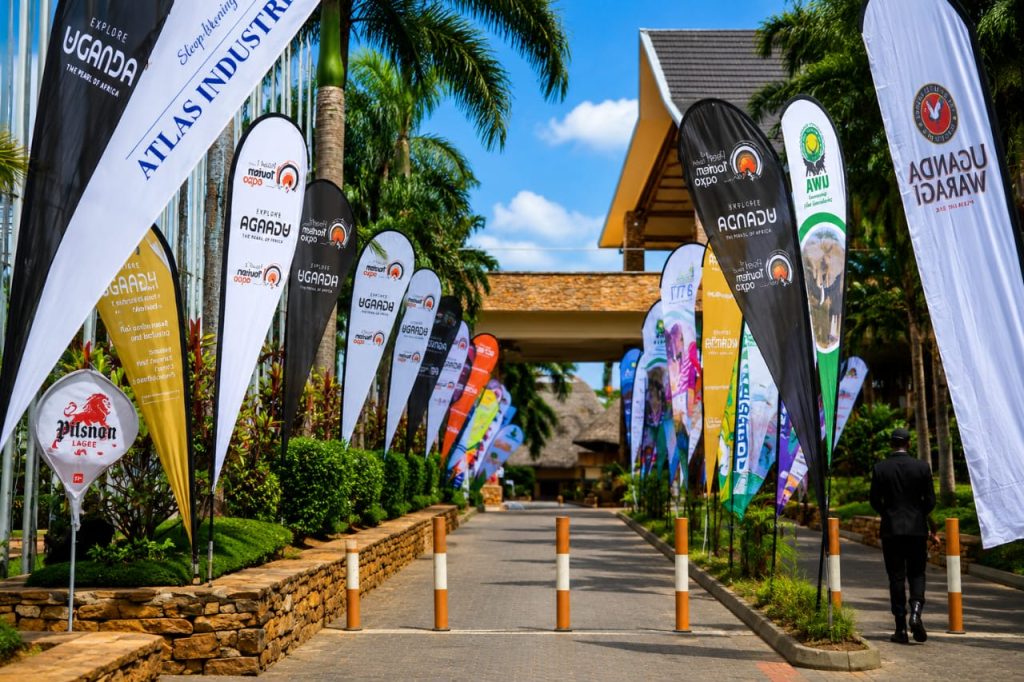
From May 21 to May 23, 2026, Uganda will host the 10th edition of the Pearl of Africa Tourism Expo at the Speke Resort Convention Centre under a theme that feels deeply personal to today’s global traveler: “Wanderlust — It’s Your Time to Thrive.”

And perhaps no phrase captures Uganda’s tourism identity more accurately.

Because wanderlust is no longer just about travel. It is longing. Curiosity. The emotional desire to discover places that still feel authentic in a world increasingly shaped by algorithms, artificial experiences, and over-commercialized tourism.

Uganda has quietly become one of those places.

Unlike destinations carefully designed for brochures and social media trends, Uganda greets travelers like a feeling rather than a product. It offers living encounters with nature, culture, rhythm, silence, and raw beauty that still feel deeply human.

That is what makes this year’s Pearl of Africa Tourism Expo feel different.

Ten years ago, POATE began primarily as a platform to showcase Uganda to the world. Today, it stands among East Africa’s most influential tourism gatherings, bringing together international buyers, tour operators, hospitality leaders, travel creators, investors, conservationists, media professionals, and storytellers searching for the future of African tourism.

But beyond exhibition halls, networking sessions, and destination showcases lies something far more powerful:

Emotion.

Because tourism has never truly been about movement alone. It has always been about meaning.

People travel searching for something they often cannot explain. Sometimes it is adventure. Sometimes healing. Sometimes perspective. Sometimes escape. And sometimes people travel simply because somewhere deep inside them exists the hope that the world still contains places capable of making them feel alive again.

Uganda has become one of those places.

At a time when many global destinations feel overcrowded, filtered, and emotionally predictable, Uganda still feels rare. The landscapes remain wild. The encounters remain personal. The beauty still arrives unexpectedly.

One moment, a traveler stands face-to-face with mountain gorillas in the ancient forests of Bwindi Impenetrable National Park. Hours later, they are watching golden light disappear across the savannah plains of Queen Elizabeth National Park. Somewhere between the crater lakes, the rolling green hills, the thunder of Murchison Falls, roadside conversations, and Kampala’s vibrant rhythm, visitors begin to understand why Uganda leaves such a lasting emotional imprint.

Uganda is not experienced in a single moment.

It unfolds slowly.

And perhaps that is the true meaning behind wanderlust — not simply the desire to travel, but the desire to rediscover wonder.

This 10th anniversary arrives at a defining moment for African tourism itself. Across the continent, destinations are shifting away from traditional sightseeing toward experience-driven travel built around storytelling, authenticity, conservation, wellness, and cultural connection.

Modern travelers no longer want to simply see destinations.

They want to emotionally enter them.

That shift creates enormous opportunity for Uganda.

Because Uganda’s greatest tourism advantage has never been wildlife alone. It has always been emotional diversity. Few destinations in the world combine adventure, intimacy, culture, spirituality, conservation, and human warmth as naturally within one journey.

And as global tourism evolves, authenticity itself is becoming luxury.

This new tourism era is also transforming how destinations market themselves. Today, a cinematic travel documentary, a viral safari reel, a powerful photograph, or an emotionally written story can shape global travel decisions faster than traditional advertising campaigns ever could.

Storytelling has become one of tourism’s most valuable currencies.

The Pearl of Africa Tourism Expo understands this shift.

POATE 2026 is not merely celebrating destinations. It is celebrating narrative. It recognizes that tourism is no longer only an economic sector. Tourism is identity projection. It is soft power. It is cultural diplomacy. It is how nations emotionally introduce themselves to the world.

And Uganda’s introduction continues to grow stronger.

Tourism remains one of Uganda’s most important economic pillars, supporting livelihoods across hospitality, transportation, conservation, media, entertainment, tour guiding, handicrafts, and local communities. Behind every safari vehicle, lodge booking, cultural performance, and travel experience exists an ecosystem of people whose lives are directly connected to the visitor economy.

When tourism grows sustainably, communities grow with it.

Yet beyond economics, this expo also carries symbolic significance.

For ten years, POATE has quietly helped reposition Uganda within global tourism conversations. It has helped move the country beyond outdated perceptions toward a modern African tourism identity rooted in beauty, conservation, creativity, experience, and emotional storytelling.

And perhaps that is its greatest achievement of all:

Uganda no longer feels like a hidden destination pleading to be discovered.

It increasingly feels like one of Africa’s most emotionally compelling journeys waiting to be experienced.

As delegates, investors, creators, and travelers gather in Kampala this May, Uganda enters this milestone edition carrying something more powerful than polished branding campaigns or carefully crafted slogans.

It carries wonder.

The kind of wonder that still lives in mist-covered forests, untamed landscapes, human connection, and stories not yet fully told.

Because long after flights depart and exhibition halls empty, the destinations people remember forever are never simply the places they visited.

They are the places that changed how they felt about the world.

The writer is John Kennedy Ssebadduka, CEO and Founder of Avenoir Safaris.