Home Blog Page 44

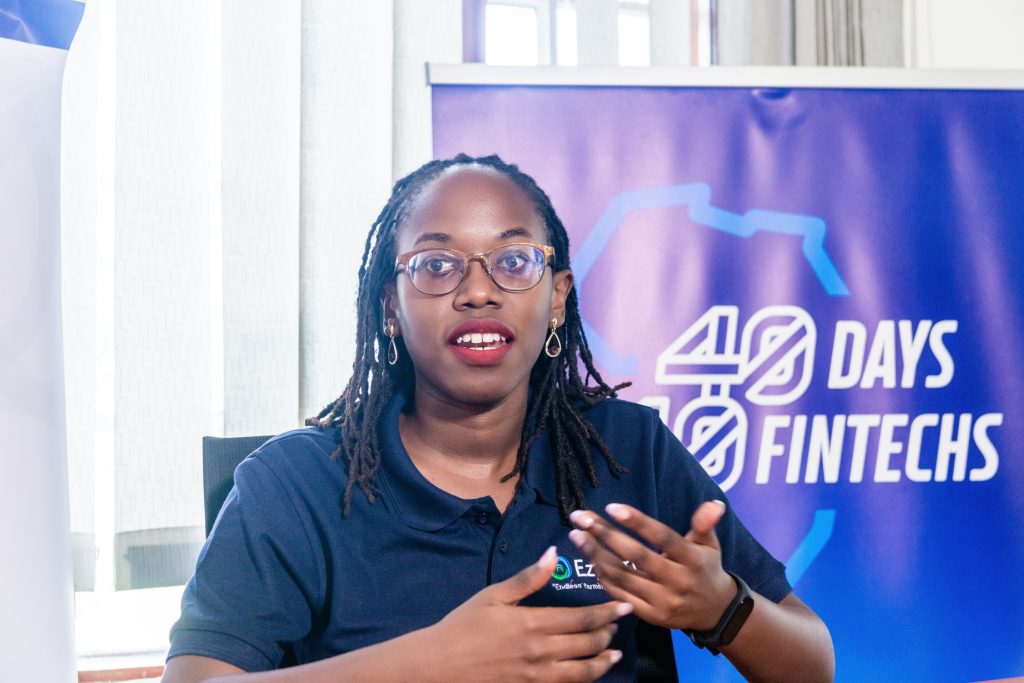
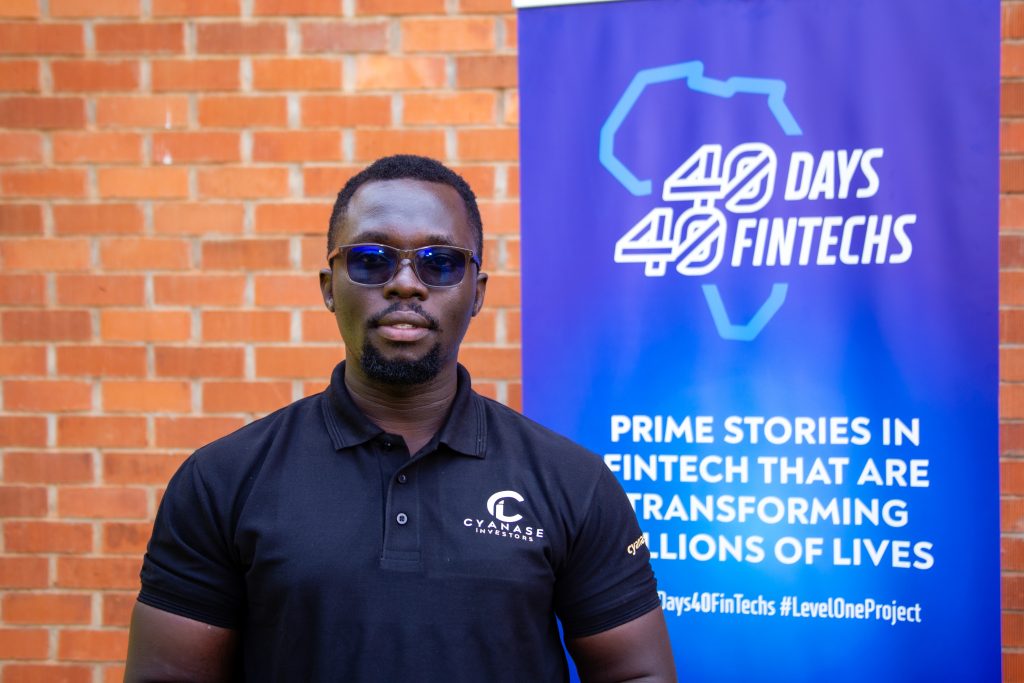
Cyanase is making investment accessible to underserved and underdeveloped markets. #40Days40Fintechs Season 4 Day 14

With the world swiftly shifting into cashless economies, one of the areas of concern is digital trading and investment. Many people are still sceptical of digital phenomena such as cryptocurrencies and even Mobile Money.

Other people are out there with lots of money and ready to invest it digitally but lack the know-how. With these challenges in mind, some young Ugandan innovators developed an investment infrastructure for the Internet where they ably aggregate different investment options from different countries into a single API (Application Programming Interface).

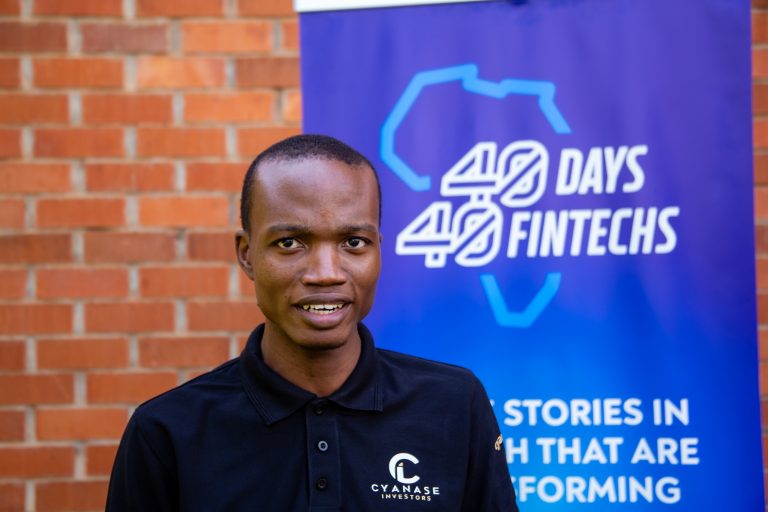
According to John Vianney Wasswa, a co-founder and CEO of Cyanase Investors, the goal behind this innovation is to make investing accessible to everyone including the underdeveloped markets.

“Any fund manager, FinTech, or bank can access investment options that will help it grow. We provide three key products,” he says.

“One, we have a Mobile App that people can download and use. We also have a web platform that can be accessed online via Cyanase.com. We also developed an API specifically for FinTechs and Banks that want to offer investment services to their customers.”
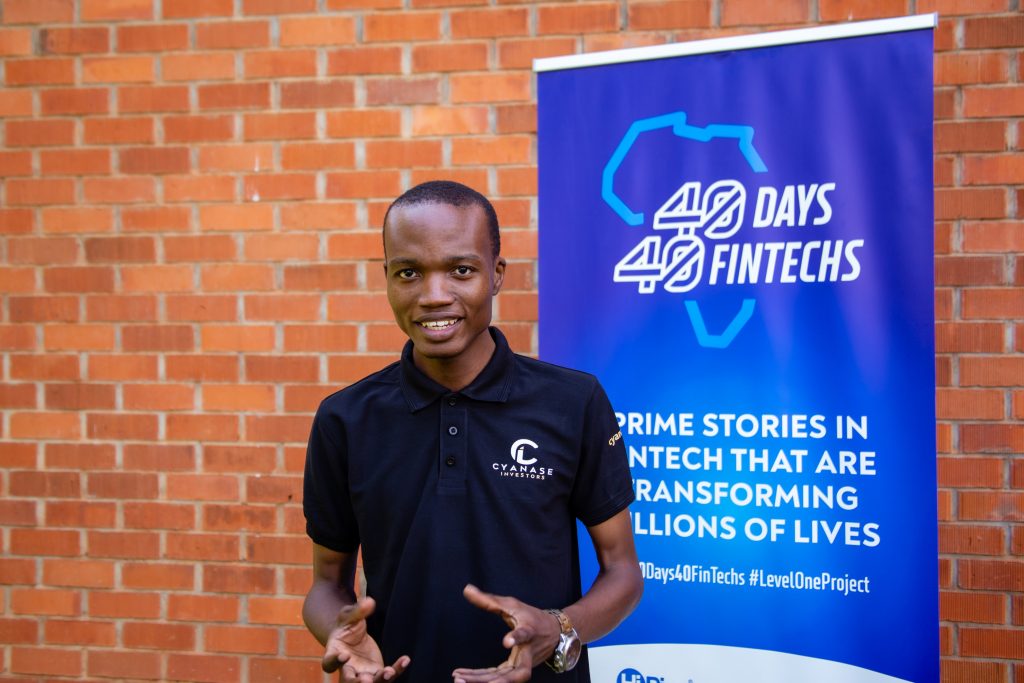
Wasswa notes that with their technology, they strictly look out for licensed fund managers and investment firms who are required to sign contracts and financial agreements to fork their technology into the company’s existing investment products.

“We work hand in hand with the Bank of Uganda, as our start-up is currently under the Bank of Uganda regulatory sandbox. We do our best to ensure that all the money we process is fully protected and secure.”

On the other hand, Mark Obini, the Chief Marketing Officer of Cyanase Investors adds that before enrolling players for this platform, they prioritize training and sensitization because truly many potential digital investors do not know what to do and whom to trust.

“We have mainly worked with students in big numbers but as time goes on, we have seen a lot of people in the working class picking interest in this platform,’ he says.

“Currently, we have about 1,800 registrations and downloads of the application. This involves students and other working-class individuals. We have different categories such as Saccos and investment groups that can still use this platform to practice investments,” he adds.

At the moment, Obini says they are working to have their product integrated into MTN Mobile Money and Airtel Money platforms.

“We are looking forward to registering our company with them so that they can include this investment feature in their applications and mobile money options.”
There is also a plan to ensure that people who don’t have smartphones and can’t access the internet can practice investments by using the USSD codes on their feature phones.

40 Days 40 FinTechs

Cyanase Investors are the 14th participants in Season Four of the 40 Days 40 FinTechs initiative organized by HiPipo to shine a light on emerging Financial Technology companies and their impact on society, especially on the people at the bottom of the pyramid.

“I would like to appreciate the 40 Days 40 FinTechs initiative for making the FinTech sector thrive. We feel like the idea of coming to capture what we do is something that will make us known to the world and also help us improve our product,’ Obini says.

The 40 Days 40 FinTechs initiative has over the past three years helped more than 100 participating FinTechs benefit from the useful tools and an introduction to the industry’s emerging technologies such as Mojaloop Open Source Software, and guidance from Level One Project foundational material.

The initiative is organized by HiPipo in partnership with the Level One Project, Mojaloop Foundation, INFITX, Cyberplc Academy, Ideation Corner, and Crosslake Technologies with support from the Bill and Melinda Gates Foundation.

According to Innocent Kawooya, the HiPipo CEO, Cyanase is a start-up with the potential to have a great impact on society.

“We can see that they are providing service from multiple players in one place through an open API. This is what we keep advocating for to ensure different players can use the same infrastructure for mutual benefits,” he said.
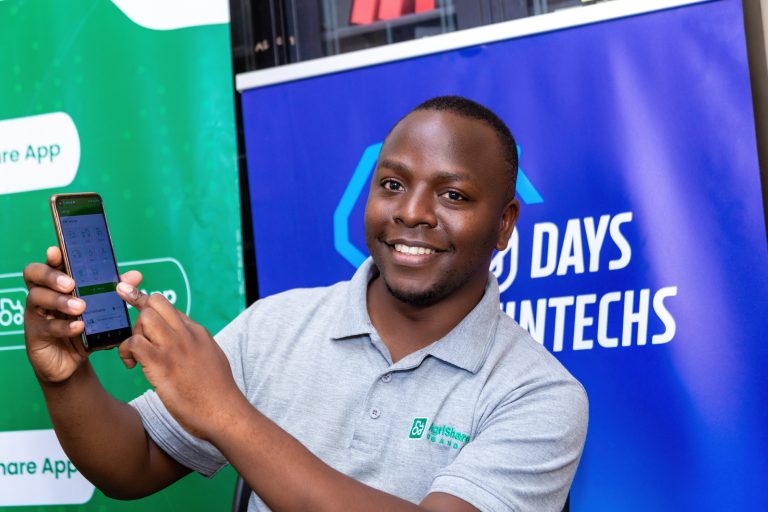

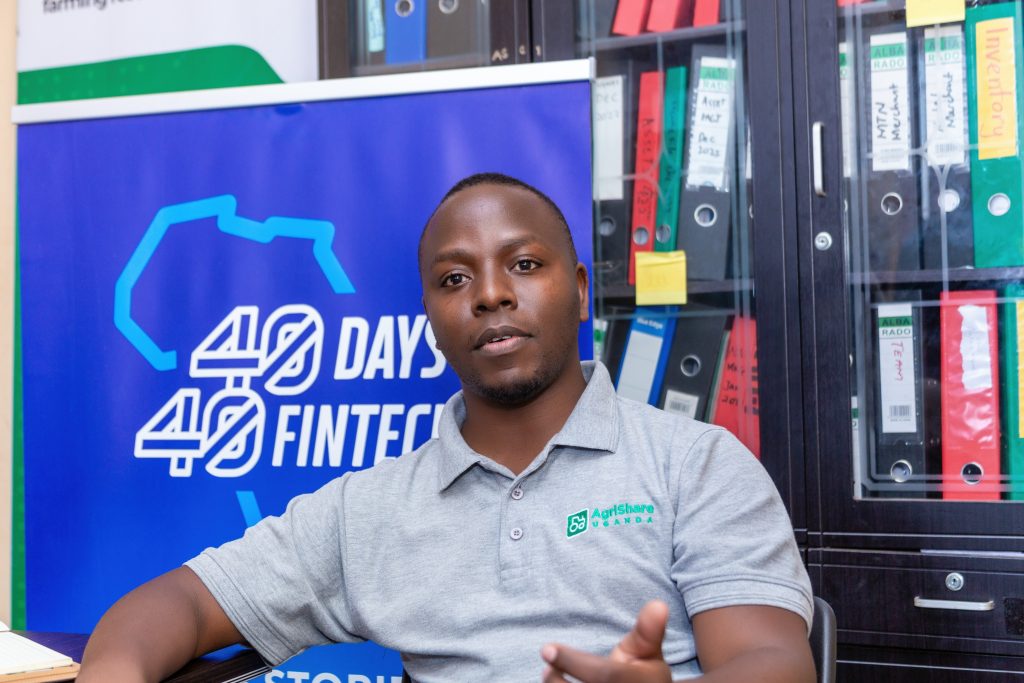
AgriShare is using FINTECH to connect Farmers to Agricultural resources. #40Days40FinTechs Season 4 Day 13

Vincent Kizito is living with his grandmother in Kabanyi village of Luwero district. The only property they own is a huge piece of land that is lying idle because they lack the resource to develop it.

But about a year ago, Kizito heard his friends talking about AgriShare APP, an online platform that can help landowners earn some money by renting out their land.

“My friends advised me to download the app and I told my granny about it.  We saw their services and contacted them. That’s how they hired our land,” he says.

“My granny is now able to pay our school fees. They have rented 23 acres of my granny’s land and farmers are using it to plant cassava, maize, and watermelons, among others,” he adds.

Kizito’s story is one of the over 40,000 people who have benefited from AgriShare’s services which include connecting people who want to hire agricultural resources to those willing to rent them.

For instance, Kosea Asinguza is a Tractor operator who also joined the AgriShare platform recently and was able to hire out his tractor to plough 25 acres in Luwero.

And he is happy with the service.

“We receive our payments from the bank or mobile money. It is really a good platform but they should improve on advertisement because most people are not aware of them,” he says.

According to Paul Zaake, the managing director and co-founder of AgriShare Uganda Limited, the core principle of this innovation is to empower smallholder farmers.

 “These are people growing crops and rearing livestock in villages. The challenge is that these people are producing less and this means that they sell less which translates into more poverty. They also eat less which leads to food insecurity,” he says.

He attributes this sorry cycle to a lack of key agricultural resources such as land, tractors, irrigation pumps, and farm workers.

“If you travel from Kampala to Gulu, Masaka, Jinja, and Karamoja, you will see a lot of idle land lying on the sides. Who’s owning this land? Is there potential to grow crops on the land?” he wonders.

According to the Food and Agricultural Organization (FAO), 70 percent of the land in Uganda is arable, but 40 percent of this is lying idle. This is how AgriShare comes in.

“We connect people who own these resources to those who want them. We innovatively do this through our AgriShare App which is available on Play Store. You just download it and can share but also access the resources,” Zaake says.

The application so far has 40,000 active farmers and has facilitated over 50,000 transactions. Zaake says that what started as a pilot project in three districts has since been scaled up to become a national project.

To ease service delivery, AgriShare partnered with telecoms MTN and Airtel by integrating their APIs into the APP. This means that farmers can be able to make and receive payments with ease. “Some farmers don’t have smartphones and we have taken steps to ensure that they can make payments through the merchants or Airtel and MTN. Of course, some corporate farmers pay through the bank, and those who access our offices and pay by cash,” he says.

40 Days 40 FinTechs.

Zaake says one of the challenges FinTechs face is a lack of exposure and visibility due to limited marketing resources. He is thus happy to be part of Season Four of the 40 Days 40 FinTechs which offers FinTechs across the East African region an opportunity to showcase their products and impact.

“At the end of the initiative, there’s usually an exhibition that provides an opportunity to interact with other actors within the sector. It also helps to collaborate and get more partnerships. This is key in Uganda where many actors were previously working in silos,” he says.

AgriShare is participant number 13 of the fourth season of the 40 Days 40 FinTechs initiative.

HiPipo’s 40 Days 40 FinTechs initiative has become a household name in the financial technology space in Africa. In the last three editions, more than 100 FinTechs have been showcased, highlighting stories changing people’s lives, especially in the under-served sectors. The initiative is organized by HiPipo in partnership with the Level One Project, Mojaloop Foundation, INFITX, Cyberplc Academy, Ideation Corner, and Crosslake Technologies with generous support from the Bill and Melinda Gates Foundation.

Echolink’s SaccoMate Application is easing work for Islamic Banking institutions. #40Days40FinTechs Season 4 Day 12

The global migration from paper-work to digital systems over the past two decades has received both support and resistance almost in equal measure. The critics have fronted the jobs worry of replacing humans with machines in the employment world while the proponents cite efficiency, convenience, and cost-effectiveness.

All said and done, digital migration has made work easier across the world.

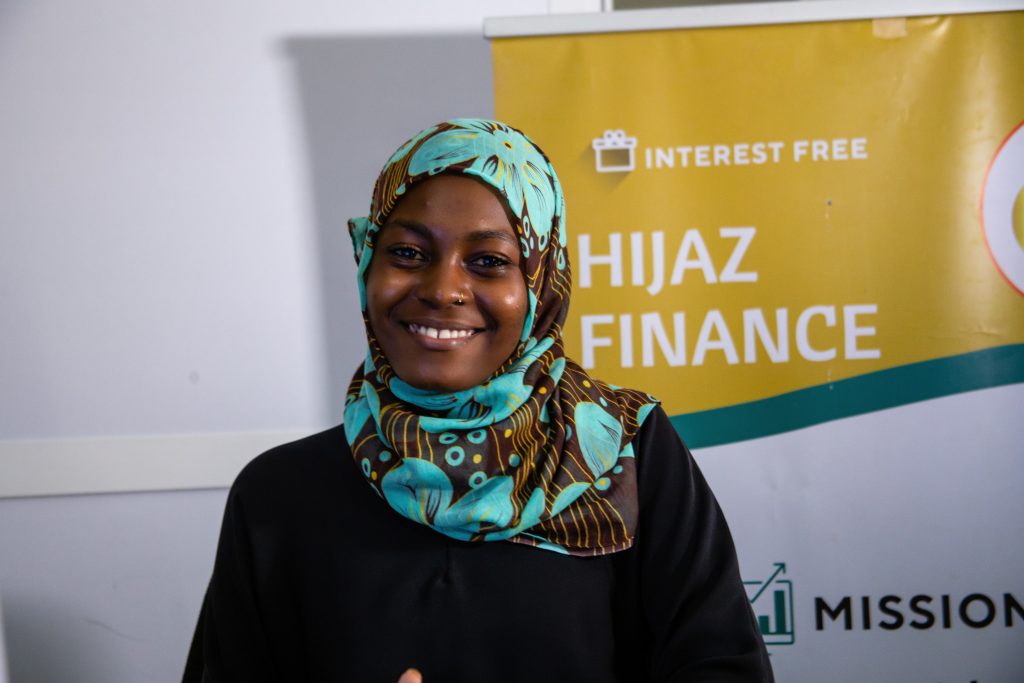
Let us take the example of Nadia Maluk Nanteza, who works in the Client Service section at Hijaz Finance, a Ugandan Sacco offering Islamic Finance services. Nanteza says Sacco book-keeping was a nightmare until they were introduced to a digital solution called SaccoMate, which has made her fall in love with her job over and over again.

“At Hijaz Finance, we offer Sharia-compliant services in the banking system. Our success is because of the SaccoMate ERP because it is a user-friendly app. Our clients can easily follow up on their deposits and account balances using their phones,” she says.

SaccoMate is a product of EchoLink Technologies, a software development, and FinTech company providing a comprehensive suite of digital solutions such as web designing, bulk SMS, custom software, and mobile applications, among others.

According to Alawi Mutebi, the founder and CEO of EchoLink Technologies, SaccoMate is one of their software products aimed at helping Saccos manage savings, interest-free loans, investments, agency banking, and E-banking using a customized Mobile App. The system integrates data from different activities seamlessly through its internet-based Web and Mobile App features accessed by managers and clients for easy decision-making through its analytical abilities.

“This software can operate several activities within an Islamic or Sharia-compliant Sacco from the point of onboarding clients to a point where they are doing their savings or withdraws, requesting loans, and other financial products provided by the Sacco,” he says.

“Islamic Financing being a new phenomenon in Uganda, we have so far on-boarded about 10 Saccos that are proving these sharia-compliant products to Ugandans,” Mutebi says they have processed more than one million dollars in value transactions and about 10,000 Sacco members are using their mobile application.

Mutebi notes that while Islamic finance is slow in Uganda, there is evidence that conventional bankers are slowly integrating the Islamic Finance model within their operations.

Mutebi further notes that beyond Saccos, the Mate ERP Suite is designed with different modules that are further customized to suit business operations including human resource, accounting, billing, payment collections, product management, membership management, manufacturing, project management, Point of Sale, and inventory management. The system features for different versions are enabled to be accessed by the users on desktop or mobile.

40 Days 40 FinTechs

Eco-Link is the 12th participant in Season Four of the 40 Days 40 FinTechs initiative organised by HiPipo to highlight the life-changing stories of innovators across East Africa.

“I am glad to be part of the 40 Days 40 FinTechs because it gives us a platform to talk about our products and bring out our new ideas for the public,” he says.

HiPipo’s 40 Days 40 FinTechs initiative has become a household name in the financial technology space across Africa. In the last three editions, more than 100 FinTechs have been showcased, highlighting stories changing people’s lives, especially in the under-served sectors.

According to HiPipo CEO Innocent Kawooya, user-centric products like SaccoMate are what make these innovators unique because they solve a specific problem.

“This year we are mainly looking at the impact of these FinTech innovations. We are happy to see such products which looked at a specific problem like Islamic Banking and came up with a solution that directly handles the operational challenges therein,” he said.

HiPipo runs the 40 Days 40 FinTechs initiative in partnership with Level One Project, Mojaloop Foundation, INFITX, Cyberplc Academy, Ideation Corner, and Crosslake Technologies with generous support from the Bill and Melinda Gates Foundation.

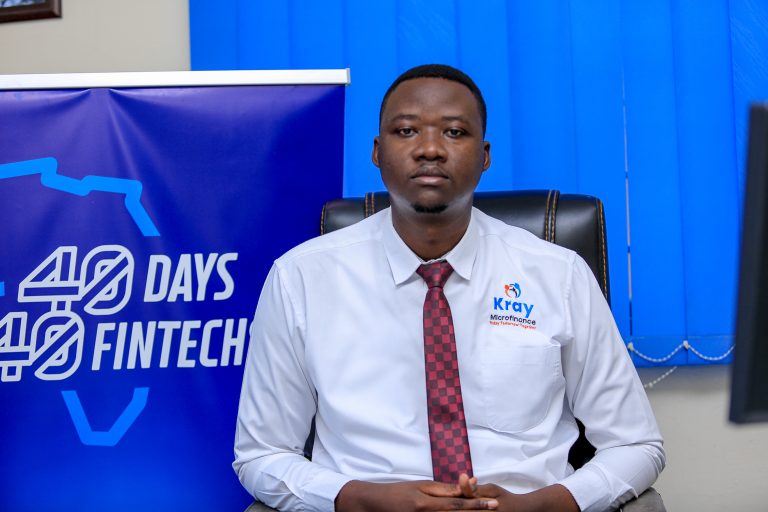
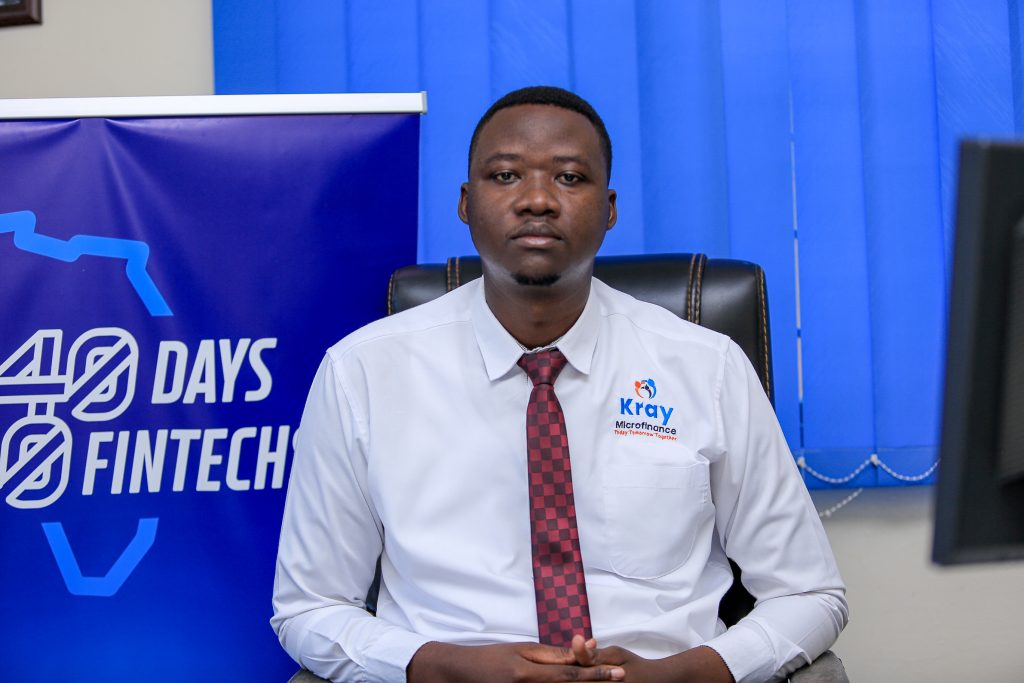
Kray Microfinance offers convenient digital loans. #40Days40FinTechs Season 4 Day 11.

We cannot overemphasize the power of digital media. Whether your interest is in sports, fashion, politics, or business, there is something for you in the digital marketplace.

So, when Mayimuna Nalumu started her business in beddings, she utilized digital marketing to supplement her physical shop in Kinawataka. And when things got tough following the Covid-19 pandemic, she still relied on social media for possible financial remedies.

“I was checking social media [for money lenders] and I landed on Kray Microfinance. I downloaded their App and filled in my credentials. An agent was sent to me and he visited my business. They gave me my first loan which lasted four months. I have been getting other loans – for three years now,” she says.

Now, that is convenience!

‘Sincerely they have helped me grow my business and I have even expanded and started a mobile money business on top of the beddings,’ she says, only praying that the App be translated to a language she understands better – Luganda.

Kray Microfinance is a digital financial services company that started as a money lending company in 2012 before it realized that digital microfinance is the real deal.

‘We designed and developed a mobile application that enables people to access fast, convenient, and reliable credit. Someone simply needs to go to the Google Play Store and download our App” says Raymond Peter Kiwanuka, founder and managing director of Kray Microfinance.

He says that once you download the App, one of Kray’s agents will contact you and pick up preliminary know-your-customer (KYC) information and then you will be passed for receiving loans.

“For those without smartphones, we developed a USSD where you can access credit,’ Kiwanuka says

Kiwanuka adds that their motivation ten years ago was to be able to provide credit to anyone available. As they went deeper into operation, they realized that there are quite several people who need credit and microfinance services and were unable to access the services. The reasons they gave were that access to banks and lenders were limited on top of bottlenecks in terms of the collateral required and documentation.

‘We came in to solve this problem by not requiring much collateral and someone does not need to come to our offices to access credit. To access the credit, the only thing required is your national ID and yourself,’ he says.

With this convenience, at least 7,800 people have taken more than 18,000 loans over time.

“Most of the transactions are by women. They are the most vulnerable regarding access to financial services,” he says.

Kray Microfinance, regulated by the Uganda Microfinance Regulatory Authority, does not work alone. They have several third-party players such as MTN and Airtel who help support the real-time transaction settlement.

‘For instance, if someone wants to withdraw money, it does not take more than five minutes to get it on their mobile money accounts. If it is a deposit, it is still the same thing because the platform is up and running 24/7,” he says.

Hope against scepticism

Kiwanuka says some of the challenges faced by digital financial services providers is slow adoption, fraud, and illiteracy.

He is however optimistic that these can be handled through engagements such as the 40 Days 40 FinTechs initiative by HiPipo.

‘The 40 Days 40 FinTechs is a platform that every digital financial provider should join because it has created awareness in the digital space, not only in Uganda but regionally. This is a platform where you meet like-minded people. If you want to grow, you must share with people to appreciate your product,” he says.

Kray Microfinance is the 11th participant in Season Four of the 40 Days 40 FinTechs initiative that seeks to highlight the impact of FinTechs in the lives of under-served populations.

Ran by HiPipo, the 40 Days 40 FinTechs initiative has over the past three years helped more than 100 participating FinTechs benefit from useful Financial Inclusion tools and an introduction to the industry’s emerging technologies such as Mojaloop Open Source Software, and guidance from Level One Project foundational material. The skills gained from this initiative cover Level One Project Principles, Instant and Inclusive Payment Systems (IIPS), inclusive finance, and FinTech in general.

‘This time we are showing the real impact of these FinTechs. Kray Microfinance is one of the participants touching on the issue of cheap and fast credit. Economies can grow faster if the low-income users can easily access credit,” said HiPipo CEO Innocent Kawooya, before sending his appreciation to the initiative’s partners including Level One Project, Mojaloop Foundation, INFITX, Cyberplc Academy, Ideation Corner, and Crosslake Technologies with support from the Bill and Melinda Gates Foundation.

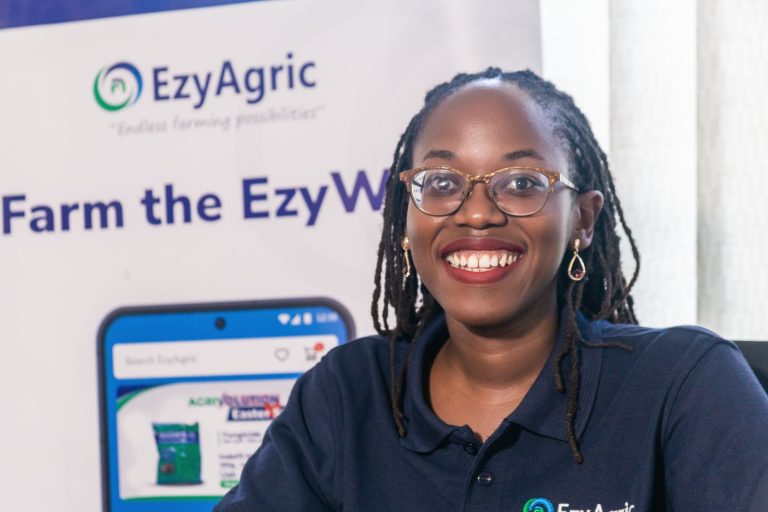
EzyAgric saves Farmers with Buy-Now Pay-Later digital loans. #40Days40FinTechs Season 4 Day 10

In many parts of rural Uganda, accessing a bank is almost impossible. Even when you chance on one, the red tape involved in accessing credit is unbelievable, especially in agricultural financing.

So, farmers usually rely on SACCOs and money lenders to survive. Most of these however come with high interest rates and they never supplement their service with any extension services.

Faced with similar challenges, Vicky Ayugi Lakot, a dealer in agricultural farm inputs in northern Uganda, would always use her phone to look for any farming techniques and market information. But about three years ago, while browsing her phone, she landed on the EzyAgric mobile application that has since changed her life.

“I picked an interest in using the EzyAgric App and I downloaded it. I have used it since then because of the many services it offers such as farming techniques, inputs, saving, and loans,” she says.

EzyAgric is an Agriculture Technology company started in 2016 to provide end-to-end agricultural solutions to both farmers and businesses operating in the agricultural landscape in Uganda.

Lakot says that on top of the market information, EzyAgric has provided both convenience and accessibility, especially for rural dwellers like herself. For instance, because most people in villages use mobile money to transact, EzyAgric has introduced a standardized withdrawal charge which is way cheaper than the charges by telecom companies.

 “We use this platform to save money and EzyAgric has subsidized transaction charges…if you are withdrawing like 10 million and above, they have subsidized it to Shs 5,000 which favors us,” she explains.

According to Mercy Angela Nantongo, the product manager at EzyAgric, the primary inspiration for this platform is to make agriculture enjoyable because it remains Uganda’s backbone.

“So, we realised that farmers and Agro SMEs were struggling to find agricultural information and cheap and easy credit…. we came up with a platform where they can access digital payments, access credit and save money at the same time,” she says.

On top of finances, farmers are offered digital advisory and extension services, farm plans, how to keep record books, and access to genuine agro-inputs.

“With Easy Credits that we launched this year with Agro SMEs, we have been offering loans of between Shs 10,000 and Shs 2m. We are further working with more than 60 suppliers of genuine agro-inputs to deliver these inputs to farmers and agro-businesses across the country. In the past year, we added more than 17,000 farmers to our platform and sold to over 300 merchants and agro SMEs,” she says.

She adds that they have delivered extension services to more than 170,000 Ugandans through partnerships with entities like Airtel.

Lakot says that with EzyAgric’s buy-now-pay-later model, Agro merchants like herself are now able to stock their shops and have access to inputs on credit such that they can pay back within seven days. This is helping them reduce the cost of stock because when farmers come to purchase from them, they have the stock in-house.

“We also have real-time credit storing especially when our customer expresses a need for credit. We have them signup on their phones and their eligibility is checked in real-time. If they qualify for credit, they also get credit scores immediately. This means that as soon as you sign up for your profile, you can access EzyAgric credit,” Nantongo says.

40 Days 40 FinTechs.

According to Nantongo, the 40 Days 40 FinTechs was their launchpad for the buy-now-pay-later product.

“We were able to test the solution and prototype it with the FinTech [incubator program by HiPipo] and roll it out to the customers who are now enjoying the product,” she says.

Now in its fourth season, HiPipo’s 40 Days 40 FinTechs initiative has become a household name in the financial technology space of the East African region. In the last three editions, more than 100 FinTechs have been showcased, highlighting stories changing people’s lives, especially in the under-served sectors.

This initiative is run by HiPipo in partnership with the Level One Project, Mojaloop Foundation, INFITX, Cyberplc Academy, Ideation Corner, and Crosslake Technologies with support generous from the Bill and Melinda Gates Foundation. Life-changing stories from more than 100 FinTechs have been highlighted by this initiative in the past three years.

UNBS Opens The 3rd Regional Food Safety Laboratory In Mbarara City

0

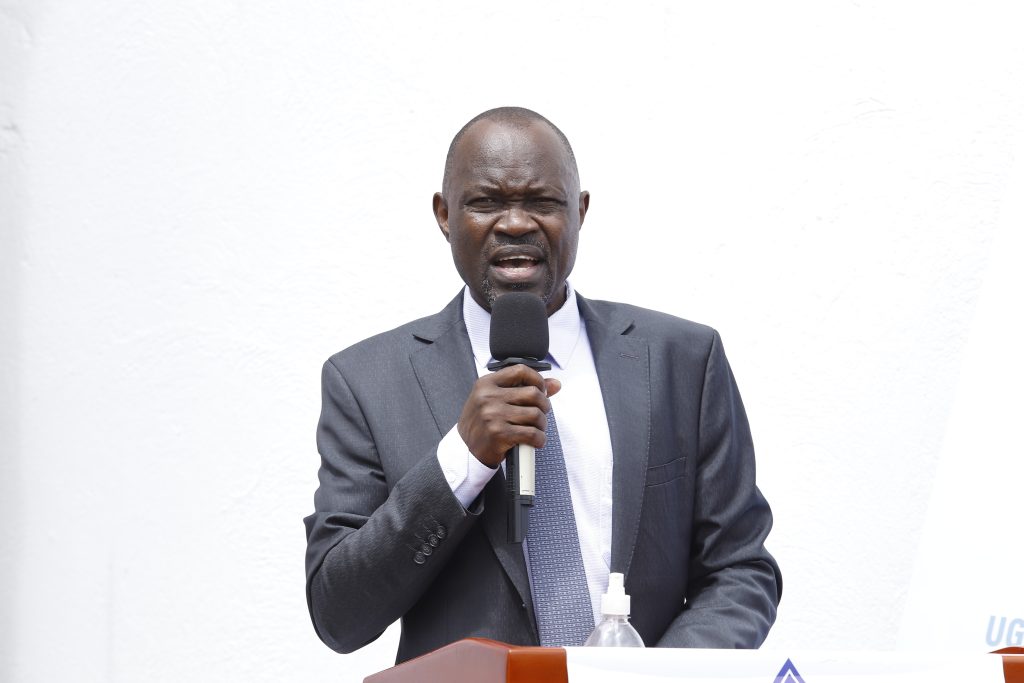
The Uganda National Bureau of Standards (UNBS) has opened a 3rd Food Safety Testing Laboratory for Western Region based in Mbarara City. The Equipment for the Laboratory was donated by the Danish Government through Trade Mark Africa.

According to Mr. David Livingstone Ebiru, the Executive Director of Uganda National Bureau of Standards (UNBS), the Bureau has already opened similar Food Testing Laboratories to serve Northern Region based in Gulu City and another for Eastern Region, based in Mbale City.

He noted that by moving these Testing Laboratories nearer to the Regional Offices, the cost of doing business for the majority of Micro, Small and Medium Enterprises (MSMEs) based in the countryside will reduce since Enterprises that used to seek testing services from UNBS Central Laboratories in Kampala can now get them from the Regional Offices. He also expects the overall compliance to quality standards of locally manufactured products to improve and be competitive in both the domestic and export markets.

The Regional Food Safety Laboratories will provide conformity assessment services to Enterprises and Industries involved in the processing and value addition of both Food and Non-Food to ensure that they meet the minimum quality standards before being put on the market. Such commodities will include among others, Beef, Milk and other Milk products Edible Fats and Oils, Water, Honey, Fruits and Vegetables, Grain, Cereals and Cereal products and other Animal Products.

The Minister of Trade, Industry and Cooperatives, Hon. Francis Mwebesa welcomed the Bureau’s initiative of decentralizing its services nearer to the Regional Offices to support the Government’s Industrialization Agenda, given that Government has opened up a number of Industrial Parks across the Country. He noted that Government Programs such as the Parish Development Model (PDM) and Agro-Industrialization are expected to stimulate production and value addition which requires UNBS services of provide quality assurance to enable them to access both the domestic and export markets.

Mr. David Livingstone Ebiru thanked the Development Partners for the trust put in the Bureau by committing such a significant amount of resources worth USD 4,455,283 towards enhancement of the Bureau’s Quality Infrastructure which is critical in supporting trade and consumption of safe products as well as stimulating economic development through Industrialization, Import Substitution and Export Promotion.

The Danish Ambassador to Uganda, H.E Signe Winding Albjerg said that the UNBS Laboratories which were opened in Mbale City and Gulu City have already made an impact in reducing the turnaround time of testing products, hence increasing consumer protection and also cross-border trade where harmonized standards are critical for Market Access to the EAC Regional Market.

She, therefore, urged the Enterprises to take advantage of the New Laboratories in Mbarara City to grow their businesses and trade in safe products.

About UNBS

Uganda National Bureau of Standards (UNBS) is a Government Agency responsible for the Development, Promotion and Enforcement of National Standards in order to protect the Health and Safety of the Public and the Environment against Harmful and Sub-Standard Products; as well as Promoting Fair Trade Practices and Competition.