Home Blog Page 67

40 Days 40 FinTechs Season Two Kicks Off.

HiPipo today successfully kicked off the 2nd edition of its 40 Days 40 FinTechs initiative, a grand showcase of exhibition, discussion and dialogue that is centered around offering exposure to those innovators that are enabling many, specifically those yet to enjoy financial inclusivity, the opportunity to become part of the digital economy by way of digital financial services.

‘This year we are aiming for a better understanding of the FinTech ecosystem,’ HiPipo CEO Innocent Kawooya revealed, adding, ’40 Days 40 FinTechs shall feature creators and innovators catering to multiple sectors. We shall also touch on interoperability at all levels, and generate appreciation and leverage for frameworks, like the Level One Project and Mojaloop, that are already in place to enable this’.

First to showcase was the Mallan Company led by its CEO Malcolm Kastiro. They gave exciting updates about their latest product named ‘Yassako’; an instant micro-credit facility for utilities, specifically electricity.

 Malcolm revealed that the exposure brought by the inaugural 40 Days 40 FinTechs had boosted ‘Yassako’ uptake, and allowed Mallan to engage in more proactive planning on where they want to take the service. ’40 Days 40 FinTechs helps you go further,’ Malcolm revealed in appreciation.

He added that HiPipo and 40 Days 40 FinTechs can ably further serve as a validation platform for fintechs, and quickly remove barriers to investment and funding, plus also be an asset in attracting the talent the industry needs.

Innocent lauded Yassako as a product that is well aligned with the Level One Project Principles, enabling low income earners to become part of the digital economy.

He further promised that HiPipo is intensifying its support, specifically in relation to documentation and sourcing for grants/funding.

Yassako Explained.  

While still in the pilot phase, the Yassako project, an innovation of Mallan Company Limited, has in a space of just a year grown its customer base to over 100 users every day.

The growing interest in the product is a testimony of how Financial Technology Companies (FinTechs) are helping solving day-to-day challenges facing millions of Ugandans.

Offered in partnership with Airtel Money, Yassako is an instant micro-credit emergency solution that enables users to recharge their pre-paid Yaka electricity on credit any time.

The product was introduced after Mallan Company, which specializes in Value Added Services and advanced credit services in the mobile payments space, noticed a gap in the market, when some Ugandans were running out of Yaka ( Electricity) units in weird hours after Umeme shifted its metering system from post-paid to pre-paid, something most Ugandans were not prepared for.

The solution has turned out to be a life saver for many Ugandans, who can now get electricity units on credit and pay within a maximum 30 days.

The company for now offers a minimum of sh2, 000 worth of Yaka units and a maximum of sh10, 000. Each credit attracts 15% service fee, according to Malcolm Kastiro, the co-founder and chief executive officer of Mallan Company Limited.

Kastiro explains that the low figures are intentional, given that it is an emergency solution. Additionally, they want to ensure that the amounts are not so big for customers to pay back.

“We just take you through that small fix you are in for that moment; probably it is lights, ironing or cooking. We allow you to get enough electricity units to do what you want to do so that the next day you go and purchase electricity,” Kastiro says.

Given that the service is offered in partnership with Airtel, it is for now available to Airtel customers only.  Kastiro, however, says that the company is in talks with MTN to have the service offered to its customers too.

Additionally, he notes that the company has plans to roll out the credit solution to pay television service providers such as Dstv and GoTv among others.

However, National Water and Sewerage Corporation (NWSC) customers will have to wait a little longer as Kastiro says that the post-paid nature of bill payment makes it tricky. Additionally, the bills involved are also too big.

He, however, expresses optimism that since NWSC has plans to introduce the pre-paid metering system, they will engage it once the system in rolled out in future.

Additionally, there are also plans to engage other electricity distributors, especially those serving the upcountry areas, offer the service to their pre-paid users.

Eligibility

For one to qualify for the Yassako credit solution, s/he must have been an Airtel subscriber for at least three months. To qualify for a certain amount of credit, one must have spent at least twice the credit value they are requesting for.

40 Days 40 FinTechs

Mallan Company Limited featured on Day One of the second edition of the 40-Days 40-FinTechs initiative, organised by HiPipo in partnership with Crosslake Technologies, ModusBox and Mojaloop Foundation, Level One Project and sponsored by the Gates Foundation.

The initiative which provides a platform for FinTechs and stakeholders in the digital and financial technology space to exhibit their products and share ideas, seeks to boost the African FinTech ecosystem to enable innovators enjoy sustainable profitability to help them design and deploy affordable and inclusive financial services for the poor.

Kastiro says that the 40-Days 40 FinTechs has given it a platform to reach more customers, interact and engage with other key stakeholders.

Kastiro notes that Mallan Company implements LevelOneProject principles such as real time payment and same day settlement. Additionally, he says that the Know-Your-Customer (KYC) principle is also key as they cannot extend credit to someone that we don’t know.
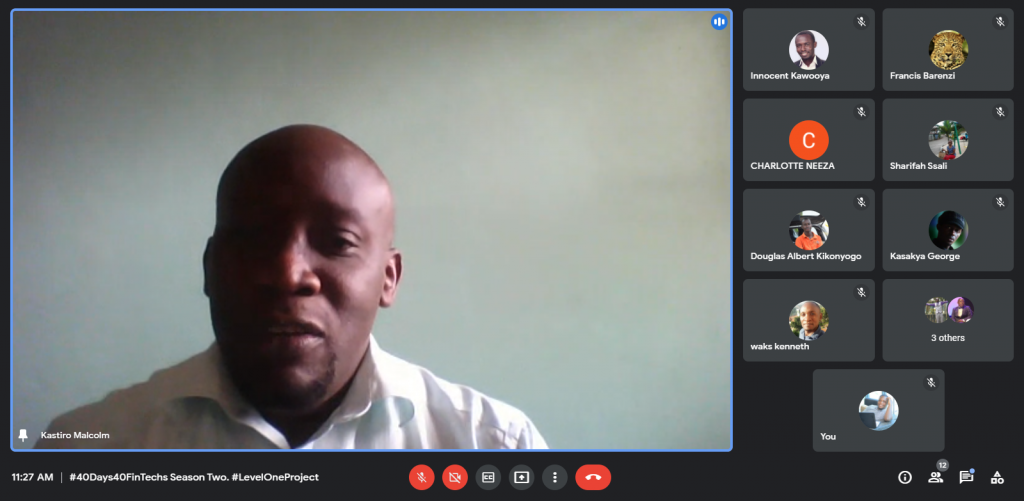
“We must have information about you so that we do the credit scoring, so that we know whether you qualify and if you do, how much do you qualify for. These are fundamental features that we need for us to offer a good service,” he notes.

At the end of the day One session, the HiPipo chief executive officer Innocent Kawooya noted: “We are proud to kick off the 40-Days 40 FinTechs season Two by showcasing Mallan Group. Initially mooted in our first edition, we are glad that it is now ready for market, in no small part due to the support 40-Days 40 FinTechs offered and continues to do so.”

He added that Yassako is a fine example of the transformative technology that can positively change societies and communities.

“This is the first of its kind in East Africa and on the entire African continent that enables customers get electricity on credit. It offers great opportunity for home businesses and SMEs that might need critical assistance at vital points of the production value chain,” Kawooya says.

He adds: “ As we talk of digital lending, borrowing and all other service points on the digital ecosystem, it should not be forgotten how vital it is that products like Yassako exist to help and attract many to on-board onto digital rails, taking the first crucial step to financial inclusivity.”

Despite the enacting of the National Payments Systems Act mid this year, Kastiro, however, says that it poses a risk of creating monopolistic tendencies in the industry, given the stringent requirements required to get an operation license.

#40Days40FinTechs #LevelOneProject

Gulu Logistics Hub is a Game Changer – URA Commissioner General.

Our Reporter.

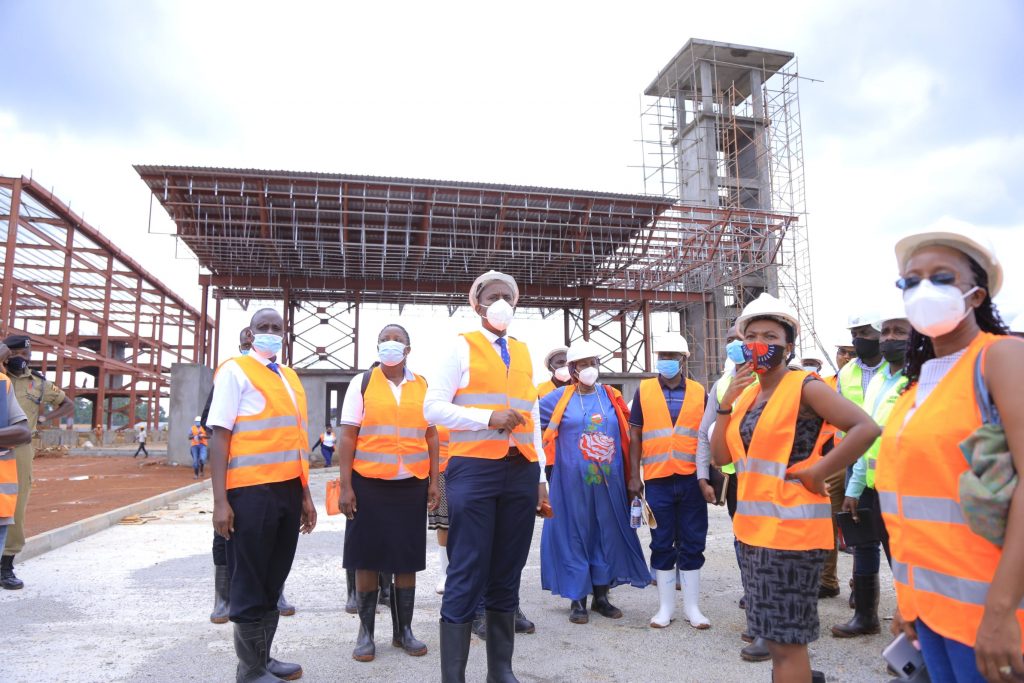
Uganda Revenue Authority (URA) Commissioner General, John Musinguzi Rujoki has described the on-going construction of the UGX 30 billion Gulu Logistics Hub as a game changer that will further facilitate regional trade and benefit all stakeholders.

The Commissioner General made these remarks while touring the Gulu Logistics Hub which is at 65 per cent and scheduled for completion by September, 2021. The Gulu Logistics Hub is located on a 24.1 acres piece of land in Layibi division, Gulu Municipality which was allocated by the Uganda Railways Corporation.

“On completion, this project will change a number of things. It will be the main import and export hub for this region, South Sudan, and DRC. This project will also lower the cost of doing business, create employment and benefit the local community,” Mr Musinguzi said, adding:

“The issue of the access roads is under Uganda National Roads Authority (UNRA). But because URA is a government agency, we shall engage with the relevant agencies of government particularly UNRA and Ministry of Works to see how the access roads can be fast-tracked so that when the Gulu Logistics Hub is ready in September, the roads are also available.”

TradeMark East Africa, with joint funding from the United Kingdom Foreign, Commonwealth and Development Office (FCDO) (USD 3.2 million) and the European Union (USD 5.2 million) is financing the construction of the Gulu Logistics Hub to the tune of about USD 8.4 million. That is about UGX 30 billion.

“The Gulu Logistics Hub will help with cargo distribution in northern Uganda, DRC, South Sudan and the Kenya market. The expectation is that this will address logistics challenges, create employment and also boost our Agriculture produce in northern Uganda,” Damali Ssali, the acting country director for TradeMark East Africa noted, adding:  

“This multimodal project will be serviced by both road and railway. The railway is being revamped by Uganda Railway Corporation from Tororo to Gulu which on completion will further support the Gulu Logistics Hub. As noted by stakeholders, there are some concerns about the access road but these will be addressed by UNRA and Ministry of Works.”

Dr. Merian Sebunya, the chairperson of the National Logistics Platform revealed that the private sector is happy to see the government finally focusing on empowering and developing the private sector with major projects like the Gulu Logistics Hub.

“We hope this project will also focus on local content. Government can own this project but it should consider unbundling the services at the Gulu Logistics Hub and have them operated by Local Content.”

On behalf of the funders, Christine Mugoya – an Economist at United Kingdom Foreign, Commonwealth and Development Office (FCDO) emphasized that the Gulu Logistics Hub is key to improving Uganda’s competitiveness and market access to Uganda’s neighbours specifically South Sudan and DR Congo. “It is also very important for the improvement of the movement of goods along the northern corridor to Mombasa and beyond. As such, it is one of our priority projects being funded during this phase of the TradeMark EA program implementation. It is very important that this project is delivered on time – September 2021.” Christine Mugoya said.

Damali Ssali donates books to Kampala schools to boost entrepreneurship skills

Kampala.

The Ideation Corner Founder and Author, Damali Ssali, has donated 650 copies of her book to three schools in Kampala in a bid to boost entrepreneurship skills among Uganda’s youth.

The schools that received these books are Kitebi Secondary School, Kansanga Seed School and St. Dennis Ssebugwawo Secondary School, Ggaba. Other books are to be donated to the Kampala Capital City Authority (KCCA) library for all people in Kampala to freely access them.

The IDEATION CORNER book, whose theme is “Ideas and Dreams Drive Innovation and Entrepreneurship”, seeks to inspire people, especially the youth, to pursue their dreams of becoming entrepreneurs.

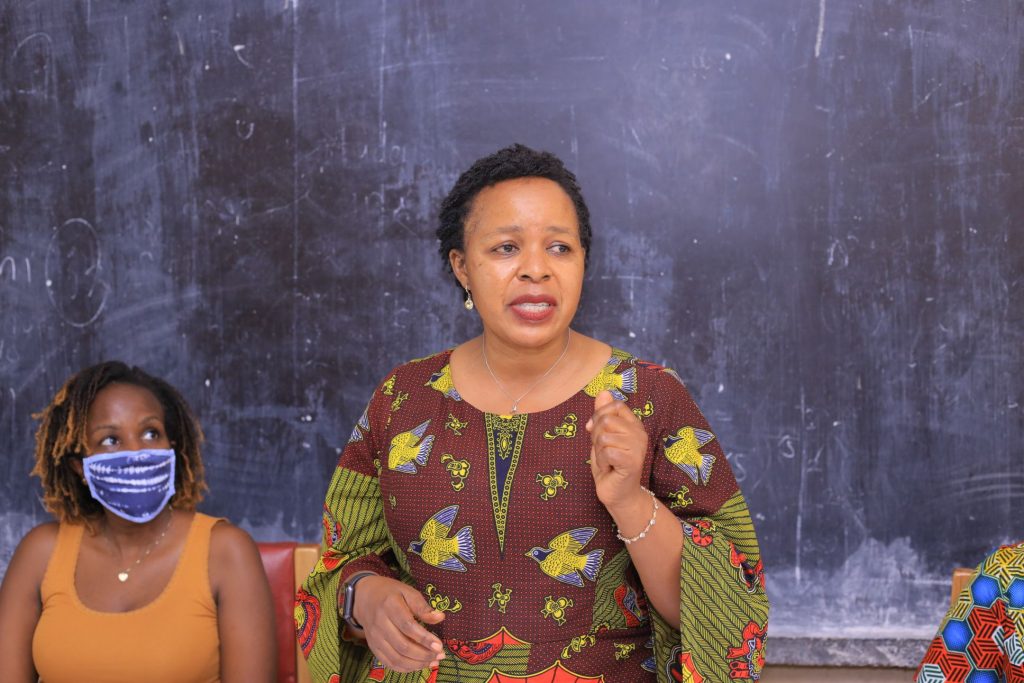
Speaking at Kitebi Secondary School in Kampala, Ssali, a chartered Accountant by profession urged the students to pursue their dreams until they achieve their goals.

 “I used to have a lot of dreams when I was still young but I regret that there are certain dreams I killed in my mind myself. But if I had pursed them, you never know what would have happened,” Ssali said.

She added: “And I know it happens; someone gets an idea and they think it is too big to pursue, which is not true. I want to inspire you that unlike me who killed my dreams by myself in my head, that you pursue your dreams in whichever way you can to see them bear fruit.”

She, however, cautioned that achieving one’s dream does not come easy as there are challenges along the way which must be overcome.

“Entrepreneurship is not a straight journey; don’t give up on pursuing your dream. You will meet hurdles along the way but don’t give up because you have failed the first time. Simply learn from your mistakes and pursue your dream again,” she said.

She added: “In this book, entrepreneurs tell us their experiences in their entrepreneurial journey; how they dreamt, prayed and then worked to have their dreams fulfilled. Many failed many times but they still got up and pursued their dreams. So the Ideation Corner was to show that there are people in Uganda who are doing something in this challenging environment we are in. You too can still do something.”

 Ssali implored the students to read the book and to make use of whatever skills they have to start something, however small it could be, saying that entrepreneurship and innovation starts in one’s mind.

About the book

The IDEATION CORNER is a platform which showcases young African entrepreneurs who are doing something themselves; sharing their experiences on how they did it, the challenges faced along the way and how they overcame them.

Featuring 21 amazing stories by amazing African entrepreneurs, the ideation corner provides a platform to entrepreneurs, who are local heroes to showcase their concepts and be examples to youth aspiring to become entrepreneurs by pursuing their entrepreneurial dreams.

The Director Education and Social Services at the Kampala Capital City Authority, Juliet Namuddu applauded Ssali for the kind gesture, saying that she is a philanthropist who wants to give back to society.

“She has used her own money to give back to society. She wants to give back; I looked at her and said what do you mean you want to give us something for free? I was humbled by Damali’s kindness when she came to my office and told me she wanted to donate copies of her book to at least three schools in Kampala at no fee. This shows that she is a philanthropist because she has used her own money to give back to society,” Namuddu said.

She added: “Entrepreneurship is about anything; I bet you; you are going to go home at the end of this week with a lot of money in your pockets. So I encourage all of you to read this book and start anything during this holiday; you never know where it will take you.”

The Supervisor, Education and Social Services (KCCA) Rubaga Division Drake Mutahakana also encouraged the students to read the book and pick key lessons, saying that if the people in the book have been able to make it in entrepreneurship, even they can make it.

“I am grateful on behalf of the people of Rubaga to Ms. Damali Ssali for donating these books to among other schools Kitebi SS. This is a wonderful gift because one who gives you knowledge gives you wealth; so with this book, I am sure that you will be able to create a lot of wealth for yourselves because I believe you are going to get a lot of knowledge from there.” END.

URSB hosts Insolvency Law Training for Judicial Officers to Enhance Easier Resolution of Insolvency Disputes

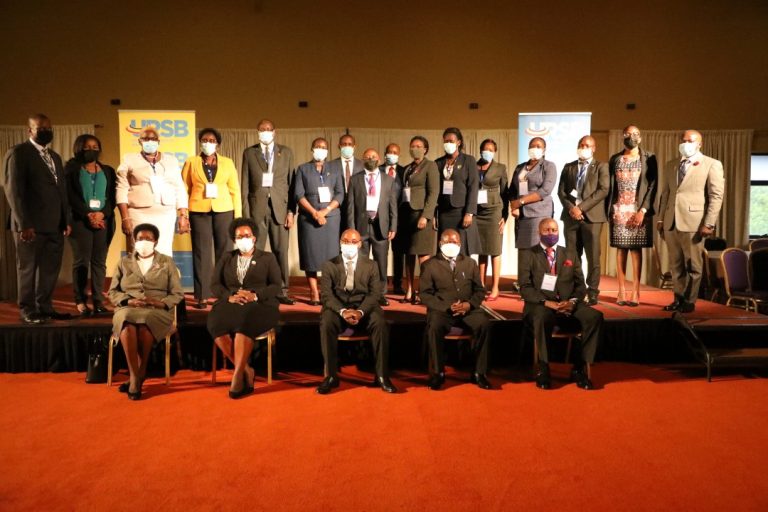
Kampala, 03rd May, 2021; The Uganda Registration Services Bureau (URSB) under their Insolvency & Receivership mandate today unveiled a week-long training for Judicial Officers. The training was officially opened by the Principal Judge, Justice Dr. Flavian Zeija and addressed by the Registrar General, Mercy Kainobwisho.

The training workshop will be held at the Speke Resort Munyonyo from Monday 03rd May, 2021 to Friday, 07th May 2021 and will be facilitated by top members of the judiciary including Hon. Justice Geoffrey Kiryabwire, Hon. Justice Musa Sekaana, Her Ladyship Justice Patricia Basaza-Wasswa, Justice Alastair Norris and Hon. Lady Justice Damalie Lwanga,  Executive Director of the Judicial Training Institute.

During the brief welcome remarks, Justice Zeija reminded participants that the training was not meant to reinvent the wheel but rather to support the judges in their role as dispensers of the law especially on the insolvency practice in the era of COVID-19 that is seeing a number of businesses and individuals at the edge of being declared insolvent as result of the impact of the pandemic. ‘It is our responsibility as the judiciary to hear all insolvency matters. But, this we can only do with sufficient knowledge on the practice. The training being offered by URSB is timely and I ask that we participate keenly in order for us to be able to make decisions considered fit under the Insolvency law’ Justice Zeija told the participants

The focus of the training will be to improve the quality and accuracy of court documents on insolvency and to achieve this, participants will be heavily engaged in enlightening sessions over the next 5 days. Emphasis will be placed on the salient features of Insolvency Law in Uganda, the roles of Judicial Officers in preservation of value of the Insolvent Estate, countering abuse of Insolvency Processes, open discussions on the challenges facing Judicial Officers in resolving insolvency disputes and communication and cooperation in cross border insolvency, as well as experiences and best practices.

The Registrar General, Mercy Kainobwisho who is also the Official Receiver said the training was timely since the COVID-19 pandemic had threatened the existence of businesses. ‘It is our role  to establish a fair insolvency system which strengthens the business sector by offering confidence to investors and the public to make viable decisions that support economic growth. As URSB, our focus is on rescuing insolvent companies and individuals by encouraging them to adopt business rescue mechanisms’ Kainobwisho added.

URSB is mandated among others to register businesses, marriages, Intellectual Property, administer insolvent companies and run the Security Interest in Movable Property Registry System (SIMPO).  The Minister of Justice & Constitutional Affairs, Hon. Prof. Ephraim Kamuntu will deliver the closing remarks on Friday as the training comes to a close.

Informal cross border traders resort to porous borders – study

By Our writer

Informal cross-border traders have resorted to using porous borders as they avoid the enhanced COVID-19 protocols at formal border points.

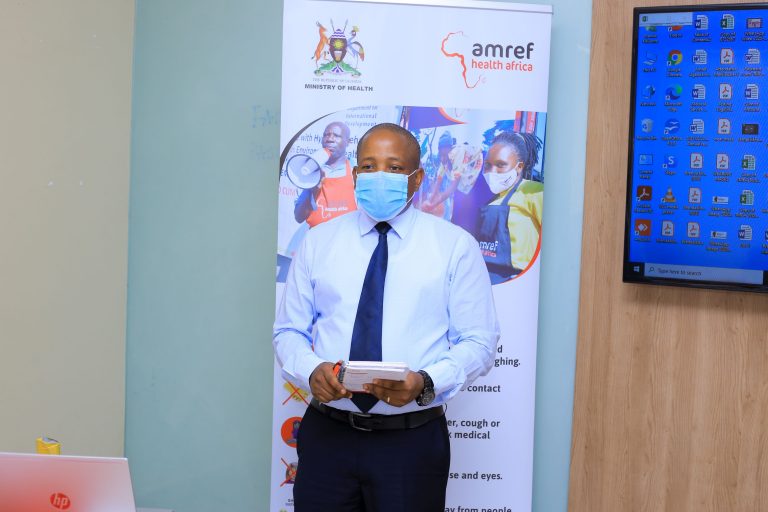
Done by Amref Health Africa and the Ministry of Health, with funding from Trademark East Africa (TMEA), the assessments show that informal cross-border traders are increasingly using the porous borders, Lake Victoria and from South Sudan to Uganda, posing high risk of spreading COVID-19.

The studies were conducted at Uganda’s various border points of Elegu, Busia, Malaba, Mirama hills and Mutukula, as the three organisations conducted several activities aimed at containing the spread of COVID-19 infection through supporting and strengthening infection prevention and control measures at the points of entry.

The TMEA Uganda acting country director Damali Ssali said: “One of the findings shows that a huge amount of activity has sprung out at these landing sites because informal cross-border traders are crossing over Lake Victoria because they are trying to avoid formal routes where there are a lot of checks.”

Ssali was speaking during the Safe Trade project updates meeting at Fairway Hotel, Kampala on Thursday 15th April.

Ssali attributed the increased use of porous borders to falling informal trade volumes, which has greatly affected informal cross-border traders, 80% of whom are women and sole breadwinners for their families.

According to Ssali, Uganda was on average exporting about $44m (sh158.6b) a month in informal cross-border trade before COVID-19 outbreak but that the figure has since dropped to an average of about $500,000 (sh1.8b) monthly following the closure of borders.

Through the safe trade for informal traders, Ssali said TMEA intends to ensure that informal cross-border traders continue trading safely.

“We want to ensure that even when COVID-19 cases go up, informal trade is not affected; they should continue trading safely, following the Standard Operating Procedures,” Ssali said.

The STZ is part of the $23m (about sh83b) wider Safe Trade Emergency Facility (STEF) rolled out by TMEA in the East African region, with donor funding, in the aftermath of the COVID-19 pandemic to ensure that trade is not disrupted and that it continues to play a critical role in the region.

STEF is being implemented under seven clusters, including the Emergency Personal Protective Equipment and Testing and Trade Technology Interventions that include the regional cargo and driver tracking system.

The others are trade policy interventions, supply chain support, standards and sanitary and phyto-sanitary (SPS) projects, private sector advocacy interventions and gender inclusion, women in trade and safe zones.

It provides for safe spaces for women cross-border traders to trade and set protocols and guidelines that include proper wearing of facemasks, maintaining physical distance of at least two metres and creating a one-way flow through markets to reduce back and forth movement and control the number of people in the marketplace at a given time, among others.

While TMEA provided PPEs that included masks, face shields, hand sanitizers, hand-washing stations, liquid hand washing soap, infrared thermometers, disposable gloves, hand sanitiser dispensers and disinfectant spray bottles, among others, Brenda Kituuma, the Amref Health Africa project officer said that it was discovered that there was shortage of these PPEs at all the points of entry due to stock outs.

This, she said, has forced market vendors to reuse masks. Additionally, there was lack of proper screening and triage system and shortage of water and soap at hand washing facilities.

She noted that there is need to raise awareness in the community about COVID-19, complying with SOPs and how to stay safe.

Dr. Patrick Kagurusi, Amref Health Africa, Uganda country manager alluded that the existing gaps need to be urgently closed to enable the country ably manage the pandemic. END

Government, URSB discuss options for supporting COVID-19 affected business through insolvency

Kampala, 27th April; Businesses especially the Small & Medium Enterprises (SMEs) are facing financial distress arising from the unprecedented and ongoing COVID-19 pandemic. While business conditions are expected to improve for some industries, it is unlikely they will return to pre-pandemic levels in the near future. Financially distressed companies may thus face potential insolvency.

To support ailing entities while offering them rescue options and legal mechanisms to deal to with their dilemma, the Uganda Registration Services Bureau (URSB) and Government of Uganda organized a joint two-day conference under the theme; Insolvency & Intellectual Property Rights in the face of COVID-19. The conference which kicked off in Kampala on April 26th also celebrated the World Intellectual Property (IP) Day that highlighted creativity in IP, also discussed proposed suggestions to help viable businesses survive during this difficult time.

Speaking at the conference, 2nd Deputy Prime Minister Hon. Moses Ali who represented the Prime Minister as Chief Guest said several measures are being considered by Government to support collapsing businesses in the aftermath of the COVID-19 pandemic. He pointed out that several rescue packages were being discussed in respect of COVID-19 defaults to save businesses from being closed prematurely. He expressed hope that the economy would revive soon on the back of picking up of demand and increased domestic and foreign investments. The Prime Minister commended URSB for having lived up to the expectations of the Government by being a dynamic and proactive insolvency regulator whose suggestions would be adopted.

The Minister of Justice & Constitutional Affairs on his part expressed optimism that SMEs had shown resilience even amidst the tough times through adaptability and innovation to remain relevant to the times. ‘The Government of Uganda has made efforts to put in place a conducive environment in which SMEs operate. Government has adopted insolvency and intellectual property laws to smoothen the business environment for SMEs. Uganda also recently adopted the National IP Policy 2019 that i urge you to embrace’ Hon. Professor Ephraim Kamuntu said.

Ambassador Francis Butagira, the URSB Board Chair added that the organization’s efforts had been directed towards saving struggling businesses affected by the COVID-19 impact. ‘Today we are focusing on insolvency practitioners who play a central role in advising and restructuring financially ailing enterprises’ he said

Mercy Kainobwisho, the Registrar General said URSB had strategically placed emphasis on SMEs since they form the bulk of businesses across the country and thus deserved attention. ‘Insolvency has become more visible this year with the effects of COVID-19 being felt by many businesses. I would like to emphasise that there is light at the end of the tunnel and it is not too late to salvage the damage caused by the effects of the pandemic’ She asserted

The Insolvency and Intellectual Property conferences are platforms utilized by URSB annually to promote a stable insolvency practice, support innovation and creativity in Uganda. This year’s conference attracted a wide section of stakeholders who presented various thoughts and perspectives of practitioners, policy makers, subject experts, and academicians, to stimulate thought on how the multitude of SMEs can be rehabilitated to prosper through generating multiple competing resolution plans while supporting the country’s social economic growth.