Home Blog Page 69

CMA, UMA sign MOU to increase access to financing from the Capital Markets

0

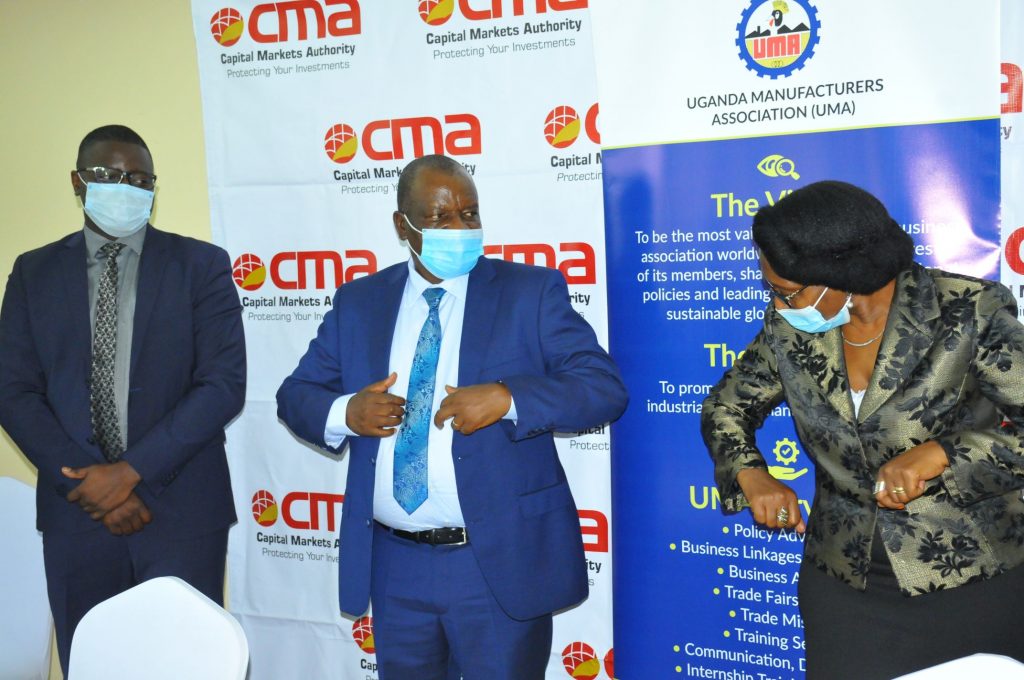
The Capital Markets Authority (CMA) and the Uganda Manufacturers Association (UMA) have signed a Memorandum of Understanding (MOU) that will enable Uganda’s manufacturing sector to take advantage of customized training on the various options for raising long-term capital to bolster their uptake of non-bank, market-based financing that best fits their needs.

Mr. Keith Kalyegira, the CMA Chief Executive Officer said the MOU will enable the CMA and UMA to consult, exchange information, and cooperate closely to expose UMA members to alternative means of meeting their financing needs, by tapping into both private and public markets.  
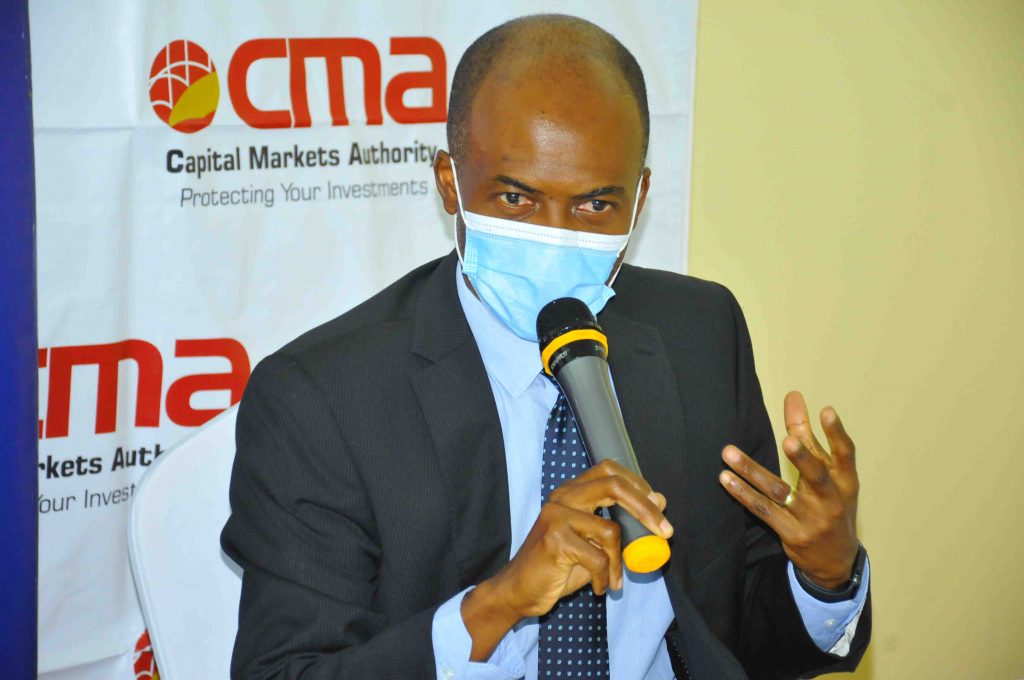
“Following the signing of this MOU, the CMA looks forward to building the capacity of UMA members to increase access to market-based financing. Non-bank financing can drastically bring down the cost of raising capital which is relatively high and negatively impacts manufacturing. This will hasten Uganda’s socio-economic growth and transformation,” he said.

Mr. Deo Kayemba, the Vice-Chairman, Uganda Manufacturers Association (UMA); said that this partnership will offer industrialists insight into the various financing options available through the Capital Markets.
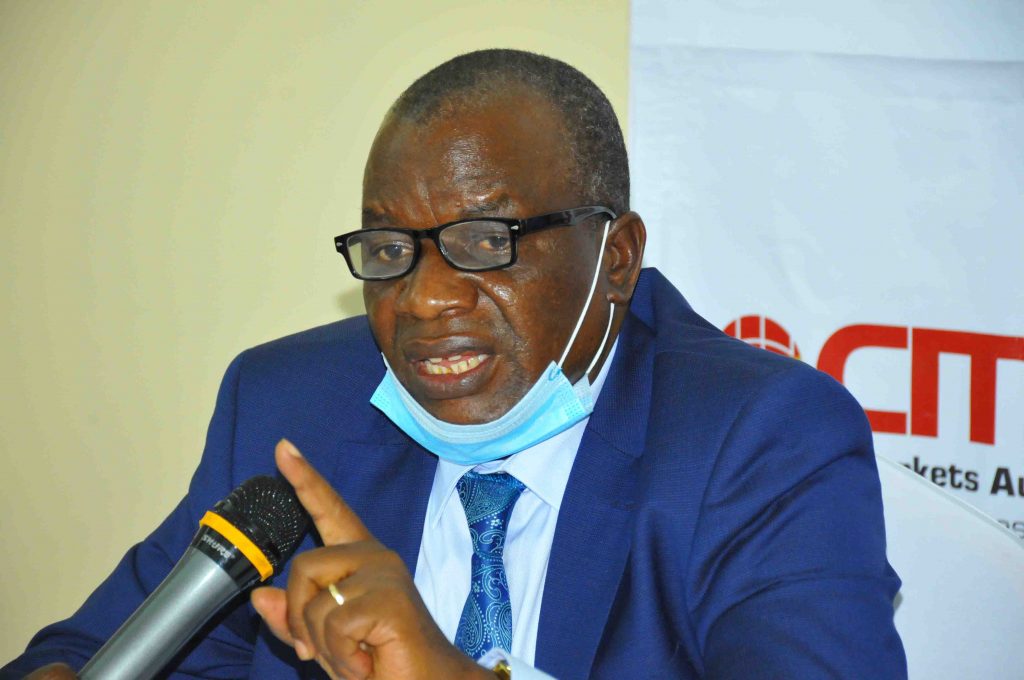
“The succession of businesses in manufacturing entities in Uganda; both at governance (board) level and shareholding level is largely focused on families with little or no interest to include more members outside their families. This partnership, therefore intends, through collaboration and research, to establish hybrid financing options, as well as identify and influence changes in law that allow for offering financing without requiring significant changes in shareholding structures,” he said.

Mr. Daniel Birungi, the Executive Director, UMA, said that that the collaboration will explore the promotion of market-based financing for manufacturers as a means of reducing the cost of capital that currently negatively impacts manufacturing as a priority sector for Uganda’s socio-economic growth and transformation.

“Manufacturers in the Scholastic materials, the beverages sector among others who have suffered from a slow-down in business due to the guidelines that were instituted by the World Health Organisation to curb the spread of the novel coronavirus. “Therefore, the MoU with CMA is a move towards better Capital Markets solutions for SME financing; a solution that will also catalyze recovery from the crisis occasioned by the pandemic,” Mr. Daniel added.

Since 1998, industrialists such as Kakira Sugar Limited, Uganda Clays, Cipla Quality Chemicals, British American Tobacco have turned to the capital markets for financing through corporate bonds – which have all been well subscribed.

Kakira sugar issued a 10 year, $30million (about sh76 billion) corporate bond in 2013.

Other firms that have issued corporate bonds include East African Development Bank (EADB), the Trade Development Bank (TDB), MTN, Uganda Telecom Limited, Standard Chartered Bank, Housing Finance Bank Limited, Stanbic Bank Uganda Limited, African Development Bank (AfDB).

Even more firms, such as; Umeme, Vision Group, Uganda Clays, Stanbic, Bank of Baroda, Dfcu, National Insurance Corporation (NIC), East African Development Bank (EADB), the Trade Development Bank (TDB), MTN, Uganda Telecom Limited, Standard Chartered Bank, Housing Finance Bank Limited, Stanbic Bank Uganda Limited, African Development Bank (AfDB)have listed equity on the Uganda Securities Exchange.

Mr. Dickson Ssembuya, the CMA director for research and market development pointed out that in addition to providing much-needed capital to expand the operations of the manufacturing industry, non-bank financing also offers a clear path for succession, ensuring that manufacturing firms continue in operation even after their founders have left.
“We want Ugandan manufacturers to increase their uptake of non-bank financing such as through acquiring private equity, listing shares on the two licensed securities exchanges and/or by offering corporate bonds privately or publically. Our experts will train UMA’s members on the various ways to raise capital and the steps they need to take to participate in non-bank financing,” Ssembuya said.

 About the CMA

The Capital Markets Authority (CMA) is a statutory body, established in 1996 by the Capital Markets Authority Act (Cap 84) as amended, to promote, develop and regulate the capital markets industry. CMA is governed by a Board of Directors appointed by the Minister of Finance, Planning and Economic Development.

About Uganda Manufacturers Association (UMA)

The Uganda Manufacturers Association (UMA) represents small, medium, and large manufacturers in every industrial sector. The UMA is a powerful voice of the manufacturing fraternity and the leading advocate for a policy agenda that helps manufacturers compete in the national, regional, and global economy.
Uganda Business Facilitation Centre to be opened in July 2021

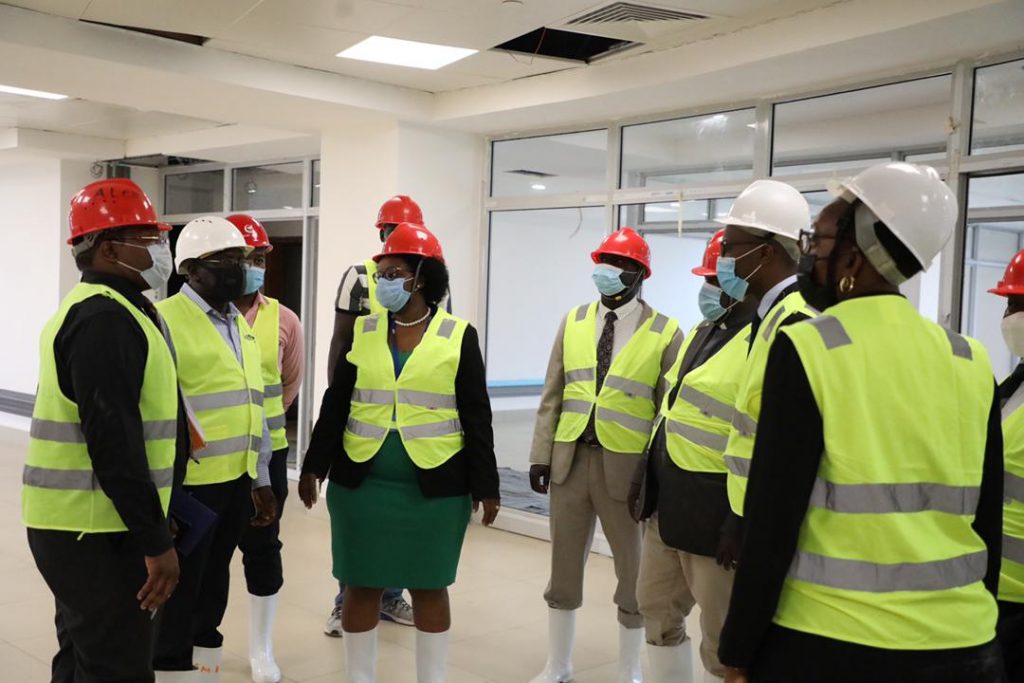
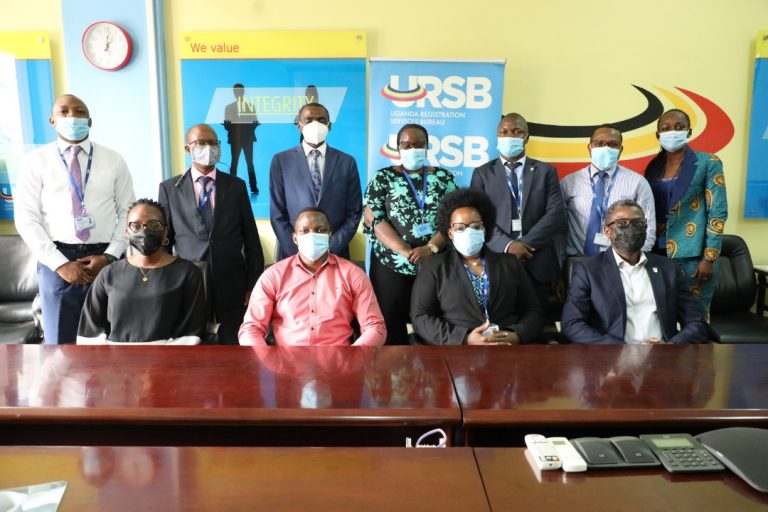
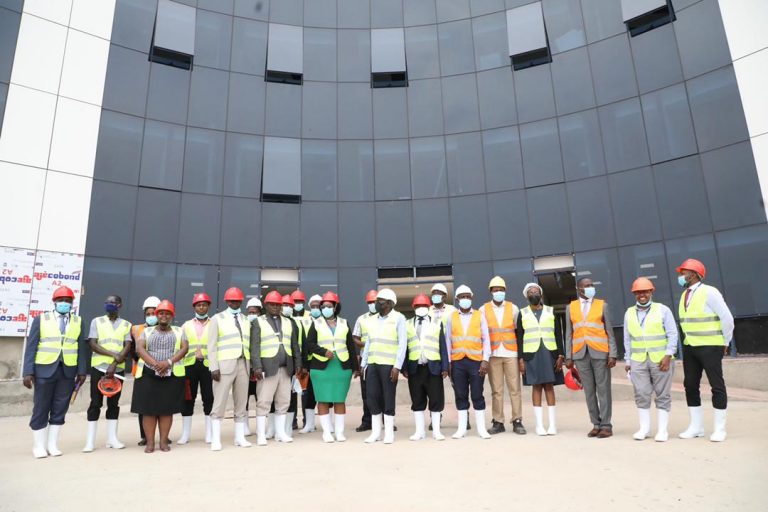
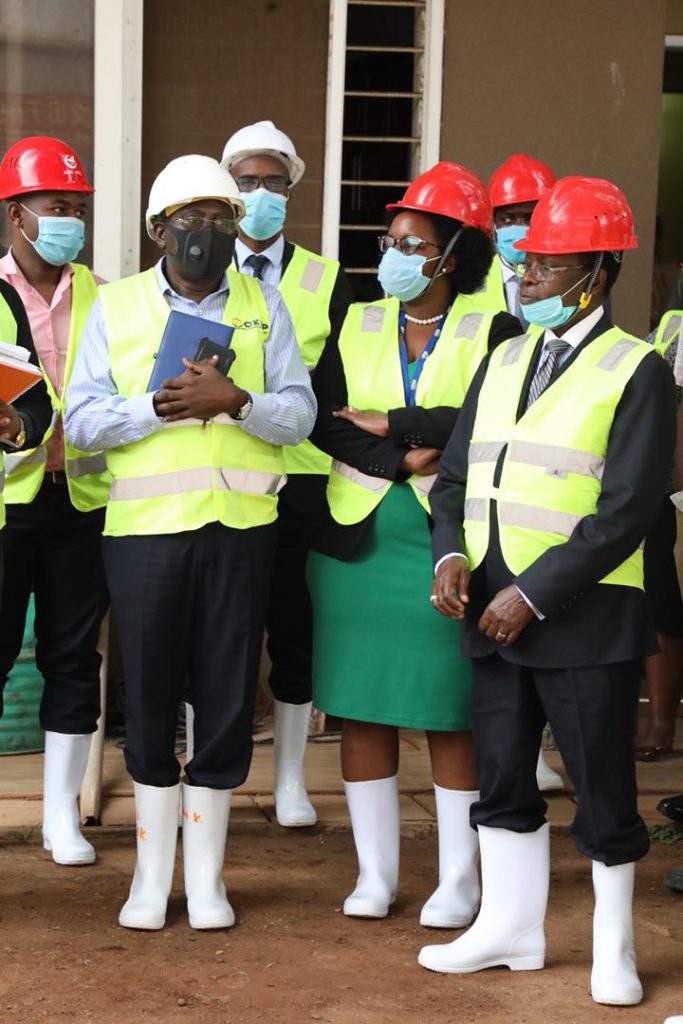
Completion works on the Uganda Business Facilitation Centre (UBFC) in Kololo are now at 75% with the building expected to be completed in July 2021. The development was revealed during a guided tour of the facility by URSB Board led by the Chairman Ambassador Francis Butagira accompanied by the Registrar General Mercy Kainobwisho. The 12 floor-storied, four-basement facility will house the Uganda Registration Services Bureau (URSB), Capital Markets Authority and Uganda Investment Authority to work in an integrated manner in providing the business community and investors with the necessary documents they need to facilitate business and investments process in the same building.

Addressing a meeting that comprised the contractors, board members and other officials, Ambassador Butagira said the excellent work culture prevailing at URSB has contributed significantly to the remarkable achievements the organization has achieved and the credit goes to the officers and staff for these unwavering efforts.

The initiatives taken by the URSB with support from the Government & other stakeholders towards transformation have become a model to emulate for many other organisations, he said. “As the board, we have made remarkable achievements together with management. it is now time to concentrate on development of infrastructure to meet the expectations of our clients. The Uganda Business Facilitation Centre will offer URSB with better stature to cement their mandate. The fact that the facility also houses other partner agencies involved in the ease of doing business which will enable faster transaction times in service delivery across all services” Butagira added

With the construction now in the completion stages, he reiterated that work is not yet over. ‘ ‘We have to deliver world-class services that match the standards of this new office building in order to satisfy our clients’ needs’ Butagira said

Commenting on the progress of the construction works, the Registrar General, observed that the new offices are much more spacious and that they evidently present a good working environment for staff. “The new offices look fantastic. We hope that this environment will provide staff with facilities that will make their work more enjoyable and productive,” Kainobwisho said.

The move to a permanent head office is a major milestone for URSB as it will save on the enormous amounts of money spent on renting facilities while giving the organization a stable repute and comfortable working conditions. “The new office provides a more conducive environment for staff and for our work. It also provides enhanced security since access to the office is controlled by finger imaging. We thank the Board, Government of Uganda and the World Bank for support in approving resources that facilitated this construction,” noted the Registrar General

The building will also house a One Stop Centre with over 15 service points which will improve service delivery to the private sector by ensuring that less time is taken in registering and starting a business. The country’s business ranking improved by 11 positions from 127th to 116th out of 190 economies on the backdrop of reforms geared at making it easy for investors to start a business.

The UBFC is being undertaken under the Competitiveness & Enterprise Development Project (CEDP), as a Government of Uganda project funded by the World Bank and coordinated by the Private Sector Foundation.

URSB and Stanbic Business Incubator announce partnership to support MSME growth & sustainability

An exciting new partnership was announced today between Uganda Registration Services Bureau (URSB), a semi-autonomous Government agency charged with formalization of businesses and registration of intellectual property, and the Stanbic Business Incubator which provides training, mentoring and business development services for Micro, Small & Medium Enterprises (MSMEs).

The main aim of the joint collaboration is to support and drive economic growth in Uganda through enabling formalization for MSME’s, training them to overcome some of their challenges while nurturing innovation through protection of intellectual property and commercialization of creations. “URSB is proud to welcome the Stanbic business incubator to the growing number of support entities that are keen on enhancing the business growth environment. Our core focus is not to only support businesses to formalize, but we also ensure that they thrive, get commercial value from their innovations and grow. This partnership that is geared towards creating innovation hubs presents a truly transformative approach for growing our economy through business’’ Mercy K Kainobwisho, the Registrar General said.

URSB has over the years been involved in efforts to formalize business operations for the bulk of MSMEs who form over 80% of Uganda’s business sector and has front-led collaborative efforts to stimulate innovation, accelerate ease of doing business and continuously provide support services to keep entrepreneurs in business. Tony Otoa, the Chief Executive Officer of Stanbic Business Incubator said the partnership would help support and nurture MSMEs to prepare for and harness business and growth opportunities. “We are always looking towards partnering with entities that have similar interests in supporting businesses to thrive. Our intensive training in entrepreneurial attitude, financial literacy, business analysis and planning as well as compliance and corporate governance are a timely addition to URSB’s services that promote the ease of doing business and nurturing of innovations”

As part of the announcement, the collaboration will also will focus more on the creative industry leading to the creation of an innovation hubs to attract, nurture and support innovative entrepreneurs protect their creations, besides helping them attract financing using their intellectual property as collateral.

Another exciting aspect of this new partnership is that URSB and the Stanbic business incubator programme will offer MSME mentorship and training programmes across the country to encourage nation-wide business support. The two will also explore opportunities how to onboard Local Governments who have been identified as fertile grounds for starter innovators that need mentoring.

URSB Partners With Higher Institutions To Protect Intellectual Property Innovations

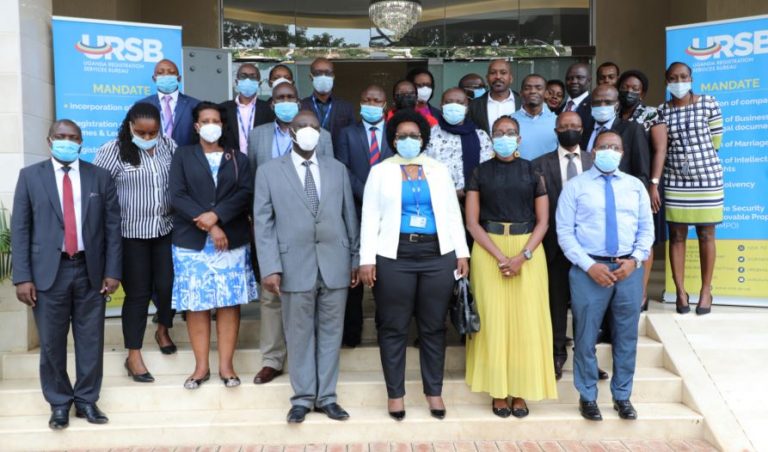
Kampala, Uganda; Intellectual property (IP) protection has been deemed critical for protecting Uganda’s proprietary designs, processes, and inventions that, if leaked to competitors or made public, could ruin the country’s market advantage across the world. This call was made at the 2nd Higher Education Partnerships in Sub Saharan Africa (HEPSSA) workshop at Makerere University in Kampala on Friday 29th January, 2021. The HEPSSA project, supported by the Royal Academy of Engineering (UK), aims to support the enrichment of engineering programmes that will lead to development of skills for the much needed engineering capacity in the region while the Uganda Registration Services Bureau (URSB) is the Government agency mandated with the registration and protection of intellectual property rights across the country. The Universities in attendance were Makerere University, Mbarara University of Science & Technology, Busitema University, Kyambogo University and Ndejje University.

 According to the World Intellectual Property Organization (WIPO), intellectual property refers to “creations of the mind: inventions, literary, and artistic works, and symbols, names, images, and designs used in commerce. IP is divided into two categories: industrial property, which includes inventions (patents), trademarks, industrial designs, and geographic indications of source; and copyright, which includes literary and artistic works such as novels, poems and plays, films, musical works, artistic works such as drawings, paintings, photographs and sculptures, and architectural designs. Rights related to copyright include those of performing artists in their performances, producers of phonograms in their recordings, and those of broadcasters in their radio and television programs.”

Speaking at the  Workshop, James Tonny Lubwama, the Manager, Patents & Industrial Designs at URSB emphasized that universities in Uganda were creating engineers who are at the front line of innovation. To tap this potential, URSB has worked on partnerships with engineering and arts faculties across higher institutions of learning as a means of supporting and enhancing knowledge on the subject of intellectual property for young creators. ‘As creators, engineers often share intimate details of their clients’ designs, materials, products, and processes, which are always highly confidential work. Other scientists, however, are more interested in focusing on the technology and don’t always realize the finer points of protecting IP. As URSB, we are open to helping our innovators have their creations fully protected so that they can enjoy the benefits from their proprietary works and designs’ Lubwama said

Drawing attention to some of the outstanding creations from universities, like the Vehicle Design Project at Makerere University that resulted into the creation of the Kiira EV car, Lubwama said such projects can only succeed if they fully protect their innovations right from the start in order to enjoy their proprietary rights.

“Enthusiastic innovators are often under pressure to give presentations at research workshops about the research and development they have completed,”  Lubwama added. “If any of these public disclosures include a discussion on something that a young engineer wishes to patent, a patent application should be filed with URSB before such disclosures occur. They must be vigilant about not sharing any conceivable IP before patent application occurs, or discussing it with other engineering colleagues or friends”

To support innovation across universities, URSB has over the years been involved in the Technology & Innovation Support Centres (TISC) project, an initiative of the World Intellectual Property Organization (WIPO) that aims to improve the quality of research by ensuring that researchers have free access to high quality information mostly available through patent and non-patent databases. The TISC project also aims to ensure that the Intellectual Property created from research is appropriately protected through proper licensing, commercialization and management.

Mercy Kainobwisho Unveils Her Vision For The Future Of URSB As Registrar General

0

Our Reporter.

The official Government Receiver and new Registrar General of Uganda Registration Services Bureau (URSB), today unveiled her strategic plan for the organisation’s future, and announced key initiatives to drive URSB’s vision as the centre of excellence for reliable registration services.

Ms. Mercy K. Kainobwisho who spoke at a management retreat for Directors, Managers and Senior Staff took time to outline her strategy dotted with aspirations to be achieved during her time of service. The Registrar General emphasized that she would direct her efforts to further strengthening URSB rather than “reinventing” it.

“We can’t change 2020 but we can learn from it to emerge stronger and get better as an organisation and oneself. As we start off a new year, we hope through rolling-out our 2021 objectives that we will make 2021 count for all our stakeholders”. She stated. “My team and I are looking forward to creating a new beginning for URSB – one that is customer-driven, service-oriented, technologically set and that will place our organisation in the forefront of the public service sector for the 21st century. Our collective knowledge, operational expertise, services experience, interpersonal skills and leadership abilities will serve us well as we confront any challenges that lie ahead”.

In calling for a new beginning for URSB, Ms. Kainobwisho emphasized her intention to build upon URSB’s existing employee base to create a team that is unmatched in the Government services category. “We have a strong, unified workforce – one that now has a very personal stake in the way we deliver services to our clients,” Mercy said. “URSB’s accomplishments will be a direct reflection of the responsibility and pride of service from each and every employee.”

Kainobwisho noted that together with her team, she plans to immediately address customer service and turn-around time issues, such as the time it takes to deliver on a customer’s submission and how long a customer has to wait to speak to a service representative. She also reiterated URSB’s commitment to ensuring that registration services continue to support Government’s economic vision of formalizing the economy, easing the doing of business, strengthening the basic of society through stable marriages, supporting creativity, innovation through intellectual property rights and rescuing ailing entities

“We have immense opportunities before us, and we intend to seize them with the understanding that change takes time, and we must be realistic in our expectations. We have one goal in mind, and that is to make URSB the best public services agency, which, in turn, support the livelihoods of people, collect revenue for government and support the social economic vision of our nation. We are ready to get started.”

The retreat also provided an opportunity for senior management to discuss at length areas of focus for URSB in the upcoming months and share ideas on how to support each other to realize the organisation’s  mandate as envisioned in the 3rd strategic development plan (SDP III) which plugs into the National Development Plan.

The Covid-19 safe trade facility and dedicated support to fragile states will continue – Frank Matsaert.

0

Our Reporter.

Over the years, TradeMark East Africa has been investing billions into trade facilitation infrastructure such as one stop border posts, roads and electronic cargo tracking and clearing systems, among others.  

However, since the outbreak of Covid-19, a lot has happened and TradeMark has had to pay more attention to ensuring safe cross border trade for all.  

For instance, TradeMark East Africa in May 2020 created a $23m Safe Trade Emergency Facility to support governments across the region to undertake critical measures along the transport and trade routes to ensure continued trade.

In this candid interview, Frank Matsaert, the TradeMark East Africa chief executive officer decodes the Safe Trade Emergency Facility (STEF) and TradeMark EA’s continued support to fragile countries like South Sudan, Burundi and Democratic Republic of Congo and more.

What is this $23m Safe Trade Emergency Facility?

We thought of an emergency programme that sought to support eastern and southern African governments to implement containment measures against Covid-19 and trade resiliency. This is being undertaken alongside scaling existing programmes to capitalise on emerging opportunities that build the region’s socio-economic resilience.

The programme supports trade continuity in a safer manner through short and medium term interventions that are critical for resumption of economic activity, food security and social stability, jobs and economic recovery.

As a region, we have seen near or total collapse of some regional value chains, affecting both imports and exports. Covid-19 has created problems, congesting borders with cargo trucks tailing back to tens of kilometres while some traders had to shut down business as a result of various restrictions.

Therefore, we needed to put in place a number of interventions and as a result, we are seeing resumption of cargo movements across borders, improved coordination in introducing Covid-19 measures and adoption of innovative solutions for real time exchange of Covid-19 certificates to confirm authenticity.

What area does the facility cover?

The Safe Trade Emergency Facility has been developed to cushion trade and people within East Africa with key objectives of making ports, borders and critical supply chains safe for trade as well as ensuring food security and access to critically required medicines and supporting measures to prevent job and income losses. 

The programme has actually grown to a $23m and is being implemented under seven  clusters; supporting emergency personal protective equipment and testing, trade technology interventions, which include the regional cargo and driver tracking system, trade policy interventions, supply chain support, standards and sanitary and phyto-sanitary projects, private sector advocacy interventions and gender inclusion, women in trade and safe zones.

The programme has recorded some successes such as provision of personal protective equipment to frontline staff and traders at ports, borders and inland container depots in Uganda, Burundi, DR Congo, Ethiopia, Kenya, Malawi, Rwanda, Somaliland, South Sudan, Tanzania and Zambia.

What has been the impact of Covid-19 on trade in the eastern Africa region?

The impact has been in varying proportions. In the first few months of Covid-19, horticulture, floriculture and tourism declined by close to 70 per cent on account of restrictions in Europe and North American markets. The situation then began to improve in the second half of 2020, but most countries in the region are yet to recover fully.

Manufacturing and cross-border trade also took a major hit as the disruptions at markets and raw material sources, shutting of borders and airports and declining incomes all contributed to reduce production output.

We also witnessed a decline of consumption as households prioritised essential goods impacting demand and production.

As a result of contraction of the economies and other tax relief measures in response to Covid-19, government revenues to finance social programmes have been significantly impacted.

Besides this, both foreign direct investments and diaspora disbursements into the region have declined, affecting foreign inflows as well as putting pressure on exchange rate and commodity prices.

This has in turn put pressure on unemployment levels and deepened poverty with one of every three companies facing a lot of vulnerabilities.

According to a World Bank report, in 2020, Uganda’s economic growth de-accelerated to 2.9 per cent, almost half of the 6.8 per cent for 2019. This is expected to continue into 2021.

The report notes that Covid-19 has forced widespread company closures, layoffs and slowdown of economic activity.  

Overall, whilst there are signs of recovery, economic growth is projected to slow down considerably.

With what happened in 2020, how do you see regional trade performing this year?

We expect to see a gradual recovery in trade, built on the anticipated arrival and manufacturing of Covid-19 vaccines. That said, the effects of Covid-19 have been severe. Economists anticipate it will take a few years before the negative effects fully taper off.

What is also interesting is the pandemic has presented new opportunities in the growth of e-commerce in the region, Governments in the region have invested in ICT infrastructure development, new e-commerce strategies are being developed and this presents great opportunities in growing the service sector and harnessing the power of technology in the region.

We also anticipate Africa and the region to trade more with itself, supported by the commencement of the Africa Continental Free Trade Area (AfCFTA), which is expected to strengthen trade value chains.

What key lessons must businesses and countries learn from this Covid-19 pandemic?

There are many lessons, key among them, the need to build greater collaboration and coordination, robust and resilient economies, early warning and detection mechanisms of threats and tapping into technology to build resilient trading systems.

Adoption of more trade supportive technology in key trade areas such as ports, corridors, and borders also needs to be consistent because they are more resilient in times of crisis and minimise transmission risks.

There is also need to increase internal and external border agency collaboration as well as streamlining and simplifying regulatory and border procedures to facilitate trade.

Focus on trade reform policies such as tariffs reduction, roll -out of trade information portals, building and promoting regional value chains to avert global contagion and strengthen the local and regional private sector organisations to advocate for improved business environment must also be enhanced.

You are a key supporter and facilitator of international trade in fragile countries across Eastern, parts of Southern Africa. How is trade faring in countries like Burundi, DR Congo and South Sudan? What big plans do you have for such countries? 

We continue to believe in the potential of fragile trade frontiers because at the end of the day, citizens, political affiliations notwithstanding, will always trade with each other.

In the countries such as DR Congo, Burundi and South Sudan, we continue to see determined citizens seeking peace, stability and economic growth.

Therefore, through trade facilitation, we want to support these governments to address infrastructure deficits, ineffective trade systems and regulation as well as bringing the private sector together to benefit from internal and regional trade.

We will continue to support South Sudan’s ascension to the East African Community because this will reduce costs of trade and stimulate economic growth through participation in regional and global value chains. We will also continue to support the government to remove non-tariff barriers along the Nimule-Juba corridor to quicken truck movements thus reducing transport costs and the prices of consumer goods.

In Burundi, we will be working with the private sector and government partners among them the Revenue Authority (OBR), National Committee on Elimination of Non-Tariff Barriers and Burundi Standards Bureau to reduce trade barriers.

In DRC, we will continue to support the government in trade facilitation to reduce cost of regional and international trade through interventions on infrastructure, trade supportive legislation, modernize trade systems and coordination of the private sector to be able to advocate for improved business environment.