Home Blog Page 71

Innovation for smart cities and climate smart agriculture towards sustainable sanitation and climate change.

By Dr. Jane Francis Namukasa Wanyama

World Toilet Day 2020 focuses on sustainable sanitation and climate change. Climate change is getting worse. Flood, drought and rising sea levels are threatening sanitation systems – from toilets to septic tanks to treatment plants.

Therefore, everyone must have sustainable sanitation, alongside clean water and handwashing facilities, to help protect and maintain our health security and stop the spread of deadly infectious diseases such as COVID-19, cholera and typhoid. Sustainable sanitation systems should also reuse waste to safely boost agriculture, and reduce and capture emissions for greener energy.

World Toilet Day, 19th November, celebrates toilets and raises awareness of the 4.2 billion people living without access to safely managed sanitation. It is about taking action to tackle the global sanitation crisis and achieve Sustainable Development Goal 6: water and sanitation for all by 2030.

One of the Keynote speakers at the 2019 World Toilet Day(WTD), Mr. Sadhguru said, “As it is important to have access to food and water, it is equally important for a human being to have access to a clean toilet to bring health, well-being and to establish human dignity.”

Uganda joins the rest of the world to celebrate this year’s WTD, organized by Nurture Model Initiatives Limited(NMI) the sole distributors of Green toilet technologies in the East African region under the theme: “Innovation for smart cities and climate smart agriculture towards sustainable sanitation and climate change”.

Nurture Model Initiatives Limited has partnered with the Professional Urban Planners Association of East Africa(PUPAEA) and the Uganda National Entrepreneurship Development Institute(UNEDI) to launch a comprehensive ten-year effort called the Uganda Program for Sanitation and Market-led Agricultural Rural Technologies (UP-SMART. The project aims to supply and distribute 1,000,000 “Green toilet technologies” and other solutions within Uganda’s stressed communities such as refugee camps and their host communities, slums and rural poor farming communities by 2030. This will improve both urban and rural sanitation, ensure climate smart agricultural productivity and create over 100,000 jobs through green economy revolution.

What are Green/dry Toilets technologies?

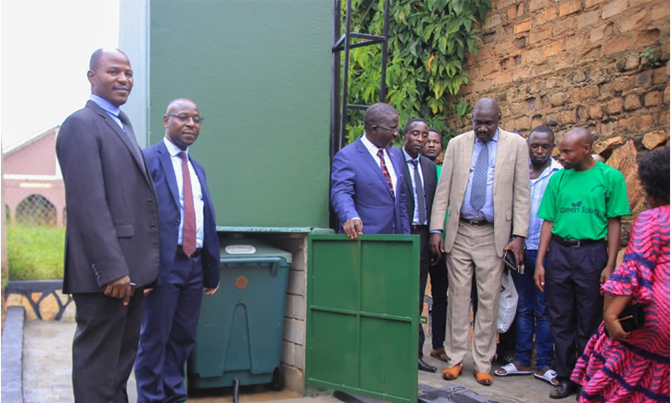
Green/dry toilet is an ecological dry toilet that works without water or electricity. The operation of the Green Toilet is based on a natural composting process in special containers, which separate the liquid waste from the solids. This separation enables the composting to start already when the toilet is in use and keep the toilet odourless as well as pleasant to use. One Green toilet can be used about 800 times before service. When the container becomes full, it is taken out from the toilet and replaced with an empty container. This switch can be done in a matter of minutes and the use of the toilet can continue without interruptions.


After some 2-5 months, when the biomass in the full container is fully decomposed – it can be used as eco-fertilizer in a farm or a private garden. Thus, all the valuable nutrients, e.g. phosphorous and nitrogen that we all humans produce daily, are restored safely back to the soil. Using a composting toilet is a simple and safe way to handle sanitation in any place where there is no drain, electricity or water available. Green Toilet can be maintained easily without any special tools or expertise and is therefore an ideal solution for both homes and public sites.

Advantages of Green/dry Toilets technologies

Do not need water or electricity: By definition, a dry toilet is a toilet that requires no water for flushing. The human waste gets composted as it would in nature without any toilet system. The fact that dry toilets operate without any water or electricity is the number one general advantage.
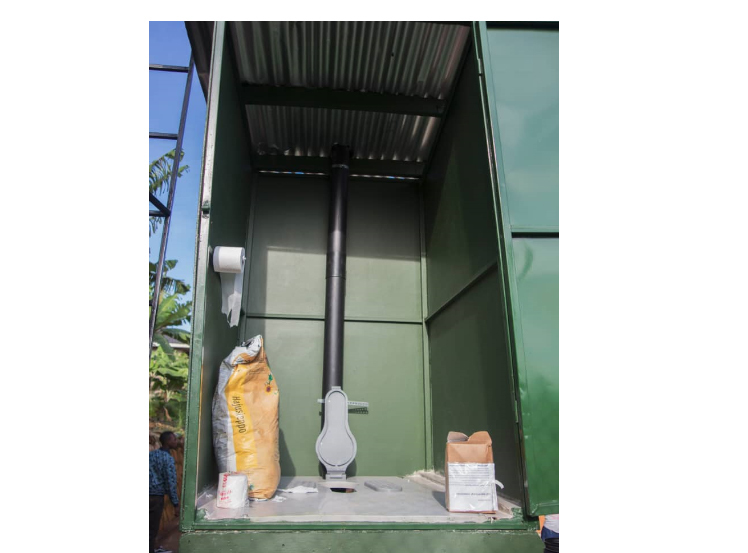
Environmental/eco-friendly: Globally, there are millions of places without immediate connection to proper sewage systems and waste management plants. In those places, a composting dry toilet is a necessity, because without any toilet system, human waste would pollute the environment. In particular, areas near water are vulnerable to human waste pollution. For example, our beloved Lake Victoria could suffer from improper human waste management.

Much more affordable: If managing our waste is key in preserving our beloved nature, why wouldn’t we build proper sewage systems and factories to manage it? The answer is lack of money. Composting dry toilets are much less expensive compared to large underground sewage systems to build and maintain. The price for one Green Toilet container that can serve the needs of a one family is a quarter the price of building an underground sewage system. As a result, more people can have access to proper toilet and waste management system which improves the quality of life for many.

Infection control and prevention: I cannot overemphasize the importance of a hygienic and safe toilet enough. Today, hundreds of thousands of people across the globe get sick because of pathogens they got from unhygienic toilet and contaminated drinking water.

Social benefits: Daily, unaccounted number of young women face sexual harassment or even get raped while using improper toilets or defecating out in the open. The outcome is that many people have to stay out of work, school and other everyday duties. Therefore, from social perspective, a toilet is a necessity, privilege and opportunity-maker.

Pleasant user-experience: Green toilets are clean and do not smell. The forever-continuing debate in the field of composting dry toilets has been about how and when to separate urine from feacal matter. Separating liquid waste (i.e. urine) from solid (i.e. feces, toilet paper etc.) is the key to odorless toilet experience. Human waste in a bucket with no separation at all will immediately start to rot causing the terrible smell many people have encountered with pit latrines. Therefore, there is no debate whether a good composting dry toilet separates urine from feces or not. The debate is more about how to separate these. Should it be done already at the toilet seat or squatting plate without mixing urine and solid waste at any point, or should the separation be done after the urine and solid waste has mixed together, like in Green Toilet? There is no obvious answer which approach is better, but in our view, the advantages of the latter option outweigh the other.

Effortless maintenance: Green Toilet mixes urine with solid waste and separates them using the double base only after that, the toilet produces much less urine to deal with. The compost mass inside the Green Toilet uses about 70 – 90 % of the urine itself during the process of composting, while the rest of the urine is led to the excess liquid canister. If the urine would be separated in the toilet seat or squatting plate, there would be much more urine to treat at the toilet site. Note that most of the human waste is urine. On average, a person urinates 1 – 1.5 liters a day. In a public toilet site, a 20-liter urine canister would fill up very quickly. In that case, someone would have to go to empty the urine canister, causing more work to maintain the toilet. Also, some moisture is necessary for the composting process. If the urine would be totally separated from the solid material, it can be too dry to compost efficiently. Therefore, Green Toilet does both: separates excess liquid but keeps the compost mass moist enough.

Uganda has been blessed with superior innovation of the Green Toilet, developed in Finland since 1992, by a “dry toilet guru” who devoted most of his life to composting and eco-living. We honestly think, there is no better solution anywhere in the world, nor there needs to be. Green /dry toilet is effortless to maintain, pleasant to use, doesn’t smell, lasts for decades in use and an amazing organic fertilizer-maker!

The author is a Senior Public Health Research Scientist.

For orders, contact us: 0772561523/ 0700800649

Or visit our website: http://www.nurturemodelinitiatives.org
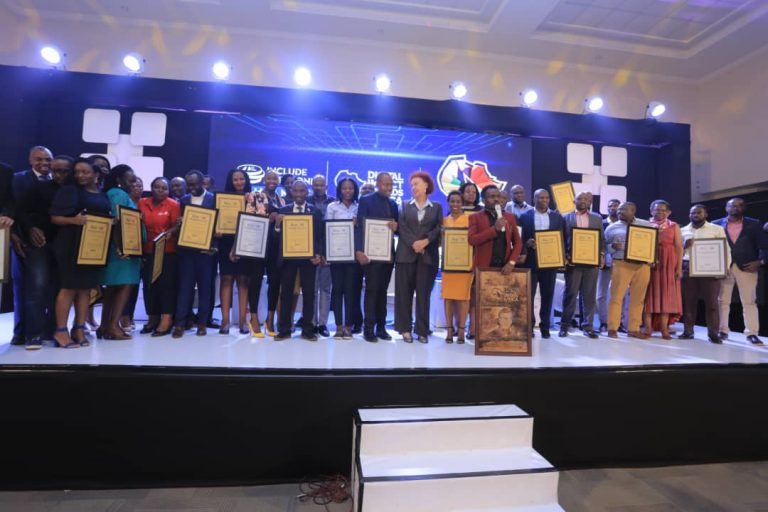
#IncludeEveryone: Nominees for the 2020 Digital Impact Awards Africa – #DIAA2020 released.

17/11/2020

For Immediate Release.

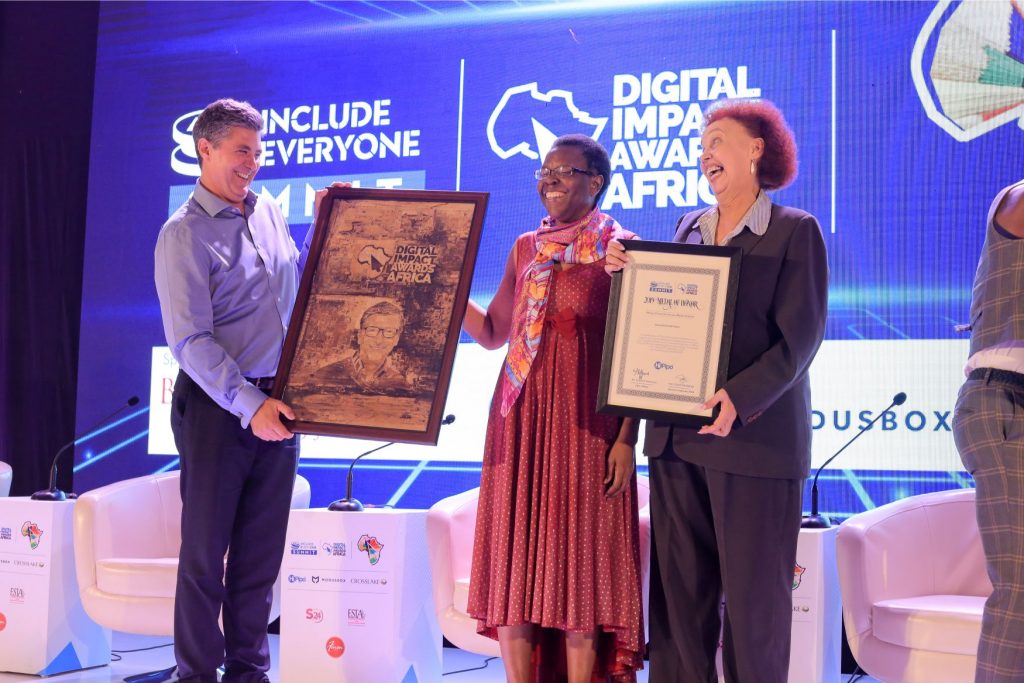
HiPipo; the organizers of the annual Digital Impact Awards Africa have today released the list of nominees for the 7th edition of the annual Digital Impact Awards Africa (#DIAA2020). 

Digital Impact Awards Africa is Africa’s most important gathering of C-Level Executives and senior Digital and IT executives.

The release of the nominations marks the end of a comprehensive entry submission and validation exercise that ran from 19th October to 10th November 2020. #DIAA2020 grand finale is scheduled for 11th December at Mestil Hotel, Kampala.

Digital Impact Awards Africa is a platform that promotes Digital Inclusion, Financial Inclusion and Cyber Security.

In other words, the Awards seek to recognize, celebrate and appreciate different individuals and organizations that are spearheading the use of digital mediums to better serve their communities.

Altogether, there are 36 categories in the 2020 Digital Impact Awards Africa including 17 that recognize best performing digital and financial players from across Africa and 19 categories purely focused on Uganda.

The #DIAA2020 edition comes in the middle of the COVID-19 pandemic; an unprecedented period that has on one hand wreaked socio-economic havoc across the world, but on the other hand further showcased the life- serving and saving capacity of digital-financial services (DFS).

The 36 categories include two special recognitions. These are: Regulatory Financial Inclusion Rails Award, and Women in FinTech Leadership Award.

Regulatory Financial Inclusion Rails Award

World over, regulators are key enablers of financial inclusion in some cases by adopting provision of digital financial infrastructure as a public good. Regulators lead the provision of a national digital identity to all residents, the development of a real-time payment systems and the establishment of a favourable legal framework.  The Digital Impact Awards Africa ‘Regulatory Financial Inclusion Rails Award’ is a special   recognition of initiatives, programs and projects that are setting up the needed financial inclusion infrastructure rails with key emphasis on instant (real-time) payments platforms in Africa.

Women in FinTech Leadership Award

Just like most countries especially in Africa, Uganda still struggles with a huge gender diversity challenge in the financial technology space. Only 10 per cent of the 41 FinTechs that took part in the 2020 40 Days 40 FinTechs initiative had either women co-founders or women in their senior management. The limited involvement of Women in Financial Technology is unfortunate because they are the majority gender world over and most importantly, their last-mile utilisation of financial technology solutions is very high. As such, the #DIAA2020 ‘Women in FinTech Leadership Award’ seeks to recognize and appreciate a Woman that is taking lead in bridging the aforementioned gender diversity challenge. 

Minus these two special recognitions, the rest of the categories will include jury assessment and public voting that will commence on Thursday 19th November until the eve of the awards. 

The awards gala will be the climax of the #IncludeEveryone – Digital and Financial Inclusion Summit that will happen on the same day.

This summit will explore the strategic trends and technologies that are shaping the future of Digital, IT and business. The summit theme will be “Collaboration to Advance Safety and Security towards Sustainable Financial Inclusion”.

We wish to congratulate all the nominees and now implore them and the entire public to take part in the voting exercise.

The official hash tags for this project are #DIAA2020, #IncludeEveryOne and #LevelOneProject

The Nomination list is below.

  1.  Mavmica Acebooktwittermore

Africa

  1. Regulatory Financial Inclusion Rails Award
  •  Fintech Investment and Inspiration Sprinter
    • PayStack
    • OPay
    • JUMO
    • Flutterwave
    • Chipper Cash
  •  Best Financial Inclusion Impact
    • Airtel Money
    • Cassava FinTech EcoCash
    • M-Pesa
    • MTN Mobile Money
    • Orange Money
  •  Best Fintech: Lending
    • Branch
    • Jumo
    • NCBA
    • OneFI
    • Tala
  • Best Fintech: Remittance
    • WorldRemit
    • MFS Africa
    • Wave
    • Mukuru
    • Transfer Wise
  •  Best FinTech: Investech
    • Abacus
    • Jamiipay
    • kwikfin
    • PiggyVest
    • Bamboo
  •  Best FinTech: InsurTech
    • AYO
    • Cassava Mobile Micro Insurance
    • Jamii
    • Click2Sure
    • Turaco
  •  Best Fintech: Blockchain
    • Bitpesa
    • Sqoin
    • Kobocoin
  •  Best Fintech: Merchant Payments
    • Paystack  
    • Flutterwave
    • Kopo Kopo
    • Zoona Tilt
    • EthioPay
    • Cellulant
  •  Best Healthtech
    • Carepay
    • AFYA PAP
    • Vezeeta
    • 54gene
    • Helium Health
  •  Best AgriTech
    • Farmcrowdy
    • FarmDrive
    • NextProtein
    • Releaf
  •  Best EduTech
    • Mzizi School Solution
    • ElimuTanzania
    • Gebeya
    • Valenture Institute
    • M-Shule
  •  Best Digital Response to Covid Impact
    • EAC Regional Electronic Cargo and Driver Tracking System (RECDTS) for Covid
    • MTN Group #WearItForMe
    • Wiqaytna Covid Exposure Notification App
    • Safeboda Medical Delivery
  •  Best Fintech Solutions Provider
    • Cassava
    • Craft Silicon
    • Eclectics International
    • Selcom
    • Tangazoletu
  •  Best Digital Financial Services Platform
    • Amdocs
    • Comviva – Mobiquity Money
    • Ericsson EWP
    • Huawei Mobile Money
    • Obopay
    • TagPay
    • Telepin
  •  WomenInFinTech – Leadership Award (Personality)
  •  Super App Innovation
    • Sasai
    • Ayoba
    • Viusasa
    • Safeboda

Uganda

  1.  AgriTech Innovation Excellence
    1. Hamwe
    2. Lusuku
    3. Jumia Fresh
    4. Nakasero Online
  2. E-Commerce Innovation Excellence
    1. Jumia
    2. Nakasero Online
    3. Safeboda
    4. Lusuku
    5. Spare-Wo
  3. Payments Innovation Excellence
    1. Beyonic
    2. Kanzucode
    3. Safeboda
    4. Ticteq
    5. Trade Lance
    6. True African
    7. Xente
  4. Disruptive Innovation
    1. JPESA -WhatsApp Money
    2. Filetax
    3. StarTimes Solar
  5. Lending & SACCO Innovation Excellence
    1. Buladde
    2. Lendinabox
    3. Social Lend Africa
    4. Mallan Yassako
  6. Merchant Payments Innovation Excellence
    1. Chapchap
    2. Flutterwave UG
    3. Xente
  7. Content Innovation Excellence
    1. Yo Tv
    2. Teesa Advisory Services
    3. StarTimes On App
  8. Best Fintech: Aggregator
    1. Pegasus
    2. True African
    3. Craft Silicon
    4. Yo Uganda
    5. Beyonic
  9. Women Financial Inclusion Award
    1. Finance Trust Bank
    2. Pride Microfinance
    3. FINCA Uganda
    4. Centenary Bank
    5. BRAC Uganda
  10. Digital Banking Excellence
    1. Absa.
    2. Centenary Bank.
    3. Stanbic Bank.
    4. Standard Chartered Bank
    5. Pride Microfinance
  11. Green Energy Innovation Excellence
    1. Fenix International – Readypay Solar
    2. M-Kopa For Energy
    3. StarTimes Solar
  12. Digital Customer Experience Excellence (Financial Services, Telecom, IT)
    1. Airtel
    2. Centenary Bank
    3. MTN Uganda
    4. Stanbic Bank
    5. Standard Chartered Bank
  13. Digital Customer Experience Excellence (Utilities and Government Services)
    1. KCCA
    2. NSSF
    3. NWSC
    4. URA
  14. Best Brand on Social Media (Financial Services, Telecom, IT)
    1. Airtel Uganda
    2. Centenary Bank
    3. DFCU Bank
    4. MTN Uganda
    5. Stanbic Bank
  15. Brand on Social Media Excellence (Consumer Goods)
    1. Bell Lager
    2. Movit
    3. Pepsi
    4. Club Pilsner
    5. Jumia
    6. Café Javas
  16. Digital Powered Campaign Excellence
    1. Jumia Black Friday
    2. Stanbic National School Championship  
    3. Club Beatz At Home
    4. Café Javas Free and Express Delivery
  17. Cards Payments Excellence
    1. Absa
    2. Centenary Bank
    3. DFCU Bank
    4. Stanbic Bank
    5. Standard Chartered Bank
    6. United Bank of Africa
  18. Community Banking Excellence
    1. BRAC Uganda Bank
    2. Centenary Bank
    3. Finance Trust Bank
    4. FINCA
    5. Post Bank Uganda
    6. Pride Microfinance Limited
  19. Digital Brand of the Year
    1. Airtel Uganda
    2. Centenary Bank
    3. DFCU Bank
    4. MTN Uganda
    5. Stanbic Bank
    6. Standard Chartered Bank

Ends!

Lord Mayor Aspirant Kawooya Innocent boosts Katumba’s presidential bid with state-of-the-art digital gadgets

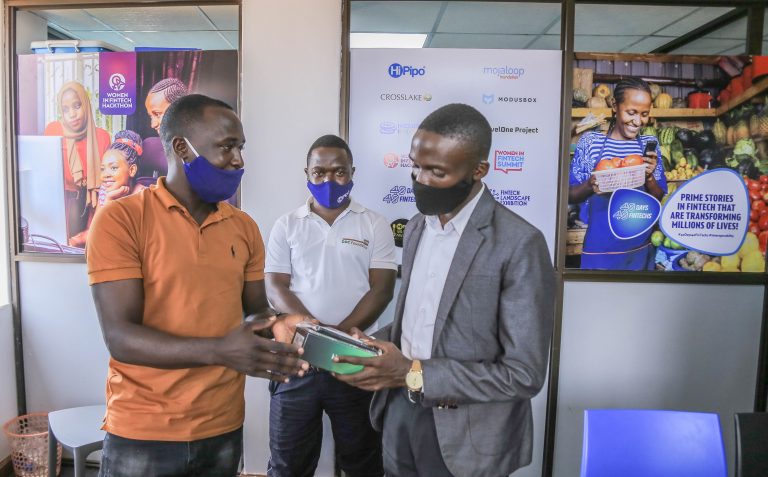
Kampala Lord Mayor aspirant Innocent Kawooya has come to the rescue of presidential hopeful John Katumba by buying him a smart phone equipped with unlimited data and airtime for the entire campaign period.

The 24-year-old Katumba received the donations this afternoon when he paid a courtesy visit to Kawooya’s campaign office in Kamokya where the two also shared about leadership, innovation and digital communication.

While donating the items to Katumba, Kawooya said that this gesture rhymes well with his Lord Mayoral campaign slogan of Digitizing Kampala, noting that the presidential aspirant needs well-connected gadgets to reach his youthful supporters who predominantly access news through digital means.

 “Allow me to congratulate you on your nomination as a presidential candidate. You have entered the books of records as the first Ugandan below 30 years to be nominated for presidential elections since independence. This is a major record and great milestone that the rest of us failed to achieve,” Incoming Lord Mayor Kawooya said.

“Because I believe in digitizing Kampala, my campaign team and I found it wise to help you address the communications glitches you have been facing due to lack of a smart phone. We have been able to get you a smart phone, airtime and data to cover all your campaigns. I have a team of digital experts that are also willing to help you execute a great digital campaign if you are interested.  I am also doing my best to ensure that I deliver a digital city that benefits every resident of Kampala,” he added.

The suave Katumba has risen to prominence after breaking barriers to stand for presidency in a race laced with seasoned politicians and prominent persons such as the incumbent president Museveni who has ruled Uganda for close to 35 years. 

Likewise, Kawooya, a digital financial inclusion entrepreneur, has become a household name in Kampala by vowing to remove politicians from Kampala’s mayor’s office and replace them with development-minded people.

Early this week, Katumba, the youngest of the 11 presidential candidates, damaged his phone during a scuffle with security operatives blocking his movements on the campaign trail – thus prompting Kawooya to intervene.

The smiley Katumba thanked Kawooya for the support and promised that this has energized him to canvas for votes and become Uganda’s 10th president.

“I thank my brother Kawooya for inviting me. As a young Ugandan, I am happy to work with likeminded people to develop Uganda. Like you know, the presidential campaigns are very expensive. I am facing issues including lack of a car, and team facilitation to ensure that I move to every corner of Uganda,” he said.

Katumba is now headed for northern Uganda where he will hold rallies in several districts.

He says he still needs support from well-wishers including transport means since he cannot use the security truck provided by the electoral commission.

“Nonetheless, with or without a car and money, I will continue my campaigns. I am very happy that Innocent Kawooya has seen it wise to get me a new smart phone, airtime and data that will ensure that I communicate effectively. Though Innocent is a few years older than me, he is also a youth. I am happy that a young Ugandan is helping out another young Ugandan. That is how it is supposed to be,” he determinedly said.

After this courtesy meeting, Katumba and his entire entourage were treated to great lunch at Café Javas, Kamwokya.

TradeMark EA boosts COVID19 fight with Personal Protective Equipment for Elegu Border Agencies and Informal Traders.

0

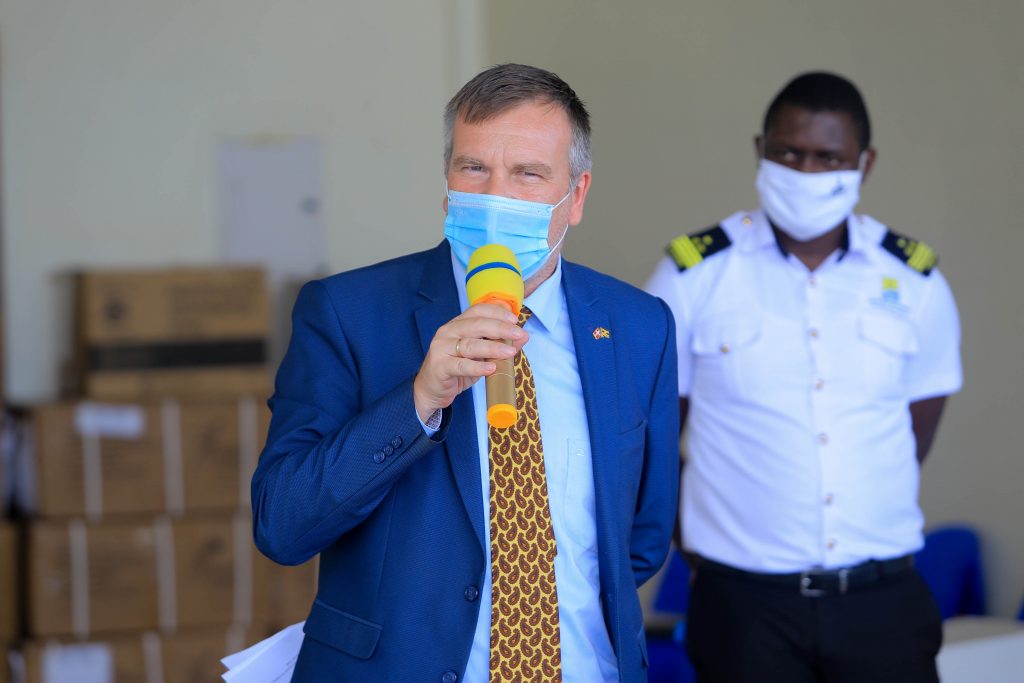
Regional trade facilitating agency TradeMark East Africa has today handed over Personal Protective Equipment (PPE) to Elegu One Stop Border Post (OSBP) frontline staff and informal cross border traders.

The delivery of PPEs at Elegu OSBP comes at the back of concentrated efforts undertaken by the government of Uganda and its partners to further curb the spread of the novel COVID-19 virus that caused havoc across the world.

The PPE presented at Elegu OSBP were funded by Danish International Development Agency (DANIDA) through TradeMark East Africa’s Safe Trade Emergency Facility. Other OBSPs that have already benefited from this Safe Trade initiative are Busia and Mutukula.

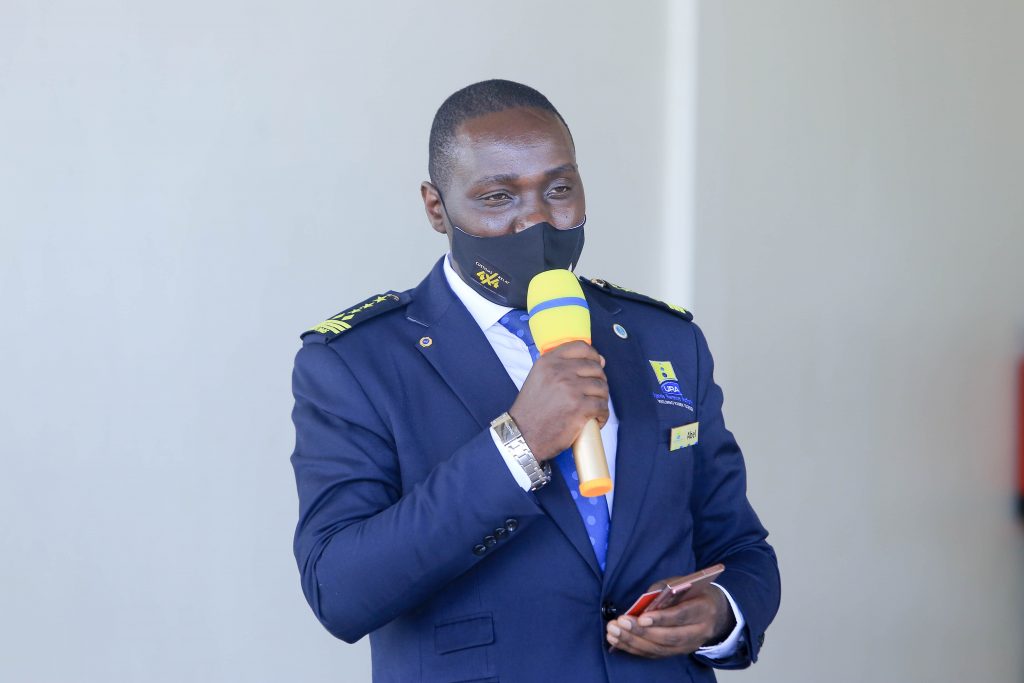
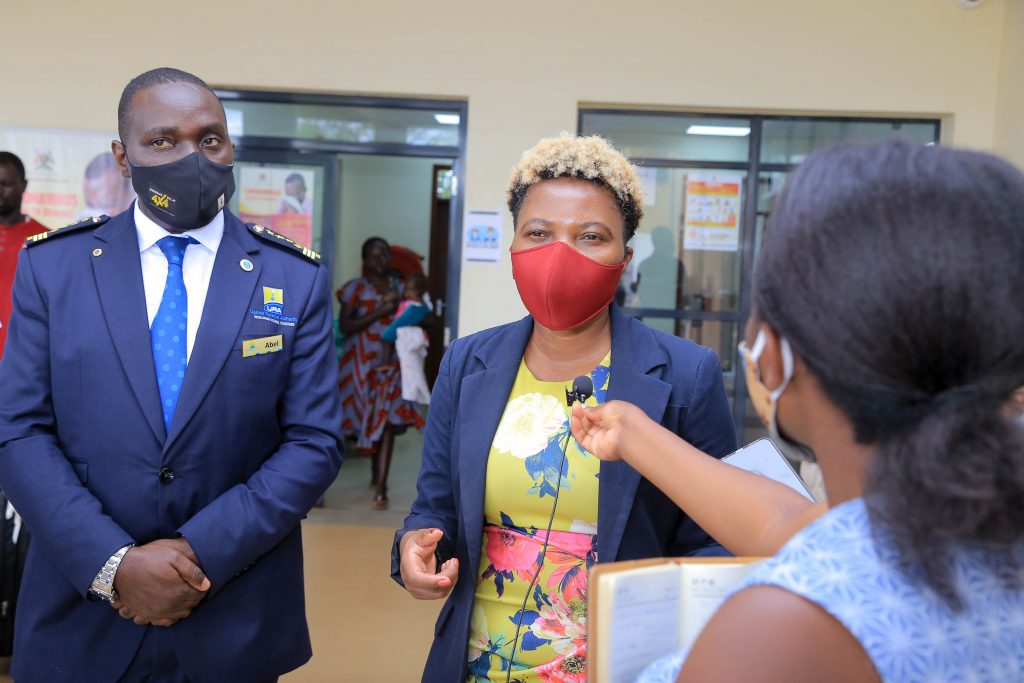
Ulrik Jorgensen, Counsellor and Teamleader Growth Team at the Denmark in Uganda Embassy and Damali Ssali, the acting country director for TradeMark East Africa, Uganda delivered the PPE to Elegu OSBP. On hand to receive the PPE was Abel Kagumire, the Commissioner Customs at Uganda Revenue Authority (URA).

The personal protective equipment provided included but not limited to hand sanitizers, hand washing stations, liquid hand washing soap, infrared thermometer, re-usable safety boots, full protective PPE, filtering face piece respirator, reusable masks, plastic face shield, disposable gloves, hand sanitiser dispensers and disinfectant spray bottles.

Abel Kagumire, the URA commissioner customs.

While receiving the PPE, Abel Kagumire, the URA commissioner customs underscored the significance of the Elegu OSBP as a strategic border for Uganda.

 “As a country, we look at Elegu border as a strategic border for growing our exports. We have a lot of agricultural produce in Uganda which is needed in South Sudan. That is why we come up with processes that help facilitate exports. We are challenging our people to add value to the products that they export so that we earn even more from South Sudan. As government agencies, we are here to facilitate trade,” Kagumire said, adding;

“We thank our partners; TradeMark East Africa and the Danish Embassy for donating this Personal Protective Equipment. Allow me confirm that this equipment received today is not for the customs team alone but for all trade facilitation agencies operating here and informal traders.”

Ulrik Jorgensen, the Counsellor and Teamleader Growth Team at the Denmark in Uganda Embassy noted that he was happy that Trade was continuing even amidst challenges such as COVID-19 and floods in Elegu.

“It is very positive to see that Trade is still progressing even amidst some difficulties. COVID-19 has affected the whole world. Many places in Europe and North America are experiencing a second wave with countries being locked down again. Fortunately, we are not seeing the same here in Uganda. This because of the efforts that Uganda has managed to put in place to contain the spread of COVID-19. Uganda is in a very good place and we are happy to continue working with you to achieve even more success.”  

The equipment presented today will enhance the safety and working condition of front-line workers in key borders, which are critical arteries of trade in and out of Uganda and her neighbours.

These PPEs are part of the Safe Trade Emergency Facility, a USD 23 million emergency program rolled out by TradeMark East Africa in the East African region in the aftermath of the Covid-19 pandemic that seeks to ensure regional economies continue to trade in a safe way, while curbing cross-border infections.

“We are handing over Personal Protective Equipment because we want to see that Safe Trade continues. People still have to trade, have to eat and live even if we are faced with COVID-19. These PPEs are for all border agencies operating here in Elegu and Informal Traders particularly Women Cross Border Traders. We have already delivered the same in Busia, Mutukula and Mirima,” Damali Ssali, the acting country director for TradeMark EA, Uganda noted, adding;

“The Safe Trade Emergency Facility that was developed by TradeMark EA and funded by our partners – Denmark includes the Safe Trade Zones. We are still in the planning of how to implement these Safe Trade Zones. The Safe Trade Zones are supposed to facilitate Informal Trade. It is not just about Formal Trade. There is a lot of Informal Trade happening in towns like Elegu, even amidst floods affecting this town. Our concept of the Safe Trade Zones is that the key markets that are near busy borders like Elegu, Mutukula and Busia should also be helped and facilitated to safely open and trade even when there is COVID-19. A lot of the people in these markets are Women and Youth. If they don’t have an income, it means also their families have no income. We have to support informal trade.”

Other interventions under the Safe Trade Emergency Facility include:  technology to enhance truck driver testing and tracking; the development and implementation of relevant protocols to enhance efficient and safe trade; supporting trade policy, standards and SPS; policy advocacy and improving e-commerce.  

President Museveni breaks ground for construction of the Gulu Logistics Hub.

0

Our Reporter.

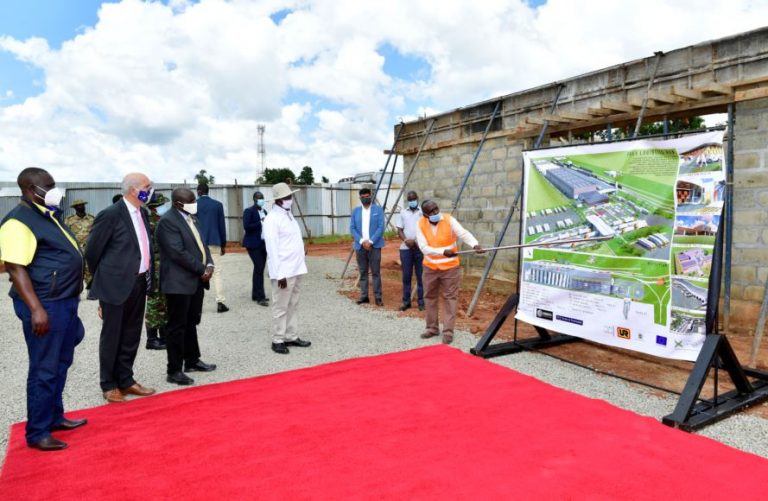
President Yoweri Kaguta Museveni on Saturday 24th October broke ground for the construction of the Gulu Logistics Hub. The same event doubled as the ground breaking for the rehabilitation of the Tororo-Gulu railway.

Other dignitaries that attended this landmark ceremony included Uganda’s Deputy Speaker, Hon Jacob Oulanyah, Cabinet Minister of Works and Transport, Gen. Edward Katumba Wamala, and European Union (EU) Ambassador to Uganda, Attilio Pacifici among others.

With support from European Union (EU) and the UK`s Foreign and Commonwealth Development Office (FCDO), TradeMark East Africa (TMEA) together with Ministry of Works and Transport and Uganda Railways Cooperation commenced construction in March 2020 of Euros 7.76M (about 33 billion Uganda Shillings) Trade Logistics Hub in Gulu, a move expected to stimulate trade in the region. The project currently at 25 per cent completion is expected to be completed before the end of 2021.

The Gulu Logistics Hub is expected to contribute to reduced barriers to trade for both Northern Uganda and the neighbouring countries of South Sudan and the Democratic Republic of Congo. The Gulu Logistics Hub (GLH) will serve the trade corridors of Kampala – Gulu – Elegu/Nimule – Juba Trade Corridor; and Gulu – Pakwach Goli/Pader/Lira/Vurra DRC Trade Corridor. The hub will be able to handle more than 500,000 containers at a time.

The logistics hub is located on a 24.1 acres piece of land in Layibi division, Gulu Municipality which was allocated by the Uganda Railways Corporation. The hub is located adjacent to the current Gulu railway station and connects to the main roads to South Sudan and Kampala.

Major features of Gulu logistics hub in Uganda will include container and break-bulk, handling and storage facilities, space for stakeholders dealing with freight transport (freight forwarders, shippers and transport operators) and the provision of accompanying services such as customs inspections, tax payment, maintenance and repair, banking and information communication technology.

Following the ground breaking of these two flagship projects, President Museveni noted that the entire infrastructure such as roads, railway, logistics hub, and electricity that is being established in Northern Uganda and the rest of the country is for making it easier for Ugandans to travel and also make it cheaper for them to do business.  

“We have invested massively in the road network. The roads are for small cargo and that is for the short term. The real medicine to cargo transportation is the railway. When you transport cargo by road, it becomes very expensive. Transporting a 40 ft. container from Kampala to Mombasa by road using a lorry would cost USD 3600. But, if you transport the same cargo by railway, you spend about USD 1800, which is almost half when compared to road transport,” President Museveni said, adding;

“This reduction in transportation costs by almost half is when you are using the old (metre gauge) railway line.  If we are to use the new Standard Gauge Railway (SGR), it will be much cheaper. We have already worked on the roads. We are now repairing the old railway and establishing more infrastructure. We will also do the new railway (SGR).”

The EU Ambassador to Uganda, Attilio Pacifici, commented: “The Gulu Logistics Hub will help in the consolidation and exportation of the goods produced from the value chains in Northern Uganda, and will also facilitate the importation and distribution of goods within Northern Uganda for the transformation and improvement and those value chains. The works on the Logistics Hub are scheduled to be completed by the end of 2021, but progress for the Government to build a 2km access road to the Hub remains uncertain. It would be a pity to have the whole project delayed by a simple access road, especially if the Hub is ready to operate next year as planned.”  

Andrew Ockenden, the  Development Director for the British High Commission in Kampala noted in a recorded video that; “The UK is committed to co-fund this multi-modal transport and warehousing project that will improve the capacity of transport and infrastructure in northern Uganda. It will also serve the export markets of South Sudan and DRC. The United Kingdom is committed to supporting trade and regional integrations agendas of Uganda and the East African community both through direct engagement and also through development programs like TradeMark East Africa. Like the government of Uganda, we understand that trade is central to Uganda’s development.”

TMEA is proud to be supporting the construction of the Gulu Logistics Hub, one of the many projects under its second phase of implementation which includes Trade Logistics Clusters in Jinja & Busia, construction of the Goli/ Mahagi One Stop Border Posts (OSBP), decentralization of standards testing and Phase II of the Uganda Electronic Single Window.

The acting Country Director for TradeMark East Africa, Uganda, Damali Ssali remarked that these and other trade facilitation efforts will “contribute to creation of additional employment opportunities as investors capitalise in the transport and manufacturing sectors and export growth. About 208,000 people are currently employed in the logistics sector in Uganda, a number that could rise to 522,000 by 2030. This project will certainly contribute to this.”

“Currently there is a significant imbalance of trade to South Sudan, Northern Uganda and DRC with very little exports coming from the region. To support exporters in the region, and to create new jobs and opportunities, we need a consolidation hub for exports, especially focused on agricultural trade. The presence of such a hub would allow for better negotiating power of exporters with transport providers as exporters would be able to access several transporters all at the same location,” Damali Ssali explained.

According to a World Bank study – Uganda Diagnostic Trade Integration Study – importers in South Sudan and DRC keep supplies in bonded facilities in Kampala before bringing them into either country when needed.

However, with the assurances of shorter lead times, Uganda has seen transit volumes grow, which has led to the emergence of a distribution industry especially in Jinja and Kampala.

In essence, the operationalization of the Gulu Logistics Hub will be a great relief to both traders and consumers as they will enjoy reduced costs of transportation and lower prices, respectively.

#IncludeEveryOne: Entries’ Submission for the 2020 Digital Impact Awards Africa – #DIAA2020 kick off.

For Immediate Release.

HiPipo; the organizers of the annual Digital Impact Awards Africa have started receiving entries for the 2020 Digital Impact Awards Africa (#DIAA2020).  Digital Impact Awards Africa is Africa’s most important gathering of C-Level Executives, and senior Digital and IT executives.

The kick-off of the entries’ submission marks the start of a comprehensive entry submission and validation process that will run until 2nd November, 2020. This will be followed by release of nominations and public voting.

The #DIAA2020 grand finale is slated for the afternoon of Thursday 26th November. It will be preceded by the annual Include Everyone Summit (aka Digital and Financial Inclusion Summit) on the same day.

#DIAA2020 grand finale is scheduled for 26th November 2020 at the Kampala Sheraton Hotel. The awards gala will be the climax of the Include Everyone – Digital and Financial Inclusion Summit that will happen on the same day. This summit will explore the strategic trends and technologies that are shaping the future of Digital, IT and business. The summit theme will be “Collaboration To Advance Safety and Security Towards Sustainable Financial Inclusion”.

Digital Impact Awards Africa is a platform that promotes Digital Inclusion, Financial Inclusion and Cybersecurity. Precisely; the Awards seek to recognize, celebrate and appreciate different individuals and organizations that are spearheading the use of digital mediums to better serve their communities.

All qualifying organisations and projects are called upon to submit their entries ahead of the entry closure date of 2nd November 2020.

The summit and awards will use 3 official tags

#IncludeEveryone #DIAA2020 #LevelOneProject

Appended below is a list of categories

Ends!

Categories

  1.  Mavmica Acebooktwittermore

Africa

  1. Africa (KENYA) Outstanding Contribution to Financial Inclusion
  2. Africa (TANZANIA) Outstanding Contribution to Financial Inclusion
  3. Africa (RWANDA) Outstanding Contribution to Financial Inclusion
  4. Africa (ETHIOPIA) Outstanding Contribution to Financial Inclusion
  5. Africa (BURUNDI) Outstanding Contribution to Financial Inclusion
  6. Africa Best Fintech Innovation
  7. Africa Best Smart Device Initiative
  8. Africa Best Internet Access Initiative
  9. Africa Best Mobile Innovation for Health
  10. Africa Best Mobile Innovation for Agriculture
  11. Africa Best Mobile Innovation for Education
  12. Africa Best Mobile Innovation for Banking
  13. Africa WomenInFintech – Leadership Award (Personality)
  14. Africa Financial Inclusion – Medal of Honor (Personality)
  15. Africa Best Digital Response to Covid Impact (Community Support)
  16. Africa Best Digital Response to Covid Impact (Consumer Product and Services)
  17. Africa Best Digital Response to Covid Impact (Financial Inclusion Services)
  18. Africa Best Digital Financial Service Platform

Uganda

  1. Financial Inclusion Excellence – Diamond (Corporate 10+ Years)
  2. Financial Inclusion Excellence -Platinum (Corporate 6-9 Years)
  3. Fintech Outstanding Contribution (40Days40Fintechs) – Gold (SME- 10+ Years)
  4. Fintech Outstanding Contribution (40Days40Fintechs) – Silver (SME – 6-9 Years)
  5. Fintech Outstanding Contribution (40Days40Fintechs) – Bronze (SME -2-5 Years)
  6. Women Financial Inclusion Outstanding Contribution (Saving and Lending)
  7. Women Financial Inclusion Outstanding Contribution (Payments)
  8. Women Financial Inclusion Outstanding Contribution (Insurance)
  9. Digital Banking Excellence (Online/Web, Mobile, Social Banking)
  10. E-Commerce Excellence
  11. Agriculture Digitization Excellence (Financial Services)
  12. Agriculture Digitization Excellence (E-commerce)
  13. Green Energy Excellence Powered by Financial Inclusion.
  14. Best Digital Customer Experience (Financial Services, Telecom, IT)
  15. Best Digital Customer Experience (Utilities and Government Services)
  16. Best Brand on Social Media (Financial Services, Telecom, IT)
  17. Best Brand on Social Media (Consumer Goods)
  18. Best Brand on Social Media (Utilities, Government Services)
  19. Best Digital Powered Campaign
  20. Best Mobile Payments (Innovation)
  21. Best Cards Payments (Innovation)
  22. Best Community Banking
  23. Best Digital Awareness Initiative (Financial Literacy, Cybersecurity)
  24. Best Digital Embrace (Non-Consumer Facing Brand)
  25. Digital Brand of the Year