Home Blog Page 71

UNBS Testing Capacity Boosted with Equipment worth UGX 6.9 Bn donated by the Danish Government through TradeMark East Africa.

0

The Danish Government through TradeMark East Africa (TMEA) has donated testing equipment worth USD 93,594 (about UGX 300 million) to Uganda National Bureau of Standards (UNBS) for testing and ensuring that quality COVID-19 prevention safety products are sold on the Uganda market.

In addition to this equipment, the Government of Denmark through TMEA is facilitating the decentralisation of the UNBS testing centres in three major cities of Mbarara, Gulu and Mbale by purchasing laboratory equipment worth USD 1.8 million ( about UGX 6.3 billion). 

According to David Livingstone Ebiru, the UNBS executive director, well as this testing equipment was procured to test COVID-19 prevention products such as face masks, surgical gowns, liquid detergents and sanitizers, it can also test Alcohol and Energy Drinks to ensure that they conform to consumption standards before they are introduced on to the market.

“I wish to thank the government of Denmark and TradeMark East Africa for this equipment and all their other investments in UNBS over the years. We are glad that we continue to be considered by development partners. Together with my team, we are committed to ensuring Quality Everywhere and this equipment comes in handy.”   
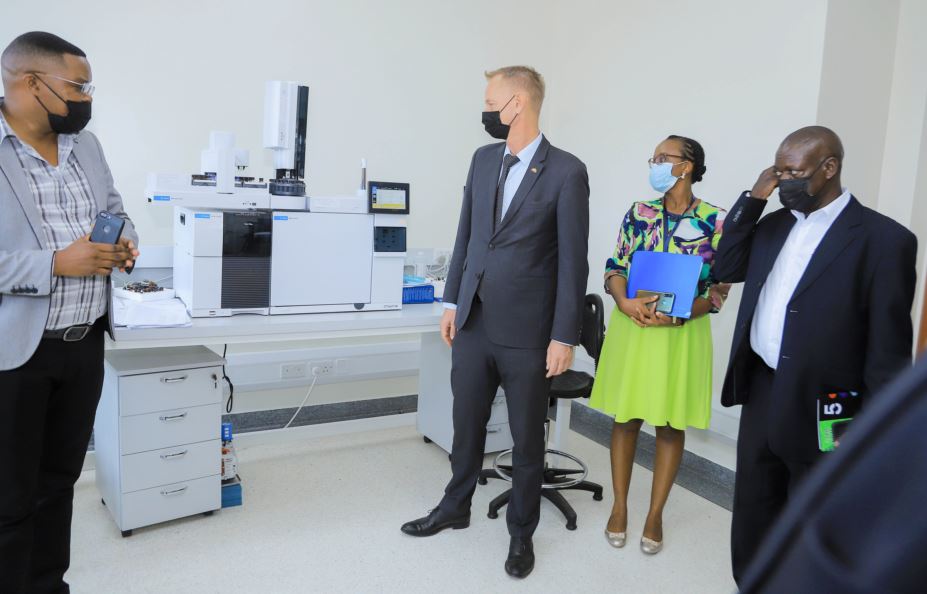
Even though this equipment was delivered last year, it was officially handed over, yesterday 22nd March, 2022 by H.E Nicolaj A.H. Petersen, the Ambassador of Denmark in Uganda. Also in attendance were Zackey Kalega  – the Ministry of Trade Commissioner Internal Trade and Anna Nambooze, the country director for TMEA Uganda and South Sudan

“Denmark is pleased that one of the interventions in this facility has been fulfilled and has been in use since last year. This equipment is used to test both locally produced and imported goods such as face masks, surgical gowns, clean air suits, respirators, sanitizers, and liquid detergents to monitor quality and performance for certification and consumer protection,” H.E Nicolaj A.H. Petersen said, adding;

“We have also learnt from UNBS that other than the COVID-19 prevention products, this equipment is also being used to test general textile products, paper products, toilet products and liquor. This is a very good thing as it shows the relevance of this equipment post COVID-19.”

The equipment received includes; Rapid Alcohol Analyser used for determination of alcohol content, pH meters used for determination of the pH levels; Differential Pressure tester for determination of breathability; Splash Resistance tester for determination of resistance to penetration and Bursting Strength Tester for determination of bursting pressure strength.

The above equipment are being used to test both locally manufactured and imported face masks (both medical and non-medical), surgical gowns, drapers, clean air suits, respirators, sanitisers, liquid detergents and other products such as alcoholic beverages which include spirits, vodka, gin, rum, beer, Kombucha and juices, soft drinks and textile materials, for conformity assessment which is in line with the UNBS mandate of consumer protection and strengthening the economy of Uganda by assuring the quality of locally manufactured products to enhance their competitiveness in regional and international markets.
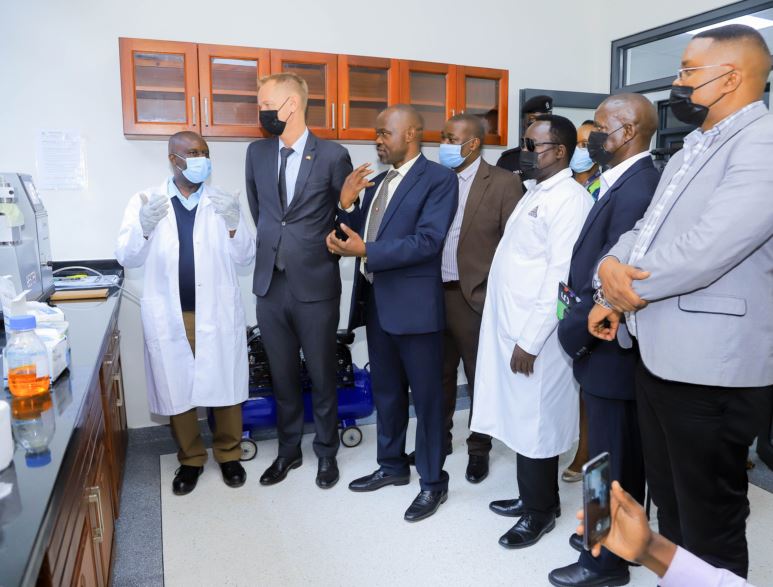
Anna Nambooze, the TMEA country director for Uganda and South Sudan noted that ‘with the onset of the Covid-19 pandemic, TMEA realised the need to ensure continued safe trade. TradeMark East Africa designed the Safe Trade Emergency Facility (STEF) to ensure that, despite the pandemic, trade in essential goods continues with minimal interruption.

“Together with partners, we defined essential goods as priority food value chains, medicaments, personal protective equipment (PPE) such as masks, and hygiene products such as sanitizers and soaps. Through STEF, TMEA initially facilitated safe Trade-Supply of PPEs to border crossings in Uganda and across East Africa.” Anna Nambooze said.

“Upon the realisation that local companies were manufacturing masks and sanitiser among other PPEs, TMEA with DANIDA funding worked with UNBS to increase its capacity through procurement of the necessary equipment and consumables to undertake rapid assessments and tests.” Anna Nambooze said.

“The equipment supports the Government of Uganda’s efforts towards curbing the spread of Covid-19, other respiratory and communicable diseases through the availability of PPEs that comply with international standards.” Anna Nambooze said.
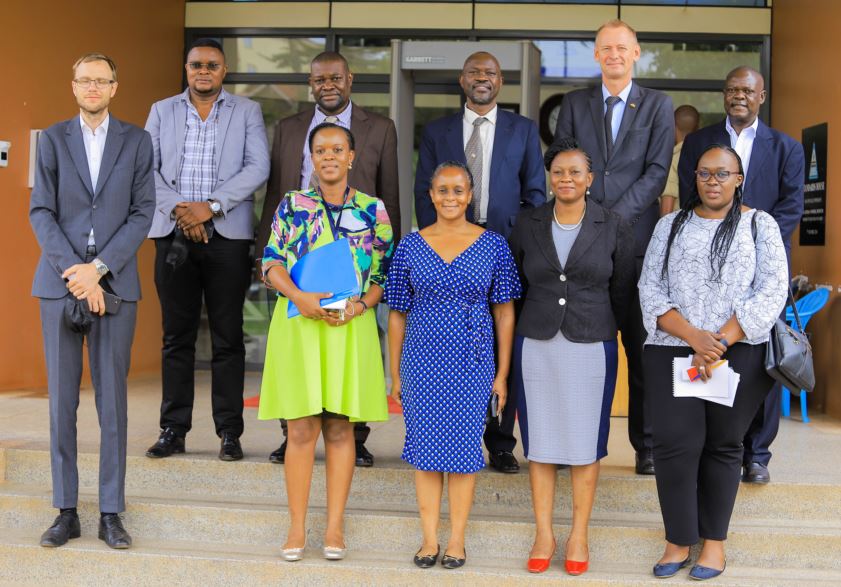
Zackey Kalega  – the Ministry of Trade Commissioner Internal Trade applauded the Government of Denmark and TradeMark East Africa for equipping UNBS with latest technology equipment for curbing the sell and consumption of sub-standard goods.

“As the ministry of Trade, we thank our development partners for this equipment and all their other trade facilitation contribution over the years. This equipment not only ensures that we have quality goods on the market but also helps our manufacturers to improve their production standards and compete internationally.” Zackey Kalega noted.

Commencement Of The We Will Win Initiative

HiPipo and the Ideation Corner, with great pleasure, announce the start of the We Will Win initiative, a project that is set to make extraordinary inroads into the development and growth of Uganda’s film industry.

The We Will Win initiative is the brainchild of and a collaboration between a number of like-minded influential players in the finance and entertainment industry. Together, we are The Consortium, and include HiPipo itself, The Ideation Corner, NG Films, MET Images, Koncepts & Sakyas, and Decent Africa.

Innocent Kawooya, the HiPipo CEO, is serving as the President, Technical Services, and Damali Ssali, the Ideation Corner Founder, is serving as President, Financial Services: they are the powerhouse duo spearheading the project.

We Will Win is a revolutionary and multi-pronged approach to steer to audiences and markets alike a high volume of quality films, all conceptualised, directed, and produced in Uganda, and all telling our stories our way. We Will Win is to offer technical and financial support at all levels of these productions, from the script to the shoot to the editing room, and then go even further to secure market for these visual stories.

This approach should see Uganda’s film industry move forward in leaps and bounds, not only by improving quality both in front of and behind the camera, but also by introducing Ugandan film to vast new interest and markets, both internally and externally, thus letting the industry emerge as the creative and empowering force it doubtless has the potential to be. HiPipo will call on its extensive experience in the same, having been the first Ugandan enterprise to produce and then place a local production onto an international streaming platform and the Ideation Corner will leverage its vast experience in social impact funding.

Be it action, drama, comedy or horror, be it mind-bending science-fiction or slapstick animation, experimental film or mythological fantasy, Uganda is a place of countless stories yet to be told and multitudes of voices ready to unfold and enthrall the world. Through our music and culture, we have shown we can hold the world’s attention. We Will Win is the springboard on which to make this vast creative leap forward, going even further in our storytelling and our entertaining. Yes, the time has come for us to stop looking for versions of our stories in those already told by others, but to finally go all out and tell our very own, and in our own way.

The wider picture of the We Will Win initiative speaks to how the creative industries are critical to the Sustainable Development agenda. They are the bedrock of innovation, and are an important factor in the ever evolving services sector. They support entrepreneurship and contribute to job creation, cultural diversity and gender diversity. As such the United National General Assembly declared 2021 the International Year of the Creative Economy of Sustainable Development.

#WeWillWin #IdeationCorner!

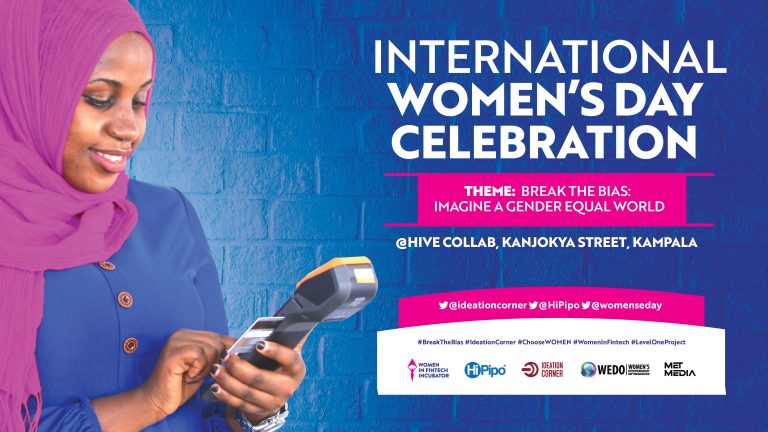
HiPipo & IDEATION CORNER ANNOUNCE WOMEN’S DAY CELEBRATION, & CONCLUSION OF INAUGURAL WOMEN IN FINTECH INCUBATOR

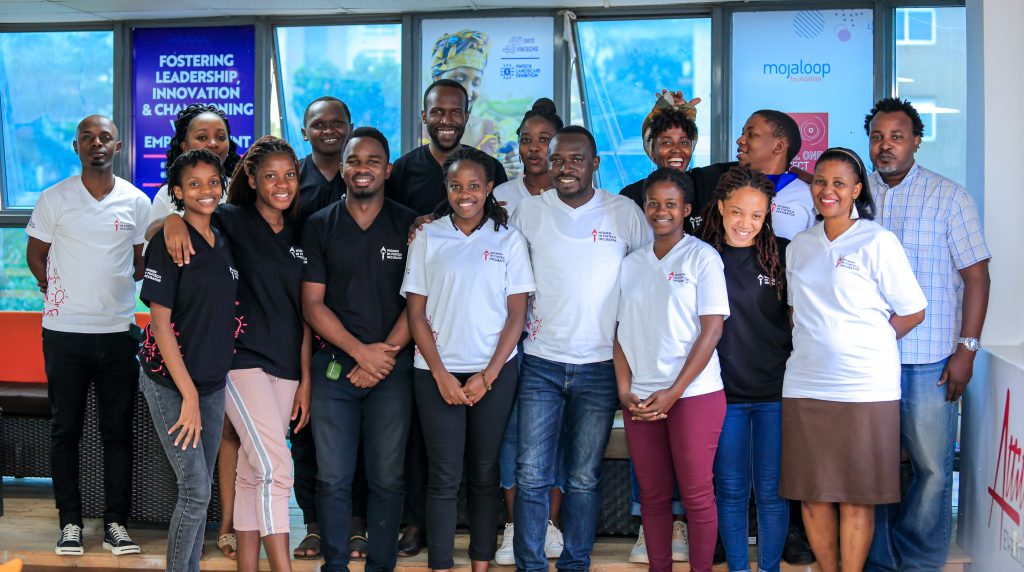
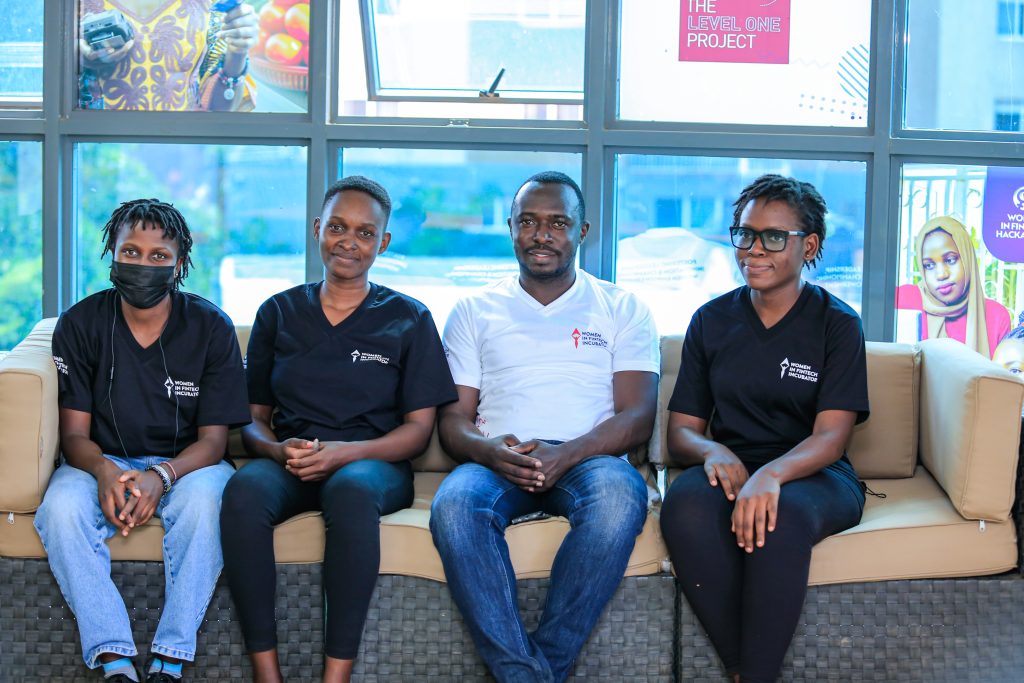
As part of our continuous efforts to not only improve the quality and variety of digital financial services, with a special emphasis on those that cater for the unbanked and underserved, but also to ensure that the delivery of these services offers rewards to the innovators, HiPipo sought to build on the gains made from the 2nd Women-in-FinTech Hackathon & Summit. And this we have successfully done by engaging the Hackathon’s top teams in the inaugural Women-in-FinTech Incubator. 

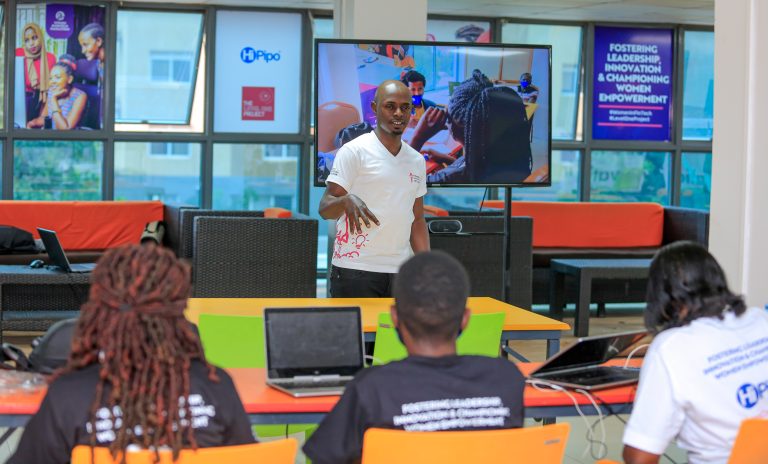
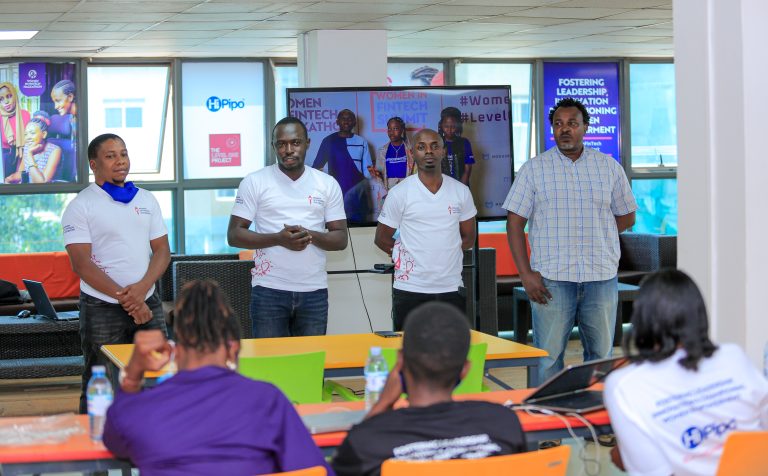
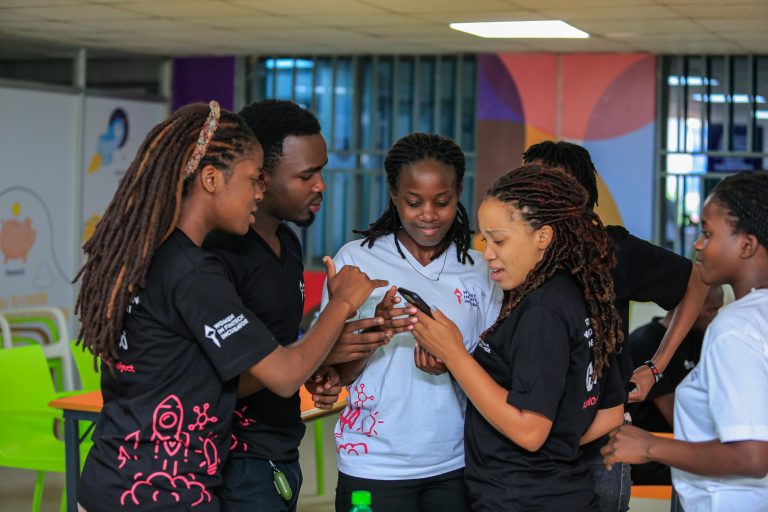
The essence of the Incubator is to empower the innovators with entrepreneurial and operational skills to complement their already formidable technical acumen. Thus, over the course of 90 days, the Incubator participants have been part of multiple online sessions and face-to-face group consultations, with even a cocktail thrown in for good measure. The facilitators, who included HiPipo CEO Innocent Kawooya and Ideation Corner Founder Damali Ssali, covered a vast range of topics to ready the participants for the business journey ahead. Core to the Incubator was to create linkages between the Level One Project principles and how they can be the firm foundation on which a successful FinTech vehicle is built.

We at HiPipo are glad that March 8th, the International Women’s Day, has served up a fantastic opportunity. In conjunction with the Ideation Corner, we intend to also use that day as the conclusion of the Incubator. It was Damali Ssali, who recently ascended to the Ambassadorial role for Uganda at the United Nations Women’s Entrepreneurship Day Organisation (WEDO), and is now also an Advisory Board Member of the Africa Continental Chamber of Commerce and Industry, who helped us shape the idea.

It is greatly symbolic for all of us that the day set aside to remind all that women must be given the opportunities to fulfill their potential, that all forms of discrimination and sexism that have been placed in their path need to end, and that the world will only truly bridge its development gaps if women are fully brought into the innovation space, syncs perfectly with what the Women-in-FinTech Hackathon & Summit in particular and indeed the HiPipo Include Everyone program in general, stands for- to break all biases that hinder the acquisition and adoption of life changing digital financial technology.

And to all those that have successfully taken part, we can assure you that this is just the beginning. HiPipo will continue to be there for you as you set forth to conquer the world with your innovations. Our promise of service is the least you deserve for choosing to make the world a better place through the power of digital financial technology. So handing you your certificates on March 8th is just another landmark in our shared journey. Congratulations, dear friends!

Of mood boards, apertures and universal values: #WomenInFinTech #LevelOneProject Incubator

Arthur expounded on what he referred to the ‘values desirable as social beings’. He explained these as the values that are common and constant to every human being, regardless of their background or status. These include integrity, respect, loyalty and responsibility. They work as uniting factors for any team and/or organisation. In fact, it is nigh impossible for productive working relationships to be built without them inculcated into a team.

Emmanuel Kintu continued on the Fundamentals of Photography, detailing what camera modes there are (automatic and manual), and also touched on speed and aperture priority. He alerted the participants to the fact that henceforth they will need to take time to ‘plan’ for what kind of image/photo they want, especially as they communicate about their products/services. Will it look better in black & white? Should the background be blurry in order for the focus to be on the subject in the foreground? Such are the questions they needed to get used to asking themselves.

Steven Kimuli brought in the aspect of a mood board: it being a collection of textures, images and text related to your company, and thus being essential to the creative process so that efforts directed towards design are not haphazard, and are indeed aligned with your desired creative direction. He also gave pointers on what to look out for in order to hire the right team for a design job, alerting all to the fact that design has its own specialisations, and knowing who to approach reduces on the portfolios you would end up sifting through.

For Innocent Kawooya, the Tiered KYC angle he tackled today was to explain how The Level One Project advises financial players to be innovative and flexible about gathering KYC data. The process should not be overly complicated for the targets i.e. the onus is on the innovators to find fitting ways to onboard those they are interested in, ensuring at the very least they now have a transactional account. He also contributed to the values discussion, as part of a response to a participant who talked of an unfortunate time when she went unpaid for services she had provided. His warning to the participants was for them to endeavour to pay their debts, warning of instances to come when the temptation might come to delay a payment instead settling it immediately.

Camera settings, standing out, & time for KYC: #WomenInFinTech #LevelOneProject Incubator

Emmanuel Kintu rounded off his talk on digital camera settings, touching on the aspects of exposure, shutter speed, aperture diameter and ISO (International Standards Organisation). His presentation, as usual, was furnished with a variety of images to illustrate what he was explaining.

Arthur talked about four categories of value: personal, spiritual, family and career. He again stressed how all are interlinked, and should not be developed independent of each other.

Steven Kimuli’s discussion this time round looked at the things a company (or even an individual) needs to do in regards to branding in order to stand out against competitors. This includes one stepping out of their own space and concentrating on what they are doing, and taking time to get to know both the key players and influencers in their industry.

Innocent Kawooya introduced Tiered KYC as the week’s Principle to concentrate on. He thus highlighted the importance of the innovators understanding their target and/or market. This they should do to the best of their ability, and know that it is a never-ending process to which a fair bit of resources should always be readily dedicated.

The value proposition, types of mass communication, and we bring in the ‘light’: #WomenInFinTech #LevelOneProject Incubator

The aspect of the Social Venture Business Model George discussed today was the value proposition. He described how it is 2-way: on one hand there’s the promise by the service provider to the client that what the former puts forth will be of value. And on the client’s side there is the belief that this value will be delivered, experienced and/or acquired. This’ important for the innovators, for it will always be necessary for them to understand what their clients need, and thus what is expected of them to deliver. Or provide value, you could say.

Continuing on mass communication, Francis defined and discussed three types of it: journalism, advertising and public relations. He illustrated the differences between the three, specifically how all might target the same individuals, but are expected to elicit different reactions.

Emma started his talks on the Fundamentals of Photography, first by getting the opinions of those in attendance on what they believe photography to be. Then in his own explanation, Emma stressed how light is central to the concept of photography. He next touched on what exposure is.

Referring to all that had been spoken, Innocent illustrated how HiPipo’s own initiatives and ventures, including 40 Days 40 FinTechs, the very Women-in-FinTech Hackathon the participants had been involved in, and indeed the ongoing Incubator itself, were run along many of the principles of the Social Venture Business Model. Proper execution of these initiatives needed careful application of various types of mass communication. And, of course, documentation was nothing without photography executed in a manner both skillful and timely.

Consideration of the above is what has helped HiPipo make tremendous headway in advocating for and promoting Same Day Settlement, and indeed The Level One Project in general. They should thus also matter to the participants as they set off on their entrepreneurial journey.