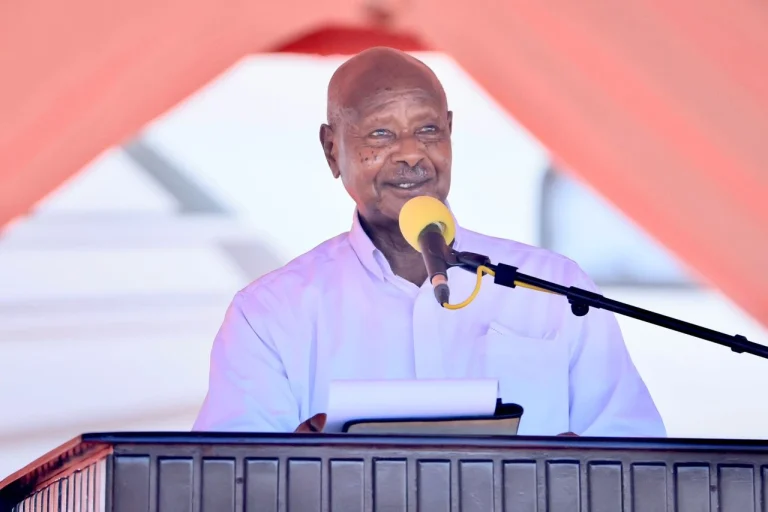
President Yoweri Museveni has questioned the growing excitement surrounding Arsenal Football Club’s recent success, saying he finds it difficult to celebrate sports achievements while many Ugandans continue struggling with poverty and unemployment.
Speaking during a public address, Museveni used the example of Arsenal’s championship celebrations to emphasize what he described as the need for Ugandans to focus more on economic transformation, household income generation, and national productivity rather than excessive excitement over foreign football success.
“How can I celebrate Arsenal’s championship when Ugandans are still poor?” Museveni asked, as he reflected on the country’s development priorities and economic challenges.
The president’s remarks come at a time when Arsenal supporters in Uganda and across Africa have been celebrating the English club’s recent achievements, with football fandom remaining one of the continent’s most dominant cultural and entertainment trends.
Uganda has one of Africa’s largest followings for English Premier League football, with clubs such as Arsenal, Manchester United, Chelsea, Liverpool, and Manchester City commanding massive fan bases.
However, Museveni argued that national attention should increasingly shift toward wealth creation, industrialization, agriculture modernization, and employment opportunities capable of improving people’s livelihoods.
The president reiterated his long-standing message that sustainable economic transformation begins at household level through participation in productive sectors such as commercial agriculture, manufacturing, services, and ICT.
According to Museveni, entertainment and sports should not distract citizens from addressing the country’s socio-economic realities.
His comments quickly sparked debate online, with some Ugandans agreeing that economic development deserves greater national focus, while others defended football as an important source of recreation, unity, and emotional escape amid economic hardship.
Sports analysts note that football remains deeply embedded within Uganda’s social culture, with major European football matches attracting millions of viewers and generating significant business activity through sports betting, broadcasting, merchandise sales, and entertainment venues.
The remarks also reignited conversations around the role of sports and entertainment in society, particularly in countries facing economic pressures.
Critics argued that football and entertainment can coexist alongside national development efforts and often provide moments of joy, social connection, and mental relief for ordinary citizens.
Others pointed out that global sports industries themselves create jobs, economic opportunities, tourism, and international branding value when properly invested in.
Museveni has previously used football analogies during public speeches to communicate political and economic messages, often urging young people to prioritize productivity, patriotism, and self-reliance.
The president’s latest comments add to ongoing public discourse about balancing entertainment culture with economic transformation as Uganda continues pursuing industrialization, infrastructure development, and poverty reduction programs.