Home Blog

Banned from World Cup, Somali Referee Omar Artan Appointed to Officiate UEFA Super Cup

0

Just days after being denied entry to the United States for the FIFA World Cup 2026, Somali referee Omar Artan has been appointed to officiate the UEFA Super Cup, European football’s governing body announced on 11th June.

The 34-year-old, named CAF Men’s Referee of the Year in 2025, will take charge of the match between UEFA Champions League winners Paris Saint-Germain and UEFA Europa League winners Aston Villa FC on 12th August in Salzburg, Austria.

The appointment follows discussions between UEFA and its African counterpart, CAF, under a recently signed Memorandum of Understanding aimed at encouraging cooperation in refereeing and other areas of football development.

Artan’s World Cup dream was shattered on Monday when he was denied entry at Miami International Airport despite holding a diplomatic passport and a valid US visa. A US official later claimed the Somali referee was denied entry due to “association with suspected members of terror organisations,” an allegation Artan has denied.

He was detained for 11 hours, questioned about links to Somali militant group Al Shabab, and put on a flight to Istanbul before returning to Mogadishu, where he received a hero’s welcome.

Now, just days later, UEFA has offered him a stage almost as prestigious as the World Cup.

“Omar Artan is an excellent young but already experienced referee, who has proven himself at the highest competition level of the Confederation of African Football,” said UEFA President Aleksander Čeferin.

“Football is made to connect people, and UEFA wants to show its respect to Omar and his outstanding officiating skills, which had earned him such a prestigious nomination. I am grateful to my friend, CAF President Patrice Motsepe, for supporting enthusiastically our initiative.”

CAF President Dr. Patrice Motsepe framed the appointment as a victory for African football.

“Omar Artan has made Somalia and the entire people of the African continent extremely proud,” Motsepe said. “His receipt of the CAF Men’s Referee of the Year Award 2025 and his appointment as a referee of the FIFA World Cup 2026 are a recognition of his world-class refereeing ability and the international respect that he enjoys.”

He added: “I am very thankful to my friend, Aleksander Čeferin, for enabling Omar Artan to officiate the UEFA Super Cup 2026 match. This is a great honour for Omar Artan and for African referees and is also an excellent example of football bringing together and uniting people from Africa and Europe and worldwide.”

Artan has been on the FIFA international list since 2018. Among the most notable matches he has officiated is the second leg of the 2025/26 CAF Champions League final. His performances earned him the CAF Men’s Referee of the Year Award in 2025, making him the first Somali referee to receive that honour.

The UEFA Super Cup appointment is a significant step up. While not the World Cup, the Super Cup remains a high-profile European fixture, contested by the winners of the continent’s two major club competitions. PSG and Aston Villa will meet in Salzburg on 12th August, with Artan at the centre of the action.

UEFA’s move is not purely charitable. The two confederations signed an MoU aimed at encouraging cooperation in refereeing, coaching, and other technical areas. Appointing an African referee to a major European final sends a signal that UEFA is serious about that partnership.

It also allows UEFA to make a quiet political point. While the United States barred Artan over alleged security concerns, European football has welcomed him with open arms. The contrast could not be starker.

For Artan, the appointment is both a professional lifeline and a personal vindication. He will not officiate at the World Cup, but he will stand in the centre of a European final, with millions watching.

Artan has not yet publicly commented on the UEFA Super Cup appointment. Following his return to Mogadishu earlier this week, he struck a defiant tone, promising to officiate at the 2030 World Cup and urging Somali youth not to lose hope.

“Everything is pre-destined,” he said at the airport. “Fifa supported me well and were in touch with me until I reached Mogadishu. I promise you that I’ll be officiating at the next World Cup.”

For now, Salzburg will do just fine.

Government Has Invested Sh11 Trillion in Wealth Creation Over Five Years, Says Finance Minister

0

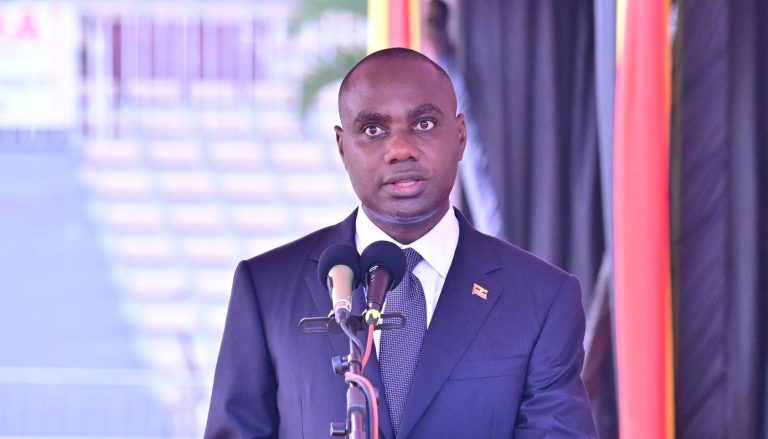
The Government of Uganda has invested close to Sh11 trillion in wealth creation programmes over the past five years, Finance Minister Henry Musasizi revealed on Thursday as he presented the 2026/27 national budget at Kololo Ceremonial Grounds.

The interventions, Musasizi said, target households, farmers, women, youth, and businesses by expanding access to affordable capital, strengthening enterprise development, and increasing household incomes. He described wealth creation as the foundation of economic transformation and praised President Yoweri Museveni’s leadership in empowering Ugandans.

Musasizi described the Parish Development Model (PDM) as the most important intervention for poverty eradication. Over the last five years, the government has transferred Sh4.4 trillion as revolving capital to 10,589 parishes across the country.

“By the end of June, the programme is expected to have reached more than four million beneficiaries,” Musasizi said. He added that the next phase of PDM will focus on improving productivity, value addition, and market access while ensuring underserved and densely populated urban parishes receive adequate funding.

The government also plans to gradually transform the programme into a self-sustaining financial ecosystem, ultimately evolving into a PDM Bank.

On Emyooga, the specialised enterprise development programme, Musasizi said the government has so far capitalised it with Sh760 billion in revolving funds.

The programme has established 7,148 Savings and Credit Cooperative Organisations (SACCOs) with more than 2.48 million members and cumulative savings of Sh95.3 billion. An additional Sh100 billion has been allocated for Emyooga in the 2026/27 financial year.

The government is currently piloting the Katale Loan Facility, administered through the Microfinance Support Centre in six major markets within the Kampala Metropolitan Area. The facility offers working capital loans at an annual interest rate of 8 percent and currently serves traders in St Balikuddembe (Owino), Nakawa, Kalerwe, Busega, Nakasero, and Ggaba markets.

Musasizi said the government plans to roll it out nationwide during the 2026/27 financial year.

The Small Business Fund, established in 2021 following the Covid-19 pandemic, has so far disbursed more than Sh82.1 billion to 4,031 small and medium enterprises. The facility offers loans of up to Sh500 million at a 10 percent interest rate.

The government has also invested Sh371.7 billion in the Agricultural Credit Facility, which has leveraged cumulative lending of Sh1.35 trillion to more than 14,000 beneficiaries. A further Sh47.68 billion has been allocated to the facility for the coming financial year.

For large-scale commercial farmers cultivating at least 50 acres of grains and animal feeds, Musasizi said the government paid Sh41 billion in interest subsidies during the current financial year, enabling 186 farmers to access Sh169.1 billion in credit. Another Sh41 billion has been set aside for the programme in 2026/27.

Through the Uganda Development Bank (UDB), one of the largest recipients of government capitalisation, Musasizi said the government has injected Sh1.6 trillion into the bank, bringing more than Sh2.45 trillion in financing to over 600 businesses operating in agriculture, manufacturing, tourism, construction, and services. In the 2026/27 financial year, the bank will receive an additional Sh442.2 billion.

Under the World Bank-financed GROW (Generating Opportunities for Women) project, Musasizi said Sh133.14 billion in soft loans has been extended to 6,584 women-owned businesses. This complements Sh153.5 billion previously disbursed under the Uganda Women Entrepreneurship Programme, which has benefited nearly 245,000 women.

For youth empowerment, the minister said the government has financed 24,859 projects benefiting 275,034 young people at a cost of Sh195.4 billion, while another 57,849 youths have benefited through the Youth Venture Capital Fund.

Another beneficiary group, according to Musasizi, is the creative sector. The government has established a Sh33 billion revolving fund for musicians and other creatives to support enterprise growth and job creation.

Private teachers’ unions received Sh20 billion to strengthen their SACCOs and improve access to affordable credit, on top of an earlier Sh25 billion extended to Walimu SACCO umbrella structures. A total of Sh2.49 trillion has been earmarked for teachers’ SACCOs in the next financial year.

The Sh11 trillion figure represents a significant portion of Uganda’s budget over five years, reflecting the government’s stated commitment to moving households from subsistence to the money economy. However, questions remain about the effectiveness of these programmes. While the minister presented impressive numbers on beneficiaries and disbursements, the budget speech did not include independent data on poverty reduction, household income growth, or loan repayment rates.

The government’s plan to eventually transform PDM into a self-sustaining bank suggests an awareness that long-term success depends on financial viability, not just capital injection. For now, the minister’s message was clear: the money has been spent, and millions of Ugandans have been reached. Whether that translates into lasting wealth creation will be the measure of the programmes’ true success.

“Consumers Trust and Prefer the Efficiency of Electronic Credit Transfers” — The Bank of Uganda Statement That Defines Uganda’s Digital Finance Success Story

When the Bank of Uganda announced that the volume of UGX transactions cleared through electronic credit transfers had increased from 87.71% to 93.53%, and that the value of those transactions had surged from 79.33% to 93.00%, it was reporting far more than financial statistics. It was documenting one of the most significant economic transformations in Uganda’s modern history. In the same statement, the Bank observed a sustained upward trajectory in both transaction volume and value, noting that consumers increasingly “trust and prefer the efficiency of electronic credit transfers.”

For many Ugandans, these numbers may appear technical. Yet behind them lies a remarkable national story, one shaped by policymakers, innovators, financial institutions, telecommunications companies, development partners, central banks, fintech entrepreneurs, and millions of ordinary citizens who have gradually embraced digital financial services as part of everyday life.

This is also a story that HiPipo has lived and contributed to for nearly two decades.

Long before digital payments became the dominant way to move money, HiPipo was advocating for a future in which financial services would be accessible to everyone, regardless of income level, location, gender, age, or social status. Through conferences, research, public awareness campaigns, media initiatives, policy dialogues, innovation platforms, and financial literacy programs, HiPipo consistently championed the belief that digital finance could become one of the greatest equalisers in Africa’s development journey.

Today, the Bank of Uganda’s numbers suggest that vision is becoming reality.

The shift from cash to digital payments did not happen because technology became available. It happened because trust was built. Every successful mobile money transaction, every electronic funds transfer, every interoperable payment, every digital merchant payment, and every successful financial literacy intervention contributed to changing consumer behaviour. Millions of Ugandans gradually discovered that digital payments were not merely convenient; they were faster, safer, more transparent, and often more affordable than traditional cash-based alternatives.

The Bank of Uganda’s findings demonstrate that electronic credit transfers have now solidified their position as the primary engine of transaction activity across Uganda’s payment ecosystem. This achievement places Uganda among Africa’s leading examples of how deliberate investment in digital financial infrastructure can transform an economy.

Few initiatives embody this transformation better than HiPipo’s Include Everyone Program. Over the years, the program has worked to ensure that digital financial services reach those who are most likely to be excluded from economic opportunities. Through financial literacy training, digital skills development, women’s economic empowerment initiatives, youth engagement programs, and regional partnerships, Include Everyone has consistently focused on one central idea: technology only matters when people can use it confidently and safely.

Across Uganda and the wider COMESA region, thousands of women, youth, entrepreneurs, cross-border traders, and community leaders have benefited from interventions designed to increase awareness of, trust in, and adoption of digital financial services. The objective has never been to increase transaction numbers. The objective has always been to create meaningful participation in the digital economy.

This philosophy closely aligns with the broader global financial inclusion movement championed by organisations such as the Gates Foundation. For years, the Foundation has supported efforts to make financial systems more inclusive, interoperable, and affordable. Through engagements around inclusive finance, digital public infrastructure, interoperability, and emerging payment systems, organisations like HiPipo have helped bring global financial inclusion conversations into African realities.

The growth reported by the Bank of Uganda is therefore not an isolated event. It is part of a much larger continental movement toward inclusive digital economies. Across Africa, central banks are increasingly investing in modern payment systems, interoperability frameworks, consumer protection mechanisms, and financial inclusion strategies. Uganda’s progress demonstrates what becomes possible when these efforts are sustained over many years.

The relationship between HiPipo and central banks across the continent has been built around this shared vision. Through platforms such as the Digital and Financial Inclusion Summit Africa, the MEA Digital Transformation Summit, and numerous policy and innovation engagements, HiPipo has consistently created opportunities for regulators, innovators, banks, FinTechs, mobile money operators, development partners, and consumers to collaborate around common goals. These conversations have helped strengthen understanding, encourage innovation, and promote the development of increasingly interconnected and inclusive financial ecosystems.

One of the most important drivers behind the growth in electronic transactions has been interoperability. For years, HiPipo has advocated that financial inclusion cannot be fully achieved if systems remain isolated from one another. Consumers derive the greatest value when money can move seamlessly between banks, mobile money wallets, merchants, governments, businesses, and individuals. The remarkable growth in electronic credit transfers reflects the increasing maturity of these digital rails and the growing confidence consumers have in using them.

The Bank of Uganda’s recent announcement regarding Over-the-Counter cash withdrawal limits, which will take effect in January 2027, further reinforces the direction of travel. Rather than signalling a restriction, the policy acknowledges a reality already reflected in transaction data: Uganda is becoming a predominantly digital payments economy. The Bank’s decision recognises that consumers are increasingly choosing electronic channels because they trust their efficiency, reliability, and convenience.

Behind every percentage point reported by the Bank of Uganda are millions of individual success stories. There is a market vendor receiving payments instantly. A small business owner is managing cash flow digitally. There is a farmer receiving money without travelling long distances. A student is paying fees electronically. An entrepreneur is accessing new markets through digital commerce. There is a cross-border trader conducting transactions with greater security and transparency. Together, these individual experiences form the foundation of Uganda’s digital economy.

The significance of the Bank of Uganda’s figures extends beyond payments. They represent trust. They represent inclusion. They represent opportunity. Most importantly, they represent progress.

As Uganda moves toward an increasingly digital future, the challenge is no longer to digitise payments. The challenge is to ensure that every citizen can benefit from the opportunities that digital finance creates. Savings, insurance, healthcare, education, investments, government services, and cross-border trade must all become more accessible through trusted digital channels.

For HiPipo, this moment is both a validation and a call to action. The Bank of Uganda’s findings demonstrate that the journey toward financial inclusion is working. Yet they also remind us that millions more people across Uganda and Africa still need access, knowledge, confidence, and opportunity.

The numbers may belong to the Bank of Uganda, but the achievement belongs to an entire ecosystem that has spent years building the foundations of digital trust. And as Uganda’s digital payments story continues to unfold, one message stands out above all others. When financial systems are designed to include everyone, everyone has a greater chance to prosper.

Uganda Airlines Signs Sh3.7 Trillion Deal with Boeing for 10 New Aircraft

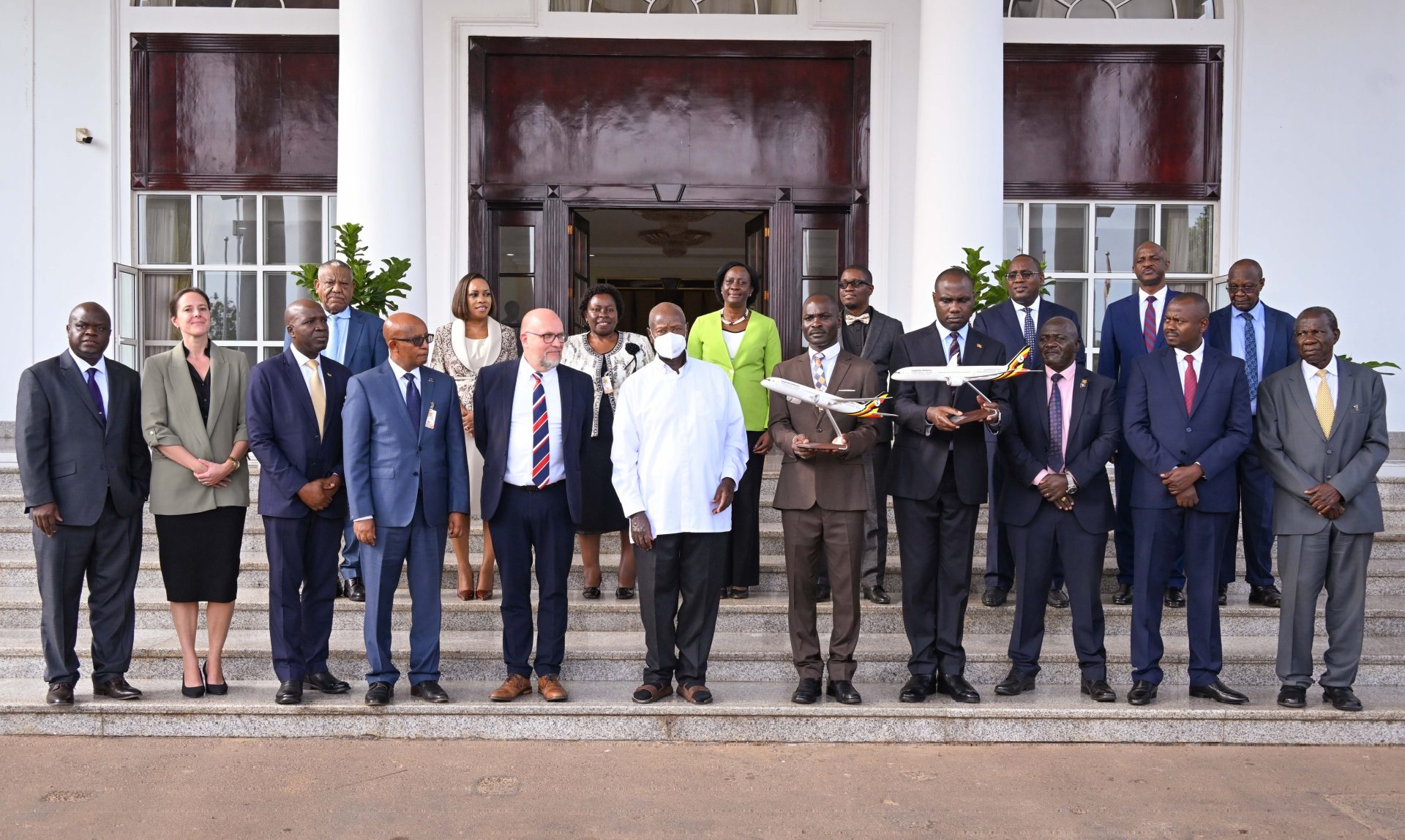
Uganda Airlines has signed a landmark commitment with American aircraft manufacturer Boeing to acquire 10 new aircraft, a deal valued at approximately Sh3.7 trillion, funded through domestic revenue collections.

The agreement was signed on Wednesday, 10th June 2026, at State House Entebbe in the presence of President Yoweri Museveni. Uganda Airlines Acting Chief Executive Officer Girma Wake and Boeing Executive Vice President and Head of Sales for Africa, Anbessie Yitbarek, put pen to paper on what both parties described as the beginning of a long-term partnership.

Under the agreement, Uganda Airlines will acquire eight Boeing passenger aircraft, each with a seating capacity of 294 passengers, alongside two cargo freighters: a Boeing 767 wide-body converted freighter and a Boeing 737 Boeing Converted Freighter (BCF).

The first phase of the agreement will involve the delivery of four large passenger aircraft before the remaining aircraft are delivered.

Minister of Works and Transport Fred Byamukama described the project as a strategic investment that will enhance Uganda’s connectivity with the rest of the world.

“It is a very expensive project, but the President guided that we have no other option,” Byamukama said. “We need to build our own airline. That is how Uganda can be connected to the rest of the world.”

The minister disclosed that the government is expected to make an initial payment of Shs460 billion as part of the implementation process, with the entire project costing about Shs3.7 trillion.

“This money comes from taxpayers’ contributions through government revenue collections, which the President directed should be invested in expanding Uganda Airlines,” he explained.

Byamukama observed that the expansion will significantly reduce Uganda’s dependence on transit hubs in other countries and increase direct flights into the country.

“Uganda will be connected directly to the rest of the world,” he said. “We shall bring many investors directly to Uganda. Previously, investors had to transit through other countries and make several stopovers. With the addition of these aircraft, we shall have more direct routes and connections.”

The acquisition forms part of a broader government strategy to expand the national carrier’s fleet, increase direct international connections, boost tourism and trade, and position Uganda as a key aviation hub in the region, according to a release from the Presidential Press Unit.

The inclusion of two cargo freighters signals Uganda’s ambition to capture a share of the air freight market, which has grown significantly across Africa in recent years. The Boeing 767 wide-body converted freighter and Boeing 737 Boeing Converted Freighter will allow the airline to transport goods more efficiently, supporting export-oriented sectors such as agriculture, horticulture, and manufacturing.

The minister emphasised that the aircraft acquisition aligns with the government’s broader infrastructure development agenda, which includes the expansion of Entebbe International Airport and the completion of Kabalega International Airport in Hoima.

He expressed optimism that the investments would significantly increase tourist arrivals and enhance Uganda’s competitiveness in international aviation over the next decade.

“We are finalising Kabalega Airport and expanding Entebbe Airport,” Byamukama said. “We know that within the next ten years, Uganda will be where it should be in terms of aviation development.”

Byamukama also revealed the government’s plans to eventually introduce domestic air services to improve connectivity within Uganda.

“Once we stabilise the expanded international operations, we shall embark on domestic flights so that Ugandans can easily fly to destinations such as Gulu, Kotido, Kidepo, and Mbarara,” he added.

If implemented, domestic services would open up tourism and business travel to regions currently accessible only by long road journeys.

Boeing Vice President of Sales for Africa, Anbessie Yitbarek, pledged the company’s commitment to supporting Uganda Airlines beyond aircraft supply through technical expertise, training, and capacity-building programmes.

He said Boeing would work closely with Uganda Airlines to ensure sustainable growth and operational excellence as the airline expands its fleet and route network.

Also present at the signing were Minister of Finance Henry Musasizi, former Works Minister General Katumba Wamala, former Finance Minister Matia Kasaija, Permanent Secretary Ramathan Ggoobi, Uganda Airlines Board Chairperson Priscilla Mirembe Sseruka, and Chargé d’Affaires of the United States Embassy in Uganda, Mikael Cleverley.

Uganda Airlines was relaunched in 2019 after the collapse of the original carrier decades earlier. The airline currently operates a modest fleet serving regional and a few international destinations. This deal represents a dramatic scaling up of its ambitions.

According to the airline, the planned acquisition will substantially increase its capacity to serve regional, continental, and intercontinental markets while supporting Uganda’s economic transformation agenda. The airline noted that the additional aircraft will facilitate trade, tourism, investment promotion, and cargo transportation, directly contributing to the implementation of Uganda Vision 2040.

While the government has framed the deal as a strategic necessity, the Sh3.7 trillion price tag raises questions about affordability and sustainability. The funding will come entirely from domestic revenue collections, meaning taxpayers are bearing the full cost. There has been no public disclosure of the repayment terms, interest rates, or total cost over the life of the agreement.

Additionally, Uganda Airlines will need to recruit and train additional pilots, cabin crew, engineers, and ground staff to operate the expanded fleet. The airline will also need to secure landing slots and regulatory approvals in new markets. These operational challenges are significant and will require careful execution.

For now, the government is celebrating the deal as a milestone. The first four passenger aircraft are expected to be delivered under the initial phase, though specific delivery dates have not been announced.

FINTECHS BUILT FOR HER – How Women-Focused Digital Finance Platforms Are Quietly Reshaping Entrepreneurship Across Africa

By HiPipo Money

Africa’s FinTech revolution is often described through the language of scale.

Millions of users. Billions in transactions. Rapid mobile money adoption. Explosive startup growth.

But beneath the numbers, another quieter transformation is taking place across the continent.

A growing generation of FinTech companies is building specifically for women entrepreneurs.

Not as a side market.

Not as a symbolic inclusion strategy.

But because millions of African women have historically been underserved by traditional financial systems despite being central to local economies.

Across Africa, women run market stalls, farms, tailoring businesses, food enterprises, transport operations, retail shops, savings groups, beauty businesses, and informal trade networks that support millions of households every day.

Yet many still struggle accessing affordable credit, insurance, savings tools, and formal financial systems designed around the realities of their lives.

Traditional banking often failed to understand how women actually manage money. FinTechs are beginning to change that. One of the most important shifts has emerged through digital savings groups.

Long before FinTech became fashionable, women across Africa had already built powerful informal financial systems through:

  • village savings groups,
  • rotating savings circles,
  • community lending structures,
  • and collective contribution networks.

These systems survived because they were trusted, flexible, social, and deeply connected to local realities.

Women used them to:

  • save gradually,
  • access emergency support,
  • fund businesses,
  • pay school fees,
  • and build resilience in environments where formal banking often remained inaccessible.

But these systems also faced limitations. Cash handling created risk. Records were difficult to track. Remote participation remained difficult. Scaling beyond local communities was limited. Digital finance is now modernising many of these traditional systems.

Women’s savings groups increasingly use mobile platforms to save digitally, track contributions, distribute loans, manage records, and move money securely through phones instead of relying entirely on physical cash systems.

The significance goes far beyond convenience. These platforms are blending something powerful: Traditional community trust with modern financial infrastructure.

For many women entrepreneurs, digital savings ecosystems become the first real pathway into formal financial participation. A woman contributing small amounts consistently through digital savings tools gradually builds:

  • transaction history,
  • financial visibility,
  • and digital confidence.

Over time, that visibility can help unlock access to broader financial opportunities.

A trader previously invisible to formal systems may eventually qualify for:

  • working capital,
  • merchant services,
  • insurance,
  • or digital credit products.

The phone becomes more than a payment tool. It becomes a financial identity layer.

Microinsurance is becoming another major area of innovation.

Historically, insurance products across much of Africa were often inaccessible to low-income women entrepreneurs. Premiums felt too expensive. Enrollment processes were too formal. Distribution systems rarely reached informal business owners effectively.

Yet women operating microbusinesses face enormous vulnerability. Illness. Climate shocks. Inventory loss. Crop failure. Household emergencies. One unexpected disruption can destroy years of progress.

Digital microinsurance platforms are beginning to address this gap through:

  • low-cost coverage,
  • mobile onboarding,
  • flexible premium structures,
  • and simplified claims systems
    designed around informal economic realities.

This matters enormously because resilience is just as important as growth in low-income entrepreneurial environments.

A woman entrepreneur who can recover after crisis is far more likely to sustain long-term economic mobility. FinTechs are also rethinking credit itself.

Traditional lending systems often relied heavily on:

  • collateral,
  • formal employment,
  • fixed salaries,
  • and conventional credit histories.

But millions of African women entrepreneurs operate active businesses outside those structures every day.

FinTech platforms increasingly use:

  • transaction patterns,
  • mobile money history,
  • savings behavior,
  • merchant payments,
  • and alternative financial data
    to assess reliability and creditworthiness.

This creates opportunities for women historically excluded from formal lending systems.

A trader once considered “unbankable” may now access working capital because her transaction behavior demonstrates financial discipline digitally.

That shift is transformative.

There is another important change happening quietly beneath the surface.

Women are increasingly building the FinTech ecosystem itself.

Across Africa, more women are emerging as:

  • FinTech founders,
  • digital finance executives,
  • mobile money agents,
  • ecosystem leaders,
  • and innovation advocates.

That representation matters because financial systems become more inclusive when women help design them directly.

Products shaped around actual user realities tend to solve problems more effectively than systems built around assumptions.

The future of African FinTech will likely become stronger as women move from being primarily users of digital finance into becoming architects of digital finance itself.

The rise of women-focused FinTech ecosystems also reflects a broader shift happening within African digital finance.

The conversation is moving beyond:
“How many people have accounts?”

Toward:
“How meaningfully are people participating economically?”

That distinction matters enormously.

A woman may technically own a mobile wallet while still struggling to access:

  • business financing,
  • insurance,
  • savings products,
  • or growth infrastructure.

True inclusion requires systems designed around actual economic realities, not simply digital onboarding numbers.

This is why many women-focused FinTech ecosystems increasingly combine:

  • financial literacy,
  • community savings,
  • mobile payments,
  • insurance,
  • entrepreneurship support,
  • and digital education
    into broader financial ecosystems rather than isolated products.

The strongest platforms increasingly behave less like standalone apps and more like economic infrastructure.

Yet major challenges remain.

Millions of women still face:

  • smartphone affordability barriers,
  • digital literacy gaps,
  • fraud risks,
  • connectivity challenges,
  • and limited financial confidence.

Women-led FinTechs themselves often struggle accessing:

  • venture funding,
  • institutional visibility,
  • growth capital,
  • and regulatory support.

The ecosystem is growing rapidly, but unevenly. Still, the momentum is becoming increasingly difficult to ignore. Governments, investors, telecom operators, development institutions, and innovation ecosystems increasingly recognise that women are not peripheral participants in Africa’s digital economy.

They are central growth drivers. And FinTechs designed around women’s realities may unlock one of the continent’s largest untapped economic opportunities. There is also a broader macroeconomic story unfolding beneath the surface.

Women already drive enormous portions of:

  • informal trade,
  • agriculture,
  • household spending,
  • microenterprise activity,
  • and caregiving economies across Africa.

When women entrepreneurs gain stronger financial tools, the effects ripple across households, communities, education systems, and local commerce networks.

Productivity improves. Resilience strengthens. Economic participation deepens. This is why women-focused FinTech innovation is no longer simply a gender conversation. It is an economic growth conversation.

For HiPipo Money, the rise of women-focused FinTechs represents one of the most important transformations shaping Africa’s digital finance future.

The continent’s FinTech revolution is becoming more powerful not simply because more technology exists, but because the technology is increasingly adapting to real human realities.

This aligns strongly with broader conversations around:

  • women’s empowerment,
  • financial inclusion,
  • digital literacy,
  • mobile money,
  • microfinance,
  • entrepreneurship,
  • and inclusive innovation championed through ecosystems such as Women in FinTech, Include Everyone, the Digital Impact Awards Africa (DIAA), and wider digital transformation movements across Africa.

Because ultimately, the future of digital finance is not only about scaling transactions. It is about expanding opportunity. A woman saving through a digital group for the first time. A trader accessing working capital digitally. A mother protecting her business through microinsurance. A rural entrepreneur building financial visibility. A FinTech founder designing systems she once needed herself. Most people still think of FinTech mainly as technology.

But across Africa, some of the most important FinTech innovation is becoming something much deeper: Infrastructure for women’s economic resilience, visibility, and growth itself.

POPULARITY BUILDS ATTENTION. FAME BUILDS LEGACY — AND MOST ARTISTS CONFUSE THE TWO

In today’s entertainment economy, attention is everywhere.

A single scandal can dominate timelines within minutes. A viral interview can turn an unknown artist into a national talking point overnight. A controversial video, a leaked private moment, a public feud, or an outrageous statement can suddenly push a musician into the centre of conversation across radio, television, TikTok, X, Instagram, YouTube, blogs, and gossip platforms.

But attention alone has never guaranteed longevity.

And that is where many artists misunderstand the difference between popularity and fame.

Popularity simply means being widely known.

Fame, however, is something far deeper. Fame is emotional connection. It is admiration. It is loyalty. It is public affection strong enough to survive silence, controversy, failure, aging, industry changes, and even long absences from the spotlight.

Popularity creates noise.
Fame creates legacy.

And in the long run, legacy is far more valuable than noise.

Across the global entertainment industry, countless artists have experienced moments of explosive popularity. Their names trend everywhere. Their faces dominate conversations. Their songs become unavoidable. Their scandals attract endless media attention.

Yet only a small percentage transform that visibility into lasting fame.

That distinction matters because the economics of entertainment are heavily tied to emotional connection. The artists who earn the most sustainable careers are usually not just the most visible, but the most loved, respected, admired, or emotionally trusted by audiences.

Audiences spend differently on artists they adore.

People may stream a popular song temporarily, but they buy concert tickets, defend reputations, support brands, wear merchandise, forgive mistakes, and remain loyal for years to artists they genuinely love. That emotional investment is what turns entertainers into institutions.

This is why popularity alone is often unstable.

Attention moves quickly. Public conversation changes rapidly. Viral moments fade. Social media algorithms shift. Trends disappear. New artists emerge daily. Controversy loses value with time. What shocks audiences today may become irrelevant tomorrow.

Fame, however, operates differently.

Fame is built slowly through consistency, authenticity, emotional trust, cultural relevance, professionalism, identity, values, storytelling, and public perception accumulated over years. Fame survives beyond trends because it becomes attached to meaning rather than mere visibility.

And this difference can completely shape an artist’s career trajectory.

Uganda’s entertainment industry itself offers numerous examples of this distinction between temporary popularity and enduring fame.

Take Moses Golola for instance. Long before many musicians mastered the art of commanding public attention, Golola understood something crucial: personality itself could become entertainment.

His humor, outrageous confidence, dramatic interviews, unforgettable quotes, and theatrical public appearances made him one of the country’s most recognizable public figures. Interestingly, his fame often extended beyond his athletic performances. Many people could easily recall his catchphrases even more than specific fights he participated in.

Golola transformed visibility into cultural identity.

That is an important difference.

He was not merely known.
He became memorable.

And memorability is one of the foundations of fame.

The same contrast can be observed within music itself.

Grace Nakimera once built extraordinary admiration around her live performances. Beyond simply releasing songs, she cultivated a recognizable performance identity. Her stage presence, energy, choreography, and incorporation of traditional dance elements created an experience audiences emotionally attached themselves to.

People did not simply know Grace Nakimera.
They anticipated her.

That anticipation created commercial value.

At a certain point, her performances became a premium product because audiences associated her brand with excellence and emotional excitement. That is what happens when popularity evolves into admiration.

However, fame also requires consistency and sustainability. Entertainment audiences evolve constantly, and maintaining emotional relevance over long periods requires reinvention, discipline, and strategic brand management.

Then there are artists whose popularity emerged primarily through controversy.

Desire Luzinda experienced an enormous spike in visibility during one of the most controversial moments of her career. Public attention exploded. Conversations intensified. Media coverage multiplied. Interest in her music temporarily surged alongside her increased visibility.

For a moment, the commercial benefits of that popularity became very real — performances increased, fees improved, and public curiosity expanded.

But controversy-driven popularity often faces one major challenge: it is difficult to sustain emotionally.

Audiences may become curious quickly, but curiosity alone rarely builds long-term loyalty. Once the shock fades, artists are often left with the difficult task of rebuilding identity beyond the controversy that initially drove visibility.

That is why scandals alone rarely create enduring fame.

Fame requires emotional substance beyond headlines.

A similar lesson can be drawn from the career trajectory of Iryn Namubiru. At one stage, her artistry, vocals, and public image positioned her toward deep audience admiration. However, repeated controversies and public conflicts complicated that emotional relationship with audiences over time.

Public trust matters enormously in fame economics.

An artist’s reputation becomes part of their commercial value. The more audiences emotionally trust or respect a public figure, the easier it becomes to sustain long-term relevance, partnerships, performances, endorsements, and audience loyalty.

On the other hand, Juliana Kanyomozi represents a powerful example of sustained fame. She can remain relatively quiet musically for extended periods and still command admiration, audience affection, media respect, and strong concert attendance.

Why?

Because fame is not built solely on frequency.
It is built on emotional equity.

Over the years, Juliana cultivated elegance, professionalism, restraint, consistency, emotional connection, and public dignity. Even when faced with personal challenges or public scrutiny, she managed her image carefully enough to preserve audience respect.

That respect became long-term brand capital.

And in entertainment, brand capital is often more valuable than temporary hype.

Artists like Bebe Cool and Bobi Wine demonstrate yet another dimension — the ability to balance both popularity and fame simultaneously.

They remain constantly visible while also maintaining emotional attachment with specific audiences. Beyond music itself, both artists strategically connect themselves to broader identities, causes, communities, and narratives larger than entertainment alone.

One builds influence through philanthropy, industry presence, and visibility.
The other strengthens emotional loyalty through activism, social representation, and grassroots identity.

In both cases, audiences feel emotionally connected to something beyond songs.

That emotional attachment is what transforms entertainers into movements.

And perhaps that is the ultimate lesson for modern artists navigating the digital era.

Today’s music industry rewards visibility aggressively. Social media algorithms encourage constant exposure. Virality is monetized. Shock value spreads rapidly. Trends move at incredible speed.

As a result, many artists obsess over becoming known.

But the deeper question is:
Known for what?

What do audiences genuinely admire about you?
What emotional value do you represent?
What identity have you built?
What trust have you earned?
What feeling do people associate with your name?

Because eventually, every artist discovers that visibility alone is not enough.

At some point, public attention demands emotional meaning.

The future belongs not merely to artists who can dominate conversations temporarily, but to those capable of building emotional permanence in the hearts of audiences.

Popularity may fill headlines.

But fame fills history.