A narrative exploration of how online tools save time, money and effort for businesses and citizens.
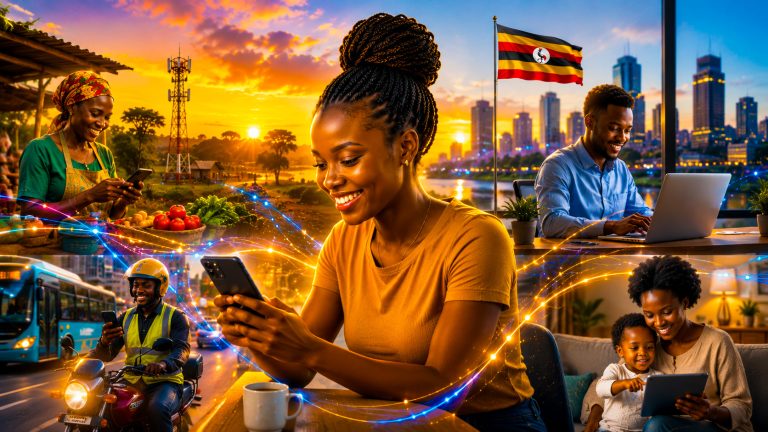
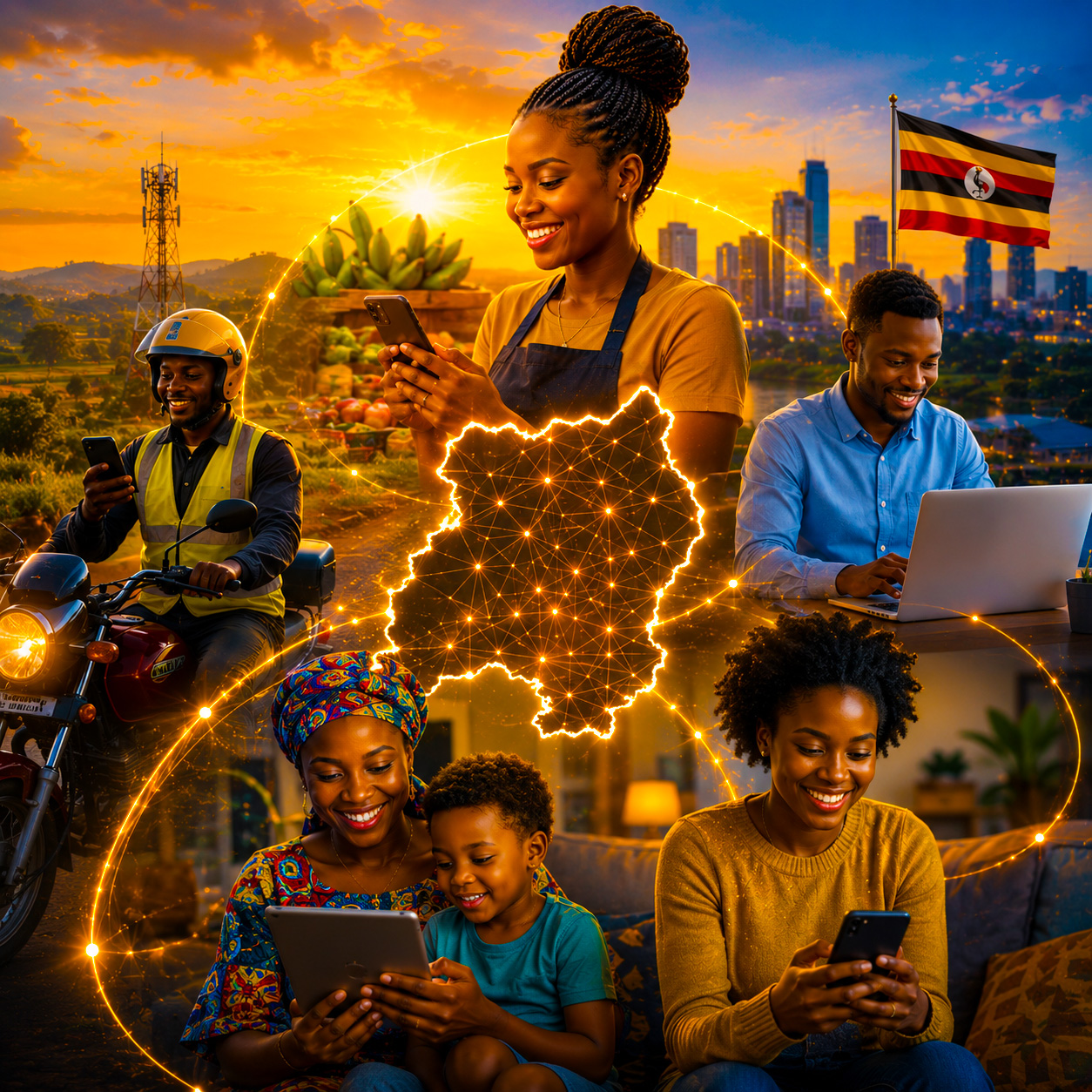
When the Digital Impact Awards Africa first surveyed Uganda’s largest companies in 2015, it discovered that more than half lacked websites. Customers queued for hours and travelled long distances to pay bills or obtain information. Ten years later, the picture is very different. Take Sarah, a shopkeeper in Kampala. She now renews her trade licence online during a lunch break, saving herself a two‑hour trip. Andrew, a farmer in Gulu, sells his beans through a mobile platform and receives payment into his phone wallet within minutes. A small manufacturer in Mbarara uses a web portal to order raw materials and track delivery status.
These individual conveniences add up. Today Uganda’s top taxpayers conduct roughly three million online interactions every day. Each interaction saves about 30 minutes, freeing 1.5 million hours daily and delivering a financial impact of about $1.995 million. Over a decade these digital efficiencies have generated around $7.28 billion in savings. The benefits reach far beyond corporate boardrooms; families spend less on transport and fees, entrepreneurs can focus on growth instead of paperwork, and civil servants process more transactions with fewer errors.
For women and young people the digital leap is particularly empowering. Women in urban areas leverage mobile money and online services to juggle businesses and household responsibilities. Youth use social media to market products and access financial services. As data costs fall and mobile subscriptions rise, these digital pathways could spread to rural and off‑grid areas, unlocking further prosperity.
Uganda’s experience underscores the power of advocacy and collaboration. HiPipo’s Include Everyone programme has championed digital innovation for nearly two decades, pushing businesses and regulators to embrace web platforms, mobile payments and open APIs. Together with telecommunications providers and fintech partners, they have shown that digital tools can lift economies. The next challenge is to ensure that the digital revolution benefits everyone by investing in connectivity, affordable devices and user‑friendly services.
Stories like Sarah’s and Andrew’s reveal how digital tools make everyday life easier and more productive. By focusing on human experiences and quantifiable savings, we see that digital transformation is not an abstract concept but a practical solution to long‑standing inefficiencies. Expanding these benefits to rural communities, women, and youth will be crucial for inclusive economic growth.
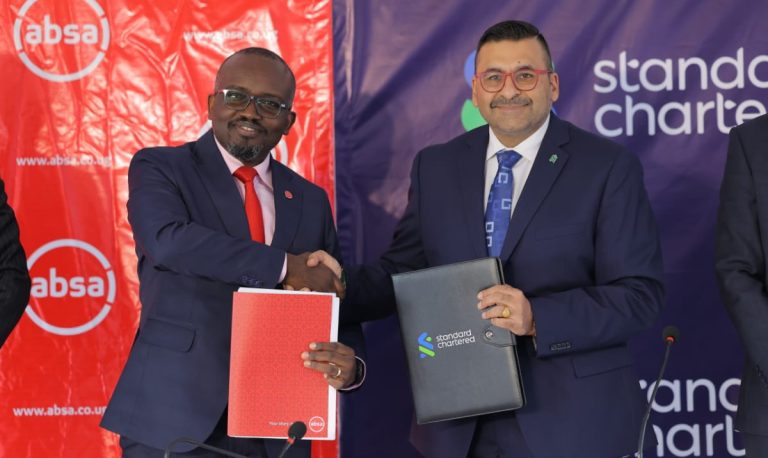
Bank of Uganda has approved the sale of Standard Chartered Bank Uganda’s Wealth and Retail Banking business to Absa Bank Uganda Limited, the two lenders announced.
The regulatory green light clears a major hurdle for a transaction that could reshape the competitive landscape of Uganda’s banking sector.
Standard Chartered is selling its retail and wealth division to Absa, a deal that reinforces Absa’s footprint in the country while allowing Standard Chartered to streamline its operations.
In a joint statement, the banks said there would be no immediate changes for customers.
“Day-to-day banking operations will continue as usual,” the announcement read. Clients will still access services through the same branches, ATMs, mobile banking, and digital platforms.
Any future changes, the banks said, will be communicated in advance and in line with regulatory requirements.
Customer deposits at Standard Chartered Uganda remain protected by the Deposit Protection Fund up to UGX 10 million, according to the statement.
The transaction is expected to become effective once remaining conditions in the sale agreement are met. The banks said they would continue engaging with regulators, customers, and other stakeholders as the process moves forward.
Neither bank disclosed the financial value of the deal.
The approval signals confidence in Uganda’s banking regulatory framework, according to the announcement.
For Absa, acquiring Standard Chartered’s retail and wealth business expands its customer base and solidifies its position as one of Uganda’s major commercial banks. For Standard Chartered, the sale aligns with a strategy seen in other markets where the bank has exited retail banking to focus on corporate, institutional, and investment clients.
The deal now awaits finalisation of outstanding conditions before taking effect.
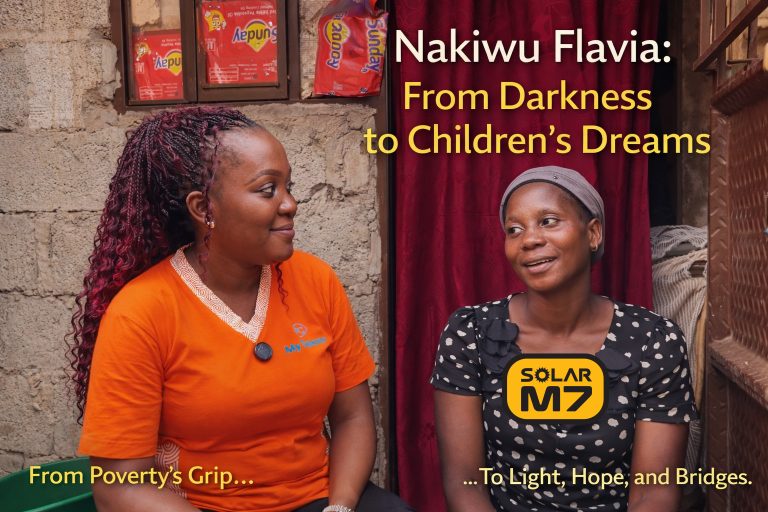
At only 24 years old, Nakiwu Flavia already carries responsibilities far heavier than her age should demand.
Inside her home in Bukalango, Wakiso District, four young children depend entirely on her strength, her sacrifice, and her determination to keep moving forward even when life feels overwhelming.
But before Solar M7 arrived, darkness constantly reminded her how difficult that fight had become.
Electricity felt unreachable. The nights felt heavy.
And as evening swallowed the house each day, Flavia watched opportunities quietly disappear with the sunlight. Her children struggled to study. Books remained closed. Dreams that deserved room to grow began fading into frustration and uncertainty.
For a young mother already battling poverty, the darkness felt deeply personal.
It made the future feel distant.
Then Solar M7 entered her home.
And slowly, hope began returning again.
Today, evenings no longer feel hopeless. Light fills the room where her children now gather around books, reading and learning after sunset with smiles that had slowly disappeared during the difficult months before.
The atmosphere inside the house feels alive again.
And for Flavia, the change goes far beyond electricity.
It feels like possibility.
“Before Solar M7, nights were very difficult for us,” Flavia shared during her interview. “The children could not study properly, and life felt hard all the time. But now they can read at night, and I feel hopeful about their future again.”
According to Doreen Nanfuka, many young mothers living without reliable energy experience emotional and financial pressure that quietly affects entire families.
“When you speak to mothers like Flavia, you realize light changes emotional realities inside the home,” Doreen explained. “Children become happier, parents feel relief, and families begin imagining a future that once felt impossible.”
Innocent Kawooya says stories like Flavia’s reveal why energy access must be viewed as part of poverty reduction and long-term empowerment.
“Reliable light helps families reclaim time, opportunity, safety, and confidence,” he noted. “For many households, it becomes the bridge between survival and the possibility of a better future.”
Today, nights inside Flavia’s home no longer feel empty.
Books stay open. Smiles return.
And in a house where darkness once threatened to silence young dreams, light is now helping a mother guide her children toward something stronger than despair.
Toward possibility.
Toward a future.
Watch the full story of Nakiwu Flavia from Bukalango, Wakiso District, Uganda across our platforms:
For years, Africa’s mobile money revolution grew through powerful but largely separate ecosystems.
One network spoke its own language. Another built its own rails.
One telecom operator connected millions of users internally, while another created parallel infrastructure beside it. In many countries, sending money within the same network became simple and affordable, but transferring across networks often remained slower, more expensive, or technically restricted.
The result was a fragmented digital economy.
Millions of Africans gained access to digital finance, yet the systems themselves often remained disconnected from one another.
That fragmentation created invisible barriers across commerce.
A customer on one mobile money network could struggle to transact smoothly with a merchant using another provider. Businesses operating across multiple networks faced reconciliation challenges. Users maintained multiple SIM cards to navigate ecosystem limitations. Merchants lost sales opportunities. SMEs faced liquidity inefficiencies. And the broader digital economy developed in silos rather than as one connected financial ecosystem.
Today, however, a major shift is underway.
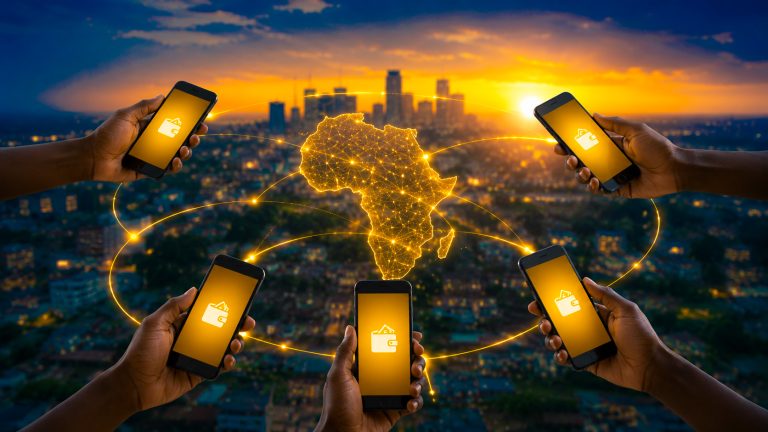
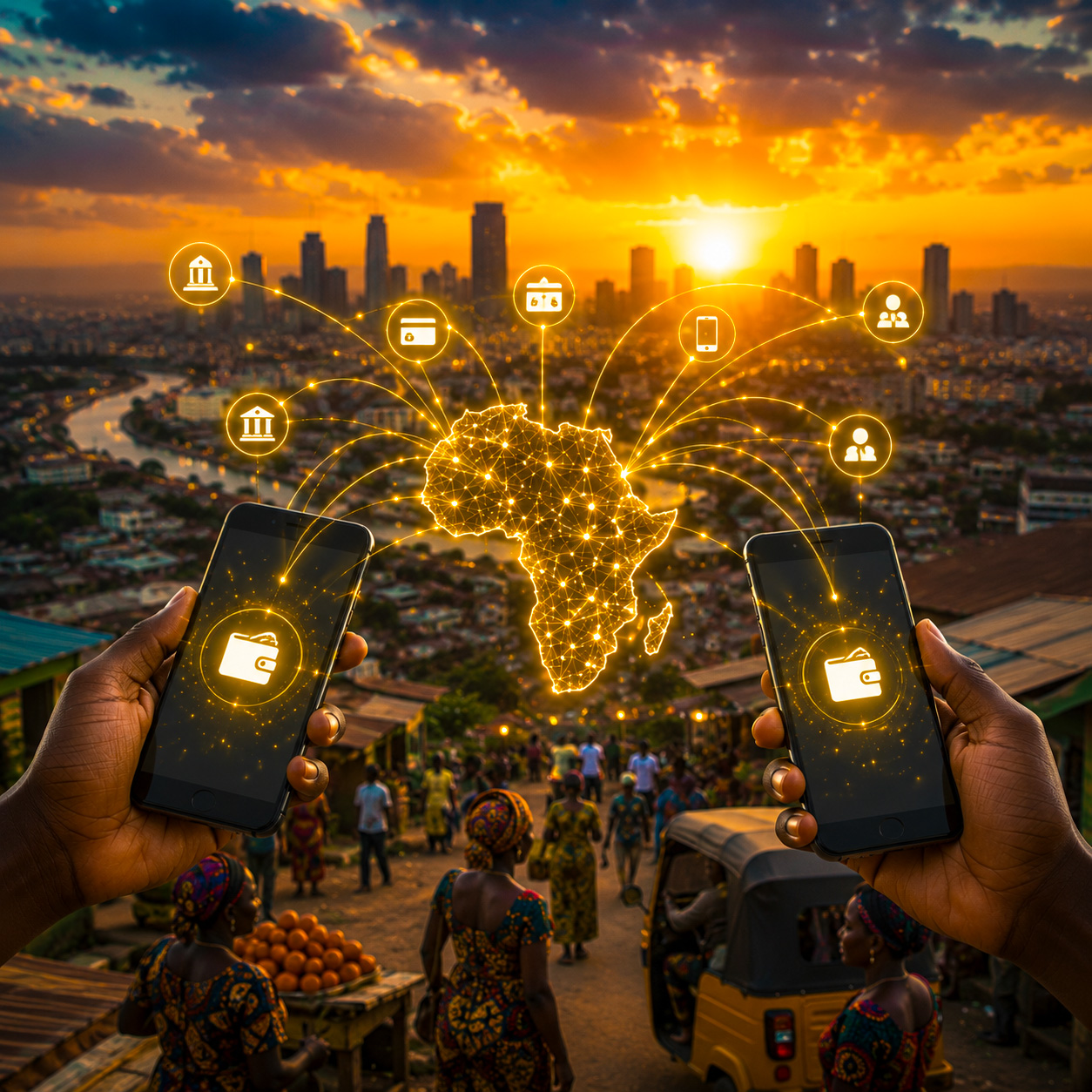
Across Africa, regulators, FinTechs, telecom operators, development institutions, and payment innovators are increasingly pushing toward interoperability — the ability for different financial systems, wallets, providers, banks, and payment networks to transact seamlessly with one another.
The implications are enormous.
Because interoperability is not merely a technical upgrade.
It is economic integration infrastructure.
And for Africa’s digital future, it may become just as important as mobile money itself.
The first phase of Africa’s digital finance revolution focused on access.
The second phase focused on adoption.
The third phase is increasingly becoming about connectivity.
How do systems connect?
How does money move between ecosystems?
How do banks, FinTechs, wallets, merchants, and governments operate inside one integrated financial environment rather than fragmented islands?
This is where interoperability changes everything.
When systems interconnect effectively:
consumers transact more freely,
merchants reach more customers,
SMEs improve efficiency,
governments digitize services more effectively,
and digital economies scale faster.
Without interoperability, digital finance remains partially trapped inside platform boundaries.
With interoperability, entire economies become more fluid.
Historically, telecom-led mobile money systems expanded rapidly because they solved a fundamental infrastructure problem ignored by traditional banks: last-mile financial access. Agent networks extended financial services into rural and underserved communities where banking infrastructure barely existed.
But the rapid growth of separate ecosystems also produced competitive fragmentation.
Different providers often prioritized customer retention inside their own ecosystems rather than cross-network openness. From a business perspective, this strategy made sense. Closed ecosystems helped protect market share and transaction revenues.
From a broader economic perspective, however, fragmentation created inefficiencies.
Consumers adapted creatively.
Many users carried multiple SIM cards.
Businesses opened accounts across different networks.
Agents managed complex liquidity balancing across providers.
Yet beneath this adaptation remained a structural reality:
Disconnected financial systems increase friction.
And friction slows economies.
This is why interoperability has become a central policy and infrastructure priority across multiple African markets.
Governments and regulators increasingly recognise that digital financial inclusion cannot fully scale if payment systems remain isolated from one another.
The shift toward interoperability is now happening through:
national payment switches,
real-time payment systems,
interoperable QR standards,
open APIs,
instant settlement infrastructure,
and shared digital financial rails.
The vision is straightforward:
A user on one network should be able to transact seamlessly with another user, merchant, bank, or service provider regardless of platform.
In many ways, interoperability aims to make digital money behave more like communication itself.
A customer using one telecom network can call another network without thinking about technical compatibility. Financial systems increasingly need similar seamlessness.
One of the most influential global frameworks shaping this thinking is Mojaloop.
Originally developed with support from the Bill & Melinda Gates Foundation and other partners, Mojaloop was designed as open-source software infrastructure capable of enabling interoperable instant payment systems, especially in emerging markets.
The significance of Mojaloop extends beyond software.
It introduced a new philosophy for financial inclusion infrastructure:
open standards,
interoperability by design,
low-cost digital payments,
and scalable financial connectivity for underserved populations.
Instead of forcing countries to build entirely proprietary systems from scratch, Mojaloop demonstrated how shared payment infrastructure could support interoperability between banks, telecom operators, FinTechs, governments, merchants, and digital wallets.
This model became especially important for countries seeking to build inclusive digital payment ecosystems without replicating fragmented architectures.
And increasingly, similar philosophies are influencing major interoperability initiatives globally and across Africa.
One of the most important examples connected to this broader movement is the Level One Project.
The Level One Project focused on designing inclusive, low-cost digital payment systems capable of supporting broad financial participation at scale, particularly for underserved populations. The initiative emphasized interoperability, affordability, open-loop infrastructure, and reducing barriers that prevent low-income users from participating meaningfully in digital finance ecosystems.
Its principles became highly influential in discussions around inclusive instant payment systems and interoperable financial infrastructure globally.
The importance of this approach is difficult to overstate.
Because for low-income economies, transaction costs matter enormously.
A payment system designed primarily for high-value transactions may exclude the very populations most in need of financial inclusion. Interoperable low-cost systems help make small-value transactions economically viable — a critical factor in African markets where informal commerce dominates daily economic activity.
This is one of the deepest economic strengths of interoperable infrastructure:
It improves efficiency not only for large institutions, but also for ordinary citizens and small businesses.
A market vendor can receive payments from any customer. A merchant can avoid maintaining multiple wallets. An SME can simplify reconciliation. A customer can transact more confidently. Governments can distribute funds more efficiently. FinTechs can innovate on top of shared infrastructure rather than rebuilding isolated systems repeatedly.
The more connected systems become, the more valuable the ecosystem becomes for everyone participating inside it.
The rise of interoperability also has major implications for cross-border trade.
Africa’s digital economy is becoming increasingly regional. The African Continental Free Trade Area (AfCFTA) aims to deepen economic integration across the continent, yet fragmented payment systems remain one of the largest barriers to seamless trade.
Interoperable payment rails can help reduce:
settlement delays,
transaction costs,
liquidity constraints,
and operational inefficiencies for businesses operating regionally.
For SMEs especially, this matters profoundly.
Large corporations may absorb payment friction.
Small businesses often cannot.
A delayed settlement can affect inventory. A failed transfer can disrupt operations. Multiple wallet systems can create accounting complexity. Cross-network fees can reduce already thin margins.
Interoperability therefore directly affects business survival and scalability.
Yet despite its benefits, interoperability also creates new tensions.
Competition dynamics change.
Dominant providers may fear losing ecosystem lock-in advantages. Transaction revenues may shift. Market power becomes redistributed. Regulators must balance openness with incentives for innovation and infrastructure investment.
Cybersecurity also becomes more important.
As systems interconnect more deeply, vulnerabilities can spread faster across ecosystems. Fraud prevention, identity verification, compliance systems, and consumer protection frameworks must evolve alongside interoperability expansion.
Trust therefore remains foundational.
Users must believe interoperable systems are:
reliable,
secure,
affordable,
and fair.
Without trust, adoption slows regardless of technological capability.
Africa’s interoperability journey is still unfolding.
Some countries have advanced rapidly in building national switches and interoperable payment frameworks. Others continue facing infrastructure gaps, regulatory fragmentation, or uneven ecosystem participation.
But the broader direction is becoming increasingly clear:
The future digital economy cannot thrive efficiently on isolated financial islands.
This is where ecosystem builders such as HiPipo and initiatives including the Digital Impact Awards Africa (DIAA), Include Everyone, Women in FinTech, and broader financial inclusion programs become strategically important. As Africa modernises its financial infrastructure, the continent needs platforms capable of amplifying innovation, encouraging collaboration, documenting progress, and ensuring interoperability remains connected to inclusion rather than only institutional efficiency.
Because ultimately, interoperability is not only about systems talking to one another.
It is about people participating more freely in economic life.
A trader accepting payments from any customer. A woman entrepreneur operating across multiple networks seamlessly. A rural merchant accessing broader digital commerce. An SME scaling regionally. A freelancer receiving payments more efficiently. A continent transacting with fewer invisible barriers.
Most citizens may never hear the terms Mojaloop, open-loop architecture, or interoperability frameworks.
But they will experience what those systems make possible.
Less friction. More freedom. Lower costs. Broader opportunity.
And perhaps for the first time, a truly connected African digital financial ecosystem where the movement of money becomes as seamless as the movement of ideas.
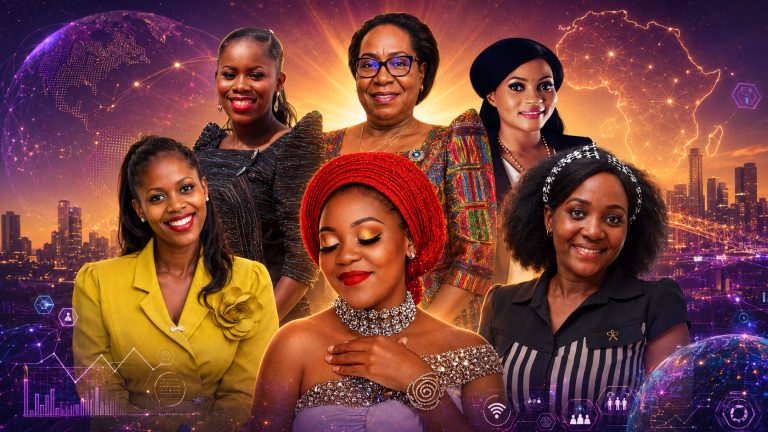
A narrative celebration of African women whose personal journeys redefine what’s possible.
Take the story of Fatima, an engineer from Kano who grew up fixing radios in her family’s shop. Today she leads a fintech start‑up that uses blockchain to provide transparent micro-loans to market women. Or consider Amahle in Cape Town, whose start‑up trains township youth in AI and matches them with apprenticeships at local banks. These stories are not isolated; they are part of a wave of African women who are reshaping technology and finance.
Their journeys reveal common threads. Many overcame scepticism and limited access to capital. They leveraged mobile phones and social networks to build customer bases. They used programs like HiPipo’s Women in FinTech initiative to gain mentorship and market exposure. In doing so they helped other women participate in the digital economy.
Women’s leadership has a cascading impact. When Fatima’s clients repay loans via mobile wallets, they build transaction histories that qualify them for larger credit lines. When Amahle’s trainees enter banks, they advocate for products that serve township communities. Meanwhile, researchers across Africa are developing AI models that account for local languages and dialects, ensuring that voice assistants work for everyone.
By shining a light on these personal journeys, we see how inclusion happens one entrepreneur, engineer or regulator at a time. Their combined influence is transforming markets and mindsets, proving that Africa’s digital future will be shaped not only by technology but by the women who lead it.
Personal stories illustrate the power of representation. When girls and young women see someone like them coding, building businesses and leading banks, they are more likely to believe they can do the same. Emphasising the human side of leadership also underscores the importance of mentorship, networks and supportive policies. Celebrating these stories helps normalise women’s authority in tech and finance, accelerating the broader movement toward gender equality and inclusive innovation.
At 93 years old, Nakate Agnes had quietly accepted a painful reality.
In her home in Kamengo, Mpigi District, life seemed to end when the sun disappeared.
Together with her two grandchildren, Agnes would retreat into darkness every evening, sleeping early not because they were tired, but because there was simply nothing else they could do once night arrived.
The house became silent. The evenings became empty. And for an elderly grandmother already weakened by age, darkness slowly stole the small joys and freedoms that make life feel human.
Even something as basic as charging a phone became exhausting. Agnes often had to endure long walks to nearby trading centers just to keep communication alive, journeys that drained her physically and emotionally.
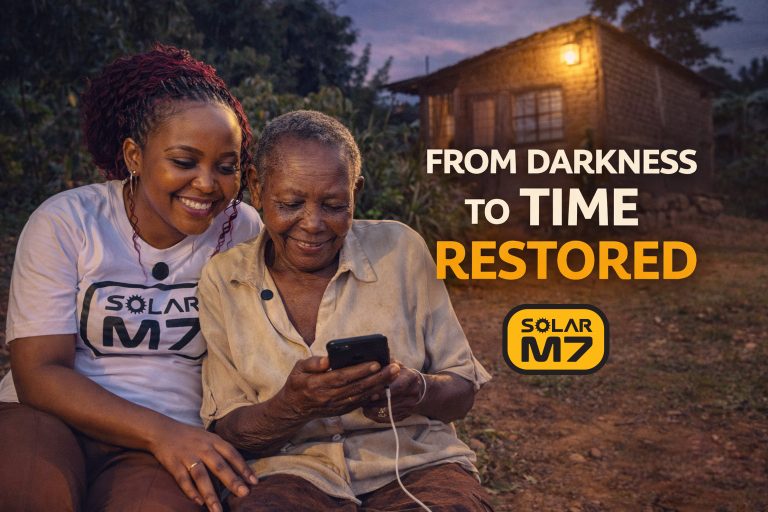
For her, darkness was not only inconvenient. It stole time from her life. Then Solar M7 arrived. And suddenly, the nights inside her home changed completely.
Today, reliable solar light fills the house after sunset. Her phone now charges safely from home, removing the painful burden of long walks. The evenings no longer disappear into silence and helplessness. Agnes and her grandchildren now remain awake longer, sharing conversations, comfort, and peaceful moments together beneath steady light.
For Agnes, the transformation feels like life returning.
“Before Solar M7, nights felt empty because darkness ended everything early,” Agnes shared during her interview. “Now the home feels alive again, and I no longer struggle walking long distances to charge my phone.”
According to Doreen Nanfuka, elderly people in underserved communities often lose independence and valuable time because of lack of reliable energy access.
“When older people regain light and phone charging at home, their daily lives become much easier and more dignified,” Doreen explained. “Reliable light gives them comfort, connection, and freedom.”
Innocent Kawooya says stories like Agnes’ reveal how energy access restores quality of life for elderly people who have spent decades living without reliable power.
“Reliable light helps people reclaim time, comfort, and independence,” he noted. “No one should spend old age trapped by darkness and isolation.”
Today, evenings inside Agnes’ home no longer feel lost to darkness.
The phone remains connected. The house glows warmly. And in a home where night once felt like the end of life itself, Solar M7 is now helping restore something deeply precious.
Time. Connection. And the dignity of living fully after sunset again.
Watch the full story of Nakate Agnes from Kamengo, Mpigi District, Uganda across our platforms: