Home Blog Page 18

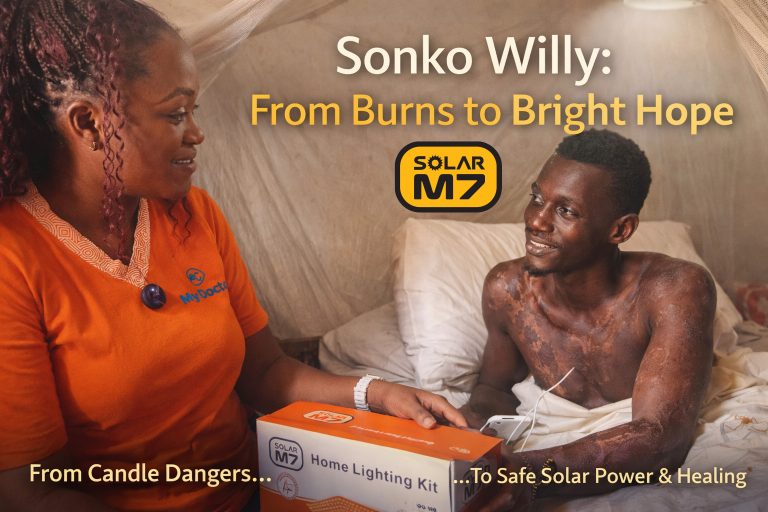
The Fire That Almost Took Everything — And the Light That Brought Hope Back

A #100DaysofSolar Human Impact Story from Bukalango, Wakiso District, Uganda

Fade in.

A quiet village in Bukalango, Wakiso District.

Inside one home lies Sonko Willy, a young father whose body still carries the painful marks of a fire that nearly ended his life.

It began with a candle.

Like many families living without reliable electricity, Sonko’s household depended on open flames to survive the night. Candles brought weak light, but they also carried constant danger, danger that too often feels invisible until tragedy strikes.

One night, the flame turned against them.

Fire consumed the home. Ashes replaced safety. And Sonko’s life changed forever.

For a long time afterward, fear followed every evening. Darkness no longer felt ordinary to the family. Every candle carried memories of pain. Every night brought anxiety about whether another disaster could happen again.

But then Solar M7 arrived. And slowly, something began to change inside the home.

Today, the family lives under safe, reliable light. Phones charge from home without relying on dangerous candles or risky alternatives. The atmosphere inside the house feels calmer. Safer. More human again.

For Sonko, the light means far more than electricity.

It means survival without fear.

“After the fire, nights became very difficult for us,” Sonko shared during his interview. “But Solar M7 has helped us feel safe again. Now we have light without fear, and the family feels more at peace.”

According to Doreen Nanfuka, stories like Sonko’s reveal the hidden dangers many underserved families face every day simply trying to light their homes.

“When people talk about energy poverty, they often focus only on darkness,” Doreen explained. “But unsafe lighting methods can destroy homes, injure families, and permanently change lives. Safe solar light protects people from those risks.”

Innocent Kawooya says reducing dependence on dangerous lighting sources remains one of the most urgent goals of #100DaysofSolar.

“No family should risk losing their life simply because they need light at night,” he noted. “Reliable solar energy brings safety, dignity, and protection to households that have lived with danger for far too long.”

Today, evenings inside Sonko’s home no longer feel haunted by fear.

The family sleeps beneath safe light.

Phones remain connected.

And in a house where fire once nearly destroyed everything, light has returned carrying something stronger than fear.

Healing. Hope. And the chance to begin again.

Watch the full story of Sonko Willy from Bukalango, Wakiso District, Uganda across our platforms:

YouTube
TikTok                                                                                                              

Facebook
Instagram
LinkedIn
X/Twitter

#100DaysofSolar #SolarM7 #IncludeEveryone #EnergyAccess #HumanImpact #Wakiso #Uganda #CleanEnergy #HiPipo
Museveni Fires Back at Andrew Mwenda in Escalating Ideological Clash

0

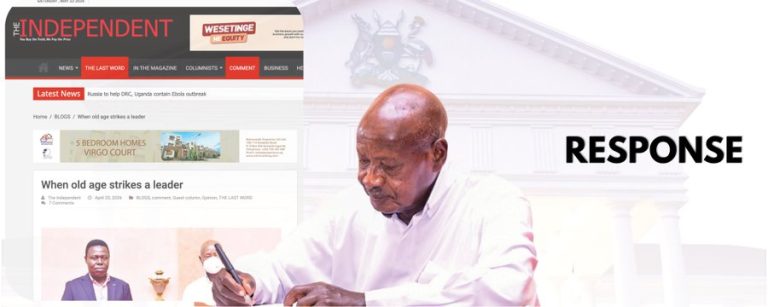
Yoweri Museveni has publicly responded to veteran journalist Andrew Mwenda in a strongly worded statement defending his leadership, industrialization agenda, and government-backed investment projects.

In a lengthy commentary titled “Mr Mwenda, thank you for declaring me incapable of judging right,” President Museveni accused Mwenda of dismissing Uganda’s industrial and scientific progress while promoting what he described as “neo-colonial” thinking.

The president’s response followed criticism reportedly made by Mwenda questioning several government-supported projects and Museveni’s decision-making capacity.

Museveni opened his response by sarcastically thanking the journalist for describing him as “senile and incapable of judging right,” before insisting that even at 82 years old he remained capable of defending Uganda “with the Bible, the AK-47 and the pen.”

The Ugandan leader went on to challenge Mwenda to personally investigate several locally driven projects and innovations that government has supported over the years.

Among the projects Museveni defended were herbal medicine initiatives associated with David Ssenfuka, industrial ventures led by Magoola and Tugume, banana research projects linked to Professor Muranga, and the state-backed Kiira Motors vehicle manufacturing initiative.

According to Museveni, critics who dismiss such projects fail to appreciate the importance of industrialization and value addition in Africa’s economic transformation.

The president argued that Uganda and Africa continue losing enormous wealth by exporting raw materials instead of processed products.

As an example, Museveni pointed to gold exports, claiming Africa loses significant value by exporting partially refined gold rather than fully processed products. He also cited coffee exports, arguing that processed coffee generates far higher earnings than raw coffee beans.

Museveni further defended his government’s decision to ban the export of unprocessed minerals, saying the policy has helped expand Uganda’s gold refining industry.

According to the president, Uganda now hosts 10 gold refineries and has significantly increased its gold export earnings in recent years.

The public exchange has drawn significant attention because of the long and complex relationship between Museveni and Mwenda, who has for years remained one of Uganda’s most influential political commentators.

Mwenda, founder of The Independent Uganda, is widely known for his outspoken political analysis and commentary on governance, economics, and African development.

Analysts say the latest clash reflects broader ideological debates in Uganda surrounding industrial policy, state intervention, scientific innovation, and the country’s economic direction.

The dispute also highlights growing tensions between sections of Uganda’s intellectual and political class over the effectiveness of government-backed industrialization projects and public investment strategies.

While supporters of Museveni argue that state-led industrialization remains critical for Uganda’s long-term transformation, critics have questioned the sustainability, accountability, and commercial viability of some publicly supported ventures.

The exchange has since sparked widespread debate online and within political circles, with supporters from both sides weighing in on the future of Uganda’s economic development model.

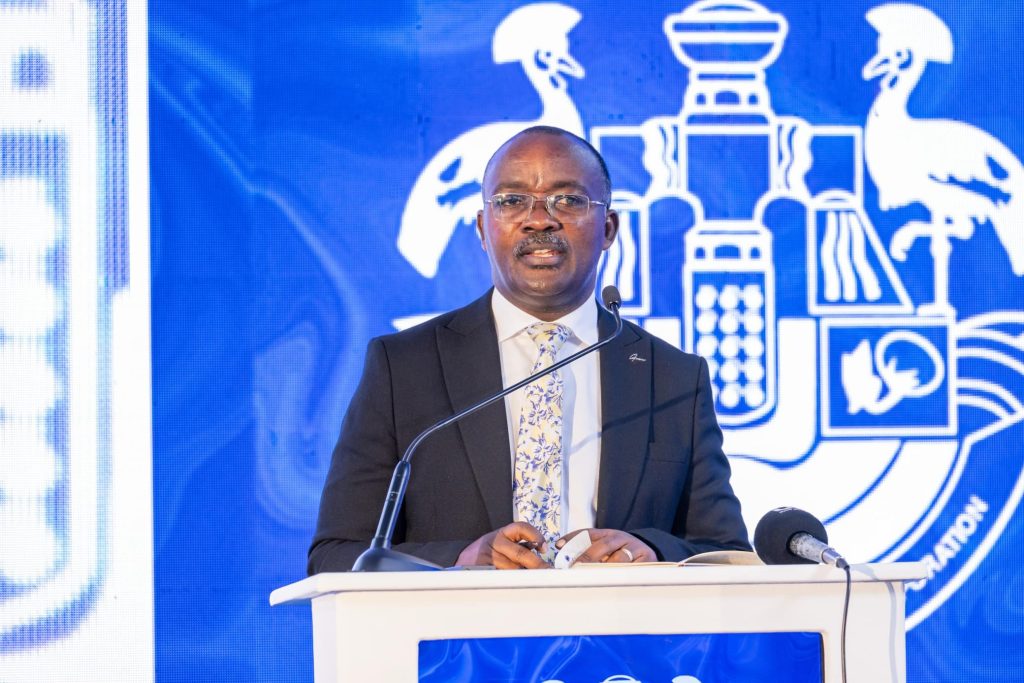
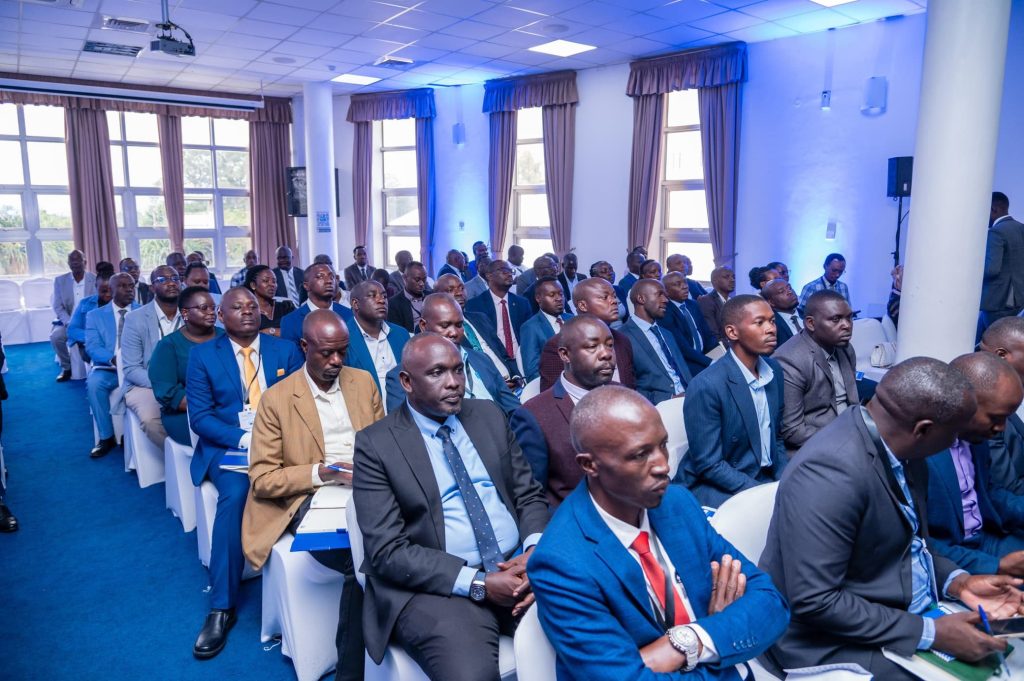
NWSC Launches New Five-Year Strategy to Expand Water Access Across Uganda

The National Water and Sewerage Corporation (NWSC) has unveiled its Strategic Plan 2025–2030, outlining an ambitious five-year roadmap aimed at expanding access to safe and reliable water and sanitation services across Uganda.

The newly launched strategy seeks to significantly increase the number of Ugandans accessing clean water services by growing the population served from 19.5 million people to 26.2 million by 2030.

According to NWSC, the plan also targets expansion of water connections to 1.294 million nationwide as part of broader efforts to improve access for households, businesses, institutions, and communities.

Officials said the strategy is designed to strengthen service delivery while supporting Uganda’s long-term socio-economic development and public health goals.

A major focus of the plan is improving operational efficiency through reduction of Non-Revenue Water — water that is produced but lost before reaching consumers due to leakages, illegal connections, metering inaccuracies, or system inefficiencies.

NWSC aims to reduce Non-Revenue Water levels from the current 34 percent to 28 percent over the next five years in a move expected to improve financial sustainability, strengthen water reliability, and reduce operational losses.

The corporation also emphasized climate resilience and environmental sustainability as key pillars of the new strategy.

Officials noted that the plan incorporates measures aimed at protecting water sources, improving environmental conservation, and strengthening infrastructure resilience against climate change impacts such as droughts, flooding, and extreme weather events.

NWSC revealed that implementation of the Strategic Plan will require approximately Shs 6.79 trillion.

Funding is expected to come from a combination of internally generated resources, government support, and development partner financing to facilitate infrastructure expansion and modernization projects across the country.

The corporation says the planned investments are expected to improve public health outcomes, support urbanization, create employment opportunities, and enhance economic productivity through improved water and sanitation access.

Uganda has in recent years experienced growing demand for water and sanitation services driven by rapid urban population growth, industrialization, and expanding economic activity.

Access to clean and reliable water remains one of the country’s major development priorities, particularly in rapidly growing urban centers and underserved communities.

NWSC called upon stakeholders, development partners, local leaders, and communities to support implementation of the strategy to help accelerate progress toward universal access to safe water and improved sanitation services.

Officials say the new roadmap positions the corporation to strengthen service coverage, modernize infrastructure, and improve sustainability as Uganda continues pursuing broader national development and public health objectives.

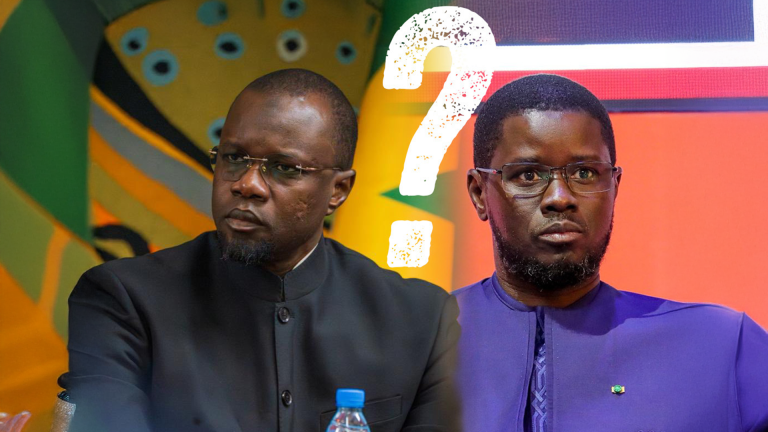
Senegal President Fires Prime Minister Sonko After Months of Growing Tensions

0

Bassirou Diomaye Faye has dismissed Prime Minister Ousmane Sonko and dissolved Senegal’s government following months of growing political tensions between the two leaders.

The dramatic announcement was made through a presidential decree read on national television, stating that President Faye had “ended the duties of Ousmane Sonko” along with those of ministers and state secretaries serving in the government.

The move marks a major political rupture within Senegal’s ruling leadership, less than two years after the pair secured a historic election victory that reshaped the country’s political landscape.

Sonko, one of Senegal’s most influential opposition figures and a popular voice among the youth, reacted shortly after the announcement, saying on social media that he would “sleep with a light heart.”

The dismissal followed a tense parliamentary session on Tuesday during which Sonko openly criticized President Faye, exposing divisions that had reportedly been building within the ruling Pastef movement for months.

Political tensions between the two leaders had increasingly become public in recent months, with reports suggesting that President Faye had grown uncomfortable with what he viewed as Sonko’s dominant political influence and “excessive personalisation” within the ruling party.

At the same time, Sonko had accused the president of showing weak leadership and failing to defend him against political attacks and criticism.

The fallout is particularly significant because Faye’s rise to the presidency was closely tied to Sonko’s popularity and political backing.

Sonko had originally been widely expected to contest and potentially win Senegal’s 2024 presidential election. However, a defamation conviction barred him from running, leading him to endorse Faye as the Pastef candidate.

The alliance proved successful, with Faye winning the presidency in what many observers described as an extraordinary political comeback. Both Faye and Sonko had been released from prison only days before the election after months of political unrest and legal battles that had drawn international attention.

Following news of Sonko’s dismissal, several hundred students reportedly gathered in the streets of Dakar overnight to demonstrate in support of the former prime minister, highlighting his continued influence among young Senegalese voters.

The political crisis comes at a difficult economic moment for Senegal. According to the International Monetary Fund (IMF), the country’s public debt has reached approximately 132 percent of gross domestic product (GDP), increasing pressure on the government to stabilize the economy and maintain investor confidence.

Analysts say the split between Faye and Sonko could significantly reshape Senegal’s political future, especially within the ruling coalition that had largely depended on their partnership and shared anti-establishment message.

The dissolution of government is expected to trigger a cabinet reshuffle and potentially deepen uncertainty within Senegal’s political environment as the country navigates mounting economic and governance challenges.

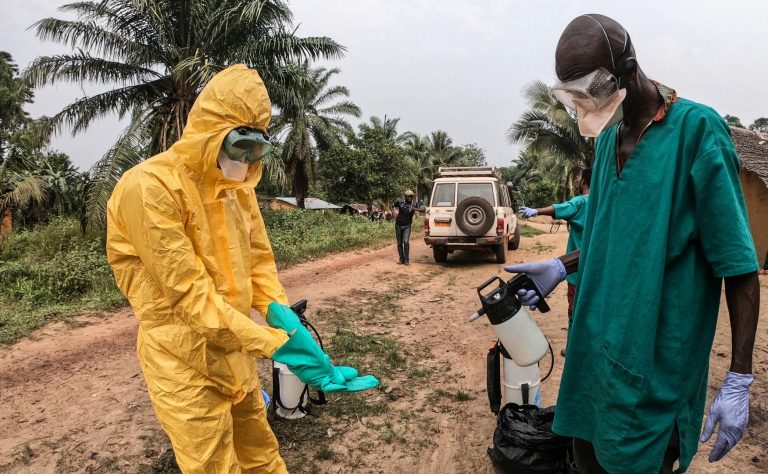
Uganda Confirms Three New Ebola Cases as Total Infections Rise to Five

0

Uganda’s Ministry of Health has confirmed three new cases of Ebola Virus Disease (EVD), bringing the total number of confirmed infections in the country to five.

In a press release issued on May 23, 2026, the Ministry said the newly confirmed cases include a Ugandan driver, a Ugandan health worker, and a Congolese woman linked to earlier Ebola exposure and contact tracing investigations.

According to the Ministry, one of the new patients is a Ugandan driver who transported the country’s first confirmed Ebola case. Health officials said he is currently receiving treatment.

The second confirmed case involves a Ugandan health worker who was exposed to the virus while caring for the country’s first Ebola patient. Authorities confirmed that she is also undergoing treatment.

The Ministry noted that both individuals had already been identified among known contacts under follow-up by surveillance teams.

The third confirmed case is a Congolese woman residing in the Democratic Republic of Congo (DRC). According to health authorities, she entered Uganda from the DRC while experiencing mild abdominal symptoms.

The patient reportedly traveled from Arua to Entebbe using a chartered flight and later sought medical attention at a private hospital in Kampala on May 10, 2026.

The Ministry said the woman was initially treated and discharged in stable condition on May 14 before returning to the DRC. However, Ugandan health authorities later received information from the pilot who had airlifted her, prompting additional follow-up investigations by surveillance teams.

Subsequent laboratory testing later confirmed that she had tested positive for Ebola Virus Disease.

Health officials said all contacts linked to the confirmed cases have since been identified and are currently being closely monitored by response teams as part of ongoing containment measures.

The Ministry of Health urged the public to remain calm but vigilant and continue observing all recommended preventive measures.

Authorities also called on the public to immediately report any suspected Ebola symptoms to the nearest health facility, emphasizing that early treatment significantly improves survival chances.

The Ministry further stated that it continues to strengthen surveillance systems, case management, contact tracing, and public awareness campaigns in efforts to contain the outbreak and protect public health.

The latest development comes as Uganda intensifies nationwide Ebola response measures, including enhanced border screening, public sensitization campaigns, restrictions on mass gatherings in high-risk areas, and strengthened health surveillance along the Uganda-DRC border.

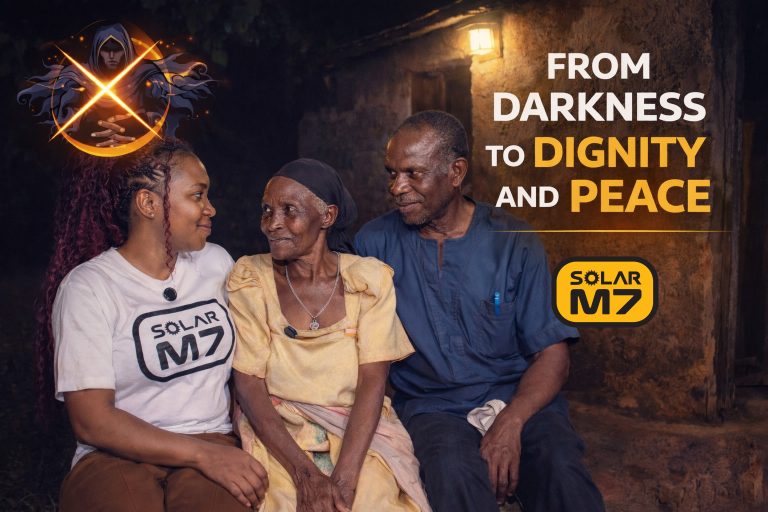
The Grandmother Who Spent 85 Years Fearing the Darkness

A #100DaysofSolar Human Impact Story from Kamengo, Mpigi District, Uganda

For most of her life, Nakabugo Maturona feared the night.

At 85 years old, the grandmother of Burundian origin has lived through decades of hardship, migration, uncertainty, and survival. But even after all those years, darkness still carried a fear she could never fully escape.

Inside her home in Kamengo, Mpigi District, the nights felt haunted.

When strong winds passed through the village, Maturona believed they carried voices of ghosts moving through the darkness. Every unfamiliar sound outside the house deepened her fear. She worried constantly about thieves hiding unseen nearby while her grandchildren sat helplessly begging for candles the family could rarely afford.

For Maturona, darkness became more than lack of light.

It became loneliness. Fear. And emotional suffering that followed her into old age.

Then Solar M7 arrived. And for the first time in her long life, the nights inside her home began to feel peaceful.

Today, reliable solar light fills the house after sunset. The frightening shadows have disappeared. Her grandchildren now sit comfortably beneath steady light instead of begging for candles. The home feels calm, secure, and emotionally lighter in ways she never imagined possible.

For Maturona, the transformation feels deeply spiritual and personal.

“Before Solar M7, nights brought fear into my heart,” she shared during her interview. “Now the home feels peaceful, the children are happy, and I no longer fear the darkness the way I once did.”

According to Doreen Nanfuka, many elderly people living in underserved communities experience emotional and psychological distress connected to darkness and insecurity.

“When older people spend decades living in fear after sunset, reliable light becomes emotionally transformative,” Doreen explained. “It restores comfort, dignity, confidence, and peace inside the home.”

Innocent Kawooya says stories like Maturona’s reveal how energy access restores humanity and emotional wellbeing alongside physical safety.

“Reliable light gives families more than visibility,” he noted. “It restores dignity, emotional peace, and the ability to live without fear inside one’s own home.”

Today, nights inside Maturona’s home no longer feel haunted by darkness.

The grandchildren laugh beneath safe light.

The shadows no longer control her peace.

And in a home where fear and superstition once ruled every evening, Solar M7 is now helping restore something profoundly human.

Comfort. Dignity. And peace in the final chapters of life.

Watch the full story of Nakabugo Maturona from Kamengo, Mpigi District, Uganda across our platforms:

YouTube
TikTok
Instagram
LinkedIn
Facebook
X/Twitter

#100DaysofSolar #SolarM7 #IncludeEveryone #EnergyAccess #HumanImpact #Mpigi #Uganda #CleanEnergy #HiPipo