Home Blog Page 38

EzeeMoney makes payments easy for the end-users. #40Days40FinTechs Season 4 Day 18

In Uganda, the word survival makes a lot of meaning because many people live on a hand-to-mouth income cycle. So, every working day matters. If you don’t work, you don’t eat!

The same applies to utilities. It is very common to find households paying daily electricity bills or weekly pay-tv subscriptions. So, the cost of transactions in such payments also matters. They are always looking for the cheaper option.

That is a problem EzeeMoney was designed to solve. EzeeMoney is a financial technology solution dealing with both financial and non-financial services providers targeting people at the bottom of the pyramid.

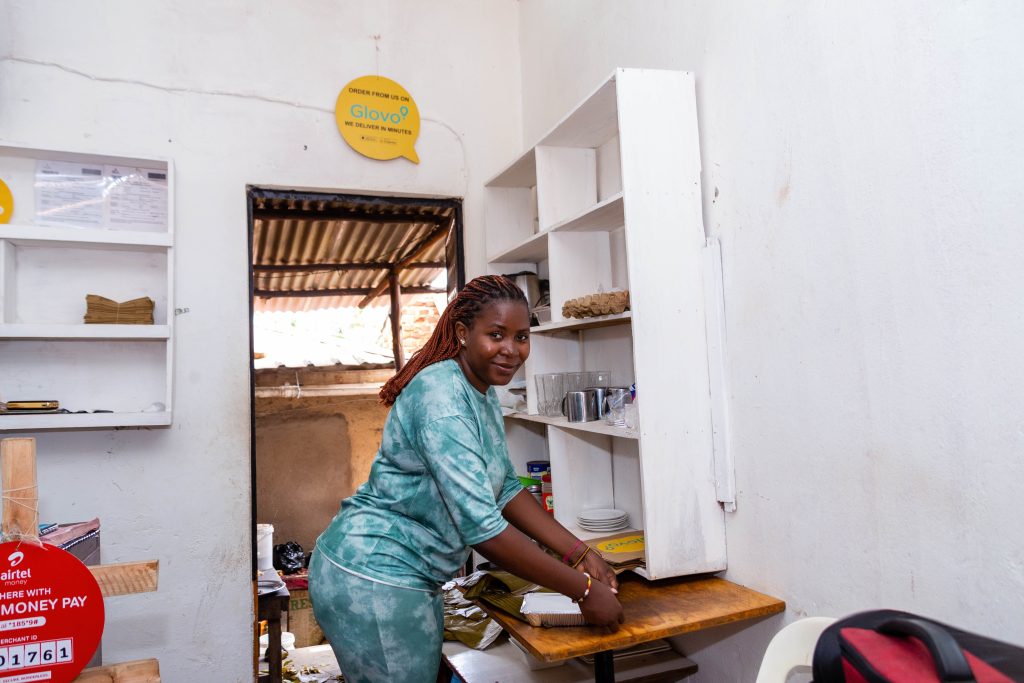
For instance, Miriam Mbambu, a manager at Grey Macy Finance in Bwaise, a Kampala suburb, says that people in her locality scamper for an EzeeMoney terminal at her place of work because of the low transaction costs compared to ordinary Mobile Money.
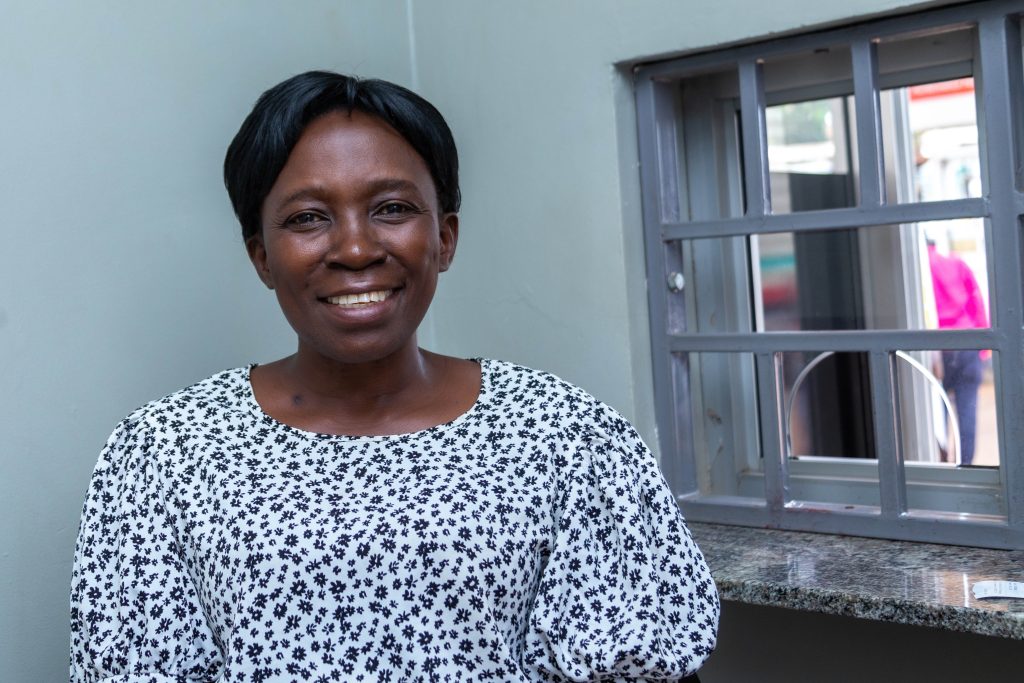
“People have found EzeeMoney easy and cheap. When their power is off, you see people rushing here to pay for Yaka, water bills, and TV subscriptions, among others,” she says.

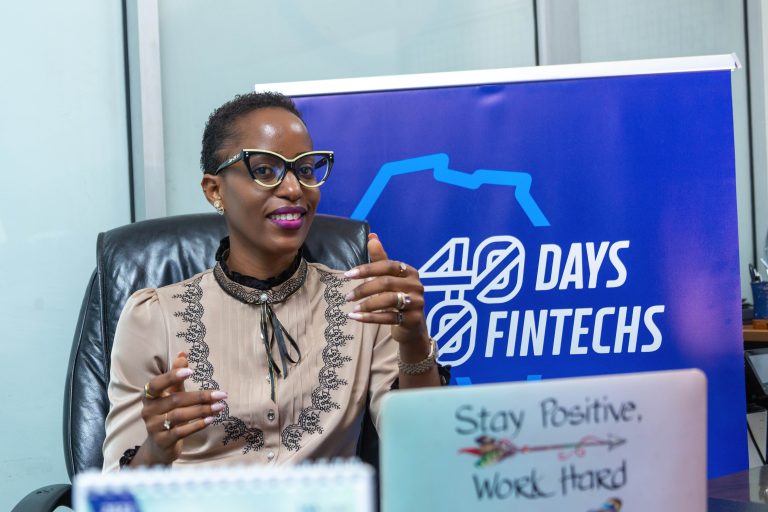
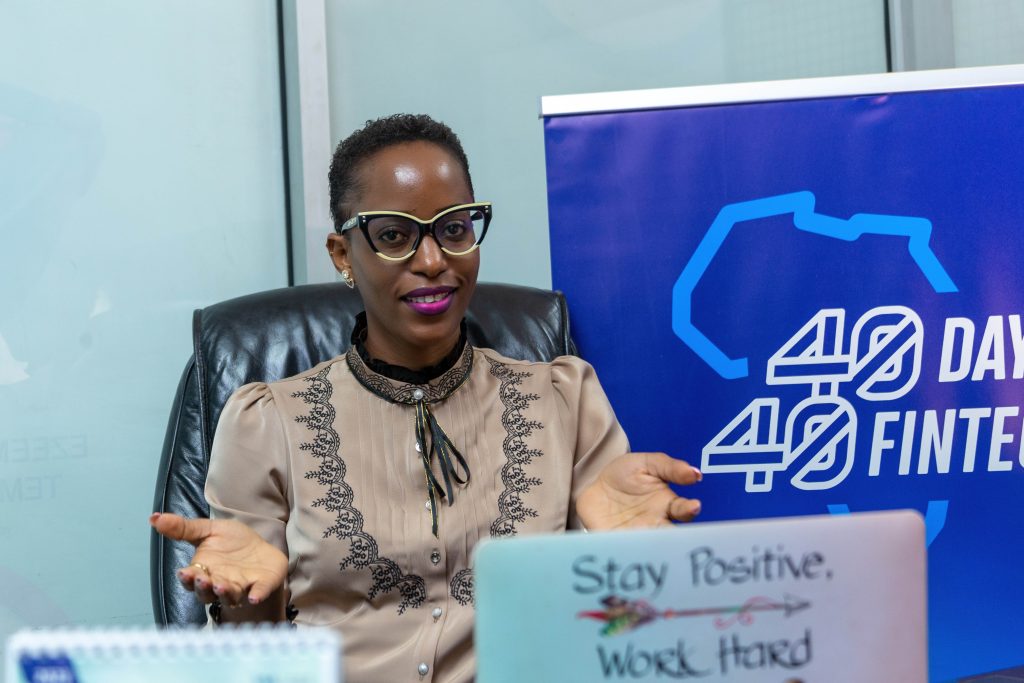
According to Flavia Eleanor Kasenge, the Chief operations officer at EzeeMoney, their model lies in recruiting agents who purchase a terminal that is embedded with a bouquet of products that can be used for bills payment, payment collection, mobile money, airtime, and agency banking.

“On the non-financial side, we do tracking services and we track information in real-time. If you hold a case on the Jubilee card, we are the ones empowering it. It’s running on our platform,” she says.

EzeeMoney has been in existence for more than 10 years and Kasenge says this has enabled them to spread wings across many African countries where she says they have been part of bridging the digital transformation knowledge gap.

Regulated by the Bank of Uganda, EzeeMoney holds two licenses; payment service provider and operator.

“We are growing healthily. If you are to compare last year to date, we have grown by 10 percent,” she says.

Challenges

Kasenge says that one of the challenges they face is during the on-boarding of agents. During the Know-Your-Customer (KYC) process, many people lack the requisite information such as a national ID.

“Some people also don’t know where to find their LCs,” she says.
On top of this, there is a high turnover of agents who keep quitting their workplaces.

“Business owners always bring in new people that we have to keep retraining to close the knowledge gap,” she says.

On the part of agents, Mbambu from Bwaise says that the EzeeMoney terminals sometimes face network issues that disrupt business.

For instance, you make a deposit and it shows you that the transaction has failed yet it hasn’t yet you have given the money back to the customer. This leads to losses; The EzeeMoney team should talk to telecom companies to make sure the network is stabilized because while the services of EzeeMoney are good, the network affects them,” she says.

Nonetheless, Kasenge says that initiatives such as 40 Days 40 FinTechs by HiPipo have created a paradigm shift in people’s minds about the FinTech industry. This is because it creates great awareness of the FinTech space with the different products being profiled.

“We can innovate according to the end user. We can know what our neighbour next door is offering and how we can work together to serve people at the bottom of the pyramid,” she says.

“As innovators, we have something cooking; the EzeeMoney app which will go live soon. It is one of the key products that we are looking to send out in the market for people to be able to get their services right at their doorstep. We shall connect it with the banks for people to withdraw from their accounts through the app or make payments as and when they are comfortable.”

Ezee Money is the 18th participant in Season Four of 40 Days 40 FinTechs Initiative organised by HiPipo to shine a light on emerging Financial Technology stories changing lives.

According to Innocent Kawooya, the HiPipo CEO, this year’s initiative looks at the impact of FinTechs on the lives of end-users across East Africa.

This initiative is run by HiPipo in partnership with the Level One Project, Mojaloop Foundation, INFITX, Cyberplc Academy, Crosslake Technologies, and Ideation Corner with generous support from the Bill and Melinda Gates Foundation.
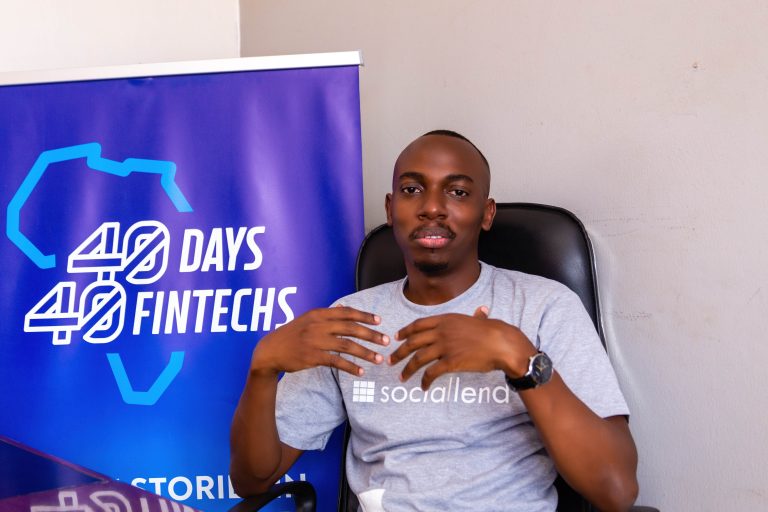

Social Lend Africa is using Technology to connect Borrowers to Lenders. #40Days40FinTechs Season 4 Day 17

For any businessman, anyone who can provide them with quick and cheap credit will definitely be their friend.

So, when Edward Mubangizi was introduced to Social Lend Africa, he saw it as a good opportunity to improve his supermarket business in Kisaasi.

“My friend told me that their financial services are friendly. I checked them out and downloaded their mobile Application. They requested to visit my businesses and they did it. They took a record of my stock and everything. The next step was asking me for the amount that I required,” he recalls.

Since then, Mubangizi has used the Social Lend platform without any challenges.

According to Marvin Peter Akankwasa, the CEO of Social Lend Africa Tech Limited, they came up with this digital lending peer-to-peer business marketplace to create a meeting point for lenders and borrowers.

“On one hand, we have borrowers who lack access to formal funding while on the other hand, we have lenders who lack operational processes to streamline their lending operations,” he says.

Akankwasa argues that at least 23 percent of the 1.5 million small businesses in Uganda are unable to access formal funding from financial institutions like banks.

“We have lenders who are engaged in predatory lending processes and lend with interest of up to 50 percent monthly,” he says.

Social Lend Africa brings different stakeholders together to create an equitable platform where both lenders and borrowers can get a fair deal.

“Borrowers get to borrow at affordable rates from 3 percent to 5 percent because most of their businesses, according to our survey, show that they don’t make more than 45% in their profit margin. Lenders get to enjoy our technology which analyses borrowers and scores them using smart algorithms so that they lend their money safely and profitably,” he says.

For a borrower to qualify, they must submit their contact and other Know Your Customer (KYC) information such as bio-data, national ID, and location.

“For businesses, we also take proof of business, ownership of the business, tax clearance certificates, and other compliance requirements,” Akankwasa says.

For lenders, all they need is proof of source of funds [is it employment or business].

“They don’t need a license to lend because we are already licensed to do that,” he says.

Akankwasa reveals that they have managed to put together a network of over 50 lenders and micro-lenders.

“We have reviewed over 3,000 loan applications and approved over 85 percent of them. We have also managed to get more than 900 downloads of the APP,” he says.

Akankwasa says that since they rely a lot on third-party aggregators who operate commission-based models, they are sometimes charged much more than they would love to.

“Some go as high as 3 percent. If a borrower is paying back about Shs 1m, then, they have to top up Shs 30,000 which makes using the platform incredibly expensive,” he says.

He is however happy that the 40 Days 40 FinTechs initiative is introducing a better community streamlining payments and making them cheaper and affordable for end-users.

Social Lend Africa is the 17th participant in Season Four of the 40 Days 40 FinTechs initiative organized by HiPipo to shine a light on emerging stories changing lives using financial technology.

This initiative is run by HiPipo in partnership with the Level One Project, Mojaloop Foundation, INFITX, Cyberplc Academy, Crosslake Technologies, and Ideation Corner with generous support from the Bill and Melinda Gates Foundation.
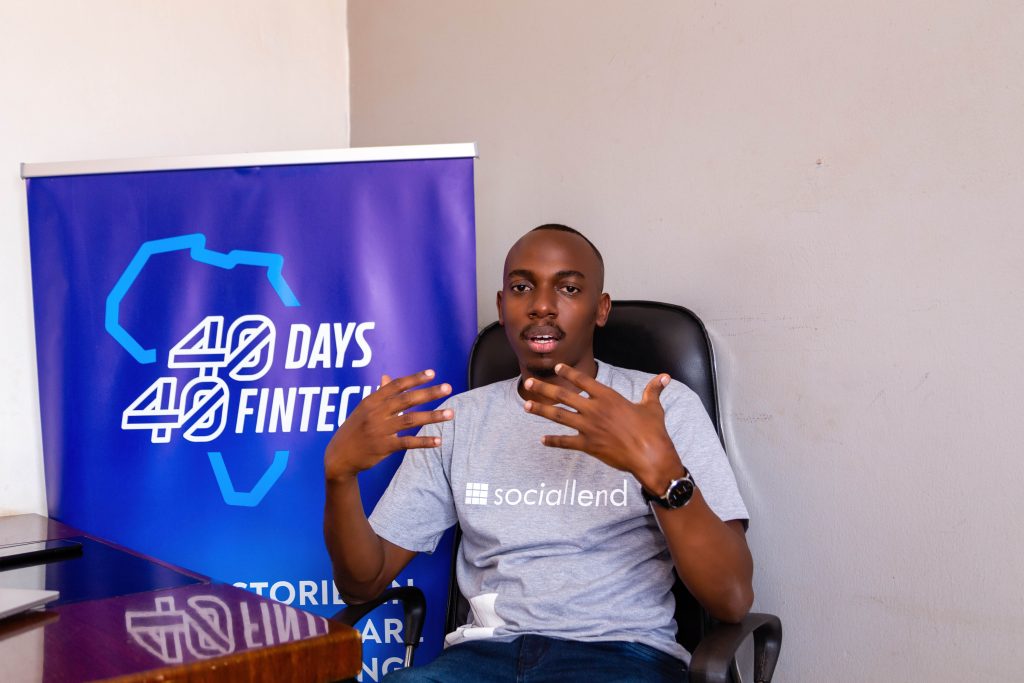
Life-changing stories from more than 100 FinTechs have been highlighted by this initiative in the past three years.

JUMO World Uganda has disbursed over 20m loans in five years. #40Days40FinTechs Season 4 Day 16

In March 2020, Uganda was placed under a total lockdown following the outbreak of the deadly Covid-19. Only essential workers such as security personnel, market vendors, and construction workers were allowed to continue working.

One such essential worker was Sarah Naluwagga Lubambula, a vendor at Kalerwe Market in Kampala. But Naluwagga says despite this allowance, business was very bad because all people were holed up in their homes.

“I needed a loan to boost my business but all money lenders had closed. Everything was a mess,” she recalls.

Then a friend introduced Naluwagga to Wewole, a quick-loan service powered by JUMO World Uganda for Airtel Money subscribers.

“He told me that I just needed to dial *185# and go straight to Wewole on number 8. After that, I would just ask for an amount that I wanted,” she says.

“On the first attempt, it was just a trial. When I got the Shs 20,000, I was surprised that it was real. I kept on increasing to Shs 30,000, Shs 50,000, and Shs 60,000 until I reached Shs 800,000.”

Naluwagga says Wewole transformed her business. It made life better because no matter what time, she would just go to her phone and get a bailout.

“My only challenge is the issue of high-interest rates; but besides that, we are very happy with Wewole.

Just like Naluwagga, Namuyiga Shamim who owns a restaurant in Kamwokya, is enjoying similar benefits through Mo Sente, an equivalent of Wewole for MTN Mobile Money subscribers.

“For me, I started using Mo Sente in 2022. We were in the hospital and our bill was too much yet we had little cash on us. We went to Mo Sente and got some money to clear our outstanding bill,” she recalls.

“The beauty about this service is that when you apply for a loan, your account is credited immediately.”

JUMO integration.

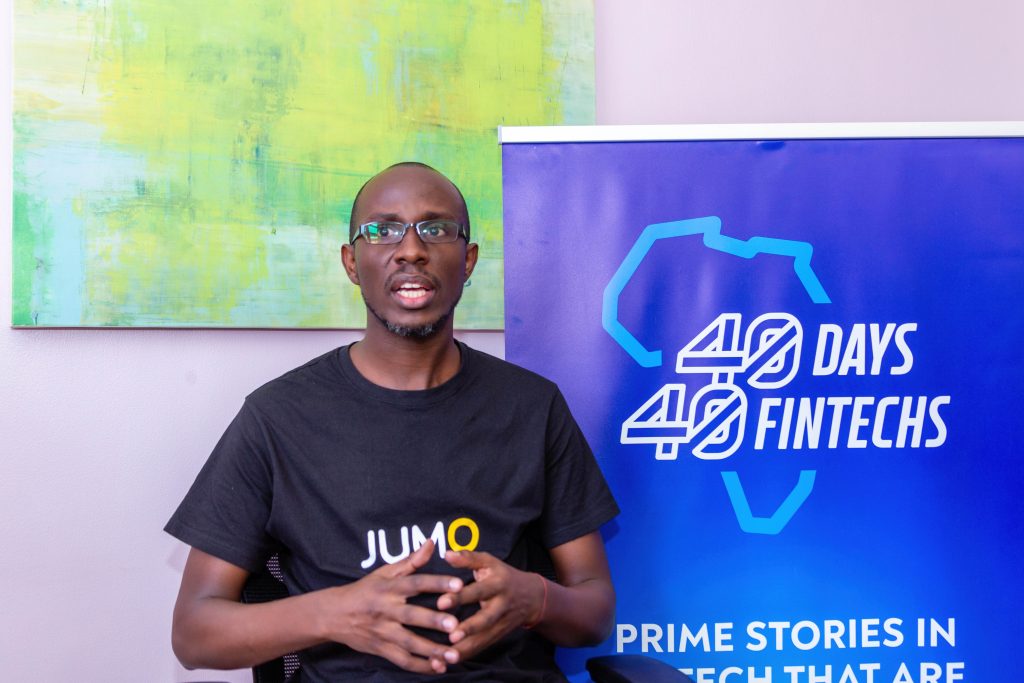
Wewole and Mo Sente are powered by JUMO, in partnership with telecom companies Airtel and MTN respectively. According to Wilfred Wabwire, the Country Manager for JUMO World Uganda and Kenya, JUMO specializes in integrating other platforms to enable them to offer loans, savings, and a wide range of financial choices to customers.

“The JUMO platform provides end-to-end banking as a service infrastructure by leveraging machine learning and data to reduce the cost and risk of lending. JUMO is solving the problem of lack of access to financial services for the majority of the people,” he says, noting that eligible customers have a repayment period of 14 days or 30 days.

“We have Wewole in partnership with Airtel Money. We also have the Mo Sente Access credit solution in partnership with MTN Mobile Money Uganda Limited. Customers can choose between the 14 and 30-day loan terms. Customers can borrow from as low as Shs 3,000. Customers with a good repayment history can potentially qualify for larger amounts,” Wabwire says.

He adds that for a customer to qualify for higher amounts, they have to pay their loan on time. They have got to continuously transact on their mobile money wallets as well as data and voice.

Multimillion loans.

Wabwire says that since 2017 when these products were introduced, JUMO has served about 3.4 million Ugandans.

“We have disbursed about 20.7 million loans with a value of about $280m. Six out of every 10 loans that JUMO disburses go out to MSMEs (Micro, Small & Medium Enterprises),” he says.

According to the UN Conference on Trade and Development, MSMEs contribute 80 percent to Uganda’s GDP. Essentially, JUMO is directly contributing to the growth of the economy in Uganda.

Another statistic Wabwire alludes to is the fact that one in every three borrowers on the JUMO platform is a woman while at least 50 percent of the JUMO borrowers are based in rural areas. This, for him, is creating an inclusive financial services sector.

“This is very important because traditionally, rural areas have been left out of traditional financial services. This is because the traditional infrastructure does not consider this sector [MSMEs] profitable,” he says.

“The JUMO platform can help customers no matter where they are located. Our loans are easy to access as long as a customer has got a phone. The loans are accessible via a USSD code which is available anywhere in the country.”

40 Days 40 FinTechs.

Wabwire says that the speed at which Ugandans and East Africans are coming up with innovations in the FinTech space has proven too fast for even the regulatory bodies.

“When you look at aspects such as regulation, they are always catching up with the innovations. In most cases, they never, probably, understand what is it that we are trying to solve,” he says.

He however applauds organisers of the 40 days 40 FinTechs initiative that is providing a platform for all stakeholders in the FinTech space to converge and share ideas.

“In the end, our customers will be able to know what we are solving and they utilize our innovation. Investors will also be able to know what we are solving and provide us with the much-needed capital in the sector,” he says.

JUMO World, Uganda is the sixteenth participant in the 2023 40 Days 40 FinTechs initiative.

HiPipo’s 40 Days 40 FinTechs initiative has become a household name in the financial technology space of Africa. In the last three editions, more than 100 FinTechs have been showcased, highlighting stories changing people’s lives, especially in the under-served sectors.

According to HiPipo CEO Innocent Kawooya, big players like JUMO World serve as an example to the emerging FinTechs that targeted innovations can indeed create a wider impact.

“JUMO World is now tried and tested. Their story tells us that when you identify an everyday problem and offer the right proposition and solution, success will look for you,” he said.

The 40 Days 40 FinTechs initiative is organized in partnership with the Level One Project, Mojaloop Foundation, INFITX, Cyberplc Academy, Ideation Corner, and Crosslake Technologies with generous support from the Bill and Melinda Gates Foundation.
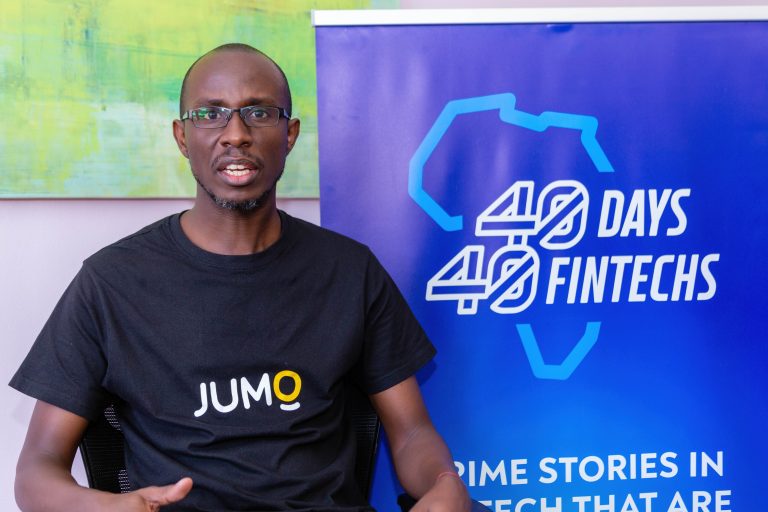
My Doctor is using Telemedicine to provide equitable Healthcare to underserved communities. #40Days40FinTechs Season 4 Day 15

Antenatal care is one service pregnant women struggle to seek. Many expectant mothers actually wait to first get a pregnancy complication to go for antenatal monitoring. They just hate the inconvenience of visiting the hospital every now and then.

But what if this service was digitized?

When Divinah Twinomujuni was pregnant last year, she went to My Doctor in Nansana, Wakiso District, Uganda where she was introduced to digital healthcare services.

“They told me I didn’t have to come to the hospital all the time. I would just talk to the doctor through the phone and he directs me on what to do,” she recalls.

In traditional medicine, a mother is supposed to have around six face-to-face antennal visits but at My Doctor, Twinomujuni was told that she could have a maximum of three face-to-face visits and the rest would be conducted via the phone.

“I just had to make regular video calls with the doctor. When my time for delivery came, I called the doctor and he immediately sent a car that picked me up from home to the hospital. I delivered my baby girl,” she says.

Twinomujuni has since been receiving digital postpartum care and she has no complaints.

“The baby is healthy and fine. After delivery, the doctors would call me on a daily for supervision and check on the baby,” she says.

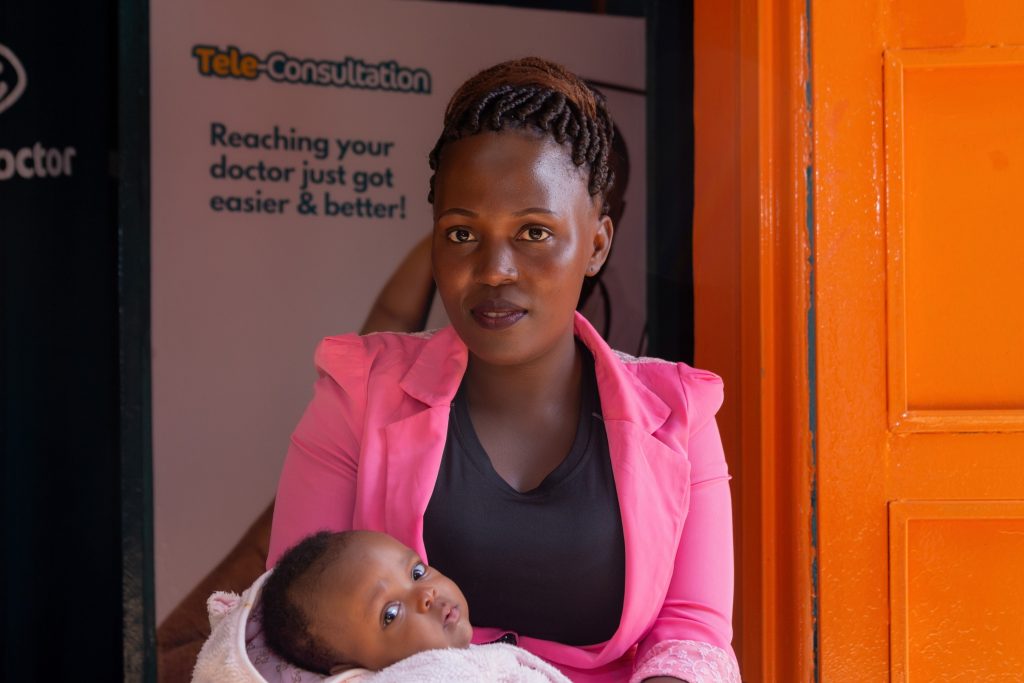
My Doctor is a digital healthcare services platform that is transforming the traditional healthcare system like never before. Attached to a physical health centre, My Doctor is providing equitable healthcare services by ensuring that people, especially those with emergencies easily reach out to professional medical services providers either through a phone call or social media text, audio, and video.

According to Dr. David Mwesigwa, the Medical in-charge of My Doctor Digital Health Care Services, healthcare should be the most accessible service because it touches people’s lives.

“Every second of the day, a person should be able to access medical care. So, we introduced this digital platform, call it Tele-medicine/consultation, where patients can call in and consult a doctor from wherever they are,” he says.

How does it work?

When a client calls in, they are received by someone in the call centre who connects them to a doctor. The doctor then investigates the condition of the patient and if they have any medical records such as laboratory tests, they are required to share them via WhatsApp for review. Payments are made using mobile money.

“For those who require lab checkups, we reach out to them and collect the sample and run the test from our facility. We later deliver the results via a phone call and share reports for those with smartphones,” Dr. Mwesigwa says.

He adds that when they give a prescription, the patient has various options. Those that require injections can either come to the facility or a mobile medical team is dispatched to the patient’s residence. For those that don’t need injections, there is a delivery team that takes the medication to the patient.

New Normal.

According to Sharon Namboozo, the Business Development Officer at My Doctor, there is still a challenge to convince an ordinary Ugandan that they can get medical services through the phone or via the internet. This challenge is acerbated by the high costs of internet/data and the limited penetration of smartphones among Ugandans at the bottom of the pyramid – who are their main target.

“It is these challenges that are driving us to ensure that we create an online one-stop-centre for medical services,” she says.

“Every Ugandan should be able to digitally access a doctor, a midwife, nurses, and all the personnel that are available in a traditional healthcare facility. This should become the new normal.”

Namboozo says that My Doctor has assembled a team of professionals in various disciplines to handle all patient queries.

“We have been able to handle more than 1,000 patients through our digital platform, which is a good sign,” she says.

40 Days 40 FinTechs

My Doctor is the 15th participant in Season Four of the 40 Days 40 FinTechs initiative by HiPipo to shine a light on emerging financial technology companies.

“In addition to the visibility provided by the 40 Days 40 FinTechs platform, it is also providing My Doctor with connections with players in the financial and digital space like banks, telecom companies, and other FinTechs that we can work with in providing a comprehensive one-stop center for digital health care,” Namboozo says.

HiPipo CEO Innocent Kawooya says the service being offered by My Doctor is very critical when it comes to the principle of including everyone.

“My Doctor offers hope for people in a country like Uganda where healthcare is way below the required standards. This is a unique product that makes it convenient and affordable to seek medical advice,” he says.

The 40 Days 40 FinTechs initiative is organised in partnership with the #LevelOneProject, Mojaloop Foundation, INFITX, Cyberplc Academy, Ideation Corner and Crosslake Technologies with generous support from the Bill and Melinda Gates Foundation.
Cyanase is making investment accessible to underserved and underdeveloped markets. #40Days40Fintechs Season 4 Day 14

With the world swiftly shifting into cashless economies, one of the areas of concern is digital trading and investment. Many people are still sceptical of digital phenomena such as cryptocurrencies and even Mobile Money.

Other people are out there with lots of money and ready to invest it digitally but lack the know-how. With these challenges in mind, some young Ugandan innovators developed an investment infrastructure for the Internet where they ably aggregate different investment options from different countries into a single API (Application Programming Interface).

According to John Vianney Wasswa, a co-founder and CEO of Cyanase Investors, the goal behind this innovation is to make investing accessible to everyone including the underdeveloped markets.

“Any fund manager, FinTech, or bank can access investment options that will help it grow. We provide three key products,” he says.

“One, we have a Mobile App that people can download and use. We also have a web platform that can be accessed online via Cyanase.com. We also developed an API specifically for FinTechs and Banks that want to offer investment services to their customers.”

Wasswa notes that with their technology, they strictly look out for licensed fund managers and investment firms who are required to sign contracts and financial agreements to fork their technology into the company’s existing investment products.

“We work hand in hand with the Bank of Uganda, as our start-up is currently under the Bank of Uganda regulatory sandbox. We do our best to ensure that all the money we process is fully protected and secure.”

On the other hand, Mark Obini, the Chief Marketing Officer of Cyanase Investors adds that before enrolling players for this platform, they prioritize training and sensitization because truly many potential digital investors do not know what to do and whom to trust.

“We have mainly worked with students in big numbers but as time goes on, we have seen a lot of people in the working class picking interest in this platform,’ he says.

“Currently, we have about 1,800 registrations and downloads of the application. This involves students and other working-class individuals. We have different categories such as Saccos and investment groups that can still use this platform to practice investments,” he adds.

At the moment, Obini says they are working to have their product integrated into MTN Mobile Money and Airtel Money platforms.

“We are looking forward to registering our company with them so that they can include this investment feature in their applications and mobile money options.”

There is also a plan to ensure that people who don’t have smartphones and can’t access the internet can practice investments by using the USSD codes on their feature phones.

40 Days 40 FinTechs

Cyanase Investors are the 14th participants in Season Four of the 40 Days 40 FinTechs initiative organized by HiPipo to shine a light on emerging Financial Technology companies and their impact on society, especially on the people at the bottom of the pyramid.

“I would like to appreciate the 40 Days 40 FinTechs initiative for making the FinTech sector thrive. We feel like the idea of coming to capture what we do is something that will make us known to the world and also help us improve our product,’ Obini says.

The 40 Days 40 FinTechs initiative has over the past three years helped more than 100 participating FinTechs benefit from the useful tools and an introduction to the industry’s emerging technologies such as Mojaloop Open Source Software, and guidance from Level One Project foundational material.

The initiative is organized by HiPipo in partnership with the Level One Project, Mojaloop Foundation, INFITX, Cyberplc Academy, Ideation Corner, and Crosslake Technologies with support from the Bill and Melinda Gates Foundation.
According to Innocent Kawooya, the HiPipo CEO, Cyanase is a start-up with the potential to have a great impact on society.

“We can see that they are providing service from multiple players in one place through an open API. This is what we keep advocating for to ensure different players can use the same infrastructure for mutual benefits,” he said.

AgriShare is using FINTECH to connect Farmers to Agricultural resources. #40Days40FinTechs Season 4 Day 13

Vincent Kizito is living with his grandmother in Kabanyi village of Luwero district. The only property they own is a huge piece of land that is lying idle because they lack the resource to develop it.

But about a year ago, Kizito heard his friends talking about AgriShare APP, an online platform that can help landowners earn some money by renting out their land.

“My friends advised me to download the app and I told my granny about it.  We saw their services and contacted them. That’s how they hired our land,” he says.

“My granny is now able to pay our school fees. They have rented 23 acres of my granny’s land and farmers are using it to plant cassava, maize, and watermelons, among others,” he adds.

Kizito’s story is one of the over 40,000 people who have benefited from AgriShare’s services which include connecting people who want to hire agricultural resources to those willing to rent them.

For instance, Kosea Asinguza is a Tractor operator who also joined the AgriShare platform recently and was able to hire out his tractor to plough 25 acres in Luwero.

And he is happy with the service.

“We receive our payments from the bank or mobile money. It is really a good platform but they should improve on advertisement because most people are not aware of them,” he says.

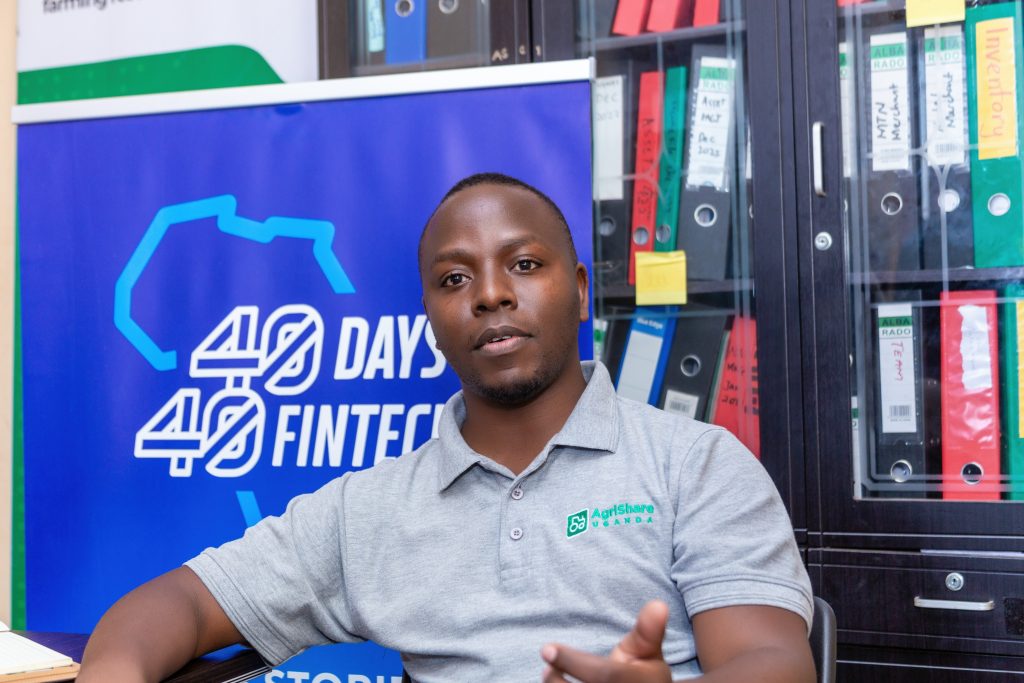
According to Paul Zaake, the managing director and co-founder of AgriShare Uganda Limited, the core principle of this innovation is to empower smallholder farmers.

 “These are people growing crops and rearing livestock in villages. The challenge is that these people are producing less and this means that they sell less which translates into more poverty. They also eat less which leads to food insecurity,” he says.

He attributes this sorry cycle to a lack of key agricultural resources such as land, tractors, irrigation pumps, and farm workers.

“If you travel from Kampala to Gulu, Masaka, Jinja, and Karamoja, you will see a lot of idle land lying on the sides. Who’s owning this land? Is there potential to grow crops on the land?” he wonders.

According to the Food and Agricultural Organization (FAO), 70 percent of the land in Uganda is arable, but 40 percent of this is lying idle. This is how AgriShare comes in.

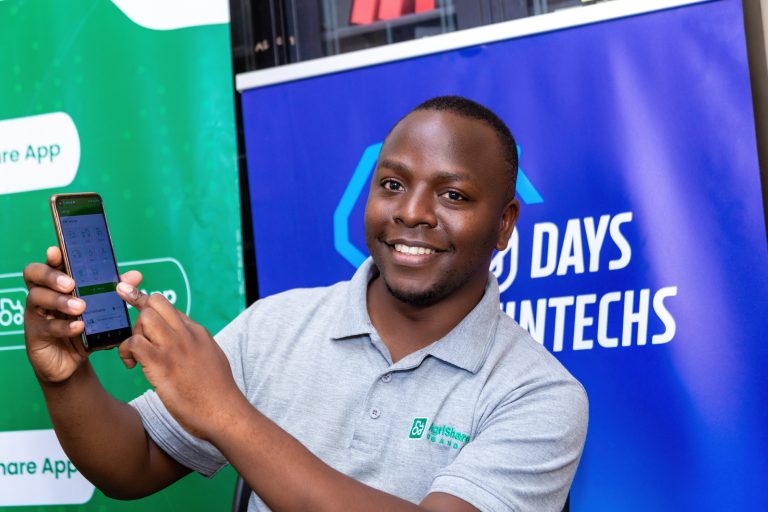
“We connect people who own these resources to those who want them. We innovatively do this through our AgriShare App which is available on Play Store. You just download it and can share but also access the resources,” Zaake says.

The application so far has 40,000 active farmers and has facilitated over 50,000 transactions. Zaake says that what started as a pilot project in three districts has since been scaled up to become a national project.

To ease service delivery, AgriShare partnered with telecoms MTN and Airtel by integrating their APIs into the APP. This means that farmers can be able to make and receive payments with ease. “Some farmers don’t have smartphones and we have taken steps to ensure that they can make payments through the merchants or Airtel and MTN. Of course, some corporate farmers pay through the bank, and those who access our offices and pay by cash,” he says.

40 Days 40 FinTechs.

Zaake says one of the challenges FinTechs face is a lack of exposure and visibility due to limited marketing resources. He is thus happy to be part of Season Four of the 40 Days 40 FinTechs which offers FinTechs across the East African region an opportunity to showcase their products and impact.

“At the end of the initiative, there’s usually an exhibition that provides an opportunity to interact with other actors within the sector. It also helps to collaborate and get more partnerships. This is key in Uganda where many actors were previously working in silos,” he says.

AgriShare is participant number 13 of the fourth season of the 40 Days 40 FinTechs initiative.

HiPipo’s 40 Days 40 FinTechs initiative has become a household name in the financial technology space in Africa. In the last three editions, more than 100 FinTechs have been showcased, highlighting stories changing people’s lives, especially in the under-served sectors. The initiative is organized by HiPipo in partnership with the Level One Project, Mojaloop Foundation, INFITX, Cyberplc Academy, Ideation Corner, and Crosslake Technologies with generous support from the Bill and Melinda Gates Foundation.