Home Blog Page 40

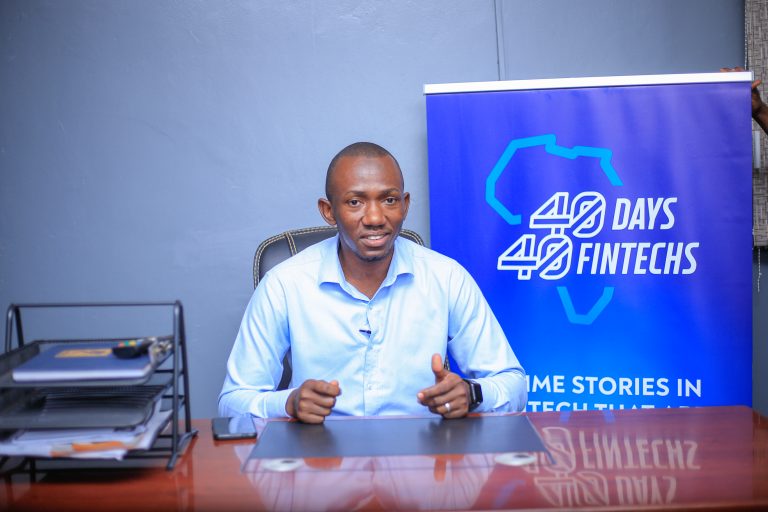
Traders rave in market access through Merchandise Uganda. #40Days40FinTechs Season 4 Day 7.

Market access is one of the biggest challenges for businesses in Uganda, especially in the informal sector. Many highly depend on word-of-mouth references because they lack resources for proper marketing.

Some fail to breakeven and close shop while others stagnate at a small-scale level. It is estimated that Uganda has more than 2.5 million formal and informal businesses suffering with limited market as well as physical visibility.

Of these, 1.8 million informal businesses are run by women, youths and refugees. The majority of these cannot afford good premises and/or online visibility.

Back in 2020, Osman Salim Mwebaze, a founder of KLA Garden Spices that is available on the Merchandise Uganda platform found himself in this state of affairs. He would wake up every morning, open his premises in Kawempe-Lugoba and pray to God for customers for his products including spices for tea and food like chicken masala, pilawo masala, Tangawizi, black pepper, among others.

Business was dim. Profits were hard to come by. Hope was lost – until he was told about Merchandise Uganda, an online marketplace.

“About three years ago, a colleague told me about Merchandise Uganda where we could advertise our products using the phone,” he says.

“Ever since I joined this platform, business has changed. Previously, it would be hard to find market but now I also get an opportunity to interact with other producers or manufacturers and buyers,” he adds.

What is Merchandise Uganda?

Merchandise Uganda is a free online marketplace where sellers and buyers meet and transact. When you have a business or products to sell, you just visit the Merchandise Uganda platform and open a shop. A seller/trader is required to provide some KYC in form of trader name or business name, location, contact details, good photos of products and videos of how the products work (if need be).

When someone wants a product, they go to the website or download the Merchandise Uganda App and search for the product they want. Then people with such a product will be listed and the client can contact them directly.

They also have partnerships with delivery companies. All suppliers are assigned to these logistics companies. So, when the client makes an order, the delivery company is notified to pick the product and deliver it

According to Suzan Awori, the Business Administrator at Merchandise Uganda, since they opened shop in 2019, they have on-boarded more than 1,300 clients and created more than 100 direct and indirect jobs in 2021 alone.

“We have also trained more than 10,000 businesses on how to use digital marketing tools as well as women in local markets,” she says.

And traders are counting dividends. Mwebaze, for instance, says that since joining this platform, his weekly client traffic has jumped from five (5) to more than 20.

“There have been more orders coming in and it’s a tremendous platform,” he says. Mwebaze retained his physical shop along with his online shop.

He however advises the operators of this platform to improve the online payment system.

“There needs to be a mechanism where a client clicks on the product and payment is done promptly. Here, the supplier will be sorted and needs to make the product available for the client,” he says.

Awori says this is part of the plan, but it starts with building trust.

“Currently, we don’t handle digital payment but we have it in our future plan. We also encourage clients to do online payments as it saves time and is more secure. But, the main challenge here remains the trust between the buyers and sellers as many people are not comfortable to pay for something that has not reached their doorstep.”

Nonetheless, Mwebaze calls on Ugandan traders from all sectors to use such platforms to expand their market reach.

40 Days 40 FinTechs

Merchandise Uganda are participating in the 40 Days 40 FinTechs for the third time and Awori is aware of this initiative’s impact to their business growth.

“In 2022, we participated in the 40 Days 40 FinTechs initiative organized by HiPipo where we were awarded. We also on boarded more than 800 clients in that year,” she says.

According to HiPipo CEO Innocent Kawooya, Merchandise Uganda is one of the success stories that have shown the world the importance of online marketing.

“During the Covid-19 pandemic, we all realised that you can get all supplies by the press of a button. Platforms such as Merchandise Uganda are an example of a marketplace on your phone,” he said.

Kawooya noted that Season Four of 40 Days 40 FinTechs intends to highlight these achievements by innovative minds across the East African region geared towards serving the people at the bottom of the pyramid.

This initiative is run by HiPipo in partnership with the Level One Project, Mojaloop Foundation, INFITX, Cyberplc Academy, and Crosslake Technologies with support from the Bill and Melinda Gates Foundation. Life-changing stories from more than 100 FinTechs have been highlighted by this initiative in the past three years.


Teslon helps homeowners to save electricity using smartphones. #40Days40FinTechs Season 4 Day 6.

0

Most developing countries such as Uganda face a problem of lack of, limited and expensive energy resources. And when it comes to domestic usage of electricity, for instance, there is a lot of waste. It is very common to find a home with lights-on during the day or all appliances connected even when there is no need to.

It is this wastage that prompted 24-year-old Diana Najjuma and a team of young graduates to start Teslon, a smart home automation system that helps homeowners regulate how much electricity is used at home as well as monitor their business security using a smartphone.

“Our startup has three main products. The first one is the Smart Socket – It allows the user to control any appliance they have in their home using a click on their smartphone. They can also schedule when they want that appliance to work. For instance, if you have a fridge and it consumes a lot of power, you can set the different times when you want it to operate it,” says Najjuma, a graduate of Software Engineering from Makerere University.

They have also created smart extensions where someone can control multiple devices using their smartphone.

“Then we have the Smart Light Unit – We looked at the existing smart lights that are being provided by companies like Apple and Amazon and we realized that the systems are not favourable in an African setting. With smart light, they automatically switch themselves on and off using sensors,” she says.

Najjuma says that their solution goes from home to people’s workstations.

“We looked at the people in urban settings, those renting shops in arcades, and other small businesses. These people work on a daily and in cases where one works alone and they need to step out of their shop, they ask their neighbours to keep an eye on their merchandise. We thought about providing them with on-site affordable security,” she explains.

“We created a simple security system that they put at the edge of the door – usually their doors are pull-ups while locking them – if a client approaches your shop or an intruder, the system will send an alert on your phone wherever you are.”

Teslon has also incorporated a donation arm to its operations to help the young company raise funds for creating Energy Saving products.

40 Days 40 FinTechs.

Teslon is the sixth participant in Season Four of the 40 Days 40 FinTechs initiative organised by HiPipo to shine a light on emerging Financial Technology companies in East Africa.

Najjuma indeed owes her company’s innovation to HiPipo noting that she got her inspiration from participating in the Women in FinTech Hackathon, also organised by HiPipo.

“The Hackathon taught us to come up with solutions that Include Everyone and I think that if we could adapt to solutions like Teslon, we can help save on power and bills for many low-income earners as well as satisfy one of the two United Nations Sustainable Development Goals of access to clean and affordable energy for people all over Africa and the development of sustainable cities,” she says.

One of the Teslon clients George William Tinka, a medical doctor, says he has used their Smart Lights product and it has been miraculous.

“They have helped me a lot. For instance, in case I have left home and forgot to turn off my lights, its sensors will turn the lights off to save me any bills. Even when I am back from work, I don’t have to struggle around the house looking for the switches as the lights will turn on automatically,” he says.

He, however, urges them to come up with a Mobile Application to make their product more convenient.

“My suggestion to the developers of the app is that they should integrate more digital payments into their system. This will make it much easier for users to make payments and donations,” he adds.

But Najjuma tags these challenges to lack of seed capital.

“It is quite hard with the current economy to afford the necessary resources in terms of equipment, and operation costs, engineers are moving up and down and don’t have data and airtime, among others. There’s a lot to do with spending on everything that you are doing. This is a big issue on our side,” she says

She, however, appreciates the 40 Days 40 FinTechs initiative for the opportunity to showcase their innovations

“It is going to empower my startup in terms of showcasing us out there. They are putting for us a platform in terms of finances, mentorship, and marketing. This is a huge hope for the development of our startup,” she says.

The 40 Days 40 FinTechs initiative is organised in partnership with the Level One Project, Mojaloop Foundation, INFITX, Cyberplc Academy, and Crosslake Technologies with support from the Bill and Melinda Gates Foundation.

Zukuka Finance is using Islamic Banking principles to save borrowers. #40Days40FinTechs Season 4 Day 5.

A quick scan through the daily newspapers will show you how many people are losing their businesses to financial services providers for failure to service a loan. Financial services providers usually don’t care if you made a profit or a loss on the money they gave you; they just want their money back plus the interest accrued. If you fail, they advertise and sell the collateral.

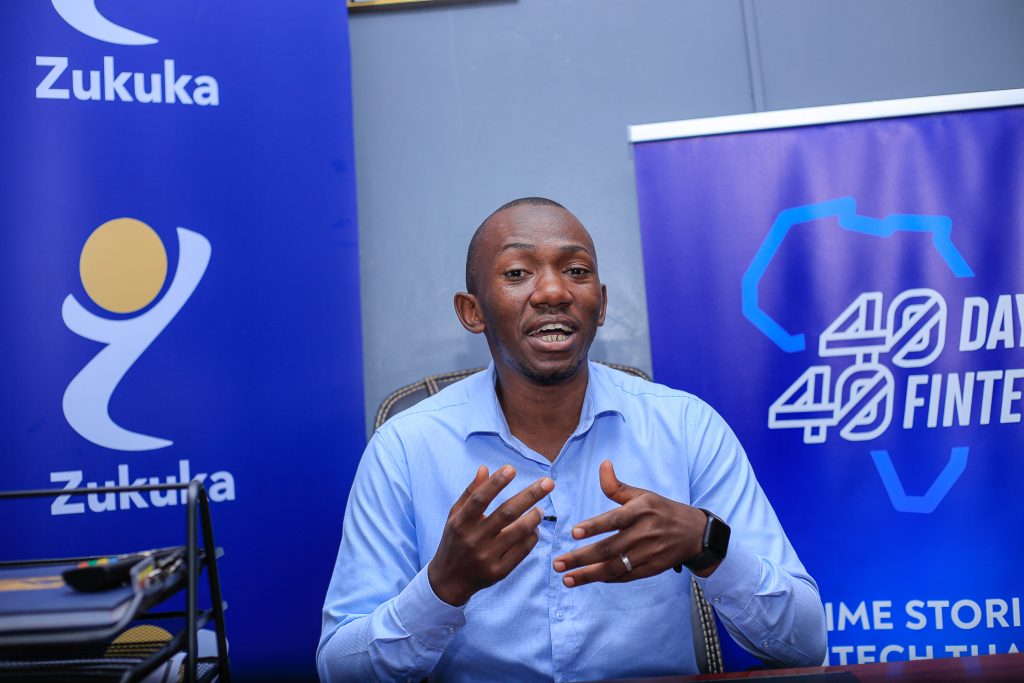
It is this unfortunate reality that partly inspired Kakande Farid Gava and four others to start Zukuka Traders Limited, a digital saving and loan product based on the Islamic banking system.

“We have two fundamentals in Islam that drive finances; Profit and Loss Sharing – this is mainly for businesses… We share the profit and loss as long as the loss is not bound to the clients. We consider the loss as natural. The second principle is interest-free loans. At Zukuka, we give loans without expecting any interest. If you take Shs 500,000, we expect the same amount on return,” Kakande, the Zukuka Chief Executive Officer, says.

On the technology side, Zukuka came to solve the problem of manual processes within Saccos because everything is digitized. Members can join using their Zukuka Mobile App, Website, and social media handles.

In the two years of operation, Zukuka has attracted more than 800 clients saving daily, weekly or monthly depending on their earnings.

“We try our best to reach about 75 million monthly in savings. For credit facilities, we give an average of 10 members monthly and expect a payback of 65 per cent in loans,” he says.

He adds that the Zukuka Mobile App allows users to track transactions in real-time. Clients can also carry out deposits on their Zukuka accounts via mobile money.

Meanwhile, Kawooya Hassan, one of the Zukuka members says it is the principle of zero interest that has impressed him most.

“I joined Zukuka Finance two years ago but I am very happy with it because of the reliable and efficient service. Our savings are safe and when you need a loan, it comes with no interest. We just have to share profits, if any,” he says, noting that even countries like Uganda are struggling to finance national budgets because of the high interest they have to pay to their creditors.

40 Days 40 FinTechs

Zukuka Finance is a fully registered Sacco under the Ministry of Trade, Industry, and Cooperatives and regulated by the Uganda Microfinance Regulatory Authority.

However, Kakande says people’s uptake of digital innovations is still a stumbling block in Uganda.

“People are illiterate about these technologies. We are trying our best to carry out training for our members. People also think technology involves a lot of fraud. For us, when a customer wants to withdraw money, we always request for a [secret] code to avoid fraud and embezzlement of funds,” he says.

He further appreciates initiatives such as 40 Days 40 FinTechs that are shining a light on emerging players in the FinTech space which is one way of building confidence among end-users.

“This initiative has helped giant companies to interact with SMEs. This has helped to build a relationship in business which eventually leads to economic growth,” he says.

Now in its fourth season, HiPipo’s 40 Days 40 FinTechs initiative has become a household name in the financial technology space of the East African region. In the last three editions, more than 100 FinTechs have been showcased, highlighting stories changing people’s lives, especially in the under-served sectors.

“This season we are happy to show the impact stories of these innovations. The likes of Zukuka are facilitating financial inclusion because we believe that in order to create realistic change, the cost of credit should be reduced significantly. And that is what Zukuka has done through their implementation of Shariah-compliant finance principles,” noted Innocent Kawooya, the CEO of HiPipo.      

Zukuka Finance is participant number five in the 40 Days 40 FinTechs initiative, season four organized by HiPipo in partnership with the Level One Project, Mojaloop Foundation, INFITX, Cyberplc Academy, Ideation Corner and Crosslake Technologies and generously supported by the Bill and Melinda Gates Foundation.

More than 1,000 businesses are benefiting from Xente Visa Cards. #40Days40FinTechs Season 4 Day 4.

One of the biggest business challenges is accountability. For instance, it is almost impossible for any organization to determine how much airtime or fuel was used by a field staff in a given month. This is because the field staff usually pay out of pocket and claim the money later without proper proof.

But this is a problem that Xente, a financial technology company, is determined to end through their Visa Cards and automated online transactions.

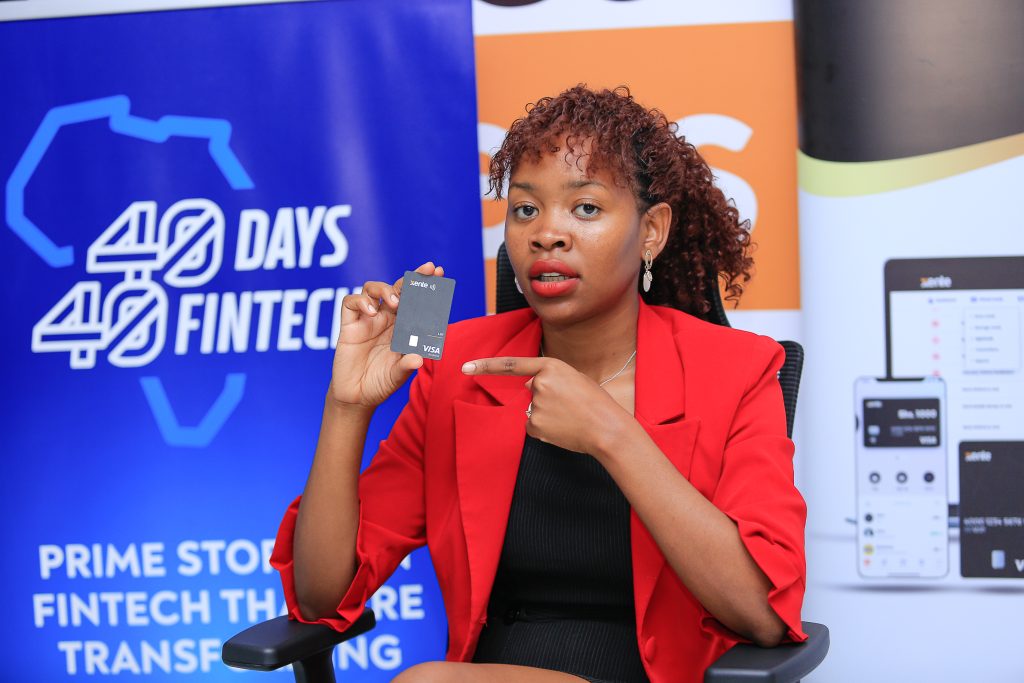
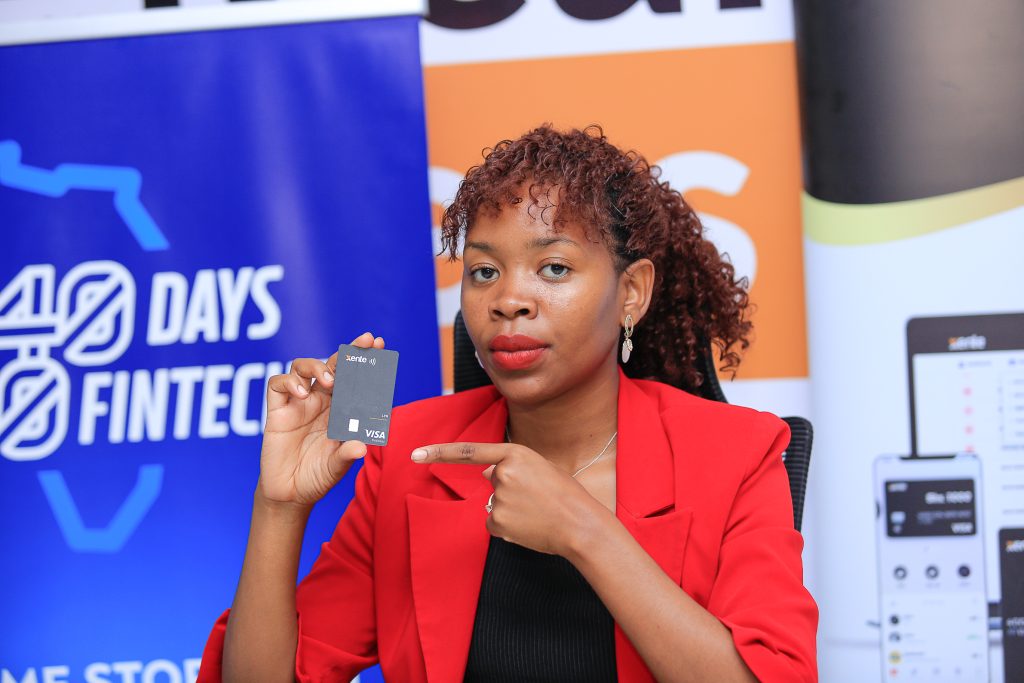
Through a partnership with Visa, Xente is among the first FinTechs to issue both virtual and physical visa cards in Uganda. On top of this, Xente helps businesses, companies and organizations to automate company finances by providing a platform where companies are able to log on and open an account where they can make bank transfers, mobile money, airtime, and data to their teams or beneficiaries and staff.

Between 2017 and 2023, more than 1,000 businesses such as NSSF and Jumia have benefitted from these services to ease their business transactions.

“They are able to save time and money while ensuring proper accountability,” says Lyn Tukei, the Head of Public Relations and Marketing at Xente.

“For instance, if you have to send money to more than 1,000 people, you don’t need to walk to that mobile money agent anymore. All you need is to get onto our platform and send money to as many people as you want across various networks. This comes in handy across businesses that use a lot of time and money while making these transfers,” she notes.

Tukei says automation helps businesses to approve every payment, track every transaction in real-time, manage money across teams, branches, and/or countries, and sync data with their accounting platforms. 

How does one get Xente?

“It is very easy, just like any other bank account. It integrates what the banks and telecoms do. All you need is to log on to the Xente website and you will be able to create an account. If you are already registered, you just simply log in and see the various features that you are able to use. If you are new, they will ask for simple KYCs like the certificate of incorporation to make sure that you are a registered business. It becomes easy for you to start sending out bulk SMS, data, mobile money, airtime, and bank transfers, and issue virtual and physical visa cards. All you need is an Excel sheet of all the targeted beneficiaries. You can automate all your payments in real-time.”

40 Days 40 FinTechs

Xente is the fourth participant in Season Four 40 Days 40 FinTechs initiative that seeks to highlight the impact of FinTechs in the lives of under-served populations.

“The 40 Days 40 FinTechs initiative has been helpful in elevating FinTech space in Uganda. There’s not so much awareness being done about FinTechs like in rural areas but this platform has amplified the message to the people,” Tukei says.

HiPipo CEO Innocent Kawooya says the past three years have seen more than 100 participating FinTechs benefit from useful tools and an introduction to the industry’s emerging technologies such as Mojaloop Open Source Software, and guidance from Level One Project foundational material.

The skills gained from this initiative cover Level One Project Principles, Instant and Inclusive Payment Systems (IIPS), inclusive finance and FinTech in general.

Now we want to show the real impact of these FinTechs. If you hear that Xente is serving 1000 businesses, then we can comfortably say we are on the right track,” he said, sending his appreciation to the initiative’s partners including Level One Project, Mojaloop Foundation, INFITX, Cyberplc Academy, Ideation Corner and Crosslake Technologies.

BOU Compliant.

Xente is a Bank of Uganda licensed Payments Systems Operator (PSO) in Uganda. They also have a license of Issuer of Payment Instrument, which means that Xente is licensed to issue any payment instrument such as the Xente Visa Card.

Tukei calls upon other FinTechs to get out of briefcase management and obtain formal licensing.

“I implore all businesses especially if you are dealing in payment instruments, it comes in handy to have a compliance license in order to be trusted by stakeholders, investors, and other partners,” she says.

She further talks up the increased FinTech uptake in Uganda, calling on developers to come up with user-centric solutions targeting people at the bottom of the pyramid.

How a village hero birthed AkelloBanker that is benefitting thousands of people. #40Days40FinTechs Season 4 Day 3

Sometime in 2016, Jean Anthony Onyait was on a study trip to Tirinyi where he met a special woman that would change the story of his life.

This woman was called Akello. She was a village hero! A hero because she was in police custody for failure to pay a loan received from a microfinance institution on behalf of members of her village farmers’ group.

She was the leader of a group of smallholder farmers. They needed money to buy farm inputs but all had no collateral. Akello had inherited some property from her late husband and she decided to use it as collateral to borrow money and give it to group members with the hope that they would use the money responsibly and manage to repay the loan.

“Her group members failed to pay and she was arrested and the property was going to be taken. Just imagine what would happen to her children,” echoes Onyait.

On hearing this sad story, Onyait intervened. Together with the team he was with, they decided to travel back to Kampala, raise as much money as possible, and return to Tirinyi to settle Akello’s debt.

And he did not stop there. He was inspired to start Akellobanker, a digital infrastructure that can be used to enable millions of smallholders and SMEs to access important and life-saving collateral-free services such as access to farm inputs and extension services on credit.

“We gave our company that name in respect of Akello. AkelloBanker means a bank for people like Akello who want to see their production and productivity increase but they do not have the resources and information that can help them,” Onyait, the AkelloBanker Chief Executive Officer, says.

Lasting impact.

Born in Tirinyi, AkelloBanker has spread wings across Uganda, impacting more than 180,000 smallholders as well as Small and Mid-size Enterprises.

“These smallholders are farmers who are toiling every day to produce what we eat while the SMEs comprise input dealers who are in the local communities with small stalls where farmers go and access inputs,” he explains.

According to Onyait, more than 700 SMEs have been empowered and they have been able to digitize their agricultural supplies to the farmers. They are also able to access credit which they are able to use for restocking their inputs.

“Every year, we have at least five transactions done by each farmer. These are about 900,000 transactions within a given period of time. We have been able to power over 20 million dollars worth of credit which has passed through the system to facilitate the farmers,” he explains.

With this digital platform, a farmer using data-driven approaches can access a loan instantly using their mobile phones. It can be via a smartphone or any basic mobile phone.

“If they cannot access cash…they should be able to access inputs on credit…,” he says.

One of the SACCOs using AkelloBanker services is LWEDE [Lwengo Development Cooperative Society] in Lwengo district.

These are mostly involved in providing financial services to coffee and poultry farmers.

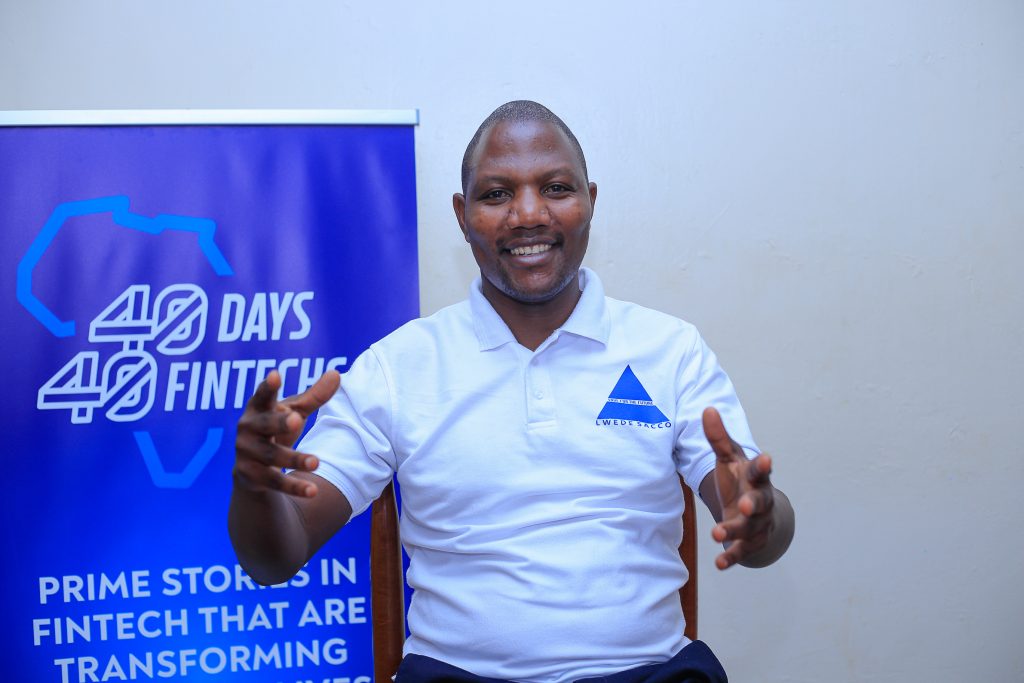
“They are powering our operations through a system called Quest and it has been very effective in financial management. Even when we get technical challenges, we reach out to them and they sort it immediately,” said Charles Asiimwe, the Lwede Sacco Manager.

Farmers are happy too.

According to Elizabeth Atugonza, she has borrowed from Lwede Sacco over 10 times using her phone and the system is very user-friendly.

Further, John Matovu Ssagala, a Lwengo-based farmer and member of LWEDE noted that the platform has offered him multiple loans that have helped him remain in business.

Onyait says they are powering Saccos in every part of the country such as Hakashinyi Sacco in Mitooma-Inshaka, Bunyaruguru Development Sacco, Achila Enterprises in Eastern Uganda, Oyam DFA in Northern Uganda, among others.

“Oyam DFA is one of the biggest farmers’ organizations which not only produces grain but we have been able to link them to Makerere University where they are able to get foundation seed on credit. We are able to facilitate all that,” he explains.

40 Days 40 FinTechs.

Onyait says that some of the challenges in driving financial inclusion in Uganda include limited infrastructure (internet and device access), illiteracy on how to use these digital services, and cyber security.

He is, however, happy that initiatives such as 40 Days 40 FinTechs are coming up to try and reduce the divide between the empowered community and the people at the bottom of the pyramid.

“The 40 Days 40 FinTechs initiative is a very strong platform to bring like-minded players into one place to share ideas and devise means on how we can deepen the financial sector. Since it comes from the issue of technology or financial technology providers, we are able to learn about the past challenges that commercial banks had to go through. We have been able to learn from the telecoms. So, the efforts by the different actors definitely give us a learning platform,” he says.

Now in its fourth season, HiPipo’s 40 Days 40 FinTechs initiative has become a household name in the financial technology space of the East African region. In the last three editions, more than 100 FinTechs have been showcased, highlighting stories changing people’s lives, especially in the under-served sectors. This initiative is run by HiPipo in partnership with the Level One Project, Mojaloop Foundation, INFITX, Cyberplc Academy, Ideation Corner, and Crosslake Technologies with support from the Bill and Melinda Gates Foundation.

AkelloBanker is participant number three of the fourth season of this initiative. Innocent Kawooya, the HiPipo CEO noted that AkelloBanker is a clear example of both the life and time-saving abilities of Financial Technology.

Belle Beauty is delivering convenience in the Beauty Service Sector. #40Days40FinTechs Season 4 Day 2

After a long day’s work recently, Fetaru Charity Flavia was late for a surprise birthday party for her friend. To make matters worse, she needed a quick make-up but she couldn’t go to her usual make-up artiste and make it to the party in time.

“Then I remembered I could order for a makeup artist using my phone. I immediately went to the Belle Beauty App and they sent me someone close to my location,” she says of Belle Beauty, a digital marketplace that connects beauty service providers to customers.

“This service is convenient for me. Now every time I want makeup, I just go to the App and find someone to have it done anytime at my place or at their offices. I use Mobile Money when I am done. I am happy with their service,” she adds.

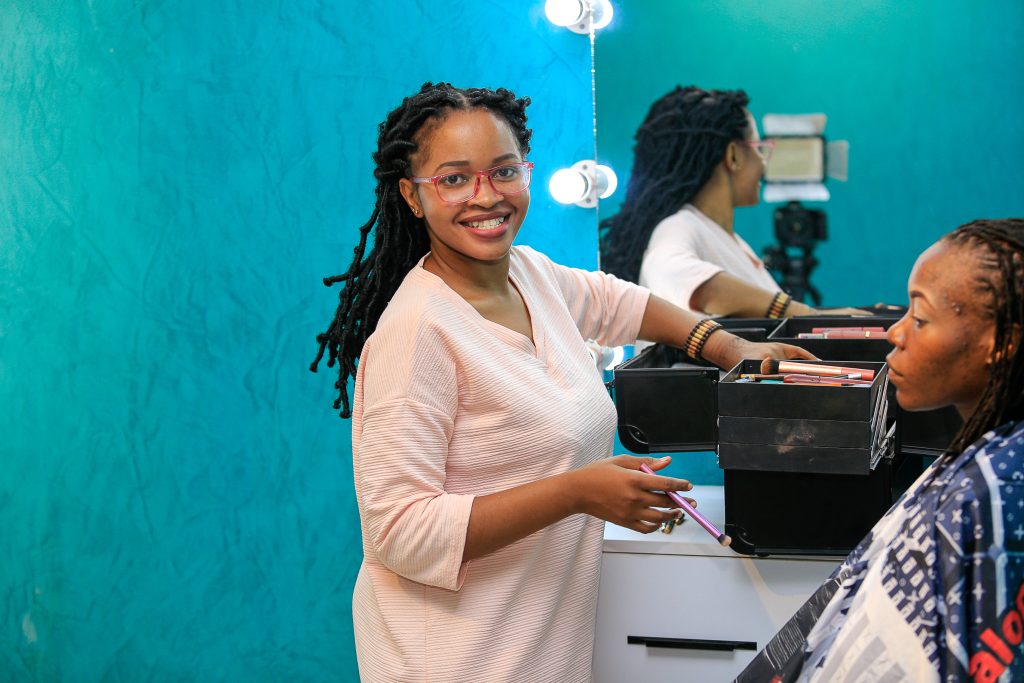
On this day, it was Namulamie Hillah, a Makeup Artist at Hillah Beauty Uganda that is listed on Belle Beauty, who saved Flavia’s day. And on her part, since she joined Belle Beauty in 2022 as a makeup service provider, Namulamie has lots of good things to say about this platform.

“I have so far worked on more than 100 clients. The App has connected me to many customers who want makeup. It has helped a lot to build my brand name and meet more people since they have a wide range of clientele including celebrities,” she says, noting that she offers all types of makeup ranging from bridal, casual, photo-shoot, indoor and outdoor.

She says that a platform like Belle Beauty has greatly helped her tap into the clientele group that prefers to be served at their places of convenience.

Covid-19 product.

According to Alice Sharon Namugerwa, the CEO of Belle Beauty, this is a product of the Covid-19 pandemic which especially affected salon women that were put out of business because of the lockdown.

“During the pandemic, we got to understand which sectors were essential or not regardless of their profitability. We saw that the beauty sector which employs between 30,000 to 60,000 people in just the urban centers was not catered for and it left a question of what happened to all these people,” she says.

“And remember that most of the people in the beauty sector are majorly informal and didn’t have any business continuity structures.”

With this in mind, Namugerwa came up with a cost-free online platform where beauty service providers could register and get connected to clients regardless of time, place, or conditions. In two years, the platform has on-boarded over 80 service providers and served more than 1,000 clients.

“We would have more service providers but some fail our quality assurance mechanisms because they are in the informal sector. However, we don’t turn people away; we still give them an opportunity to meet clients after undergoing training. We connect them to beauty schools to get skills so that quality is assured for our customers that use the platform,” Namugerwa says.

To avoid losses, customers are encouraged to pay upfront using digital payment platforms such as Mobile Money.

“When you utilize our platform, you are required to pay upfront using mobile money. Once the payment is received, the appointment is then fixed with the service provider who is paid on the same day when the work has been successfully executed. The service provider is also paid using mobile money. We try as much as possible to be cashless so that we can ensure that all the players in the transaction are happy and safe,” Namugerwa says.

40 Days 40 FinTechs

Namugerwa owes Belle Beauty’s meteoric rise to its association with the HiPipo Include Everyone Program.

“When we tell people that we have been around for one and a half years, they can’t believe it. We started off participating in the Women in FinTech Hackathon and by the time we were included in the 40 Days 40 FinTechs, we had grown. Being on this platform validated our idea. This platform has taken us to spaces that we would have worked a little longer to achieve because of the mentorship and visibility that comes with the platform,” she says.

Now in its fourth season, HiPipo’s 40 Days 40 FinTechs initiative has become a household name in the financial technology space of Africa. In the last three editions, more than 100 FinTechs have been showcased, highlighting stories changing people’s lives, especially in the under-served sectors.

According to HiPipo CEO Innocent Kawooya, the testimonies coming from users of these platforms are a testament to the great work done through this initiative.

He further urges innovators to continue targeting people at the bottom of the pyramid who urgently need financial technology services to improve their lives.

CHALLENGED!

Flavia notes that on top of connecting people to service providers, they should as well add beauty makeup products “so that it makes it easier for us to get them.”

Namugerwa says this is part of the plan and this provision will soon be available on the App.

On the side of service providers, Hillah says sometimes clients make appointments and when you come to the hub in Ntinda or go to the agreed location, the client does not show up.”

Meanwhile, Namugerwa says that while there are many challenges facing startups in Uganda, the biggest one is funding.

“I can’t address the regulatory aspect because you will still need funding to satisfy it,” she says.

“Most importantly, you must be very patient with a startup because even when you provide the first funding, it doesn’t mean that you are going to break through immediately. We need funding for our companies to run for like five years because what we are trying to do is an innovative solution in an economy that is just trying to get innovative,” she adds.

“There are still challenges of access to the internet yet most of the solutions we are coming up with need access to the internet…For example, if I have developed an App, I am mainly looking at the urban sector but I want my App to be a solution for those at the bottom of the pyramid. However, they don’t have access to the internet. We could use USSD but you also need funding.”

Belle Beauty has been featured as participant number two in the 40 Days 40 FinTechs initiative season four. This initiative is run in partnership with the Level One Project, Mojaloop Foundation, INFITX, Cyberplc Academy, Ideation Corner, and Crosslake Technologies with support generous from the Bill and Melinda Gates Foundation.