Home Blog Page 60

CardPesa is enabling small businesses access instant working capital

By Our writer

While majority of Uganda’s youth have resorted to running small businesses due to the high unemployment rate, their businesses suffer high failure rates due to, among others, inability to access credit.

This is mainly because most lenders ask for collateral, which most of them do not have.

However, Discount Cards Limited’s CardPesa solution, an online platform that enables ordinary people to access revolving credit on their mobile devices or digital wallets, could salvage them.

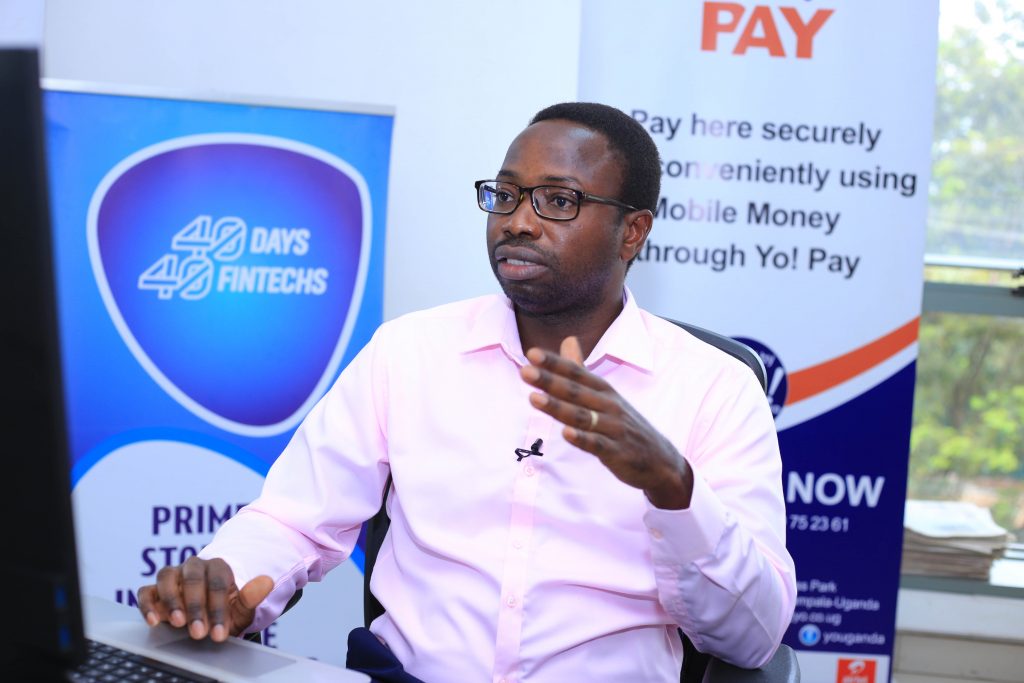
According to the Discount Cards Limited Managing Director, Nelson Kituuka, the solution enables people access collateral-free working capital loans instantaneously to invest in their businesses so as to maintain or increase their earnings.

 “We will not provide you money to buy a house, land or Boda Boda, but we shall give you money to fuel your Boda Boda so that you can work. We will give you money to buy ingredients to bake cakes or provide you money to ensure that your daily activities are not hindered by lack of that small ingredient you need to carry out your business,” Kituuka explains.

5Cs.

Instead of asking for physical collateral, CardPesa assesses the borrower’s credit worthiness and loan limits using five Cs – the borrower’s character, capacity, capital, available conditions in the environment and collateral – which in this case is in form of one’s bio data, references and one’s business or work place.

The borrower is, however, required to subscribe to the platform and access funds for a period of the year they have subscribed via www.cardpesa.com/signup.

Kituuka says that if one is subscribed for a year and their monthly limit is UShs500,000, they can access up to UShs6 million by the end of the year, as long as they pay back the borrowed money for that particular month within 30 days.

Basing on one’s credit history on the platform; their limits can be increased and even given better service, according to Kituuka.

To provide the loan service, CardPesa integrated into Airtel Money, MoMo Pay and banks to easily provide instant credit to its clients.

For safety, the CardPesa platform uses a two factor-authentication. A user is thus required to have a secret PIN and to remove the money off the platform; they also need an operator PIN. For instance, if one uses Airtel or MTN mobile money, they will need that secret code or that to their bank account before the money can be released.

While a third of CardPesa’s clients are women, Kituuka says that women are less likely to take loans mainly because they are more risk averse.

To raise their appetite for loans, Kituuka notes that they are looking to partner with organizations that want to empower women and show them that they can borrow and use the credit to increase their revenues.

40-Days 40-FinTechs

Discount Cards is among the firms participating in the ongoing second edition of the 40-Days 40-FinTechs initiative, organized by HiPipo in partnership with Crosslake Technologies, ModusBox and Mojaloop Foundation, and sponsored by the Gates Foundation.

Kituuka applauded HiPipo, saying that 40 Days 40 FinTechs is a move in the right direction as it highlights the different FinTechs and their solutions so that the different sector players see what others are doing and seek to form synergies.

“I thank HiPipo for initiatives like 40 Days 40 FinTechs. To win as FinTechs, the public needs to know what is out there. I was one of the biggest skeptics of what HiPipo was doing but I have watched videos of the players featured and it’s incredible. As a lender, it is important for me to know that there are farmers in this place, with this amount of produce and need this amount of money,” he says, adding that the biggest problem for doing business in third-world countries is the inability to access information on which to base decision making.

The HiPipo Chief Executive Officer Innocent Kawooya says that this year’s edition of the 40-Days 40-FinTechs initiative has showed that there are several FinTech solutions on the Ugandan market, with things like distributed ledger technologies, Artificial Intelligence, Big Data, Automated Customer Relationship Management, cash management and lending platforms, among others being showcased.

He notes that equity of access to credit is key to achieving business success and financial inclusion.

Silicon Pay making payments easier and efficient

0

By Our writer  

While previous efforts to encourage Ugandan businesses to digitize were futile, the outbreak of the global COVID-19 pandemic has created haste for enterprises, irrespective of size, to shift to online platforms. 

This has opened opportunities for Financial Technology Companies (FinTechs) to tap in with innovative solutions that are changing the way people pay for goods and services as well as receive payments.

Among these FinTechs is Silicon Savannah Limited, a technology company whose Silicon Pay solution is increasingly being used by businesses to ease payments.

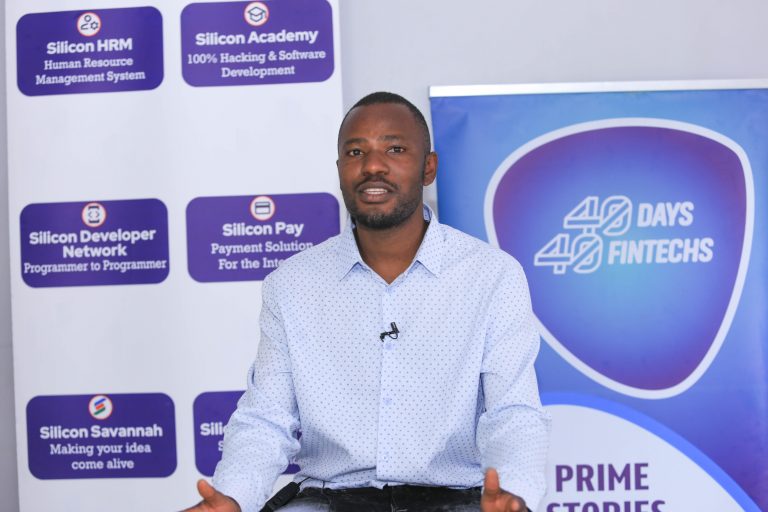
According to the FinTech’s Chief Executive Officer Patrick Setuba, the firm offers a fully integrated suite of payments products including collection, bulk payments, utilities, bank transfers and crowd funding through its Application Programming Interface (API).

Setuba adds that the platform provides an API for mobile money and credit card services, which merchants, individuals and companies can leverage by integrating it into their websites and mobile application and start receiving payments in real time.

“COVID-19 has affected businesses but it has paved way for the growth of digital payments as businesses resorted to online tools because they could not do physical meet-up and collections. So we provide solutions to these businesses and merchants to receive e-value,” he says.

Women inclusion

Given that fewer women-owned businesses have online presence, Setuba notes that the Silicon Savannah set out to change this. It offers low-cost website development services to women entrepreneurs to enable them move their businesses online and reach a wider customer base.

These websites are then integrated with Silicon Pay payment options to enable them have a fully modern e-commerce store where they collect and control their funds in real time.

Additionally, Silicon Savannah integrated the Silicon Pay solution in several women Saccos to help them ease collection of money through the platform and enhance accountability.

To stay on top on their game, Setuba says Silicon Pay integrated new products and services to meet its clients’ evolving financial needs. It for instance integrated mobile wallets to cater for customers who receive money in different currencies across Africa.

It also forged partnerships with key service providers such as e-commerce platform players, to provide more services to its clients.

To make it easy for businesses to onboard, Setuba says that the company uses the tiered Know-Your-Customer (KYC) principle, which he says also, helps them guard against fraud.

“To understand who we are dealing with, we incorporated KYC standards to better understand the customer we are dealing with. We thus take extra steps by asking them to prove their identity, nature of business to make sure the source of a customer’s funds are legitimate,” Setuba notes.

He adds that their systems enables users to monitor their funds on their dashboard in real time and can withdraw through mobile money instantly whenever they need it.

Additionally, the platform enables users to transfer funds instantly to their preferred bank accounts on request and receive the funds in a few hours depending on the time the request is made.

40-Days 40-FinTechs

Silicon Savannah is among the firms taking part in the ongoing second edition of the 40-Days 40-Fintechs initiative, which Setuba says has provided a platform for industry players to showcase their innovations that were less known to the public.

He alludes that Uganda’s FinTech industry is still virgin and thus offers a multitude of opportunities for growth, especially now that businesses are steadily picking interest in digital payments and e-commerce as they seek to reach a wider customer base.

Setuba, however, appeals to industry players to ensure real time funds transfer and same day settlement, noting that this will attract more Ugandans to use Fintech solutions.

The 40-Days 40-FinTechs initiative is organized by HiPipo in partnership with Crosslake Technologies, ModusBox and Mojaloop Foundation, and sponsored by the Gates Foundation. The HiPipo Chief Executive Officer Innocent Kawooya also notes that FinTechs need to be prepared with appropriate products and have appropriate real time payment systems in place to support an inclusive, interoperable digital marketplace that is both thriving and safe.

MTN MoMoPay brings new lines of business in your business

By Our Writer

By enrolling on the MoMoPay platform, your goal could have been to simply receive digital payments and make your business more efficient.

However, MoMoPay is not your ordinary kind of platform that allows you to only receive digital payments.

It, according to the MTN Mobile Money Uganda Limited Managing Director Stephen Mutana, creates new lines of business for small business owners to earn extra income.

Mutana says that a merchant that uses the MoMoPay platform can also sell airtime and earn 4% commission; can facilitate school fees, and pay utility bills among others.

 “MoMoPay is a full end-to-end proposition that not only allows you to receive digital payments and makes your business more efficient but it also brings new lines of business into your business,” Mutana says.

He adds: “Wherever you see a MoMoPay merchant, however informal they are, it is a business in a box; it not only allows them to receive digital payments but also allows them to receive other lines of business.”

MoMoPay is a product of MTN Mobile Money Uganda Limited, which was recently split from MTN Uganda Limited, following the enactment of the National Payments Systems (NPS) Act last year. The NPS Act required telecommunications companies to separate their mobile money services from voice and data services and run them independently. That said, MTN Mobile Money Uganda Limited is 100 percent owned by MTN Uganda Limited.

Mutana notes that the company applies a tiered Know-Your-Customer system which makes it easy for businesses to use the MoMoPay platform. Someone doing MoMoPay for their small business for instance only needs to have a fully registered SIM card while a big organization needs to provide a few more documents.

Even then, Mutana notes, they have made the process as seamless as possible, by availing digital on-boarding kits that pickup all the required information easily.

He says that the company puts a customer in mind throughout the product development process.

“For people to get the full benefits of the cashless economy, they should be able to transact digitally anywhere; let it be at a local hardware, a shop or salon. But for them to pay cashless, the service has to be relevant to their life,” Mutana says.

He adds: “So we are the ones who should align ourselves to the needs of the customer and as our agenda, we are deeply embedded in the activities of making it easy, within the confines of the regulations, for people to onboard onto these digital services like MoMo Pay.”

The firm also runs the MoKash product, offering unsecured micro-loans and savings products, in partnership with NCBA bank.

It uses one’s information about usage patterns of MTN services to assess one’s creditworthiness.

Additionally, Mutana says the company is in the process of launching more products that specifically target businesses. Among them is the MoMo Business, which builds on MoMoPay but gives businesses more capabilities around invoicing, payments and collection.

Use open APIs

To achieve full financial inclusion, Mutana says there is need for financial literacy, translating material in local languages and enhancing safety to engender and build people’s trust in using digital payment platforms.

Additionally, there is need to make it easy and faster for entrepreneurs with innovative ideas to onboard on open APIs.

“We have open-APIs where we have standardized some of the key functions of mobile money like payments, collections, remittances, and bulk payments. The worst thing is to have a great idea and you get stuck at how you should digitize it. We have done a lot in that area, though there is still a more to be done to get the developer community conversant with the standard APIs,” Mutana says.

The company is among the firms participating in the second edition of the 40-Days 40-FinTechs initiative, organized by HiPipo in partnership with Crosslake Technologies, ModusBox and Mojaloop Foundation, and sponsored by the Gates Foundation.

The HiPipo Chief Executive Officer Innocent Kawooya says this edition is Uganda’s most comprehensive foray into things like distributed ledger technologies, Artificial Intelligence, Big Data, Automated Customer Relationship Management, cash management and lending platforms, among others. He applauds MTN Uganda for spearheading the digital economy revolution from game changing products such as Mobile Money, MoMoPay and MoKash.

SoftPay is aiding business management transformation

By Our writer

Businesses are increasingly adopting emerging technologies across all functions, owing to the ability to improve operational efficiency, deliver better customer experiences and improve profitability.

Among the providers of these emerging technologies are Financial Technology Companies (FinTechs) like NewLife Technologies Sarl, a Cameroon-based mobile application and website development company, whose SoftPay is empowering businesses with a variety of financial solutions across the different functions to improve efficiency.

Using a mobile application for smartphone users and a Point of Sale (POS) option, the SoftPay Business platform offers solutions including inventory, sales, human resources, ticketing and booking and events management.

The solutions help firms collect payments, manage inventory, payrolls, sales, ticketing and event, among others.

According to the NewLife Technologies co-founder and Chief Executive Officer, Ngala Cyprian Mufor, the SoftPay Business platform seeks to help firms manage their interactions with both current and prospecting customers better.

“The system acts as a record of interactions across all business customer-facing touch points; organising, automating and synchronising them to enable you as a business service all your existing customers and respond quickly to issues and new business,” Mufor says.

He adds: “Businesses can manage their inventory, create invoices and distribute them to their clients and collect payments. They can also sell tickets while event organizers can create an event, sell it out, manage check-in and collect payments.”

How the systems work

The SoftPay Business’ Inventory and Service Management solution, for instance, enables businesses take advantage of a multitude of tools to improve efficiency by ensuring that their inventory and sales are in tandem while the Sales Management system enables businesses to manage every sale they make and receive payments through standard payment methods such as mobile money, Visa and Master card.

Its Human Resource Management system, on the other hand, enables a business to link its business account to other SoftPay users and pay them easily while the Ticketing and Bookings Management solution helps businesses sell tickets on multiple channels while reducing check-in-time at entry to the business site.

The PayForms Management solution allows a business to sell products, services and tickets online without having to build an e-commerce website. They simply share with potential clients a link generated on the platform for the product or service offered, using an SMS or social media.

“We are focused on serving and changing lives through technology. We are struggling to create a system that will support the financial inclusion for Africa.  That is why when you look at our platform, our on-boarding time is very short. Within a few seconds after downloading the Mobile App, the user is ready to use it because the on-boarding procedure has been reduced,” he says, adding that the procedure takes less than 15 minutes for those using SoftPay Business.

Using the MTN Mobile Money and Orange Money APIs, users can easily load their SoftPay accounts from any of these service providers as well as withdraw funds from their SoftPay accounts using their mobile network service provider.

Mufor, however, notes that Africa is still grappling with a number of challenges, including the dominance of cash as a means of business transaction, limited talent in the industry and lack of collaboration and support.

NewLife Technologies Sarl is among the FinTechs participating in the 40-days-40-FinTechs initiatives organised by HiPipo, in partnership with Crosslake Tech, ModusBox, and Mojaloop Foundation.

The initiative seeks to enable FinTechs to innovate solutions that facilitate cross-network financial transactions at minimal risks to enhance access to financial services.

The HiPipo Chief Executive Officer Innocent Kawooya, however, says that FinTech in Africa offers attractive opportunities and that investors are rightfully picking interest in the various startups that are offering a plethora of services, ranging from payments and lending, remittances, cross-border transfers and neobanks, among others.

He adds that FinTech is the launchpad on which the promise of full global financial inclusion will be fulfilled.

Yo Uganda: The FinTech that pioneered Uganda’s digital payments journey

By Our writer

Cashless and contactless digital payments are increasingly playing a significant role in ensuring safety, speed, convenience, and seamlessness in business operations globally.

It is this that Yo Uganda Limited, a technology solutions company, is extending to businesses and farmers across Uganda to improve their efficiency.

Established in 2006, Yo Uganda entered the market offering low-cost international calls before venturing into mobile technology to provide Value-Added-Services.

Solutions including mobile money, SMS, Unstructured Supplementary Services Data (USSD) gateways, Interactive Voice Response (IVR), voice solutions, and custom-developed applications, were developed and tailored to customers’ needs.

This followed the launch of MTN mobile money in 2009 and Kenya’s M-Pesa, which had been launched two years before MTN’s mobile money services.

“When mobile money was first launched, the focus was person-to-person and the recipient would immediately go to a nearby agent to withdraw cash. So, we saw an opportunity to enable businesses and other organisations to take advantage of the mobile money service in a way that would enable them to reduce their costs and lower the risks of keeping cash at their premises,” the company’s Managing Director Gerald Begumisa says.

The company later ventured into the mobile payments space, with the launch of Uganda’s first online, publically available mobile payments gateway in 2010, to enable businesses to receive payments from their customers via mobile money as well as make mobile money payments to any mobile money account holder.

Since then, Begumisa says, Yo Uganda has enabled more than 50,000 small medium and large businesses and over 150,000 farmers integrate digital payments into their day-to-day operations and lives.

Begumisa explains that while mobile money was already popular by 2010, there was still a big gap especially in rural areas where farmers were skeptical about adopting digital finance but it has since converted many.

Its Digital Payment Acceptance solution facilitates businesses to transition and to accept digital payments for their goods and services while the Bulk Digital Payment Disbursement solution enables various players, both for-profit and non-profit, transition to digital disbursement of funds such as salaries and vendor payments.

Its Integrating Financial Institutions with Mobile Money Networks solution provides an integration service that allows seamless transfer of funds between financial institutions and Mobile Money Networks to enable a bank account holder to transfer funds from their bank account directly to their mobile phone and vice versa.

Though not yet where they would want the industry to be, Begumisa says Uganda’s Fintech story is taking a good shape with time, with a generally improved market place for work, continued advancement and innovation.

He notes that solutions have been developed by various players over the years, beyond the initial focus on payments to various verticals like Insurance and Agri-Tech solutions.

Additionally, he notes that more has been done to improve the general marketplace, especially given the enactment of the National Payments System Act, 2020, which does not only seek to protect the rights and privileges of payments systems and solutions users but also streamline the industry.

40-Days 40-FinTechs initiative

Yo Uganda is among the firms participating in the on-going second edition of the 40-days-40-FinTechs initiative, organized by HiPipo in partnership with Crosslake Tech, ModusBox and Mojaloop Foundation.

Begumisa says the 40-Days 40-FinTechs initiative provides the needed publicity about the available solutions and products, and offers an opportunity to reach out to more stakeholders in government and private sectors to come on board to push the digitization agenda.

The HiPipo CEO Innocent Kawooya says FinTech in Africa offers attractive opportunities and that investors are rightfully picking interest in the various start-ups that are offering a plethora of services, ranging from payments and lending, remittances, cross-border transfers and neobanks, among others.

Numida is providing unsecured digital loans to small businesses in Uganda.

By our writer.

While access to credit is what micro and small business owners need to expand their enterprises and work their way out of poverty, it is nearly impossible for them to get bank loans because they lack collateral.

Given that they employ majority of Ugandans and contribute about 30% of the country’s Gross Domestic Product, Numida, a Financial Technology Company (FinTech) sought to close this gap and help them access unsecured capital to further increase their impact on society.

Using historical behavioral data and business performance to predict risk, Numida is able to extend digital unsecured and affordable working capital loans to these businesses through a mobile Application.

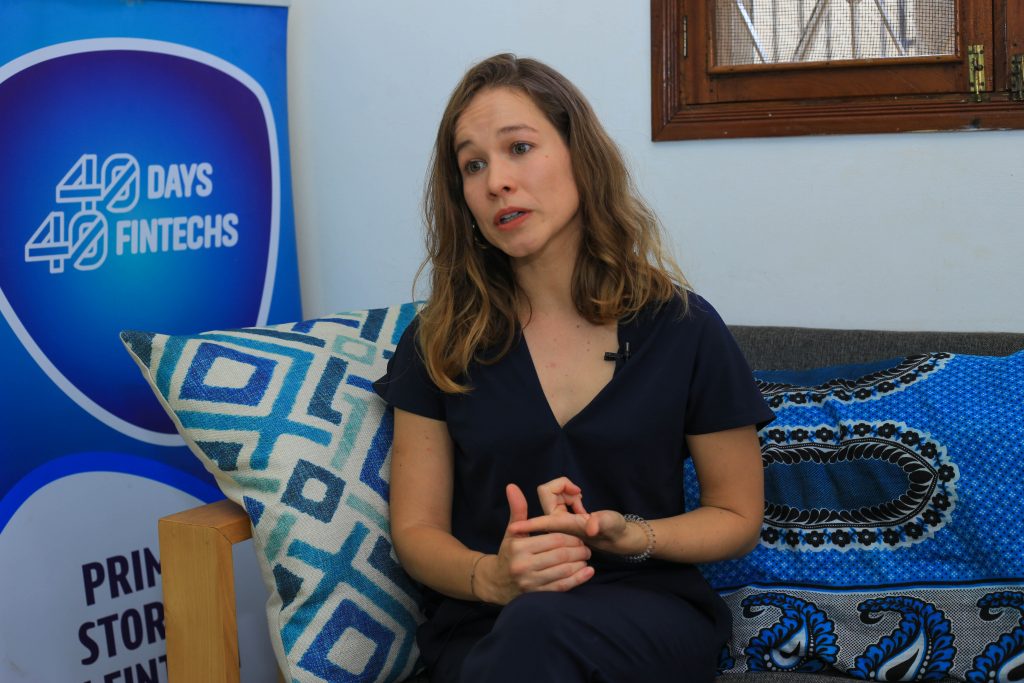
According to Ana Grajales, the Numida Uganda Country Director, the loans neither require paper work nor collateral and are disbursed within two hours for first-time borrowers, and in seconds for repeat customers.

 “We are working to be the first and largest mobile platform in Africa focused on offering digital, convenient and responsible financial services to semi formal African micro and small businesses. Our target is to enable at least 1 million small business owners on the continent to achieve their dreams by 2030.”

Grajales explains that unlike banks that ask for a multitude of requirements for one to access a loan, Numida only needs three things; one must own a business, have a national identity card or passport or driving permit and a mobile money number registered in their name.

The applicant is, however, required to download the Numida App, fill in the business details and upload photos. Once the loan is approved, money is sent to the applicant’s phone through mobile money.

The FinTech offers working capital loans ranging from Shs 300,000 to Shs 10 million, payable within one to six 6 months.

Grajales says Numida uses Tiered Know Your Customer (KYC), which allows customers to engage with them with minimum requirements.

“Our whole philosophy is lending to informal businesses that may not have all of the documentation or requirements needed by commercial banks,” she notes.

Same Day settlement is a core principle of Numida’s product as it gives convenient loans and services, within 24 hours while transactions are settled on a near-instantaneous basis.

Grajales notes that women business owners account for a third of Numida clients.

“Women are significantly less likely to access capital and are more likely to be more informal. So, lending to female-owned businesses, and building services to support them and other overlooked segments is a core part of who we are,” she says.

COVID-19

Unlike other micro-lenders, Grajales says that Numida continued operating and disbursing capital through the pandemic and has seen its portfolio growing during the period.

She notes that while they had to freeze interest, extend or wave fees for its existing customers that were negatively impacted by the effects of the pandemic, the FinTech acquired new customers and that collections remained steady.

Also important to note is that Numida is partnering with SafeBoda to rollout a capital and micro credit product for its clients.

 “We are very excited to be working with SafeBoda; we are very aligned in our values and keen to support SafeBoda vendors to access financing, grow their business, and increase their loyalty and engagement with SafeBoda,” Grajales explains.

She says that Uganda’s FinTech industry is budding; pushing the envelope of what is possible.

“We have exciting startups across the financial ecosystem with the potential to make economic growth and prosperity possible to more Ugandans,” she says.

Numida is among the firms participating in the ongoing second edition of the 40-Days 40-FinTechs initiative, organized by HiPipo in partnership with Crosslake Technologies, ModusBox and Mojaloop Foundation, and sponsored by the Gates Foundation.

Grajales commends HiPipo for the 40-Days 40-FinTechs initiative, saying it showcases the diversity and innovation in Uganda’s FinTech space, adding that visibility is important in facilitating attention, creating support and nurturing potential collaboration and partnerships.

The HiPipo Chief Executive Officer Innocent Kawooya lauds Numida, saying it is playing a great role in facilitating financial inclusion, as its product is impacting hundreds of the originally financially excluded people.