Home Blog Page 34

clinicPesa saves expectant mothers from financial pressures. #40Days40FinTechs Season 4 Day 37

Sometime in 2022, Rosemary Nankabirwa got the shock of her life when her underage daughter was impregnated by another juvenile. Despite the disappointment, Nankabirwa, a teacher by profession, chose to support her daughter through this trying experience.

She started by enrolling the expectant mother at a nearby health centre for antenatal care, and it is here that her story shifted from sadness to one of hope.

“When I came with my child, we were introduced to a product called clinicPesa Mamas by a company called clinicPesa where vulnerable expectant mothers were helped to save money, prepare for safe delivery and receive some medical supplies,” she recalls.

“We enrolled and my child started saving through me and she was given a card,” she says, noting that clinicPesa’s saving platform helped her cover child delivery fees as well as postnatal care.

Harriet Igalu is another subscriber to the clinicPesa Mama’s product. She notes that after she was introduced to clinicPesa in mid-2022, she started to save little amounts in preparation for safe delivery.

“I got to know about clinicPesa last year in June. I was enrolled and started saving small. clinicPesa improved my saving culture. At the time of delivery, I had saved enough money that catered for my hospital bills and also transport to and from the hospital.”

clinicPesa explained.  

clinicPesa is a FinTech-driven digital healthcare initiative that provides access to healthcare financing that is more convenient and affordable than the traditional insurance through digital micro-loans and a savings platform. Subscribers are encouraged to set aside dedicated healthcare funds used to offset medical bills and purchase drugs in time of need.

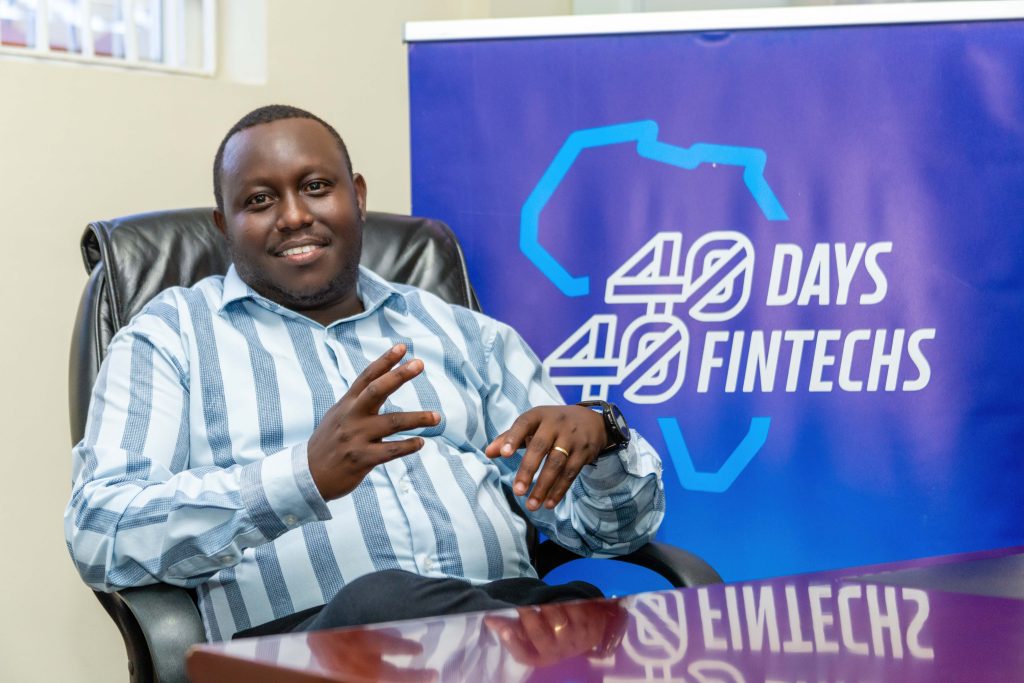
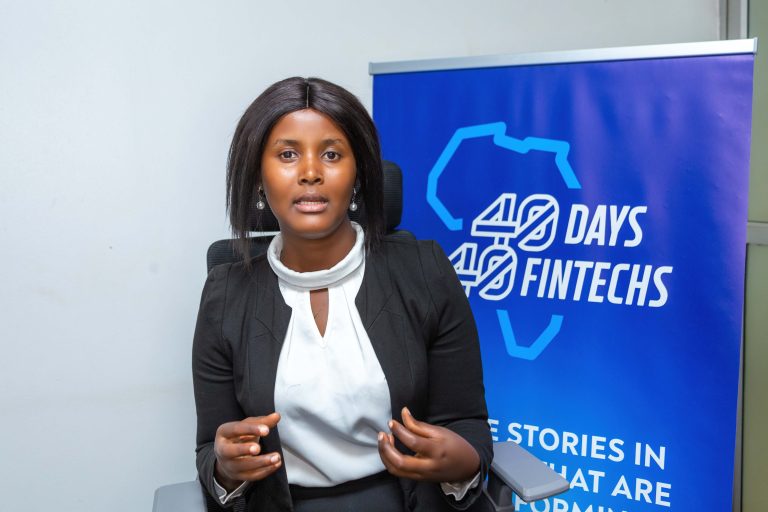
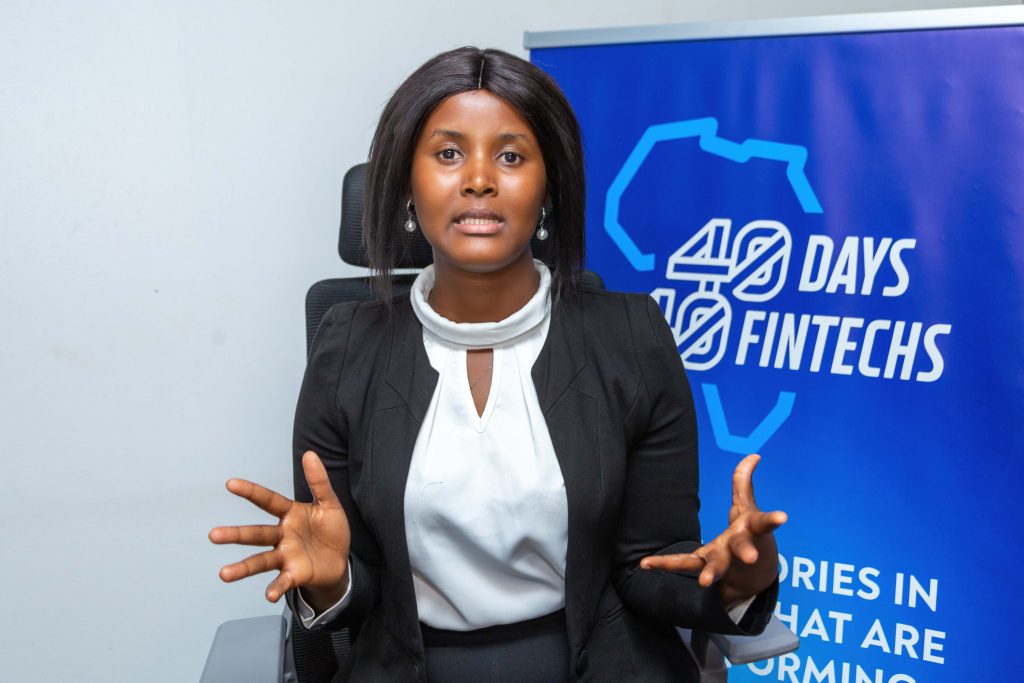
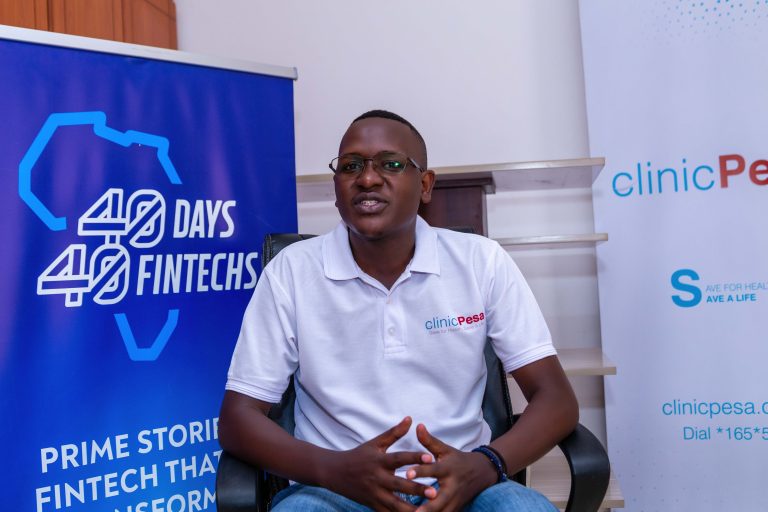
According to Eng. Chrispinus Onyancha, the Founder and CEO at clinicPesa, this solution is aimed at solving the challenge of access to health financing because most Ugandans either don’t have or can’t afford conventional health insurance.

“What we have come out to do is create a mobile wallet that enables the public to save from as low as Shs 1,000 on a daily, weekly and monthly basis and they are able to use this money to clear medical bills at any of our partner health centres. In case they do not have enough money, we are able to give them a loan top-up to clear bills and pay later,” he says.

Onyancha notes that they have a partnership with MTN MoMo where one just needs to dial *165*5# and select clinicPesa under the loans and savings option. In there they are able to put in their mobile money pin to accept the terms and conditions and an account is created.

“You can also download our mobile application from Google PlayStore and put in your mobile money number and a prompt will be sent to your phone to confirm your subscription” he explains.

“Conversely, clinicPesa Mamas’ product plays a significant role in mitigating maternal mortality by assisting pregnant women in preparing for the expenses associated with secure childbirth,” he says.

Onyancha further adds that clinicPesa has received tremendous uptake because of the growing appreciation of medical insurance by Ugandans.

“Our customer base has expanded to beyond 780,000, nearing the one million milestone. Presently, we are in collaboration with over 2,490 healthcare facilities throughout Uganda,” he says.

Resource challenge.

Nonetheless, Onyancha notes that besides the regulatory challenges, startups are curtailed by limited resources for investment due to the global economic recession in the past few years.

“The other challenge is about awareness. People still don’t appreciate saving, especially saving for healthcare. Coming from an angle where most people are biased about insurance where they see it as a loss rather than a gain, it is difficult to transform these mindsets but we are doing our best,” he says.

He however acknowledged that the 40 Days 40 FinTechs initiative is helping in showcasing the work of startup FinTechs to potential investors, partners, and clients.

“Another crucial component addressed by the 40 Days 40 FinTechs initiative is fostering awareness of these FinTechs within the community. This visibility promotes understanding of our operations and objectives, assisting our transition from a cash-based society towards a cashless economy,” he says.

As the 37th participant in the fourth season of the 40 Days 40 FinTechs initiative, clinicPesa is proud to join this collaboration. This initiative is expertly organised by HiPipo and made possible through partnerships with Level One Project, Mojaloop Foundation, INFITX, Cyberplc Academy, Ideation Corner, and Crosslake Technologies, with significant backing from the Bill and Melinda Gates Foundation.

The initiative highlights innovative stories that are changing the lives of under-served communities.

According to HiPipo CEO Innocent Kawooya, this year’s initiative looks at the user experience of East African FinTechs.

“We are delighted to see an increasing number of individuals embracing Digital Financial Services like clinicPesa, which positively impact the lives of everyday people. “Health is Wealth” perfectly encapsulates clinicPesa’s mission as they are making dignified healthcare accessible to all through their micro-savings and credit solutions,” he noted.

Golola Moses Teams Up with My Doctor to Usher in a New Era of Healthcare in Uganda

In a move that is already being hailed as a game changer in Uganda’s health sector, My Doctor, a trailblazing telemedicine service provider, has announced a landmark partnership with none other than the national kickboxing icon, Golola Moses.

Known for his sporting prowess and larger-than-life persona, Moses will lend his considerable influence and popularity to My Doctor’s efforts to reach and serve over 100,000 users, specifically focusing on traditionally underserved communities. This alliance underscores the innovative ways My Doctor is striving to enhance accessibility, reduce costs, and improve the quality of healthcare across the country.

A significant part of this collaboration’s mandate involves bolstering healthcare services for women, who often face barriers in accessing necessary care. With Golola Moses as a powerful advocate, the initiative aims to break down these barriers and provide women with the tools and knowledge they need to take charge of their health. This empowerment is expected to have a profound and far-reaching impact, creating healthier outcomes for not only the women themselves but also their families and communities.

“Our alliance with Golola Moses is more than a partnership—it’s a statement. It’s about showing that healthcare is not a privilege, but a right, and we’re here to make that right accessible to all Ugandans. By harnessing the charisma of a national icon, we’re amplifying the impact and reach of our health initiatives.” Said, Sharon Nambozo, Business Development Officer at My Doctor.

Furthermore, maternal and child health is another area set to benefit immensely from this partnership. My Doctor’s comprehensive antenatal, pediatric, labor, and safe childbirth programs are already leading the way in this field, and the partnership with Moses promises to strengthen these services even further. By raising awareness and promoting these vital programs, the initiative intends to improve health outcomes for mothers and children across Uganda.

Notably, the partnership is also dedicated to fostering growth and improvement within the healthcare sector itself. By providing a structured program for future healthcare education and training, My Doctor and Golola are laying the groundwork for a better-equipped and more knowledgeable healthcare workforce. This is anticipated to lead to not only improved service provision but also a reduction in healthcare costs, benefiting patients and providers alike.

“As I join forces with My Doctor, we’re not just throwing punches at diseases—we’re aiming for a knockout. We’re fighting for every Ugandan’s right to quality healthcare. This partnership isn’t just about bringing healthcare to the people, it’s about changing lives and building a healthier, stronger nation.” Said, Golola Moses.

Beyond its immediate impacts, this partnership is also set to have a longer-term effect on Uganda’s economy. By reducing healthcare costs and improving the health of the population, the initiative is expected to contribute to increased workforce productivity, boosting Uganda’s economic prosperity.

In sum, this unprecedented collaboration between My Doctor and Golola Moses holds great promise for the future of healthcare in Uganda. As the country looks towards a future with more equitable and efficient healthcare provision, this partnership is certainly a step in the right direction. The prospect of leveraging the popularity and reach of a national icon like Moses to advance healthcare provision is both innovative and inspiring, and it signals a new chapter in Uganda’s healthcare narrative.

MoMoPay is used by more than half a million subscribers every month. #40Days40FinTechs Season 4 Day 36

Since MTN Uganda launched mobile money some 14 years ago, the money transfer and financial technology landscape in Uganda was forever revolutionized.  

The convenience, timeliness, and robustness that come with mobile money have seen millions of Uganda’s unbanked population use this service at least once every year. Imagine the idea of sending money from Kampala to someone in Lira and they receive it within five seconds!

However, it is MTN’s most recent innovation called MoMoPay that has received more reviews because of its transformative effect of Mobile Money from a channel of sending and receiving money to a mode of payment between sellers and buyers.

For instance, Joshua Ainomugisha, who works as a Dispenser at WellCity Pharmacy and Medical Center in Kyanja, Kampala, notes that with MoMoPay, businesses have been saved the hustle that comes with cash transactions such as looking for change. With MoMoPay, clients promptly pay the exact amounts from their mobile wallets onto the business’ wallet.

“MoMoPay has also helped us to get rid of fake notes and makes bookkeeping very easy because we are no longer talking about shortages as all payments are on our MoMo line,” he says.

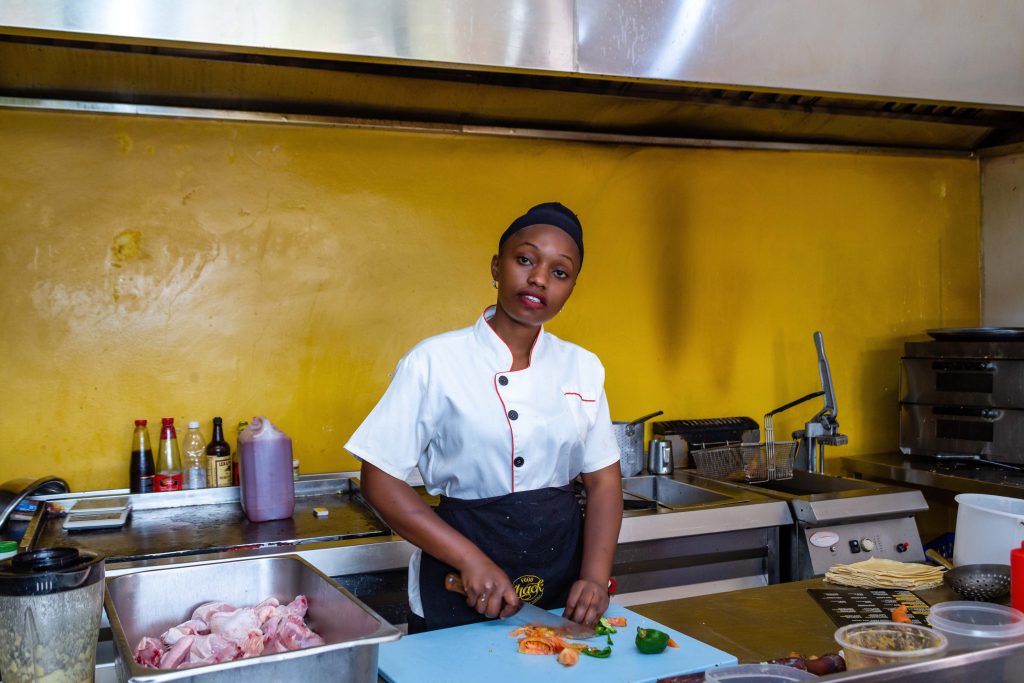
Further, Julian Atugonza, a Chef at Food Shack, also in Kyanja, Kampala notes that customers are very happy with MoMoPay as it saves time for all parties involved in the transaction.

“It quickens our work because as they are paying through MoMo, we are also finalizing the dish they have ordered,” she says. 

MoMoPay explained.

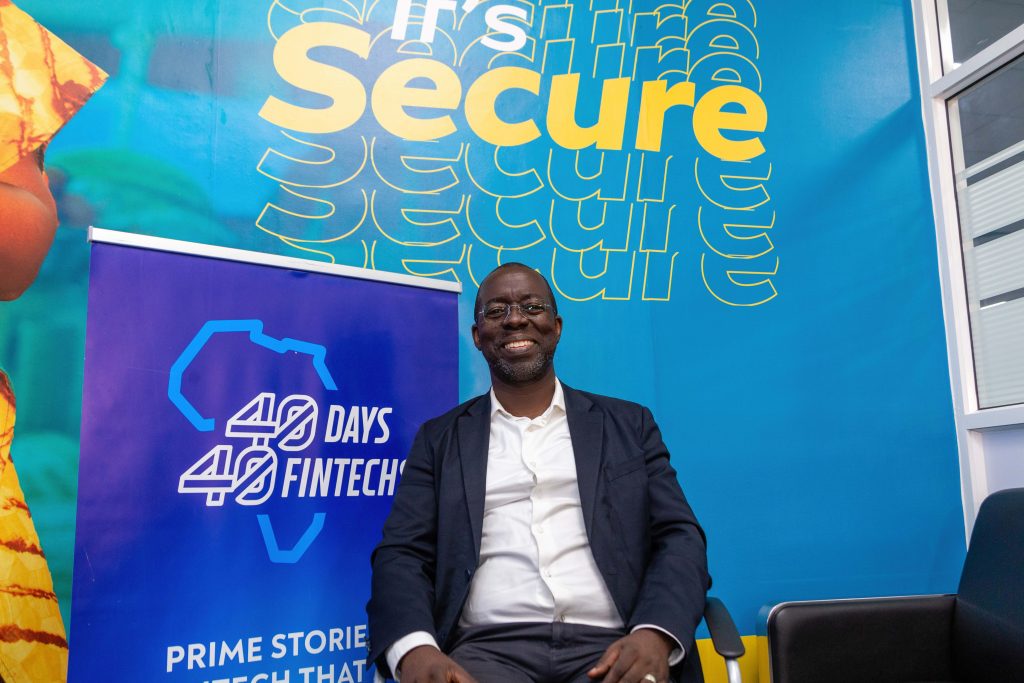
Stephen Mutana, the Chief Strategy and Stakeholder Officer of MTN MoMo notes that most people initially understood mobile money as a cash-in and cash-out platform. They, therefore, decided to add more value to it by making it more transactional and inclusive through MoMoPay.

“We noticed that people were sending money to pay each other. So, we did some research and found that there was room for businesses to accept digital money. We then launched MTN MoMoPay,” he says.

“There are various ways of paying via MoMoPay. You can input a merchant code into your mobile phone and pay or the shopkeeper puts your number in their device and you receive a prompt to enter your pin and the money is removed. You can also pay using the MTN MoMo APP where you press MoMoPay and scan a QR code before inputting the money billed by the shopkeeper,” he explains.

He however warns customers about rampant online fraud.

“We have seen an increase in online fraud – usually where people use all sorts of social engineering. I want to emphasize that; never share your pin with anyone. Not any bank or MTN MoMo or any other FinTech will ever ask you for that,” he says.

Meanwhile, Adams Kibet, the acting Chief Commercial Officer for MTN MoMo Uganda notes that the convenience that comes with MoMoPay has seen the uptake numbers rise within a few years.

“There are approximately 540,000 customers using MoMoPay on a monthly basis. We have about 275,000 active merchants monthly. We do an average of UGX 140 billion in a month – in terms of the value of transactions through MoMoPay,” he says.

Kibet says that now the focus is on trying to bring more informal merchants such as market vendors, and Boda Boda riders, among others, into the fold.

“Our main focus is to ensure that the money remains within the eco-system. We are driving informal merchants – in that when they collect money from a consumer, they should not cash out the money. We want to drive that cashless ecosystem where we ensure that every informal merchant is mapped to a formal merchant,” he says.

Kibet however acknowledges that the majority of Ugandans are still stuck in the cash economy.

“The biggest elephant in the room is the cash. But with MoMoPay, we have other value proposition advantages that we give to our merchants. We try to train them to understand how risky it is to handle cash and how faster it is for a business person to accept the cashless economy,” he says.

40 Days 40 FinTechs.

MTN is the 36th participant in Season Four of the 40 Days 40 FinTechs initiative organised by HiPipo to highlight innovative solutions changing lives for people at the bottom of the pyramid.

“I got to know 40 Days 40 FinTechs around 2020 and you gave us much hope. What I loved about it is that you are a platform for young FinTechs to come and showcase what it is that they are innovating,” Mutana said.

“This is also a platform of reassurance. You bring various stakeholders together to share ideas and experiences. We all need encouragement to know that what we are thinking about is not just an idea in isolation but something that is useful to customers and the economy,” he says.

Mutana also appreciates the initiative for selling the Ugandan brand across the region and beyond.

“We are in one of the best regions in FinTech innovation. Our neighbour Kenya is a world leader and we are very close to Kenya. So, East Africa is seen as a basket or home of FinTech innovation. The 40 days 40 FinTechs initiative helps us to elevate the great work that is going on, the skills that are available in Uganda, and most importantly, the life-changing and impactful contributions by youth, women, and men in our society,” he says.

In the meantime, HiPipo CEO Innocent Kawooya observes that the emergence of groundbreaking innovations from prominent brands like MTN MoMo serves as a promising indication for FinTech startups to explore existing opportunities and devise specialized solutions.

“MoMoPay represents a product nested within another product, highlighting the numerous challenges that can be addressed by FinTech companies when they critically examine society,” Kawooya noted.

Mutana thus called for more frequent engagements that should even involve institutions of learning.

“I know students come to the 40 Days 40 FinTechs event but nothing makes me happier than seeing young minds engage with technology with all the benefits that we can get from it,” he said.

40 Days 40 FinTechs initiative is run by HiPipo in partnership with Level One Project, Mojaloop Foundation, INFITX, Cyberplc Academy, Ideation Corner, and Crosslake Technologies with generous support from the Bill and Melinda Gates Foundation.

Ticteq’s online tickets are helping event organisers cut costs. #40Days40FinTechs Season 4 Day 35

When Doreen Nanfuka started an events management, company called Fuuka Star a few years ago, her most immediate challenge was about the cost of ticketing. This is on top of the hustle of printing tickets and incorporating security features to avoid fraudsters.

Then she soon learned about Ticteq, an online events solution that among other things sells online tickets for events. Since then, she decided to incorporate digital tickets into her events.

“Trust me Ticteq has helped us in saving money because we don’t have to use paper to print. It is also automated. We use their dashboards to withdraw our money through mobile money or send directly to our bank accounts,” she says.

With Ticteq, they just need a scanner that validates a QR code of tickets at event entrances.

“I encourage all event managers to sign up for Ticteq as signing up is free. There are no contracts needed yet they provide us with all information we need, and access to their tools to help us manage our businesses,” she says.

What is Ticteq?

Ticteq is a system that helps fans purchase tickets online starting from Sports, Theatre shows, Music concerts, Cinemas, Comedy shows, Festivals, and Award ceremonies, among others.

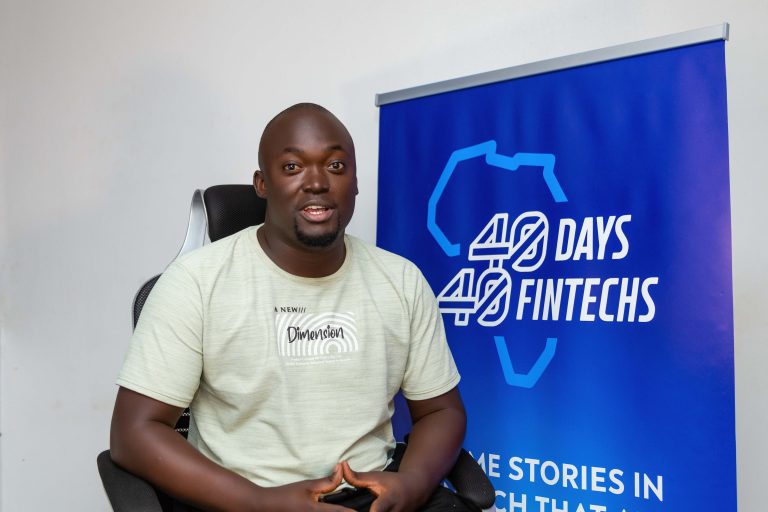
According to George Katuramu, a Ticteq director, Ticteq is a subsidiary of Xopa Limited that allows Events Organizers worldwide to register an account and start transacting with a personalized dashboard to enable them to monitor their event performance.

“They then start creating the events and attach them to the tickets they want. When they create these tickets, the links are generated automatically and they start sharing them with their users,” he says.

Katuramu says that for the time they have been operating, Ticteq has managed to sell more than 200,000 tickets with a transaction value worth more than Shs 400m.

Besides ticketing, Katuramu notes that they also offer crowd-funding services for noble causes such as education services, healthcare services, etc.

“Crowd-funding uses the power of social media and the internet to enable people to raise money, assist others in overcoming adversity, and achieve aspirational goals. You can do anything from funding your own surgery to helping a student realize his or her dream of attending college – and so much more,” he says.

Ignorance.

Katuramu however notes that the first challenge that the FinTech industry is facing is ignorance.

“Many people don’t know the digital world. People think that things that are done digitally are associated with fraud,” he says.

Even Nanfuka agrees.

“The challenge with Ticteq is that people don’t know that these platforms exist. Even when you buy tickets online some people, prefer to use the old way of printed tickets which is costly,” she says.

Another challenge is the high percentage cut by payment gateways.

“The percentage is a little bit high because we get a percentage for each ticket we sell to the customers. So, the gateways can charge you like 3 percent per ticket sale yet you also need to take a percentage like 2 or 3 percent. This becomes a little bit high and people end up finding it costly to buy tickets online. If the gateways could reduce the percentage of the charges, I believe more people will start buying online tickets,” he says.

Ticteq is the 35th participant in 40 Days 40 FinTechs season 4 organized by HiPipo in partnership with Level One Project, Mojaloop Foundation, INFITX, Cyberplc Academy, Ideation Corner, and Crosslake Technologies with generous support from the Bill and Melinda Gates Foundation.

Katuramu says the 40 Days 40 FinTechs initiative has solved the issue of exposure and ignorance.

“This is something that has been missing in the FinTech industry, especially in marketing. For example, if someone has a good product, the initiative gets known to the public. This has been a hustle for us but when we come for the 40 days 40 FinTech, the public knows how our products work,” he says.

Now in its fourth season, HiPipo’s 40 Days 40 FinTechs initiative has become a household name in the financial technology space of the East African region. In the last three editions, more than 100 FinTechs have been showcased, highlighting stories changing people’s lives, especially in the under-served sectors.

Empowering the Future: Ambassador Damali Ssali Inspires Young Women Entrepreneurs at ‘Ambassador for a Day’ Event

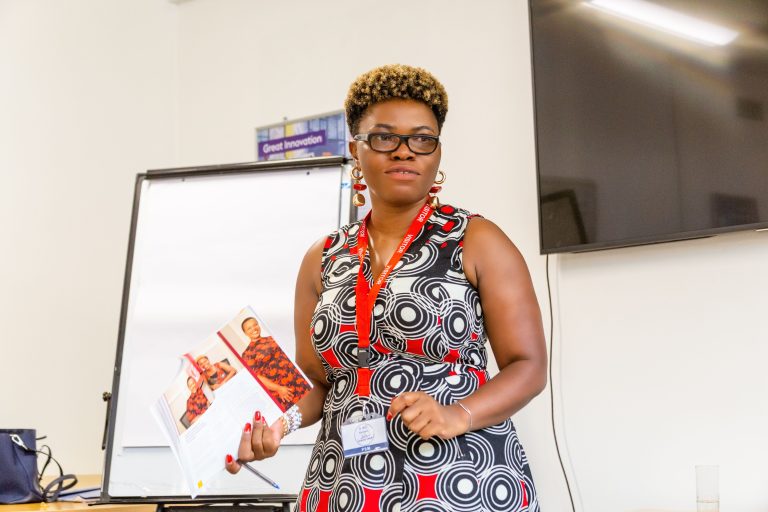
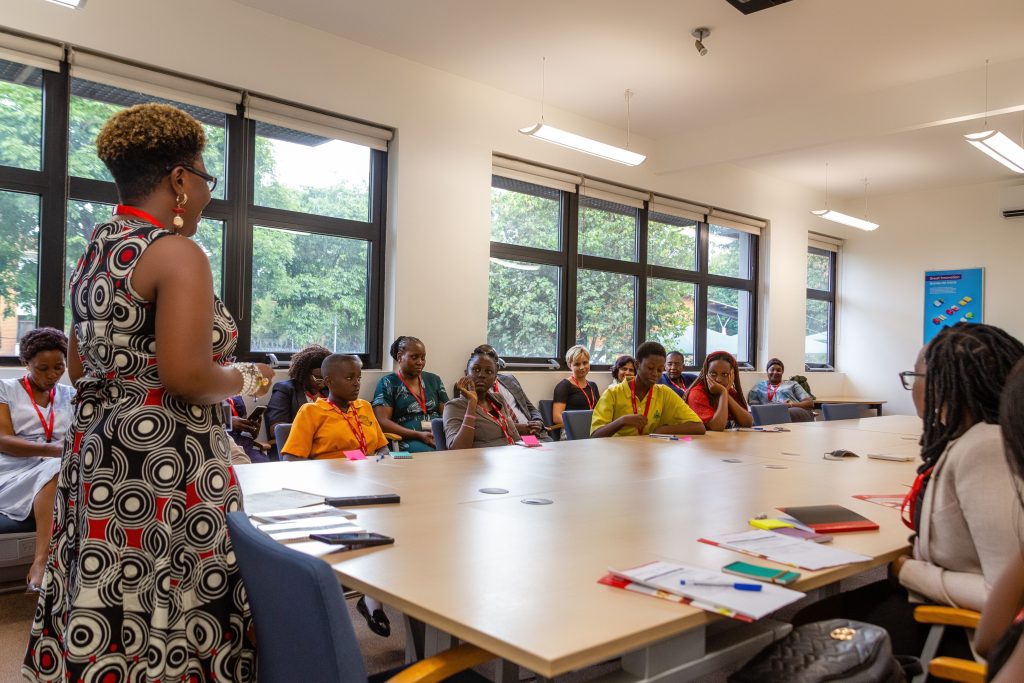
Kampala, 10 June 2023 – In a groundbreaking event promoting gender equality and empowering young women in Uganda, Ambassador Damali Ssali recently facilitated a powerful pitching session at the British High Commission in Kampala. The event, called ‘Ambassador for a Day,’ showcased the commitment of Ambassador Damali Ssali and the partnering embassies to nurture a new generation of female leaders and entrepreneurs in Uganda.

‘Ambassador for a Day’ is an annual competition organized by the British High Commission Kampala in collaboration with the Danish Embassy, Swedish Embassy, and UN Resident Coordinator. The competition aims to foster ambition, inspiration, and momentum among young females, providing them with an exceptional opportunity to shadow and learn from inspirational female ambassadors and businesswomen in Uganda.

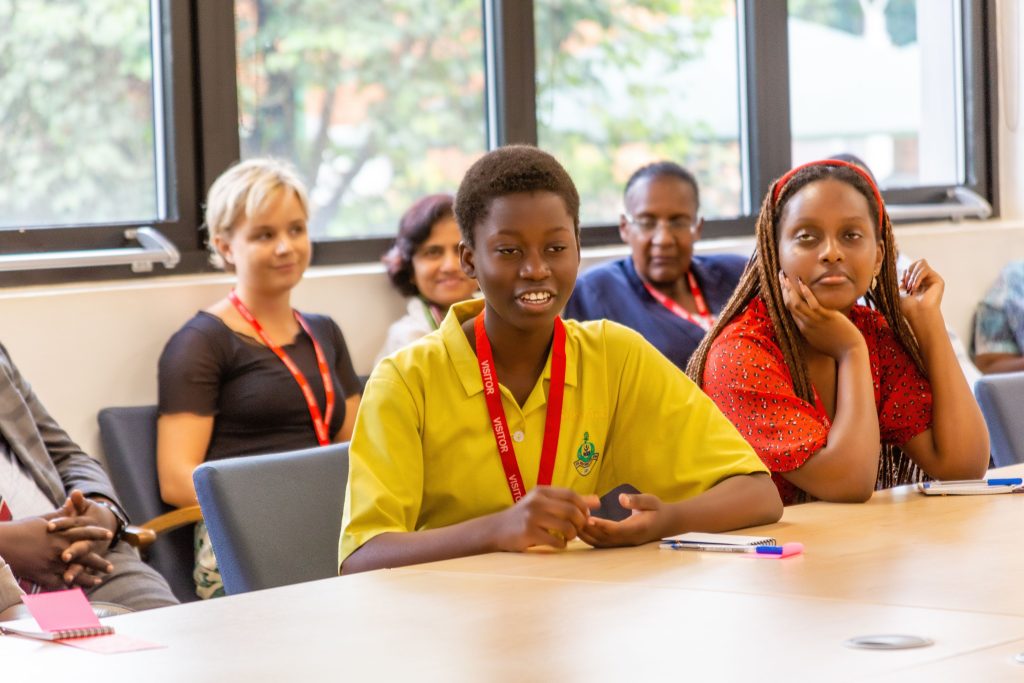
The event, which took place on Thursday, 1st June 2023, welcomed ten exceptional female students and potential entrepreneurs from across Uganda, aged between 14 and 18. These young women were selected as winners based on their responses to the question, “If you were the Ambassador, what would you do to support a more equitable business environment for young women in Uganda?” They were given the unique chance to spend a day shadowing ambassadors, with Ambassador Damali Ssali leading the way.

During the session, Ambassador Damali Ssali provided the young participants with valuable business pitching skills. The engaging and interactive event covered a range of topics, including networking, career advancement, idea actualization, confidence building, personal branding, standing out from the crowd, and effective positioning. The girls left the session equipped with practical entrepreneurial skills and a newfound sense of courage and self-assurance.

The participants were deeply grateful for Ambassador Damali Ssali’s extensive knowledge and unwavering generosity in sharing her wisdom and insights. One of the organizers, Tina Wamala, a Communications Officer at the British High Commission, Kampala, expressed her appreciation, stating, “We are grateful to Ambassador Damali Ssali for accepting the invitation to speak to this new generation of powerful girls who represent the future of our nation and the world. They are our future leaders and innovators.”

Among the outstanding participants were Loena Cheryl Kusasira from Mt. St. Mary’s College Namagunga, Michelle Nmamate from Asifiwe International Academy, Praxedes Atuha Ngabirano from Home School, Nicole Babirye from Nabisunsa Girls, Nicole Tinka Asimire from Heritage International School, Karen Kakyo Kaboyo from Kampala Diplomatic School, Alicia Mirembe Thanzan (homeschooling), Patricia Nakalaala from Onwards and Upwards Secondary school, and Gollapalli Pragna Sree from Delhi Public School, along with other remarkable individuals. Notably, winners selected by the Swedish embassy also had the privilege of participating in Ambassador Damali Ssali’s session.

About Ambassador Damali Ssali:

Ambassador Damali Ssali is the esteemed Chief Programs and Projects Officer at the Private Sector Foundation of Uganda (PSFU). With over 20 years of experience, including 15 years in senior management roles, Ambassador Ssali is a UK-trained chartered accountant who brings a wealth of expertise to her current position. Her professional interests encompass financial services, trade, business, innovation, and entrepreneurship.

Ambassador Ssali holds key positions such as Ugandan Ambassador to the United Nations Women Entrepreneurship Day Organization, Board Member of HiPipo Foundation, and Advisory Board Member of the African Council for Trade, Tourism, and Investment.

Izere is using FinTech to democratize and transform Education. #40Days40FinTechs Season 4 Day 34

Deborah Mulungi had gone shopping in a local supermarket when she met a fine lady wearing a T-shirt with the inscription – Izere Education. Curious, Mulungi stopped this lady and asked her what Izere Education stood for.

“She told me about many things but I had never heard about Early Childhood Development. She told me that they work as a social enterprise aimed at transforming education in under-served communities to realize quality 21st-century learning outcomes for all,” she recalls.

But the most amazing part of this Edu-Tech platform was that parents were being empowered to save money using their phones and later pay school fees for their children.

“I got interested. I enrolled my sibling in this program and it has been of great impact. If they talk about nurturing children, especially helping them to develop 21st-century skills, it is remarkable,” Mulungi says.

“They give children the ability to be creative, innovative, and confident,” she says.

“The good thing is that you can enroll your child and pay in installments. You may not prioritize it, but if you see what your child goes through, you need to invest in it. If you are appreciative of personal development, then you can be willing to sacrifice what you can to ensure that your child grows up as a responsible person in this competitive world.”

Edu-Tech.

Shamim Nirere, the Team Lead at Izere Education, notes that most times, these quality learning opportunities are missed by the have-nots because of the extra money one is supposed to pay for an extra enrichment class.

So, they decided to come up with a mobile solution under the Edu–Tech platform targeting parents struggling with school fees in public institutions, which are expected to be cheap.

“We have set up an Edu–Tech platform powered by FinTech solutions and reaching schools to extend our solution, communities to set up innovation spaces for young people, parents to enroll their children in our online academy and pay online, and trainers to get their money electronically,” she says.

“We are now getting to the ground in communities to get parents to save some money on their mobile money wallets for school fees.”

And Mulungi emphasizes that every parent should give this service consideration because it offers much more than ordinary routine classroom education.

“A parent who thinks that a child’s destiny is determined by academics, I don’t think that is right. Google can give us the academic answers that we need but in the 21st century, we need competitive skills to survive,” she says.

Strong strides.

Started in 2016, Izere has evolved to offer solutions that drive communities to the vision of quality 21st-century learning outcomes.

Nirere says that when the world was met with the Covid-19 pandemic, they got a boost in numbers and 2020 was their best year because most people realized that they can do much with technology like studying, paying online, making orders, etc.

“We have so far reached close to 5,000 young people and hope to reach 20,000 by the end of 2023. This is because we are running community programs and reaching a wide range of young people in 10 districts in Uganda online,” she says.

She adds that they are currently working with different aggregators and payment gateways such as SchoolPay and Flutterwave.

“But in the near future, we shall design and roll out our own wallet that will make payments much easier for the users of our solutions – content creators, teachers, parents, and students.

Nirere nonetheless says that the biggest challenge is the inability of some parents to understand their service of holistic education.

“The journey of enrolling young people on our platform is not an easy one. First of all, some schools provide mainstream education with traditional subjects. So, parents often ask if we are a school and not many understand what we do,” she says.

“But Covid-19 was a time for people to understand that there’s so much learning that can be done online. They later realized that there’s a new set of skills that our people need,” she says.

She also appreciated the organizers of the annual 40 Days 40 FinTechs initiative for shining a light on players in the FinTech space.

“This is helpful because most times, people build in silos yet whatever they are working on is already out there. It has also made it a lot easier to see people do things differently and share ideas. It has also helped to demystify FinTech,” she says.

Izere Education is the 34th participant in this year’s 40 Days 40 FinTechs initiative organised by HiPipo in partnership with Level One Project, Mojaloop Foundation, INFITX, Cyberplc Academy, Ideation Corner, and Crosslake Technologies with generous support from the Bill and Melinda Gates Foundation.

Now in the fourth season, HiPipo’s 40 Days 40 FinTechs initiative has become a household name in the financial technology space of the East African region. In the last three editions, more than 100 FinTechs have been showcased, highlighting stories changing people’s lives, especially in the under-served sectors.