Home Blog Page 35

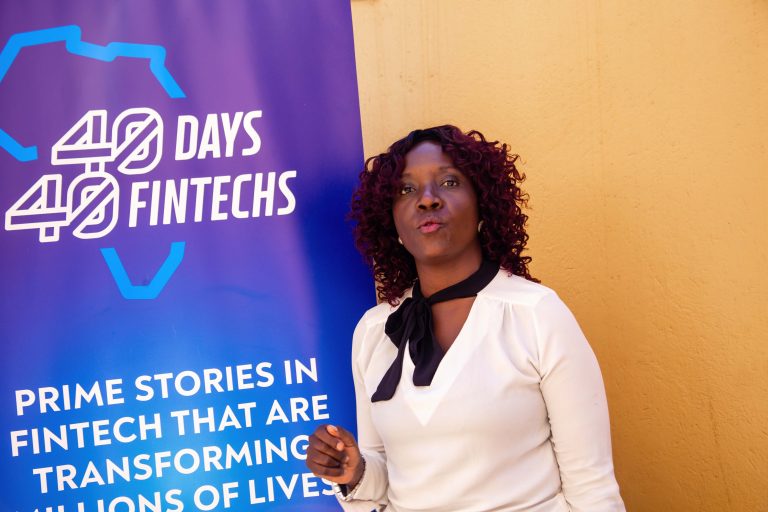
Tawaza Diva offers collateral-free loans to Informal Women and Youth. #40Days40FinTechs Season 4 Day 33

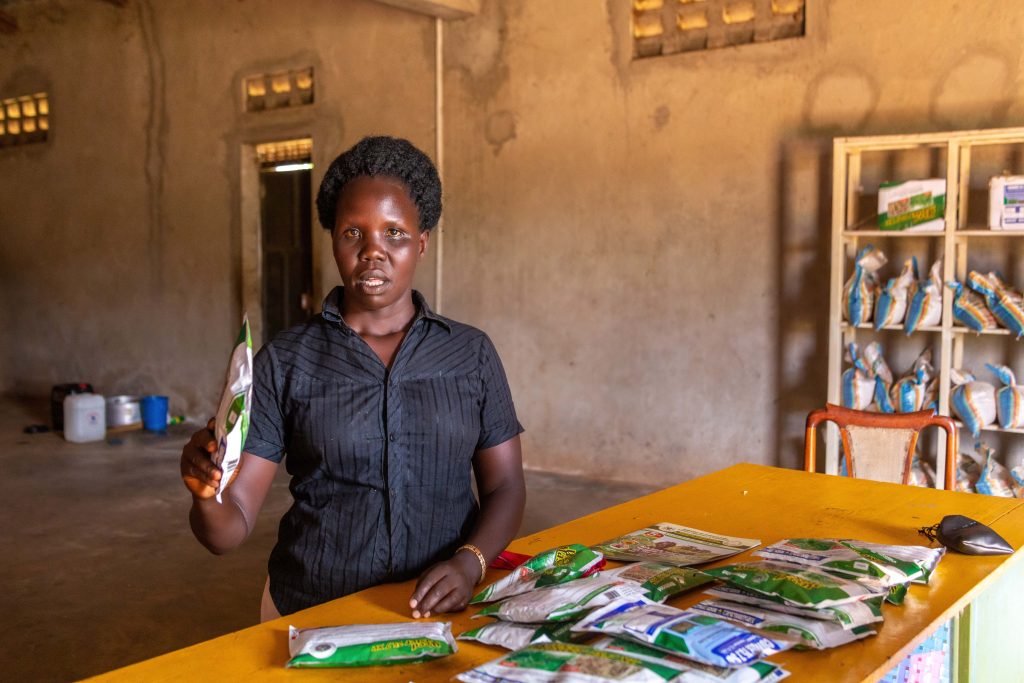
Sarah Nassaka Kagimu is a Pastor and small-scale businesswoman in Nansana.

Nassaka loves convenience.

So, when a group of young innovators came preaching about a platform where market vendors could save money and receive loans using phones, Nassaka was the first one to register.

“My aim was to access loans. I liked the fact that they were digital because I wanted something that would help me run a business using a smartphone,” she recalls her first encounter with Tawaza Digital Varieties, a Financial Technology start-up offering financial services to informal women and youths in rural and semi-urban areas.

“When I heard that their loans have no collateral, I was excited. Their systems are friendly where someone just pays a membership fee of only Shs 20,000. As long as you saved with them, you automatically qualified for a loan,” she adds.

For Nassaka, this was much easier than the stress of banks.
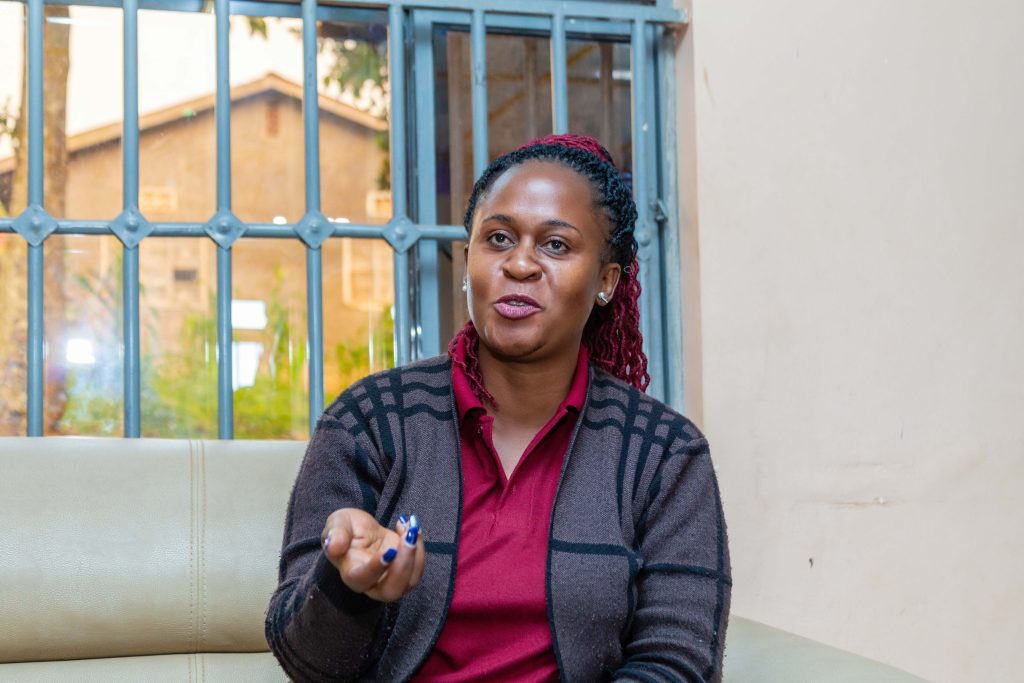
“Mainly, banks target high-end users and don’t want to approach ordinary women but these people gave us basics on how to save. I was surprised when they tripled my savings to get the loan. If they decide to continue growing with us, I can go far,” she says.

Including the excluded.

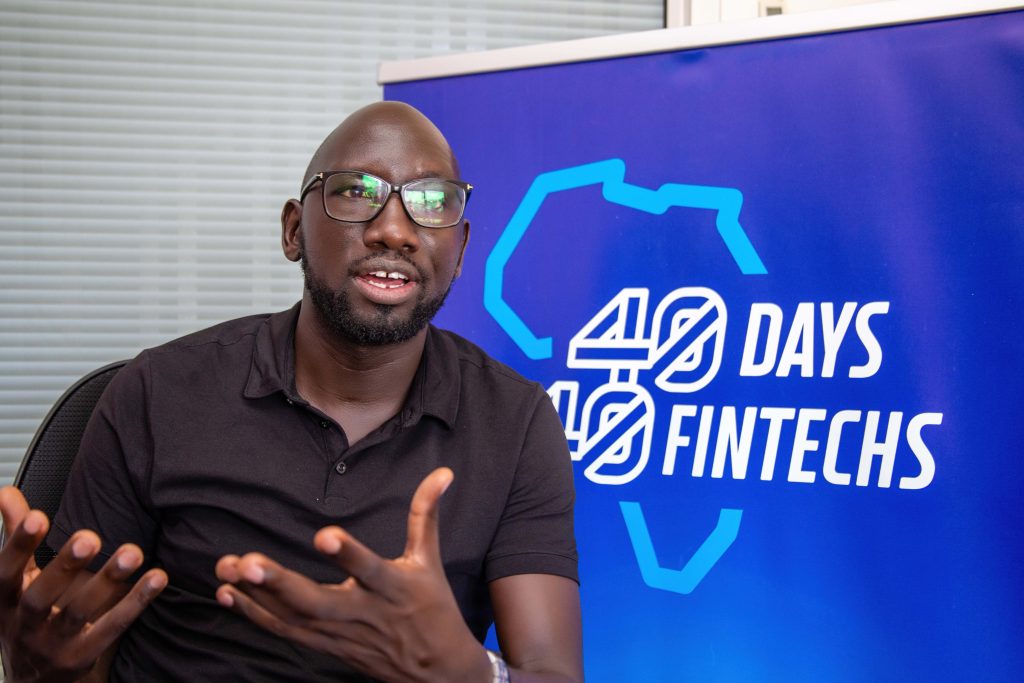
According to Winfred Nandawula, the Regional Programs director for Tawaza, this service was designed to tackle the increasing number of women and youth who can’t access formal financial services offered by banks.

“The challenge that we address is majorly that women and youth are running several informal businesses and are being excluded from access to formal banking services. We want to improve how they handle their businesses so that they can access the right credit and provide them with a simplified solution that they can easily use,” she says.

Nandawula notes that they mainly target rural farmer groups and informal women traders because they comprise the most under-served communities.

“We mainly work with USSD because most of the informal people do not have smartphones and are not vigilant with the usage of smart apps. We are now training them on how to use the various gadgets so that they get comfortable with the digital space,” she explains, noting that they are currently working with more than 60 farmer groups and over 1,000 women.

Challenges.

On the part of users, Nassaka notes that their biggest challenge is the lack of gadgets that can be used to operate the Tawaza mobile services.

“Tawaza should help us to get smart mobile phones so that we do away with the poor network on ordinary phones. They can maybe get us the phones and we pay in instalments,” she says.

Nandawula acknowledges this challenge but notes that they also face a financing problem that limits their investment capabilities.
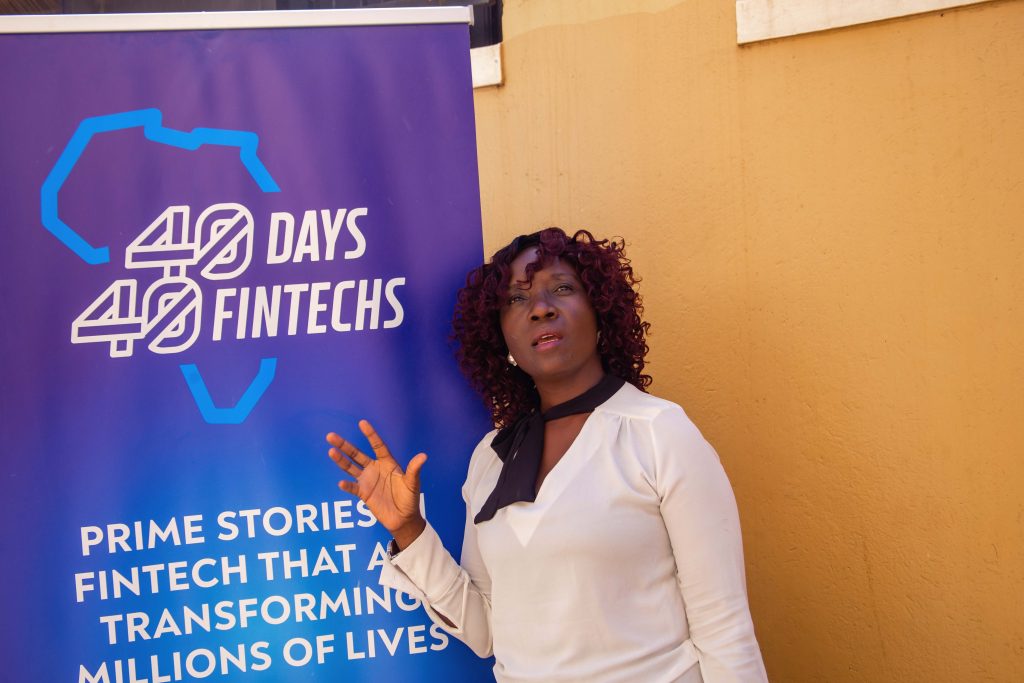
She is, however, grateful to the organisers of the 40 Days 40 FinTechs initiative for offering startups a chance to showcase their services and address common challenges.

“If we sit in our offices and keep talking about our innovations, it won’t help. The 40 Days 40 FinTechs platform has given us follow-up programmes through HiPipo where we have benefited a lot by getting the right skills, advice, visibility, and a lot of advocacy support,” she says.

Tawaza is the 33rd participant in Season Four of the 40 Days 40 FinTechs initiative organised by HiPipo to shine a light on emerging Financial Technology companies with unique stories changing the lives of under-served communities.

The initiative is organised in partnership with Level One Project, Mojaloop Foundation, INFITX, Cyberplc Academy, Ideation Corner, and Crosslake Technologies with generous support from the Bill and Melinda Gates Foundation.
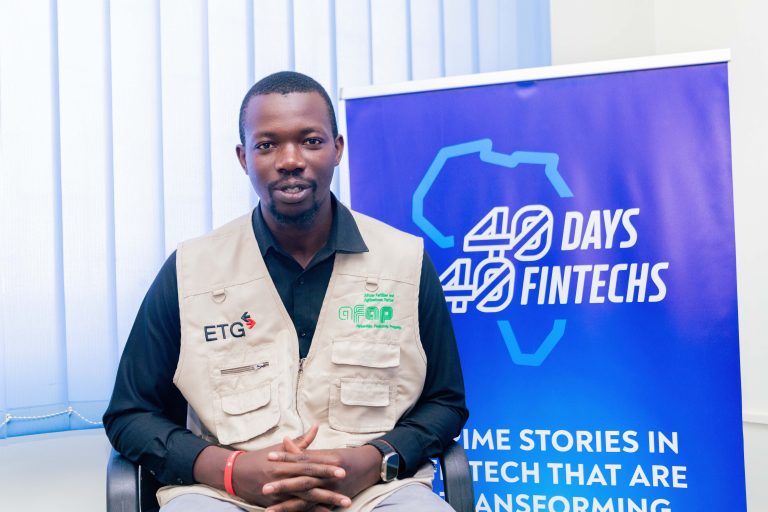

ETG’s one-stop Agricultural solutions APP embedded with Finance Features makes farming more profitable. #40Days40FinTechs Season 4 Day 32

It is no secret that the Ugandan business environment is saturated by counterfeit and substandard products in all sectors. In agriculture, for instance, grassroots farmers are perennially challenged by identifying authentic agricultural inputs such as seeds, pesticides, and equipment.

Take the example of Ssenabulya Patrick, a farmer, and trader, who notes that besides volatile weather, a farmer’s biggest worry is about being cheated with fake agro inputs.

“It is usually difficult for a rural farmer to know a genuine product. So, they just buy and later discover that they were cheated after it fails to work,” he says.

These worries are however beginning to fade since Ssenabulya was introduced to a Mobile Application by ETG, which provides authentic market information about genuine agricultural inputs, market access, financial literacy, and other extension services.

Established in 1967, ETG (Export Trading Group) is one of the largest and fastest-growing integrated agricultural conglomerates in sub-Saharan Africa, importing and exporting soft commodities to and from 49 countries including Tanzania, Kenya, Malawi, Mozambique, Nigeria, and South Africa. It also has supply chain operations in China, India, America, the Middle East, and South East Asia.

“I got to know ETG through a friend who advised me where to sell my coffee. He introduced me to ETG and I found out that they are also buyers of coffee… The information on their Agricultural App is readily available on your phone. This eases the search for local agronomists in villages and when I go to buy pesticides or herbicides, I am not cheated,” he says.

According to Ponsiano Byansi, an agronomist at ETG, this organisation headquartered in Dubai has the motivation to empower Ugandan rural farmers.

“[In Uganda] we have ETG logistics which deals in transport, ETG commodities which are based in Tororo, and ETG coffee which deals in the export of processed coffee and is based in Namanve. We also have ETG inputs which deal in Agricultural inputs like fertilizers, crop protection products, and farm tools,” he says.

Byansi says that they came up with a mobile application that is a one-stop centre for all Agricultural inputs. A user just needs to download the ETG application to their phone and start accessing these services.

The ETG one-stop solution APP also has a live weather forecast which helps farmers to plan for their gardens depending on the weather forecast. For instance, if you want to apply fertilizers, you must do so immediately when it is going to rain so that you don’t incur losses.

The agronomy feature on this App provides information to farmers with a program for all crops. For instance, if a farmer is growing maize, they go to the App and open the maize program to know what they are supposed to do from the planting stage, and what fertilizers to use, until the harvesting period.

“We also have the agro-doctor feature on the App whereby if a farmer has a disease in their garden, you use the smartphone to take a photo of the crop and send it via WhatsApp to us. Instantly, the farmer gets a message about the name of the disease, pesticides to use, and more pictures of the signs and symptoms of that disease,” he says.

Byansi further adds that to ensure financial literacy and discipline, they integrated a personal finance feature named Falcon Wallet that helps farmers to plan budget management and also keep records of their finances.

“For example, most farmers invest money into their farms at the start of the season and at the end, when they sell their produce, they can’t tell if they have made profits or losses. Under the Falcon Wallet, if a farmer is planning to invest Shs 1m into their garden, they input that money into the App and every time they incur an expense, it is registered into the wallet.  At the end of the season, when selling his produce, he can also input the income. The APP will then give him a balance sheet of what he spent on and what he earned,” he explains.

Technology gap.

Byansi notes that while their mobile application has more than 40,000 users on the African continent, there are about 700 users in Uganda.

“We are working with more than 100,000 farmers in Uganda but very few use the application because many lack smartphones and several that have them have phone storage capacity limitations. So, there is competition on the apps they are supposed to retain but also an information gap,” he says.

Byansi nonetheless expresses gratitude for the opportunity offered by the organisers of the 40 Days 40 FinTechs initiative to highlight their services and also get to know what other players in the ecosystem are doing.

“The 40 Days 40 FinTechs initiative is a great initiative because it gives us a platform. It is an addition to the efforts we are trying to push because there is an information gap, financial illiteracy, and poor record keeping, among others. So, this platform will help us add a voice to the efforts to reduce these problems,” he says.

ETG is the 32nd participant in this year’s 40 Days 40 FinTechs initiative.

Now in its fourth season, the 40 Days 40 FinTechs initiative is run by HiPipo in partnership with the Level One Project, Mojaloop Foundation, INFITX, Cyberplc Academy, Ideation Corner, and Crosslake Technologies with generous support from the Bill and Melinda Gates Foundation.

MedMoo’s fuel loans are revolutionizing the Boda Boda business in Lira City. #40Days40FinTechs Season 4 Day 31

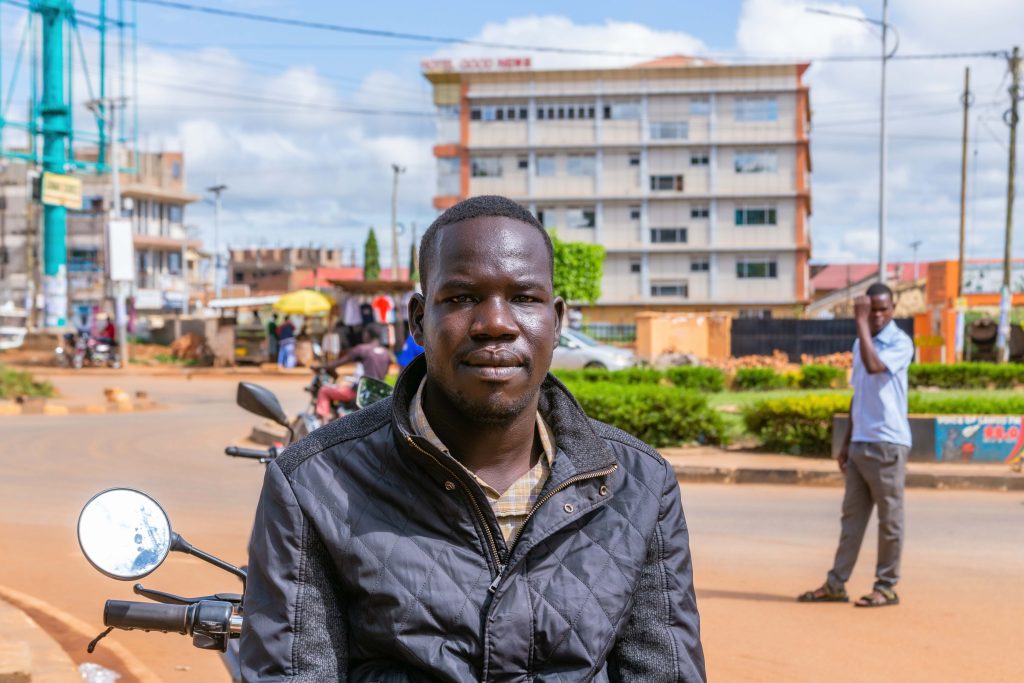
With years of experience in the boda boda business, Francis Edyel says that refuelling is one of the most painful things to a rider. On a given bad day, he would usually struggle to juggle between paying the bike owner, leaving some money at home for his family, and refuelling his motorcycle to start the day.

This was until he was introduced to Medmoo, a Financial Technology startup based in Lira that disburses micro-loans to boda-boda riders.

“I got the information from the manager of Medmoo that they can give me a fuel loan. I registered and got fuel and paid in the evening. MedMoo changed my work in a way that I get more customers because if my fuel is there, it’s easy for me to get more customers,” he says.

Edyel says that while the 10 percent interest on the fuel loans is a bit high, the idea of getting no-cash fuel every morning has made work easy.

“That fuel helps me a lot because when I get money, it can help me to feed my family and sometimes pay school fees for the children. There’s a challenge of interest rate – the thing with fuel, sometimes the price can go high. For instance, when they give us fuel for Shs 5,000 when paying back we add Shs 500. They should reduce the Shs 500 interest to at least Shs 250. There, it will be fair for us,” he says.

Edward Omara, another Lira City-based Boda Boda rider equally agrees to the transformative role of MedMoo, noting that even with the 10 per cent interest, the daily fuel loans enable them to start each work day with the focus on transporting customers and no worry about failure to complete trips due to fuel shortage. He notes that his Boda Boda job enables him to live a decent life and the MedMoo fuel loans are an enabler for this.

Boda Boda revolution.

Medmoo has been in operation since 2021, with its main operations in Lira City.

According to Denis Orech, the CEO and co-founder of MedMoo, within two years, they have been able to onboard over 1,600 riders, with more than 83 percent of them able to interface with the fuel loan product.

Orech explains that for anyone to register as a client for the fuel loan service, they must have a stage recognized by the boda chairmanship in that particular region or district.

“When we confirm that the stage is registered, we move to the stage and you must be a member of a particular stage. We come and sign you but your signing is co-signed by the stage chairmanship because most stages have leadership,” he says.

He notes that their main target is boda-boda riders because of their daily financial challenges. The fuel loans range from Shs 5,000 to Shs 20,000 which are payable within 24 hours.

About the interest of 10 percent, Orech says “This is a drop in the bucket compared to how much they can make in a day, especially for those doing town service.”

Financial struggles.

Despite this being a good initiative, Orech notes the lack of seed capital is delaying Medmoo’s growth beyond their locality to the national and regional levels.

“The other challenge is the low level of penetration of technology especially the gadgets that would be used to access our service,” he says.

He is however grateful for the contribution of the 40 days 40 FinTechs initiative organised by HiPipo to highlight unique stories by FinTechs in the East African region.

“The impact is quite tremendous given the exposure that has been given to us as a startup in Northern Uganda. We do recall that last year after our participation in the 40 Days 40 FinTechs, we were able to have access to a grant. A well-wisher gave us Shs 4m to facilitate our operations. This was purely a result of exposure by the 40 days 40 FinTechs,” he says.

Meanwhile, HiPipo CEO Innocent Kawooya says that the quick impact created by MedMoo is a testament to the opportunities available in the FinTech sector in Africa if we embrace targeted innovation.

“Our target is to include everyone. We need people like MedMoo who identify a common problem and come up with a convenient solution,” he said.

MedMoo is the 31st participant in this year’s 40 Days 40 FinTechs initiative run by HiPipo in partnership with Level One Project, Mojaloop Foundation, INFITX, Cyberplc Academy, Ideation Corner and Crosslake Technologies with generous support from the Bill and Melinda Gates Foundation.

Now in its fourth season, HiPipo’s 40 Days 40 FinTechs initiative has become a household name in the financial technology space of the East African region. In the last three editions, more than 100 FinTechs have been showcased, highlighting stories changing people’s lives, especially in the under-served sectors.

MyTalu aims to create a purely cashless economy in Uganda. #40Days40FinTechs Season 4 Day 30

It is no secret that more than half of Africa’s adult population lacks a bank account or even a mobile money profile. This means a huge block of the African population is totally excluded, with no financial identity at all.

As a result, Africa is predominantly a cash economy where transactions are peer-to-peer. This has therefore presented a huge opportunity for sector players to come up with innovations that can contribute to the migration from cash to a digital economy. Such innovations include mobile money, and borderless money transfers, among others.

It was with these facts in mind that MyTalu – a financial technology company headquartered in London, UK – entered the Ugandan market in 2021 to try and tap into the virgin remittances market.

“Much as there are several entities engaged in cross-border payment recently, the market is still big. It’s not that everyone can get their money on time at specific rates. As a sender on MyTalu, you can dictate how the money is used,” says Dan Edoma, the MyTalu Country Manager Uganda and Vice President of Growth and Expansion.

“We do offer four products; cross-border transfers, eased payment of bills like water and electricity, multi-currency wallets, and virtual cards to help people who may not necessarily have either Visa or Mastercard-enabled cards but still want to do online transactions,” Edoma says.

On top of that, they also seek to create a purely cashless economy in Uganda and Arica at large.

“If you are to go to downtown Kampala, the best way to make transactions is by cash. However, globally, everything is being digitized. We have cashless economies that are at almost 100 percent. This is the opportunity where we need to get into and ensure that we digitize the cash transactions in Uganda,” he says.

Edoma believes that while Telecom companies such as MTN and Airtel started the merchant payment system, the uptake has been limited to very few institutions and opportunities are abundant for other players to join the market.

“Not every institution has a merchant code or MoMo or Airtel pay code. If you go to your local charcoal seller and do not have cash, you need to do mobile transactions and that’s an opportunity that needs to be utilized,” he says.

He also gives the example of school fees payment, which touches almost every parent.

“Right now, learners are going back to school and not every school has – besides the bank accounts and going to the bursar – any other mode of payment. So, how do you digitize that and ensure that people can make payment from the ease of their living room minus going to the bank to line up or the school bursar?” he wonders.

Healthy competition.

Edoma says that the money transfers and remittances market in Africa can benefit from strong competition because this would push innovators to improve their products and services.

“No one is an island and we need each other. We need both competitors as well as complementors,” he says.

MyTalu is the 30th participant in Season Four of the 40 Days 40 FinTechs initiative organised by HiPipo to shine a light on emerging Financial Technology companies with unique stories changing the lives of under-served communities.

“I am keenly looking forward to meeting other players and just learning about what they are doing and what are the possible loose ends or opportunities for partnerships. You realize that not everyone else is doing what you are doing and not everyone is intended to do what you do but you have people who need what you are doing,” he said.

The 40 Days 40 FinTechs initiative is organised in partnership with Level One Project, Mojaloop Foundation, INFITX, Cyberplc Academy, Ideation Corner, and Crosslake Technologies with generous support from the Bill and Melinda Gates Foundation.
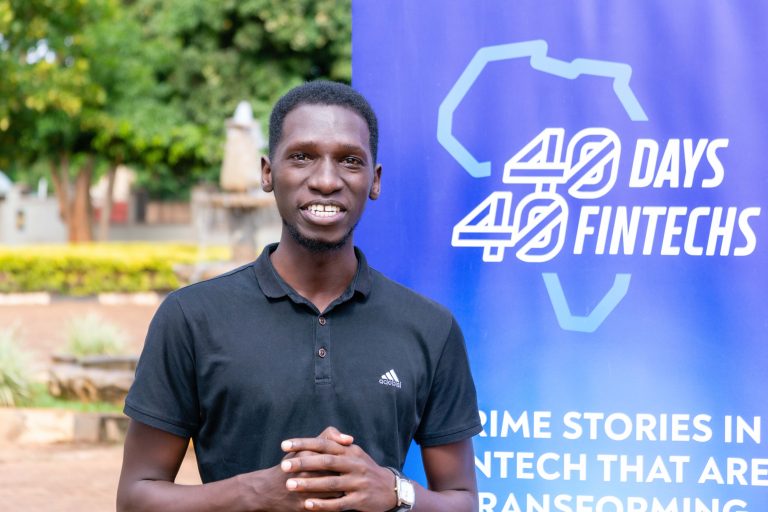
Hamwe brings financial services to farmers’ doorsteps. #40Days40FinTechs Season 4 Day 29

Alvin Sam Otto is the coordinator Oyam District Farmers Association. Charged with over 200 farmer groups with a membership of thousands of farmers spread across 64 parishes, Otto’s biggest challenge is about keeping tabs on the needs of every farmer.

Some want extension services; some want farm inputs while others want market opportunities. Otto would have to manually handle these needs, one by one.

This however was made easy in 2019 when the association was introduced to Hamwe East Africa, a Financial Technology company offering management, payments, and collections services for farmers.

“We signed a memorandum of understanding (MoU) with Hamwe East Africa in 2020. They helped us profile our farmers and put us in a digital system which enabled digital transactions for our farmers,” Otto says.

It was however not very easy because this service requires every farmer to at least have a smartphone, which is a rare commodity in a rural district like Oyam.

They, therefore, started by identifying agents with smartphones where farmers would go to make transactions or get market information.

“We requested Hamwe, in partnership with MTN, to provide us with mini smartphones which would help our farmers. They provided us with 2,000 phones which were given to farmers to access the system and make orders regarding whatever they wanted like feeds and inputs. This was very helpful to our organization.”

Otto says this gesture saw the membership numbers rise from 4,000 to about 7,000.

Creating a difference.

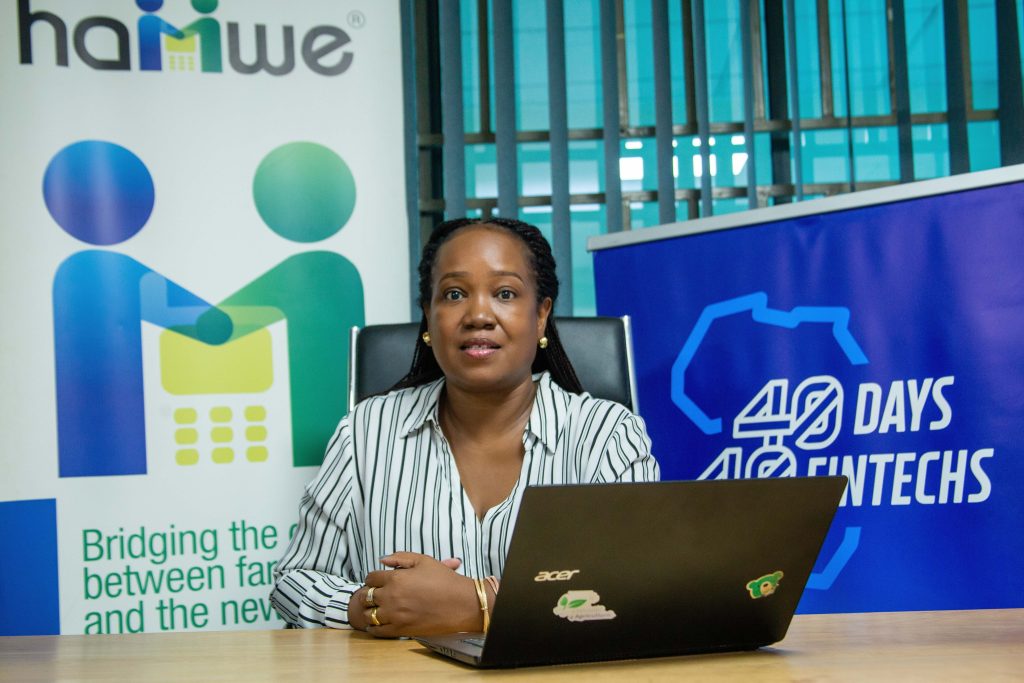
According to Stella Lugalambi, a Co-founder and managing director of Hamwe East Africa, since the inception of this digital platform in 2013, their motivation was to ensure that rural dwellers find farming a desirable economic activity.

“We wanted to digitize the value chains. First, we have a product about management where we help groups consolidate all information like biodata for farmers, value chains, and suppliers, among others,” he says.

“Our second product is Hamwe pay – this payment gateway allows the farmers to be able to pay for products and also access their funds when they sell their produce. The third platform is an order service – this platform is where they access different services like crop insurance, tractor hire services, agro-dealers, and suppliers for seeds,” she says.

“The last product is the collection for aggregated demand – they can access this service using SMS and inform a digital agent that the crops are ready for collection,” she adds.

Currently, Hamwe is servicing about seven unions and under them, there are about 720 primary cooperatives.

“We have profiled about 280,000 farmers. Some of the biggest women groups are in the Lango sub-region. We have also worked with 840 groups in West Nile where we found few cooperatives but ended up working with farmer groups. These groups come together and have more than one acre of land and form a small association,” she explains.

In the Lango sub-region, one big union they work with is called Acwec Omio Cooperative Society.  According to Fiona Atim, the General Manager of Acwec Omio Cooperative Society, this union was started in 1999 by 15 widows but joined the Hamwe revolution in 2021.

“By then, farmers were having two to three acres but when Hamwe came in, they trained farmers on how to use the chemicals, and improved seeds. Such farmers have risen from two to three acres to ten acres each. Most of the farmers now take their children to good schools and their lives have changed,” she says.

Lugalambi notes that they have also worked in South Western Uganda with about five cooperatives in Ntungamo, Kanungu that work with coffee and sorghum.

Network problems.

One of the unanimous challenges faced by this initiative is the lack of stable internet connection in rural areas despite the fact that such services provided by Hamwe are powered by the internet.

Lugalambi acknowledges this challenge but notes that some telecoms are willing to help.

“We have been talking to the telecoms and acknowledged that there is a problem and some are willing to bring in boosters to some places if we can show that we have at least 5,000 farmers that would utilize the internet in such areas,” she says.

“Most of the farmers in the underserved areas are digitally excluded. Before we financially include them, is it possible to first digitally include them? So, if they can’t put those infrastructures in place, then, these farmers may never be financially included.”

She is however pleased with the 40 Days 40 FinTechs initiative organised by HiPipo which is not only showcasing FinTechs but also helping in highlighting and looking for solutions to challenges affecting the industry.

Meanwhile, HiPipo CEO Innocent Kawooya says the work being done by FinTechs such as Hamwe brings hope to the under-served communities.

“A farmer deep down in the villages only needs to know where they can sell their produce and receive money in real-time; where to buy inputs and how to handle produce. Hamwe is providing this service,” he said.

“Season Four of the 40 Days 40 FinTechs initiative aims to look at user experiences and identify challenges such as internet connectivity and bring together stakeholders to find solutions to these problems,” he added.

Hamwe is the 29th participant in this year’s 40 Days 40 FinTechs initiative, presented by HiPipo in partnership with the Level One Project, Mojaloop Foundation, INFITX, Ideation Corner, Cyberplc Academy, and Crosslake Technologies with generous support from the Bill and Melinda Gates Foundation.
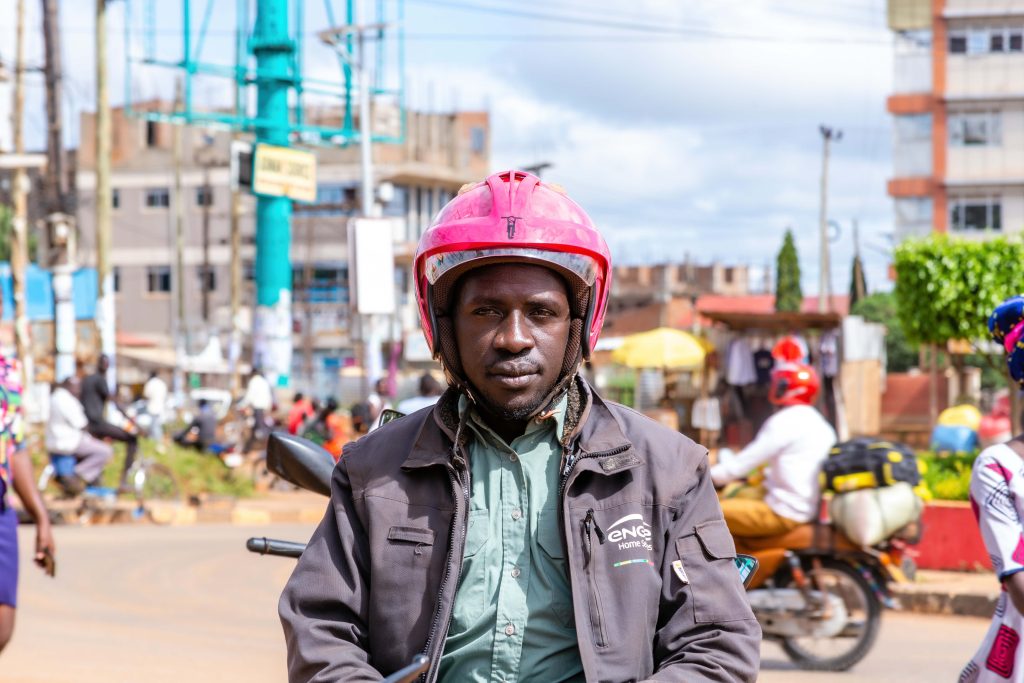
Autochek makes online car purchases easier and safer. #40Days40FinTechs Season 4 Day 28

One of the rarest commodities in the world of digital business is called trust. Everyone is afraid of another either because of past experiences with fraud or stories regarding the same.

When it comes to the car business, the odds of getting exactly what you ordered online are very minimal, especially in Africa. It is possible for someone in Uganda to order a 2022 Mercedez Benz from a car dealer in Asia and receive a 2017 make with even different specifications!

So, it is such fears that Autochek – an African one-stop-shop for car buyers, sellers, and service providers was formed to eliminate.

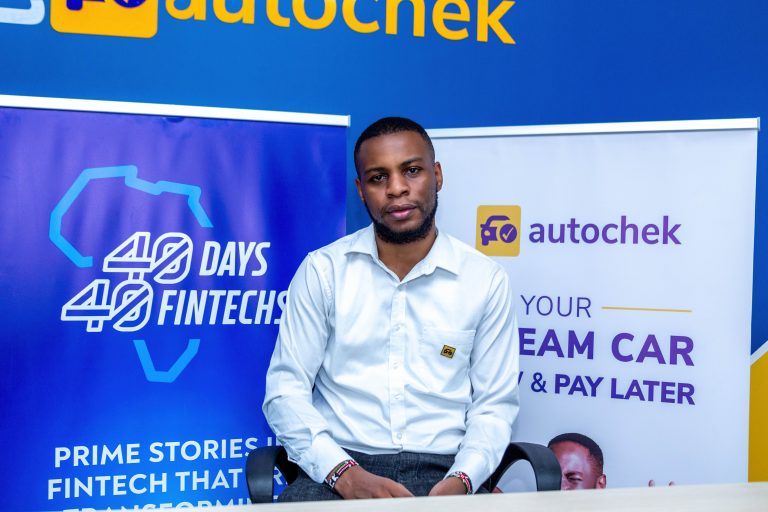
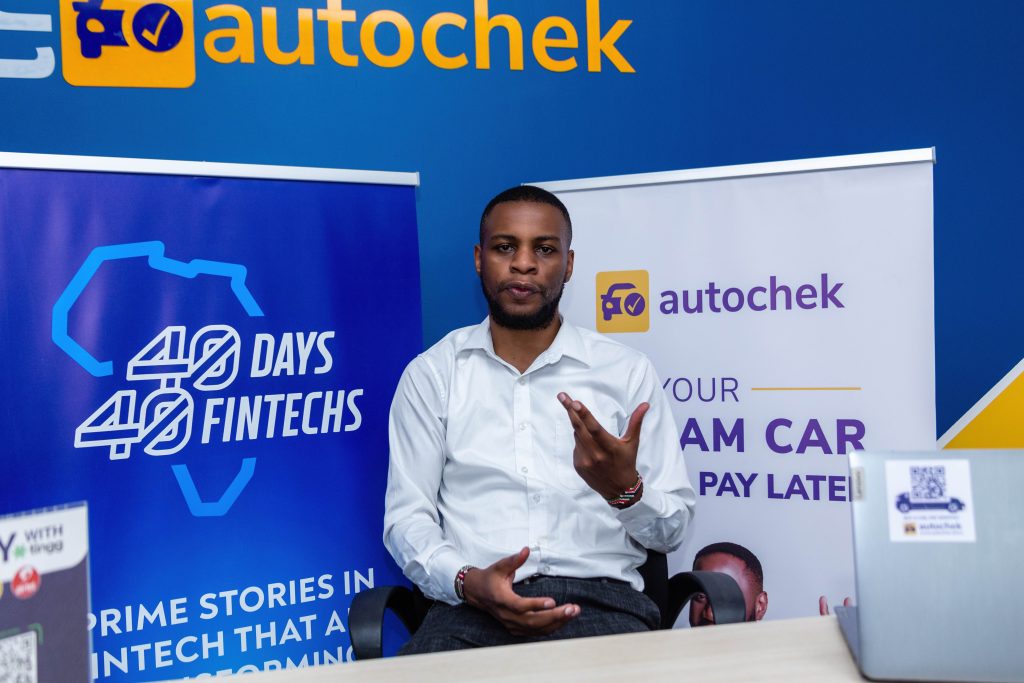
“We live by the principle of you get what you see on the website,” says Victor Magaki, the East African Regional HR manager at Autochek Africa.   

Magaki says that the idea of owning a genuine car should not be very complicated. The Autochek website, therefore, allows sellers and buyers to meet, negotiate and pay the right amount for the right commodity.

“To eliminate people’s fears, we follow proper procedures to ensure that every stakeholder is in sync. For instance, when a dealer posts a car on our website, we first send a group of professionals to inspect it to ensure that it has the specifications as mentioned,” he says.

Started in the September of 2020 in Nigeria and Ghana, Autochek has had exponential growth to establish branches in Uganda, Kenya, Ivory Coast, Senegal, Morocco, Central African Republic, etc.

“Recently, we acquired Auto Tiger in Egypt and Autochek Financial Services in South Africa. All this acquisition is in less than three years of penetrating major automotive markets in Africa to nine countries,” he says.

In Uganda alone, Magaki says they work with more than 2,000 car dealers, which creates variety for their clients. Someone who wants a car just needs to visit our portal, pick a car of their choice and they are connected to the dealer.

Magaki adds that one of the most attractive components of Autochek is the car financing service where people are allowed to apply for cars of their choice and pay for them in instalments.

“We partner with microfinance institutions. We have also been whitelisted with Stanbic Bank so that we can do the loans and everything,” he says.

“We are building the Fintech experience and in Africa, you always know that it is built on trust. Like other marketplace platforms, we are trying. I don’t want to mention places but there are other places where you see your car being sold and you wonder how it happened.”

GENUINE

According to Bilal Saeed, the Sales Manager, YUASA – a marketplace, commonly referred to as bond for new cars, since they started using the Autochek Uganda platform about two years ago, the service has been fast, efficient, and reliable.

“They not only finance the cars but also make sure that they keep the car in a good state. If you compare the market dynamics, different institutions are providing similar facilities. There are banks and other financiers but Autochek beats them. They are more organized, you can do online inquiries, and fill up online forms, and don’t need to go to their offices. They are instant and fast,” he says.

“Autochek makes sure that any car they buy from us is properly serviced and checked before they take the car on the road. They look at the car physically and mechanically,” he adds, noting that they have so far sold more than 60 cars through Autochek.

Saeed thus urges Autochek to develop a mobile application with simpler know-your-customer requirements which will definitely attract more people to their platform.

Autochek is the 28th participant in Season Four of 40 Days 40 FinTechs organised by HiPipo to shine a light on unique innovations changing people’s lives at the bottom of the pyramid in the East African region.

The 40 days 40 FinTechs organisers deserve a round of applause and appreciation because this is big and very educative. We have an opportunity to learn about activities of 40 FinTechs in 40 Days,” Mageto says.

HiPipo’s 40 Days 40 FinTechs initiative has become a household name in the financial technology space of the East African region. In the last three editions, more than 100 FinTechs have been showcased, highlighting stories changing people’s lives, especially in the under-served sectors.

The initiative is organised in partnership with the Level One Project, Mojaloop Foundation, INFITX, Ideation Corner, Cyberplc Academy, and Crosslake Technologies with support from the Bill and Melinda Gates Foundation.