Home Blog Page 47

Nomanini is using FinTech to connect over 15,000 retailers to consumers

Our reporter.

Nomanini is a South Africa-founded payments platform that connects financial service providers and fast-moving consumer goods companies to consumers. Founded in 2011, Nomanini, which means ‘anytime’ in the ‘Siswati’ language, started out as a point-of-sale gadget distributor to retailers where they could be able to sell airtime to customers. It has since expanded to offer a wide range of financial services in Zambia, Kenya, and beyond.

Our team talked to Paul Nyamweya, Nomanini’s Regional Partnerships Manager for East Africa. He explained the evolution of Nomanini, challenges, and opportunities.

QN: It is more than 10 years since you came into existence: how has the journey been?

ANS: It has been great, full of growth and progress but not without challenges. Having started with just a point-of-sale gadget, eventually, we were able to develop a wide-labeled application where retailers could download the app and be able to provide the same service that the gadget was able to do. Over time, we have been able to expand and partner with banks such as Moza Banco in 2015 and Standard Bank in 2019 to provide solutions relevant to informal retailers. In 2021, we partnered with another bank and have been able to extend our presence to Zambia, Lesotho, Ivory Coast, and Tanzania and now rolling out in Kenya.

QN: What are your flagship services?

ANS: We offer a wide range of value-added services. Once a retailer is registered with us, you can be able to buy air time, electricity, pay bills; and for retailers, if we have a history of their transactions, they can get float loans.

The other one we are rolling out is the supply chain finance solution…where we partner with financial services providers and Fast-Moving Consumer Goods (FMCG) companies to provide what we call stock advances to informal retailers.

Then there is another one called Umoja, where we basically integrate with an aggregator where we buy airtime in bulk from mobile service providers and be able to cascade them down to retailers.

QN: How are the numbers looking like?

ANS: So far, cumulatively we are at about 15,000 retailers registered on the platform with over 3.3 million dollars in loans given to customers. We have processed over 42 million transactions so far.

QN: How are you ensuring gender equality and usability in service provision?

ANS: When you talk about informal trade retailers, many of them are actually women that run them. When you talk about small businesses like salons, barber shops, they are mainly run by youths. So, we are supporting a lot of them. Women and youth are the most vulnerable…When we support these businesses, they are the ones we help grow their businesses.

Our technology is advanced in terms of usability. Most of our transactions are real-time and in terms of KYC (Know-Your-Customer), we do elaborate KYC of at least what is relevant to what we need in terms of collecting customer information. Most of this information is protected because we sign Non-Disclosure Agreements so that we use it for what it must be used for.

QN: What is your assessment of FinTech in Kenya?

ANS: Kenya is considered a hotbed for FinTech. It is actually a global hub because of the pioneering work that has been done in this country such as M-Pesa and mobile penetration because most of these solutions are through the mobile phone. There are a lot of innovations in this country that have propelled the FinTech industry. So, there are massive opportunities not just in Kenya but across the region. A lot of innovators are creating their own mobile solutions or partnering with FinTechs so that they can be able to access more points of representation.
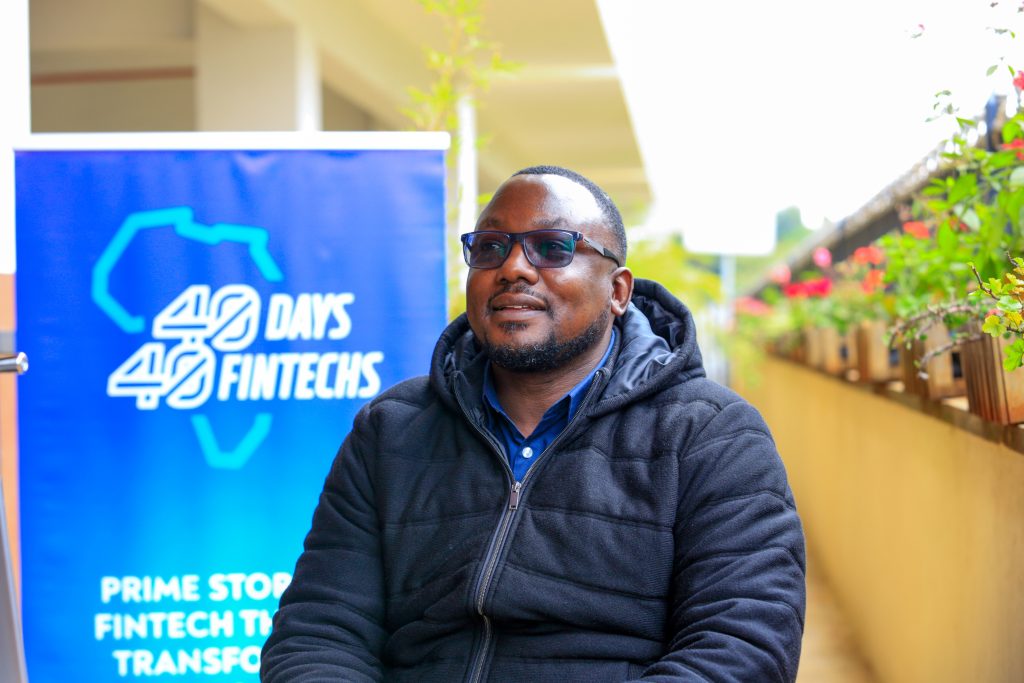
QN: How do you rate the 40 Days 40 FinTechs initiative and what can be improved?

ANS: The 40 days 40 FinTechs initiative is great because it creates awareness on what the FinTech ecosystem has to offer…We have made great steps but there is still a lot of ground to cover. If you are talking about 10 million informal retailers in Sub-Saharan Africa, this initiative is creating that awareness that these opportunities are there that can help small retailers and small businesses to take advantage to grow their businesses and change their lives.

What else can we do? …Actively bringing together the different players as well as investors, financial service providers, and the FMCG companies to talk and see how we can grow together.

40-Days 40-FinTechs.

Nomanini is the 43rd participant in this year’s 40 Days 40 FinTechs platform.

The initiative is run under HiPipo’s Include Everyone program that also encompasses other initiatives such as FinTech Landscape Exhibition, Women in FinTech Hackathon, Summit & Incubator and the Digital and Financial Inclusion Summit and Digital Impact Awards Africa.

Now in its third edition, #40Days40FinTechs has quickly grown into one of the world’s premier showcase events for the innovations that are enabling ever more people to join the digital economy space. That is surely going to remain the case, in large part due to the inspiration and collaboration that our partners; Level One Project, Mojaloop, ModusBox, and Crosslake Technologies generate, but mostly because of the continuing, generous support of the Gates Foundation.

The initiative offers participants useful tools and an introduction to the industry’s emerging technologies, such as Mojaloop Open Source Software, and guidance from Level One Project foundational material. The skills gained from this initiative cover Level One Project Principles, Instant and Inclusive Payment Systems (IIPS), Inclusive Finance, and FinTech in general.

According to HiPipo CEO Innocent Kawooya, this year’s edition has cemented the achievements of the previous editions – where over 60 FinTechs have been transformed – but also building on them to leverage digital financial inclusion in East Africa and beyond.

“As HiPipo, our extensive effort and advocacy is partly for the intention of championing digital innovation and interoperable instant and inclusive payment systems (IIPS) in Africa to a point where our innovators enjoy and achieve sound profit margins to help them keep designing and deploying affordable and inclusive financial services for the poor,” Kawooya said.
Ukonga is using FinTech to facilitate targeted savings for women and youths

Our Reporter.

East Africa has one of the fastest-growing populations, predominated by women and youth. The same region has a ballooning informal sector economy including Boda Boda riders, market vendors, and salon operators among others.

Unfortunately, the majority of these have little, somewhat no clue about financial discipline, especially the art of saving.

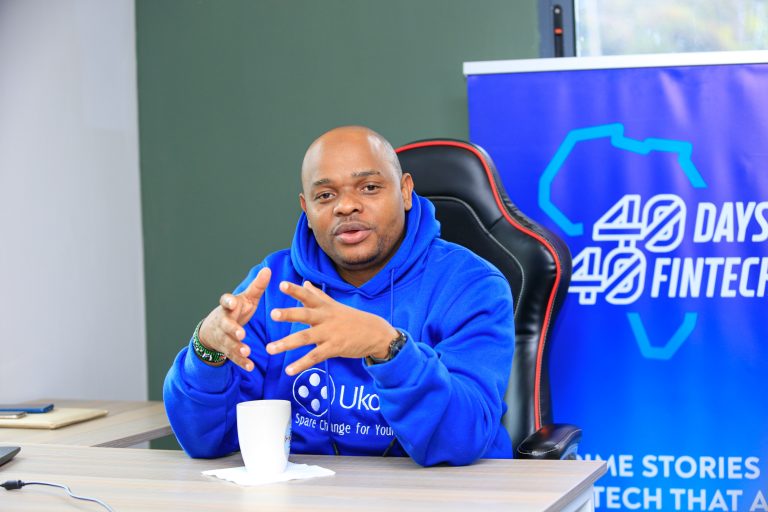
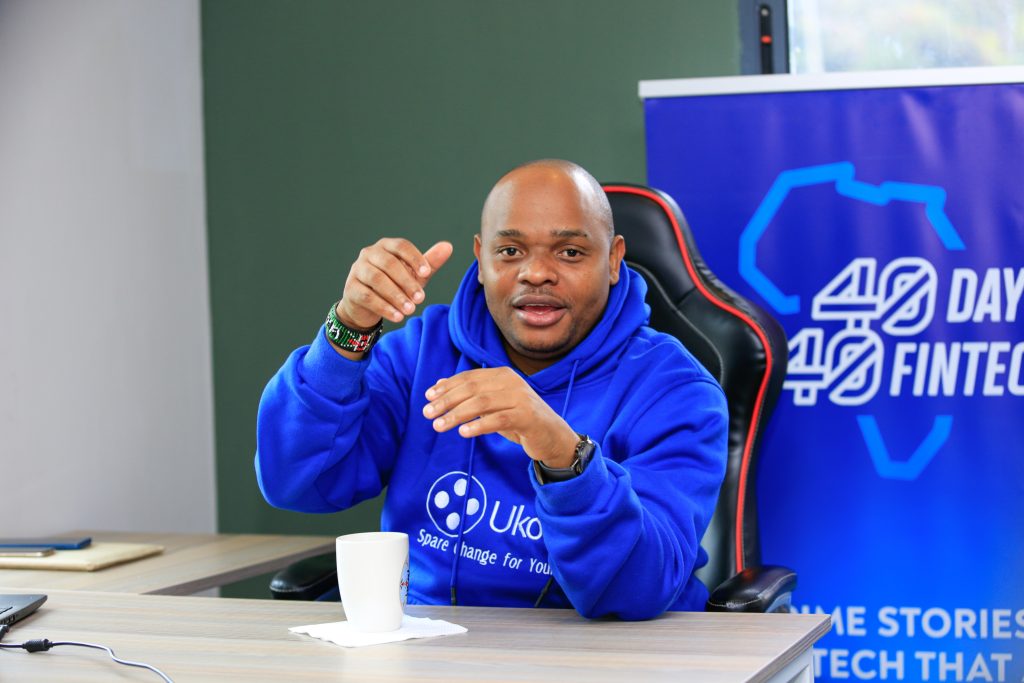
It is this problem that Ukonga was formed to provide an answer to. Founded eight months ago, Ukonga is a Kenyan FinTech product that provides a targeted micro-savings platform for youths and women. It is owned by SaveApp; a Kenyan financial technology company that creates solutions to solve real-life problems.

“Ukonga is a Zulu word that stands for savings. We seek to provide the answer to the underserved community of youth and women. We believe we have had a huge impact and we will continue to impact the lives of these people,” says Abdulaziz Mohammed Omar, the CEO of SaveApp. 

In less than one year, Abdulaziz is happy that Ukonga has been able to register more than 1800 users with a month-on-month growth averaging 30 percent.

“We are currently in Kenya but we want to dominate the East African region in a short time,” he says.

The solution is currently available on USSD and as an App to enable users save their spare change from their daily spending because every cent and shilling matters in enabling one’s financial goals. A user can redeem their savings to pay for anything in their saving goal right from holidays, to pension, insurance, shopping, etc.

“During registration, we ask our users to provide the KYC because it is essential not only for their own security but also for the security of financial assets. We work with partners that are regulated by the Central Bank of Kenya to provide some sense of security,” he says.

Abdulaziz is very happy that the FinTech industry is beginning to receive the recognition it duly deserves.

“The state of Kenyan FinTech business is quite interesting. The opportunities continue to come. The population continues to grow and many challenges which need solutions,” he noted, before appreciating the Kenyan government for providing a conducive regulatory environment for FinTechs.

Based in Kenya, Ukonga is participant number 42 in the third edition of the 40 Days 40 FinTechs initiative organized by HiPipo.

“I want to thank the HiPipo team for the 40 days 40 FinTechs initiative that helps to advocate and showcase our products and services. Through this platform, we can share knowledge, opportunities and seek support from other players. We thank you because very few people dare to do what you do,” Abdulaziz said, before calling for an expanded version of this initiative in future to accommodate more players from across Africa.

40 Days 40 FinTechs

The #40Days40FinTechs initiative is run under HiPipo in partnership with the Level One Project, Mojaloop, ModusBox, and Crosslake Technologies with support from the Gates Foundation.

According to HiPipo CEO Innocent Kawooya, initiatives such as Ukonga offer hope for the underserved populations which have for long been ignored by financial service providers.

“Ukonga has cut a niche for providing the underserved population with targeted saving avenues. This is in line with our common objective of achieving financial inclusion for all,” Kawooya said.

He further thanked digital innovators and FinTechs around East Africa for embracing Season three of 40 Days 40 FinTechs which has covered physical destinations in Uganda, Kenya, and Tanzania.

 “As HiPipo, our extensive effort and advocacy is partly for the intention of championing digital innovation and interoperable instant and inclusive payment systems (IIPS) in Africa to a point where our innovators enjoy and achieve sound profit margins to help them keep designing and deploying affordable and inclusive financial services for the poor,” he said.

The #40Days40FinTechs platform is run under HiPipo’s Include Everyone program that also encompasses other initiatives such as FinTech Landscape Exhibition, Women in FinTech Hackathon, Summit & Incubator and the Digital and Financial Inclusion Summit and Digital Impact Awards Africa.

The platform also offers participants useful tools and an introduction to the industry’s emerging technologies, such as Mojaloop Open Source Software, and guidance from Level One Project foundational material. The skills gained from this initiative cover Level One Project Principles, Instant and Inclusive Payment Systems (IIPS), Inclusive Finance and FinTech in general.

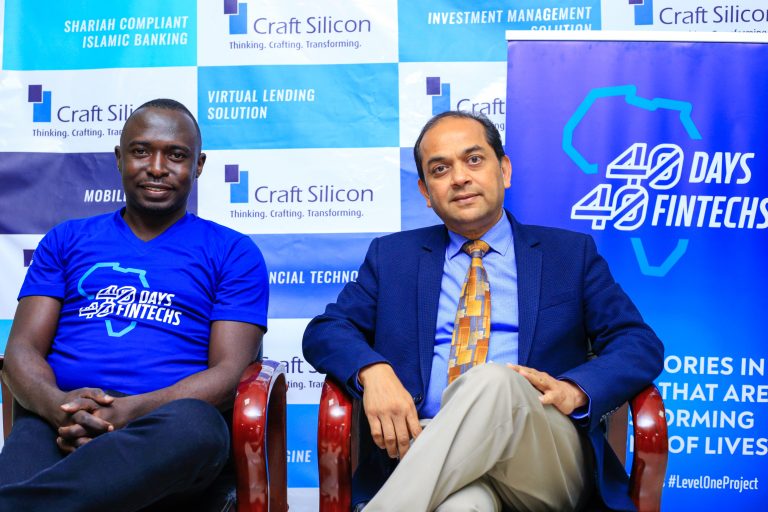
Craft Silicon is serving over 1 billion customers in Africa and Asia

Our Reporter.

It is now 22 years since one of East Africa’s oldest financial technology companies, Craft Silicon launched operations.   

What started as a back-end financial solutions company has since transitioned into a huge banking and financial inclusion enabler providing a wide range of solutions, from core banking, microfinance, anti-money laundering, and electronic payments among others.

According to Vivek Bhirud, the Craft Silicon Country Head, while their primary goal was to provide backend core banking and microfinance solutions, experience over the years made them realize that financial inclusion can only be achieved if you provide the entire value chain in business transactions.

As such, Craft Silicon has since grown into a platform capable of facilitating business-to-business transactions, consumer-to-business transactions, consumer-to-government transactions, and consumer-to-consumer transactions.

To make this happen, Bhirud says, Craft Silicon provides solutions right from core banking to mobile banking, internet banking, agency banking, and even ATM services to their clientele of more than one billion people across 35 countries.

“Using our solutions such as mobile banking used by several banks, we are processing about 1 billion transactions per day. This includes the mobile money transactions and bill payments,” he says.

In order to meet the company’s aspirations of enabling last mile financial inclusion, Craft Silicon predominantly prioritizes tackling the underserved segments dominated by SMEs and MSMEs, especially those run by women and youths, to level their playing field with bigger players.

State of FinTech in East Africa.

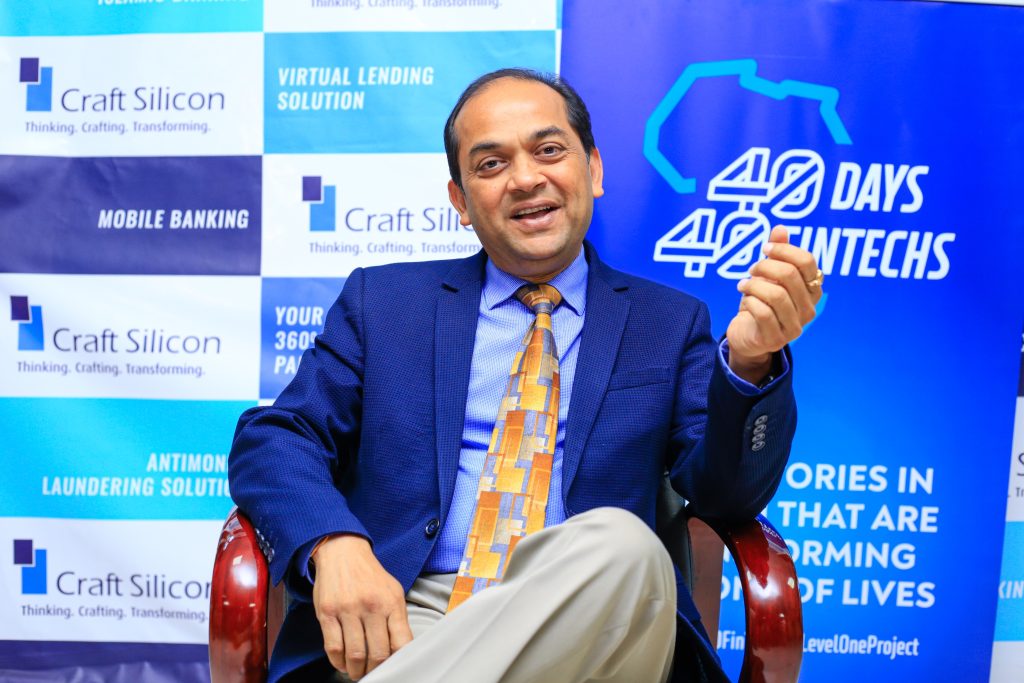
Meanwhile, Dhimant Shah, the Craft Silicon CEO notes that Financial Technology (FinTech) is fast growing in East Africa with Kenya leading the East African Community in adoption and progress in digital financial products ‘because most of its citizens are open to embracing new technology’.

He adds that the outbreak of Covid-19 further opened frontiers for innovation in Kenya’s digital financial services sector.

“Even though we have made progress, opportunities are still immense. We will continue to expand [beyond borders]. In Uganda for instance, we are partnering with different institutions to provide instant and affordable digital loans,” Shah says.

Craft Silicon is the 41st participant in season three of the 40 Days 40 FinTechs Initiative that is shining a light on emerging and established FinTechs across the East African region.

Shah says the initiative couldn’t have come at a better time when start-up FinTechs need a lot of inspiring and mentoring.

He notes that with such interactions as 40 Days 40 FinTechs, mature FinTechs get the opportunity to share their stories, which in turn helps to inspire the start-ups and also creates room for cooperation.

“In this digital era, no one is too big and no one is too small. It is the idea that counts. I think this initiative brings visibility for the smaller players which helps in creating better solutions and collaborations,” Shah says, stressing the importance of governments, venture capitalists and incubation hubs such as HiPipo and others in fostering financial inclusion and digital growth.

40 Days 40 FinTechs.

Now in its 3rd season, the 40 Days 40 FinTech initiative is organized by HiPipo in partnership with Level One Project, Mojaloop, and Crosslake Tech and supported by the Gates Foundation.

This year’s edition is cementing the achievements of the first two seasons by looking at more impactful FinTechs from all over the East African region. The countries covered so far are Uganda, Kenya, and Tanzania.

Innocent Kawooya, the HiPipo CEO noted that FinTech giants like Craft Silicon offer a variety of learning options for young FinTech players.

“With a presence in over 35 countries, every emerging FinTech should be trying to learn how Craft Silicon has done it. We are happy that they have agreed to share their story,” Kawooya said.

Minus shining a light on impactful FinTechs, the 40 Days 40 FinTechs initiative also offers participants useful tools and an introduction to the industry’s emerging technologies, such as Mojaloop Open Source Software, and guidance from Level One Project foundational material. The skills gained from this initiative cover Level One Project Principles, Instant and Inclusive Payment Systems (IIPS), Inclusive Finance and Financial Inclusion in general.

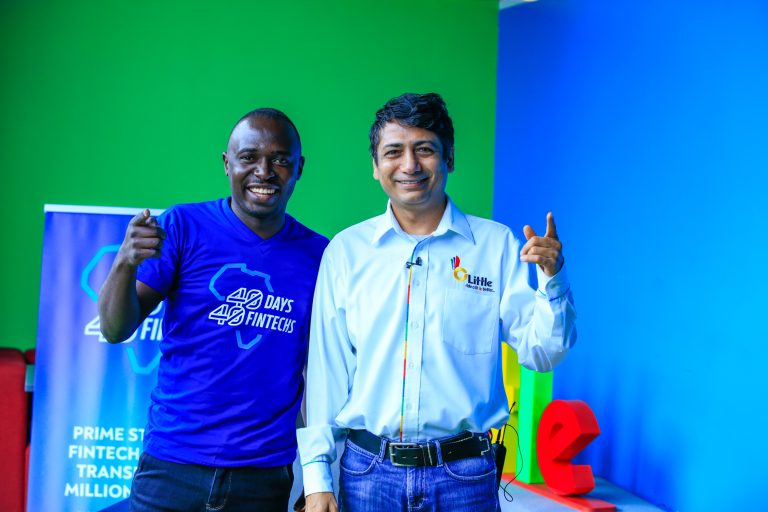
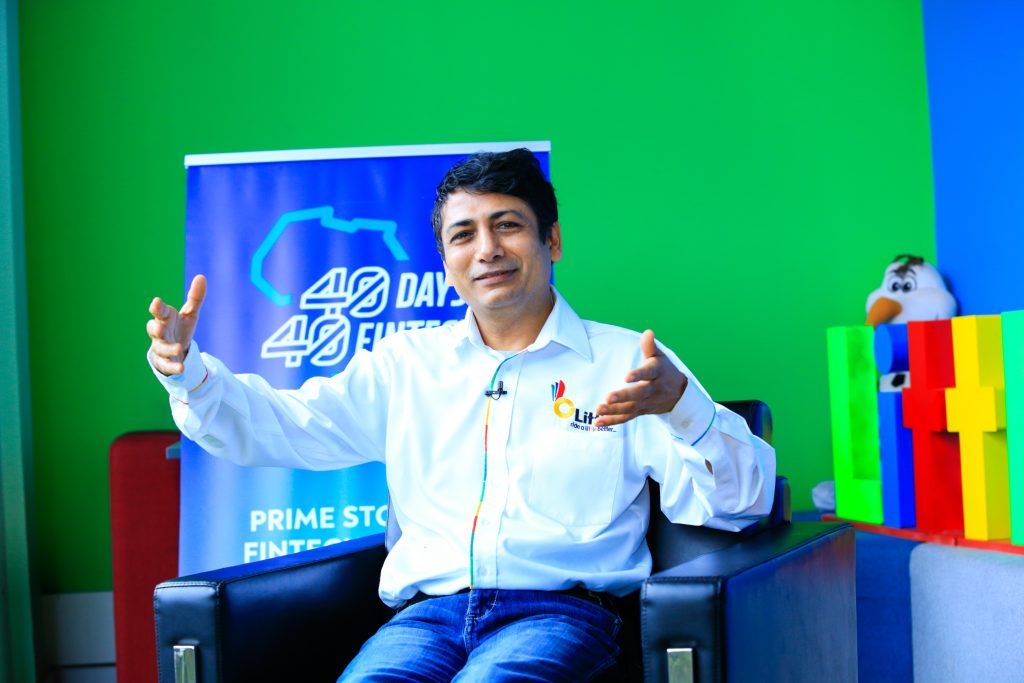
Little has transformed from a ride-hailing platform to a super APP for your daily needs

Our Reporters.

At the start of July 2016, news broke that two Tech giants had come together and devised an African Transport solution. The Tech Giants were Craft Silicon and Safaricom. The Transport solution was Little Cab; a ride-hailing APP that was launched in Kenya to directly compete with the likes of Uber, and Taxify – that has since rebranded to Bolt.

According to Kamal Budhabhatti, the Little Founder and CEO, they introduced this APP to cushion African drivers from/against the several challenges they faced with foreign ride-hailing companies.

“Couple of years back, when ride-hailing Apps from the West were dominating the market, the driver’s interests were not being addressed. Every driver had an issue with how these platforms were operating. We felt that there was a need to come and address the challenges that these drivers were facing. That is how Little was formed,” Kamal said, adding;

“Today, the drivers’ community is really supporting Little because we listen to them and design products that are a win-win for both the drivers and riders. We have rolled out products specifically designed for women entrepreneurs. For example, on Little, we have a special product for women drivers.”

Six years later, Little has grown into a reliable ride-hailing platform with over 100,000 registered drivers and serving close to one million clients in Kenya alone. It has also since expanded to other countries like Uganda, Tanzania, and Ethiopia and is now headed to West Africa.

Motivated by this success, Little has now evolved into a super APP that addresses a variety of day-to-day needs. Its latest APP version offers competitive and quality services in logistics, payments, money transfers, transport, entertainment, and e-commerce.

“What we have realized over the years is that the mobile phone capacity of an African consumer is always a challenge. The customer can’t have one APP for rides, one for deliveries, one for payments and one for entertainment. So, we thought about bringing all these services together under one App, with great customer experience,” Kamal explained.

He added: “That is why we have now transformed Little from just a ride-hailing platform to your every day, everything App. With Little, you can now order for a ride, food, groceries, pharmaceutical products, transfer money and make payments among others.”

Kamal notes that Kenya and East Africa’s FinTech industry is very competitive and fast-growing as several innovators continue to think and develop solutions for the issues addressing their communities. He nonetheless notes that the biggest challenge to the industry is the high transaction costs.

“When you send money from one account to another, when you buy airtime, when you make a bill payment, and when you pay a merchant, the transaction costs are relatively high. We believe that this transaction cost can be reduced,” Kamal noted.

40 Days 40 FinTechs.

Little is participant number 40 in the 2022 40 Days 40 FinTechs initiative organized by HiPipo in partnership with Level One Project, Mojaloop, Crosslake Tech and supported by the Gates Foundation.

Little features as part of 40 Days 40 Fintechs initiative’s financial inclusion strategy that now covers the entire East Africa. More impactful Fintechs from all over the region are set to be showcased this year.

Innocent Kawooya, the HiPipo CEO explained that players like Little are key to shaping the future of Africa.

“The only little thing about Little is the English word little. Away from that, Little is doing amazing things for drivers and riders. It has now expanded its reach to cover a wider market. I have confidence in the Little Leadership and Team so I am sure that they have carefully scaled from ride-hailing to a super App. Their programs for women and youth are amazing,” Kawooya said.

Now in its third edition, the HiPipo #40Days40FinTechs has quickly grown into one of the world’s premier showcase events for the innovations that are enabling ever more people to join the digital economy space.

Kamal appreciates the great Financial Inclusion advocacy role that HiPipo is playing through platforms like 40 Days 40 FinTechs. He advises that such platforms are key to ending the ‘silo-mindset’ among innovators and ensuring that more FinTechs succeed.

“40 Days 40 Fintechs will help the FinTechs to shine. There are a lot of talented brains out there and a lot of FinTech companies outside there that are not well represented. I think this platform is where they can come and demonstrate their innovations. I applaud you guys for the 40 Days 40 FinTechs initiative.” Nicknamed Kenya’s Bill Gates by the Forbes magazine, Kamal Budhabhatti is also the founder of Craft Silicon – a Kenya-based Software company that currently serves over 300 institutions and clients globally.

Cellulant is processing digital payments worth billions of dollars per year across Africa

Our Reporter.

In 2001, two young African men from opposite ends of the continent sat across each other at a dinner table and had a discussion over a cup of coffee. So intense was the conversation that problem-solving models were created on a serviette that would fuel the establishment and growth of a multinational African firm forever changing the payments landscape.

They called the business “Cellulant”, paying homage to the growing mobile phone penetration in Africa, but also symbolizing the importance of a Cell, the smallest structural and functional unit of life that when combined with other Cells, builds a whole being.

Two decades later, Cellulant is arguably the leading Pan African payments company providing locally relevant and alternative payment methods for global, regional, and local merchants.

According to Moses Abindabizemu, the Cellulant Group chief marketing officer, this success is attributed to the provision of solutions that are customized to the local needs of specific societies in over 35 African countries.

“For example, we provide integration through cards, banks, and Mobile Money which gives us access to over 220 million clients across Africa. We have over 300 large enterprise customers and over 2,000 SMEs,” he says.

Abindabizemu says their niche is through availing a single Application Programming Interface(API) payments platform that enables businesses collect payments online and offline while allowing anyone to pay from their mobile money, local and international cards or directly from their bank.

As a result, Cellulant facilitates more than 300 million transactions per year with volumes in billions of dollars.

“Our growth rate is about 80 percent year on year. We can only continue to grow. We want to offer solutions to retail businesses in Uganda. By the end of 2022, we will be processing over 500 million transactions per year with a volume of turnover of 30 billion dollars,” he says.

To give this success some perspective, Cellulant boasts an 80 percent market share of providing payment solutions for all airlines in Africa including Emirates, Kenya Airways, Jumbojet, Ethiopian Airlines, among others. They also provide solutions for the likes of Jumia, Kiku, MultiChoice, StarTimes, Zuku, National Water, Umeme, among others.

Helping startups.

Abindabizemu says that many African FinTech startups are curtailed by a lack of sufficient funding, thus the inability to set up the correct infrastructure for business sustainability.

“When you are a startup, chances are that these service providers (website developers, telecoms, visa cards, banks) don’t know you or you don’t know them. When you come to us, we give you all that at once. You don’t need to know anything in IT… all you need [is a] phone…then we give you a merchant code and you can start transacting…If you develop a website, we give you our APIs and you start…We bridge that gap for them,” he says.

He further notes that one of the reasons small businesses don’t last long is they don’t have a good grasp of financial discipline. Someone may start a shop and probably put the minimum price of commodities at Shs 10,000 but even if the shop attendant sells that commodity at Shs 15,000, they will not declare it because the business is purely run on cash.

That is why Cellulant introduced a payment platform called Tingg, which allows a business owner to monitor everything by digitizing all payments.

“With Tingg, Money goes to your account directly. This creates a track record which can even help you get loans because your business report is well tracked,” he says.

ForAbindabizemu, settlement is one of the biggest challenges businesses face in Africa. So, they ensure that payments are made within a day.

“Businesses ask; can I get my money on the same day? Because we work with telecoms, sometimes money may take long to come on a client’s account but we [ensure that] we pay within 24 hours,” he says.

He thus calls upon FinTechs in Africa to embrace collaborations because it can only make them stronger.

“What we can do to make the industry better is appreciating that we can win together. We need to collaborate. Not one person can do everything…we can connect and integrate and take our uniform solution to a business,” he says.

“The other issue is continuous awareness. People need to know that digital payments promote financial discipline because you will only pay for the things that you really need, unlike when you have cash.”

He, however, rates Uganda as amazing with opportunity for FinTech, where digitization is still below 20 per cent.

“If you are still carrying cash, if you are still walking to a supermarket, if you still walk to the bank to pay fees, etc, then it means there is still an opportunity that can be exploited. There are many unsolved problems in Uganda and people are ready to pay for convenience,” he says.

40 Days 40 FinTechs.

Abindabizemu notes that the 40 Days 40 FinTechs initiative is a powerful platform for African and East African innovators to see their potential.

“Not many people know that solutions exist. This initiative helps people to discover that while they have been struggling with a given problem, there is someone who has a solution,” he says.

Cellulant is the 39th participant in this year’s 40 Days 40 FinTechs initiative that is shining a light on the unique stories about innovations enabling ever more people to join the digital economy space.

The initiative is run under HiPipo in partnership with the Level One Project, Mojaloop, ModusBox, and Crosslake Technologies, with generous support from the Gates Foundation.

According to HiPipo CEO Innocent Kawooya, digital innovators and FinTechs around East Africa have fully embraced Season three which covers physical destinations in Uganda, Kenya, Tanzania, Burundi, and Rwanda.

“We are very happy that FinTechs in the East African region have taken up this opportunity to showcase how they are solving everyday problems and integrating Level One Project principles,” he said.

Kawooya added that this year’s edition has cemented the achievements of the previous editions – where over 60 FinTechs have been transformed – but also built on them to leverage digital financial inclusion in East Africa and beyond.

“As HiPipo, our extensive effort and advocacy is partly for the intention of championing digital innovation and interoperable instant and inclusive payment systems (IIPS) in Africa to a point where our innovators enjoy and achieve sound profit margins to help them keep designing and deploying affordable and inclusive financial services for the poor,” he said.

The #40Days40FinTechs platform is run under HiPipo’s Include Everyone program that also encompasses other initiatives such as FinTech Landscape Exhibition, Women in FinTech Hackathon, Summit & Incubator and the Digital and Financial Inclusion Summit and Digital Impact Awards Africa.

It offers participants useful tools and an introduction to the industry’s emerging technologies, such as Mojaloop Open Source Software, and guidance from Level One Project foundational material. The skills gained from this initiative cover Level One Project Principles, Instant and Inclusive Payment Systems (IIPS), Inclusive Finance and FinTech in general.

FinTech Group is providing digital solutions to over 200 Institutions in Africa

Our reporter.

FinTech Uganda Limited, a subsidiary of FinTech Group is one of the oldest financial technology companies in Africa with a variety of fully integrated models that assist over 240 financial institutions across Africa to manage payments and collections, asset financing, mortgage business, and insurance premium financing, among others.

Having opened shop back in 1993, FinTech Group has mastered the art of providing technology solutions to organizations in more than 20 African countries, including supporting and implementing financial and technology solutions to over 20 banks and institutions in Uganda alone.

According to Hazel Were, a Software Engineer and Business Development Executive at FinTech Group, their experience is unmatched in providing customized digital products and solutions specific to business needs.

One such product is LeasePAC; a web-based leasing management solution that incorporates the core asset finance management modules and interfaces to third-party systems. With over 15 different but fully integrated modules, LeasePAC assists financial institutions to manage asset financing, mortgage business, insurance premium financing, factoring and discounting, stocking plan, and deposits etc.

“LeasePAC allows you to have automated collections and also eases the tracking of payments with an inbuilt accounting module,” she says.

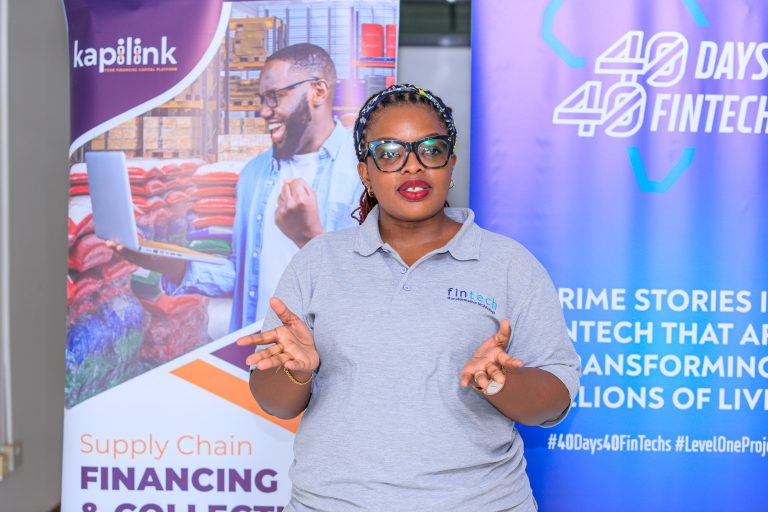
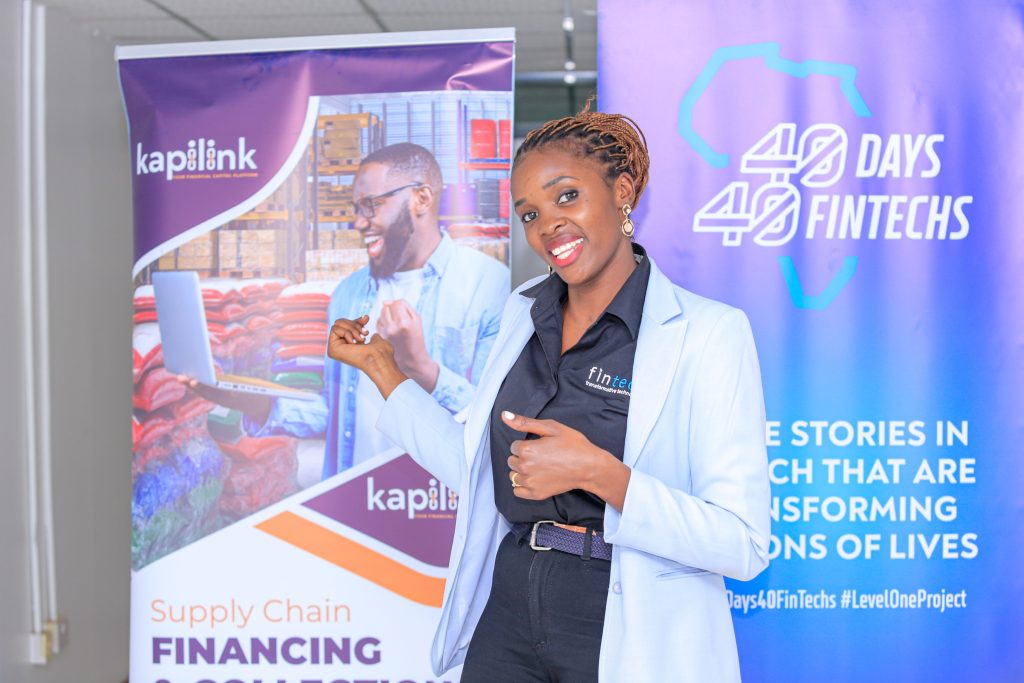
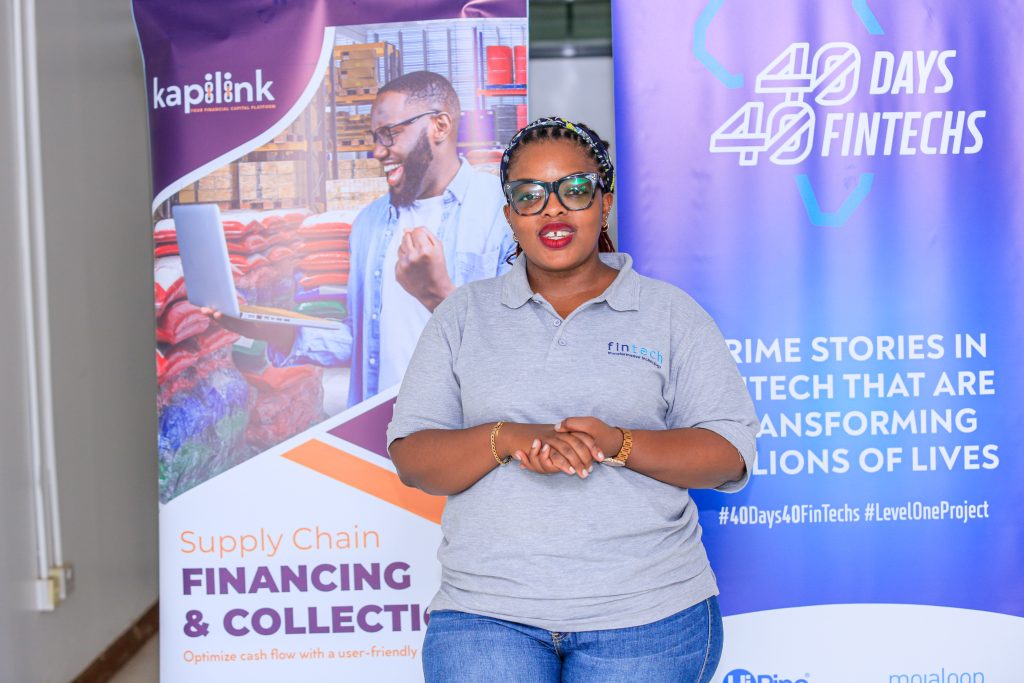
She adds that they also have another key product named Kapilink; an end-to-end, cloud-based platform that builds an ecosystem of financiers, large corporates, and MSMEs to facilitate Supply Chain Financing and Collections in one place. It supports various working capital solutions such as invoice discounting, factoring and, dynamic discounting.

As a way of ensuring that people at bottom of the pyramid have equal access to financial services, FinTech Uganda distributes point-of-sale (POS) terminals to different financial institutions who later then re-distribute the same to low-level kind of customers.

According to Priscilla Kemigisha, the Projects Team Leader at Fintech Group, the company is implementing financial inclusion best practices such as real-time transactions, same-day settlements, and tiered KYC among others.

 “As FinTech Uganda, we have systems that are able to give our customers real-time notifications. For example, the traders in URA, when they get to make payments for their goods, they are able to get real-time notifications that payments are received and it enables them clear their goods in time. We have systems that handle mobile banking, and internet banking as well,” Kemigisha says.

Kemigisha further notes that Uganda and Africa at large are headed for a fully digitized economy because automation is the way to go. She however says there is a need to address the challenge of user retention and user experiences.

“We should find solutions to the issue of user experience so that we can retain and gain more customers,” she says.

She also cites a challenge of data security and inability to adhere to government regulations but calls on FinTechs to make sure that they go through what the policies say and engage legal teams to ensure compliance.

40-Days 40-FinTechs

FinTech Uganda is participant number 38 in this year’s 40 Days 40 FinTechs initiative organized by HiPipo. The platform seeks to showcase financial technology companies that are changing lives, especially for people at the bottom of the pyramid.

“We appreciate the 40 Days 40 FinTechs initiative for enabling collaboration and networking for all tech enthusiasts. As a woman in tech, I appreciate the women inclusion aspect, especially in the Hackathons,” Hazel Were says.

The 40 Days 40 FinTechs initiative is run by HiPipo in partnership with the Level One Project, Mojaloop, ModusBox, and Crosslake Technologies and supported by the Gates Foundation.

According to HiPipo CEO, Innocent Kawooya, FinTech Uganda is among the ‘legends of the game’ and their participation is crucial for emerging FinTechs to pick some lessons.

“This initiative provides a blend of the old and the new. FinTech Uganda has worked with some of the biggest financial institutions in this country. Startups have a lot to learn from them,” Kawooya said.

The #40Days40FinTechs platform is run under HiPipo’s Include Everyone program that also encompasses other initiatives such as FinTech Landscape Exhibition, Women in FinTech Hackathon, Summit & Incubator, and the Digital and Financial Inclusion Summit and Digital Impact Awards Africa.

The platform aptly provides a setting for the various players and stakeholders involved in digital and financial technology to exhibit their products & services and also share their ideas on how more people, especially those unserved and underserved by the present financial systems, can be brought into the fold. It also offers participants useful tools and an introduction to the industry’s emerging technologies, such as Mojaloop Open Source Software, and guidance from Level One Project foundational material. The skills gained from this initiative cover Level One Project Principles, Instant and, Inclusive Payment Systems (IIPS), Inclusive Finance and FinTech in general.