Home Blog Page 48

Medmoo is using FinTech to extend daily fuel loans to Lira Boda Boda riders

Our Reporter.

At the peak of the Covid-19 pandemic in 2020, Denis Orech and two friends from Lira University decided to devise means of delivering goods and services to people in Lira town who were trapped in their homes due to a national lockdown.

The three, using their knowledge in information technology, started an e-commerce platform called Yammie shoppers where people would go and order home supplies and pay upon delivery.

“Lira being a remote district in Northern Uganda, the business did not pick on. One of the reasons for this failure was that we did not have enough capital. People would make orders but we never had resources to buy and transport the goods to their destinations using our motorcycle,” he says.

However, it is from this bottleneck that Orech originated a new business idea that is now becoming a household name in Lira town.

Orech says that whenever they were short of money to make deliveries, they would approach an old lady in the area who would lend them some money and they pay later.

“I realized that this lady was extending loans to even Boda Boda riders. I said I can do this as well. So, one of my partners happened to be running a fuel station in Amolatar district; we sat down and I shared the idea. We came up with a model and launched MedMoo in January 2022 with me as its CEO,” he says.

MedMoo is a Luo word that loosely translates into refueling in English or ‘Yongeramu amafuta’ in Luganda. Under this model, they onboard riders who are then given daily fuel loans which they are expected to repay within 24 hours, with a 10 percent interest.

“We approach them at their stage and explain what we do. We ask those interested to register. We get their names, number plates, phone numbers and NIN numbers,” Orech says.  

The riders are given specific forms to fill out at their stage location and the stage chairman or treasurer co-signs as their guarantor.

Upon registration, a Boda Boda rider can go to any of the MedMoo partner fuel stations and get fuel on credit ranging from UGX 5,000 to UGX 20,000.

“We have an employee at all these stations who hands out fuel vouchers to these riders. The employee first confirms their registration status and credit status before issuing a voucher,” he explains, noting that payments can be made in cash or using mobile money.

In six months, MedMoo has onboarded over 878 riders and given out fuel worth UGX 77m.

“At the beginning of the year, we were giving out fuel loans of about 700,000 per day but as fuel has become more expensive, trips have reduced, our numbers have dropped to as low as 300,000 per day,” he says.

Meanwhile, Orech says one of the biggest challenges faced by startups in northern Uganda is capital. He explains that while many young people have brilliant ideas, they are affected by limited capital and low levels of uptake of technology.

“It takes a lot of time for people to adapt to new things. There is a mindset problem, especially for homegrown initiatives. People expect everything to have a stamp of approval from Kampala,” says.

40 Days 40 FinTechs.

He, however, applauds the 40 Days 40 FinTechs initiative that has reached out to even upcountry FinTechs and given them both national and international mileage.

“We really need a very active tech space; I am meaning incubators, in northern Uganda. We need a hub in Northern Uganda. The skill is there. The people are there. We need exposure and funding. It is very encouraging for the 40 Days 40 FinTechs initiative to come to us and give us a chance to tell our story,” he says.

Now in its third edition, the HiPipo #40Days40FinTechs has quickly grown into one of the world’s premier showcase events for the innovations that are enabling ever more people to join the digital economy space. This is done in collaboration with partners such as Level One Project, Mojaloop, ModusBox, and Crosslake Technologies, with support from the Gates Foundation.

MedMoo are the 37th participants in this year’s edition that has been extended to cover physical destinations in East African nations of Uganda, Kenya, Tanzania, Burundi, and Rwanda.

According to the HiPipo CEO, Innocent Kawooya, Medmoo is an encouraging start-up with a solution that targets a huge yet niche audience.

“Boda Boda riders are part and parcel of our economy. They always struggle with getting fuel, more so in the morning. A solution like Medmoo helps them start their work days well without worrying about fuel. We have challenged the Medmoo team to scale their product and make it, paperless, cash-lite, and eventually cashless. HiPipo is ready to move with Medmoo on this journey”

Run under HiPipo’s Include Everyone program, the 40 Days 40 FinTechs initiative offers participants useful tools and an introduction to the industry’s emerging technologies, such as Mojaloop Open Source Software, and guidance from Level One Project foundational material. The skills gained from this initiative cover Level One Project Principles, Instant and Inclusive Payment Systems (IIPS), Inclusive Finance and FinTech in general.
Xente is using FinTech to empower businesses and enable payments

Our Reporter.  

The outbreak of Covid-19 has forced many businesses to migrate from the manual way of doing things to digital solutions.

Businesses that used to manage their expenses manually using cash or cheques are now using mobile money which ultimately saves time and creates easy tracking mechanisms.

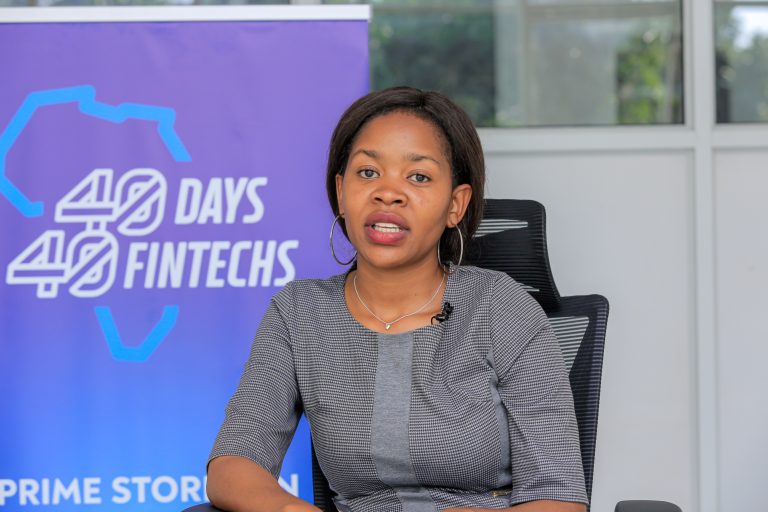
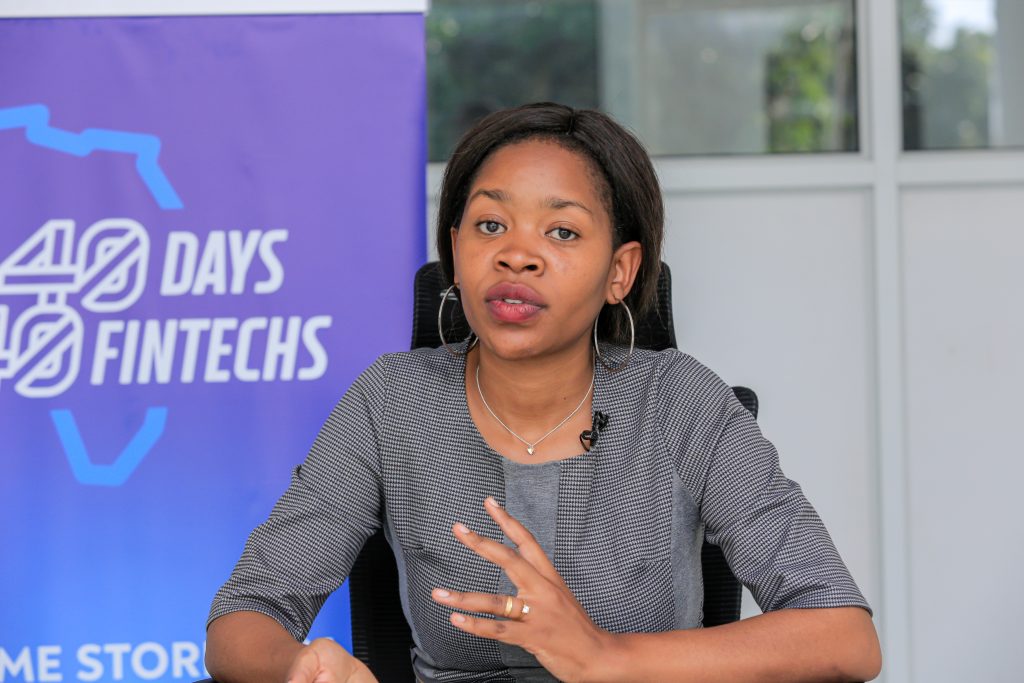
According to Lyn Tukei, the Xente head of marketing and communications, Covid-19 has accelerated the global shift to automated, paperless, and cashless finance processes.

Xente is a Financial Technology company (FinTech) that helps businesses simplify finance by offering automated solutions with a goal to help African businesses get connected to the global economy.

“One of our key features is issuance of visa cards to businesses. They can be either virtual or physical cards. We are actually the first FinTech to issue visa cards in Uganda, through our partnership with Visa,” she says.

Xente also facilitates mobile money disbursements by companies. Tukei says this helps businesses to approve every payment, track every transaction in real-time, manage money across teams, branches, and/or countries, and sync data with their accounting platforms.

“If you have remote teams, instead of going to a mobile money agent, you simply log onto the Xente platform and send money in seconds. It can be mobile money, it can be airtime, it can be any bill,” she says, adding;

“We also help people make bank transfers using Xente. You can pay salaries. You are also able to collect payments from wherever. With this platform, you are able to get statements whenever you do a transaction.”

Tukei, who is enthusiastic about women inclusion in the Tech sector, is happy that the FinTech industry in Uganda is maturing steadily, as seen with more companies opening shop and regulations coming in place.

40 Days 40 FinTechs.

Xente are the 36th participants in this year’s 40 Days 40 FinTechs initiative that offers Fintechs useful tools and an introduction to the industry’s emerging technologies, such as Mojaloop Open Source Software, and guidance from Level One Project foundational material. The skills gained from this initiative cover Level One Project Principles, Instant and Inclusive Payment Systems (IIPS), Inclusive Finance and FinTech in general.
Tukei appreciates the 40 Days 40 FinTechs initiative for profiling different players in the market who are providing unique solutions to various problems in society.

“The initiative has also helped in letting the world know how financial technology can turn around the country and the continent at large,” she says.

HiPipo CEO Innocent Kawooya says this year’s edition is cementing the achievements of the previous editions – where over 60 FinTechs have been transformed – but also building on them to leverage digital financial inclusion in East Africa and beyond.

“Xente is playing a critical role in our migration to a cashless economy. We are also happy to see that big companies like Visa are partnering with local FinTechs to simplify digital payments. This will further make our dream of Including Everyone a reality,” he said.

The #40Days40FinTechs platform is run under HiPipo’s Include Everyone program that also encompasses other initiatives such as FinTech Landscape Exhibition, Women in FinTech Hackathon, Summit & Incubator and the Digital and Financial Inclusion Summit and Digital Impact Awards Africa. The platform aptly provides a setting for the various players and stakeholders involved in digital and financial technology to exhibit their products & Services and also share their ideas on how more of us, especially those unserved and underserved by the present financial systems, can be brought into the fold.

2ambale is digitizing fashion and art

Our Reporter.

Uganda has a huge but largely underdeveloped fashion industry.

According to a November 2020 article by The East African newspaper, “Uganda’s fashion industry is characterized by struggling ventures, semi-professional small-scale production, and lack of infrastructure, institutions and government support.”

Even so, while thousands of Ugandans continue to find their space in fashion and arts, a few others are coming up with solutions that transform the entire industry for the better.

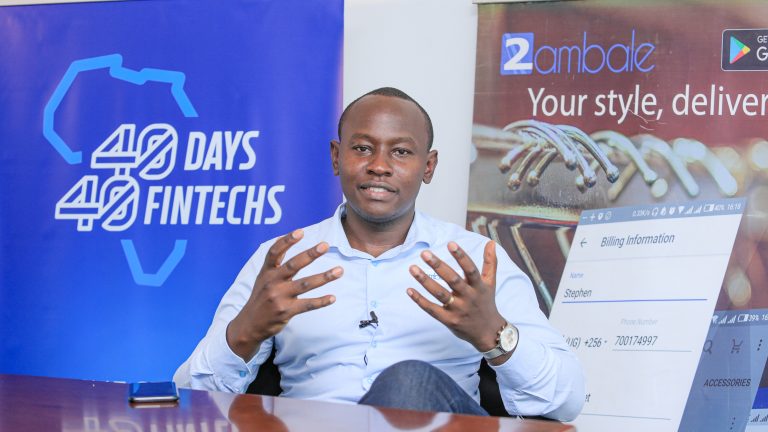
Among such people is Stephen Mutungi, the CEO of 2ambale; a digital marketplace for fashion stores. He sat down with the HiPipo 40 Days 40 FinTechs team and laid bare his 2ambale vision.

QN: What is 2ambale and what do you do?

ANS: 2ambale is an online marketplace for fashion stores. We leverage technologies like machine learning to help small businesses easily pay for efficient advertising on the world’s leading digital platforms like Google, Meta, and Twitter using mobile money.

QN: What is the motivation behind 2ambale? What market challenges do you address?

ANS: 90 percent of businesses in Uganda are small businesses and 33 percent of these are in trade and commerce with physical locations relying on physically visiting customers. To survive, businesses need to pay heavy rent fees for prime locations. This coupled with other rising costs has greatly raised the cost of doing business and seen many small businesses close shop earlier than their first birthdays.

In an effort to reverse this, 2ambale leverages technology to help small businesses dealing in fashion, textile, and art products, to easily pay for efficient marketing online to customers beyond their physical location. 

This way, businesses don’t have to compete for prime locations with high costs of doing business but can instead set up anywhere, list their products online, and yet sell to a bigger market.

QN: For the time you have been in business, what do your numbers look like?

ANS: We have enabled businesses to generate over 18,000 business transactions from more than 11,000 buyers. These numbers are very encouraging and we are optimistic about the future.

QN: What is the state of Uganda’s E-commerce Industry?

ANS: E-commerce is a new but one of the fastest growing technology industries in Uganda. The main challenges for this industry are around absence of infrastructure mainly robust and trusted digital payment solutions and logistics services tailored to the industry.

QN: In your opinion, how does the 40 Days 40 FinTechs initiative support the industry?

ANS: Platforms like 40 Days 40 FinTechs create publicity and grow people’s confidence in different financial technologies while pushing and advocating for best practices among the players. This results into the growth of a more disciplined and healthy industry.  As 2ambale, we are excited to be part of this season.

About 40 Days 40 FinTechs!

2ambale is participant number 35 in the 2022 40 Days 40 FinTechs initiative. The #40Days40FinTechs platform is run under HiPipo’s Include Everyone program that also encompasses other initiatives such as FinTech Landscape Exhibition, Women in FinTech Hackathon, Summit & Incubator and the Digital and Financial Inclusion Summit and Digital Impact Awards Africa.

It offers participants useful tools and an introduction to the industry’s emerging technologies, such as Mojaloop Open Source Software, and guidance from Level One Project foundational material. The skills gained from this initiative cover Level One Project Principles, Instant and Inclusive Payment Systems (IIPS), Inclusive Finance and FinTech in general.
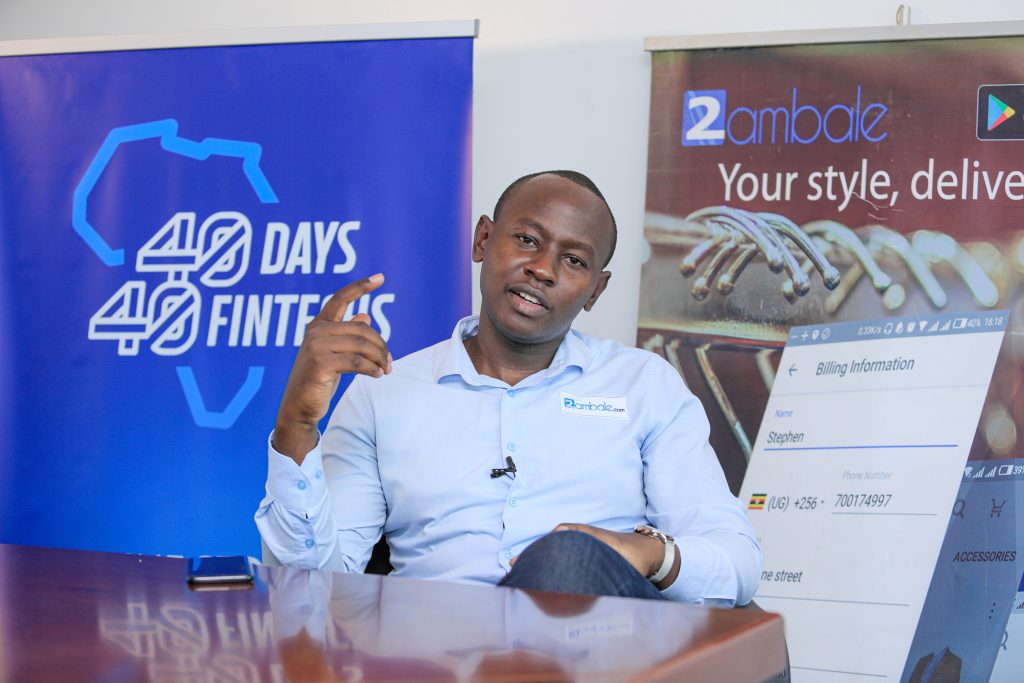
According to Innocent Kawooya, the HiPipo CEO, though in its infant stage, 2ambale is a great idea, targeting a popular niche.

“Thousands of Youth and Women are involved in fashion and art. However, many of them are yet to integrate technology into their trade. A platform like 2ambale is one way of aiding the digitization of such businesses,” Kawooya said.

He further noted that despite the rapid adoption of digital financial services, an average of 40 percent of Africa’s adult population remains financially excluded and something must be done. “Financial exclusion continues due to the lack of interoperable, open-loop, cost-effective, real-time, and secure retail payments systems/switches to digitally connect large numbers of low-income users onto formal financial rails. The 40 Days 40 FinTechs initiative is accelerating discussions on building industry-led Instant and Inclusive Payment System (IIPS) across the East African region and continent.”

Mfuko Plus is helping over 70 savings and credit-giving institutions serve their customers better

Our Reporter.

Enrolling members into savings, and investment clubs is a key stage in operationalizing such organizations. But when this is done, the harder part is handling operations, which includes keeping customers’ deposits safe, managing the risks that come with handling savings and loans, and ensuring proper record keeping.

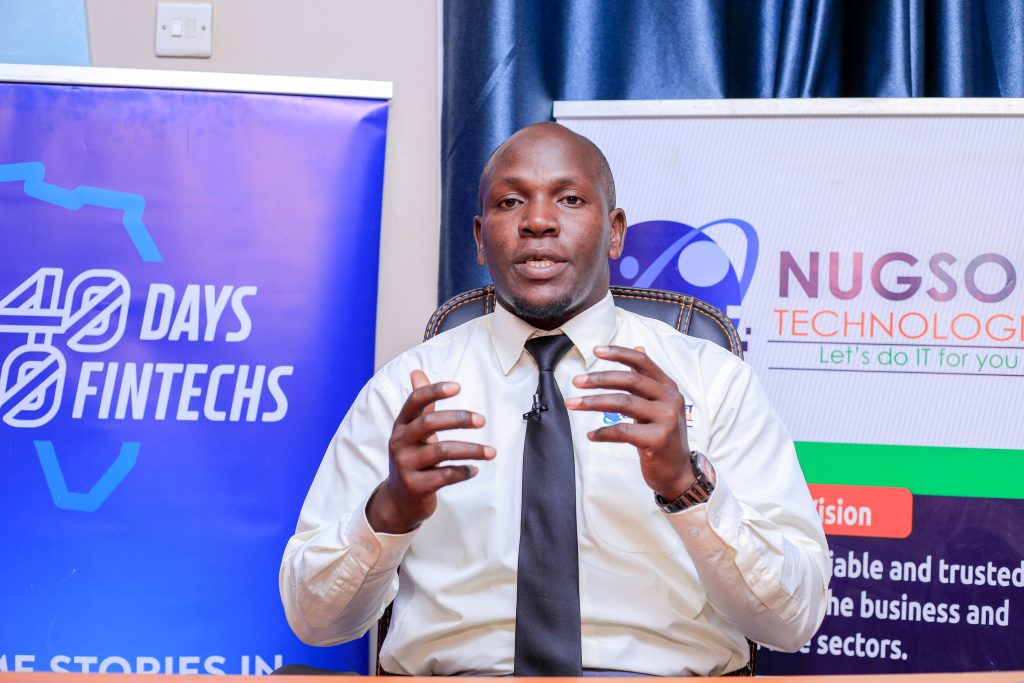
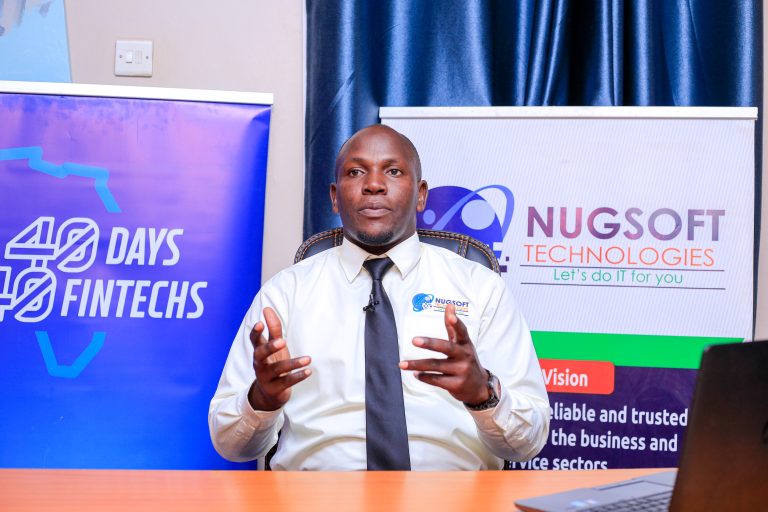
That is where Mfuko Plus comes in handy. This platform is a ‘SACCO Management System’ established and run by Nugsoft Technologies.

The HiPipo 40 Days 40 FinTechs team had a chat with Darius Mutasi, the Nugsoft Technologies Business Development Manager. Below is his take on how his organization is improving SACCOs, improvement in FinTech, and ongoing Financial Inclusion efforts.   

QN: What is Mfuko Plus?

ANS: Mfuko Plus is a credit advisory and records management application. The application manages loans, shares, individual and group profiles, and transactions like savings, withdrawals, and transfers; all provided with standard financial reports and detailed transaction reports. USSD and mobile money services have also been recently introduced to the platform. We work with SACCOs, Microfinance institutions, Savings groups, money lenders, and several other credit institutions.

QN: How does your platform work?

ANS: Mfuko Plus runs as a web application and it has two key modules. One is the main platform where businesses like SACCOs, Microfinance Institutions, and others login in to manage their operations (Loans, savings, and other transactions) while the other is a members’ portal where members of the enrolled businesses can self-register, then log in to check their balances and perform several transactions individually. We mainly enroll financial institutions and for them to start, they just visit www.mfuko.net to contact us or request a demo. All they need is a functional computer and an active internet connection (We shield all businesses against internet costs as all our services are zero-rated).

QN: For the years you have been working, what do your numbers look like?

ANS: We have a total of 22 SACCOs enrolled, over 50 microfinance and money-lending institutions/ individuals and 6 Saving Clubs. Across all these, we have over 12,000 members and we have managed cash-flows of over UGX 22Bn cumulatively and in this year alone, about UGX 7.3Bn.

QN: How is MfukoPlus supporting women, small businesses and the youth?

ANS: To reduce costs of accessing the service among small businesses and the youth, we recently incorporated SMS services, and USSD and went ahead to zero-rate the service. This means all our members can access the service without loading data. Additionally, we revised our pricing to offer lower rates to youth groups, women saving groups, and village/community-saving initiatives.

QN: As an entity actively involved in the FinTech space, are you implementing Level One Project Principles which are Industry Best Practices such as Tiered KYC, Accessibility on Low-Cost User Devices, Real-time/Immediate funds transfer, Same-day settlement, Pricing Transparency, and Irrevocability?

ANS: We enabled USSD in Mfuko Plus to ease accessibility on low-cost user devices. In terms of transparency, we have standard pricing plans for the different modules with no hidden costs in our billing and all transactions are reported accurately. We also identify aggregators who support real-time funds transfers and same-day settlements in order to facilitate a high level of efficiency, flexibility, and productivity.

QN: What is the state of Uganda’s FinTech Industry?

ANS: The industry is very promising and the players are full of potential. Yes, there are challenges, but the opportunities outweigh the challenges. One of the biggest opportunities is the general adoption of technology across the country; there is a reasonable growth in the use of technology across businesses which presents a big market opportunity. The influx of foreign players to support local FinTechs is also an advantage.

However, there are several challenges like the high cost of transactions, especially among aggregators; the stringent legislation around FinTechs compared to other players in the sector; and the low volume of capital/funding that caps several FinTechs from reaching their potential, among others.

QN: In your opinion, how does the 40 Days 40 FinTechs initiative support the industry? What else must be done to improve the industry?

The 40 Days 40 FinTechs initiative extends great visibility to FinTechs and this eventually creates market and much-needed revenue growth. It has also created a conducive atmosphere where various FinTechs can converge to share ideas, opportunities, and avenues for collaboration; all these are extremely vital and deeply appreciated.

If the initiative can introduce an element of funding in the future (either directly or through its partners), especially for start-up FinTechs that have been part of the initiative, there will be a strong impact on how these FinTechs survive and ultimately, on how they grow.

About 40 Days 40 FinTechs!

Mfuko Plus is participant number 34 in the 2022 40 Days 40 FinTechs initiative. The #40Days40FinTechs platform is run under HiPipo’s Include Everyone program that also encompasses other initiatives such as FinTech Landscape Exhibition, Women in FinTech Hackathon, Summit & Incubator and the Digital and Financial Inclusion Summit and Digital Impact Awards Africa.

It offers participants useful tools and an introduction to the industry’s emerging technologies, such as Mojaloop Open Source Software, and guidance from Level One Project foundational material. The skills gained from this initiative cover Level One Project Principles, Instant and Inclusive Payment Systems (IIPS), Inclusive Finance and FinTech in general.
According to Innocent Kawooya, the HiPipo CEO, despite the rapid adoption of digital financial services, an average of 40 percent of Africa’s adult population remains financially excluded and something must be done.

“Financial exclusion continues due to the lack of interoperable, open-loop, cost-effective, real-time, and secure retail payments systems/switches to digitally connect large numbers of low-income users onto formal financial rails. The 40 Days 40 FinTechs initiative is accelerating discussions on building industry-led Instant and Inclusive Payment System (IIPS) across the East African region and continent.”

PayTota is championing voice response technology for digital payments

Our Reporter.

The world is slowly migrating into a cash-lite and eventually a cashless global economy where all transactions are done without the exchange of cash. As a result, more financial technology companies (FinTechs) are emerging with a variety of solutions to meet consumer needs.

However, most of these solutions target a fairly literate population that can at least read and interpret mobile phone prompts, leaving out the illiterate and blind population.

It is this problem that PayTota is determined to end with the introduction of an Interactive Voice Response (IVR) solution that allows its customers to interact with a computer-operated phone system through the use of voice.

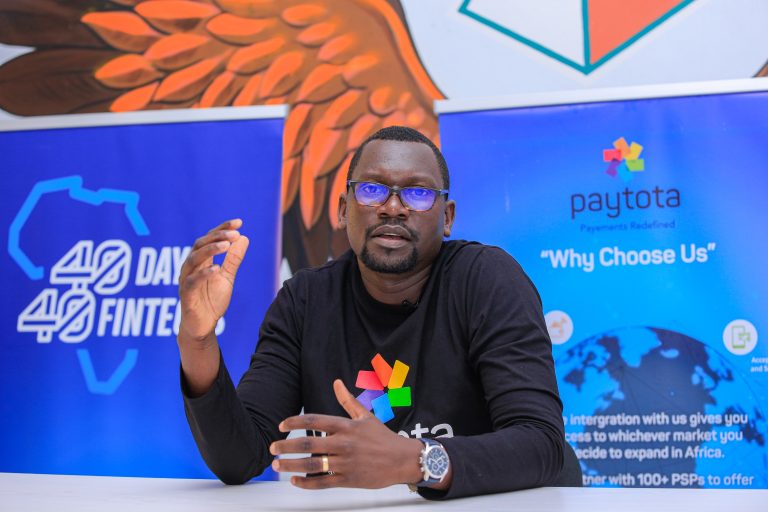
According to Erasmus Okurut, the PayTota CEO and Co-Founder, while this product is already in use in more advanced economies, PayTota is proud to be the champions of this initiative in Uganda.

“Not everyone can read and operate phones. So, if we want to include everyone, this product is very crucial,” he says.

Pay Tota is a Financial Technology company that designs universal payment solutions with an emphasis on emerging markets targeting mainly insurance providers, e-commerce players, and agri- service providers, among others. They are the 33rd participant in this year’s 40 Days 40 FinTechs initiative that is showcasing impactful and emerging FinTechs across East Africa and beyond.

“We provide a unified payments interface for our clients. Being a Business-to-Business FinTech, we have been able to integrate more than 20 businesses in Uganda and five businesses outside the country,” Okurut says. 

Okurut says this integration is facilitated by other payment methods including Google pay, Mobile Money, Visa and Credit Cards, etc, with monthly recurring revenue of more than USD 20,000.

He owes this success to the Covid-19 pandemic that prompted many businesses to reach out to them seeking digital payment services and solutions.

“Covid-19 was an awakening call. We were able to grow within the pandemic and also in terms of the impact, we saw many businesses take up PayTota solutions. In Uganda, we were able to receive over 100 players per month asking for our solutions,” he says.

For better client management, they have implemented different tools at the back-end, the latest being KYC onboarding, which is already being done to help reduce the timelines one needs to get on-boarded to the market.

Okurut highlights that although there are some regulatory challenges, FinTechs in Uganda are generally picking up faster, with more investors taking a keen interest.

“The market is ripe and now is the time to develop solutions that target consumer needs,” he says, before applauding the 40 Days 40 FinTechs initiative that has contributed a great deal in highlighting and exposing startups to the global economy.

“When we first featured on this platform, we were just a startup, but it gave us a platform and we were able to onboard over five clients because of that. Our brand visibility has improved,” he says.

40-Days 40-FinTechs

Now in its third edition, #40Days40FinTechs has quickly grown into one of the world’s premier showcase events for the innovations that are enabling ever more people to join the digital economy space. That is surely going to remain the case, in large part due to the inspiration and collaboration that HiPipo partners Level One Project, Mojaloop, ModusBox, and Crosslake Technologies generate, but mostly because of the continuing generous support of the Gates Foundation.

The initiative offers participants useful tools and an introduction to the industry’s emerging technologies, such as Mojaloop Open Source Software, and guidance from Level One Project foundational material. The skills gained from this initiative cover Level One Project Principles, Instant and Inclusive Payment Systems (IIPS), Inclusive Finance, and FinTech in general.

According to HiPipo CEO, Innocent Kawooya, this year’s edition is cementing the achievements of the previous editions – where over 60 FinTechs have been transformed – but also building on them to leverage digital financial inclusion in East Africa and beyond. “As HiPipo, our extensive effort and advocacy is partly for the intention of championing digital innovation and interoperable instant and inclusive payment systems (IIPS) in Africa to a point where our innovators enjoy and achieve sound profit margins to help them keep designing and deploying affordable and inclusive financial services for the poor,” Kawooya said.

MFS Africa is facilitating digital financial transactions in over 34 countries

Our Reporter.  

One of the biggest bottlenecks of transferring funds from one country to another is the cost involved, especially if it involves different networks.

It is a problem that MFS Africa; a digital payments hub, is keen on mitigating by providing access to a world of innovative, simple, convenient, secure, affordable, and compliant mobile financial solutions for all.

It connects senders, recipients, and service providers across Africa’s fast-growing yet fragmented mobile payments ecosystem through the establishment of; access to speed and efficiency, access to the global digital economy, access to new options, access to new markets and new customers, access to scale, access to security, and access to endless opportunities among others.

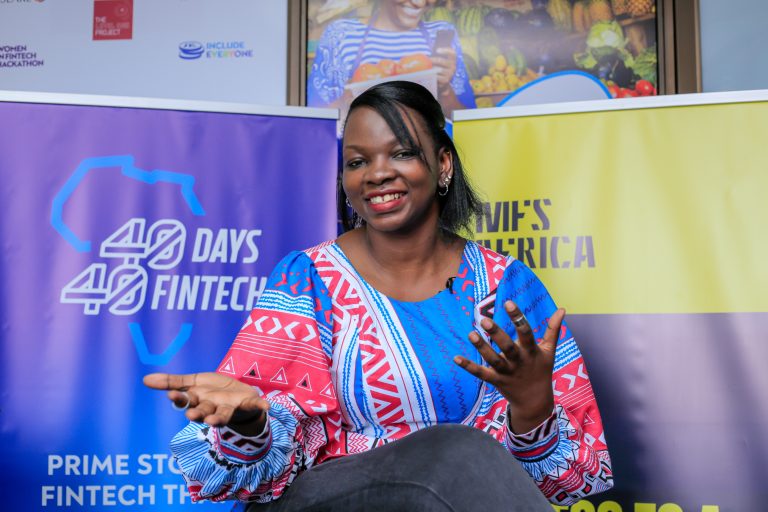
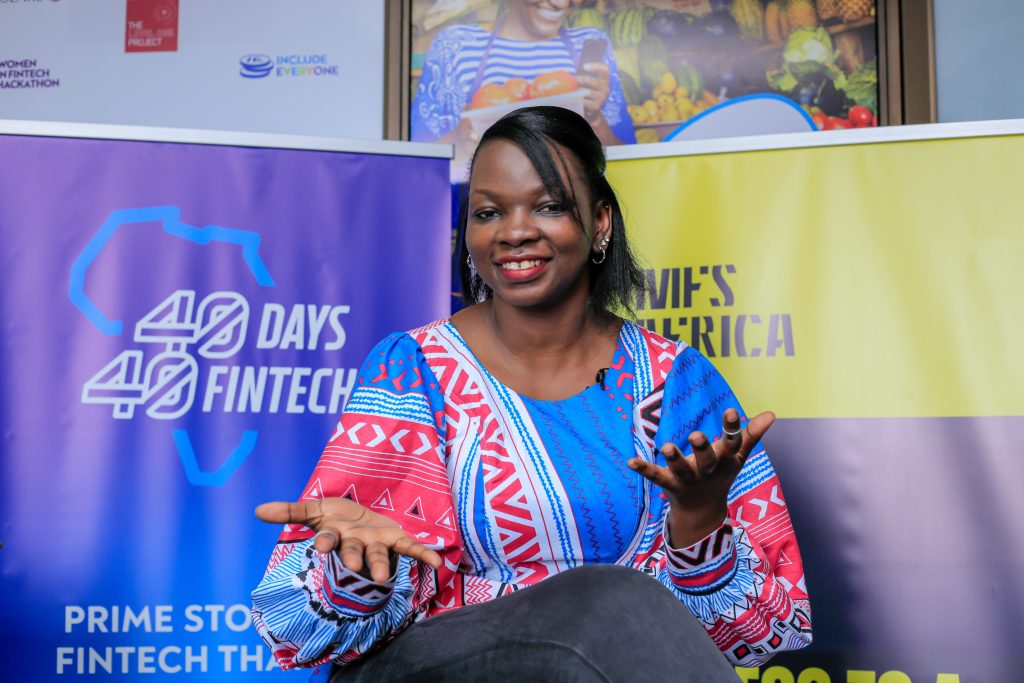
According to Doreen Lukandwa, the VP Global Enterprise at MFS Africa, thisborderless hub acts as a one-stop center for any individual, business, or organization that wants to send or collect money from and to their final consumer in at least 34 African countries.

“The vision for MFS Africa is to make borders matter less. It is not enough to say that we can provide mobile money to people to be able to send money to a family member in Ethiopia, but it is to say that we can provide different sectors with these different solutions that we have within a single hub,” Lukandwa says.

For example, if you are a Ugandan business with a shop on Instagram, if you want a market from a consumer in Arua, you just have to promote the product on Instagram, connect through MFS Africa and you will be able to collect your payment through any of the mobile money networks in the country. So, the customer in Arua can select the item they want on Instagram, make a mobile money payment directly to you and then organize to deliver the paid-for product.  

Lukandwa says one of the most powerful components of this platform is interoperability, backed by solid infrastructure that enables people to send money to anyone across the world through partners like WorldRemit.

“The fact that we are connected with over 180 telecoms, banks, and money transfer organizations, means that we are facilitating safe, affordable interoperability. For example, if I am a business in Uganda and I have to pay my staff in Kenya, our platform will actually confirm who the account holder is in Kenya,” she says, adding;

“But also in Uganda if you are paying somebody, our system will actually validate if the person you are paying is the right one. In that regard, we are de-risking payments; we are making it more affordable because of the interoperable capability.”

Lukandwa further notes that the Ugandan FinTech industry has shown significant growth with initiatives that seek to address day-to-day challenges.  

“Rocket Health is addressing healthcare challenges; HiPipo is expanding and accelerating technical capabilities among Women in FinTech; SafeBoda is digitizing transportation, etc. The impact is not limited to just what we see here,” she said.

MFS Africa is the 32 (thirty-second) participant in this year’s 40 Days 40 FinTechs initiative that is showcasing evolving FinTechs fostering financial inclusion, especially for the people at the bottom of the pyramid.

Innocent Kawooya, the HiPipo CEO says the job being done by MFS Africa points to the right path in fulfilling the tenets of the broader Include Everyone program.

“As HiPipo, our extensive effort and advocacy is partly for the intention of championing digital innovation and interoperable instant and inclusive payment systems (IIPS) in Africa, and MFS Africa is doing just that. We hope they continue designing and deploying affordable and inclusive financial services that serve the rich and the poor,” Kawooya said.

First launched in 2020, the 40 Days 40 FinTechs initiative is a 40-days event that shines a spotlight on emerging FinTechs with unique stories. It provides a setting for the various players and stakeholders involved in digital and financial technology to exhibit their products and services and also share their ideas on how more people, especially those un-served and underserved by the present financial systems can be brought on board, with emphasis on interoperability.

Run under HiPipo’s Include Everyone program, the initiative offers FinTechs useful tools and an introduction to the industry’s latest technologies such as Mojaloop open source software, and guidance from Level One Project foundational material. The skills gained from this initiative cover Level One Project principles, instant and inclusive payment systems (IIPS), inclusive finance and FinTech in general.