Home Blog Page 5

Can Cheap Loans Fix Uganda’s Clean Energy Problem? Equity Bank Bets on Green Financing

For years, clean energy technologies have remained out of reach for most Ugandans. Not because they are unavailable, but because the upfront costs are too high. Equity Bank Uganda is now betting that affordable financing can close that gap.

The lender has rolled out a series of green financing products aimed at households, schools, farmers, and small businesses, offering longer repayment periods and working directly with renewable energy suppliers to reduce barriers to access.

But whether this marks a genuine shift or simply good marketing remains to be seen.

Uganda faces a familiar energy paradox. While the country has abundant renewable resources, millions of households still rely on charcoal, firewood, and kerosene. The reasons are not complicated. Solar home systems and improved cookstoves require significant upfront investment, often running into hundreds of dollars, beyond the reach of many rural families.

Government tax waivers on solar products have helped, but they have not solved the core problem. Traditional bank loans come with short repayment periods, typically twelve months, which make monthly installments unaffordable for the very people who need clean energy the most.

Virginia Semakula, Equity Bank’s Energy, Environment and Climate Change Pillar Head, acknowledged this reality in a recent interview.

“Many Ugandans want solar systems, clean cookstoves, and renewable energy solutions, but the initial costs remain too high for households and small businesses,” she said.

She argued that a twenty-four-month repayment structure works much better for most customers, allowing them to spread the cost without taking on unmanageable debt.

The bank has introduced two main products: Equi-Green Loans and Green Enterprise Financing. Under the model, Equity works directly with renewable energy suppliers who install the technologies while the bank provides financing to end users.

A more interesting component is Results-Based Financing (RBF), a model where incentives are only paid after projects are independently verified and proven to be working. Equity has implemented RBF programs in partnership with organizations such as GIZ-NDEF.

“Results-Based Financing is not about promises,” Semakula said. “The systems must first be installed, operational, and verified by an independent third party before incentives are paid out.”

In theory, this approach reduces risk for both the lender and the customer. In practice, it depends heavily on the quality of verification and the willingness of development partners to keep funding.

Equity Bank says the impact has already been visible. Households in rural communities have shifted from charcoal and kerosene to cleaner cooking systems, reducing fuel costs and indoor pollution. Businesses including salons, retail shops, and agro-processors are using solar energy to extend operating hours. Schools in off-grid districts such as Alebtong have installed solar systems, enabling students to study at night.
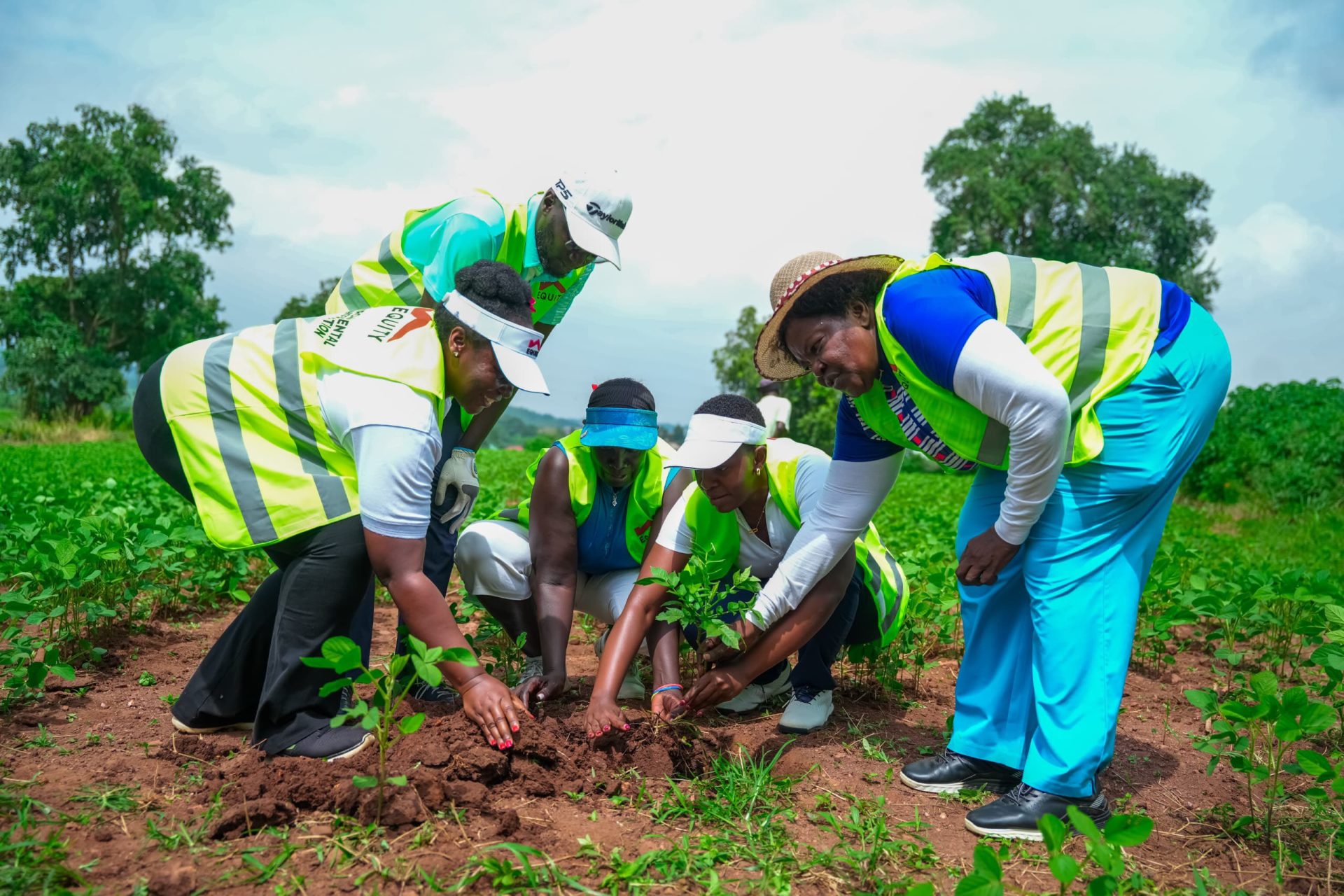
“In some schools, electricity access changed everything,” Semakula said. “Students could study longer, enrollment increased, and schools even recorded improved academic performance.”

The bank also claims that its RBF programs have demonstrated strong repayment rates, challenging the perception that renewable energy financing is too risky.

“There has always been fear that customers may not repay or that the technologies may fail, but the results are showing otherwise,” Semakula said.

Missing from the bank’s announcement are independent figures. Equity did not disclose how many loans it has disbursed, what the default rates are, or how many households have actually benefited. Without transparent data, it is difficult to assess whether green financing is scaling or simply being piloted.

There is also the question of interest rates. Equity did not specify what rates it charges on its green loans. If rates remain high, longer repayment periods alone may not solve the affordability problem.

Additionally, many financial institutions in Uganda still consider renewable energy financing risky. Equity says its data proves otherwise, but it has not released that data for public scrutiny.

Equity has announced a series of public awareness initiatives during Energy Month, including “Green Friday” campaigns where customers can interact with renewable energy technologies through demonstrations and exhibitions. The bank also plans to onboard more renewable energy companies into its ecosystem to increase customer choice and improve pricing competitiveness.

Financial literacy programs are also being expanded to educate Ugandans on how to select, finance, and effectively use clean energy technologies.

The bank’s long-term vision is ambitious. It wants to make renewable energy financing as accessible and common as school fees or boda boda loans.

“Our vision is a Uganda where every household and business can access clean energy without taking on unmanageable debt,” Semakula said.

Uganda’s clean energy transition will not happen on goodwill alone. It requires affordable financing, reliable technology, and consumer confidence. Equity Bank is positioning itself at the centre of that transition, but its claims need independent verification.

If the bank’s model works, it could unlock hundreds of millions of dollars in renewable energy investments and provide a template for other lenders. If it does not, it will join a long list of well-intentioned green finance initiatives that failed to scale.
Christian Eriksen Collapses on Pitch Again: Denmark Friendly Abandoned Six Years After Cardiac Arrest

Christian Eriksen collapsed on the pitch during Denmark’s friendly against Ukraine on Sunday, triggering immediate medical intervention and the abandonment of the match, almost six years after his cardiac arrest at Euro 2020.

The incident occurred midway through the second half when the 34-year-old midfielder clutched his chest and fell to the ground. Medical personnel rushed to his aid as players from both sides formed a protective huddle around him. Distressing scenes unfolded as several of Eriksen’s teammates broke down in tears.

A statement from the Danish Football Association later confirmed that Eriksen was conscious and in stable condition. “Christian Eriksen is conscious and doing well in the circumstances. The match has been called off,” the statement read.

A message displayed on the big screen inside the stadium in Odense echoed the update: “The match is over. Christian Eriksen is in good condition under the circumstances.” Fans responded by singing Eriksen’s name and applauding as he received treatment.

Around ten minutes after the collapse, Danish national team doctor Morten Boesen widely credited with saving Eriksen’s life during the Euro 2020 incident provided a more detailed update.

“Christian is doing well and walked off the pitch himself,” Boesen said. “As I see it, the pacemaker responded as it should. He was briefly unconscious, but regained consciousness very quickly, and we were quickly in contact with him.”

Boesen added that Eriksen would undergo further examination at a hospital to determine the cause of the incident. “He asked me to send his regards to all the players and tell them that he was OK.”

Eriksen, who now plays for German club Wolfsburg after leaving Manchester United last year, received treatment for approximately ten minutes before receiving a standing ovation as he made his way off the pitch. His wife, Sabrina, accompanied him to the hospital.

Former Denmark striker Nicklas Bendtner, covering the match as a pundit on Danish television, fought back tears as he processed the incident.

“These are horrible pictures, and it completely overshadows the rest of the evening,” Bendtner said. “My thoughts are with the family and the children. This is the second time it has happened, and as Christian’s friend also… it’s really terrible.”

Players from both sides accompanied Eriksen to a waiting ambulance while holding up a privacy screen around him. After the match was abandoned, the teams gathered in a huddle and walked around the stadium to thank the fans who had stayed.

Sunday’s collapse echoed the terrifying events of 12th June 2021, when Eriksen suffered a cardiac arrest during Denmark’s Euro 2020 match against Finland. On that occasion, his heart stopped for approximately five minutes, and he received CPR on the pitch before being stabilized in hospital. Eriksen later revealed that he had “died for five minutes.”

Following that incident, he was fitted with an Implantable Cardioverter Defibrillator (ICD), a type of pacemaker and made an incredible return to professional football just eight months later, first with Brentford and later with Manchester United.

Doctor Boesen suggested on Sunday that the same device may have saved Eriksen’s life once again.

Sunday’s match was Eriksen’s 151st cap for Denmark. The friendly had been arranged after both Denmark and Ukraine lost in the World Cup play-offs in March, missing out on this summer’s tournament. Denmark was leading 2-1 at the time of the abandonment.

Messages of support poured in from across the football community.

Eriksen’s current club, Wolfsburg, posted: “We’re thinking of you, Christian. According to the Danish Football Association, Christian is conscious and doing well given the circumstances. He has been taken to Odense University Hospital, where further examinations will follow. We are in close contact with the Danish Football Association and are following further developments. All the best and a speedy recovery, Christian.”

Tottenham Hotspur, one of Eriksen’s former clubs, added: “Our thoughts are with Christian Eriksen and his family. Wishing you a full and speedy recovery, Christian. We’re all with you.”

Ashley Young, who played alongside Eriksen at Inter Milan, shared a simple message: “I hope you’re OK, bro. Sending prayers and best wishes to you and your family.”

Eriksen will remain under observation at Odense University Hospital, where doctors will conduct further tests to establish what caused Sunday’s collapse. The Danish FA has confirmed that it remains in close contact with the player and his medical team.

For now, the football world holds its breath and sends its best wishes for a player who has already defied fate once, and who now faces another uncertain wait.

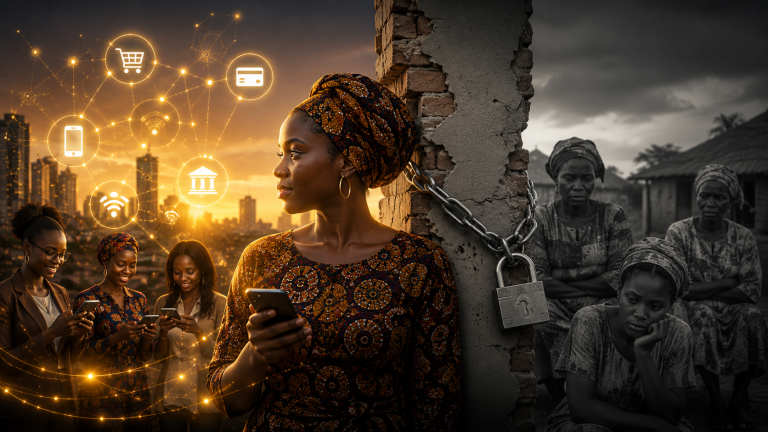
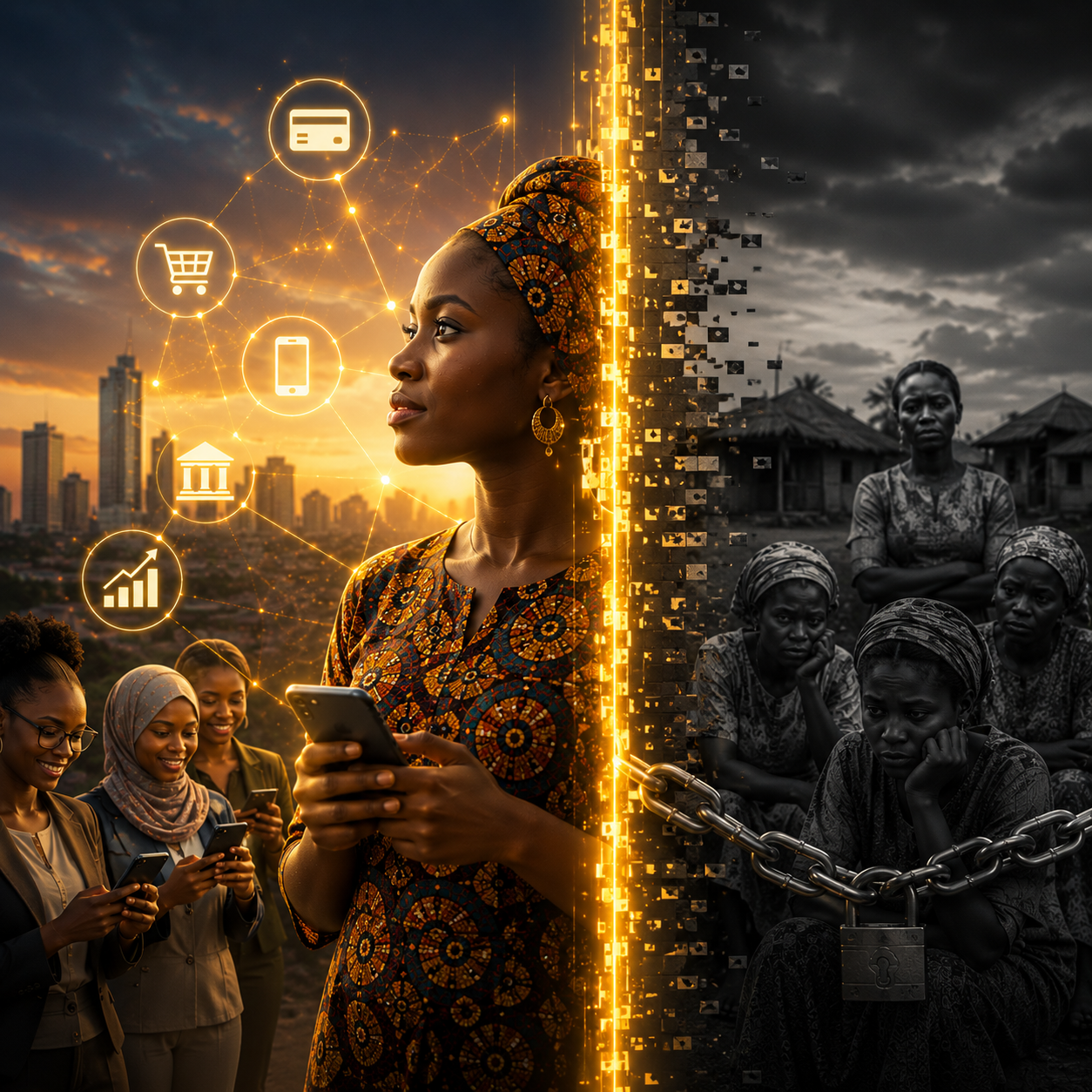
THE MISSING HALF OF THE DIGITAL ECONOMY – Why Women Still Lag in Digital Payments, and Why Closing the Gap Could Transform Africa’s Future

By HiPipo Money

Africa’s digital finance revolution has changed millions of lives.

Mobile money expanded access to financial services at a scale few imagined possible two decades ago. Entire communities entered the formal financial system for the first time through phones rather than bank branches. Small businesses digitised. Families sent money instantly. Governments distributed payments electronically. Rural economies became more financially connected.

Yet beneath this success story lies a quieter and more uncomfortable reality:

Women across much of Africa still remain less financially connected than men.

The gap is narrowing.

But it has not disappeared.

And the consequences extend far beyond banking.

Because when women are excluded from digital finance, entire economies lose productivity, resilience, entrepreneurship, household stability, and long-term growth potential.

The future of Africa’s digital economy may therefore depend heavily on one question:

Can the continent close the gender gap in digital payments fast enough?

For decades, women across many African societies faced structural barriers to formal financial participation.

In some communities, women lacked formal identification documents required to open accounts. In others, lower income levels reduced access to banking services designed primarily around salaried employment. Distance from financial institutions disproportionately affected women balancing caregiving responsibilities and informal work. Social norms sometimes limited independent financial decision-making. And digital access itself remained unequal, particularly around phone ownership and internet connectivity.

The result was layered exclusion.

Women were not excluded from economic activity.

Far from it.

Across Africa, women have long powered markets, agriculture, trade, informal commerce, and household financial systems. But much of this participation remained outside formal financial infrastructure.

Mobile money changed the trajectory dramatically.

By reducing reliance on traditional banking infrastructure, mobile financial services created more accessible entry points into the digital economy. Women no longer needed to travel long distances to banks or maintain large minimum balances. Transactions could happen through local agents embedded within communities. Small-value transactions became economically viable. Financial participation became more flexible and decentralised.

The impact was significant.

According to World Bank-related reporting, women’s account ownership in sub-Saharan Africa nearly doubled between 2011 and 2021, driven heavily by mobile money expansion.

That transformation represented one of the most important financial inclusion developments of the modern African economy.

But progress alone does not erase inequality.

Despite improvements, women in many African countries still lag men in:

  • digital account ownership,
  • smartphone access,
  • internet connectivity,
  • digital literacy,
  • transaction frequency,
  • merchant participation,
  • and access to broader financial services built on top of digital payments.

The reasons are deeply interconnected.

One of the largest barriers remains device access.

In many low-income households, phone ownership is still uneven. Men are often more likely to own smartphones, maintain independent connectivity, and control access to digital devices. Women may share phones within households or depend on relatives to transact digitally.

This creates a hidden layer of exclusion.

A woman may technically “have access” to digital finance while lacking full autonomy over how and when she uses it.

That distinction matters enormously.

True inclusion is not simply about whether an account exists.

It is about control.

Can women transact independently?
Can they save privately?
Can they manage businesses digitally?
Can they access digital marketplaces?
Can they build transaction histories?
Can they participate confidently without relying on intermediaries?

These questions increasingly define the deeper meaning of financial inclusion.

Digital literacy also remains a major challenge.

Many women entering digital finance ecosystems for the first time may face lower confidence navigating:

  • mobile applications,
  • PIN management,
  • fraud risks,
  • merchant payments,
  • digital savings,
  • or more advanced financial services.

This vulnerability can increase dependence on agents or relatives and heighten exposure to fraud and financial abuse.

In some cases, women intentionally avoid digital systems not because they reject technology, but because they fear making costly mistakes.

Trust therefore becomes central to adoption.

Financial systems designed without considering literacy, language, accessibility, or social realities risk reinforcing exclusion even when infrastructure exists.

This is why inclusive design matters.

Simple interfaces.
Local languages.
Voice-based systems.
Low-data solutions.
Strong customer support.
Consumer education.
Fraud awareness.
Community onboarding.

These are not secondary features.

They are inclusion infrastructure.

Another major issue is affordability.

Women are disproportionately represented in lower-income segments and informal economic sectors across many African economies. Transaction fees, smartphone costs, data expenses, and device replacement costs therefore affect women differently.

Even small costs can shape digital behaviour significantly.

A platform may technically be available while remaining economically impractical for frequent use.

This is particularly important because women often dominate precisely the sectors where small-value transactions are common:

  • informal trade,
  • market vending,
  • agriculture,
  • household commerce,
  • and microenterprise activity.

The economics of low-value digital payments therefore directly influence women’s participation.

This is one reason mobile money succeeded so strongly in Africa.

It made small transactions viable.

But sustaining meaningful inclusion requires continuing to reduce friction and costs for low-income users.

The rural dimension is equally important.

Women in rural communities often face overlapping barriers:

  • weaker network coverage,
  • fewer agents,
  • lower literacy,
  • lower phone ownership,
  • lower electricity access,
  • and less exposure to digital systems.

This creates compounded exclusion.

A rural woman farmer may simultaneously face:

  • infrastructure barriers,
  • affordability barriers,
  • social barriers,
  • and literacy barriers.

Closing the gender gap therefore cannot rely on one solution alone.

It requires ecosystem thinking.

The economic implications are enormous.

Women’s financial inclusion is directly connected to:

  • household resilience,
  • child welfare,
  • education outcomes,
  • business growth,
  • agricultural productivity,
  • healthcare access,
  • and poverty reduction.

Research consistently shows that when women control financial resources, broader household outcomes often improve significantly.

Digital finance therefore becomes more than a payment tool.

It becomes empowerment infrastructure.

A woman with direct control over digital income may gain:

  • greater financial independence,
  • stronger business participation,
  • safer savings mechanisms,
  • improved emergency resilience,
  • and increased economic visibility.

Transaction histories can eventually support:

  • credit access,
  • insurance participation,
  • merchant integration,
  • and formal economic inclusion.

This is where digital payments begin connecting to larger development outcomes.

Yet there is another important reality:

The future gender gap may increasingly become a data gap.

As economies digitize, those without strong digital transaction histories risk becoming economically invisible. Credit systems, lending models, merchant ecosystems, e-commerce platforms, and digital marketplaces increasingly rely on data generated through transactions.

If women transact less digitally, they may also generate fewer economic records.

That affects:

  • lending access,
  • business scalability,
  • platform participation,
  • and long-term economic mobility.

Closing the gender payments gap is therefore not only about fairness.

It is about future economic competitiveness.

Governments, FinTechs, telecom operators, regulators, and ecosystem institutions increasingly recognize this challenge.

Across Africa, initiatives are emerging around:

  • women-focused FinTech products,
  • digital literacy training,
  • affordable smartphones,
  • female agent networks,
  • women entrepreneurship platforms,
  • and gender-intentional financial services.

But scale remains critical.

The gender gap will not close through isolated pilots alone.

It requires structural commitment.

Policies that prioritize inclusion.
Products designed intentionally for women users.
Affordable connectivity.
Identity access.
Education systems supporting digital literacy.
Infrastructure investment.
Consumer protection.
And financial ecosystems designed around real-world social conditions rather than idealized assumptions.

This is where ecosystem platforms such as HiPipo and initiatives including the Digital Impact Awards Africa (DIAA), Women in FinTech, Include Everyone, and broader digital financial literacy movements become strategically important. Africa’s digital transformation conversation must continue placing women at the center rather than the margins of financial innovation.

Because the next phase of inclusion will not simply be about onboarding more users.

It will be about ensuring digital economies work meaningfully for everyone.

Especially those historically excluded.

Ultimately, the gender gap in digital payments is not merely a technology problem.

It is an economic participation problem.

A market vendor receiving payments independently.
A rural entrepreneur building transaction history.
A mother saving privately and securely.
A woman farmer accessing digital markets.
A young entrepreneur participating confidently in e-commerce.
A household becoming more financially resilient.

These are the real outcomes behind inclusion statistics.

Africa’s mobile money revolution already proved that financial infrastructure can evolve differently from the rest of the world.

Now the continent faces another historic opportunity:

To prove that digital finance can become not only widespread, but genuinely inclusive.

Because if Africa succeeds in closing the gender gap in digital payments, it will not simply expand financial access.

It will unlock one of the continent’s largest untapped economic growth engines.

The Elderly Man Who Finally Found Peace After Years of Fearful Nights

0

A #100DaysofSolar Human Impact Story from Kasenge Nakawuka, Uganda

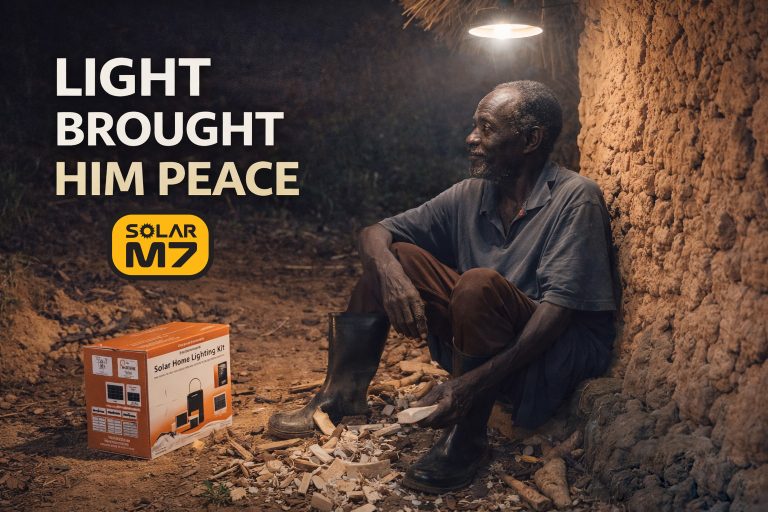
At 73 years old, Mpabonye Charles had grown used to surviving through difficult nights alone.

Inside his fragile grass-thatched home in Kasenge Nakawuka, darkness carried discomfort, fear, and exhaustion into every evening. Insects crawled across the floor and bit him through the night. Animals slipped into the house unseen. And with age making movement slower and more difficult, every sound inside the darkness felt unsettling.

For Charles, nighttime never brought proper rest.

It brought vigilance. Fear. And loneliness.

To cope, he relied on weak torches that failed constantly and drained the little money he had. Even after spending what he could afford on batteries and temporary light, the darkness always returned.

And with it came the feeling that old age had become a struggle instead of a time for peace.

Then Solar M7 arrived. And slowly, the nights inside Charles’ home began to change.

Today, reliable solar light fills the small grass-thatched house after sunset. The darkness that once hid insects and animals no longer controls the space around him. He now sees clearly, moves more confidently, and rests more peacefully through the night.

For the first time in many years, the home feels safe.

And for Charles, safety feels like dignity restored.

“Before Solar M7, nights were very difficult for me,” Charles shared during his interview. “I feared sleeping alone in darkness because of insects and animals entering the house. But now I feel peaceful and able to rest properly again.”

According to Doreen Nanfuka, elderly people living alone are among the most emotionally affected by energy poverty and unsafe nighttime conditions.

“When older people spend years sleeping in fear, it affects their health, emotional wellbeing, and sense of dignity,” Doreen explained. “Reliable light helps restore comfort, confidence, and peace inside the home.”

Innocent Kawooya says stories like Charles’ reveal the deeply human side of energy access initiatives.

“Reliable light is not only about visibility,” he noted. “It is about helping people feel safe, respected, and comfortable inside their own homes regardless of age or income.”

Today, nights inside Charles’ home no longer feel haunted by fear.

The darkness no longer steals his peace.

The fragile house no longer feels dangerous after sunset.

And in a place where old age once felt overwhelmed by discomfort and loneliness, Solar M7 is now helping restore something priceless.

Rest. Comfort. And dignity in the final chapters of life.

Watch the full story of Mpabonye Charles from Kasenge Nakawuka, Uganda across our platforms:

YouTube
TikTok
Facebook
Instagram
LinkedIn
X/Twitter

#100DaysofSolar #SolarM7 #IncludeEveryone #EnergyAccess #HumanImpact #Nakawuka #Uganda #CleanEnergy #HiPipo

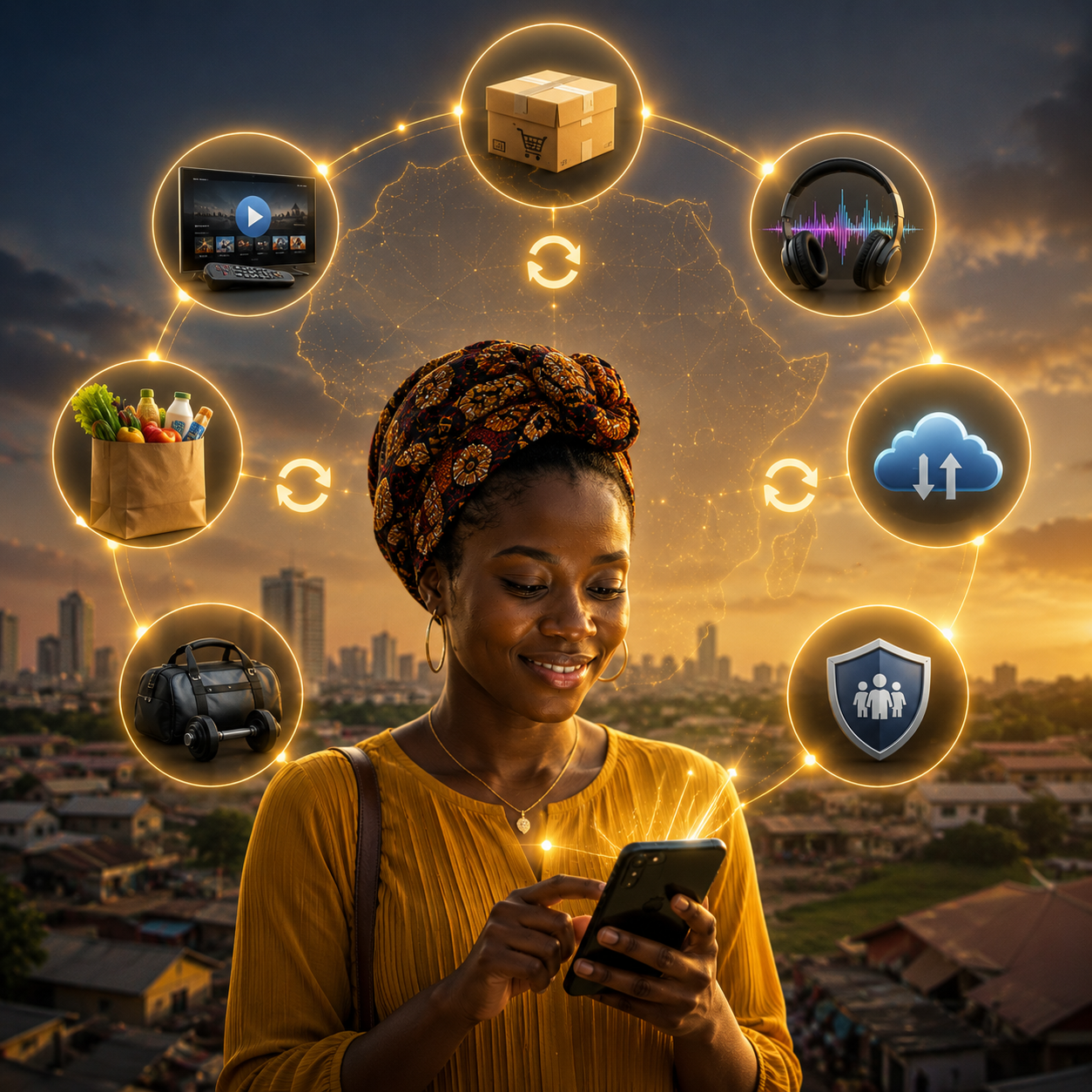
THE AUTOMATIC ECONOMY – How Subscription Payments and Recurring Billing Are Quietly Reshaping Africa’s Digital Commerce Landscape

By HiPipo Money

For decades, much of Africa’s economy operated transaction by transaction.

Pay today. Buy today. Renew manually tomorrow.

Businesses depended heavily on one-time payments, physical collections, cash handling, and repeated customer follow-ups. Whether it was electricity, television, school fees, insurance, transport, internet bundles, or healthcare contributions, payment relationships were often fragmented and unpredictable.

This created instability for both businesses and consumers.

Companies struggled with inconsistent cash flow.
Customers missed renewal dates.
Service interruptions became common.
Administrative costs remained high.
And millions of low-income users operated without structured financial continuity.

Now, a quieter transformation is emerging across Africa’s digital economy:

The rise of recurring digital payments.

Subscription billing systems, automatic deductions, wallet-based recurring payments, standing mobile money instructions, embedded finance tools, and digital payment APIs are increasingly enabling businesses to collect payments continuously rather than manually.

The implications are far bigger than convenience.

Recurring payments are beginning to change how African businesses generate revenue, how households manage services, and how digital economies sustain long-term customer relationships.

In many ways, Africa is slowly transitioning from a transaction economy into a subscription economy.

Historically, recurring billing systems developed first in highly banked economies where customers maintained stable card relationships and formal banking histories. Monthly subscriptions for utilities, insurance, streaming platforms, and telecom services became normalized because payment infrastructure supported automated recurring collection.

Africa’s financial landscape evolved differently.

Large portions of the population remained:

  • unbanked,
  • underbanked,
  • cash-dependent,
  • or reliant on informal income cycles.

Many households earned daily or weekly income rather than monthly salaries. Card penetration remained limited across multiple markets. Formal direct debit systems developed slowly. And infrastructure fragmentation complicated automated billing.

Yet demand for recurring services continued growing.

Consumers increasingly needed:

  • pay-TV subscriptions,
  • internet services,
  • solar energy financing,
  • healthcare plans,
  • school systems,
  • digital platforms,
  • insurance coverage,
  • streaming services,
  • and telecom bundles.

The challenge was clear:

How do you build recurring payment systems in economies where income patterns and financial infrastructure differ significantly from traditional Western banking models?

Africa’s answer is increasingly being shaped by mobile money, FinTech infrastructure, and API-driven digital billing systems.

Mobile money changed the economics of recurring payments dramatically.

Instead of relying exclusively on cards or bank accounts, businesses could increasingly collect recurring payments directly through:

  • mobile wallets,
  • airtime-linked billing,
  • agent-assisted systems,
  • QR payments,
  • and digital payment gateways.

This created entirely new possibilities.

A household could pay for solar energy gradually through PAYGo systems.
A family could maintain television access through recurring mobile money deductions.
A small business could subscribe to software monthly.
A customer could maintain insurance coverage digitally.
A rural user could pay for internet bundles incrementally.

The key innovation was flexibility.

Africa’s subscription economy could not simply copy Western models built around fixed monthly card billing.

It needed systems designed around:

  • irregular incomes,
  • low-value transactions,
  • mobile-first infrastructure,
  • and hybrid digital-cash realities.

That adaptation became one of the continent’s biggest digital commerce innovations.

The energy sector provides one of the clearest examples.

PAYGo solar systems transformed energy access by allowing low-income households to purchase electricity gradually through recurring digital payments rather than large upfront costs. Instead of requiring customers to buy expensive solar systems immediately, providers enabled incremental payments through mobile money.

This changed the economics of energy inclusion completely.

Millions of households previously excluded from formal electricity access could now participate through:

  • small recurring payments,
  • digital wallet deductions,
  • and flexible financing models.

The significance extends beyond energy.

Recurring payment systems make expensive services economically accessible by spreading costs over time.

This model is increasingly shaping:

  • insurance,
  • healthcare,
  • education,
  • mobility,
  • agriculture,
  • and digital services.

Insurance is another major frontier.

Historically, insurance penetration across much of Africa remained low partly because premium collection systems were poorly aligned with informal income realities. Annual or large periodic premiums often excluded low-income populations.

Digital recurring payments are changing that equation.

Microinsurance models increasingly allow users to:

  • pay tiny recurring premiums,
  • maintain continuous coverage,
  • and manage policies digitally through phones.

This creates opportunities for:

  • health insurance,
  • agricultural insurance,
  • funeral cover,
  • device protection,
  • and climate resilience products.

The payment infrastructure itself becomes inclusion infrastructure.

Streaming and entertainment ecosystems are also accelerating recurring digital commerce.

Pay-TV providers, music platforms, gaming systems, streaming services, and creator economies increasingly depend on subscription billing models. As digital consumption grows across Africa, recurring payment infrastructure becomes essential for monetizing digital audiences sustainably.

Yet this sector also reveals a deeper transformation:

Businesses increasingly prefer predictable revenue over unpredictable transactions.

Recurring billing improves:

  • cash flow forecasting,
  • customer retention,
  • operational planning,
  • and financial stability.

For SMEs especially, predictable recurring income can significantly improve resilience.

A company with stable subscription revenue often survives shocks better than one relying entirely on inconsistent one-time sales.

This is why recurring payments are becoming strategically important not only for large corporations, but also for startups and SMEs.

FinTech infrastructure providers are playing a central role in this evolution.

Payment gateways, APIs, embedded finance systems, and digital billing platforms increasingly allow businesses to:

  • automate invoicing,
  • manage recurring collections,
  • integrate mobile money,
  • process standing instructions,
  • and monitor subscription analytics.

This dramatically lowers barriers for digital entrepreneurship.

A startup no longer needs to build complex billing infrastructure independently.
A healthcare platform can automate membership payments.
A software company can launch subscription pricing.
An education platform can collect recurring tuition digitally.

The infrastructure layer quietly enables entire new business models.

Yet despite rapid growth, major challenges remain.

One of the biggest is payment reliability.

Recurring billing depends heavily on:

  • stable connectivity,
  • reliable wallets,
  • sufficient balances,
  • interoperable systems,
  • and trusted infrastructure.

In low-income environments where incomes fluctuate significantly, failed recurring payments become common. Customers may lack sufficient wallet balances temporarily. Network interruptions may affect deductions. Wallet fragmentation may complicate collections.

This means recurring payment systems in Africa must remain flexible rather than rigid.

Rigid automated billing models designed for stable salaried economies may fail in highly informal markets.

The most successful African systems increasingly adapt around:

  • partial payments,
  • flexible billing windows,
  • hybrid payment methods,
  • and low-balance tolerance.

This flexibility is one of Africa’s most important digital commerce innovations.

Consumer trust also remains critical.

Recurring deductions can quickly become controversial if:

  • fees are unclear,
  • cancellations are difficult,
  • charges appear unexpectedly,
  • or customer support remains weak.

Low-income users are especially sensitive to unauthorized deductions because even small amounts matter significantly.

Transparent billing therefore becomes essential.

Customers must understand:

  • what they are paying for,
  • when deductions happen,
  • how to cancel,
  • and how disputes are resolved.

Without trust, recurring ecosystems weaken rapidly.

Regulation is also becoming increasingly important.

As subscription economies expand, regulators face new questions around:

  • consumer rights,
  • digital lending tied to subscriptions,
  • recurring authorization standards,
  • data privacy,
  • interoperability,
  • and financial transparency.

The line between FinTech, telecom, commerce, and utilities is increasingly blurring.

This convergence is reshaping the entire digital economy.

For HiPipo Money, the rise of recurring payments represents one of the most important shifts in Africa’s digital commerce future:

The move from transactional economies toward continuous digital relationships.

This aligns strongly with broader ecosystem conversations around:

  • financial inclusion,
  • digital infrastructure,
  • SME growth,
  • embedded finance,
  • energy access,
  • healthcare access,
  • and interoperable payment systems.

It also connects deeply to initiatives such as the Digital Impact Awards Africa (DIAA), Include Everyone, Women in FinTech, and broader innovation ecosystems championing affordable and inclusive digital services across the continent.

Because ultimately, recurring payments are not only about automated deductions.

They are about continuity.

A family maintaining electricity access.
A small business stabilising revenue.
A household accessing insurance affordably.
A student staying connected to learning platforms.
A creator monetising audiences sustainably.
A healthcare platform maintaining patient support.
A low-income customer accessing services once considered unreachable.

Most users may never think deeply about the infrastructure behind a monthly wallet deduction.

But quietly, recurring payment systems are changing how African economies function.

And in the emerging digital era, the businesses capable of building trusted recurring financial relationships may ultimately shape the future architecture of African commerce itself.

Shakira and Burna Boy to Kick Off 2026 World Cup as FIFA Plans Three-Nation Opening Spectacle

The 2026 FIFA World Cup will open not with one ceremony, but with three.

FIFA has unveiled a star-studded musical lineup for the tournament’s unprecedented three-nation opening, with Shakira and Nigerian Afrobeats superstar Burna Boy headlining the first ceremony in Mexico City ahead of the cohosts’ match against South Africa.

The Colombian icon and Burna Boy will perform “Dai Dai,” the tournament’s official song, on Thursday at the Estadio Azteca. They will be joined by a formidable Latin American lineup including Alejandro Fernández, Belinda, Danny Ocean, J Balvin, Lila Downs, Los Angeles Azules, Maná, and South African sensation Tyla.

For the first time in World Cup history, the tournament is being cohosted by three nations: Mexico, the United States, and Canada. FIFA has responded by planning a curtain-raiser for each host country’s opening match.

In Toronto on 12th June, Alanis Morissette and crooner Michael Bublé will headline ahead of Canada’s match against Bosnia and Herzegovina.

Later that same day in Los Angeles, Katy Perry will front the US ceremony before the American team faces Paraguay. She will be joined by LISA, Nigerian Afrobeats star Rema, Brazilian pop artist Anitta, and hip-hop artist Future.

The three ceremonies are being created by Italian producer Marco Balich, who was behind the spectacular opening ceremony for this year’s Milan Cortina Winter Olympics. Each show will be held approximately 90 minutes before kickoff, giving fans a full entertainment experience before the football begins.

FIFA has indicated that more artists will be announced for the US and Canadian ceremonies in the coming days.

Shakira’s involvement in the 2026 World Cup does not end with the opening ceremony. She is also among the headliners scheduled to perform at a Super Bowl-style half-time show during the World Cup final, alongside Madonna and the globally renowned boy band BTS.

That performance is expected to be one of the most-watched musical events of the year, broadcast to hundreds of millions of viewers worldwide.

The official tournament song “Dai Dai” is more than just a catchy tune. FIFA has announced that the song aims to raise $100 million in support of the FIFA Global Citizen Education Fund, linking the joy of the beautiful game to tangible social impact.

The title “Dai Dai” which has become a viral dance challenge on social media has already sparked global participation, with fans posting their own choreography across TikTok, Instagram, and other platforms.

The last time the World Cup was held in the United States, in 1994, Diana Ross performed at the opening ceremony in Chicago and famously missed a penalty kick as part of the show. That moment has since become one of the most memorable and most replayed in World Cup entertainment history.

Thirty-two years later, the 2026 edition promises to raise the bar significantly, with three ceremonies, a continent-spanning format, and some of the biggest names in global music.

Football fans and music lovers alike will have their eyes on Mexico City on Thursday for the first of the three openings. With Shakira and Burna Boy sharing the stage, and a lineup that spans Latin America and Africa, the ceremony is being positioned as a celebration of the sport’s global reach.

Meanwhile, the US and Canadian lineups reflect the diverse musical tastes of their home audiences from Katy Perry’s pop anthems to Alanis Morissette’s rock legacy and Michael Bublé’s crooning standards.

As the world turns its attention to North America, one thing is clear: the 2026 World Cup is shaping up to be as much a musical festival as a football tournament.