The 2026 FIFA World Cup will open not with one ceremony, but with three.
FIFA has unveiled a star-studded musical lineup for the tournament’s unprecedented three-nation opening, with Shakira and Nigerian Afrobeats superstar Burna Boy headlining the first ceremony in Mexico City ahead of the cohosts’ match against South Africa.
The Colombian icon and Burna Boy will perform “Dai Dai,” the tournament’s official song, on Thursday at the Estadio Azteca. They will be joined by a formidable Latin American lineup including Alejandro Fernández, Belinda, Danny Ocean, J Balvin, Lila Downs, Los Angeles Azules, Maná, and South African sensation Tyla.
For the first time in World Cup history, the tournament is being cohosted by three nations: Mexico, the United States, and Canada. FIFA has responded by planning a curtain-raiser for each host country’s opening match.
In Toronto on 12th June, Alanis Morissette and crooner Michael Bublé will headline ahead of Canada’s match against Bosnia and Herzegovina.
Later that same day in Los Angeles, Katy Perry will front the US ceremony before the American team faces Paraguay. She will be joined by LISA, Nigerian Afrobeats star Rema, Brazilian pop artist Anitta, and hip-hop artist Future.
The three ceremonies are being created by Italian producer Marco Balich, who was behind the spectacular opening ceremony for this year’s Milan Cortina Winter Olympics. Each show will be held approximately 90 minutes before kickoff, giving fans a full entertainment experience before the football begins.
FIFA has indicated that more artists will be announced for the US and Canadian ceremonies in the coming days.
Shakira’s involvement in the 2026 World Cup does not end with the opening ceremony. She is also among the headliners scheduled to perform at a Super Bowl-style half-time show during the World Cup final, alongside Madonna and the globally renowned boy band BTS.
That performance is expected to be one of the most-watched musical events of the year, broadcast to hundreds of millions of viewers worldwide.
The official tournament song “Dai Dai” is more than just a catchy tune. FIFA has announced that the song aims to raise $100 million in support of the FIFA Global Citizen Education Fund, linking the joy of the beautiful game to tangible social impact.
The title “Dai Dai” which has become a viral dance challenge on social media has already sparked global participation, with fans posting their own choreography across TikTok, Instagram, and other platforms.
The last time the World Cup was held in the United States, in 1994, Diana Ross performed at the opening ceremony in Chicago and famously missed a penalty kick as part of the show. That moment has since become one of the most memorable and most replayed in World Cup entertainment history.
Thirty-two years later, the 2026 edition promises to raise the bar significantly, with three ceremonies, a continent-spanning format, and some of the biggest names in global music.
Football fans and music lovers alike will have their eyes on Mexico City on Thursday for the first of the three openings. With Shakira and Burna Boy sharing the stage, and a lineup that spans Latin America and Africa, the ceremony is being positioned as a celebration of the sport’s global reach.
Meanwhile, the US and Canadian lineups reflect the diverse musical tastes of their home audiences from Katy Perry’s pop anthems to Alanis Morissette’s rock legacy and Michael Bublé’s crooning standards.
As the world turns its attention to North America, one thing is clear: the 2026 World Cup is shaping up to be as much a musical festival as a football tournament.
Every evening, silence used to arrive early inside Christine Nandala Kasumba’s home in Buteyongera, Mukono District.
Not because the family wanted to sleep.
But because darkness gave them little choice.
With nine people living in the household, evenings often became frustrating. The children wanted to study, revise their books, and continue learning, but the darkness inside the home made it almost impossible. To avoid the daily struggle of children begging to read without proper light, the family simply went to bed early.
Night after night, learning stopped when the sun disappeared.
And slowly, dreams waited for daylight too.
Then Solar M7 arrived.
And everything inside the home began to change.
Now, when evening comes, the house no longer falls silent.
Light fills the rooms.
Children gather together with books open in their hands. Voices rise with excitement as they read, revise, and laugh together late into the evening. What was once darkness and frustration has become time for learning, bonding, and possibility.
For Christine, the transformation feels deeply emotional.
“Before Solar M7, nights would end very quickly for us,” she shared during her interview. “The children wanted to study, but darkness always stopped them. Now they are learning more, spending more time with their books, and the whole home feels happier.”
The impact has been immediate and powerful.
With access to reliable solar light, the family now gains an estimated 10 to 15 extra study hours every week, precious time that could shape the future of the children living under Christine’s roof.
According to Doreen Nanfuka, one of the most visible transformations during #100DaysofSolar has been the emotional shift that happens when children can finally study freely at night.
“You see confidence returning to families,” Doreen explained. “Children become excited about learning again. Parents begin feeling hopeful again. Something as simple as light starts changing how families think about the future.”
Innocent Kawooya says education remains one of the strongest long-term outcomes of energy access initiatives like Solar M7.
“When children gain more hours to study consistently, entire futures begin to change,” he noted. “Energy access is directly connected to educational opportunity, confidence, and community transformation.”
Today, nights inside Christine’s home no longer feel empty.
The silence has been replaced by learning.
The darkness has been replaced by possibility.
And in a home where evenings once ended too soon, light is now giving new dreams the chance to grow.
Watch the full story of Christine Nandala Kasumba from Buteyongera, Mukono District, Uganda across our platforms:
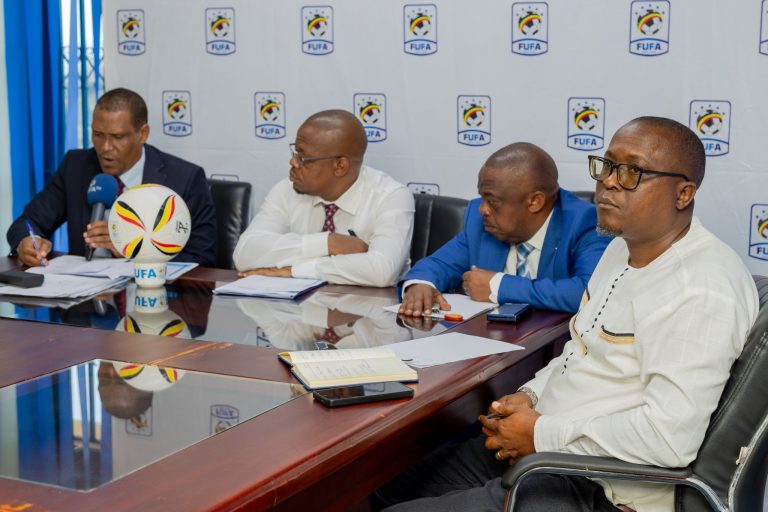
The Federation of Uganda Football Associations (FUFA) has taken a significant step toward full compliance with national sports laws after delegates unanimously approved amendments to the federation’s statutes during an Extraordinary General Assembly held virtually on 4th June 2026.
The assembly, chaired by FUFA President Moses Magogo, brought together approximately 71 delegates representing the FUFA Executive Committee, Uganda Premier League clubs, Regional Football Associations, and various Special Interest Groups.
The amendments were introduced to align FUFA’s governing statutes with the requirements of the National Sports Act 2023 and the National Sports Regulations 2025. The changes are a key part of the federation’s ongoing re-registration process with the National Council of Sports (NCS).
Several articles of the FUFA Statutes, including Articles 1, 24, 36, 67, 68, 74, 75, and 91, were revised to meet the legal standards set out in the national sports framework.
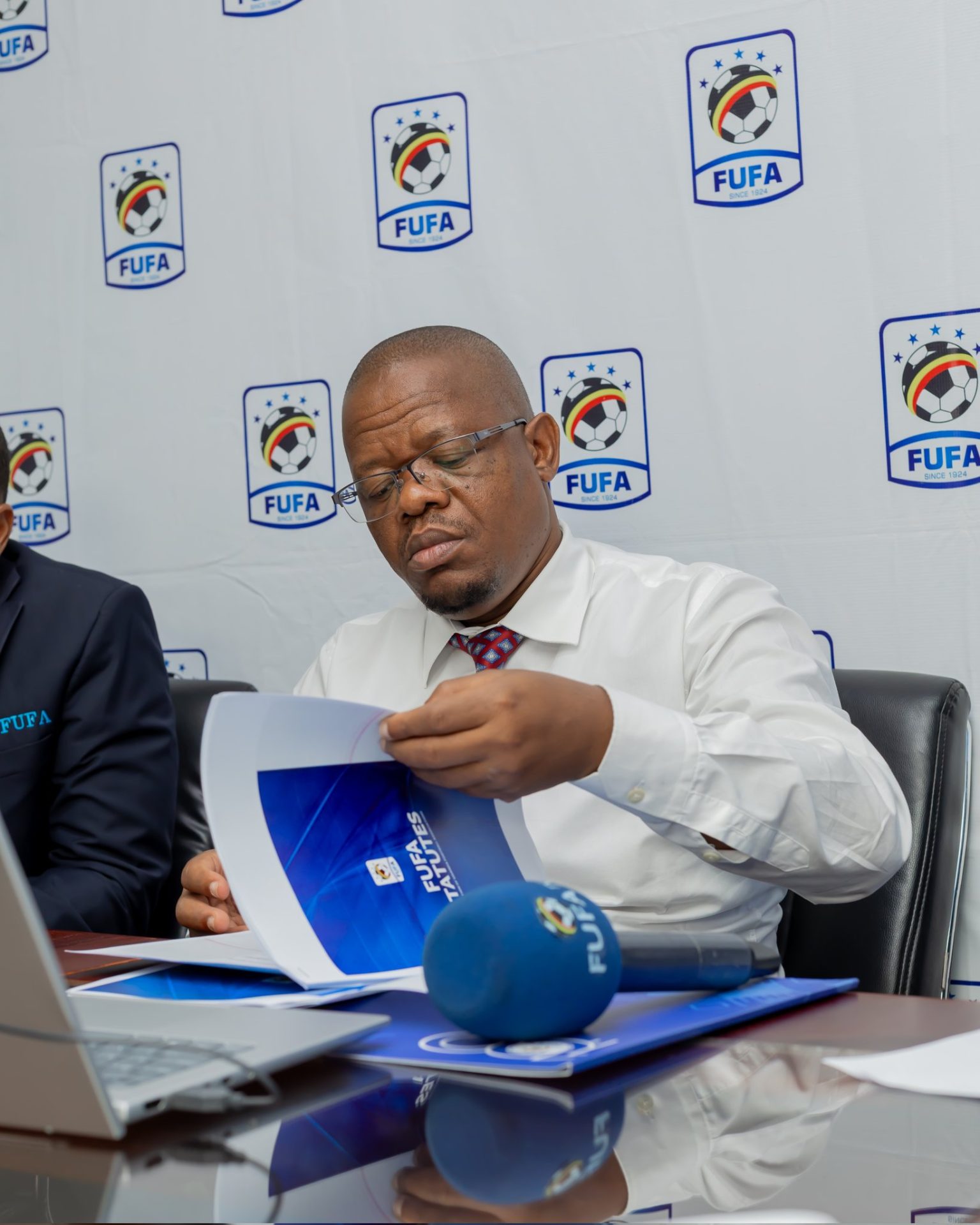
FUFA Legal Director Denis Lukambi explained that the amendments were necessary to address gaps identified during the compliance process.
“The National Sports Regulations provide that the constitution of a national sports federation or association must include specific clauses,” Lukambi said. “The way these clauses are worded in the regulations, they were effectively a copy and paste into our FUFA statutes.”
FUFA Legal Director Denis Lukambi provides an overview of the key decisions reached during the Extraordinary General Assembly held today. pic.twitter.com/WP6mJnR18K
He noted that approximately six mandatory clauses had previously been omitted. “These have now been resolved and submitted to the delegates of FUFA, who approved unanimously all the proposed amendments,” Lukambi said.
One of the most significant changes relates to how football-related disputes will be handled in Uganda.
Previously, FUFA referred disputes directly to the Court of Arbitration for Sport (CAS) in Lausanne, Switzerland. Under the revised statutes, the arbitration framework established under the National Sports Act will become the primary avenue for handling football-related disputes in Uganda.
“The recommendation now is that we refer all matters relating to disputes to national sports arbitration in accordance with the National Sports Act,” Lukambi explained.
The amendments provide that decisions made by arbitrators appointed under the Act will be final and binding. However, the Court of Arbitration for Sport remains available as an alternative mechanism where the national arbitration system is not yet operational.
With the delegates’ approval secured, FUFA will now forward the amended statutes to the National Council of Sports for final review and approval.
“After here, we are going to submit our statutes to the National Council of Sports for further approval so that we comply entirely with the law to be registered as a national sports federation,” Lukambi added.
The approval comes at a crucial stage in the re-registration exercise for national sports federations and associations, which is expected to conclude on 7th June.
FUFA’s application for re-registration was originally submitted to the NCS in June 2025 and was followed by a nationwide verification exercise. The assessment confirmed football activities in 114 of Uganda’s 146 districts, surpassing the minimum requirement of 110 districts needed for recognition as a national sports federation.
That finding reinforced FUFA’s claim to be a genuinely national sport, with organised football present in more than three-quarters of the country’s districts.
In his closing remarks, FUFA President Moses Magogo praised delegates for their participation and highlighted the importance of ensuring football governance remains in line with national legislation.
“It is important for us to ensure that we clear and clean up our governance system,” Magogo said. “Let us cooperate and ensure that we have statutes that are talking to the law and are also talking to the modernity of the game as we also want it.”
He thanked the National Council of Sports, FUFA’s legal team, and the delegates for their role in the process, describing the unanimous vote as a strong endorsement of the federation’s commitment to good governance and regulatory compliance.
The re-registration of national sports federations under the National Sports Act 2023 represents a fundamental reshaping of Uganda’s sports governance landscape. Federations that fail to comply risk losing official recognition, which would affect their ability to receive government funding, host international events, or represent Uganda abroad.
By moving swiftly to amend its statutes and secure delegate approval, FUFA has positioned itself as one of the more compliant federations in the country. The unanimous vote also signals internal unity on an issue that could have exposed divisions in less cohesive organisations.
All eyes now turn to the National Council of Sports, which must give its final approval before FUFA can be formally re-registered. With the 7th June deadline approaching, the ball is now in the regulator’s court.
For seven long years, Nalumansi Agnes has carried the responsibility of raising five children almost entirely on her own.
Inside a half-built house in Bukalango, Wakiso District, she learned to survive through uncertainty, heartbreak, and the quiet loneliness that abandonment often leaves behind.
The unfinished walls around her home mirrored much of her struggle.
Even during the day, the house sometimes felt dim.
And when night came, the darkness felt even heavier.
For Agnes, evenings became a reminder of everything that was missing, stability, comfort, support, and the simple ability to give her children a brighter environment to grow in.
The children tried to study.
Tried to remain hopeful.
But darkness interrupted so much of their learning, their joy, and their sense of possibility.
Then Solar M7 arrived.
And slowly, the atmosphere inside the home began to change.
Tonight, light fills the rooms where darkness once settled heavily. Her children now sit together reading, laughing, and learning after sunset. The house no longer feels abandoned by hope.
It feels alive again.
For Agnes, the transformation is deeply emotional because it reaches far beyond electricity.
It feels like reassurance that her children’s future is still worth fighting for.
“For many years, life has been difficult for us,” Agnes shared during her interview. “But now the children can study at night, they are happier, and the home feels brighter in every way.”
According to Doreen Nanfuka, many women leading households alone carry emotional burdens that become even more difficult under conditions of energy poverty.
“When a mother is already struggling to raise children without support, darkness adds another layer of limitation and stress,” Doreen explained. “Reliable light helps restore dignity, confidence, and hope inside the household.”
Innocent Kawooya says one of the most meaningful aspects of #100DaysofSolar is seeing families rediscover optimism even after years of hardship.
“Light changes more than visibility,” he noted. “It changes emotional environments inside homes. It helps families believe again that brighter futures are still possible.”
Today, evenings inside Agnes’ home no longer feel silent or defeated.
Children laugh beneath reliable light.
Books remain open after sunset.
And in a house where abandonment once left darkness behind, Solar M7 is helping a mother rebuild something powerful for her children.
Hope. Opportunity. And the belief that even broken homes can still raise bright futures.
Watch the full story of Nalumansi Agnes from Bukalango, Wakiso District, Uganda across our platforms:
In an era dominated by overstimulation, emotional urgency, and endless digital noise, Evening Hymn emerges as something increasingly rare in modern music culture:
Stillness.
Not emptiness.
Not silence.
But intentional emotional calm crafted with extraordinary precision.
As the third major spiritual moment on Voices Of Light – African Hymns Reimagined Vol. 1, the song shifts the project into a far more reflective emotional space, demonstrating the album’s remarkable understanding of human emotional rhythm across the day itself.
Where earlier records like Matchless Love and All Glory introduced warmth, celebration, and collective praise, Evening Hymn slows the heartbeat of the listener and gently guides the spirit toward rest.
That emotional transition is one of the album’s greatest artistic achievements.
From its opening lines:
“Come let us sing this evening song As day is fading away…”
the listener is immediately placed inside an atmosphere of emotional release. The songwriting does not chase complexity. Instead, it pursues emotional sincerity with near-liturgical elegance.
The brilliance of the composition lies in its universality.
Regardless of geography, culture, or background, nearly everyone understands the emotional feeling of evening: the slowing of the world, the reflection on the day, the longing for peace, the search for comfort before rest.
Evening Hymn transforms that shared human experience into music that feels both deeply spiritual and profoundly therapeutic.
The recurring refrain:
“Oh oh oh — we rest in You…”
is especially masterful in its emotional construction. Rather than functioning as a conventional chorus alone, it operates almost like guided spiritual breathing. The melodic repetition creates a calming psychological effect that naturally encourages emotional surrender and mental stillness.
This is music designed not merely for listening, but for decompression.
Vocally, Doreen Nanfuka delivers perhaps one of the most emotionally delicate performances on the entire album. Her voice feels intentionally softened, almost floating above the arrangement rather than sitting aggressively within it.
There is extraordinary emotional maturity in the restraint of her delivery.
She never forces emotion.
She allows it to unfold naturally.
That subtlety becomes the emotional core of the record.
Supporting her is the beautifully controlled presence of Enlightened Academy Choir, whose harmonies are handled with remarkable sophistication throughout the arrangement. Instead of overpowering the listener, the choir acts almost like emotional atmosphere itself — surrounding the song with warmth, reassurance, and spiritual intimacy.
Together with HiPipo Voices, they create what feels less like a performance and more like an environment.
The production work by George Kasakya and Henry Kiwuuwa deserves exceptional recognition here for its emotional intelligence.
The song is incredibly spacious.
Every pause matters.
Every vocal reverb feels intentional.
Every ambient layer appears carefully calibrated to create psychological softness.
This level of emotional engineering is extremely difficult to achieve without losing listener engagement, yet Evening Hymn manages it with remarkable confidence.
The arrangement understands something many contemporary productions overlook: peace itself can be emotionally powerful.
In many ways, the record perfectly embodies one of the central ambitions outlined during the launch of Voices Of Light – African Hymns Reimagined Vol. 1, creating music that integrates naturally into daily life and emotional routine rather than existing as occasional listening.
Evening Hymn feels intentionally designed for: night reflection, family prayer moments, late-night solitude, healing spaces, quiet drives, meditation playlists, and emotional recovery after difficult days.
That level of functional emotional design gives the song enormous long-term streaming potential because it becomes attached not merely to listening habits, but to human routines themselves.
Speaking about the vision behind the record, Innocent Kawooya describes the song as one of the emotional anchors of the album:
“We wanted Evening Hymn to feel like peace entering the room. Modern life has become extremely loud emotionally, mentally, spiritually. This song was intentionally created to give people a moment of calm at the end of the day, something they could genuinely live with every evening.”
Lead vocalist Doreen Nanfuka says the emotional atmosphere during recording was deeply personal:
“This song felt healing even while recording it. There was no pressure to perform loudly or dramatically. The emotion came from softness, honesty, and surrender. We wanted listeners to feel safe inside the music.”
The production crew, including George Kasakya and Henry Kiwuuwa, revealed that much of the sonic direction focused on emotional breathing space:
“We intentionally avoided overcrowding the arrangement. The silence between moments was just as important as the music itself. Evening Hymn needed to feel like rest, not stimulation.”
Perhaps the most extraordinary thing about Evening Hymn is its refusal to compete for attention.
Instead, it invites presence.
And in today’s attention economy, that may be one of the boldest artistic decisions possible.
The song does not demand emotional exhaustion from the listener.
It offers restoration.
Not many modern records understand the value of that.
Evening Hymn does.
And because of that, it quietly stands as one of the most emotionally sophisticated pieces on Voices Of Light – African Hymns Reimagined Vol. 1, a modern spiritual lullaby designed for a restless world searching for peace again.
As you experience the powerful journey of Voices Of Light – African Hymns Reimagined Vol. 1, from songs of hope, praise, healing, unity, victory, and light, this album stands as a remarkable celebration of faith, humanity, and emotional transformation through music. Led by Doreen Nanfuka, Enlightened Academy Choir, and HiPipo Voices, with exceptional production led by Innocent Kawooya, alongside George Kasakya and Henry Kiwuuwa, the project continues to position itself as one of the most emotionally immersive and globally resonant inspirational music releases from Africa in recent years.
For decades, one of the biggest challenges facing many African governments was not simply collecting revenue.
It was tracking it.
Cash-based systems created enormous inefficiencies across public finance. Tax payments could disappear between offices. Manual processes delayed reconciliation. Citizens spent hours in queues to pay licences, permits, and service fees. Corruption opportunities thrived inside fragmented collection systems. Businesses faced uncertainty. Governments struggled with leakages. And public trust weakened when payment systems appeared opaque, inconsistent, or difficult to navigate.
In many cases, the state itself operated slowly because money moved slowly.
Today, that reality is beginning to change.
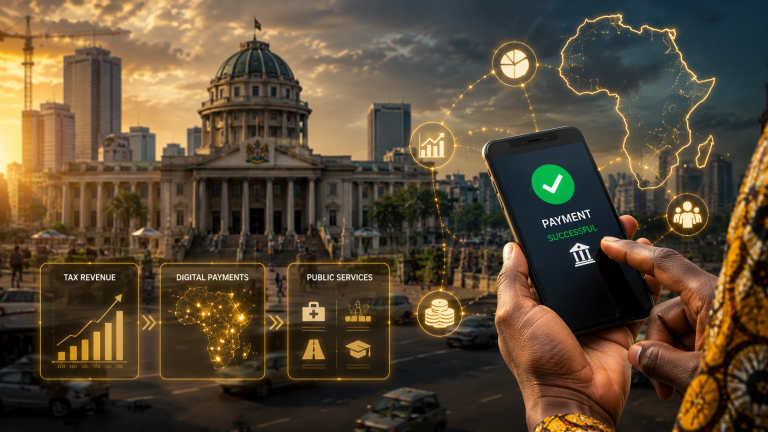
Across Africa, governments are rapidly digitising payments for taxes, licences, utility bills, permits, customs duties, school fees, healthcare services, and public administration charges. Mobile money, digital banking, payment gateways, QR systems, national payment switches, and interoperable digital platforms are increasingly replacing manual cash-based collection systems.
The transformation is not only technological. It is fiscal. Institutional. Political. And deeply economic.
Because when governments modernise payment systems, they do more than collect money faster.
They begin rebuilding the relationship between citizens, businesses, and the state itself.
Historically, public payment systems across many African countries relied heavily on manual processes.
Citizens often needed to:
travel physically to government offices,
carry cash,
fill out paperwork manually,
wait in long queues,
and navigate fragmented approval structures.
For businesses, compliance frequently became expensive not only financially, but operationally. A company could lose entire working days processing tax obligations, licence renewals, customs documentation, or regulatory payments.
These inefficiencies created hidden economic costs.
Time lost. Productivity reduced. Leakages increased. Compliance discouraged.
And where manual cash handling dominates, opportunities for informal deductions and corruption often expand.
This is one reason government payment digitalisation has become such a major policy priority across the continent.
Digital systems reduce friction.
And reduced friction improves both compliance and transparency.
At the center of this transformation lies a simple but powerful idea:
When payments become traceable digitally, governance changes.
A digital tax payment creates an audit trail. A digital licence fee generates real-time records. A digital customs payment improves visibility. A digital utility payment reduces cash leakage. A digital government transfer strengthens accountability.
The transaction itself becomes verifiable data.
This is one of the deepest structural impacts of digital government payments.
Cash systems often obscure visibility.
Digital systems increase visibility.
And visibility changes institutions.
Revenue authorities across Africa are increasingly leveraging digital infrastructure to improve collection efficiency. Tax systems are being integrated with:
mobile money,
banking systems,
payment gateways,
online portals,
digital identities,
and real-time reconciliation tools.
This allows governments to:
automate collections,
reduce manual intervention,
improve compliance tracking,
strengthen reporting,
and expand revenue bases more efficiently.
The effects can be substantial.
When payment systems become easier and more transparent, compliance often improves. Citizens and businesses are more likely to pay when systems are:
convenient,
predictable,
accessible,
and trusted.
This is especially important for SMEs and informal businesses.
Historically, many small businesses avoided formal systems partly because compliance processes themselves were too burdensome. Digital payments simplify onboarding into formal economic participation.
A business owner can:
pay taxes remotely,
renew licences digitally,
verify receipts instantly,
and reduce costly administrative delays.
This lowers the operational cost of formalisation.
Mobile money has played a particularly important role in this transformation.
Across Africa, telecom-led financial infrastructure often reached citizens faster than traditional banking systems. Governments increasingly recognized that if mobile wallets already handled millions of daily transactions, they could also support:
tax payments,
utility collections,
permit fees,
school payments,
transport levies,
and broader public service transactions.
This dramatically expanded government payment reach.
Citizens no longer needed to rely exclusively on urban offices or bank branches to interact financially with the state.
The implications for inclusion are significant.
A rural trader can renew a licence digitally. A farmer can pay fees remotely. A student can pay school charges through mobile channels. A business can settle obligations without travelling physically.
Digitalisation therefore reduces not only financial friction, but geographic friction too.
Governments are also increasingly connecting payment digitalisation to broader national digital transformation agendas.
Payment systems now intersect directly with:
digital identity programs,
e-government services,
customs modernisation,
smart cities,
procurement systems,
and social protection infrastructure.
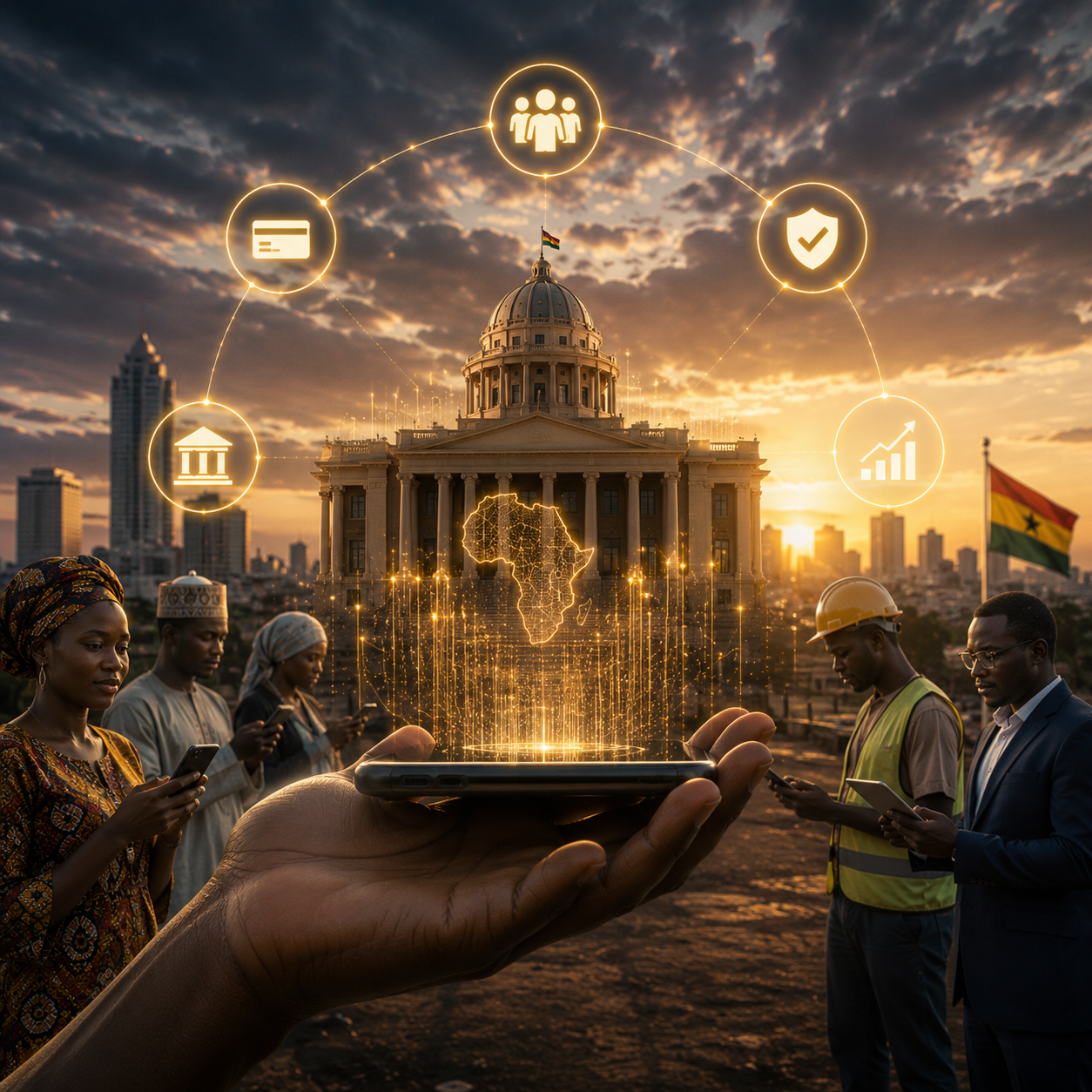
This creates what many policymakers increasingly describe as digital public infrastructure.
The idea is simple but transformative:
Identity. Payments. Data systems. Public services.
All connected.
When these systems work together effectively, governments gain stronger administrative capacity and citizens experience more seamless service delivery.
Yet despite the benefits, digitalisation also introduces difficult challenges.
One of the biggest is exclusion risk.
Not all citizens access digital systems equally.
Rural communities may face:
weak connectivity,
unreliable electricity,
low digital literacy,
and limited smartphone access.
Older populations may struggle with digital interfaces. Low-income citizens may remain dependent on cash. Women may face device access barriers. People with disabilities may encounter inaccessible systems.
A fully digital government system that ignores these realities risks creating new forms of exclusion.
This is why hybrid approaches remain important.
Digital transformation must increase access, not reduce it.
Governments therefore need:
strong agent networks,
offline-compatible systems,
multilingual support,
consumer education,
and accessible user experiences.
The goal should not simply be digitisation.
The goal should be inclusive digitisation.
Cybersecurity is another major concern.
As government revenue systems become increasingly digital, they also become more attractive targets for:
fraud,
phishing,
cyberattacks,
identity theft,
and system manipulation.
Trust becomes critical.
Citizens must believe:
payments are secure,
receipts are legitimate,
data is protected,
and systems are reliable.
Without trust, users may revert to informal or cash-based alternatives.
This means payment modernization must be accompanied by:
strong cybersecurity frameworks,
transparent governance,
dispute resolution systems,
and effective regulatory oversight.
There is another deeper consequence of digital government payments:
They change the visibility of the economy itself.
Digital transactions generate data. Data improves economic mapping. Economic mapping improves policy planning.
Governments gain better understanding of:
business activity,
sector participation,
regional trends,
revenue flows,
and service demand patterns.
This can strengthen:
fiscal planning,
infrastructure investment,
public service targeting,
and economic policy design.
In this sense, payment digitalisation becomes state capacity infrastructure.
The long-term implications for transparency are especially important.
One of the strongest arguments for government payment digitalisation is its ability to reduce leakage and corruption opportunities associated with cash-heavy systems. Automated reconciliation, digital records, transaction visibility, and reduced manual handling all improve accountability.
But technology alone is not enough.
Digital systems can improve transparency, if governance remains strong.
Without institutional integrity, even digital systems can be manipulated through procurement abuse, opaque contracts, weak oversight, or exclusionary practices.
Technology, therefore, amplifies governance quality rather than replacing it.
For HiPipo Money, this transformation reflects one of the most important realities of Africa’s digital future:
Financial infrastructure is governance infrastructure.
The modernisation of public payments affects:
business competitiveness,
citizen trust,
SME growth,
public accountability,
and national development capacity.
This aligns strongly with broader ecosystem conversations around digital transformation, inclusion, financial literacy, interoperability, and public-private collaboration championed through initiatives such as the Digital Impact Awards Africa (DIAA), Include Everyone, and wider innovation ecosystems across the continent.
Because ultimately, government payment digitalisation is not only about making it easier to pay taxes.
It is about building more efficient states.
A business spending less time in queues. A citizen receiving transparent receipts. A rural entrepreneur accessing government services remotely. A government reducing leakages. A country improving revenue collection fairly. A public system becoming more accountable.
Most citizens may never think deeply about the infrastructure behind a digital licence payment or online tax receipt.
But these systems quietly shape how economies function.
And across Africa, the shift from cash-heavy government systems to digital public payments may become one of the most important institutional transformations of the digital age.
Because in the end, modern economies are not only built by collecting revenue.