Home Blog Page 83

The Covid-19 safe trade facility and dedicated support to fragile states will continue – Frank Matsaert.

0

Our Reporter.

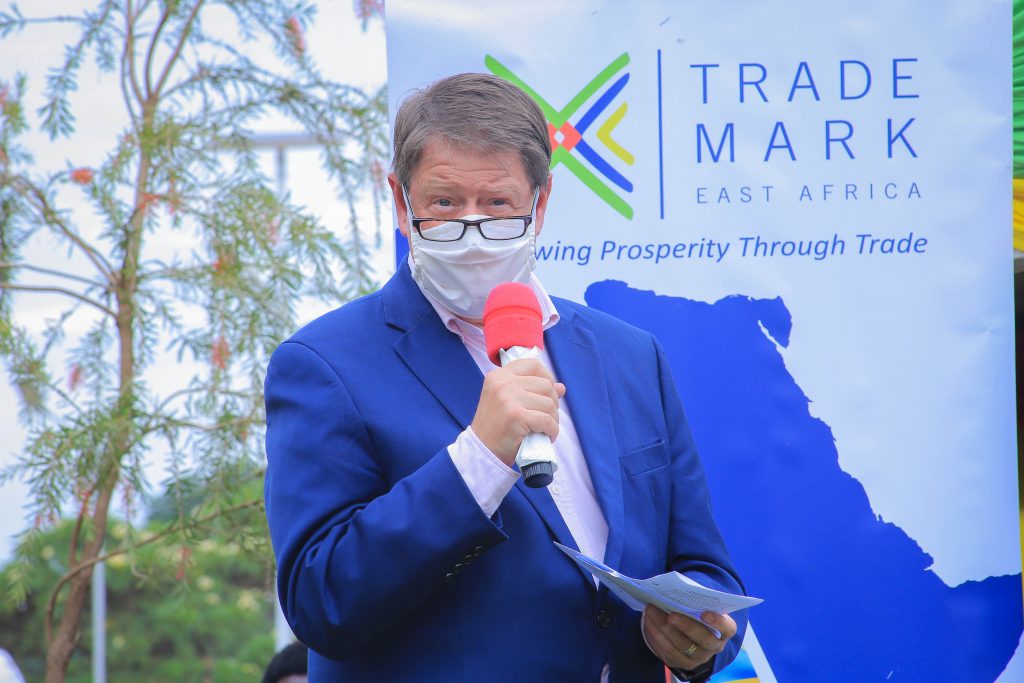
Over the years, TradeMark East Africa has been investing billions into trade facilitation infrastructure such as one stop border posts, roads and electronic cargo tracking and clearing systems, among others.  

However, since the outbreak of Covid-19, a lot has happened and TradeMark has had to pay more attention to ensuring safe cross border trade for all.  

For instance, TradeMark East Africa in May 2020 created a $23m Safe Trade Emergency Facility to support governments across the region to undertake critical measures along the transport and trade routes to ensure continued trade.

In this candid interview, Frank Matsaert, the TradeMark East Africa chief executive officer decodes the Safe Trade Emergency Facility (STEF) and TradeMark EA’s continued support to fragile countries like South Sudan, Burundi and Democratic Republic of Congo and more.

What is this $23m Safe Trade Emergency Facility?

We thought of an emergency programme that sought to support eastern and southern African governments to implement containment measures against Covid-19 and trade resiliency. This is being undertaken alongside scaling existing programmes to capitalise on emerging opportunities that build the region’s socio-economic resilience.

The programme supports trade continuity in a safer manner through short and medium term interventions that are critical for resumption of economic activity, food security and social stability, jobs and economic recovery.

As a region, we have seen near or total collapse of some regional value chains, affecting both imports and exports. Covid-19 has created problems, congesting borders with cargo trucks tailing back to tens of kilometres while some traders had to shut down business as a result of various restrictions.

Therefore, we needed to put in place a number of interventions and as a result, we are seeing resumption of cargo movements across borders, improved coordination in introducing Covid-19 measures and adoption of innovative solutions for real time exchange of Covid-19 certificates to confirm authenticity.

What area does the facility cover?

The Safe Trade Emergency Facility has been developed to cushion trade and people within East Africa with key objectives of making ports, borders and critical supply chains safe for trade as well as ensuring food security and access to critically required medicines and supporting measures to prevent job and income losses. 

The programme has actually grown to a $23m and is being implemented under seven  clusters; supporting emergency personal protective equipment and testing, trade technology interventions, which include the regional cargo and driver tracking system, trade policy interventions, supply chain support, standards and sanitary and phyto-sanitary projects, private sector advocacy interventions and gender inclusion, women in trade and safe zones.

The programme has recorded some successes such as provision of personal protective equipment to frontline staff and traders at ports, borders and inland container depots in Uganda, Burundi, DR Congo, Ethiopia, Kenya, Malawi, Rwanda, Somaliland, South Sudan, Tanzania and Zambia.
What has been the impact of Covid-19 on trade in the eastern Africa region?

The impact has been in varying proportions. In the first few months of Covid-19, horticulture, floriculture and tourism declined by close to 70 per cent on account of restrictions in Europe and North American markets. The situation then began to improve in the second half of 2020, but most countries in the region are yet to recover fully.

Manufacturing and cross-border trade also took a major hit as the disruptions at markets and raw material sources, shutting of borders and airports and declining incomes all contributed to reduce production output.

We also witnessed a decline of consumption as households prioritised essential goods impacting demand and production.

As a result of contraction of the economies and other tax relief measures in response to Covid-19, government revenues to finance social programmes have been significantly impacted.

Besides this, both foreign direct investments and diaspora disbursements into the region have declined, affecting foreign inflows as well as putting pressure on exchange rate and commodity prices.

This has in turn put pressure on unemployment levels and deepened poverty with one of every three companies facing a lot of vulnerabilities.

According to a World Bank report, in 2020, Uganda’s economic growth de-accelerated to 2.9 per cent, almost half of the 6.8 per cent for 2019. This is expected to continue into 2021.

The report notes that Covid-19 has forced widespread company closures, layoffs and slowdown of economic activity.  

Overall, whilst there are signs of recovery, economic growth is projected to slow down considerably.

With what happened in 2020, how do you see regional trade performing this year?

We expect to see a gradual recovery in trade, built on the anticipated arrival and manufacturing of Covid-19 vaccines. That said, the effects of Covid-19 have been severe. Economists anticipate it will take a few years before the negative effects fully taper off.

What is also interesting is the pandemic has presented new opportunities in the growth of e-commerce in the region, Governments in the region have invested in ICT infrastructure development, new e-commerce strategies are being developed and this presents great opportunities in growing the service sector and harnessing the power of technology in the region.

We also anticipate Africa and the region to trade more with itself, supported by the commencement of the Africa Continental Free Trade Area (AfCFTA), which is expected to strengthen trade value chains.

What key lessons must businesses and countries learn from this Covid-19 pandemic?

There are many lessons, key among them, the need to build greater collaboration and coordination, robust and resilient economies, early warning and detection mechanisms of threats and tapping into technology to build resilient trading systems.

Adoption of more trade supportive technology in key trade areas such as ports, corridors, and borders also needs to be consistent because they are more resilient in times of crisis and minimise transmission risks.

There is also need to increase internal and external border agency collaboration as well as streamlining and simplifying regulatory and border procedures to facilitate trade.

Focus on trade reform policies such as tariffs reduction, roll -out of trade information portals, building and promoting regional value chains to avert global contagion and strengthen the local and regional private sector organisations to advocate for improved business environment must also be enhanced.

You are a key supporter and facilitator of international trade in fragile countries across Eastern, parts of Southern Africa. How is trade faring in countries like Burundi, DR Congo and South Sudan? What big plans do you have for such countries? 

We continue to believe in the potential of fragile trade frontiers because at the end of the day, citizens, political affiliations notwithstanding, will always trade with each other.

In the countries such as DR Congo, Burundi and South Sudan, we continue to see determined citizens seeking peace, stability and economic growth.

Therefore, through trade facilitation, we want to support these governments to address infrastructure deficits, ineffective trade systems and regulation as well as bringing the private sector together to benefit from internal and regional trade.

We will continue to support South Sudan’s ascension to the East African Community because this will reduce costs of trade and stimulate economic growth through participation in regional and global value chains. We will also continue to support the government to remove non-tariff barriers along the Nimule-Juba corridor to quicken truck movements thus reducing transport costs and the prices of consumer goods.

In Burundi, we will be working with the private sector and government partners among them the Revenue Authority (OBR), National Committee on Elimination of Non-Tariff Barriers and Burundi Standards Bureau to reduce trade barriers.

In DRC, we will continue to support the government in trade facilitation to reduce cost of regional and international trade through interventions on infrastructure, trade supportive legislation, modernize trade systems and coordination of the private sector to be able to advocate for improved business environment.
TradeMark EA rolls out Women in Trade Training Programme for South Sudan.

0

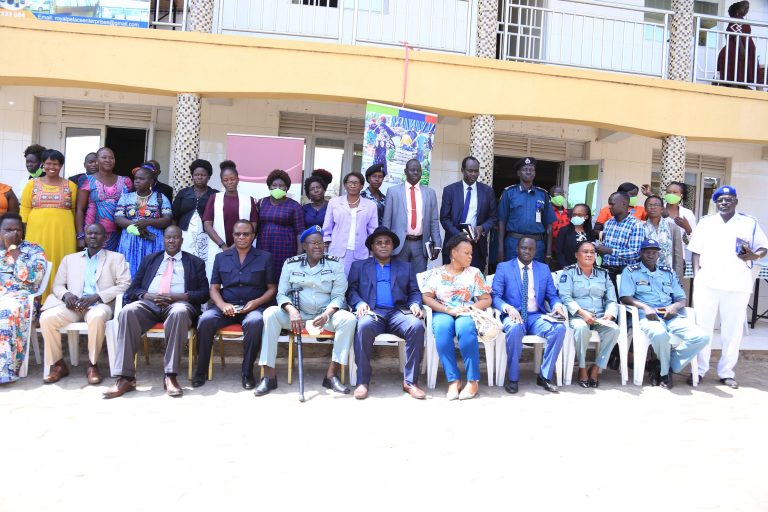
TradeMark East Africa, in Partnership with AMSCO Development Solutions Limited is set to roll out a capacity building and mentorship program for 2,000 Women Informal Cross Border Traders and Women Entrepreneurs in South Sudan.

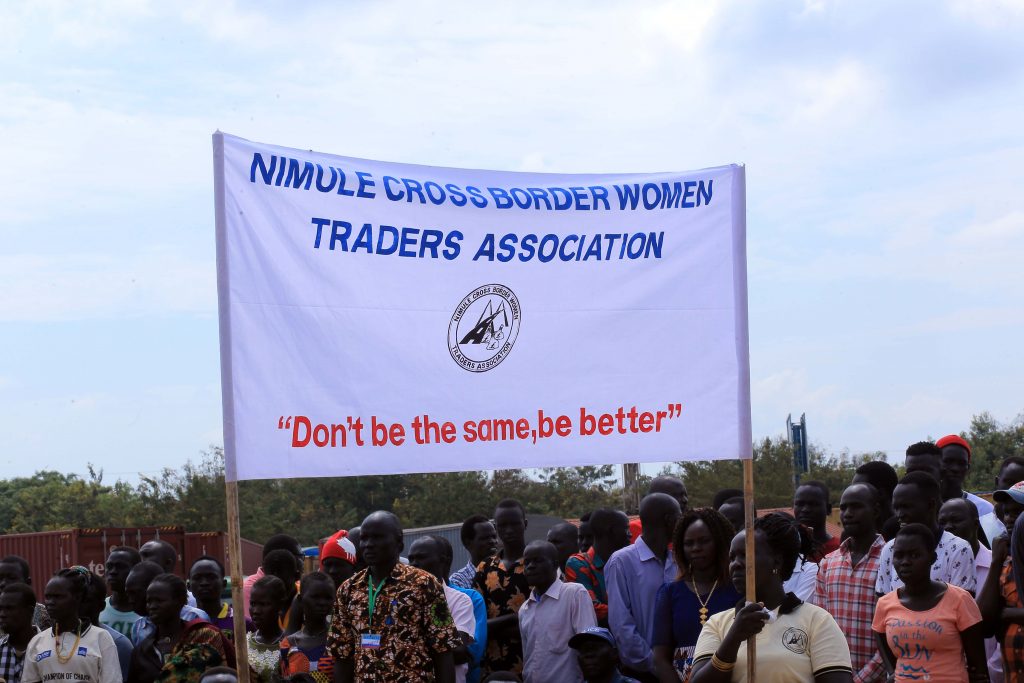
The Women in Trade Programme aims at benefitting 2,000 women traders across the borders of Nimule, Kaya and Nadapal and will focus on improving the trading environment for women in trade as well as build the business capacity of women traders, SMEs and Cooperatives.

The Women in Trade is a 9 months Programme from May 2020 to February 2021, funded by Global Affairs Canada and implemented by Trade Mark East Africa (TMEA). Through the Programme, TradeMark East Africa seeks to increase incomes and improve livelihoods for women traders and women-owned enterprises through capacity building, addressing trade barriers and advocacy for policies that will create an enabling environment for women traders and women-led SMEs. This is part of a larger initiative by TMEA to tackle poverty and reduce inequality through increased trade and competitiveness. The expected end of programme outcome is “Increased Social and Economic Empowerment of Women Traders in Eastern Africa. This empowerment will be achieved through 3 key objectives:

  1. Increase income from trade for targeted women traders in East Africa.
  2. Increase the capacity of women to participate in trade
  3. promote the rights of women in trade and reduce their vulnerability to violence and exploitation.

The first phase of the Programme (2010-2018) delivered exceptional results which contributed to substantial gains in East Africa’s trade and regional integration in terms of reduced cargo transit times, improved border efficiency, and reduced barriers to trade. Now in the second phase (2018 – 2023), the focus is on:

  1. Reducing barriers to trade; and
  2. Improving business competitiveness.

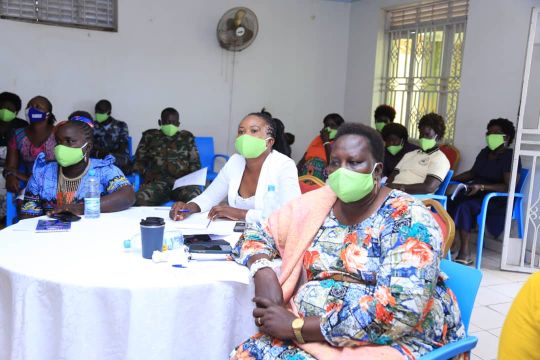
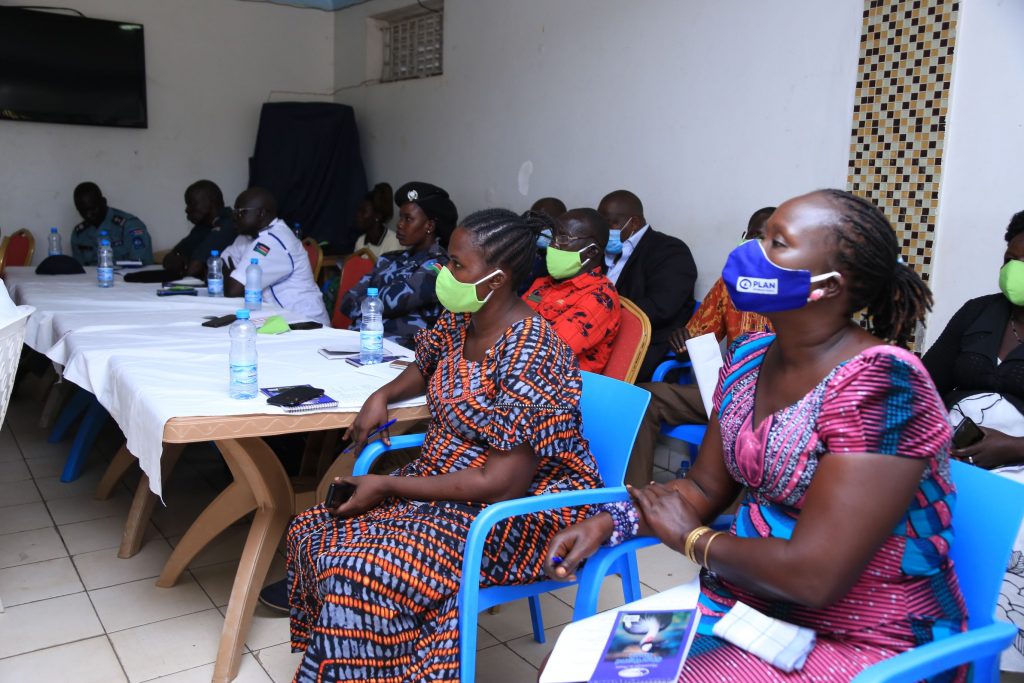
The programme is to be delivered in three phases. The pre-training phase which involved mapping of stakeholders was conducted alongside a Needs Assessment survey to validate the training objectives. This phase was been finalized in August 2020 and the images below capture the live survey conducted.


The training delivery phase is twofold – developing and customizing of the training content to meet the needs assessed and the actual training delivery on advocacy and capacity building. The training manuals have been developed and approved and we are now beginning the training delivery from 25th January, 2021. The post training phase which is the final one will include mentorship, coaching and Programme evaluation.

TradeMark East Africa is an aid-for-trade organisation that was established in 2010, with the aim of growing prosperity in East Africa through increased trade. TMEA operates on a not-for-profit basis. TMEA works closely with Regional Intergovernmental Organisations and has its headquarters in Nairobi, Kenya, with successful operations and offices in EAC-Arusha, Burundi (Bujumbura), Tanzania (Dar es Salaam), Democratic Republic of Congo (Bukavu), Horn of Africa, South Sudan, Uganda (Kampala) and Rwanda (Kigali).

AMSCO Development Solutions Ltd is the Kenyan registered subsidiary company of the African Management Services Company BV (AMSCO), a pan African private sector development company. AMSCO offers integrated market-led solutions to enhance and ensure inclusive growth and sustainable development for private sector and public institutions using innovative approaches and partnerships to scale up various economic interventions.

TradeMark EA Presents Personal Protective Equipment (PPE) Worth USD 110,000 to South Sudan.

Press Release

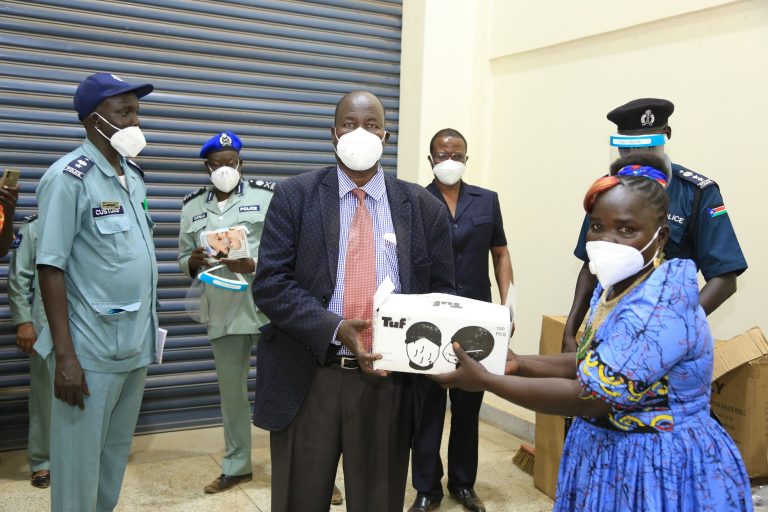
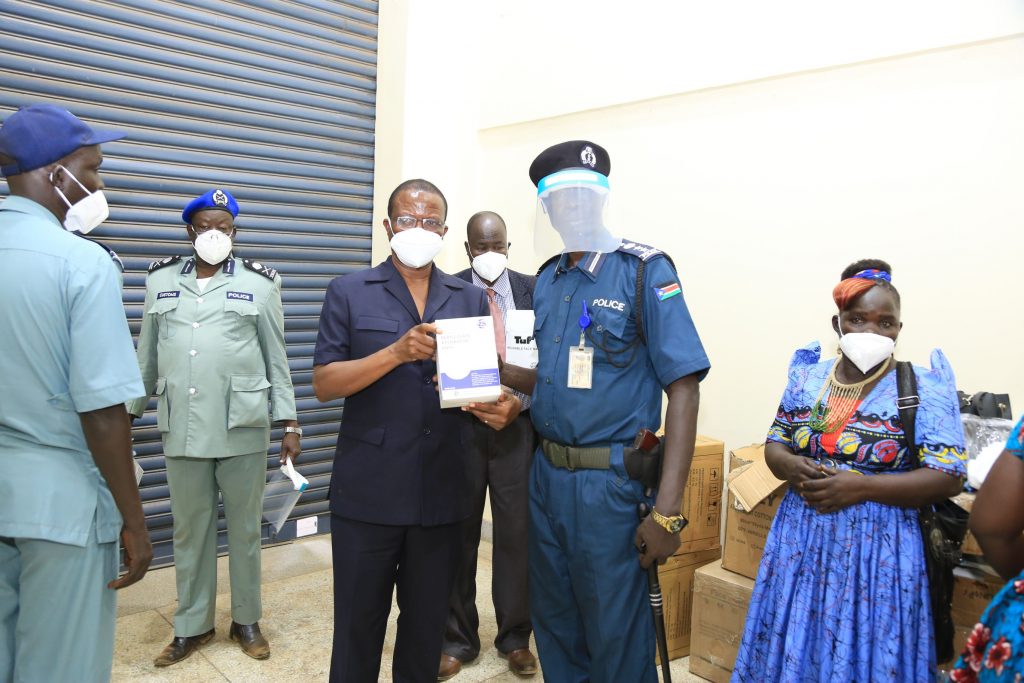
Leading Regional Trade Agency TradeMark East Africa has this morning handed over Personal Protective Equipment (PPE) worth USD 110,000 to the Government of the Republic of South Sudan to boost war against Covid19.

The equipment provided includes hand sanitizers, hand washing stations, liquid hand washing soap, infrared thermometers, re-usable safety boots, full protective PPE, filtering full face respirators, reusable masks, plastic face shields, disposable gloves, hand sanitiser dispensers and disinfectant spray bottles.

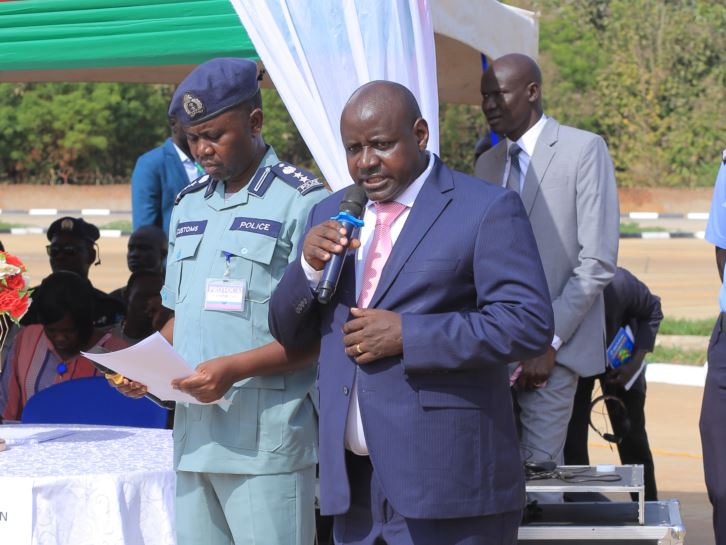
The equipment is expected to slow down infections and protect the lives of public officials, traders and citizens of South Sudan and was received on behalf of the government by Under Secretary for EAC Affairs, Mou Mou Athian. Other leaders at the event included Commissioner General of South Sudan National Revenue Authority Dr. Patrick Mugoya, Director General for Customs Gen Ayii Akol and EAC Youth and Women Ambassador for South Sudan.

Speaking at the event, EAC Under Secretary noted that it is critical for South Sudan to continue having strong vigilance and protection against the virus, owing to its huge social economic disruption trends world over.

“The PPE we have received from TradeMark East Africa could not have come at a more opportune time. Whereas as a government we have made concerted efforts to minimize infections across the country, the re-emergence of the disease in parts of the continent as well as new strains of the virus continue to pose a big threat to the health of our populations. We must double efforts in order to protect the health and livelihoods of our people” said Mou Mou.

On his part the Commissioner General of South Sudan National Revenue Authority Dr. Patrick Mugoya emphasized the critical role the Nimule border point plays for the economy of South Sudan. “This border is very key due to the amount of trade volumes it controls. We are keen to enhance and protect both government workers and traders in order to foster both our economy as well as revenue collection” said the Commissioner General.

The equipment presented today will enhance the safety and working conditions of front-line workers at the Nimule Border, the crossing point between South Sudan and Uganda and which controls an estimated 90% of international trade in South Sudan.

TradeMark East Africa Country Representative John Bosco Kalisa stressed the need for all actors in government, private and non-government sectors to act in concerted and co-ordinated effort for greater impact in containing the Pandemic.

“As we witnessed last year, the challenges posed by Covid19 are first health-related, then immediately economic in terms of their negative impact on the social-economic standards of our people. In order to protect trade and livelihoods, TradeMark will continue working with the Government of South Sudan to address challenges posed by Covid19 on trade as well as other other trade barriers.” noted the Country Representative.

The TMEA Country Representative further revealed that the equipment donated today is part of the Safe Trade Emergency Facility, a US$ 23 million emergency program rolled out by TradeMark East Africa in the East African region in the aftermath of the Covid-19 pandemic that seeks to ensure regional economies continue to trade in a safe way, while curbing cross-border infections. The Trade Agency is also supporting several trade infrastructure projects as well as inclusive trade programs in South Sudan.

Notes to Editor

For more information, please contact TMEA Programme Officer for South Sudan David Kenyi on email david.kenyi@trademarkea.com or through mobile number 0787 541 834

About TradeMark East Africa (TMEA)

TradeMark East Africa is an aid-for-trade organisation that was established in 2010, with the aim of growing prosperity in East Africa through increased trade. TMEA operates on a not-for-profit basis and is funded by the development agencies of the following countries: United Kingdom, Belgium, Canada, Denmark, Finland, Ireland, Netherlands, Norway, United States of America as well as the European Union. TMEA has its headquarters in Nairobi, Kenya, with successful operations and offices in EAC-Arusha, Burundi (Bujumbura), Tanzania (Dar es Salaam), Democratic Republic of Congo (Bukavu), Ethiopia (Addis-Ababa), Malawi, Zambia, South Sudan, Uganda (Kampala) and Rwanda (Kigali). 

For more information, please visit our website www.trademarkea.com

We have kept a young Nation going despite the Covid-19 pandemic – John Bosco Kalisa.

Our Reporter.

As a young nation that is recovering and rebuilding from war, South Sudan faces several challenges. These were worsened by the Corona Virus pandemic that almost put several productive sectors globally at a standstill as governments worked to mitigate the effects of the dreaded Covid-19 disease in 2020.

In South Sudan, one of the major industries affected by the Corona Virus was cross border trade. Due to the closure of borders, implementation of curfews and lockdowns, it became almost impossible for small trade to remain profitable.

Even though formal/big business trade was allowed to continue, informal cross border trade was hit had with traders complaining about failure to access cross border markets, loss of millions of money and stock while cases of assault and rape became rampant.

But even amidst these challenges, TradeMark East Africa remained a reliable ally, supporting the young nation’s local and international trade. In this exclusive interview, John Bosco Kalisa, the country representative of TradeMark East Africa in South Sudan discusses the highlights and challenges of 2020.  

Question: How was the year 2020?

John Bosco Kalisa: I thank you for this interview, a very noble initiative in the sense that the 2020 year was a challenging year due to the impact of Covid-19. But we are glad that we managed to navigate through these difficult circumstances and through our trade facilitation initiative, we are looking for a solid, positive recovery, having done quite substantive work around the border, supporting the trade facilitation infrastructure, as well as supporting the women who have been heavily affected by Covid-19. So I am happy that we are on the right track despite the challenges we experienced in the 2020.

Question: What were the Trade Facilitation highlights for 2020?

John Bosco Kalisa:  There were a number of highlights in 2020. As I stated, this has been an unprecedented time due to the Covid-19 pandemic, but the key highlight from the TradeMark South Sudan program is that we managed to complete and handover the USD 5 million Nimule one stop border post (OSBP) funded by United Kingdom’s Foreign, Commonwealth and Development Office through TradeMark East Africa. It is such a big achievement given that it anchors the trade facilitation initiative as it is able to reduce a number of barriers that were hindering the movement of goods and services along the Nimule border.

The second important achievement has been the support South Sudan program. We continue to support South Sudan to engage in to the East African Community (EAC).  Given that now South Sudan is a new member of EAC, there are a lot of trade policy initiatives that are on-going and those trade initiatives are being supported heavily by TradeMark East Africa.

The third important achievement is our support in terms of private sector advocacy, where we have built and strengthened the capacity of the private sector in South Sudan and they are actively engaged in the East African Business Council (EABC). They are working with their counterparts in the region.

Another aspect which is very critical is the standards harmonization. These are ​​​​​​​​​​​​​​​​​​​​sanitary and phytosanitary (SPS) measures, given that South Sudan depends heavily on imported food. So these measures are very critical in terms of health and safety of human beings. This has also been a very critical and important achievement by Trademark in South Sudan.  

Another important milestone that we achieved in 2020 is our support to the women traders. You know that Covid-19 has heavily affected the women, especially the informal cross-border women. I would like to thank the board and council of TradeMark EA for the continued support to the South Sudan women to ensure that they are able to recover from the effects of Covid-19 by supporting them in terms of having the necessary tools and equipment that helped them to continue to trade across the board.

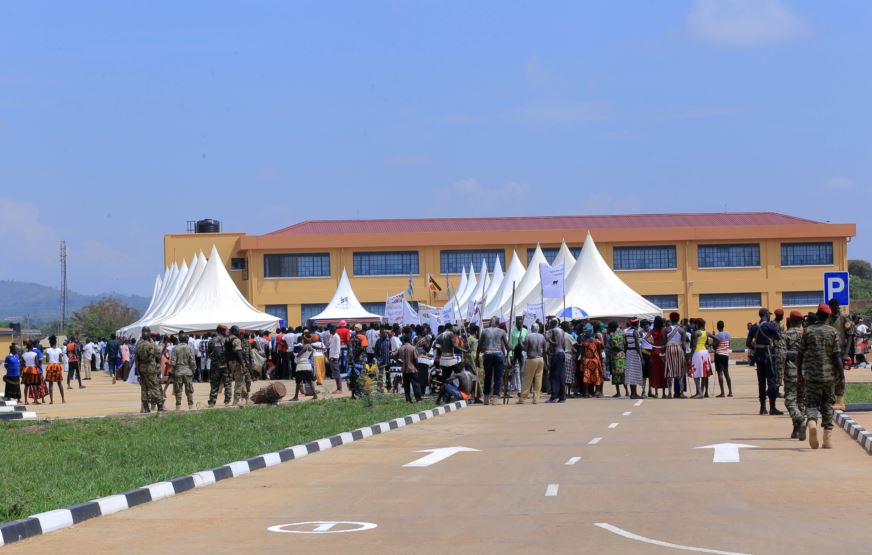
You witnessed that there was a launch, which we did with AMREF. AMREF is doing a commendable job in terms of sensitising and raising awareness for women to ensure that they are able to social distance while trading. The women of South Sudan have really applauded this initiative. We are also planning to organize the women to have safe cross border markets at Nimule under the Safe Trade Zones Protocols. It is an on-going initiative and we thank our donors, especially EU-IGAD, which is supporting that initiative.

We also did a lot of work in 2020 with the Shippers’ Council. We supported Shippers, Freighter and Forwarders to understand the protocols related to Covid-19. There has been a lot of on-going sensitization in terms of strengthening the Freighter and Forwarders association.

Question: TradeMark EA launched the Safe Trade Emergency Facility in mid-2020 to mitigate the effects of Covid-19 on Trade. How has this been received in South Sudan?

John Bosco Kalisa: The Safe Trade Emergency Facility (STEF) has been well received in South Sudan. South Sudan was the first country to launch the Safe Trade Zones at Nimule in October 2020 and this initiative will benefit over 2000 women at Nimule alone. The women and the youth have been heavily affected by Covid-19. I am happy that we are doing value addition to ensure that they are able to recover. The government is very happy with what we are doing on matters Trade Facilitation.

Question: During a December visit to Nimule and Elegu, the women of Elegu said they had received personal protective equipment (PPEs) to combat Covid-19 but the Women in Nimule said they hadn’t received any. When are you distributing in Nimule?

John Bosco Kalisa: We have already received the PPEs. They were delivered to our stores at the border by World Food Program. So we are waiting for the official handover before the end of January after which the frontline staff and traders at Nimule will receive their PPEs.

Question: While at the Nimule-Elegu border, the women complained about being harassed, assaulted and some raped at the border by security officials and other law offenders. As TradeMark EA and your partners, what are you doing to address such issues?

John Bosco Kalisa: You are right. Indeed these are some of the issues we are addressing under our non-tariff barriers (NTB) program.  These are some of trade restrictiveness issues we are encountering.  You would understand, South Sudan is emerging from the conflict so it requires a number of efforts to sensitize the soldiers and officials that are harassing the traders especially women. The good thing is that we are working on a program with our counterparts in Uganda to ensure that especially the truckers and the women are able to report these cases through a real time sms system. In the past, it has been difficult due to a number of NTBs on the Nimule-Juba road but this program we are undertaking now will ensure that there is a toll-line for reporting these issues. This system is going to be rolled out in 2021.

Question: The women at Nimule and Elegu complained that the borders are closed and for one to cross, you must have a Covid-19 certificate. But the Covid-19 tests cost USD 50 and above. How can they be helped? Can TradeMark EA and Amref come to their rescue?

John Bosco Kalisa: That issue of Covid-19 certificates is not only at Nimule and Elegu. It has been an issue across the East African region. I am happy that our EAC heads of state and ministers of health are working on a solution to have only one test across the region. If you are tested in Uganda, you don’t need to be tested again in South Sudan. That certificate can be valid for up to 14 days. Again, the cost of these tests is very high. Fifty dollars is a lot for informal women. This is like their livelihood. It doesn’t make business sense to pay fifty dollars for a test because you are selling a tomato across the border. Under our safe Trade zones, we are proposing that such traders shouldn’t be tested so long as they are adhering to the Covid-19 standard operating procedures (SOPs). They can cross the borders so long as they can observe the Covid-19 guidelines.

Question: After a very hard 2020 characterized by Covid-19, what do you see happening in 2021 and what should be done better?

John Bosco Kalisa: There are a lot of positive expectations and positive strides for 2021. As I mentioned, our safe trade initiative has produced tangible results across the region. You witnessed the PPEs that have been delivered. You witnessed the trade policy program we are doing across the region. We are working on a plan with the EAC Secretariat to have an economic recovery program where we want to strengthen our regional value chain. So I see a lot of positive trends with 2021. As I said, 2020 has been a very challenging and unprecedented year. It has triggered some of those unknowns, for instance, social distancing and lockdowns. These have had a negative impact, especially on the people’s welfare. There is positivism now that the Covid-19 vaccines are being tested and awareness is improving. In December 2020, we introduced the equal masks program in South Sudan. Those are some of the new tools that will enhance the recovery agenda. That is why I am saying there is a lot of positivism for 2021.

Ends.

We want Interoperable Financial Solutions, Users tell FinTechs.

Our Reporter.

Financial Technology stakeholders have witnessed a lot of positives in 2020 even amidst the COVID-19 pandemic and its unprecedented effects on people and economies globally. But that doesn’t remove the fact that this has been a rough and tough year.  

The highlight of the year saw world leaders imploring their citizens to embrace digital financial services (DFS) and other electronic services as means of curbing the spread of the dreaded novel corona virus.

In Uganda, the uptake of digital financial services, e-commerce, e-agriculture, e-education and e-health among others has been remarkable this year with more people adjusting to what is now the new normal.    

The cardinal role that fintechs are playing in the new normal was acknowledged at the 2020 Digital and Financial Inclusion summit featuring the Digital Impact Awards Africa.

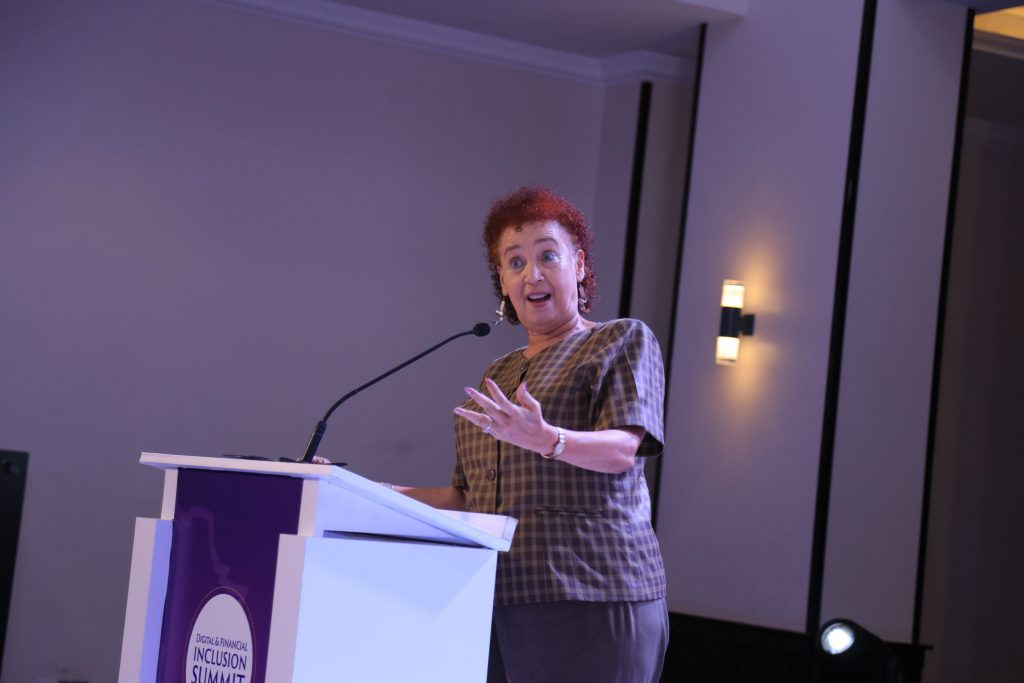
Prof. Maggie Kigozi, a Ugandan Business Leader and the event guest of honour underscored the economy saving role that the Financial Technology industry has played during these unprecedented Covid-19 times, existing challenges notwithstanding.

“I want to appreciate the young generation for seeing opportunities, jumping up to them and delivering products and solutions that we all use. I urge the Financial Technology Ecosystem players to continue working together to address any challenges. There are still a few problems here and there. But Financial Inclusion is happening,” Prof. Maggie Kigozi said.

But then the issue of access to devices and internet continues to obstruct digital and financial inclusion. To this, UNCDF’s digital country lead, Chris Lukolyo urged innovators to develop products that directly target the last mile users as this will in turn force the big players to pay more attention to addressing the devices and internet access challenges.

“The people being left out are mostly rural, immigrants and refugee communities. At UNCDF, we have piloted something called the Digital Community Entrepreneur where we are leveraging the people in the community to reach out to the doorstep, the last mile audience with digital related products and services. There are also locally manufactured devices now. It is a step in the right direction and can help to reduce the costs of devices,” Lukolyo said, adding;

“Indeed Internet access is still very expensive especially here. A lot of work still needs to be done to address this. Part of UNCDF’s strategy of not leaving anyone behind in the digital era is to foster inclusive innovation. If you can innovate with underserved communities in mind, you can come up with those viable business models that will attract the big service providers such as MTN to get down there and reduce access costs because there is money to be made.”

The digital and financial inclusion summit which was a culmination of the 2020 Include EveryOne Program was organized by HiPipo, in partnership with ModusBox, Mojaloop Foundation, Level One Project and United Nations Capital Development Fund (UNCDF).

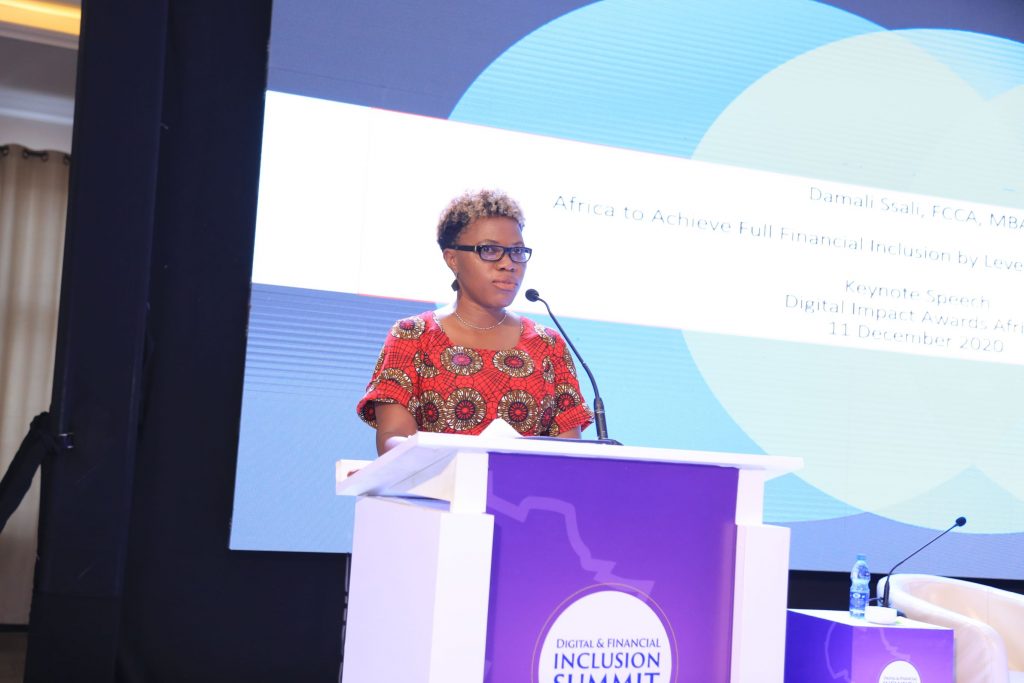
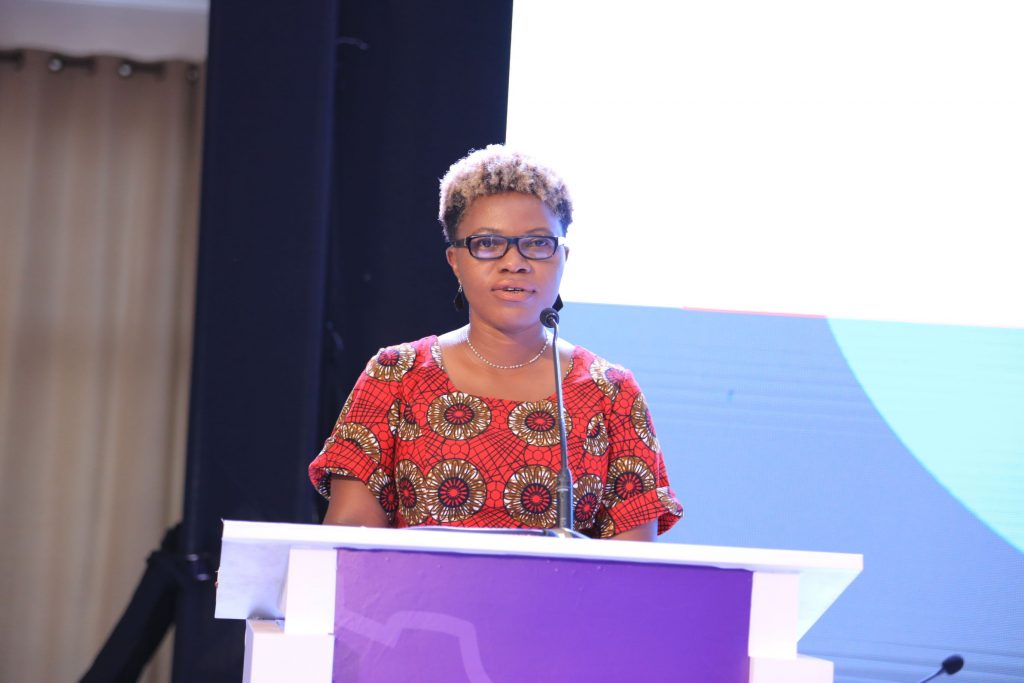
In her keynote address, Damali Ssali, a Ugandan senior chartered accountant and trade development expert recommended that for Africa to achieve full Digital and Financial Inclusion, it must fix the regulatory framework, adopt interoperability and push for digitalization of government services.

“Digital and Financial Technology regulations should be reviewed and enhanced so that they facilitate rather than curtail financial inclusion. Providers of digital financial services should develop solutions that are interoperable and meet Level One Project Principles such as tiered KYC, and affordable devices,” Damali Ssali noted, adding;

“In any country, government is the largest provider of financial services. Governments need to embrace digital technology in the provision of public goods and services to all people. This will catalyse and speed up the rate at which financial inclusion is attained. Governments must develop infrastructure backbone to digitize the provision of financial services in a manner that is inclusive.”

Inclusive Panel Discussions.

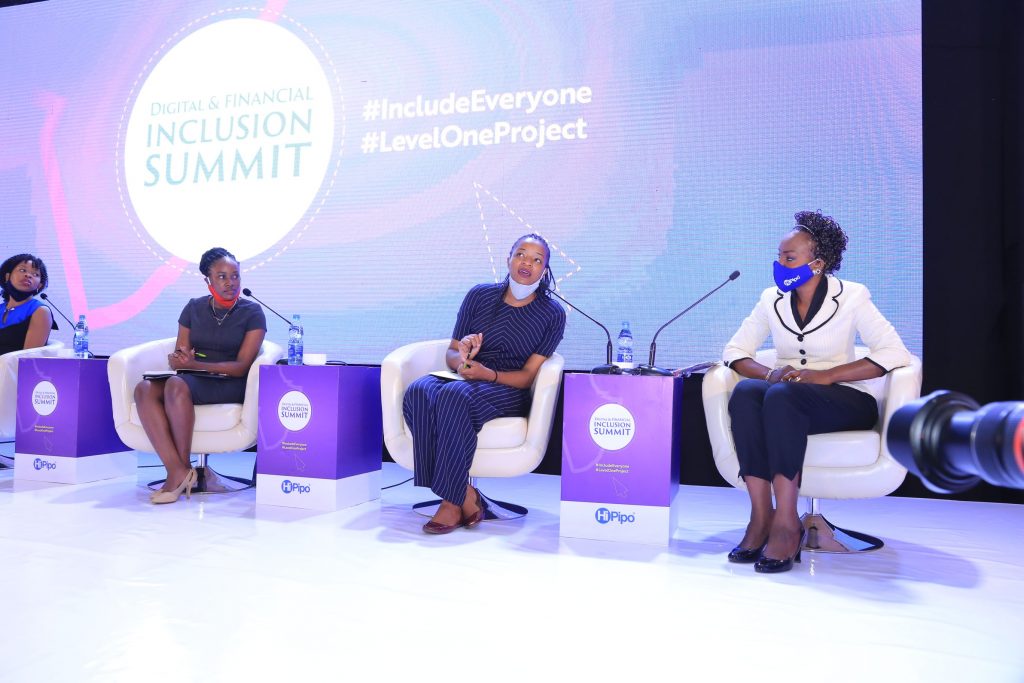
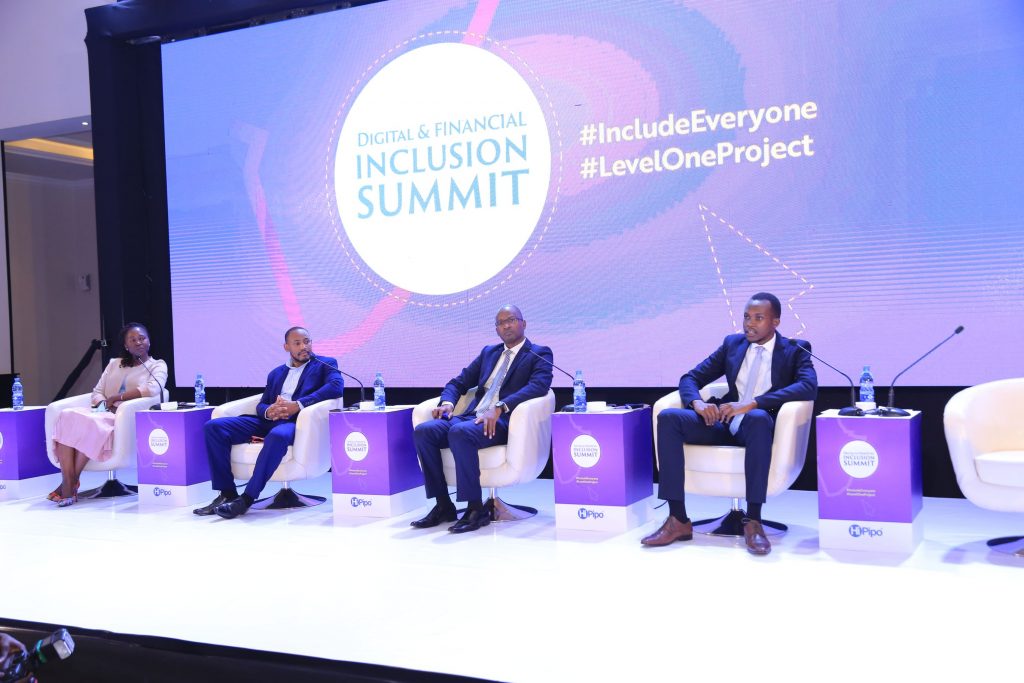
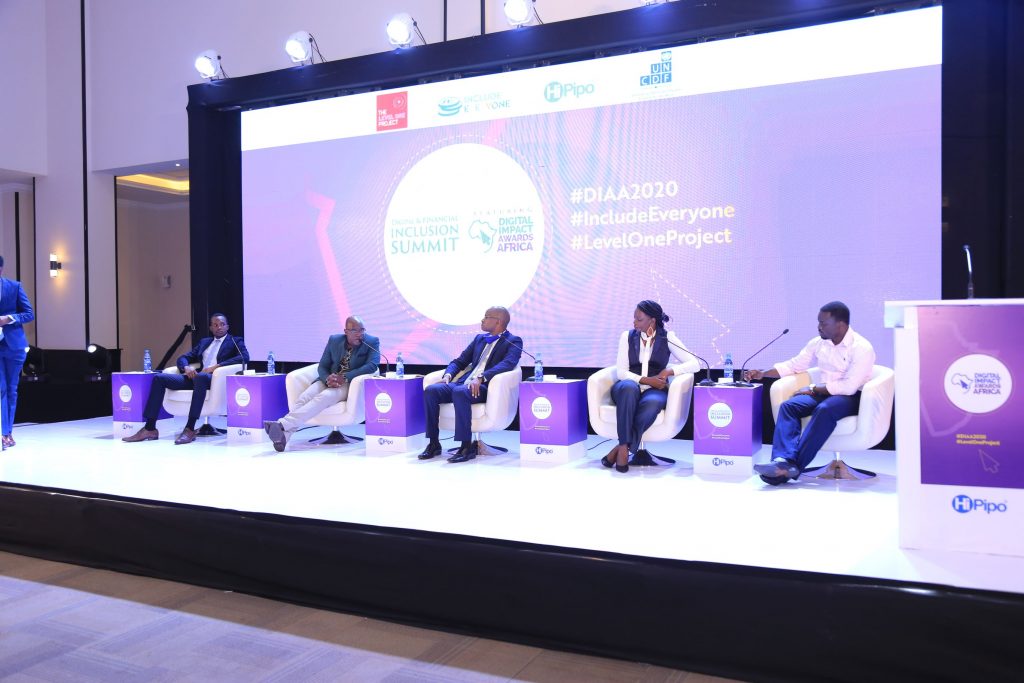
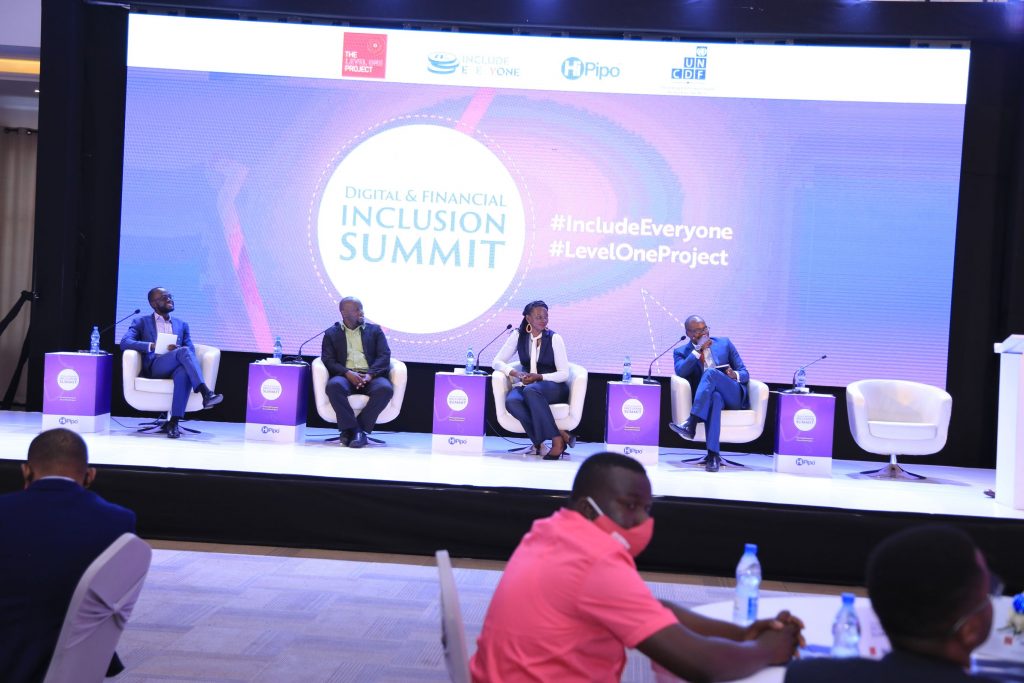
The summit had five gender balanced panel discussions that decoded the facts and myths about digital and financial inclusion in Uganda and Africa at large. Altogether, there were 22 Panelists including 11 women.  

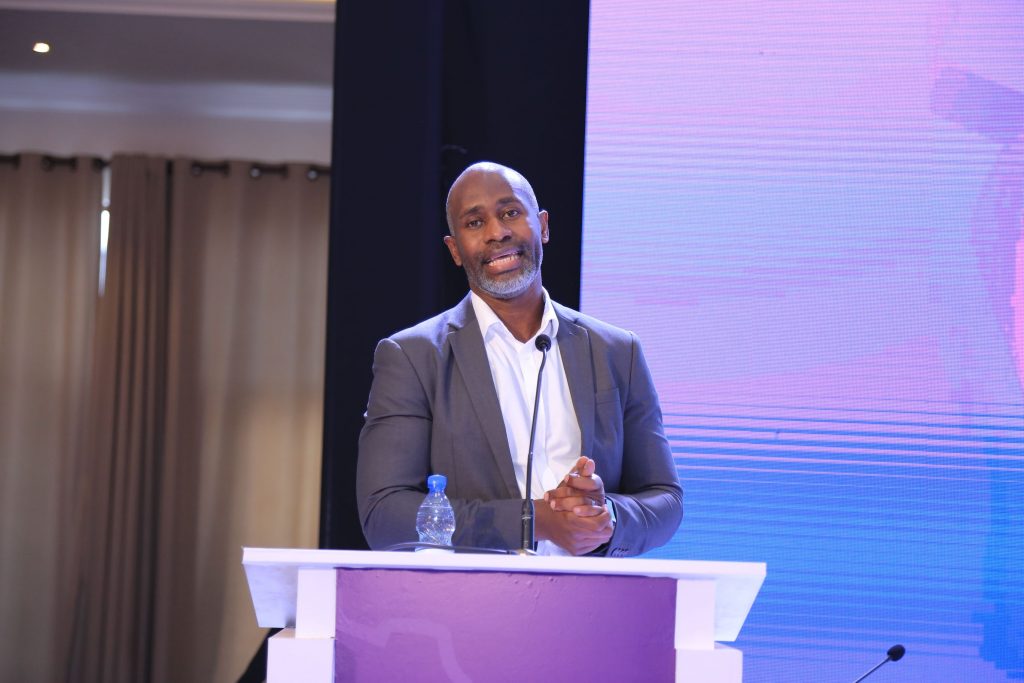
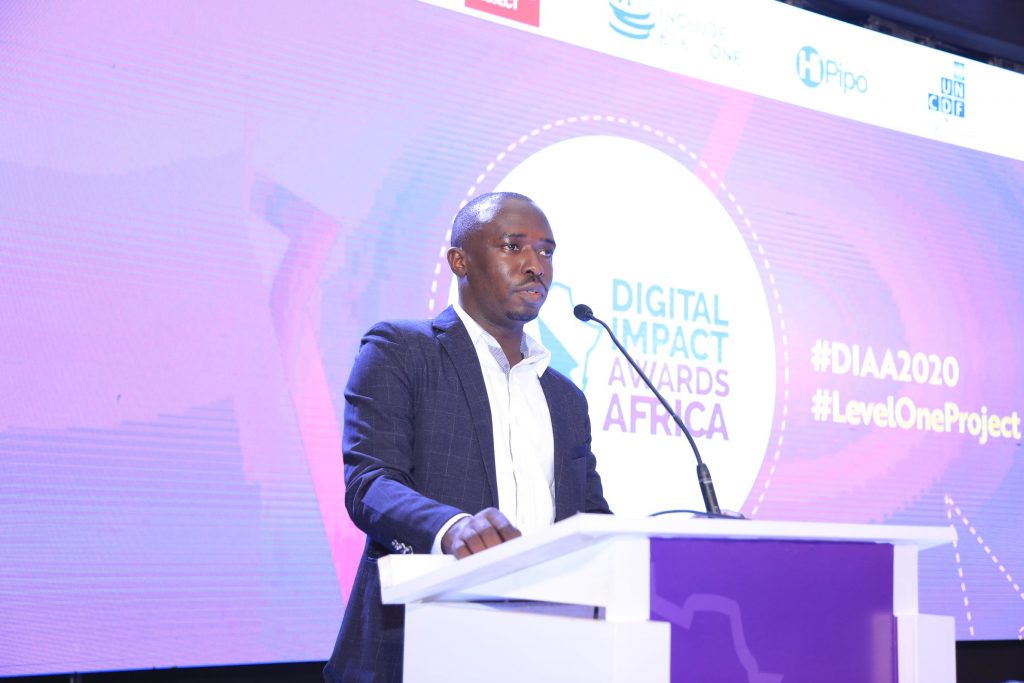
“The gender diversity challenge in the Financial Technology industry is well documented. Mere talking about it is not a solution. Instead, we must make sure that both genders are well represented at every level if we are to achieve last mile digital and financial inclusion,” Innocent Kawooya, the HiPipo CEO said, adding;

“It is not by mistake that 50 per cent of our 22 panelists today are women. It is also not by mistake that both our keynote speaker and guest of honour are women. We are deliberately engaging more women because we know that even though they are the majority gender, they are least included. HiPipo is playing its part in addressing the gender issue. You too play your part. We thank all our partners – UNCDF, ModusBox, Mojaloop Foundation and Level One Project for contributing to the success of this summit and other activities we have undertaken in 2020.”   

The first panel was themed Financial Inclusion for Women – How do we minimize and recover from Covid Impact on Women? It had Barbra Kahunde – Project Manager Pebuu Africa, Lyn Tukei – Head of Marketing and Communications at Xente, Mbabazi Suzan – Engineer and Kameeza Team Leader and Yvonne Mpanga – Business Development Consultant.

“Digitalization is a must for our recovery from the impact of COVID-19 on trade and business. Most women love technology and will surely adopt it if well guided and sensitized. But the most important thing for me is ensuring that we are healthy because COVID-19 is still here,” Yvonne Mpanga noted.

The second panel was Securing the Fintech Ecosystem – How do we effectively collaborate? The discussants were Jane Mugenyi – Head of Strategic Partnerships and Corporate Sales at the MFS section of MTN Uganda, Ronald Azairwe – Managing Director of Pegasus Technologies, Paul Tamale – Manager Card and Acquiring at Stanbic Bank and Nathan Levi Dragudi Ocatre–Implementation Manager, Transaction Banking at Standard Chartered.   

This panel came at the back of a ‘mobile money fraud’ that affected Pegasus Technologies, Stanbic Bank, MTN Uganda and Airtel Uganda around September and October 2020. Different discussants weighed in on how to safeguard the industry from such incidences now and in the future.

“There was a money heist like you have called it. But what I can assure you is that the customer wallets were not affected. No customer lost any money. Being a technology platform, we have continuous controls in place using both internal and external auditors to ensure that this does not happen again. We need to use digital identity as a platform in order to reduce such cases. If we have a digital identity of somebody who performed a suspicious transaction in MTN, then we could share with Stanbic, Stan Chart and Airtel etc so that when this same person goes to perform transactions elsewhere, s/he is already blacklisted,” MTN Uganda’s Jane Mugenyi said.

Pegasus managing director Ronald Azairwe added; “The most important thing is having digital identity. There must be a rigorous process of identifying every individual and relating every transaction to an individual. Yes, it is a bit of an intrusive process but there is nothing we can do to avoid that. We need to reach a point where everything digital is linked to your NIRA National ID.”

Then came the third panel – Building the Rails: Interoperability with Private Sector Led Real-time Payments Switch: How do we achieve it? The Panelists were Peter Kakoma – Kanzu Code CEO, John Mark Ssebunnya – FinTech Platforms Architect at MTN Group, Doreen Lukandwa – Beyonic Director Marketing and Customer Success, Paul Tamale – Stanbic Manager Card and Acquiring and Nathan Levi Dragudi Ocatre– Standard Chartered Implementation Manager, Transaction Banking. 

This was a special one as it envisioned financial inclusion powered by interoperability, collaboration and competition.

“There is a framework that can help all industry players understand where we can compete and where we can collaborate in real time payment systems. The framework has what we call the rails which in this case are the infrastructure. It also has the rules. We can always collaborate on the rails and the rules. Then we can be left to compete on the accounts and applications. All players must be aware that both collaboration and competition can co-exist,” MTN Group’s John Mark Ssebunnya noted.

The fourth panel addressed the 2020 National Payments Act that is currently under review with both players and the regulator working on ensuring that the law doesn’t lock out anyone but instead develops the industry without prejudice to players – big or small.

This panel discussion had Financial Technology Service Providers Association (FITSPA) Company Secretary also Bowmans lawyer – Brian Kalule, Mallan Group CEO – Malcolm Kastiro, YOTV Channels CEO – Aggrey Mugisha and Beyonic Director Marketing and Customer Success – Doreen Lukandwa.

Beyonic’s Doreen Lukandwa summed up the National Payment ACT by noting that “this regulation has come with a lot of positives, credibility, control and trying to make the ground levelled for all players involved in this particular space. It is going to be very important for the regulator to engage all the stakeholders in this space on a regular basis not just once a year but monthly and ensuring that this regulation is suited for Uganda and serves Ugandans.”

Come in Informal Traders.

After these four panels, it was clear that all the key issues touching on the Fintech industry had been competently discussed and recommendations made.

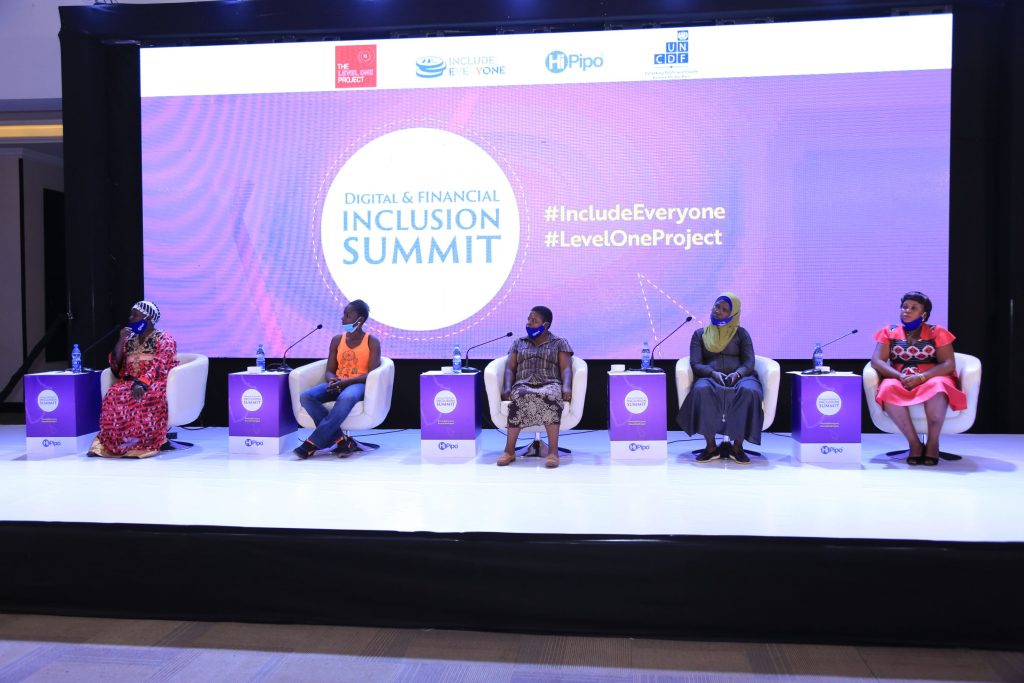
But then came the Financial Inclusion for Women Informal Traders panel discussion – a super climax that the Digital and Financial inclusion summit needed.

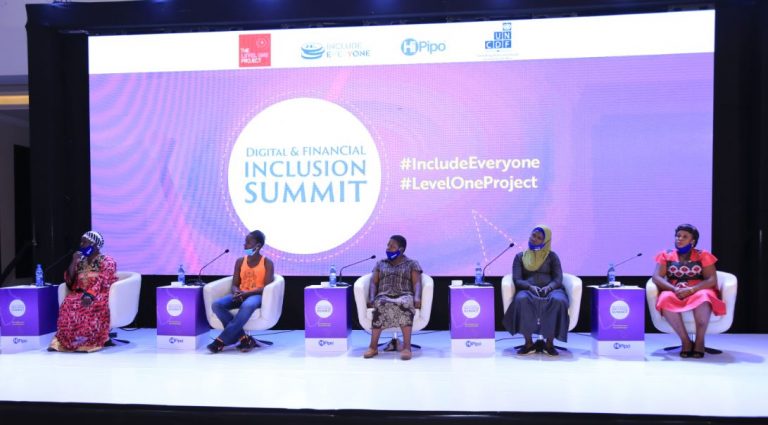
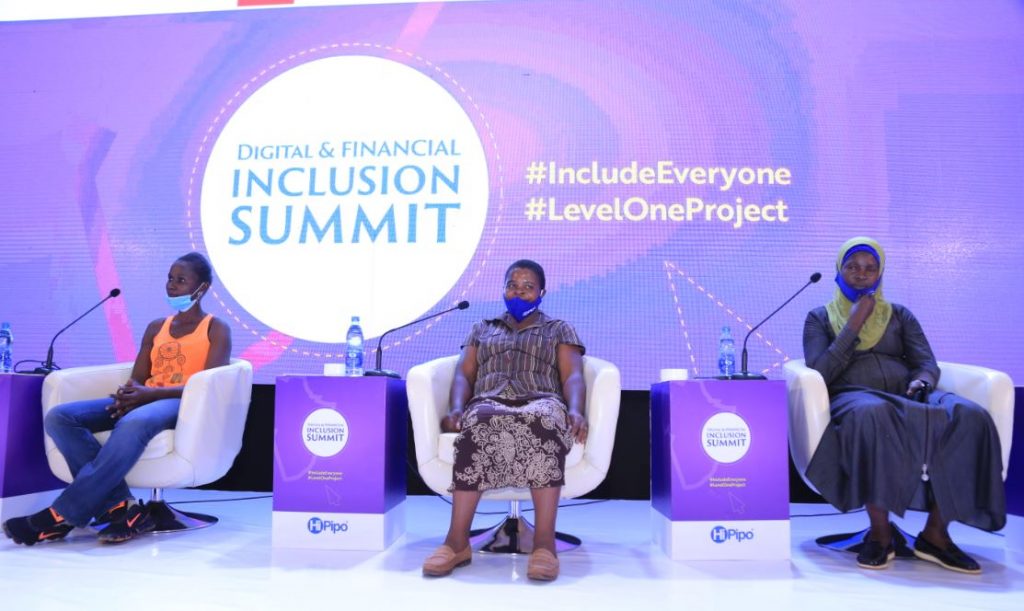
During this panel, Women Traders from across Kampala City asked Financial Technology Stakeholders, and E-commerce players to focus on both Real Time payments and Traders’ Training as these two are the main impediments to online transactions embrace.

The Women Traders drawn from Bugolobi, Wandegeya, Kalerwe, Mpererwe and Kitintale Markets noted that even though online transactions have saved businesses and lives during these unprecedented Covid-19 times, failure by Financial Technology players to do Real Time payments, Limited Training and Lack of latest Online Trade tools have slowed further uptake.

“There hasn’t been huge embrace of the online and technology based business in Kitintale market. We haven’t had sufficient training on online trade. We also don’t have the right tools of trade. This explains the low uptake among vendors in our market,” Nakaketo Samalie Nkata, a Women Traders’ Leader from Kitintale Market said.

Grace Akiiki, the Chairperson of Wandegeya Market Women Traders candidly noted; “We had embraced e-commerce in Wandegeya market. But we got a huge challenge of delayed and sometimes no payments from an E-commerce player we were working with. When someone orders online, they order for goods that you don’t even have on your stall. So you have to use your cash to purchase the missing items and prepare this order with hope that you will be paid immediately. But then the payment delays or never comes.”

The issues shared by these traders made up much of the discussions at this event with different speakers acknowledging the need for the industry players to implement Financial Inclusion best practices such as same day settlements, tiered KYC, Low Cost User Devices and real time funds transfer.  

Damali Ssali, pleaded with Financial Technology and E-Commerce players to walk the digital and financial inclusion talk by ensuring that they train traders and also make payments for sold goods in real time.

“It is unfair that an informal trader in Kalerwe market has to offer credit to big e-commerce and FinTech players then wait for days before a payment is made. The Financial Technology industry must embrace the Level One Project principle of same day settlement. Payments for goods sold must be instantly remitted to seller through mobile money or bank,” Damali Ssali said, adding;

“Again, the FinTechs and E-commerce players must take lead on educating the traders on how this industry works. If well trained and empowered, more traders will make informed decisions and embrace online transactions.”

Additionally, in his presentation titled The Inclusive Digital Economy, Steve Haley, the Director Economic Development at ModusBox emphasized that excluding millions of people from digital financial services not only hurts business owners but also stifles economic growth.

“Small business owners don’t have any option to wait days for their money to settle in to their accounts. Their lives and businesses depend on day to day income. As such they need interoperable real-time solutions. Interoperability will enable the innovation needed to make digital payments inclusive and affordable while pouring money in to the transaction economy and supercharging the ecosystem. All we need is a single real-time payment network solution, and that is Mojaloop.”

#DIAA2020

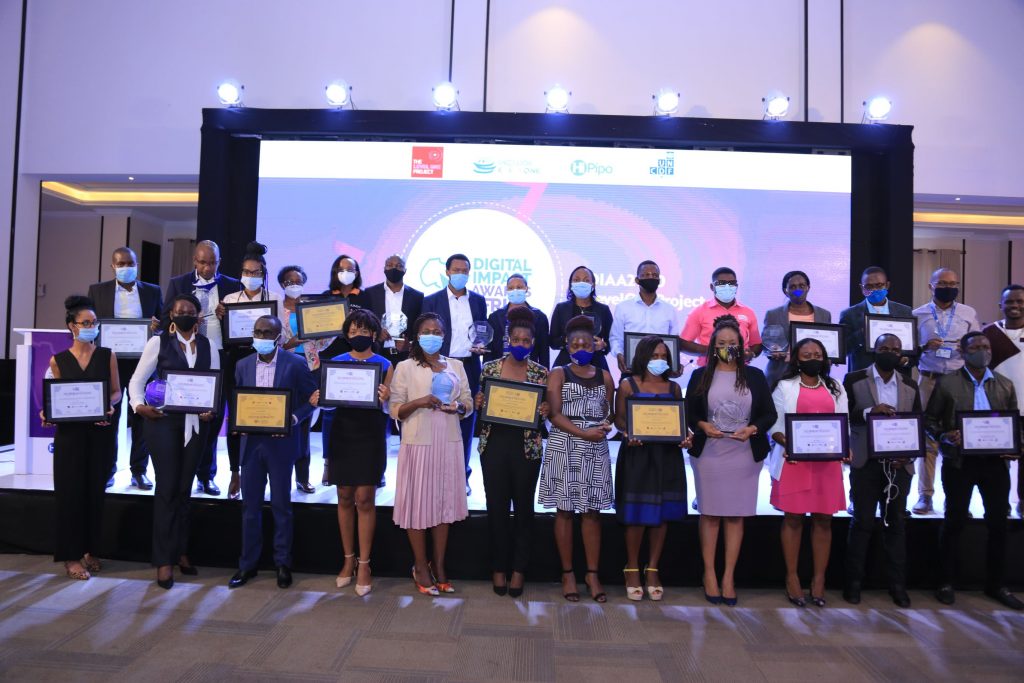
The Awards were a culmination of the Digital and Financial Inclusion Summit organized by HiPipo in partnership with ModusBox, Level One Project, Mojaloop Foundation and UNCDF. 

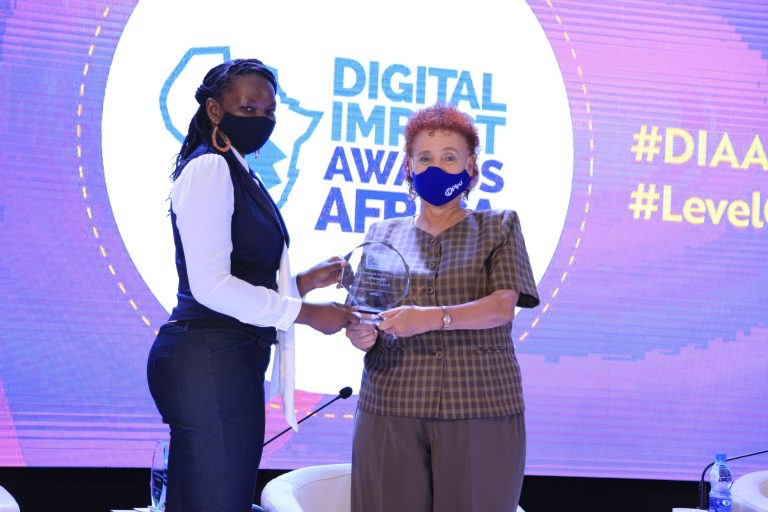
The Digital Impact Awards Africa seeks to recognize, celebrate and appreciate different individuals and organizations that are spearheading the use of digital mediums to better serve their communities. Winners are those with the highest score from a combined Jury and Public voting process.

The 2020 winners included Standard Chartered for Digital Brand of the Year Award, Stanbic Bank took the Cards Payments Excellence Award, Jumia won E-Commerce Innovation Excellence, Centenary Bank won the Community Bank Excellence Award while Jumia was voted as Best Consumer Goods Brand on Social Media.

The special recognition for Regulatory Financial Inclusion Rails Award went to Bank of Tanzania (BoT) for their implementation of the Tanzania Instant Payment System (TIPS) while Doreen Lukandwa to the Women in Fintech Leadership Award.

Here is the full list of the 2020 Digital Impact Awards Africa winners.

Ends!

Women Traders decry Delayed Payments, Limited Training on E-commerce.

Our Reporter.

Women Traders from across Kampala City have asked Financial Technology Stakeholders, and E-commerce players to focus on both Real Time payments and Traders’ Training as these two are the main impediments to online transactions embrace.

While appearing on a panel discussion themed Financial Inclusion for Informal Women Traders at the 2020 Digital Impact Awards Africa held at Mestil Hotel on Friday 11th December, the Women Traders’ leaders drawn from Bugolobi, Wandegeya, Kalerwe, Mpererwe and Kitintale Markets noted that even though online transactions have saved businesses and lives during these unprecedented Covid-19 times, failure by Financial Technology players to do Real Time payments, Limited Training and Lack of latest Online Trade tools have slowed further adoption.

Those on this informative and thoughtful panel discussion were Nanono Aisha from Bugolobi market, Akiiki Grace from Wandegeya market, Nakaketo Samalie Nkata from Kitintale market, Nabukera Faridah from Mpererwe market and Sarah Naluwaga from Kalerwe market.

“There hasn’t been huge embrace of the online and technology based business in Kitintale market. We haven’t had sufficient training on online trade. We also don’t have the right tools of trade. This explains the low uptake among vendors in our market,” Nakaketo Samalie Nkata, a Women Traders’ Leader from Kitintale Market said.

Grace Akiiki, the Chairperson of Wandegeya Market Women Traders added; “We had embraced e-commerce in Wandegeya market. But we got a huge challenge of delayed and sometimes no payments from an E-commerce player we were working with. When someone orders online, they order for goods that you don’t even have on your stall. So you have to use your cash to purchase the missing items and prepare this order with hope that you will be paid immediately. But then the payment delays or never comes.”

The issues shared by these traders made up much of the discussions at this event with different speakers acknowledging the need for the industry players to implement Financial Inclusion based practices such as same day settlements, tiered KYC, Low Cost User Devices and real time funds transfer.  

Damali Ssali, a Trade Development Expert implored Financial Technology and E-Commerce players to walk the digital and financial inclusion talk by ensuring that they train traders and also make payments for sold goods in real time.

“It is unfair that an informal trader in Kalerwe market has to offer credit to big e-commerce and FinTech players then wait for days before a payment is made. The Financial Technology industry must embrace the Level One Project principle of same day settlement. Payments for goods sold must be instantly remitted to seller through mobile money or bank,” Damali Ssali said, adding;

“Again, the FinTechs and E-commerce players must take lead on educating the traders on how this industry works. If well trained and empowered, more traders will make informed decisions and embrace online transactions.”

The Awards were a culmination of the Digital and Financial Inclusion Summit organized by HiPipo in partnership with ModusBox, Level One Project, Mojaloop Foundation and UNCDF. 

The Digital Impact Awards Africa seeks to recognize, celebrate and appreciate different individuals and organizations that are spearheading the use of digital mediums to better serve their communities. Winners are those with the highest score from a combined Jury and Public voting process.

The 2020 winners included Standard Chartered for Digital Brand of the Year Award, Stanbic Bank took the Cards Payments Excellence Award, Jumia won E-Commerce Innovation Excellence, Centenary Bank won the Community Bank Excellence Award while Jumia was voted as Best Consumer Goods Brand on Social Media.

Prof. Maggie Kigozi, a Ugandan Business Leader and the event guest of honour underscored the critical economy saving role that the Financial Technology industry has played during these unprecedented Covid-19 times, the existing challenges notwithstanding.  

“I want to appreciate the young generation for seeing opportunities, jumping up to them and delivering products and solutions that we all use. I urge the Financial Technology Ecosystem players to continue working together to address any challenges. There are still a few problems here and there. But Financial Inclusion is happening,” Prof. Maggie Kigozi said. Ends.