Home Blog Page 6

Somali World Cup Referee Banned from US Over Alleged Terror Links, Returns Home as Hero

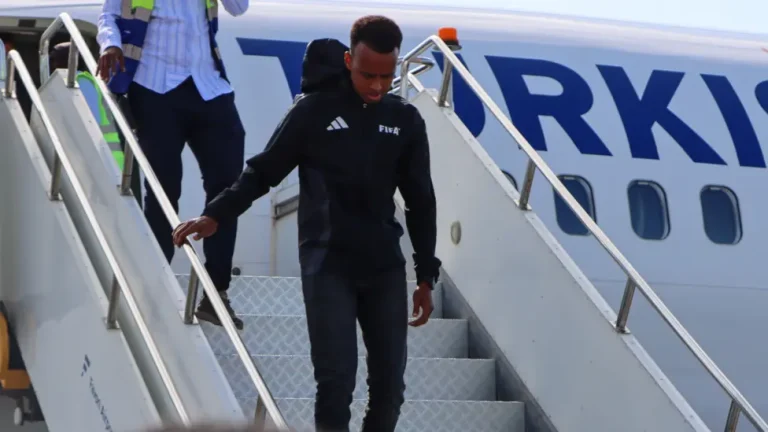
Somali referee Omar Artan was denied entry to the United States because of his “association with suspected members of terror organisations,” a US official has claimed, ending the 34-year-old’s dream of becoming the first Somali to officiate at a World Cup finals.

Artan, named Africa’s Referee of the Year in 2025, was set to be one of 52 referees selected for the 2026 World Cup. But his journey came to an abrupt halt on Monday when he was detained at Miami International Airport, subjected to an 11-hour immigration interview, and put on a flight to Istanbul.

Despite holding a diplomatic passport and a single-entry US visa, Artan was refused admission. Somalia is among twelve countries on a travel ban list introduced by President Donald Trump.

A Trump administration source provided the official justification for the ban.

“This individual was seeking admission to the United States,” the source said. “Upon further inspection by CBP [Custom and Border Protection], derogatory information, including association with suspected members of terror organisations, was discovered making the traveller ineligible for admission to the United States under the Immigration and Nationality Act (INA).”

The source added: “President Trump’s administration will not allow any security threat to enter our country – full stop.”

Artan told the New York Times that during his questioning, border officials asked him about his links to Somali militant group Al Shabab. He said he told them he knew nothing about the group.

It was not possible for Artan to stay outside the United States and referee matches played in Canada or Mexico, as all on-pitch officials were based in Florida for training, preparation, and security. His World Cup dream, he later said, had “crashed down.”

Upon landing at Aden Adde International Airport in Mogadishu on Wednesday, Artan received a hero’s welcome. He was greeted by government officials, representatives of the Somali Football Federation, fellow referees, and local residents.

He later met President Hassan Sheikh Mohamud at the Presidential Palace and is expected to attend a public event at Mogadishu Stadium.

In a brief statement to the media at the airport, Artan spoke of his determination to officiate at the 2030 World Cup but did not take questions from journalists.

“Everything is pre-destined,” he said.” FIFA supported me well and were in touch with me until I reached Mogadishu. I promise you that I’ll be officiating at the next World Cup.”

Artan used his return to issue a defiant message to his country’s young people, urging them not to lose hope in the face of his treatment.

“Let’s all defend Somalia’s honour,” he said. “We all belong to Somalia, whether it’s bad or good. That flag is ours, and so is the passport – let’s defend it.”

He added: “The youth shouldn’t be demoralised about their country. Despite this happening to me, I’ll still stand for my nation. I want to continue my journey from here and urge the youth to do the same.”

President Trump placed a full entry ban under any visa category for twelve countries, including Somalia, in June 2025. Two days before the World Cup draw in December 2025, Trump drew widespread attention for comments made about Somalia in the lead-up to a planned immigration enforcement operation in Minnesota, which has a large Somali community.

“With Somalia, which is barely a country, you know, they have no anything,” Trump said at the time. “They just run around killing each other. There’s no structure.”

He added that Somali immigrants should “go back to where they came from” and that the US would “go the wrong way if we keep taking in garbage to our country.”

Artan’s exclusion raises questions about the intersection of sports and geopolitics. FIFA, world football’s governing body, has not issued a detailed statement on the matter, though Artan acknowledged that the organisation supported him and remained in contact until he reached Mogadishu.

For Somalia, the incident has become a matter of national pride. A referee who was denied entry to the United States has been embraced at home as a symbol of resilience. For the United States, the administration has made clear that security concerns override any sporting considerations.

Artan, meanwhile, has already set his sights on 2030. Whether he will be allowed to pursue that dream remains uncertain.
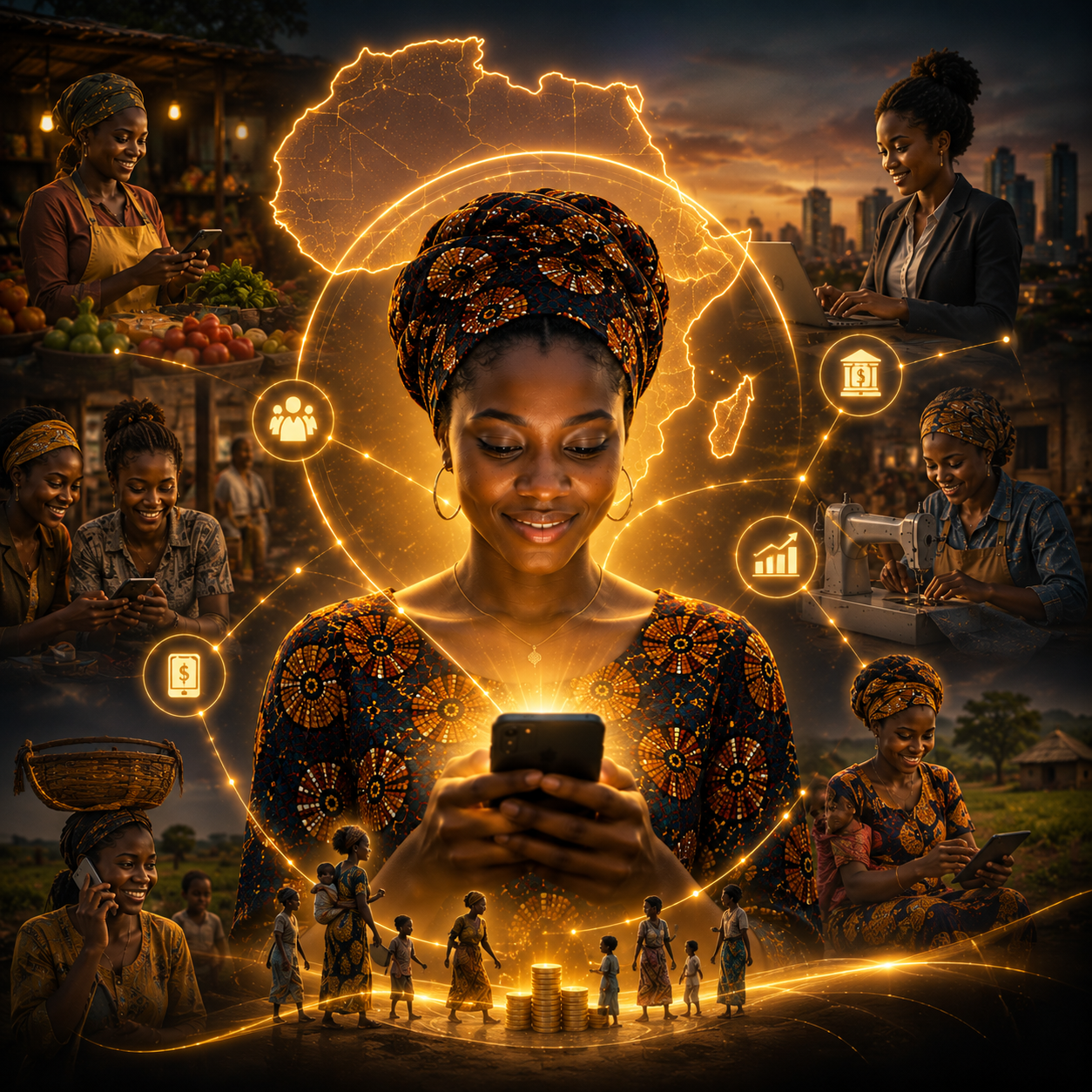
THE MOBILE MONEY REVOLUTION FOR WOMEN – How Digital Finance Quietly Became One of the Biggest Economic Empowerment Forces in Africa

By HiPipo Money

For decades, millions of African women lived outside the formal financial system.

Not because they lacked economic activity. Not because they lacked discipline or ambition.

But because access itself was designed around systems many women could not easily reach.

Traditional banking often depended on:

  • physical branches,
  • formal employment,
  • minimum balances,
  • paperwork,
  • long travel distances,
  • and documentation many low-income women did not possess.

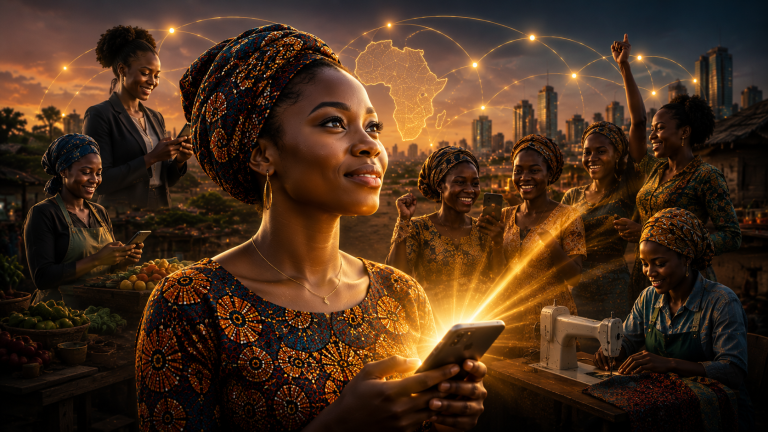
Across rural Africa, especially, financial exclusion became deeply connected to geography, poverty, infrastructure gaps, and social inequality. Women traded daily, ran households, operated microbusinesses, supported families, and participated heavily in informal economies, yet remained largely invisible to formal finance.

Then mobile money arrived. And quietly, one of the most important financial inclusion shifts in modern African history began unfolding.

Over the last decade, women’s account ownership across sub-Saharan Africa has risen dramatically, driven heavily by mobile money adoption and expanding digital financial access. According to the World Bank’s Global Findex database, women’s account ownership in the region grew from roughly 23% in 2011 to approximately 49% by 2021.

The numbers tell a powerful story. But the human transformation behind them is even bigger.

For millions of women, the mobile phone quietly became the first real gateway into formal financial participation.

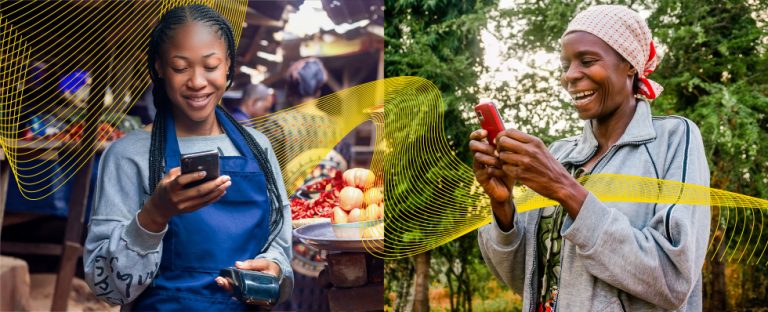
A market vendor could suddenly receive payments digitally instead of relying entirely on cash. A mother could save privately on her phone without needing to travel to a bank branch. A small trader could separate household money from business income more effectively. A rural entrepreneur could transact across distances that traditional financial infrastructure had failed to serve affordably.

The significance went far beyond convenience. Financial access changes power.

A woman with direct control over a digital account often gains greater independence over:

  • savings,
  • emergency spending,
  • school fees,
  • healthcare decisions,
  • and small-business management.

This is one reason women’s financial inclusion increasingly sits at the centre of broader development conversations globally. When women gain reliable financial tools, the impact often extends beyond the individual account holder into entire households and communities.

Education outcomes improve.
Household resilience strengthens.
Small businesses stabilise.
Healthcare access becomes easier.
Emergency coping capacity increases.

The multiplier effects can be profound.

Africa’s mobile-first financial ecosystem accelerated this transformation faster than many expected. Platforms such as M-Pesa, MTN MoMo, Airtel Money, and rapidly expanding FinTech ecosystems succeeded because they adapted to realities traditional banking often struggled with. Mobile money worked for:

  • small-value transactions,
  • informal income flows,
  • rural accessibility,
  • flexible usage patterns,
  • and low-cost participation.

This mattered enormously for women operating within informal and microeconomic environments. Many could join digital finance ecosystems without needing the formal structures traditional banking systems historically demanded.

The phone became the bank branch. And the agent network became the infrastructure layer that made inclusion physically possible.

But the transformation also revealed something deeper about Africa’s digital economy:

Inclusion scales faster when infrastructure adapts to people rather than forcing people to adapt to infrastructure.

That lesson now shapes much of the continent’s wider digital transformation agenda. Yet despite extraordinary progress, major gender gaps remain. Millions of African women still face barriers linked to:

  • smartphone affordability,
  • internet access,
  • digital literacy,
  • identification requirements,
  • and social restrictions around technology ownership or usage.

In some communities, women remain less likely than men to own smartphones independently. Even where mobile money access exists, deeper gaps often remain around:

  • digital savings,
  • insurance,
  • investment products,
  • formal credit access,
  • and advanced digital financial services.

Access alone is not enough. Usage matters.

An account that exists but is rarely used does not fully translate into empowerment. This is why the next phase of inclusion increasingly focuses on active financial participation rather than simple account ownership.

Digital literacy has therefore become increasingly important. Many first-generation digital finance users still require support understanding:

  • fraud protection,
  • PIN security,
  • digital savings,
  • responsible borrowing,
  • mobile lending risks,
  • and transaction verification.

Women are often disproportionately exposed to scams or financial misinformation because digital confidence gaps remain significant in many markets.

This means the future of inclusion depends not only on infrastructure, but also on education and trust.

At the same time, women are increasingly shaping the FinTech ecosystem itself. Across Africa, more women are emerging as:

  • FinTech founders,
  • ecosystem leaders,
  • mobile money agents,
  • digital entrepreneurs,
  • and financial inclusion advocates.

That shift matters because inclusive systems are usually designed more effectively when women participate directly in building them.

The future of digital finance cannot be fully inclusive if women remain underrepresented inside the institutions shaping that future.

There is also a major economic story unfolding beneath the surface.

Women’s financial inclusion may represent one of Africa’s largest untapped growth opportunities. As millions of women gain transaction histories, digital identities, payment access, and financial visibility, they become easier for lenders, insurers, marketplaces, and digital commerce platforms to serve formally.

Inclusion, therefore, expands not only participation, but economic possibility.

A woman operating informally today may eventually:

  • access digital credit,
  • scale a microbusiness,
  • transact regionally,
  • build savings,
  • access insurance,
  • or participate in digital commerce ecosystems previously beyond reach.

This is where financial inclusion evolves from a social conversation into a productivity conversation.

Governments, development institutions, FinTechs, and telecom operators increasingly recognise this reality. Across Africa, digital inclusion programs now increasingly combine:

  • mobile onboarding,
  • affordable device access,
  • digital literacy,
  • interoperable payments,
  • agent-network expansion,
  • and women-focused financial ecosystems.

The objective is no longer simply to count accounts. It is to create meaningful economic participation.

This is where Digital Public Infrastructure becomes especially important. Strong identity systems, interoperable payment rails, affordable connectivity, and trusted digital ecosystems all help lower barriers for women entering formal digital economies.

Without those rails, inclusion slows. Without trust, adoption weakens. Without affordability, participation narrows.

For HiPipo Money, the rise of women’s financial inclusion represents one of the most important economic transformations happening quietly across Africa today.

The continent’s mobile money revolution did more than digitise payments.

It changed who gets to participate in the economy.

This aligns strongly with broader conversations around:

  • financial inclusion,
  • women’s empowerment,
  • digital literacy,
  • FinTech innovation,
  • interoperable payments,
  • and inclusive growth championed through ecosystems such as Women in FinTech, Include Everyone, the Digital Impact Awards Africa (DIAA), and wider digital transformation movements across the continent.

Because ultimately, financial inclusion is not just about technology.

It is about visibility.

A woman saving securely for the first time.
A mother receiving payments directly.
A trader growing a business digitally.
A rural entrepreneur joining formal commerce.
A young woman gaining financial independence through a phone in her hand.

Most people will remember mobile money as a FinTech success story.

But for millions of African women, it became something much bigger.

A doorway into economic participation itself.

Government Plans to Merge UNEB and NCDC in Major Education Sector Overhaul

0

The Ministry of Education and Sports is planning to merge the Uganda National Examinations Board (UNEB) and the National Curriculum Development Centre (NCDC) into a single institution, according to officials familiar with the proposal.

The merger is among the key reforms contained in the forthcoming Curriculum, Assessment and Admissions Bill, one of several education sector laws recently highlighted by President Yoweri Museveni as being in the government’s legislative pipeline.

Brighton Barugahare, Commissioner in charge of policy analysis and research at the Ministry of Education, said the merger is part of wider reforms aimed at improving efficiency and reducing costs in government entities. He added that the move is intended to eliminate duplication of functions and address fragmented decision-making within the education sector.

The two institutions already perform complementary roles. NCDC is responsible for curriculum design, including teaching, learning, and assessment frameworks, while UNEB mainly conducts end-of-cycle national examinations such as the Primary Leaving Examination (PLE), Uganda Certificate of Education (UCE), and Uganda Advanced Certificate of Education (UACE).

Under the proposed arrangement, neither function would be abolished. Instead, they would be placed under a single institution with separate directorates responsible for the different mandates.

“These are just complementary functions, and bringing them under one institution will improve coordination and reduce fragmentation in planning and decision-making,” Barugahare said.

He noted that the two agencies already have overlapping governance structures, including representation from the Ministry of Education and cross-membership on their respective boards.

Barugahare argued that internationally, curriculum development and assessment are often managed under the same institution. He added that Uganda’s Competency-Based Curriculum (CBC) has further strengthened the case for integration because assessment is now embedded throughout the teaching and learning process rather than being confined to final examinations.

“Assessment is no longer only about what happens at the end of the cycle. Schools conduct continuous assessment on a daily basis, and these processes require coherent guidance linked directly to curriculum development,” he explained.

The proposal echoes recommendations made by the Amanya Mushega-led Education Policy Review Commission. That commission recommended the creation of a National Curriculum and Assessment Authority by merging curriculum and assessment bodies operating at both basic and advanced education levels.

“The Commission notes that R5 on the merging of all curriculum and assessment bodies applies,” the commission’s report reads. “NCDC, UNEB, and other assessment bodies under the Basic and Advanced levels should be merged under one body with respective directorates to develop curriculum and assessment frameworks for both the academic and skills tracks.”

Although the commission’s report is yet to be adopted through a government white paper, discussions on merging the two institutions had already begun before the report was released.

The name and structure of the proposed institution have not yet been made public. However, sources indicate that both UNEB and NCDC have previously expressed reservations about the merger, citing concerns over institutional autonomy and mandate preservation.

Neither institution has publicly commented on the latest developments.

The government has already adopted a similar approach in the Technical and Vocational Education and Training (TVET) sector, where curriculum development, assessment, and certification functions were consolidated under the Uganda Vocational and Technical Assessment Board (UVTAB) and the Uganda Health Professions Assessment Board (UHPAB).

Those two boards develop curricula in consultation with relevant stakeholders while also conducting assessments and overseeing certification.

NCDC was established in 1973 to centralize and localize the curriculum, ensuring that learning content reflects national priorities and the country’s social and economic needs.

UNEB was created in 1983 following the collapse of the East African Examinations Council, taking over responsibility for administering national examinations.

For more than four decades, the two institutions have operated separately. The proposed merger would represent one of the most significant structural changes to Uganda’s education governance in a generation.

The Curriculum, Assessment and Admissions Bill, which contains the merger proposal, is expected to be tabled before Parliament as part of the government’s legislative agenda. Once the bill is introduced, lawmakers will have an opportunity to scrutinise the proposed reforms, hear stakeholder concerns, and make amendments before any merger can take effect.

For now, the Ministry of Education appears committed to the integration, arguing that it will improve efficiency, reduce costs, and better align curriculum and assessment under the Competency-Based Curriculum. But the reservations reportedly expressed by UNEB and NCDC suggest that the proposal may face resistance before it becomes law.

MUSIC IS NOT A HOBBY. IT IS A MULTI-BILLION-DOLLAR BUSINESS — AND INVESTMENT IS INEVITABLE

One of the biggest lies ever told to young African artists is that talent alone is enough.

It is not.

Talent may open the door, but investment, structure, strategy, branding, consistency, and business discipline are what sustain careers, build empires, and transform musicians into global cultural forces.

Music is not charity.
Music is not luck.
Music is not magic.

Music is business.

And like every serious business in the world, it demands sacrifice, planning, capital, risk-taking, patience, and continuous reinvestment.

Across Africa, countless young people wake up every morning with dreams of becoming musicians, producers, songwriters, DJs, video directors, or entertainment entrepreneurs. Many possess extraordinary talent. Some have voices capable of moving nations. Others have lyrical brilliance powerful enough to inspire generations.

But raw talent without investment often dies quietly.

That reality may sound harsh, but it is true.

A young entrepreneur in Kampala may sell family property to start a business in downtown arcades. A trader may take a loan to open a wholesale shop in Kikuubo. A boda rider may save for years to buy a motorcycle. A farmer may invest heavily before harvesting returns months later.

Music is no different.

The entertainment industry is a commercial ecosystem built around money, infrastructure, branding, visibility, distribution, relationships, technology, and influence. It is an industry that creates millionaires, global celebrities, political influencers, and cultural icons capable of shaping elections, movements, conversations, fashion, language, and entire generations.

Yet too many young artists enter the industry emotionally prepared but financially unprepared.

That is where the struggle begins.

Every serious musician needs a business mindset before chasing fame.

An artist must ask:
What is my long-term strategy?
How will I finance my growth?
What is my production budget?
How will I market myself?
How will I distribute my music?
What makes my brand commercially sustainable?
How will I reinvest my profits?

Without answers to those questions, even extraordinary talent can remain invisible.

Music production itself is expensive. Audio recording costs money. Mixing and mastering cost money. Professional songwriting, beat production, vocal coaching, branding, photography, artwork, visual storytelling, choreography, styling, public relations, digital marketing, streaming campaigns, social media management, tour logistics, video production, distribution, and media visibility all require investment.

None of these things appear magically.

And in today’s digital entertainment economy, competition is more intense than ever before.

Thousands of songs are uploaded every single day across streaming platforms and social media channels. Attention itself has become one of the world’s most valuable currencies. Artists are no longer competing only with musicians from their neighbourhoods or countries. They are competing globally for visibility inside algorithms designed to reward consistency, engagement, branding, and audience retention.

That means music can no longer be approached casually.

Artists who refuse to invest in themselves often end up frustrated by an industry they never truly prepared for.

Many upcoming musicians expect free recording sessions, free video shoots, free airplay, free promotion, free management, free marketing, and free distribution. Yet those same services are businesses run by professionals who also survive through investment and commercial returns.

A producer invests in studio equipment.
A videographer invests in cameras and editing software.
A radio station invests in infrastructure and licensing.
A DJ invests in branding, sound equipment, and audience-building.
A media company invests in platforms and visibility.

Why then should music promotion be expected to operate outside economic reality?

This misunderstanding has damaged many creative careers across Africa.

The truth is simple: visibility costs money.

Globally, major artists spend enormous amounts of money promoting music. Billboard campaigns, streaming promotions, tour support, influencer campaigns, television advertising, public relations, playlist pitching, fan experiences, merchandising, digital advertising, and strategic partnerships are all part of modern music business infrastructure.

The world’s biggest artists do not merely create songs.
They build ecosystems around those songs.

Some record labels invest millions before a single album is released. Others acquire media companies, radio stations, event platforms, or digital distribution channels to strengthen visibility and control promotion. Entire entertainment empires are built on understanding one core principle: art alone is not enough without business structure.

And Africa’s creative industry must increasingly embrace this reality if it hopes to compete sustainably on the global stage.

This does not mean independent artists cannot succeed. In fact, technology has opened unprecedented opportunities for creators. Digital distribution platforms, streaming services, mobile money, creator monetisation tools, direct-to-fan platforms, and social media have lowered barriers to entry.

But accessibility does not eliminate the need for investment.

Even in the digital era, successful artists still invest heavily in consistency, branding, audience development, storytelling, visuals, marketing strategy, and professional growth.

The artists who survive longest are usually those who understand both creativity and commerce.

Music must therefore be treated with the seriousness of any other profession.

Upcoming producers must invest in learning new technologies.
Video directors must upgrade their equipment and skills.
Artists must invest in branding and professionalism.
Managers must understand contracts, publishing, and monetization.
Labels must understand audience analytics and digital ecosystems.

The entertainment economy evolves rapidly. Anyone unwilling to learn, adapt, invest, and grow risks becoming irrelevant.

And yet, despite all its difficulties, music remains one of the most powerful industries on earth.

Music creates employment.
Music exports culture.
Music influences politics.
Music drives tourism.
Music powers fashion.
Music fuels advertising.
Music creates digital economies.
Music builds global identity.

Africa’s future creative billionaires may emerge not only from oil, construction, telecom, or banking, but from entertainment ecosystems built by disciplined creators who understand both artistry and enterprise.

The future belongs to artists who stop thinking like hobbyists and start operating like founders.

Because music is not merely performance.

It is intellectual property.
It is media.
It is influence.
It is technology.
It is branding.
It is infrastructure.
It is commerce.
It is investment.

And like every serious business in history, those willing to invest wisely, sacrifice consistently, build patiently, and think strategically are the ones most likely to create lasting success.

Music is business.

And investment is inevitable.

The Grandparents Who No Longer Fear the Night

A #100DaysofSolar Human Impact Story from Buteyongera, Mukono District, Uganda

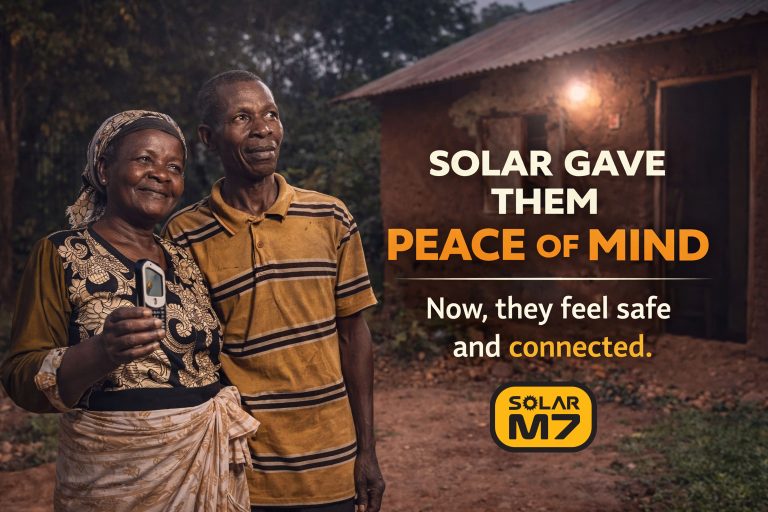
In Buteyongera, Mukono District, Kulimira John and Nantume Margaret are spending their later years doing something both beautiful and demanding, raising grandchildren.

Every day, they work quietly to keep the family together, protect the children, and provide stability inside a world that often feels uncertain.

But for a long time, nights brought constant worry into their home.

Darkness made the family feel exposed. Thieves moved through the community after sunset, targeting livestock and homes. Every unusual sound outside forced the grandparents to wake up and check whether their animals were safe.

And something as simple as charging a phone had become exhausting.

Whenever the battery died, someone had to walk long distances looking for a charging point. Communication with family became difficult. Important phone calls were missed. Sometimes, they simply felt disconnected from the world around them.

Then Solar M7 arrived.

And slowly, peace began returning to their home.

Today, their phones charge safely from home. The family remains connected to relatives, neighbours, and opportunities without making exhausting journeys just to power a device. At night, the home feels more secure. The presence of light itself has helped restore confidence and calmness around the household.

For John and Margaret, the change is deeply personal.

“Life is easier now,” they shared during their interview. “Before, darkness made us worry all the time. Even charging a phone was difficult. But now we feel safer, more connected, and more at peace.”

According to Doreen Nanfuka, elderly people in underserved communities are among those most emotionally affected by energy poverty.

“When you visit older guardians like John and Margaret, you understand how much stress darkness creates,” Doreen explained. “Reliable light reduces fear, improves communication, and helps older people care for their families with greater dignity.”

Innocent Kawooya says energy access must also be viewed as a tool for social connection and emotional wellbeing.

“Access to light and phone charging may seem simple in some parts of the world,” he noted. “But for many families, it means safety, communication, inclusion, and peace of mind. It helps people stay connected to the people and opportunities that matter most.”

Today, nights inside John and Margaret’s home no longer feel isolating.

The grandchildren sleep more peacefully.

The phones stay charged.

The livestock feels protected.

And for two grandparents who spent years worrying through darkness, light has brought something they deeply deserve again.

Peace of mind.

Watch the full story of Kulimira John & Nantume Margaret from Buteyongera, Mukono District, Uganda across our platforms:

YouTube
TikTok
Facebook
Instagram
LinkedIn
X/Twitter

#100DaysofSolar #SolarM7 #IncludeEveryone #EnergyAccess #HumanImpact #Mukono #Uganda #CleanEnergy #HiPipo

Ghana, Rwanda and Zambia Launch Cross-Border Payment Pilot to Bypass Dollar Dependency

Ghana, Rwanda, and Zambia have launched a pilot digital trade corridor designed to enable instant cross-border payments and reduce Africa’s long-standing dependence on dollar-mediated settlement systems.

The project, unveiled during the 3i Africa Summit in Accra on 6th May, reflects a broader continental push to build interoperable, Africa-owned financial infrastructure under the African Continental Free Trade Area (AfCFTA).

“Economic sovereignty in the twenty-first century is inseparable from digital sovereignty,” said Ghana’s Vice President Professor Jane Naana Opoku-Agyemang at the summit, where the pilot was officially announced.

For years, businesses moving money across African borders have depended on correspondent banking systems routed through financial centres outside the continent. A fabric trader in Kumasi selling products to Kigali or Lusaka could face several days of delays, multiple currency conversions, and transaction charges that significantly reduced already-thin profit margins.

According to the World Bank’s Remittance Prices Worldwide database, Sub-Saharan Africa remains the world’s most expensive region for cross-border transfers, with average remittance costs standing at 8.46 percent. Bank-led transfers can approach 15 percent.

The new Ghana-led pilot seeks to remove those frictions entirely by enabling direct settlement between local currencies through interoperable payment systems connected under a shared digital framework.

The pilot is being integrated with the Pan-African Payment and Settlement System (PAPSS), the African Union-backed payment rail designed to reduce dependence on dollar-mediated transactions and external correspondent banking systems.

Afreximbank data shows PAPSS already connects at least 17 African countries, 14 national switches, and more than 150 commercial banks, enabling near real-time settlement without routing transactions through third-party currencies. The system allows payments in local currencies while clearing centrally, reducing exposure to foreign exchange volatility and settlement delays.

The new corridor is designed to address inefficiencies while supporting intra-African trade, which policymakers increasingly view as central to the success of AfCFTA.

According to the latest Afreximbank trade outlook, total African trade reached approximately US$1.4 trillion in 2025, with intra-African trade accounting for about 18 percent of total flows, or nearly US$250 billion.

AfCFTA has been designed to expand that figure, but its success depends heavily on whether payments, identity, and compliance systems can function seamlessly across borders.

The pilot corridor integrates four core pillars: payments, digital identity, regulation, and infrastructure interoperability. The framework is also aligned with the African Union’s Digital Trade Protocol, which seeks to establish common rules around digital commerce, data governance, and cross-border interoperability.

A critical element of the project is the use of national digital identity systems such as Ghana Card as a model for cross-border verification, allowing faster Know Your Customer (KYC) checks between participating countries.

World Bank estimates show that nearly 470 million people in Sub-Saharan Africa still lack formal identification, limiting access to banking services, credit, and digital commerce. Policymakers increasingly see interoperable identity systems as both a trade facilitation tool and a financial inclusion mechanism.

The pilot also reflects a broader wave of regulatory alignment emerging across the continent. In East Africa, regulators are increasingly moving beyond basic mobile money interoperability toward harmonised licensing and compliance systems.

In March 2026, the Central Bank of Kenya and the National Bank of Rwanda signed a memorandum of understanding establishing a license passporting framework that allows payment service providers licensed in one country to operate in the other without duplicating approvals.

That framework, aligned with the East African Community Cross-Border Payment System Masterplan, is intended to reduce regulatory fragmentation while allowing fintech companies to scale services such as remittances, merchant payments, and digital wallets across borders.

Other African markets are also adopting ISO 20022 messaging standards to improve compatibility between payment systems and enable instant cross-border communication between financial institutions.

For small and medium-sized enterprises, which dominate African trade flows, the implications are immediate. Businesses trading regionally often struggle with delays in foreign exchange sourcing, high settlement costs, and fragmented compliance requirements.

The corridor aims to remove what policymakers describe as the “dollar hurdle,” allowing businesses to invoice and settle transactions directly in Ghanaian cedis, Rwandan francs, or Zambian kwacha without relying on intermediary currencies.

The next phase of the pilot will test mobile money interoperability to ensure that informal and unbanked traders can also participate in the system. Africa’s mobile money ecosystem has become one of the world’s largest digital finance markets, processing more than US$2 trillion in transactions annually, according to GSMA estimates.

Clara Arthur, Chief Executive Officer of Ghana Interbank Payment and Settlement Systems (GhIPSS), has previously argued that interoperable infrastructure will be critical to scaling Africa’s digital payments ecosystem.

The broader ambition behind the Ghana-Rwanda-Zambia corridor is to create what policymakers increasingly describe as a single African digital market, where trade is supported by interoperable financial rails designed, governed, and settled within the continent itself.

Whether the pilot succeeds will depend on technical execution, regulatory harmonisation, and the willingness of commercial banks and fintechs to adopt the new systems. But the direction is clear: Africa is slowly building the infrastructure to move its own money, on its own terms.